

With an eye-watering starting price of $259,900, the SV is the most expensive Range Rover that money can buy. We reviewed the P530 First Edition earlier in the year, reporting it to be one of the most capable and luxurious SUVs we have ever driven. But that had a price tag of only $182,000. So, how could the Range Rover SV top that?

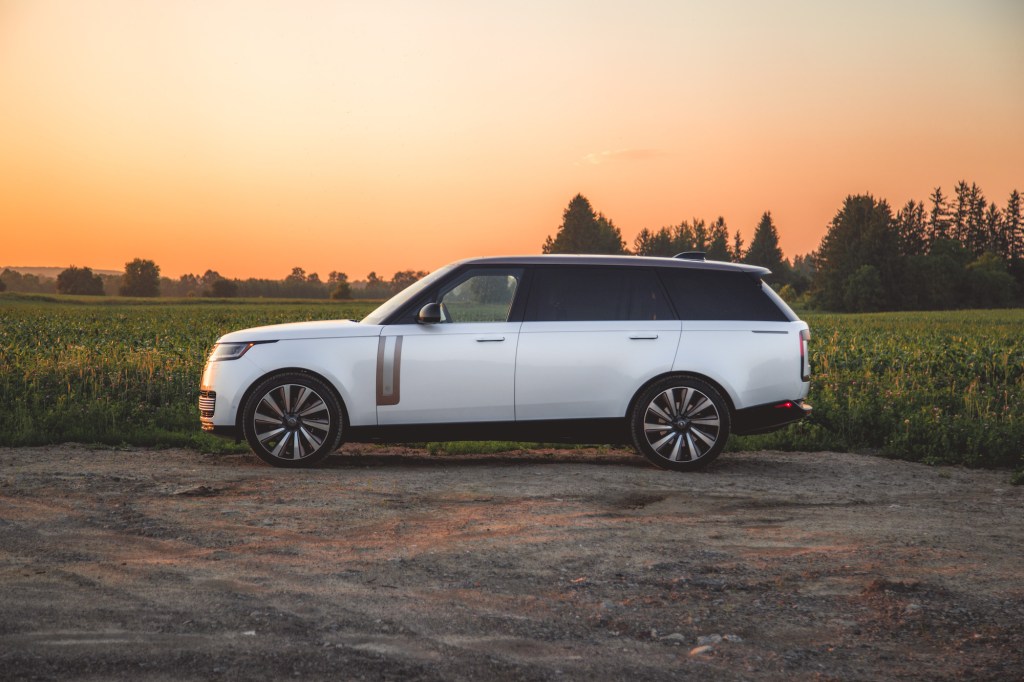
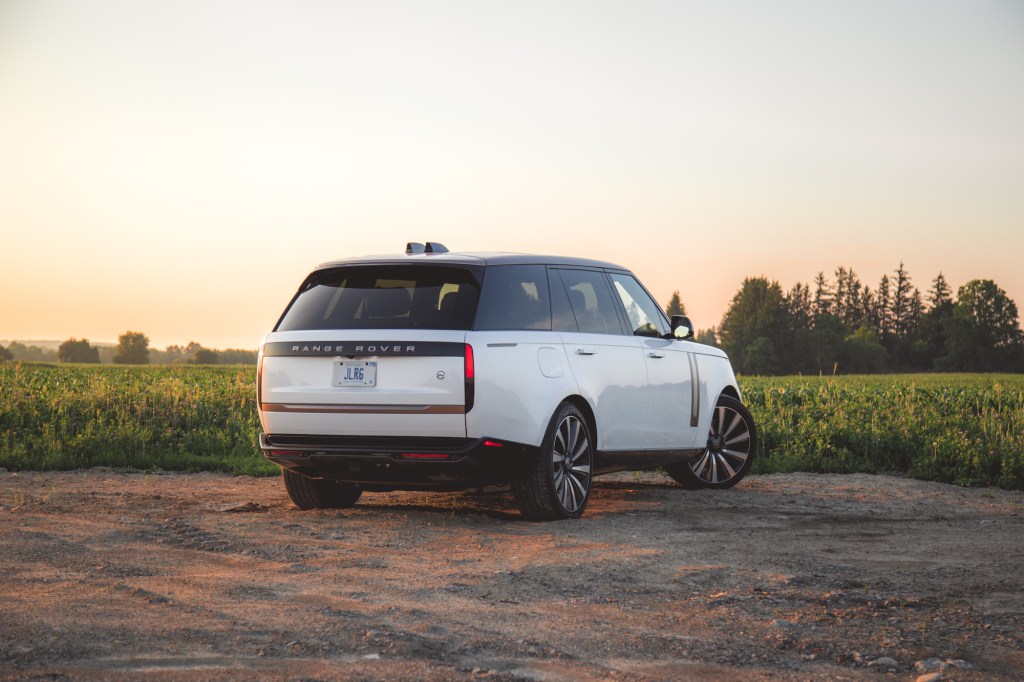
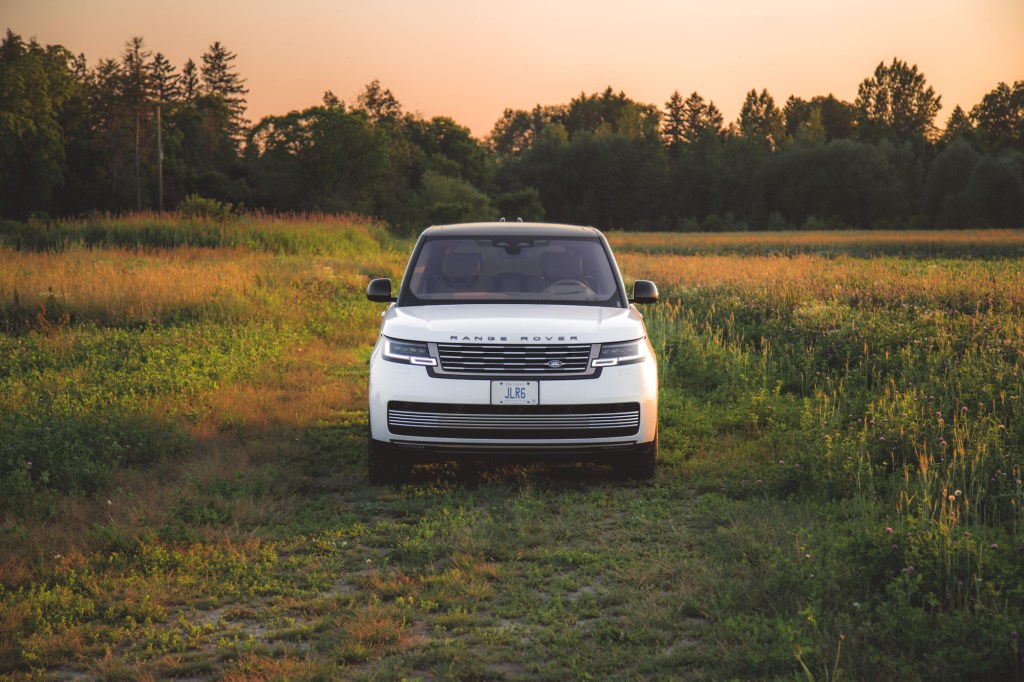
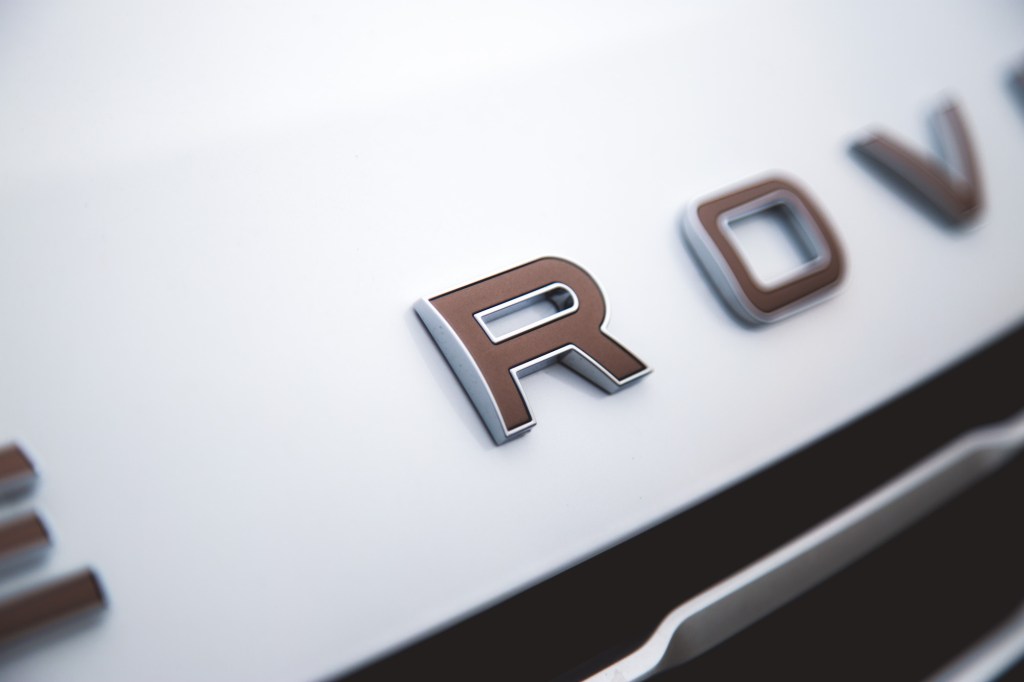
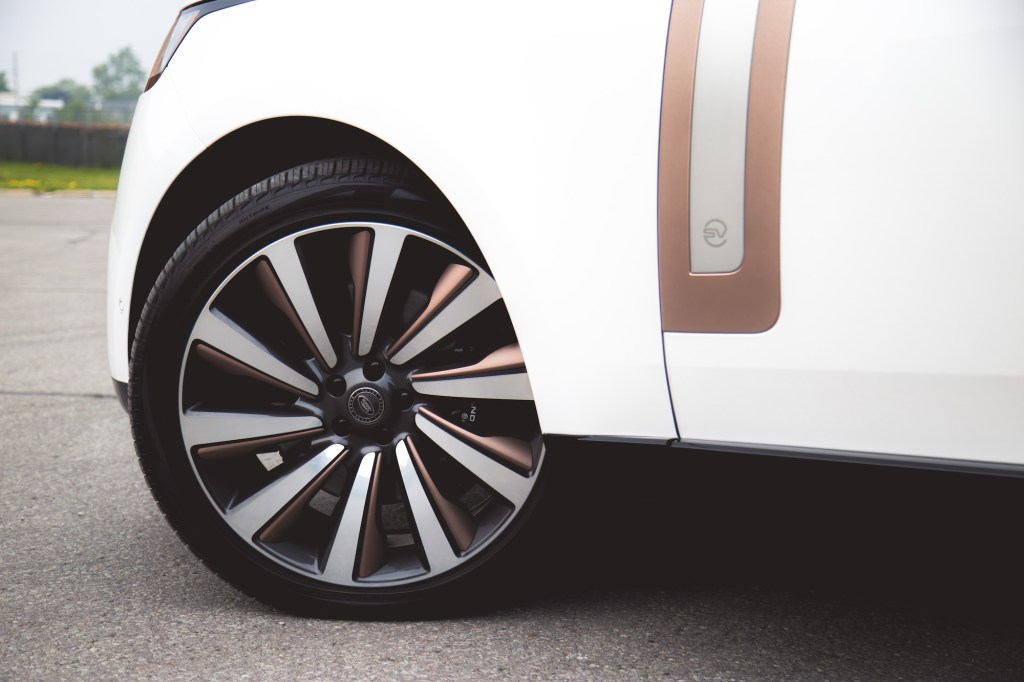
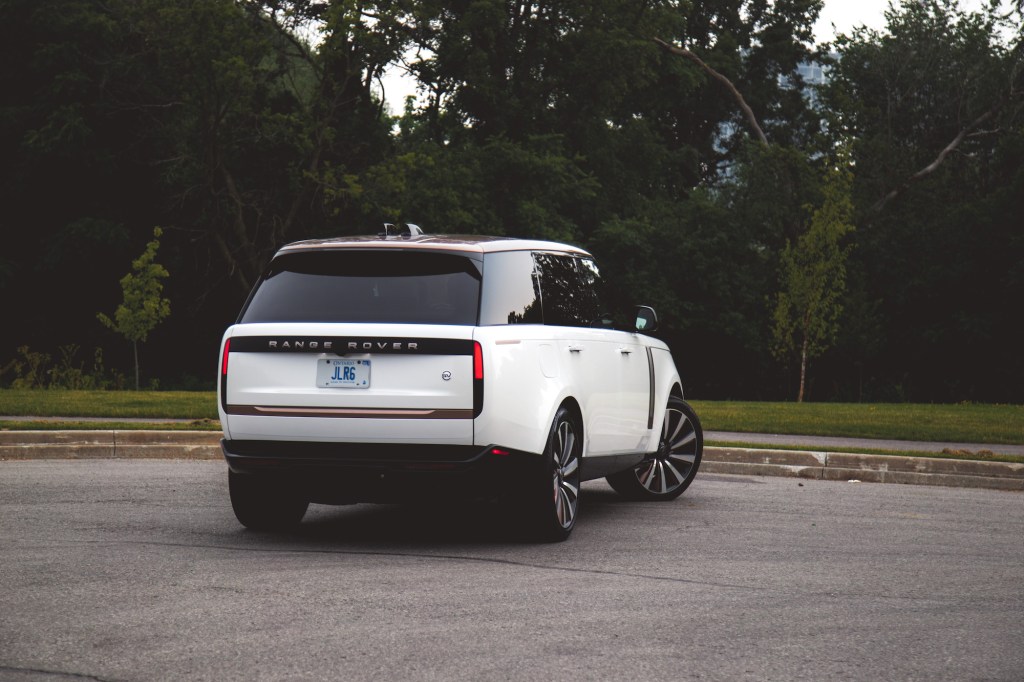
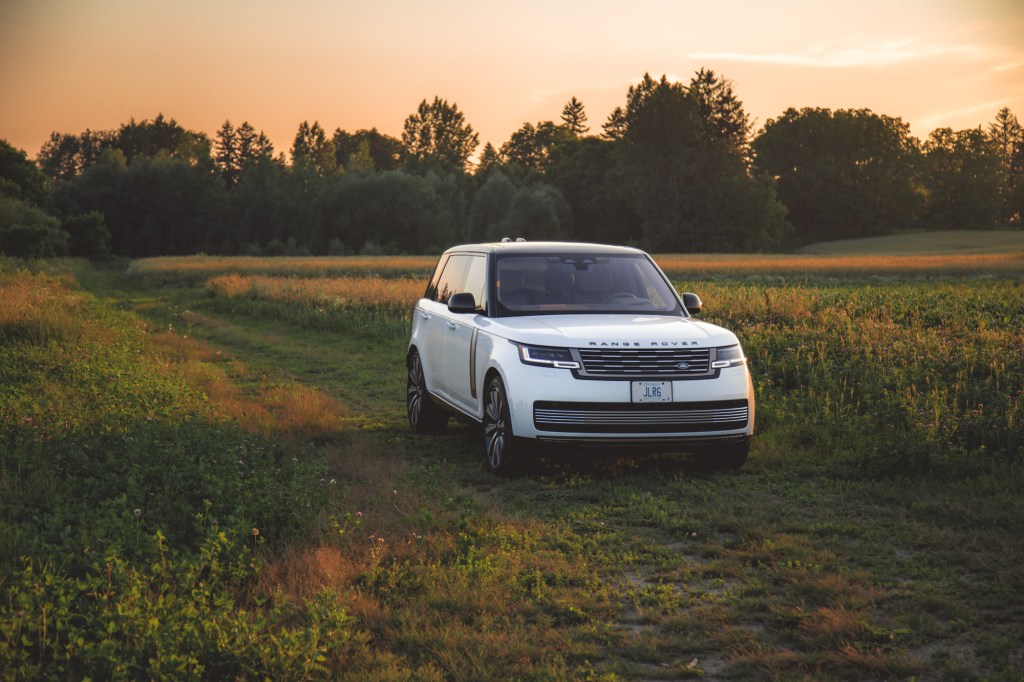
Previously known as the SVAutobiography, the SV represents the peak of British engineering but on paper, the upgrades and revisions over the standard model may seem subtle. You wouldn’t think it but there are 1.6 million ways you can spec your SV, and it’s available in both short- and long-wheelbase models. A cleaner fascia and sleeker grill design adorn the front, while a laser-etched SV badge blends into the contrasting side fender blade. Even though the rear is unchanged, this fifth-generation Range Rover didn’t need much of a facelift to begin with. It’s large, imposing in white with bronze accents, absolutely drips in road presence, and visually it doesn’t stray far from the brand’s rugged DNA.

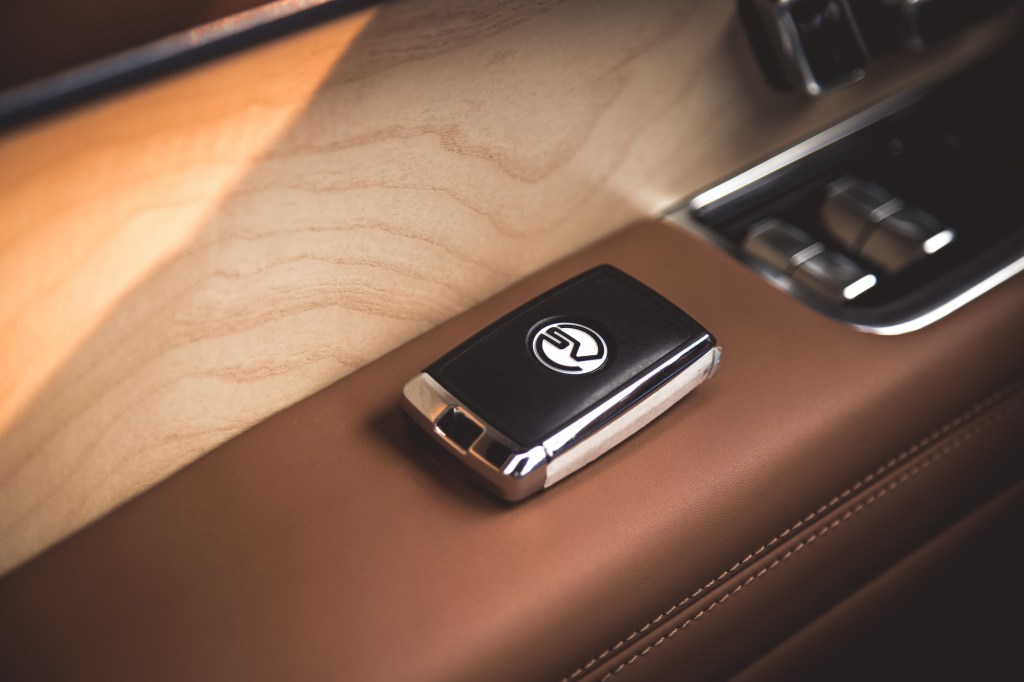
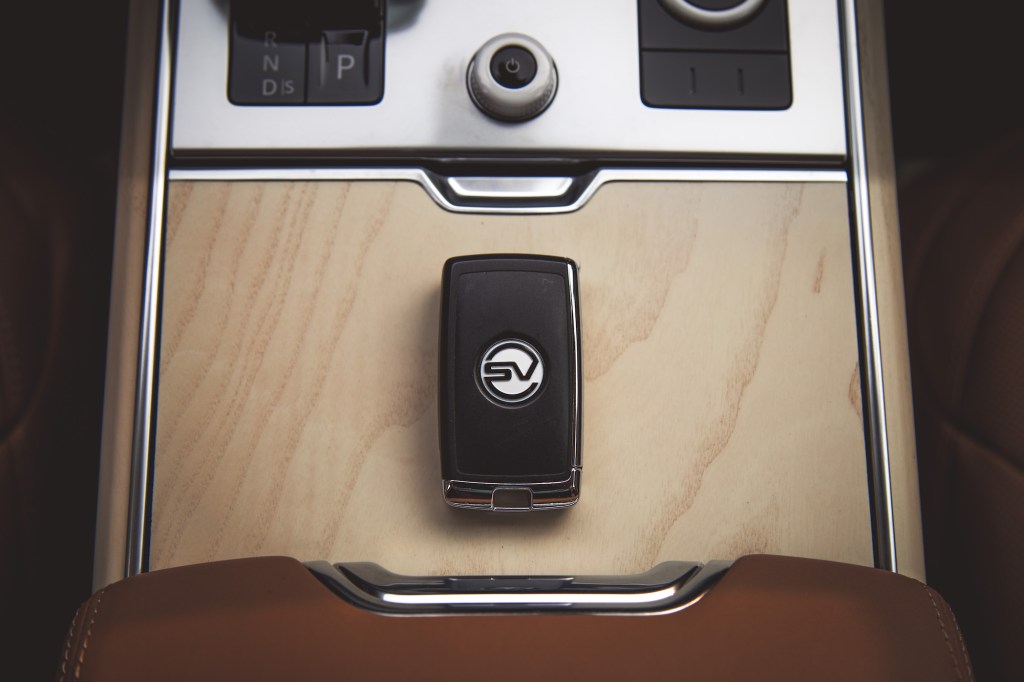
But it’s the interior that warrants the heart-stopping price. Land Rover didn’t skimp on any details and no expense was spared. The key fob, for instance. In a car costing this much, you want every touchpoint to feel special and exclusive. Owners wouldn’t want to find the same kind of switchgear on their next Hertz rental. Like Audis with their RS models, there’s a large white SV logo on the back of the key to show friends that this isn’t just a normal Range. And if that SV badge looks familiar, it finally hit us a week later when we pulled up right behind a Nissan Rogue. SV.
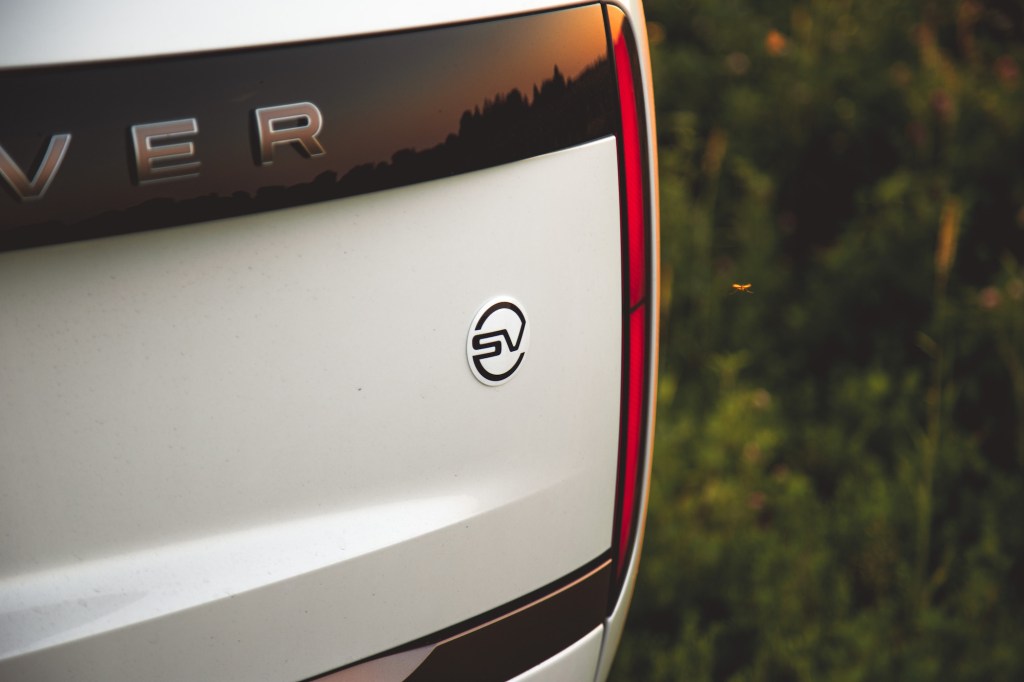
They have shown restraint too. Land Rover didn’t bother plastering SV badges on every exposed surface, unlike a BMW M car. You won’t find any inside the cabin aside from the door sill plate and start-up graphics. The only other SV badges are on the side fender, puddle lights, VIN plate on the front windshield, and the ceramic white SV badge on the trunk lid, the latter of which blends into the white paint. It’s an IYKYK kind of deal.
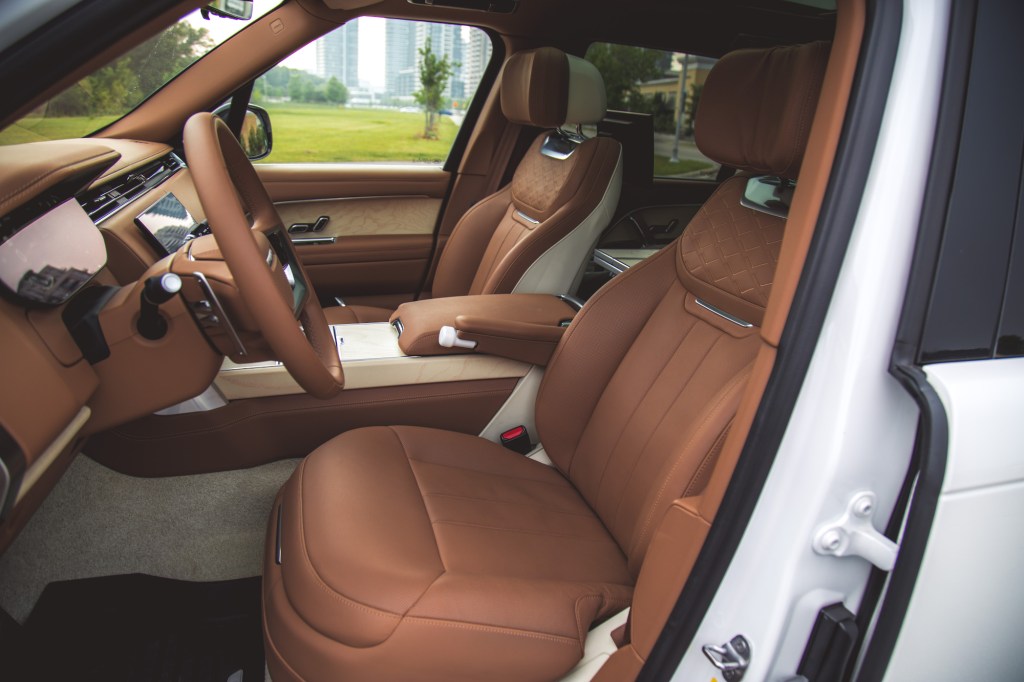
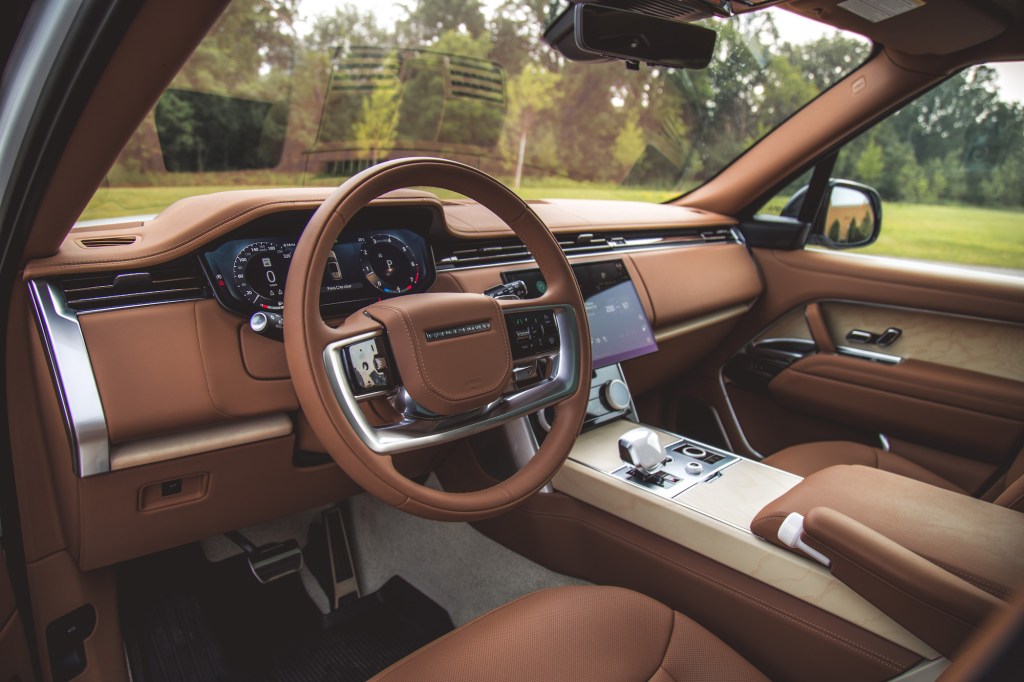
Instead, the SV showcases its quality in the leather that covers nearly every cabin surface, including the entire headliner. And we know you’ve heard of semi-aniline leather before – one of the industry’s top choices for its soft and buttery textures, but the SV uses near-aniline leather instead, which is even softer, creamier, and more expensive but slightly less durable. The craftsmanship is impeccable; you can see all the delicate micropores. It smells like you have just entered a high-end Italian shoe store, and it wouldn’t look out of place on a Hermès Birkin. We’re afraid to look up how many cows went into the making of this SV but the curb weight of over 2,600 kg gives us a clue. Not to mention, the flawless finish of the wood veneer panels. How many trees? Best not to ask.

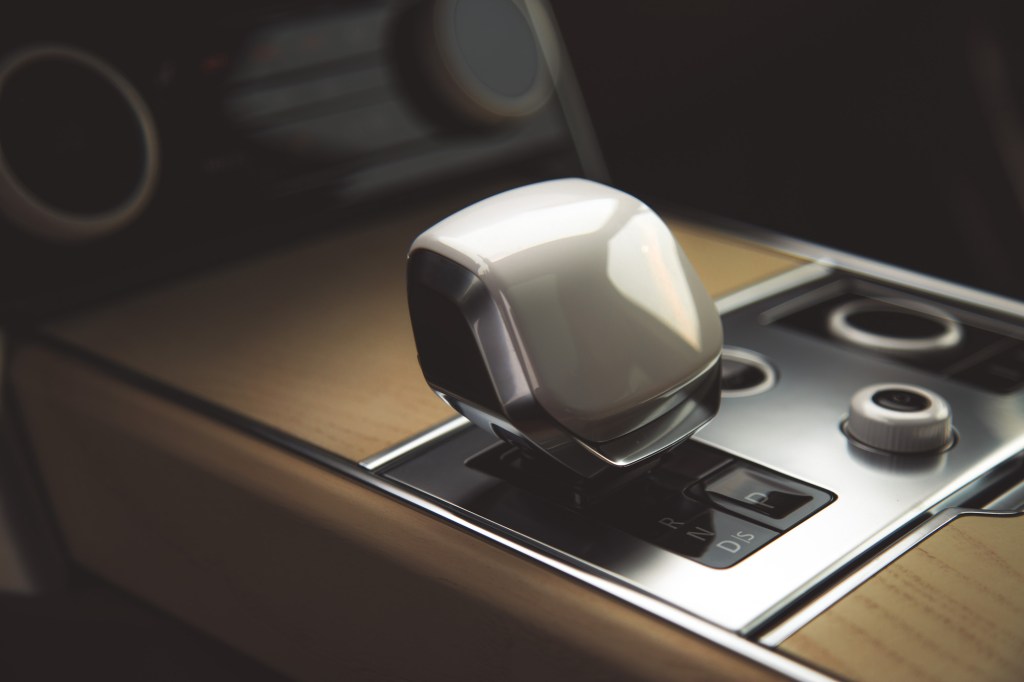
The front and rear seats are also different coloured leathers, brown and white, respectively, and we are smitten by how well it has been pulled off. Depending on the spec chosen, the SV also features exclusive white ceramic finishes on the armrest knobs, dial surrounds, and gear shifter. While it doesn’t feel particularly special when prodded, it’s nice to have something less extravagant than carbon fibre or Alcantara. Other choices include natural wood inlaid with metal, woven mesh, or anodized metal.

And while the front cabin is a first-rate, first-class piece of kit, it’s the long wheelbase’s rear seats that will have you thinking twice about hopping on a short-haul Emirates A380, especially with the SV Signature Suite option ticked ($25,900). The four bordering walls of leather create a sanctuary that makes the Mercedes-AMG G 63 feel like a cramped World War 2 bunker, and a Lincoln Navigator look cheap and chintzy. The individually sculpted seats are sleep-inducing, the headrests can be adjusted in more ways than we can count, and they’re more supportive on the neck than any luxury competitor, from the BMW i7 to the Rolls-Royce Ghost.
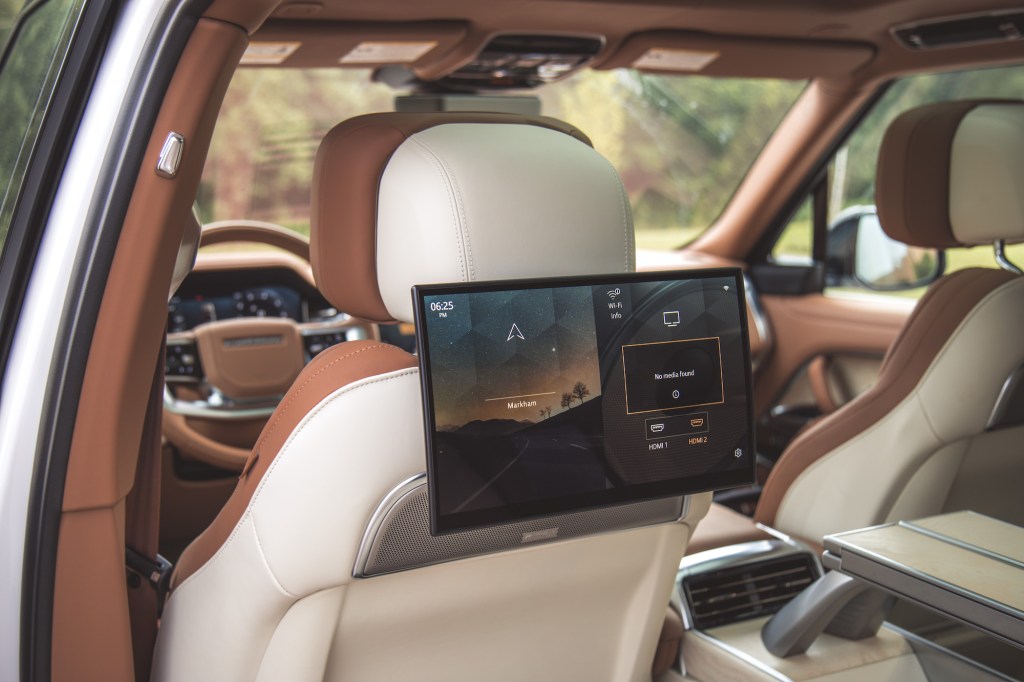
The rear passenger-side seat can fold into a nearly lie-flat seat, just like in a Boeing 777 business class pod, complete with its own footrest. The two 13.1-inch screens are the largest ever fitted on a Range Rover, approximately the size of a standard MacBook for reference. While not as impressive as the gigantic widescreen in the BMW i7, they still make for a grand Netflix and chill session.

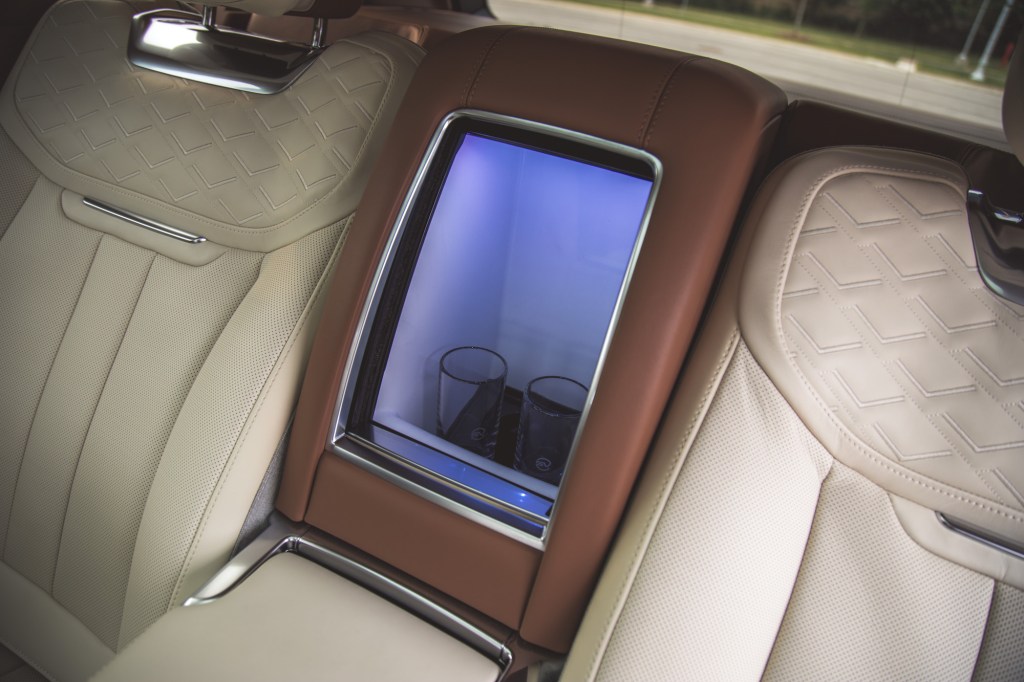
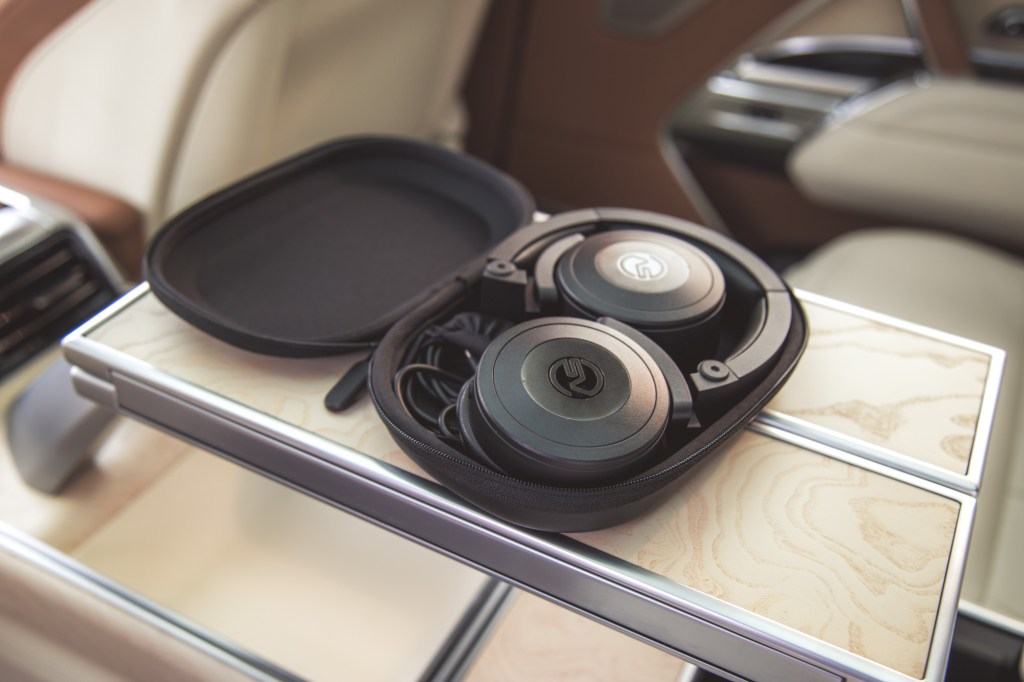
With the SV Signature Suite, the middle seat is sacrificed for a fixed center console that includes a touchscreen to control all amenities and features, such as the sunblinds, electronically stowed cupholders, and the cooler box compartment located between the seat shoulders, complete with its own glassware. Dig further into the menu and you will find the button to summon the foldable table that can also be swivelled around. It’s not the flimsy or wobbly kind of table you would find in front of your airplane seat, either. This one is sturdy, heavy, and machined from a solid aluminum billet. Safe to say, it’s the most opulent and feature-rich rear cabin we have ever experienced.
The P530 powertrain in the SV remains unchanged, utilizing a 4.4-litre twin-turbocharged V8 sourced directly from BMW. It’s the same engine you would find in a BMW X6 M60i, and it actually sounds like a BMW, not just under acceleration but also during engine start-up. Blindfold us and we would have been fooled. The engine fans will even run on overdrive post-shut-off, just like in a BMW, to cool and prolong the life of that volcanically heated turbo.
The V8 produces 523 hp and 553 lb-ft of torque through an 8-speed automatic transmission, though the upcoming 2024 model promises an uprated P615 spec with 607 horsepower instead. Power comes on smoothly and consistently, exactly what you want in this substantially sized land yacht. You can ride the throttle and let the gearbox sort itself out with polished and invisible shifts behind the scenes, and make outrageous progress without ever breaching 5,000 rpm. The way it wafts to the limiter reminds us of a Rolls-Royce twin-turbo V12, and the exhaust is neither overly shouty nor in your face. Its acoustics are restrained and mature, and you could even call it grown-up or professional, especially since we know what this V8 engine is capable of in the BMW M5.
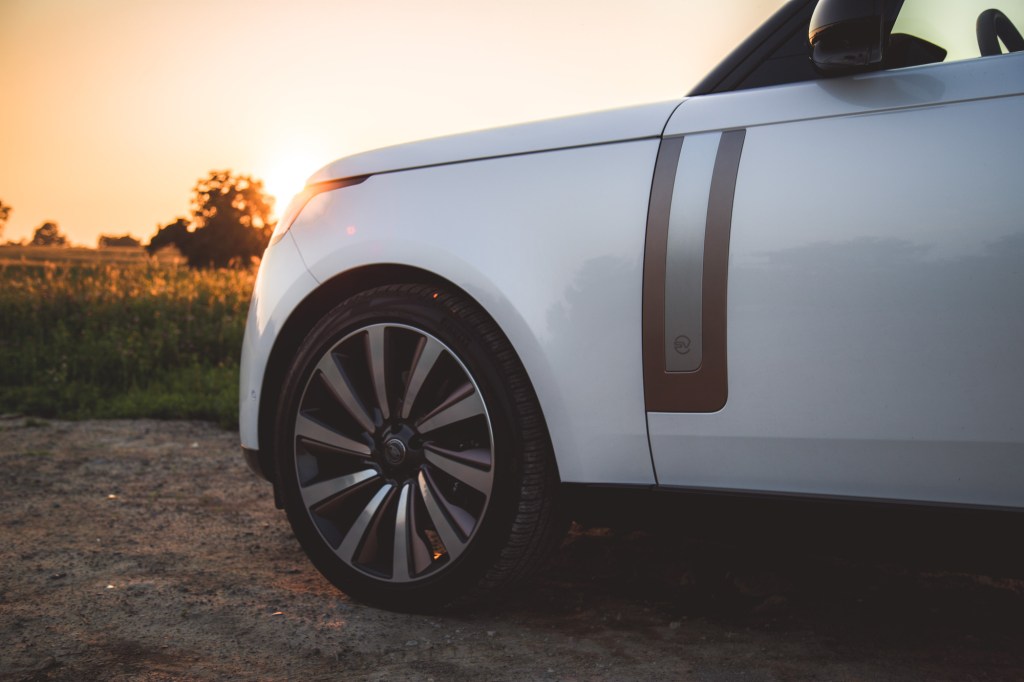
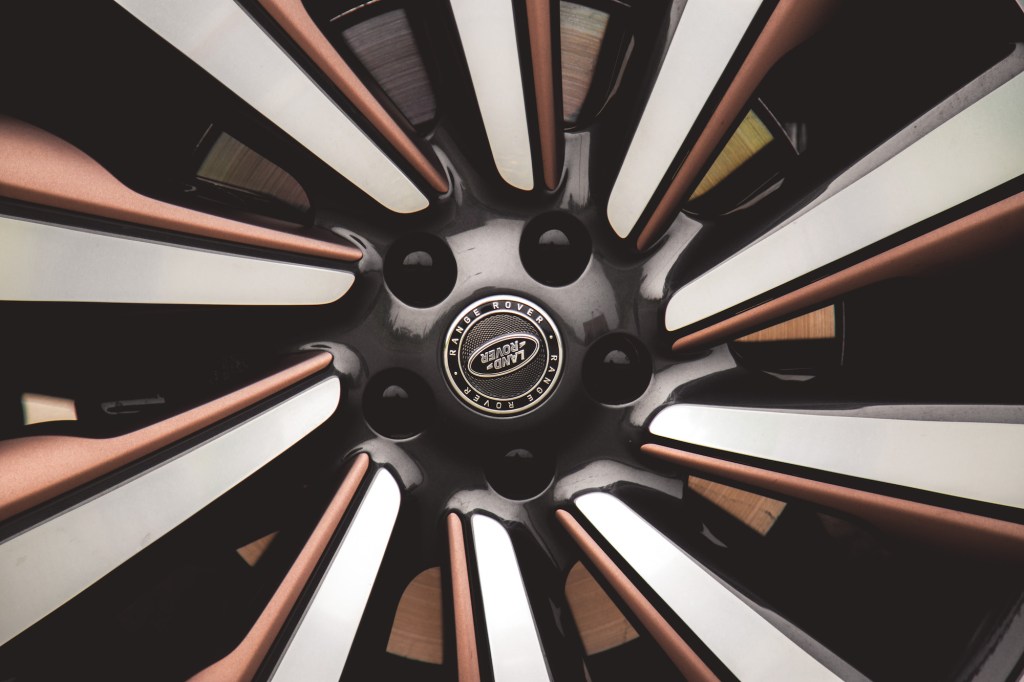
As expected, the ride quality is outstanding. Minor impacts barely register as it floats and glides along your desired path. Even while wearing 23-inch wheels, the SV glides over broken surfaces with ample suspension travel to spare. It’s really not that far off from a Rolls-Royce Cullinan. Body roll is kept to a minimum and its handling remains as stable and neutral as the Swiss economy.
Maneuverability at both low and high speeds is incredible, reducing the intimidation factor of the LWB’s large footprint. The steering is wonderfully light and precise, while directional changes and minor adjustments are met with zero resistance. The rear-wheel steering feature pays for itself, allowing the SV to navigate through tight spaces like an Evoque, and Range Rover has tuned the steering to feel more organic and natural than even the BMW XM. Mix in the army of cameras and displays, and you will never have to touch up any of that $9,700 Icy White paint.
The Range Rover SV is priced for the upper elite and for good reason. In ride quality and craftsmanship alone, it puts the Mercedes-Maybach GLS 600 and BMW XM to shame, and those looking for Bentleys and Rolls-Royces shouldn’t hesitate to cross-shop with one. It’s more comfortable and usable than a G 63 AMG, and it’s not as flashy or in-your-face either, prioritizing the comfort of its occupants rather than showing them off like a German peacock. The SV oozes first-class luxury through each of its molecular fibres, and it hasn’t missed an iota of detail. It’s the best that Range Rover has to offer and is uncoincidentally the best one we have ever driven.
Specifications:
Model: 2023 Range Rover SV LWB P530
Paint Type: Icy White in Gloss Finish
Base Price: $259,900
Price as Tested: $307,155
Wheelbase(mm): 3,197
Length/Width/Height (mm): 5,252 / 2,047 / 1,870
Engine: 4.4-litre twin-turbocharged V8
Horsepower: 523 hp @ 5,500 – 6,000 rpm
Torque: 553 lb-ft @ 1,800 – 4,600 rpm
Transmission: 8-speed automatic
Engine & Drive Configuration: Front engine, AWD
Observed Fuel Consumption (L/100km): 14.8
Tires: 285/40R23; Pirelli Scorpion Zero All-Season tires

















Leave a Reply to Review: 2025 Range Rover Autobiography – Canadian Auto ReviewCancel reply