
War is always bad for business, but with oil prices surging to new highs, electric vehicles have started to become attractive again. Despite being a relatively new player in the automotive industry, Lucid has already made an impact on the EV space. Blending modern luxury with stately looks and a mile-munching battery, the Lucid Air is a vaccine for range anxiety, delivering 676 km of range on the base model, up to 824 km at the top end. Its price swells in proportion, but this American offering is only the vanguard, with the minivan-like Gravity SUV following later this year. Nevertheless, the Air is already one of the most remarkable EVs we have driven.
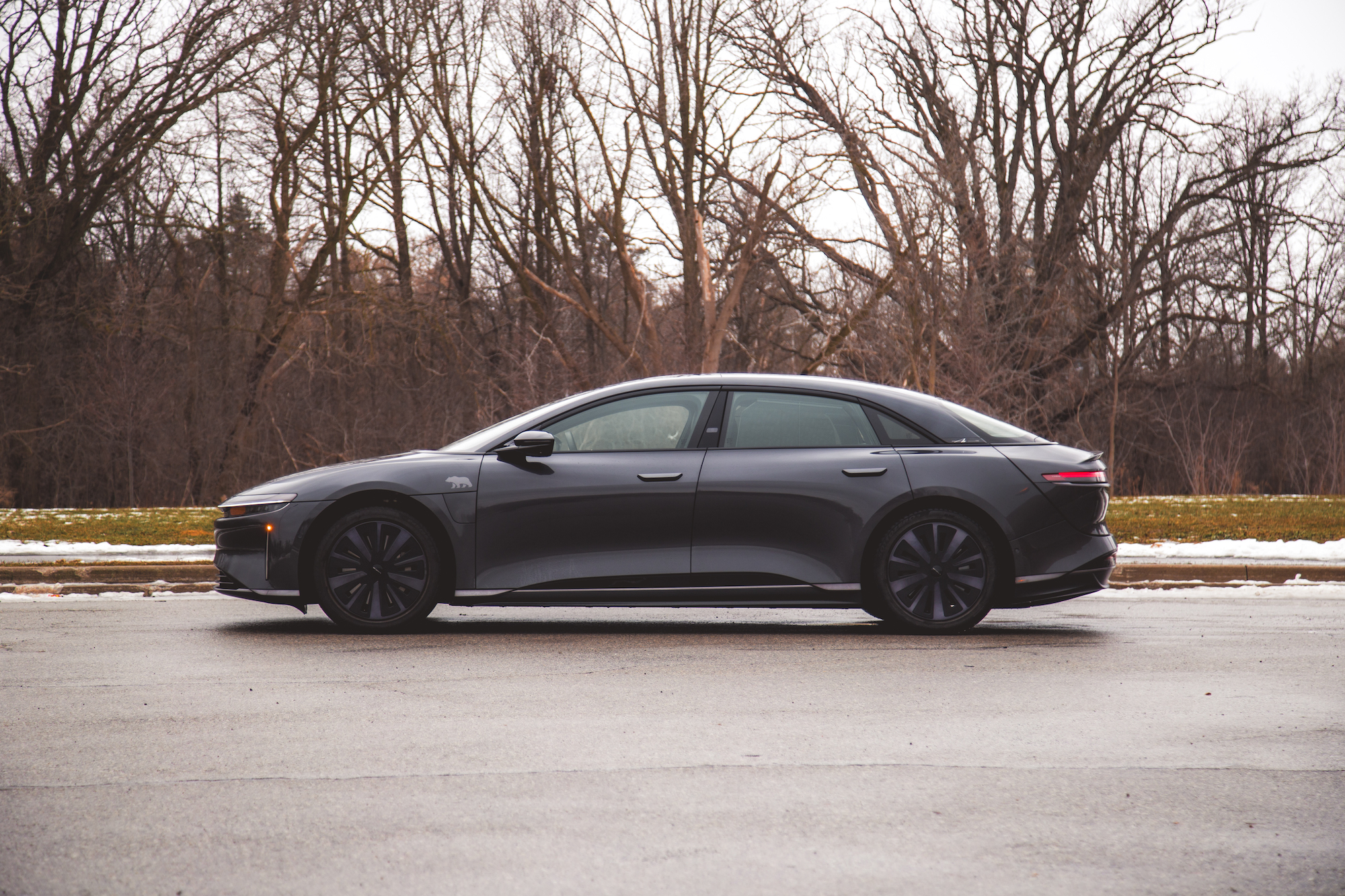
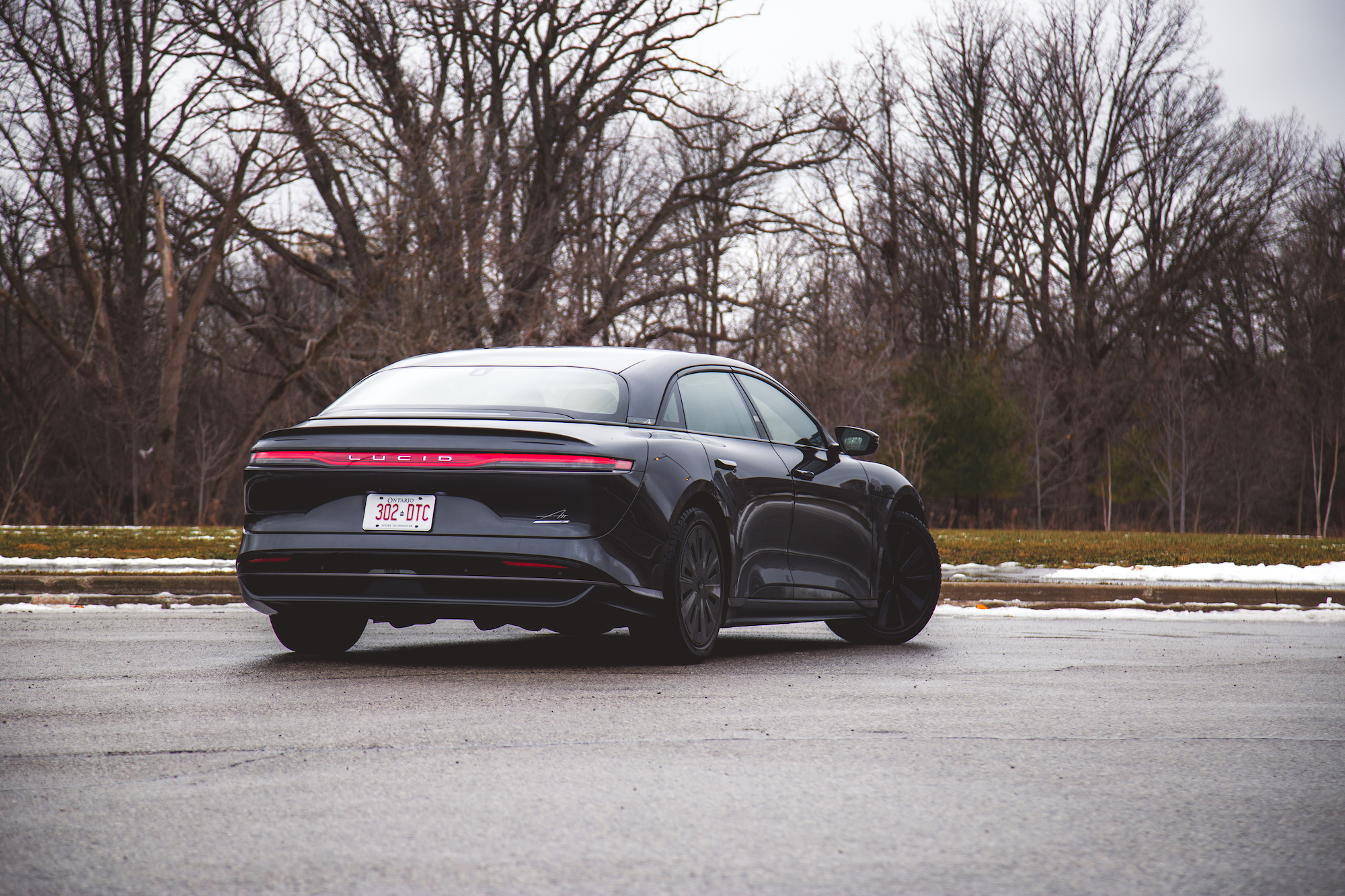
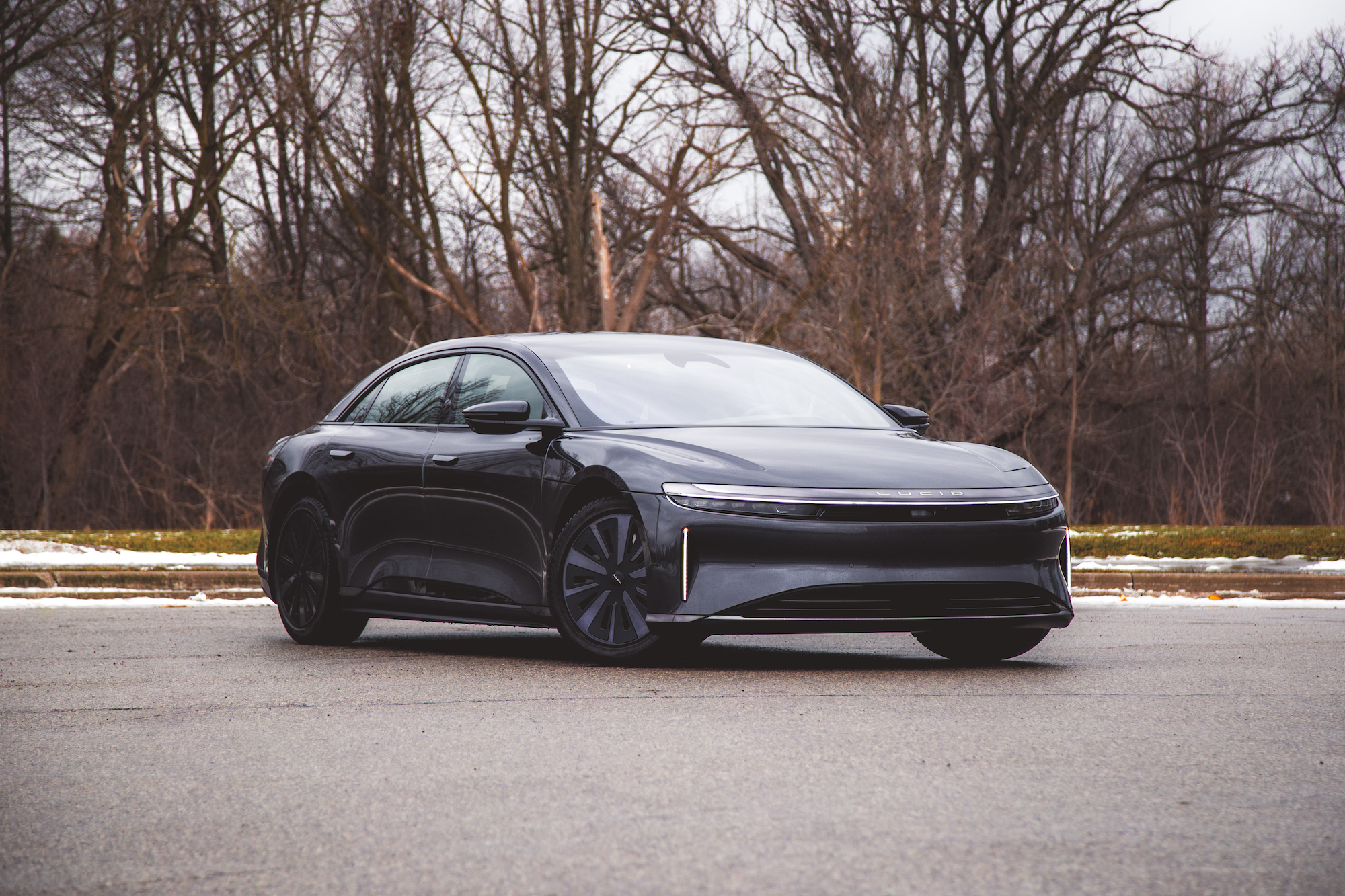
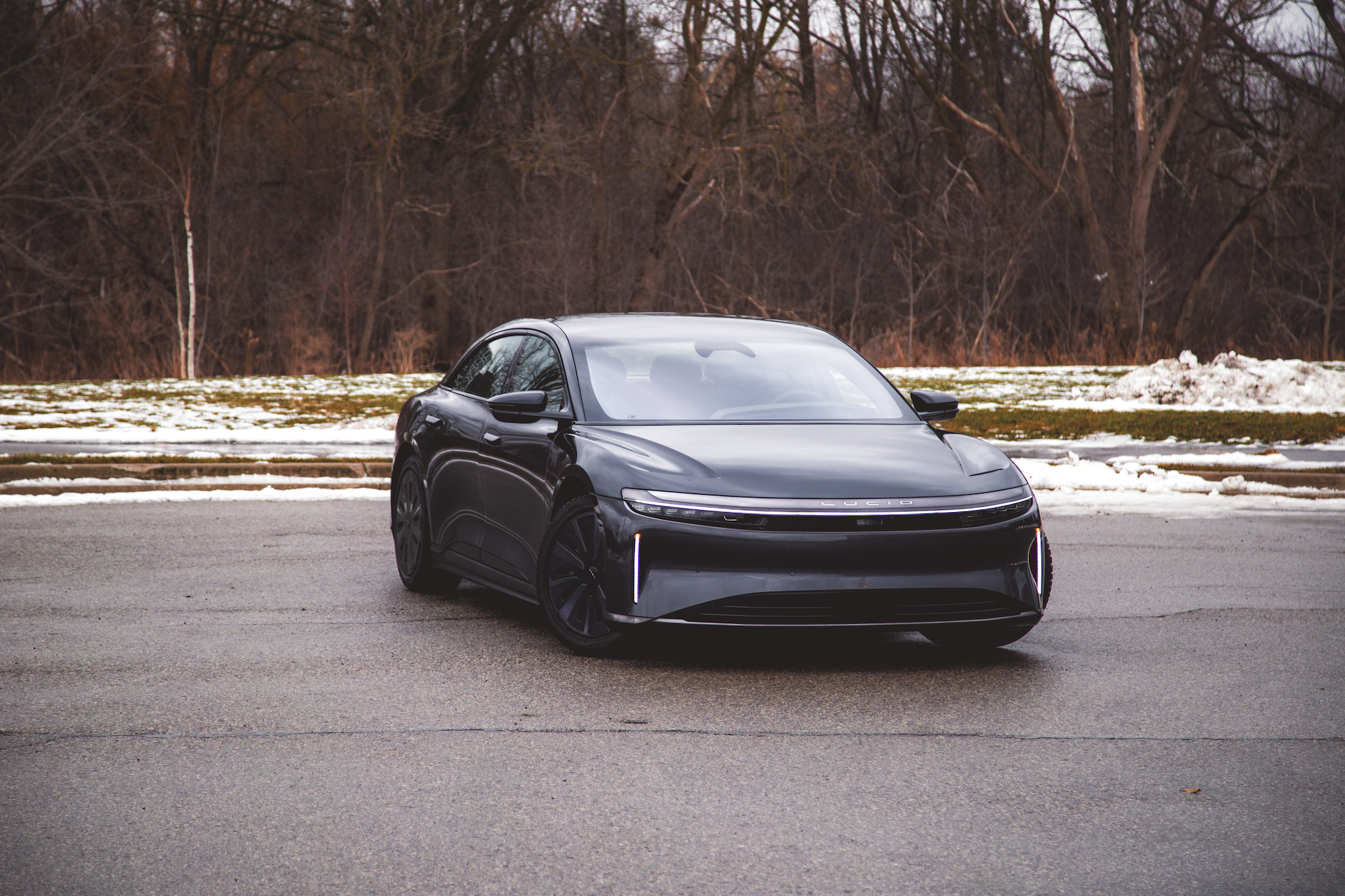
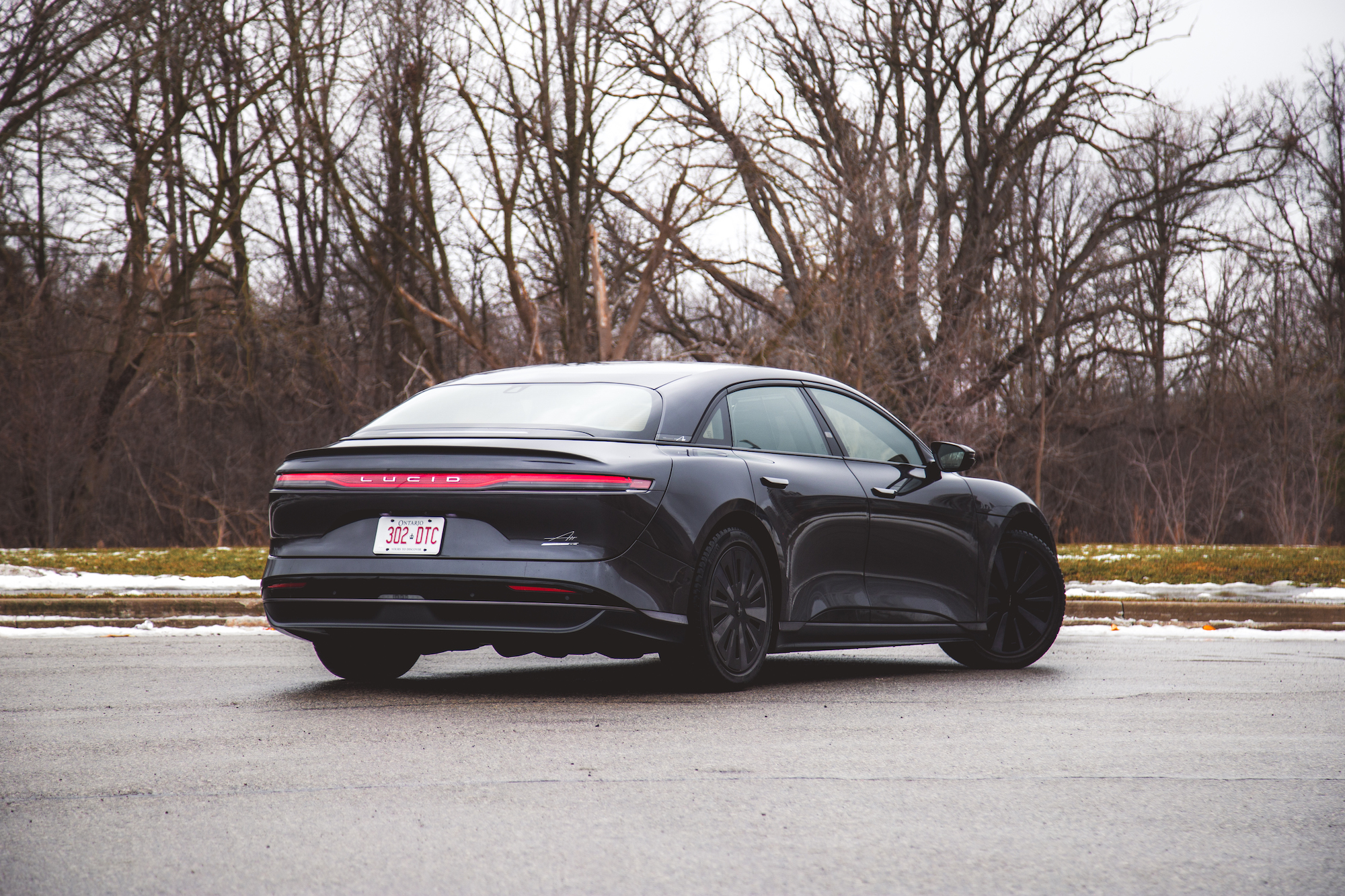
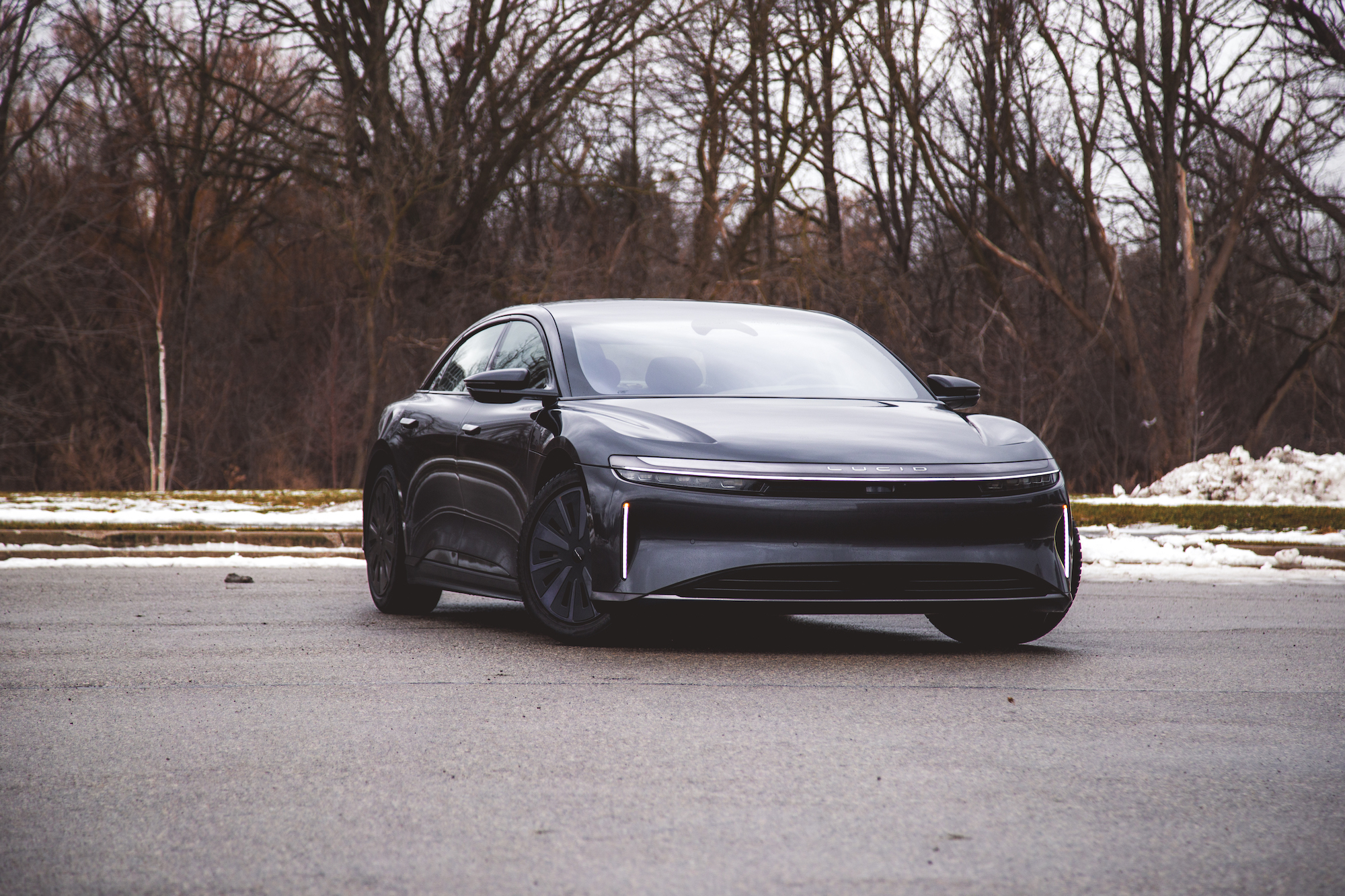
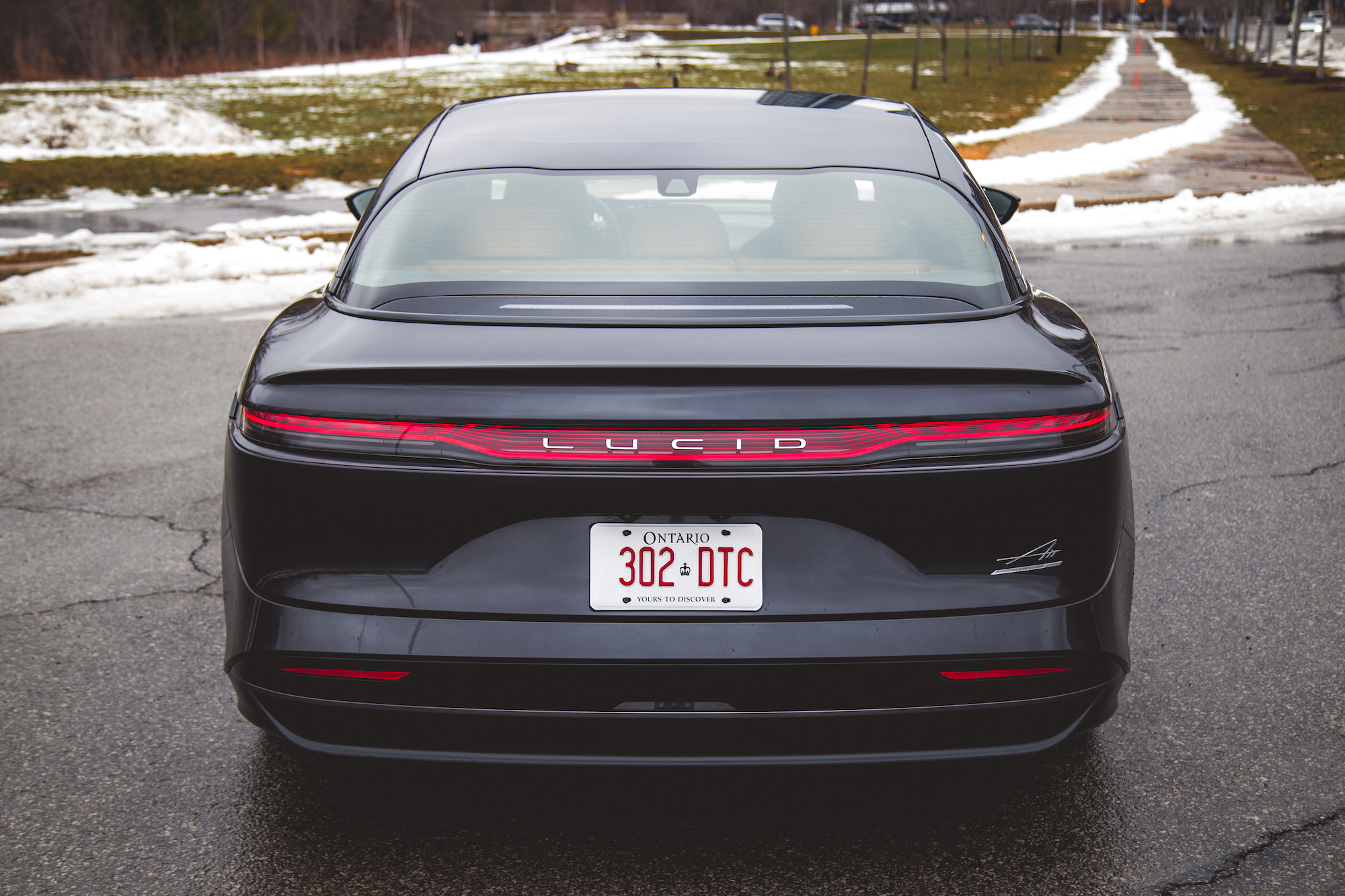
Longer than a Range Rover Sport, but shorter than a BMW 5 Series, the Air carries a lengthy footprint, but its swooping roofline means it sits lower than a Mercedes-AMG EQS and about the same height as a Porsche Taycan. Draped in Quantum Grey paint, it has a sculpted, sinister appearance and more curb appeal than the Model S’s overly familiar shape.
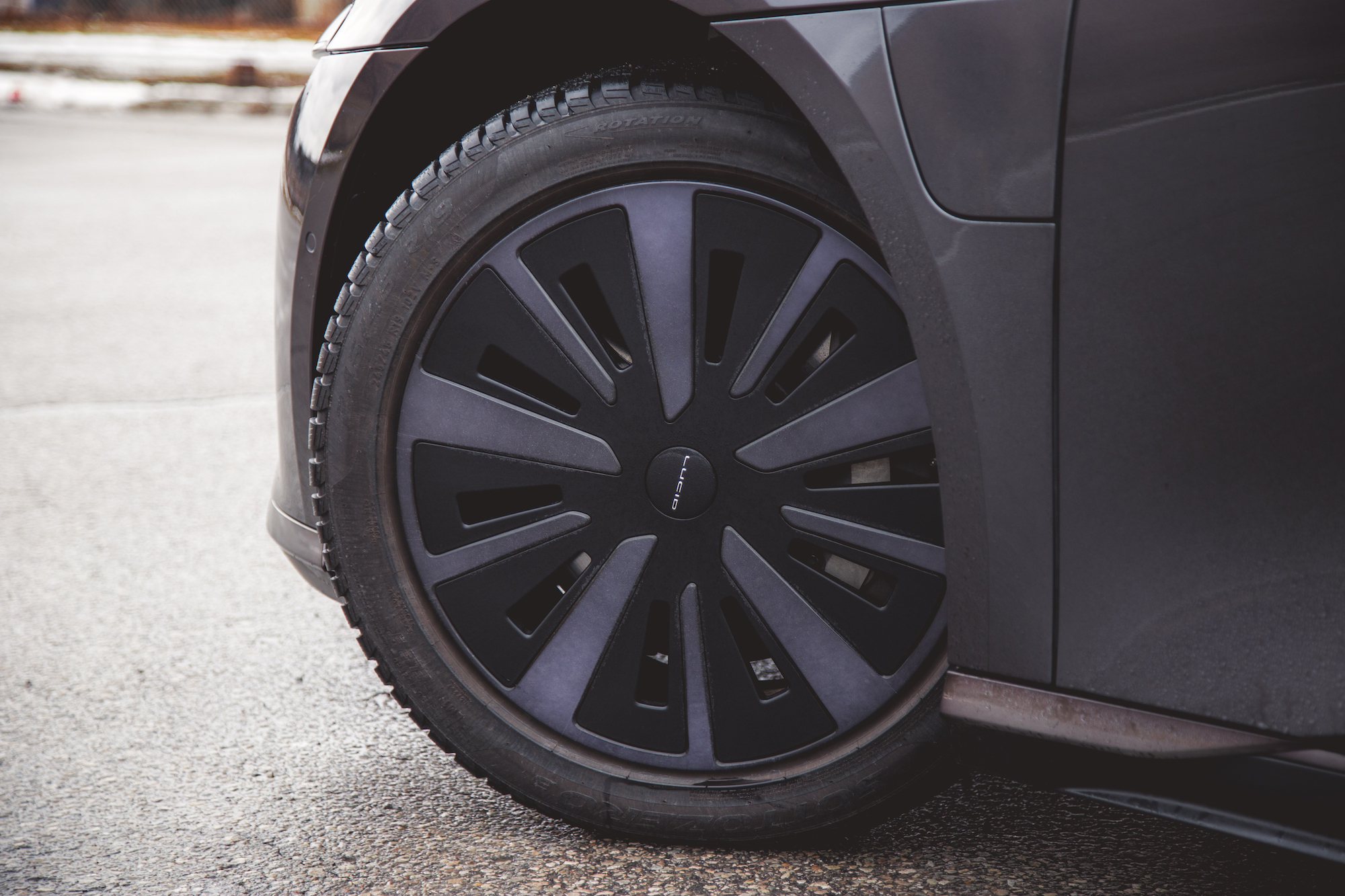
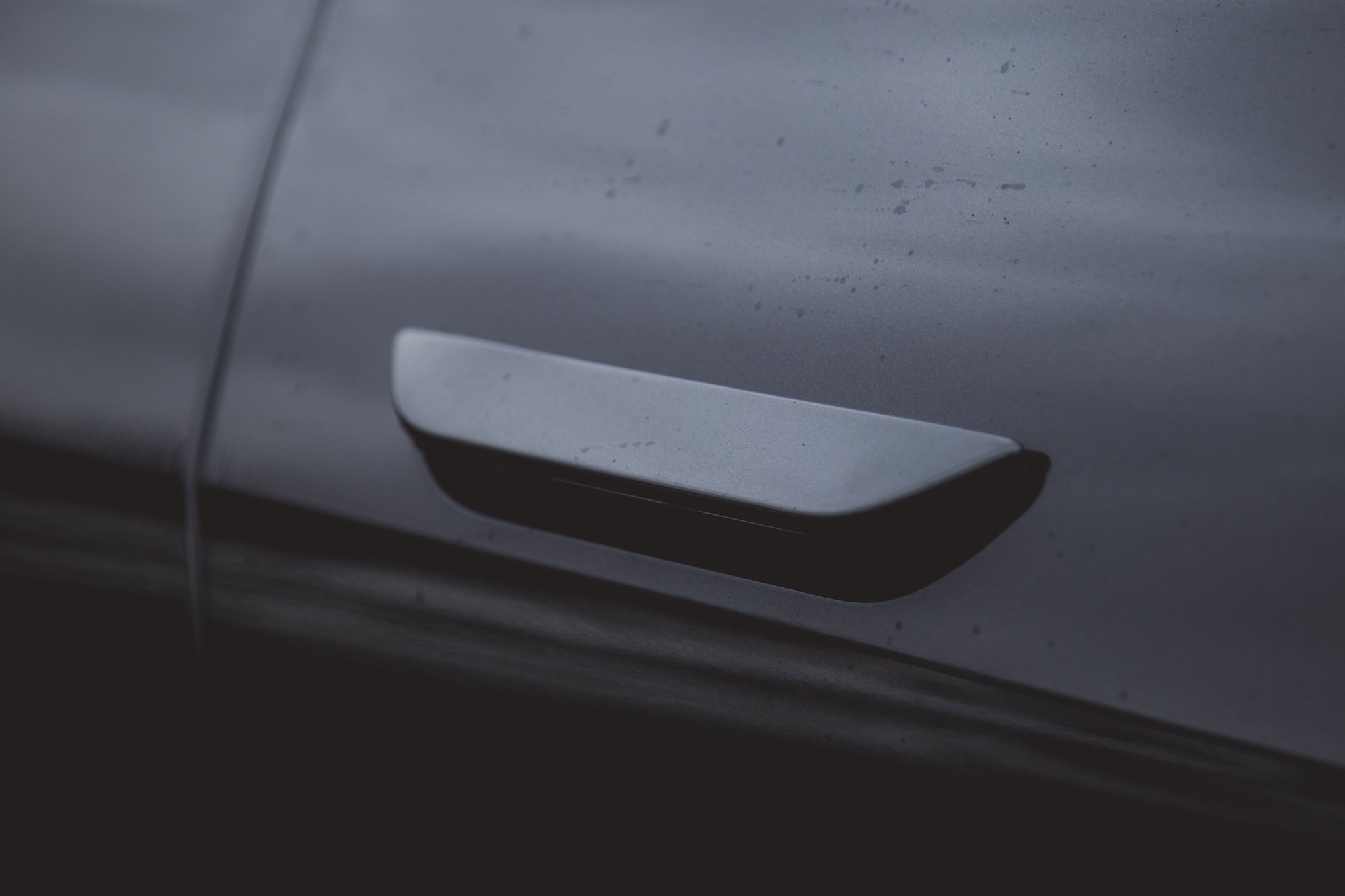
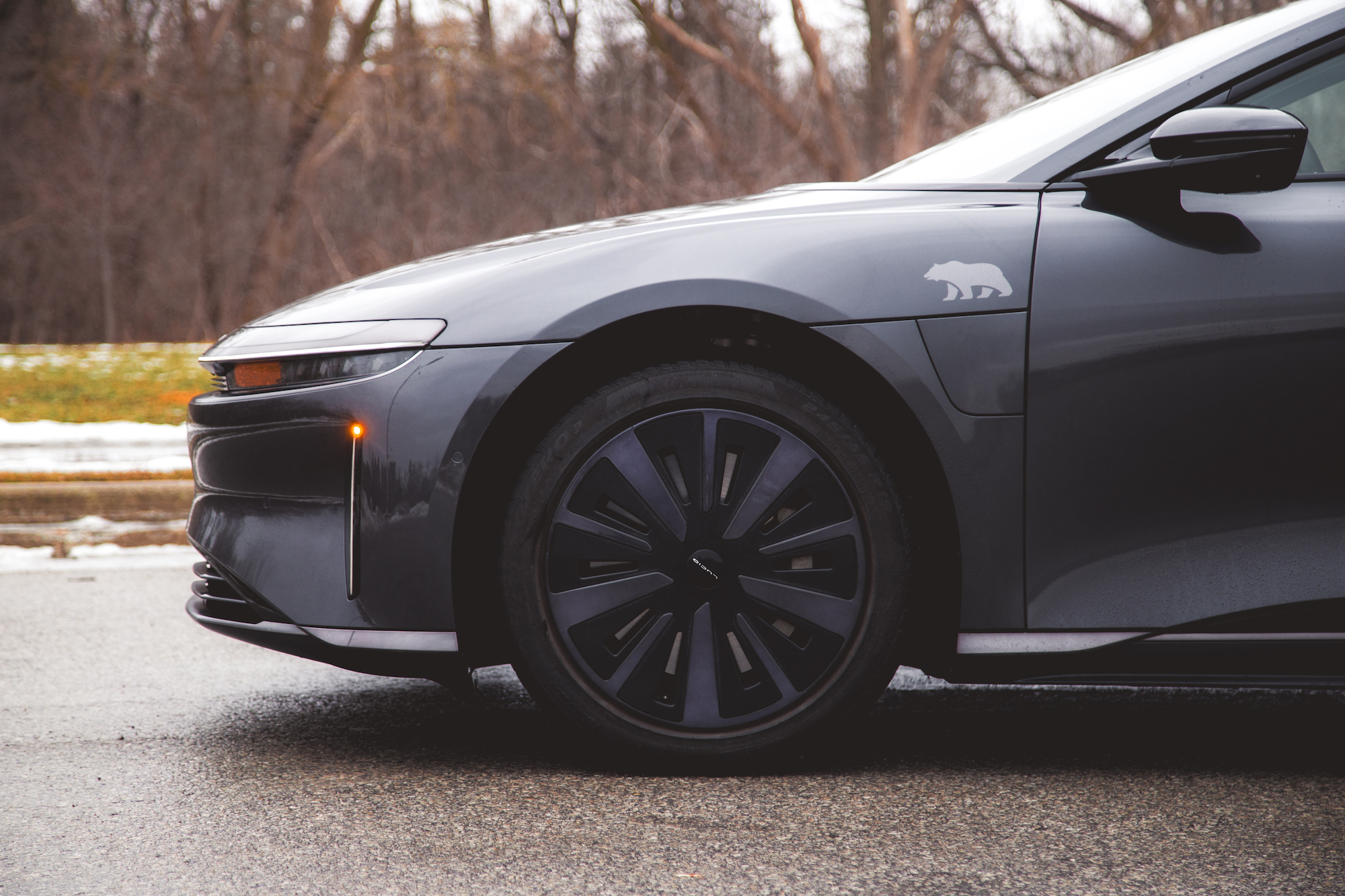
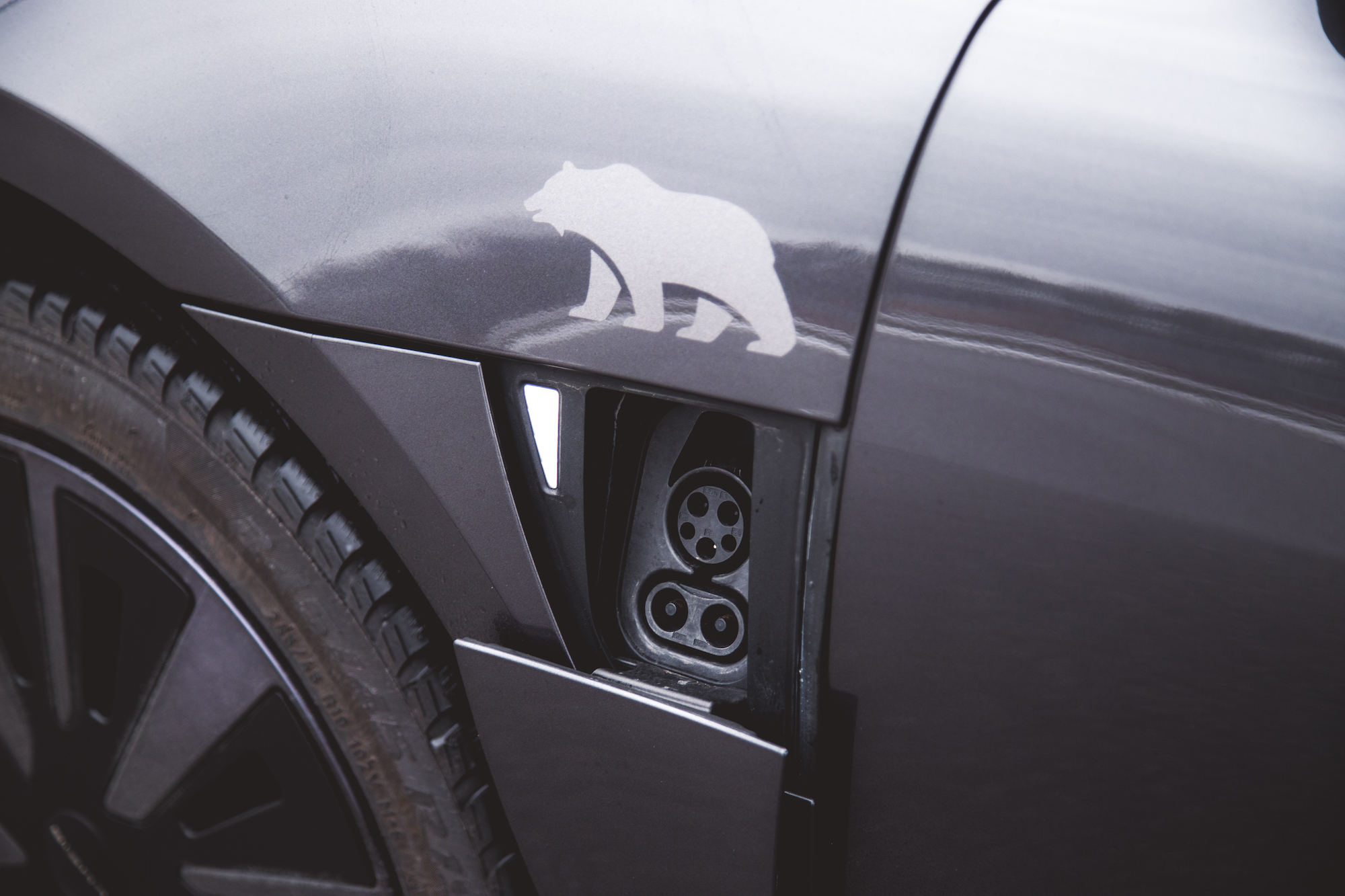
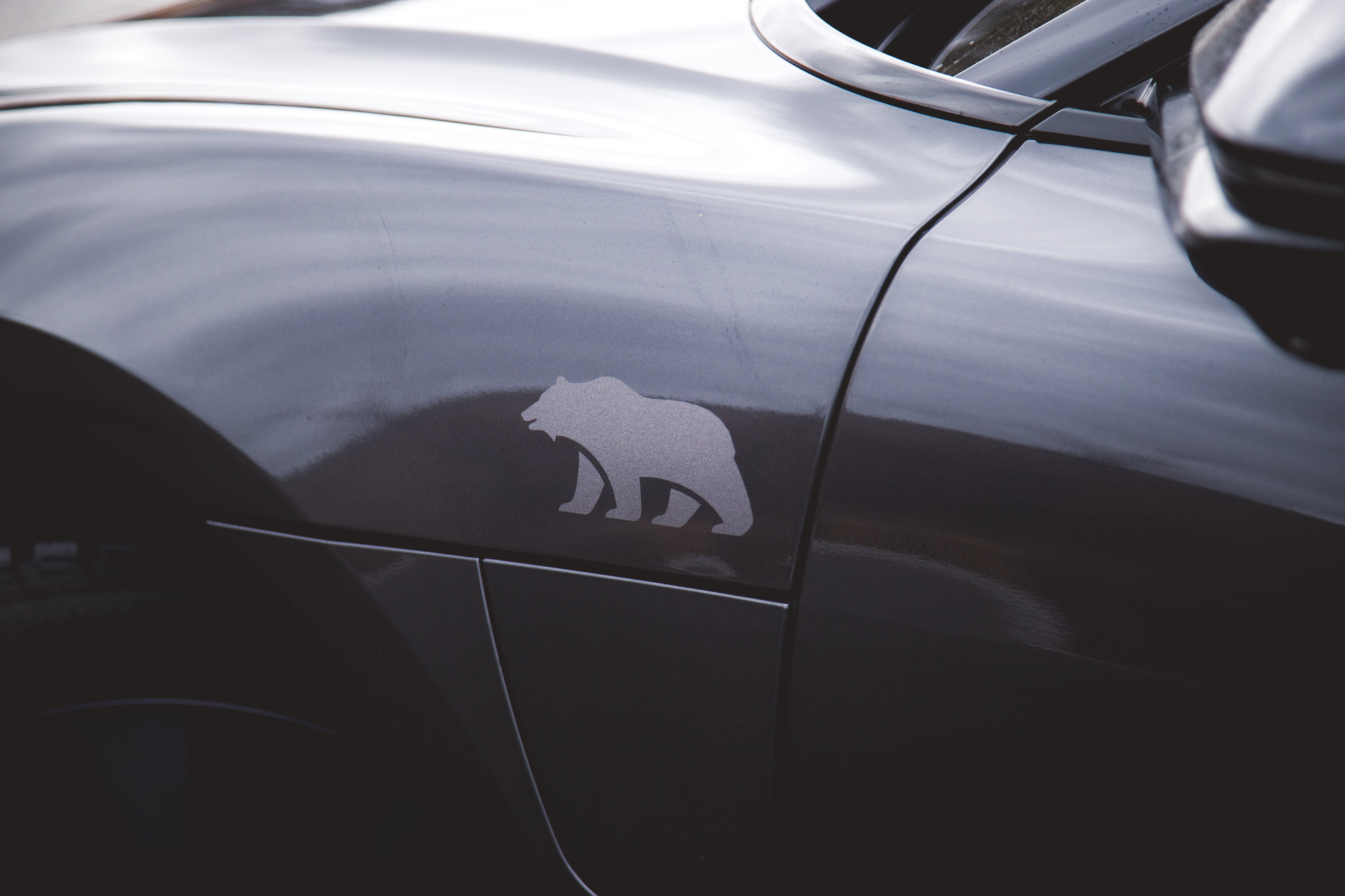
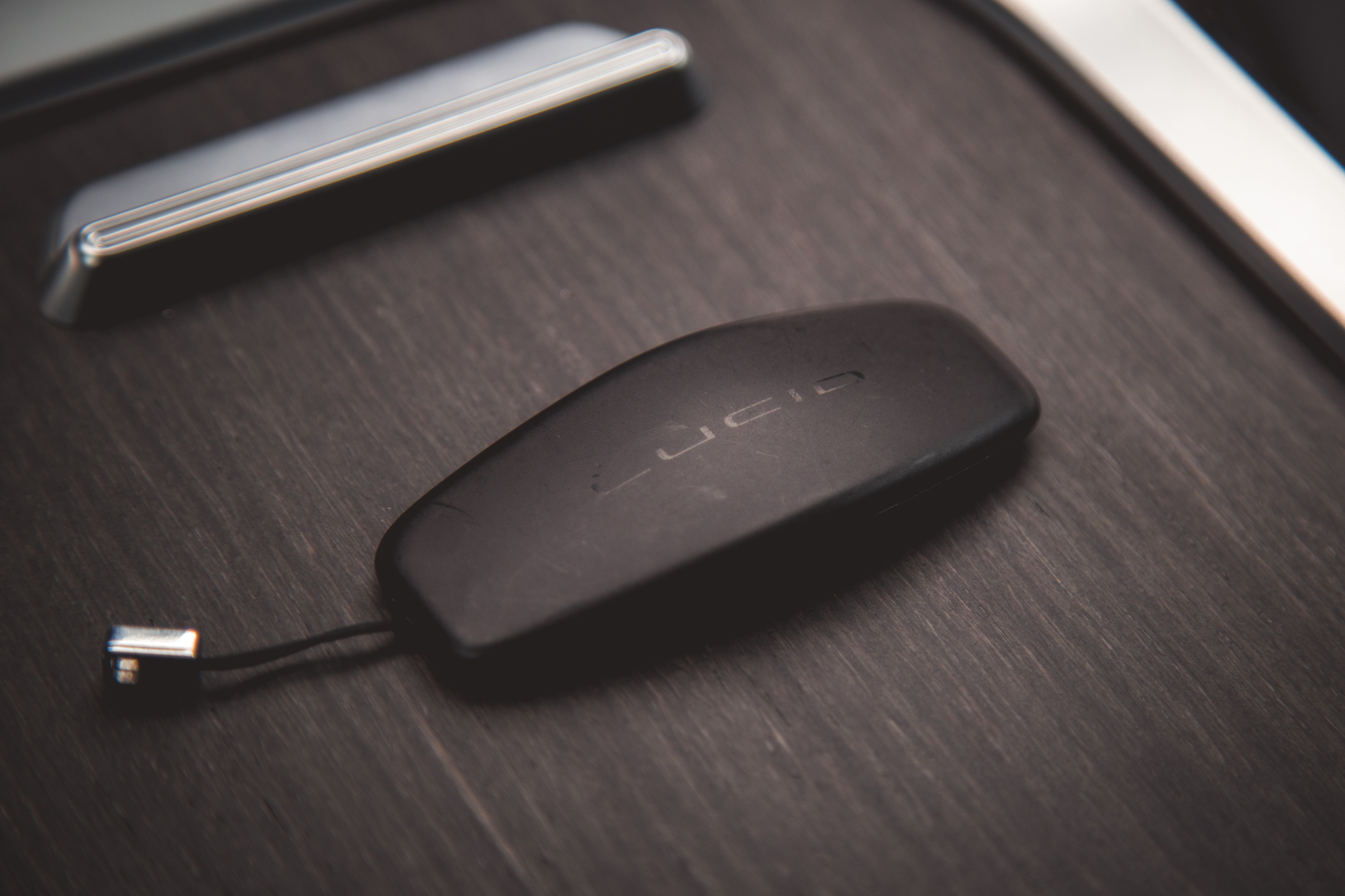
Fitting on custom multi-spoke 22-inch wheels would give it even more presence, though fitment may be an issue, as the largest that Lucid offers are 21s, and range will be impacted. Ours are wearing smaller 19s on Pirelli Sottozero 3 rubber, with the Lucid bear logo above the arches a nod to its Californian birthplace. But the retracting door handles are one thing they shouldn’t have copied off Tesla. Though sleek and flush, they don’t match the ease and functionality of a proper handle, and they’re not always responsive to keyfob proximity either, at times retracting into their sockets or not responding at all. At least the doors are incredibly light, but how much do these handles realistically benefit the Air’s overall drag coefficient?
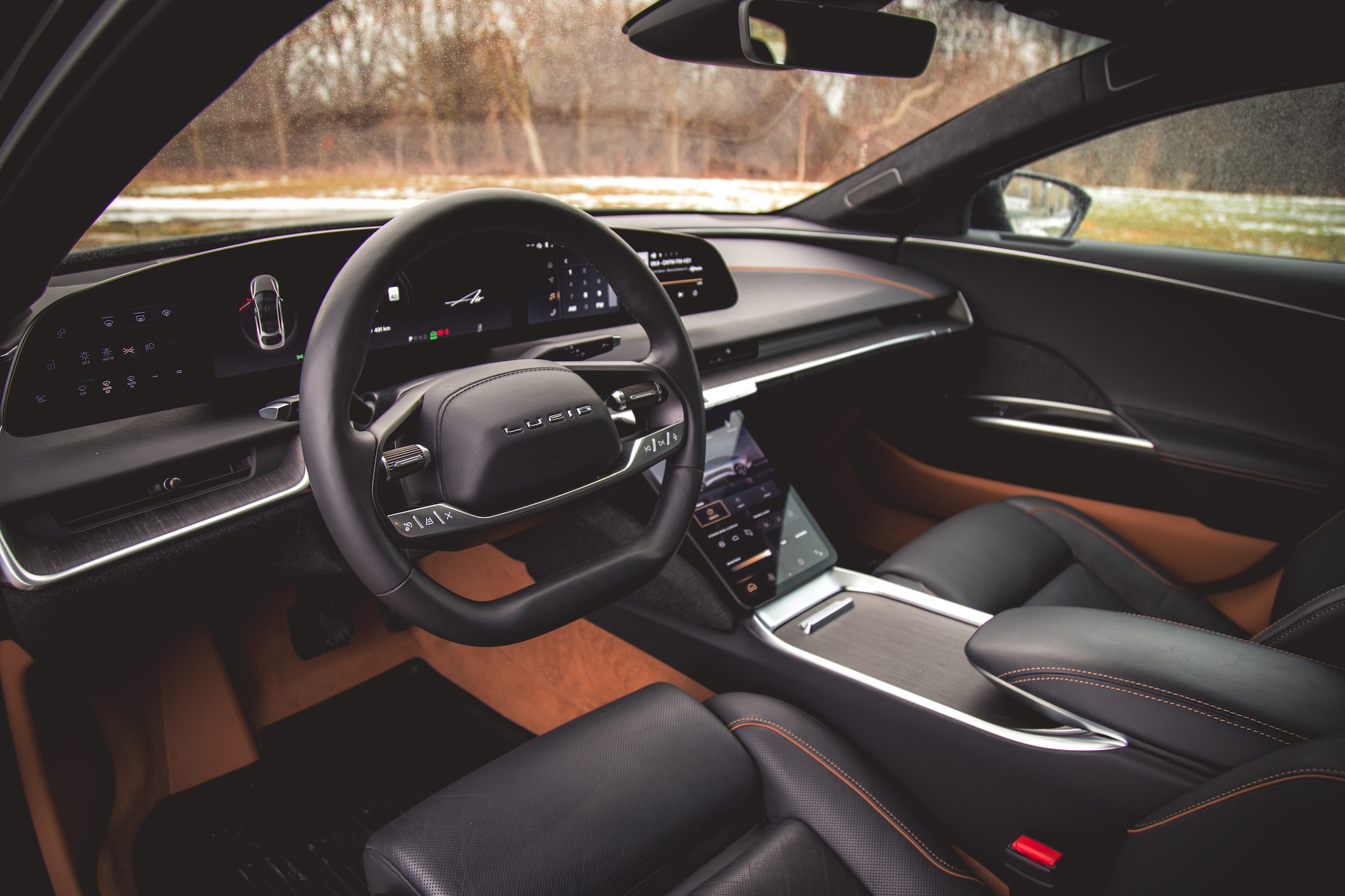
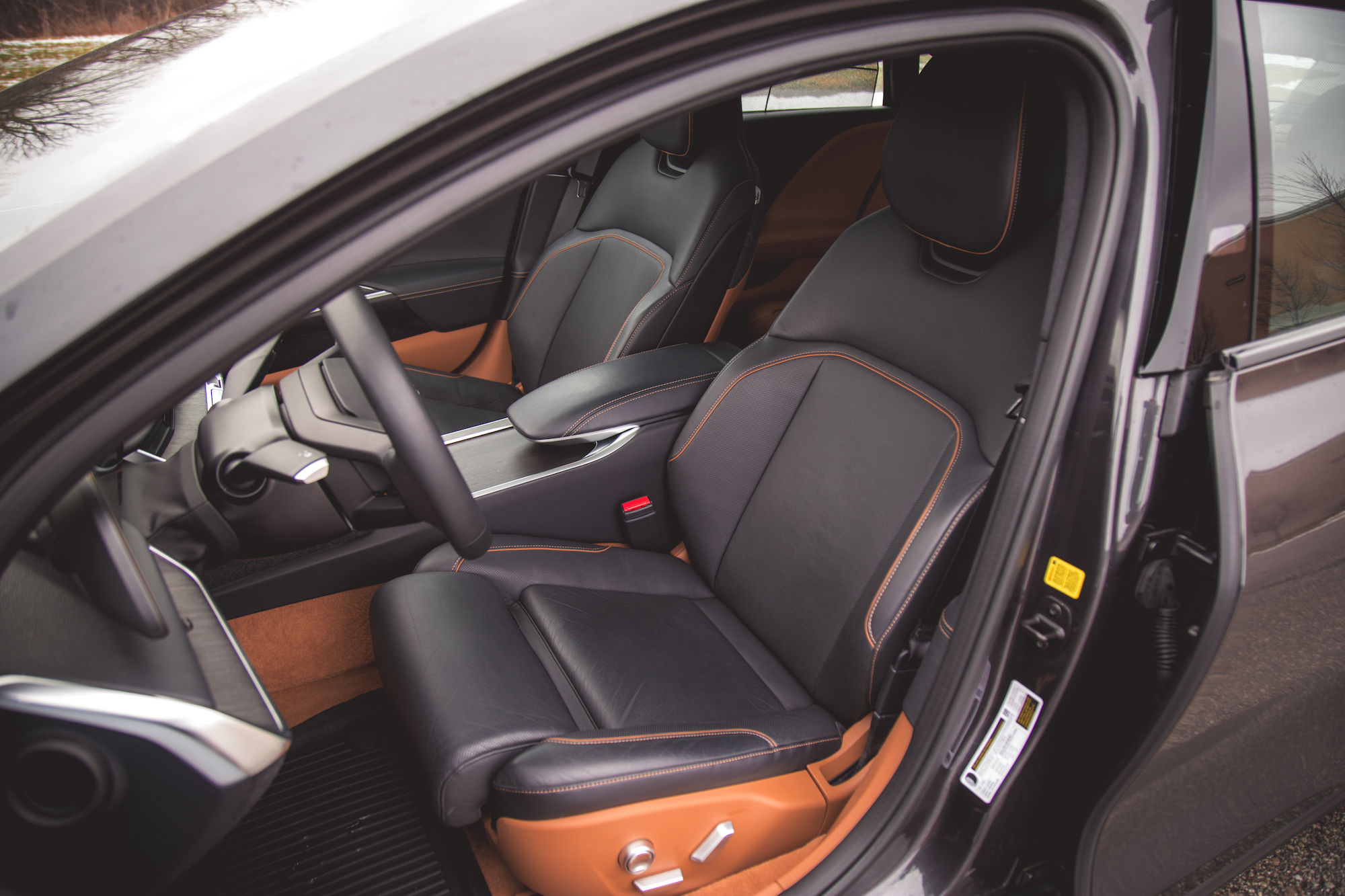
The interior is an impressive feat of design and engineering, blending the best qualities of a Cadillac and a Tesla in mid-modern century style, prioritizing clean lines, organic shapes, and functionality. While the Air lacks the panel tightness and fitness of the Taycan, and the simplicity and minimalism of a Volvo, it distinguishes itself as its own with unique textures and materials. No one will hop inside and think ‘Oh boy, this looks like a Tesla rip-off’.
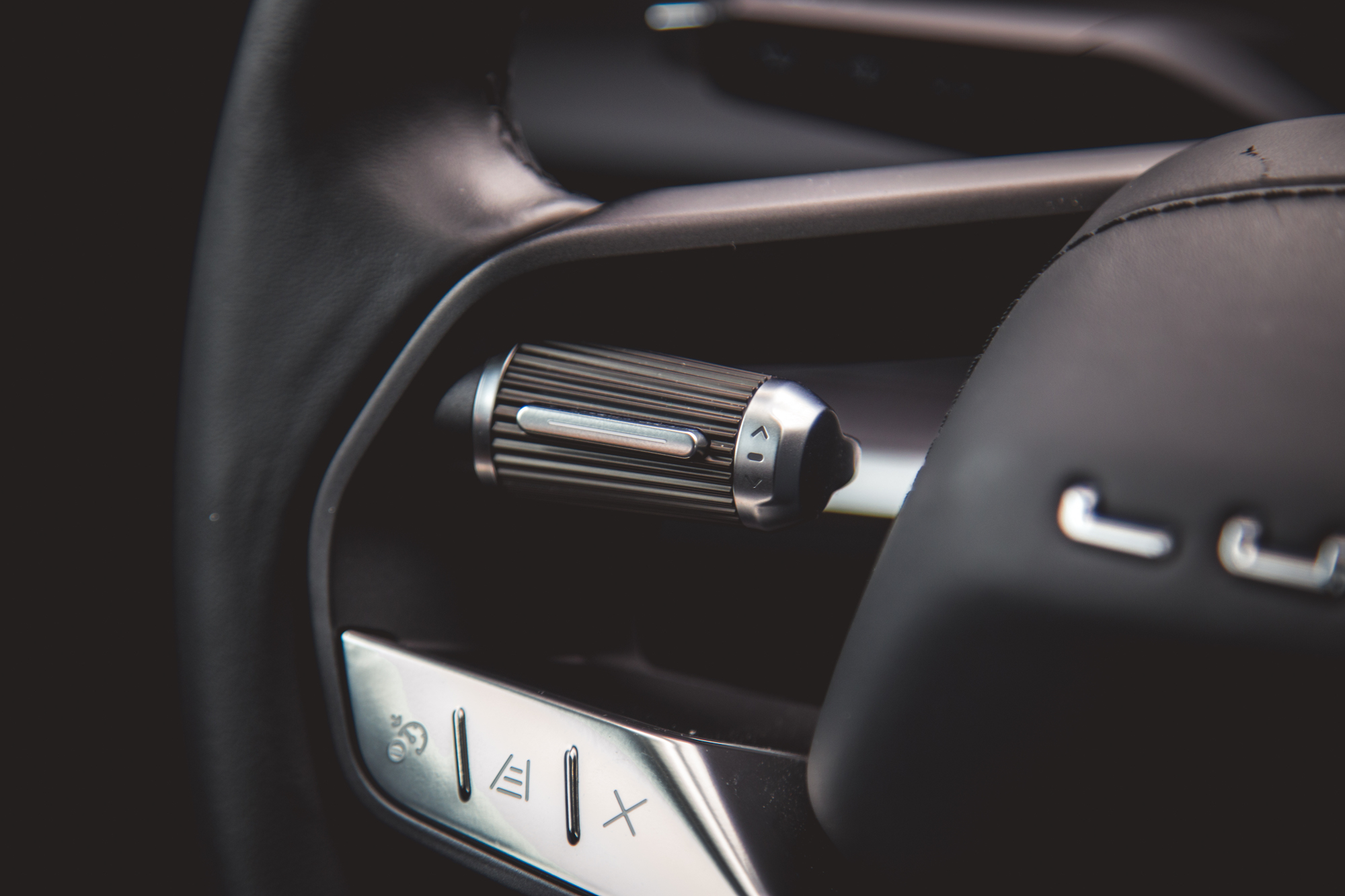
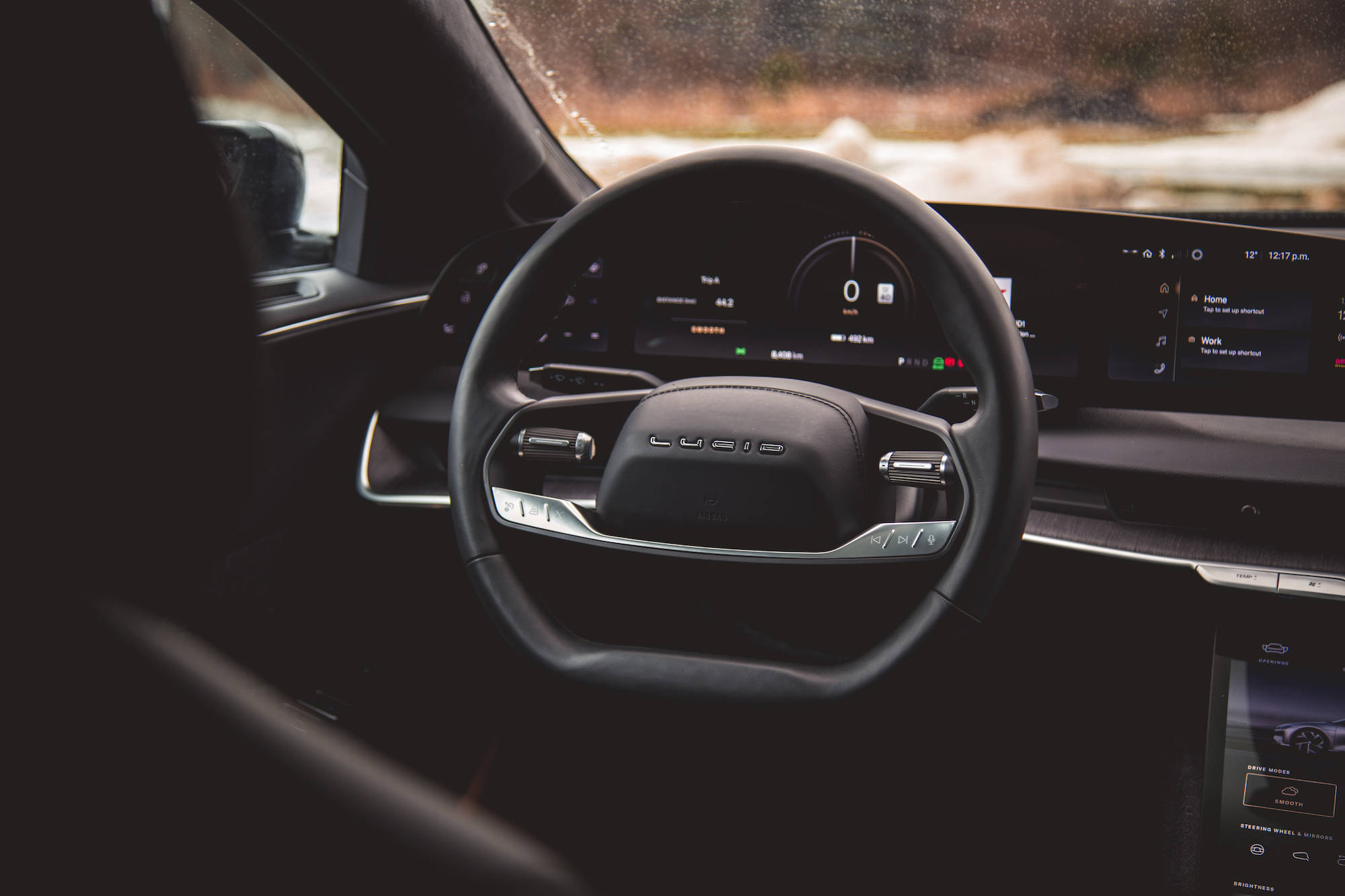
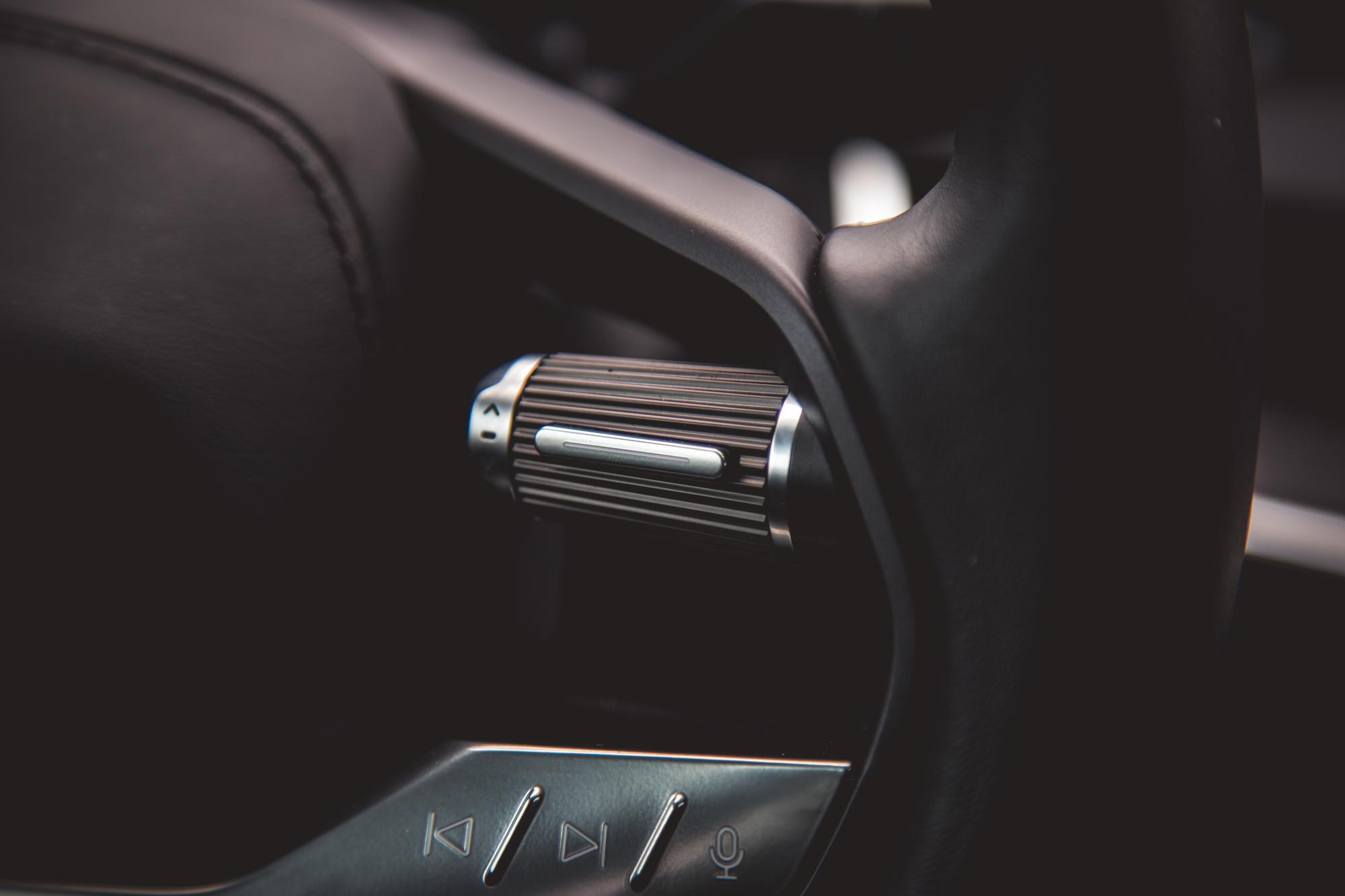
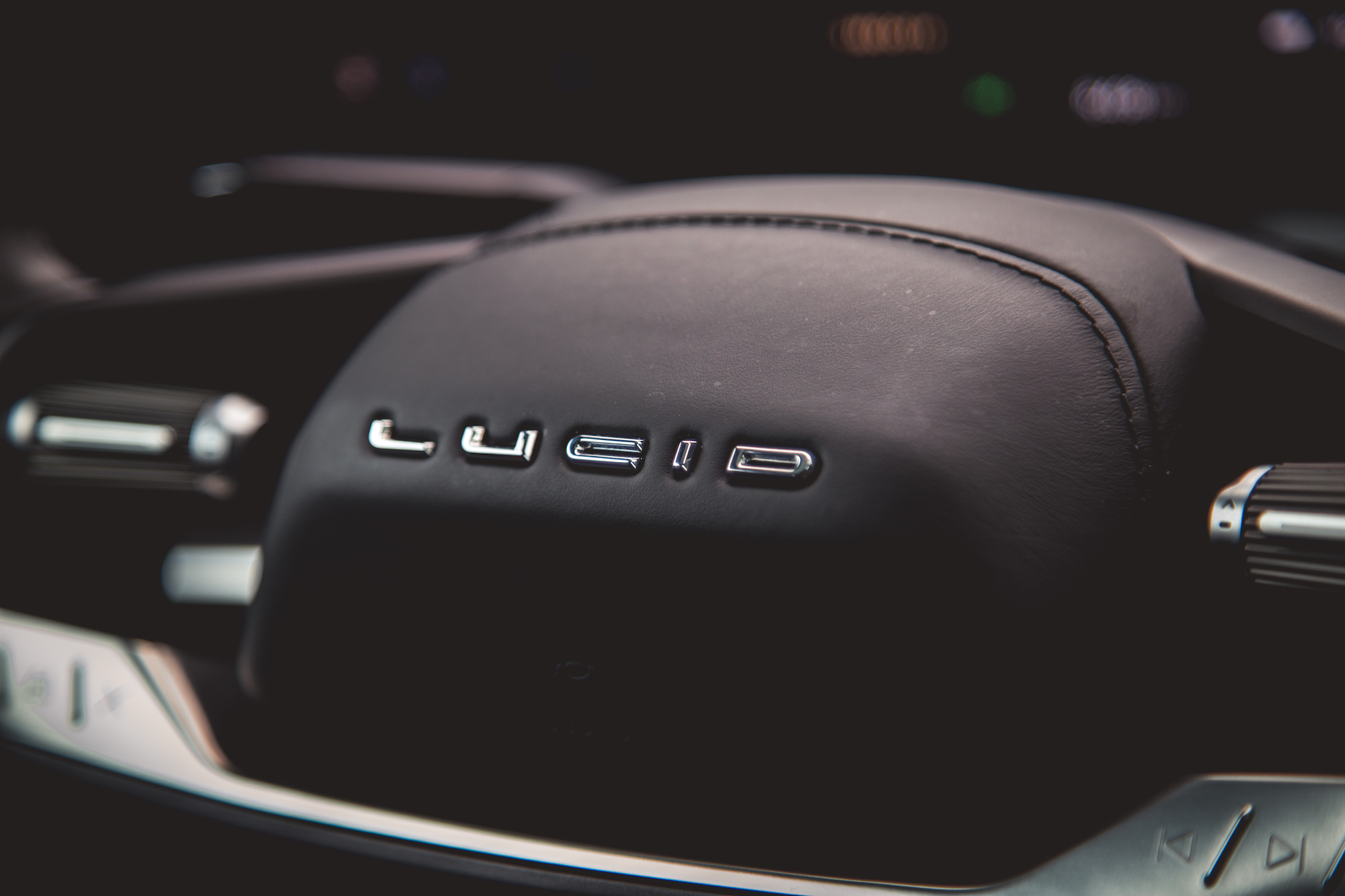
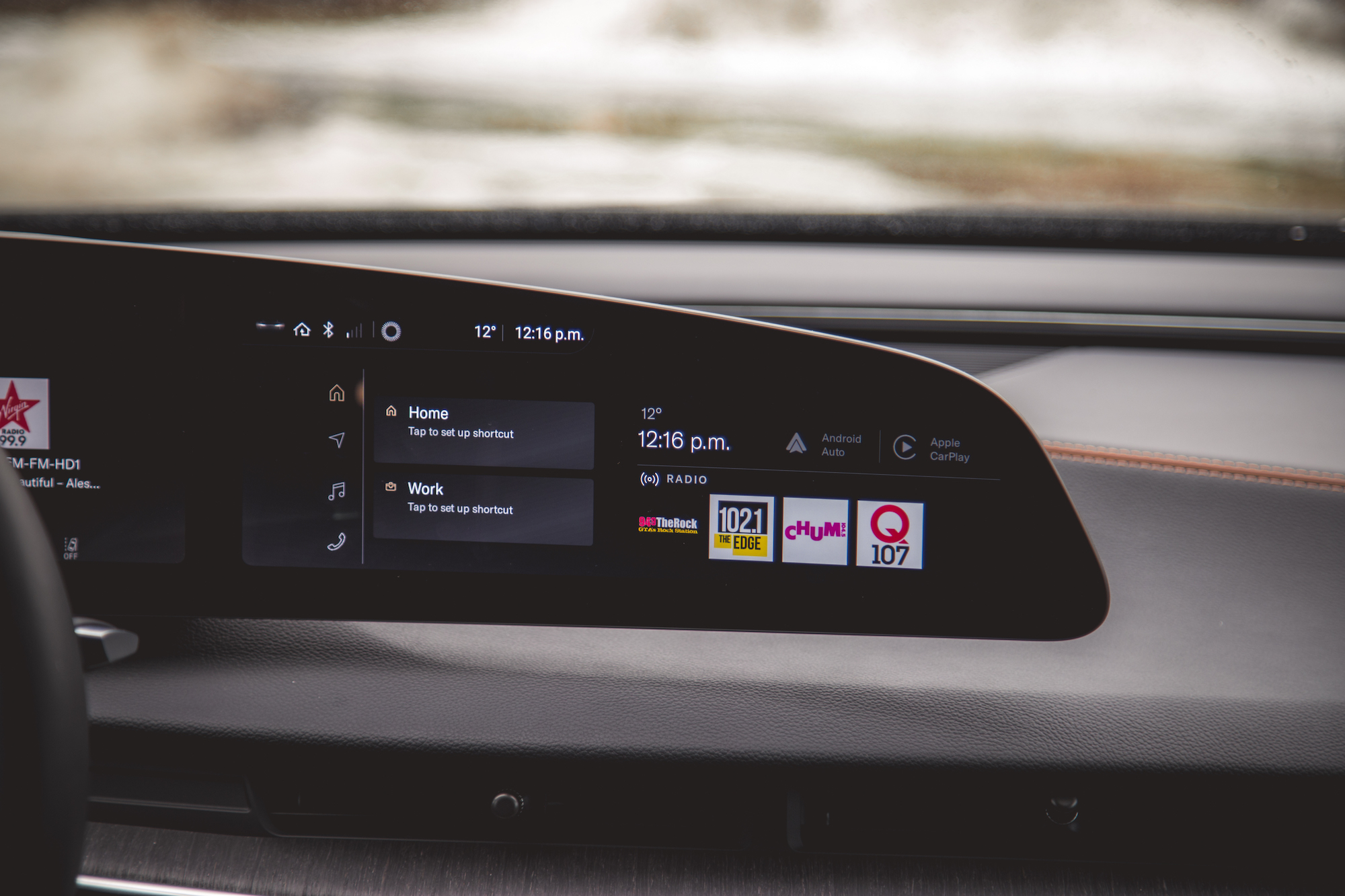
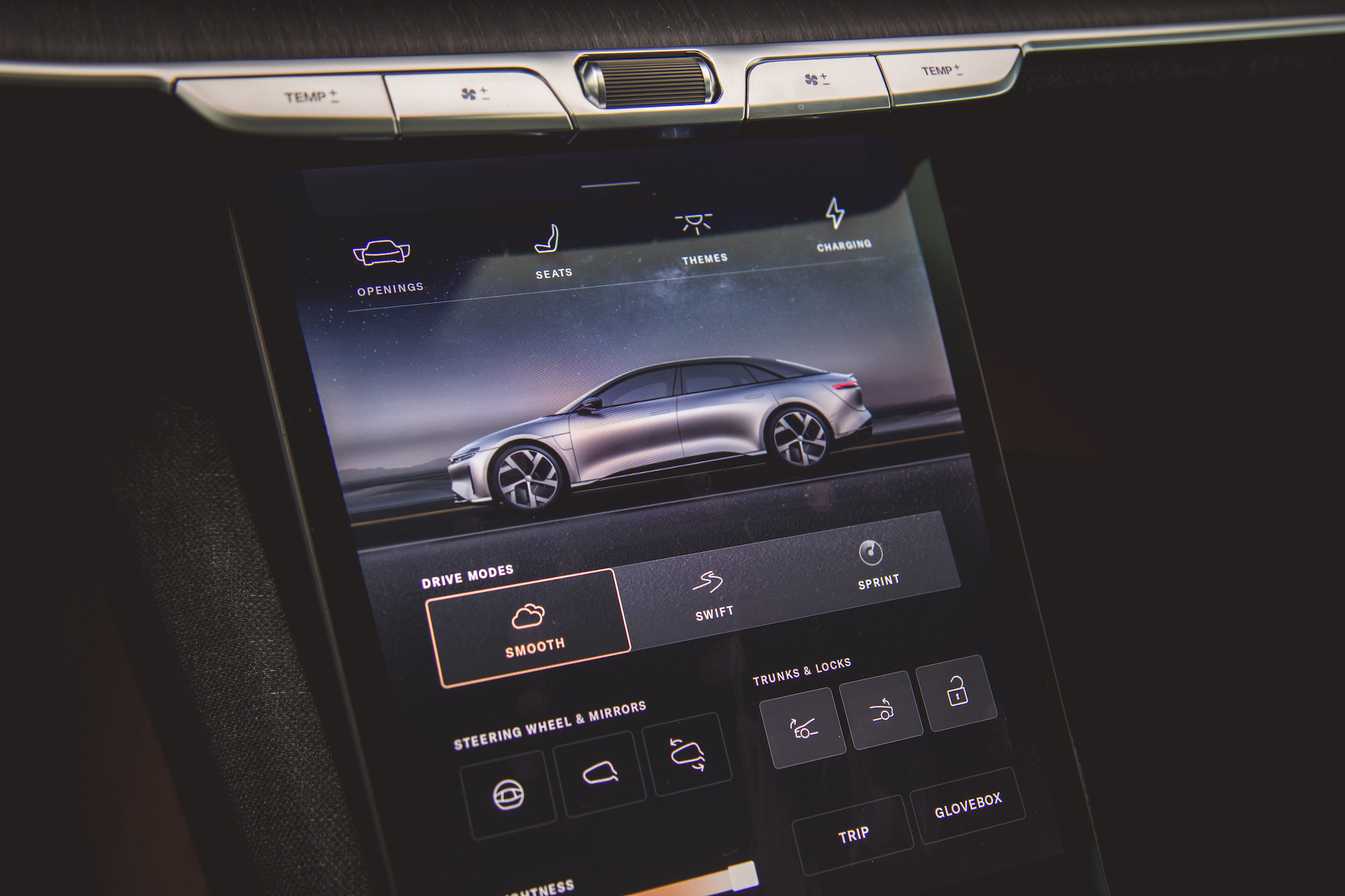
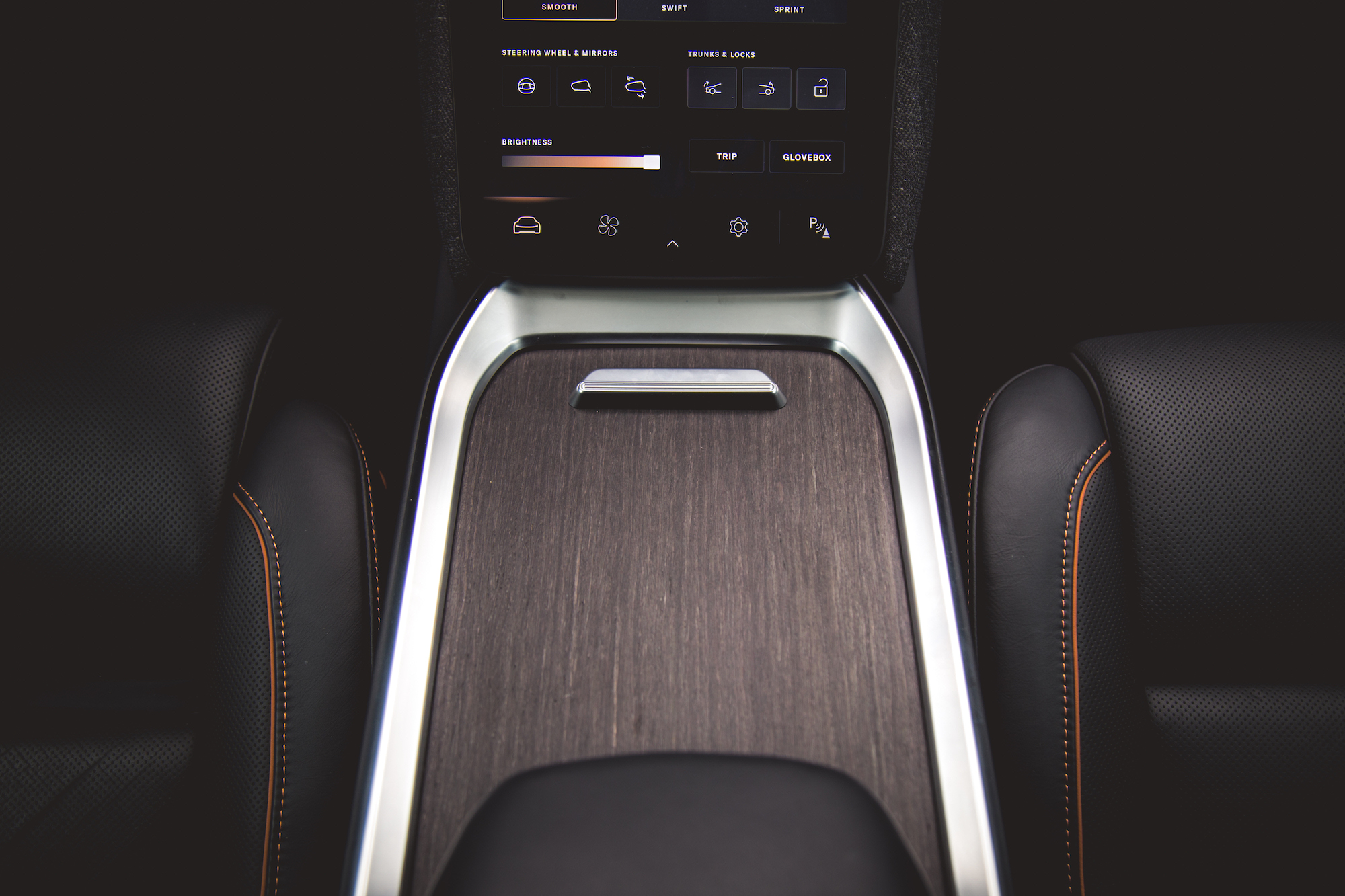
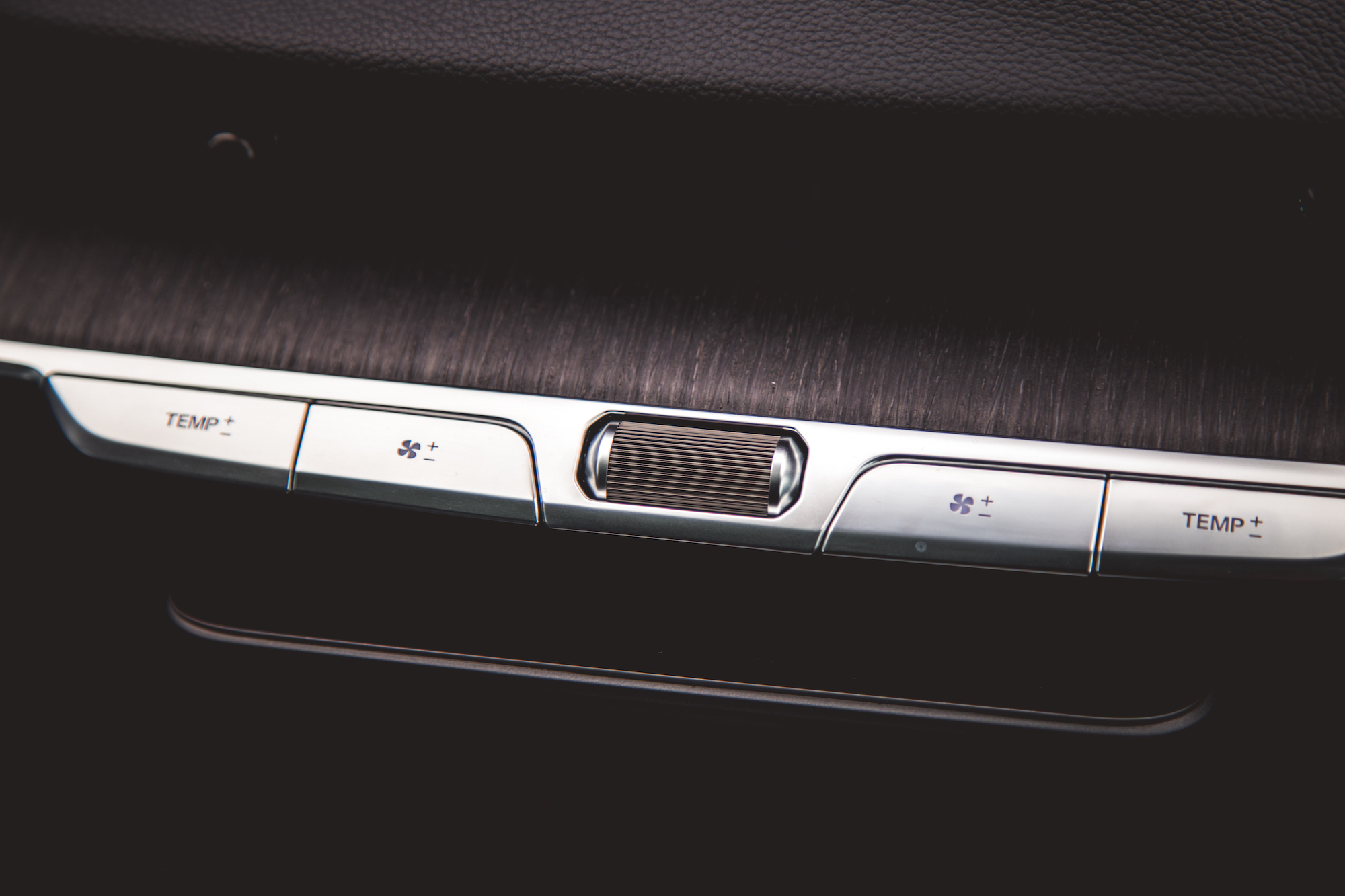
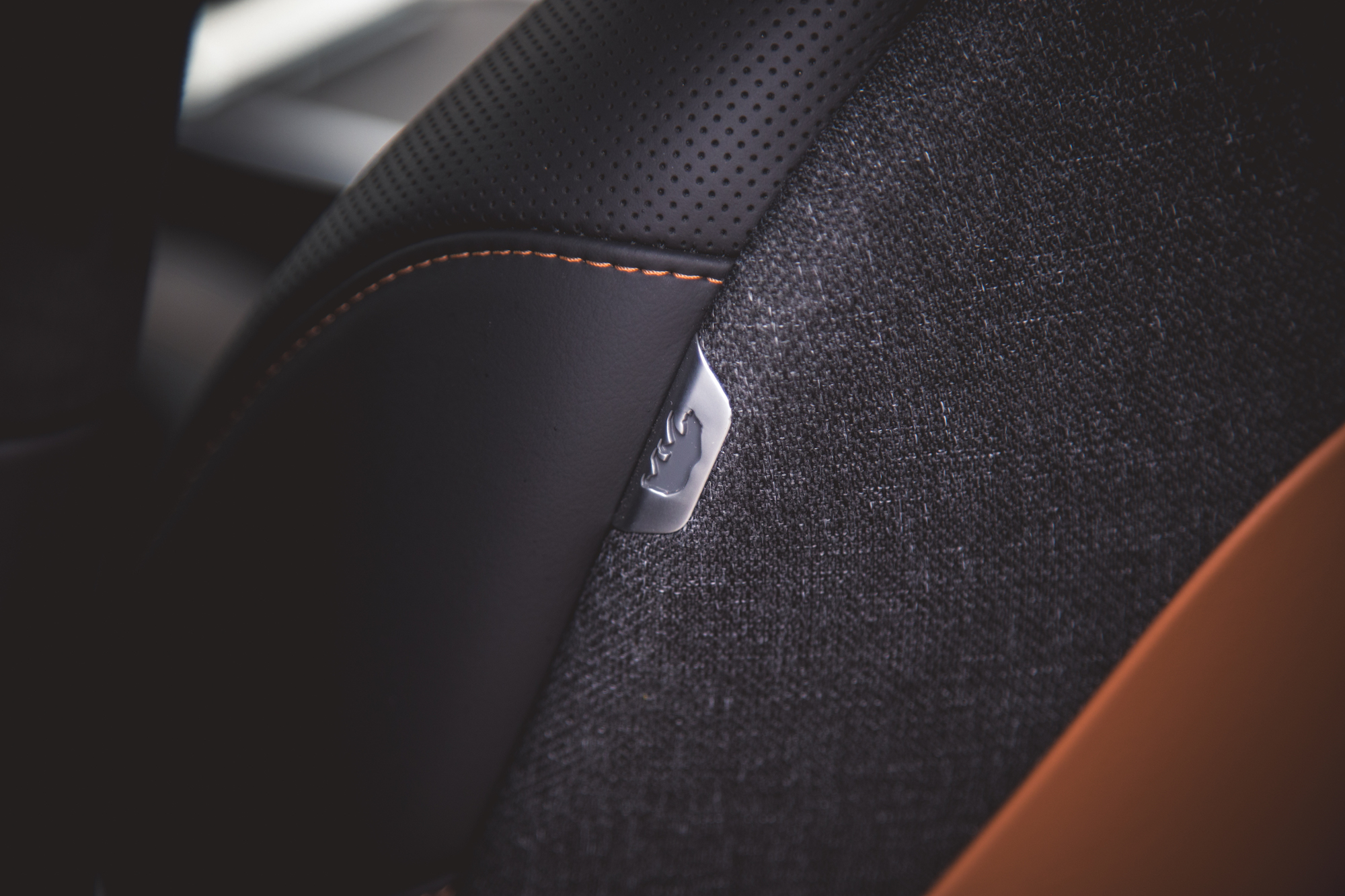
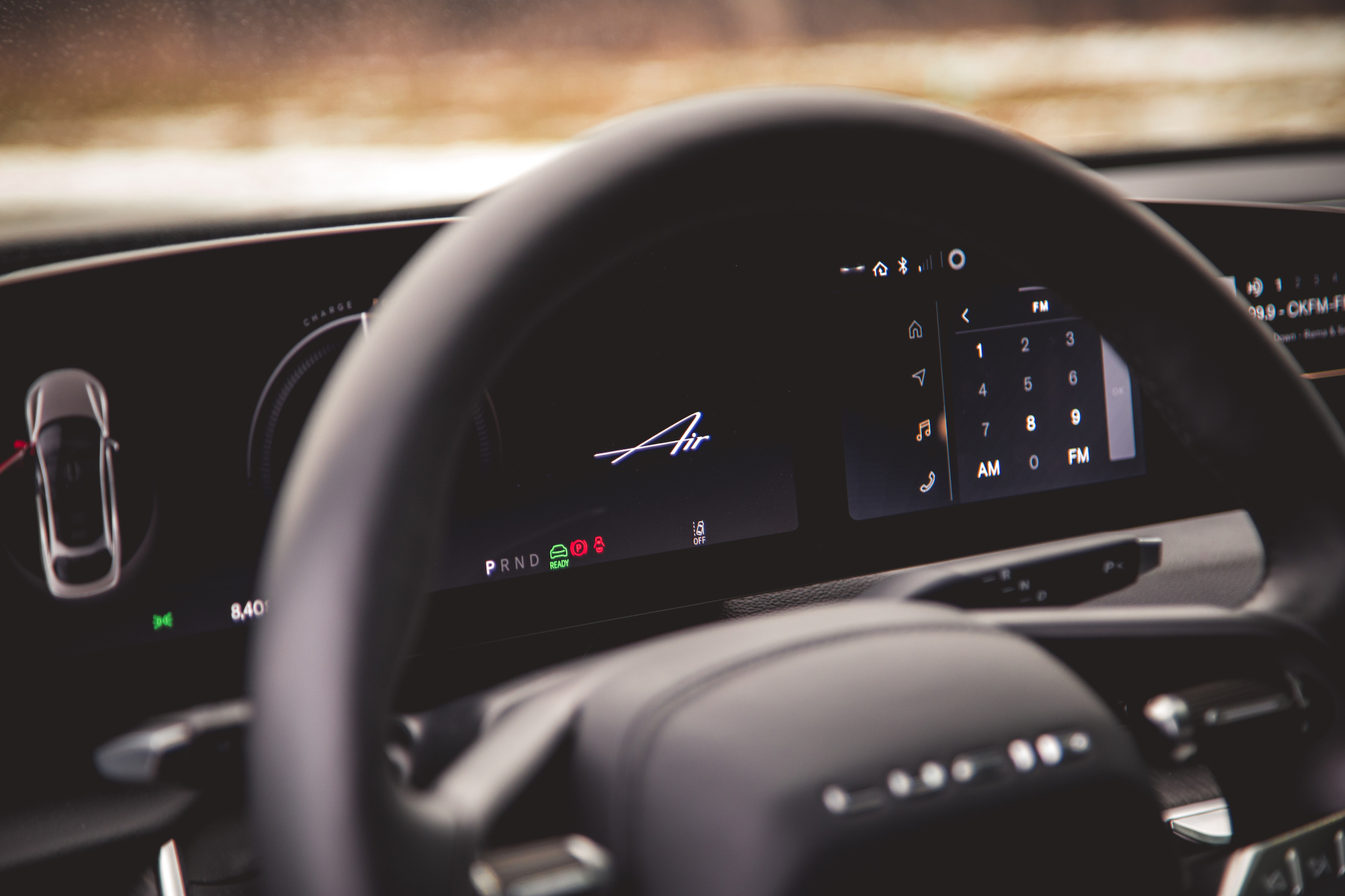
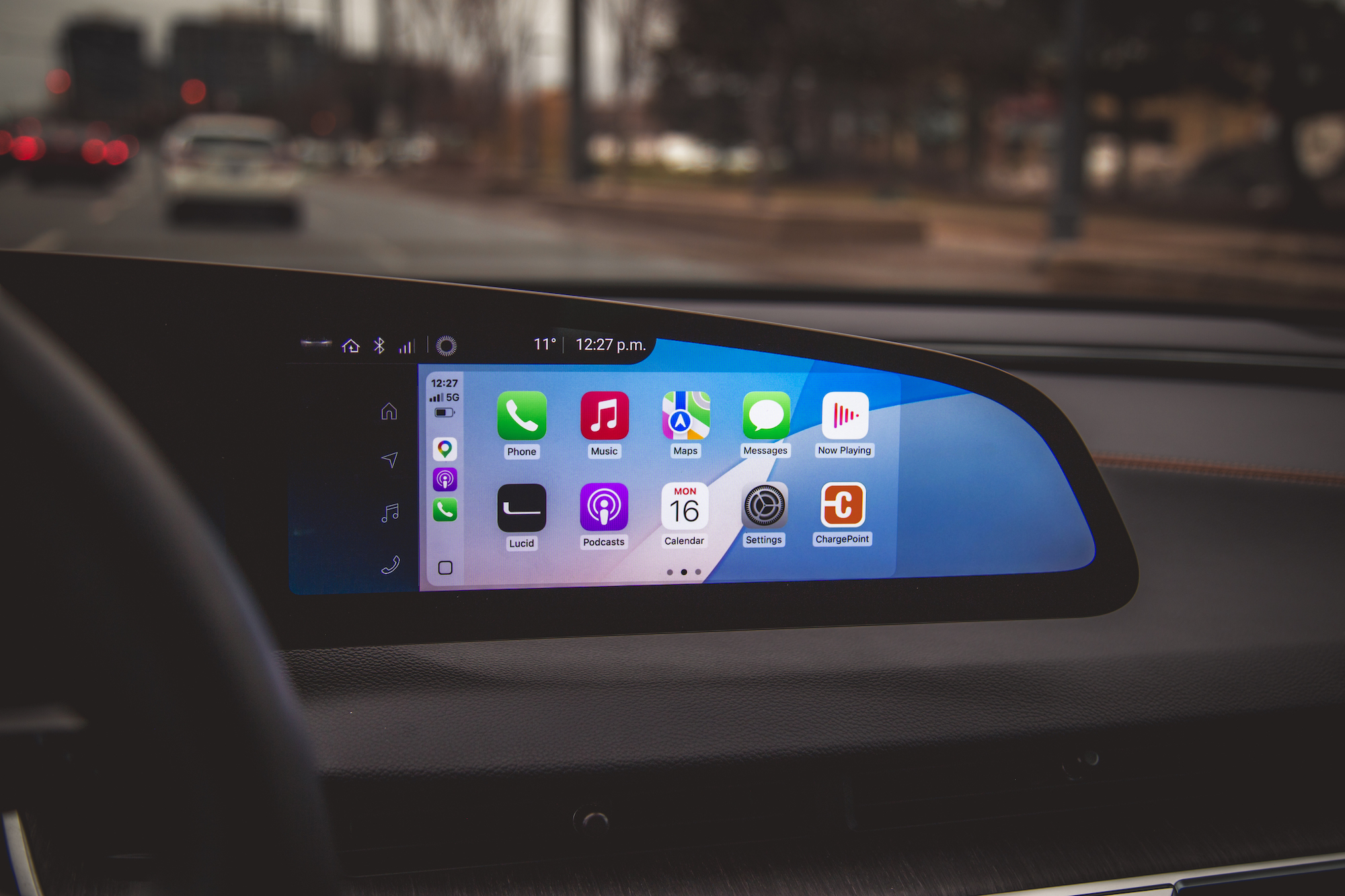
Turbine-shaped switchgear is integrated into the steering wheel and center dash, with dedicated buttons for frequently used features, while the 12.5-inch touchscreen and panoramic dash display handle the rest. The liberal use of dark wood and leather is welcome, but the soft and buttery leather on the seats doesn’t blend well with the rougher, thinner, and cheaper-feeling leather on the door panels and dashboard.
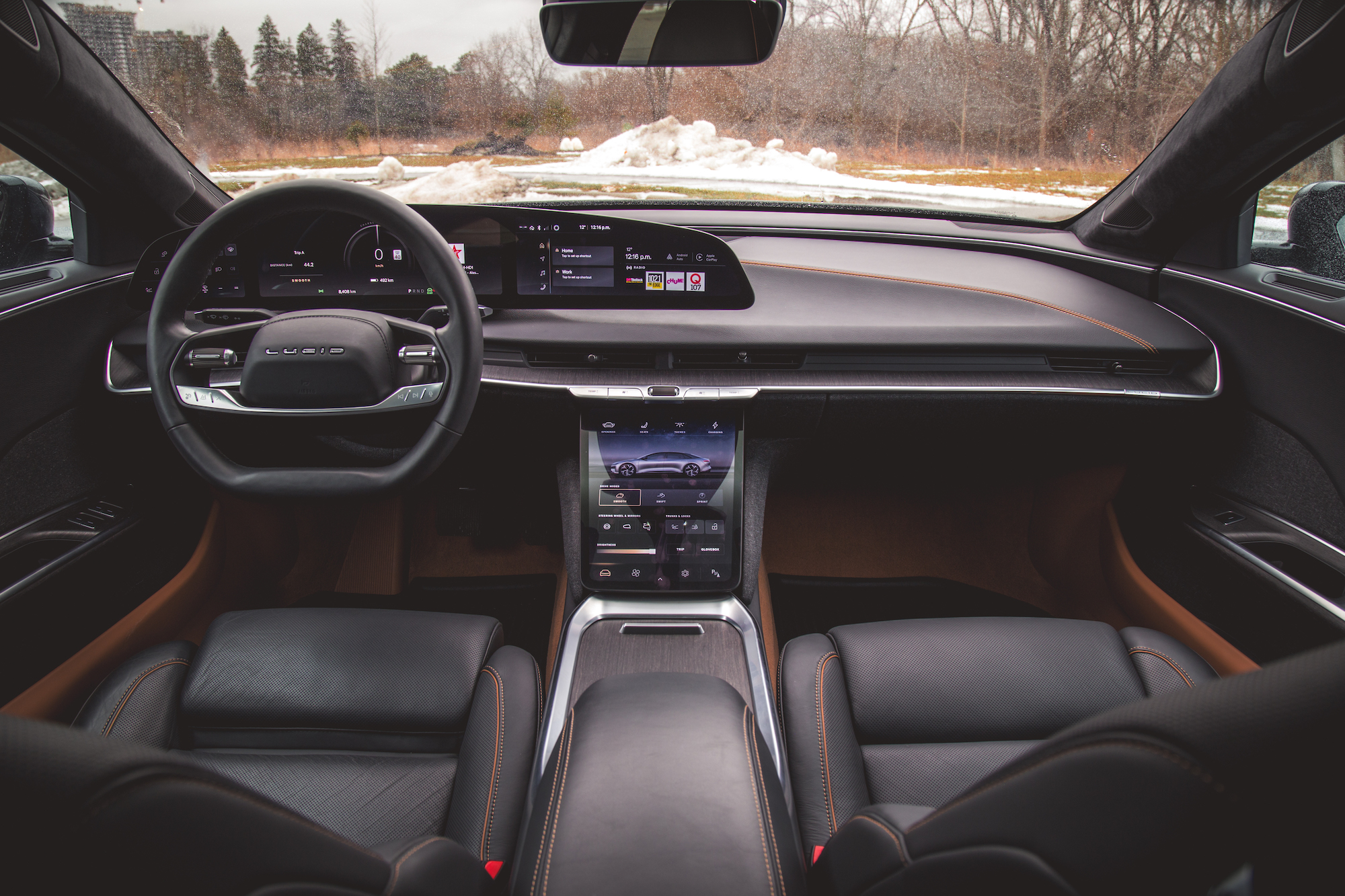
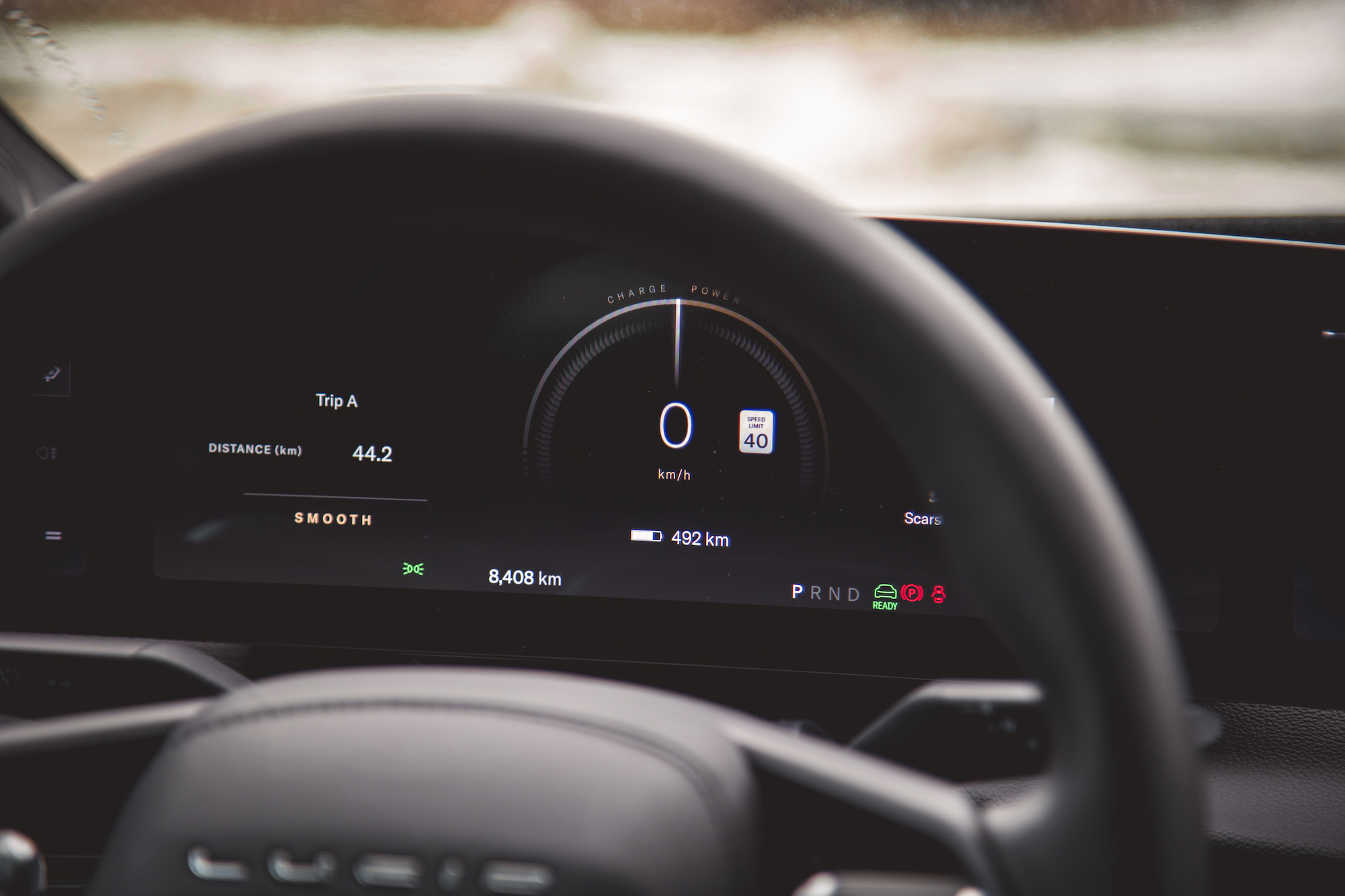
Even with just 8,300 kms on the odometer, we’ve already noticed a fair amount of creasing and wear and tear on the seat bolsters and edges. Nevertheless, the overall build quality and fit and finish are impressive for a brand’s first offering. Those who recall Tesla’s and VinFast’s early model years know how bad it can get.
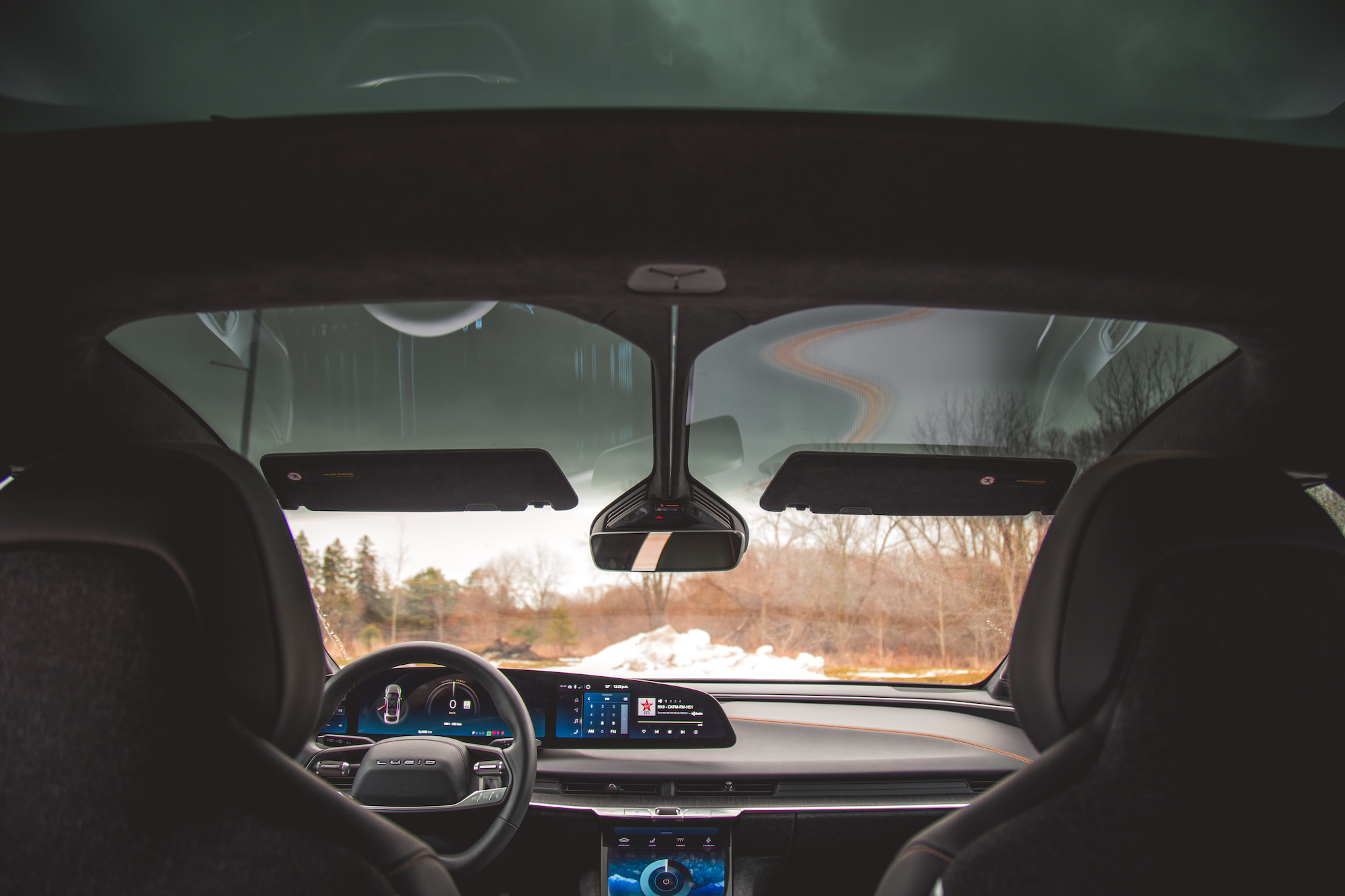
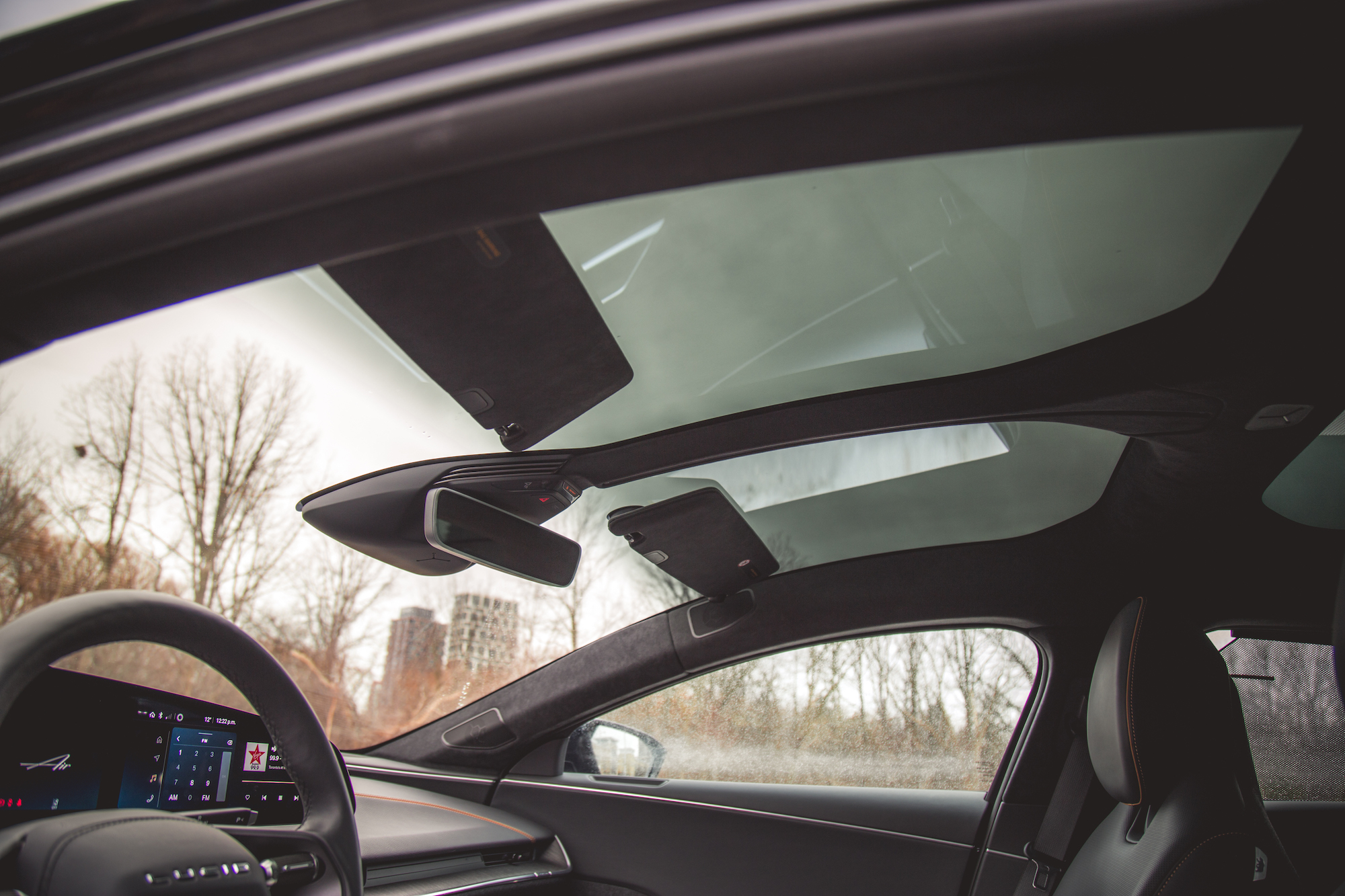
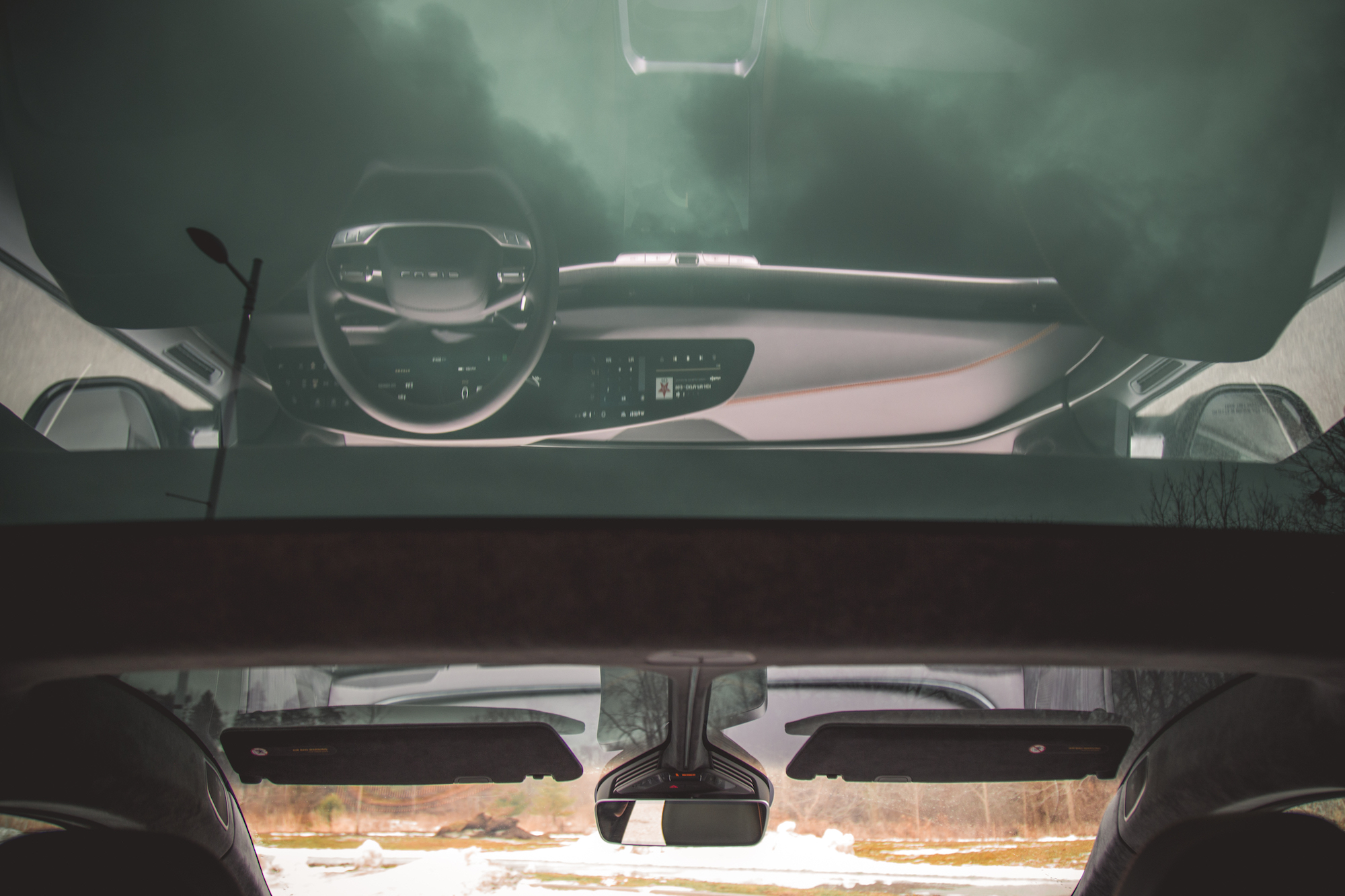
The cabin is flush with natural light thanks to the one-piece windshield that Lucid calls the Glass Canopy ($5,000), sweeping from the bottom of the dashboard to above the driver’s headrest. The sunshades impede the continuity by necessity, but you can throw them to the side. Still, we don’t want to know how much it costs to replace one of these windshields, and you can opt for the standard aluminum roof instead.
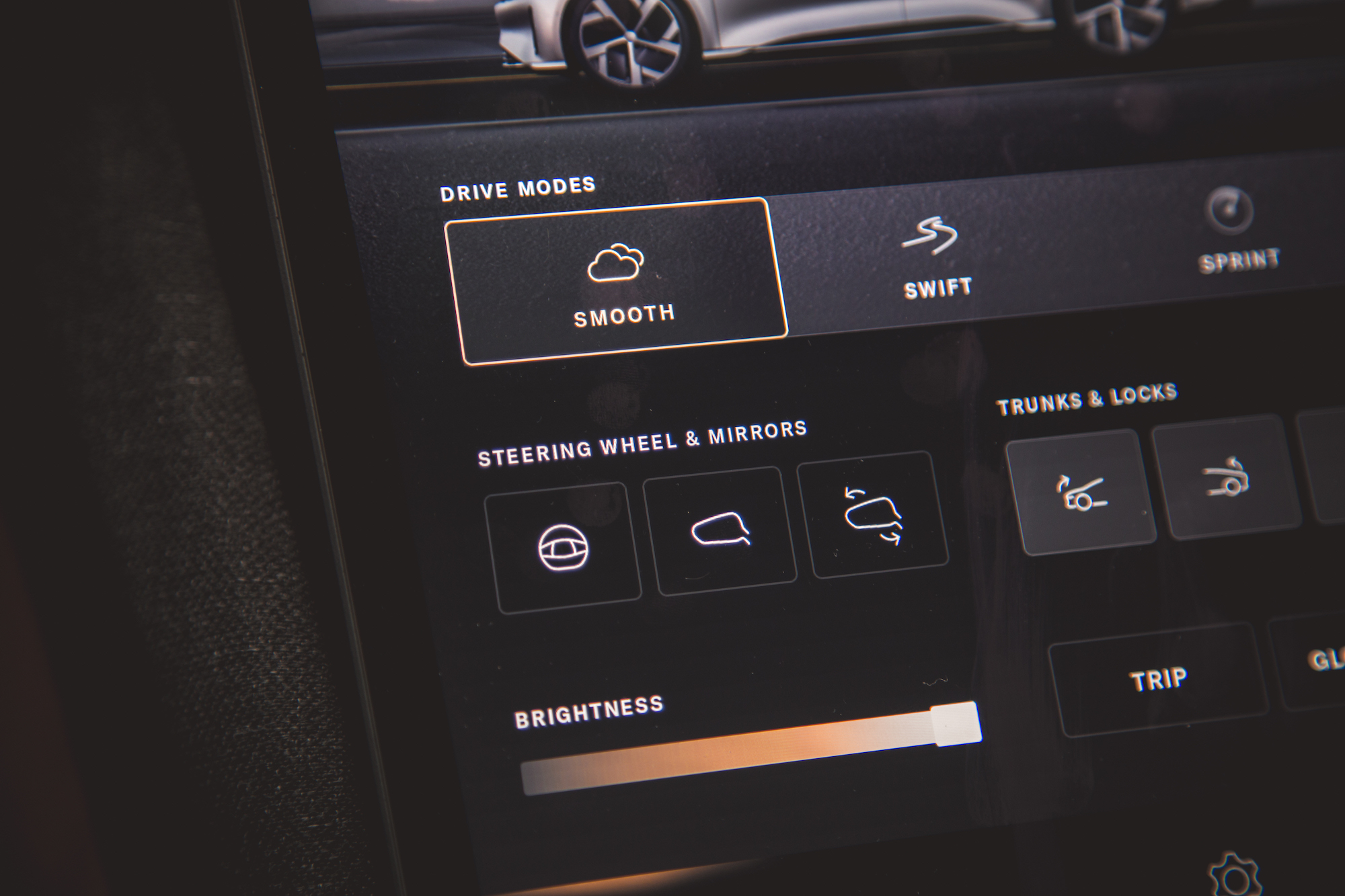
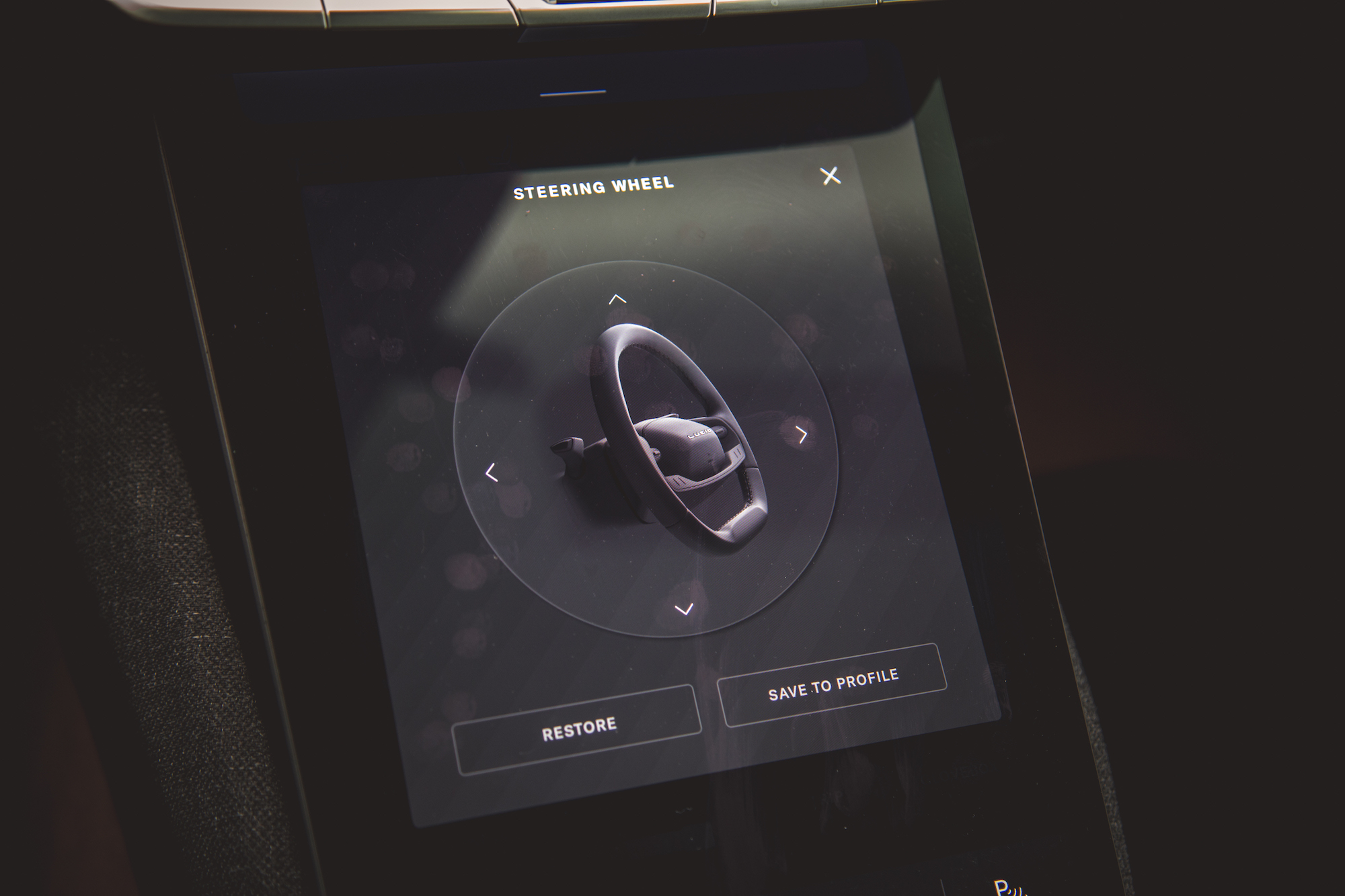
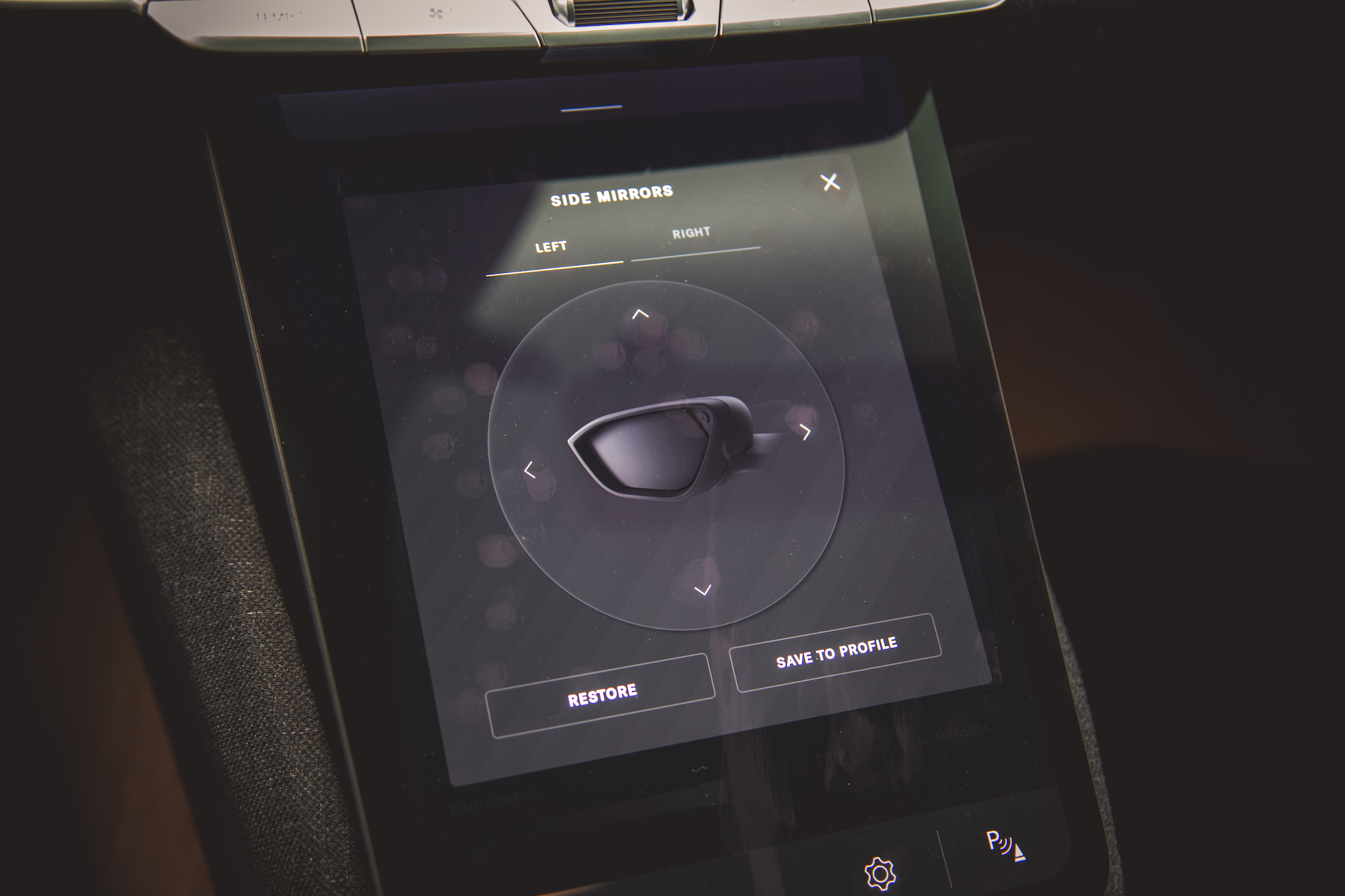
The gear shift toggle is relegated to the steering column and operates much like the Mercedes stalk. Unfortunately, the Air is heavily software-focused and has designated the steering wheel and side mirror adjustments to the touchscreen, making quick adjustments a laborious process. How difficult is it to keep a small toggle on the steering wheel column? Much like the Volvo EX90, this choreography is typically performed once or twice when the vehicle is first received and subsequently saved to the memory settings. However, you soon realize that this decluttering trend has also extended to opening the trunk and glovebox via the displays.
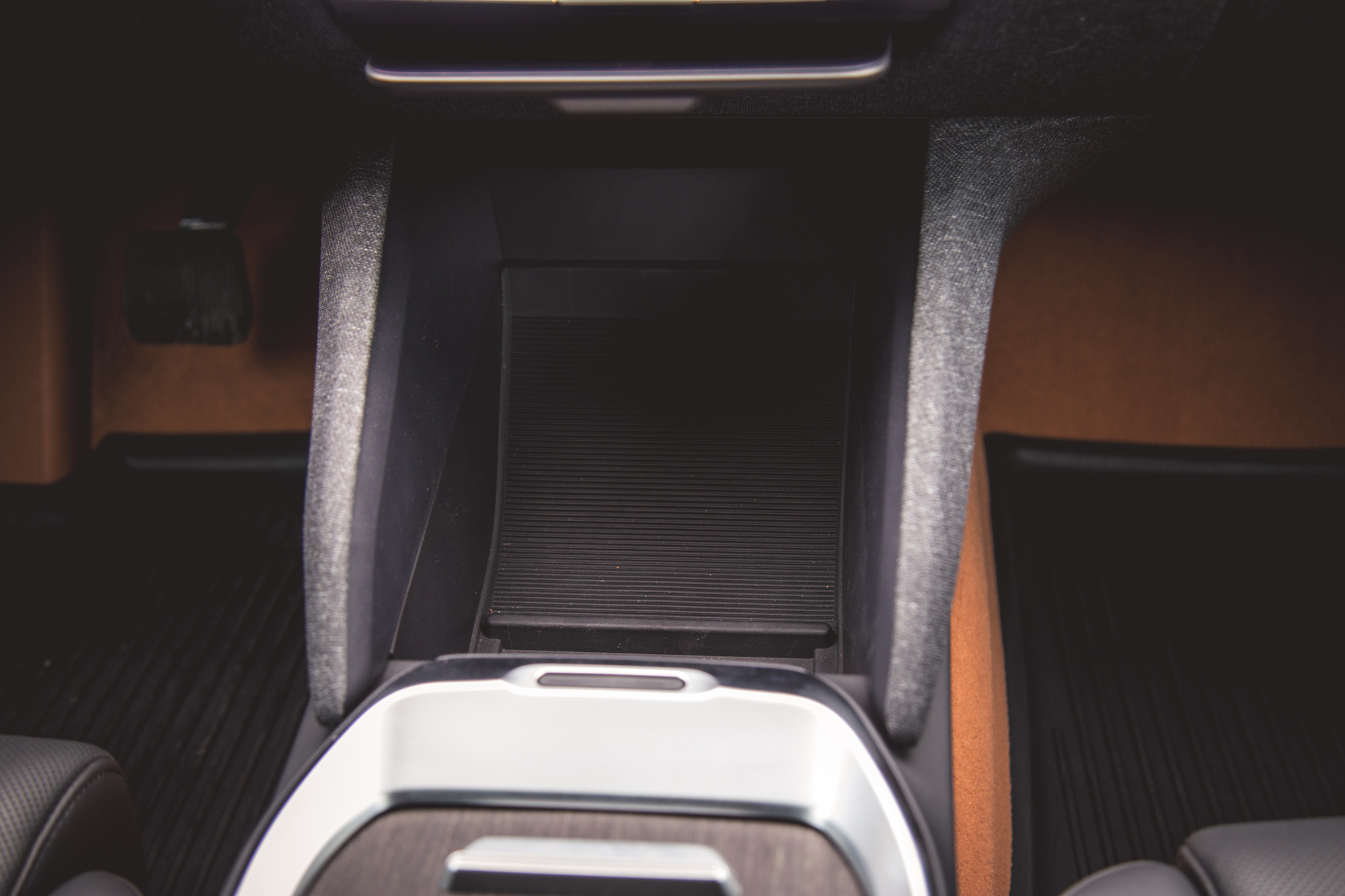
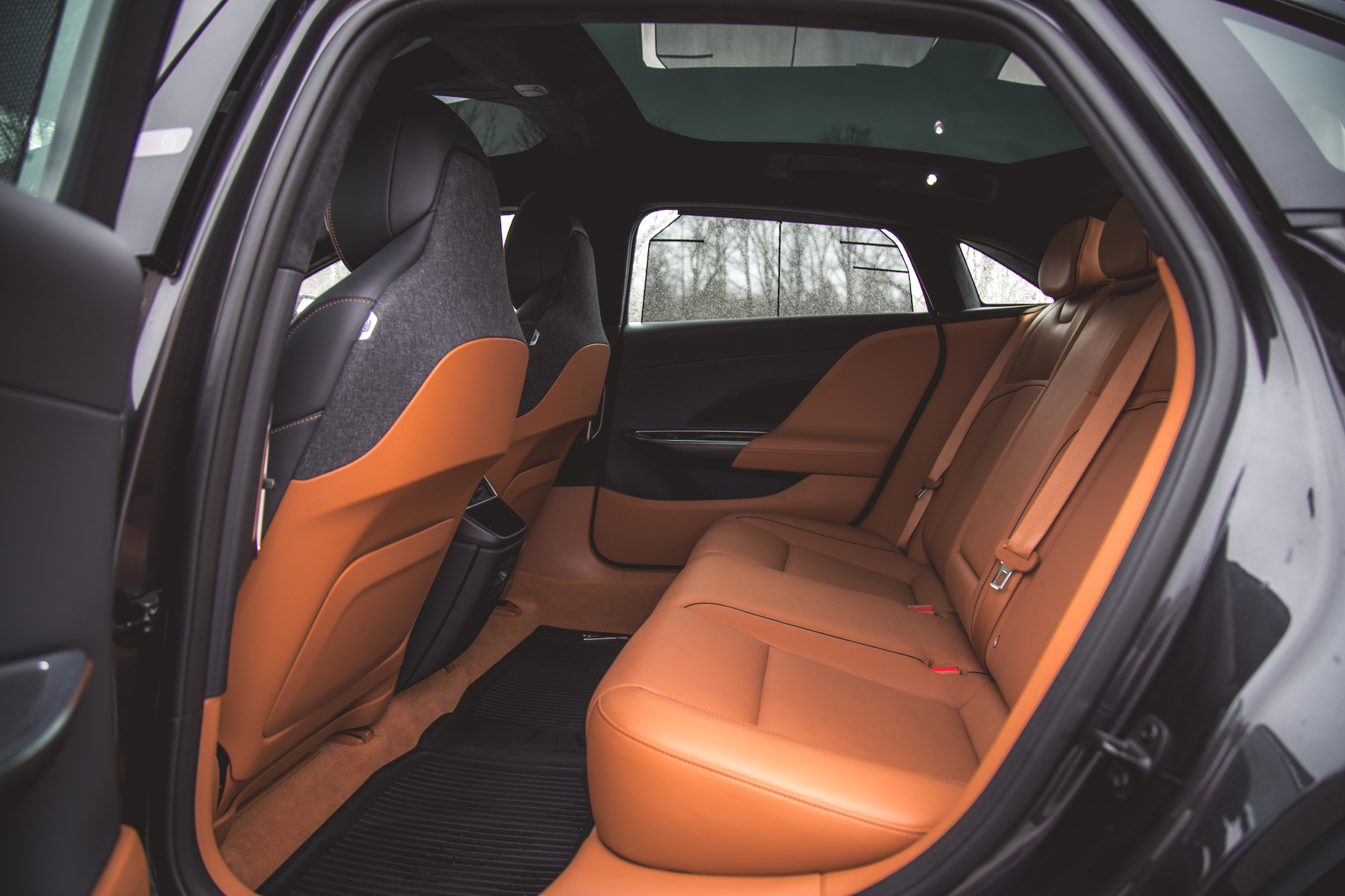
At least the 12.5-inch vertically oriented touchscreen is within easy reach, and while it takes up the majority of the center stack, it electronically stows away with a quick swipe, revealing a deep, recessed cubby area, complementing the sizable center glovebox and the shallow cubby beneath the armrest. Lucid certainly spared no expense to ensure optimal storage for a large family. The same goes for the cavernous rear cabin, featuring an abundance of headroom and legroom, even for my six-foot figure, making the Taycan, i5, and EQS cabins feel cramped and confined by comparison. In fact, the amount of legroom here nearly matches the standard wheelbase variants of the i7 and S-Class.
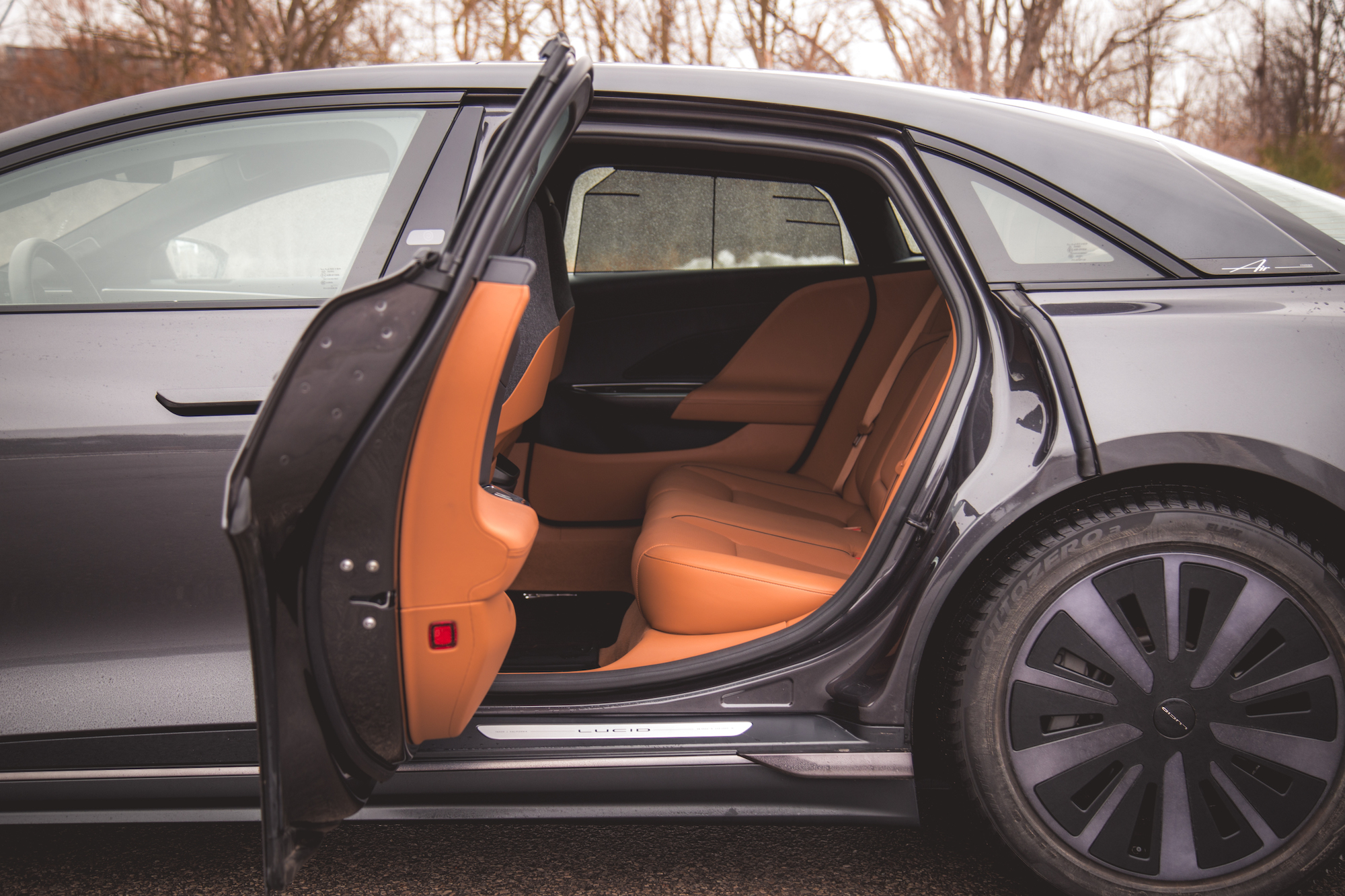
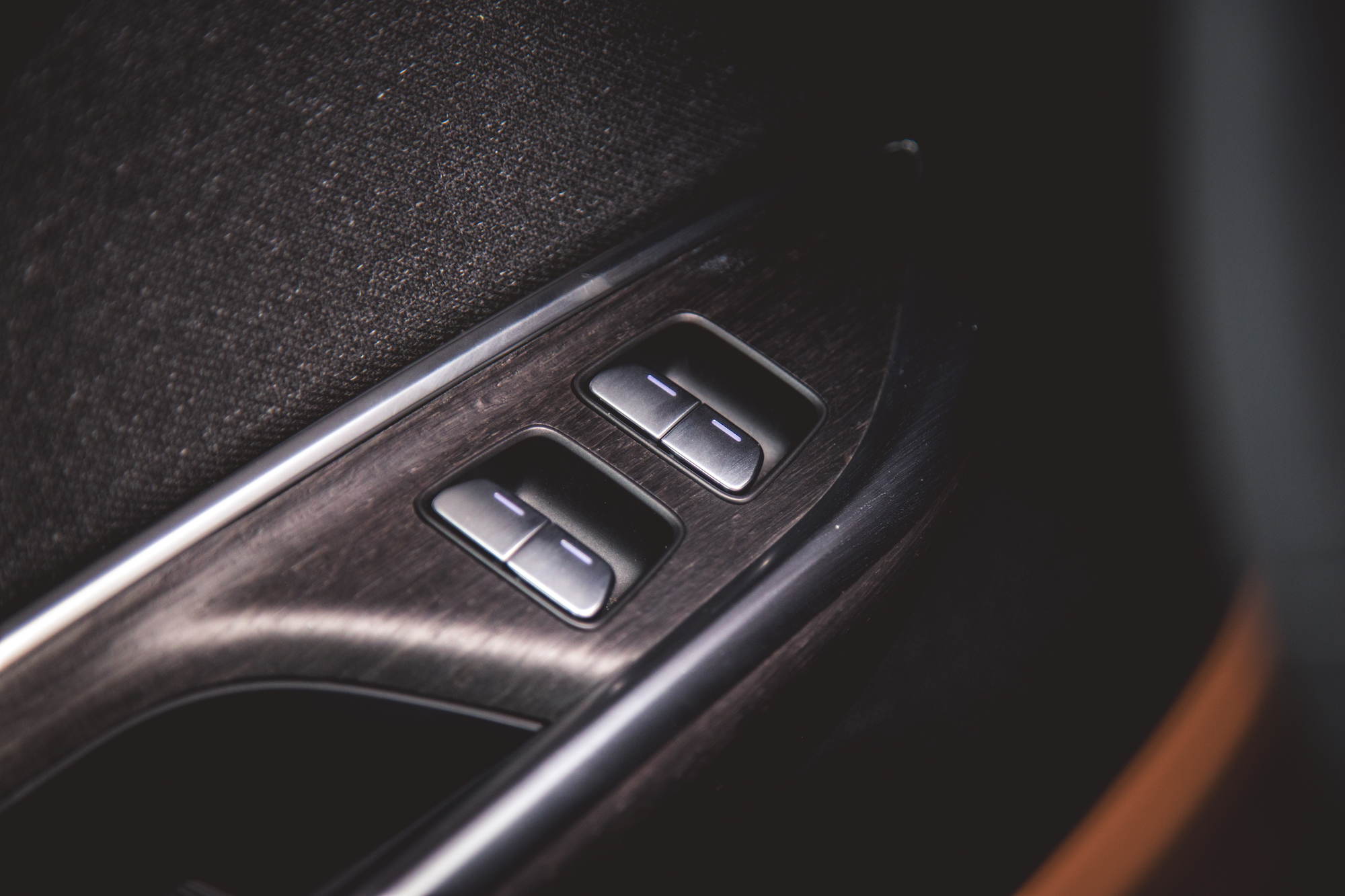
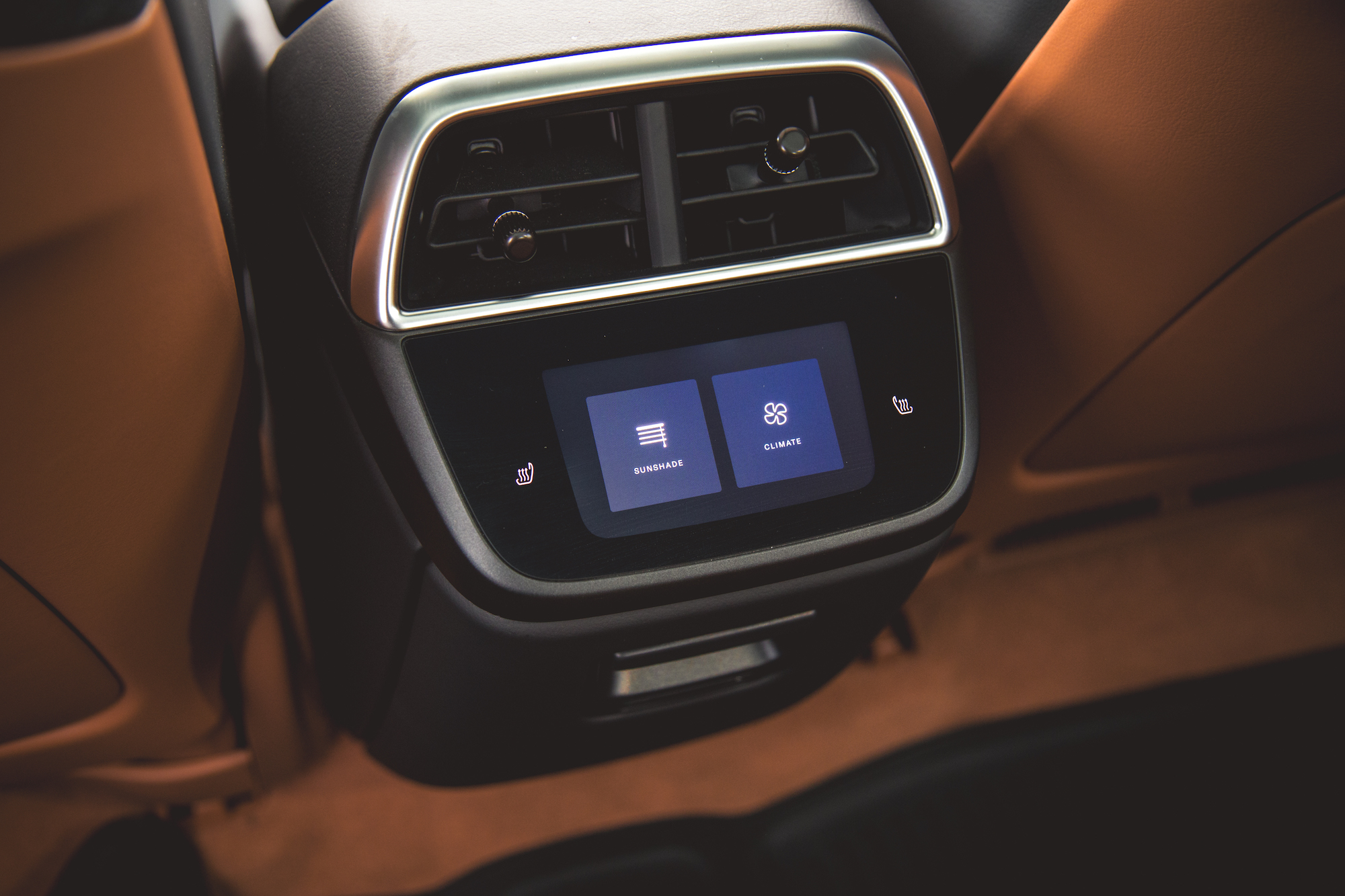
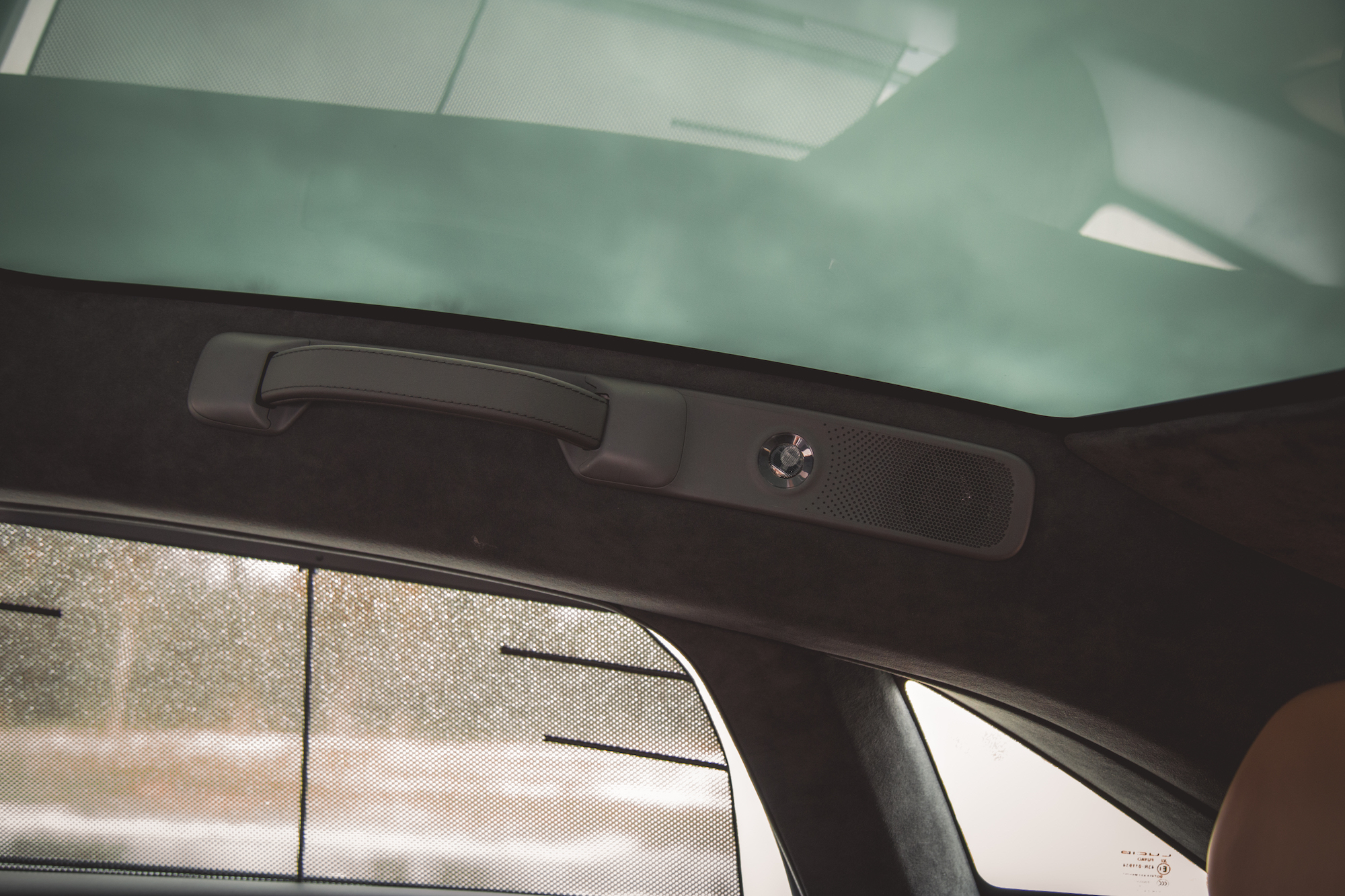
Ingress can be a love and hate relationship, though, depending on where you’re sitting. The Air sits low to the ground, and the roofline swoops down sharply, giving taller front occupants a thunderous jolt to the noggin if they don’t apologetically bow down before entering. However, the rear doors swing open a full 90 degrees on their hinges, unveiling one of the widest entry portals we’ve ever seen, alluding to its ride-hailing potential. No self-closing doors, though, and soft-close is optional on the Touring model. Rear amenities include electronically operated side and rear sunshades, heated seats (including the middle seat), a large glass sunroof, and a fold-out center console, but there are no dedicated door lock buttons or seatback attachment hooks, and the windows do not fully roll down.

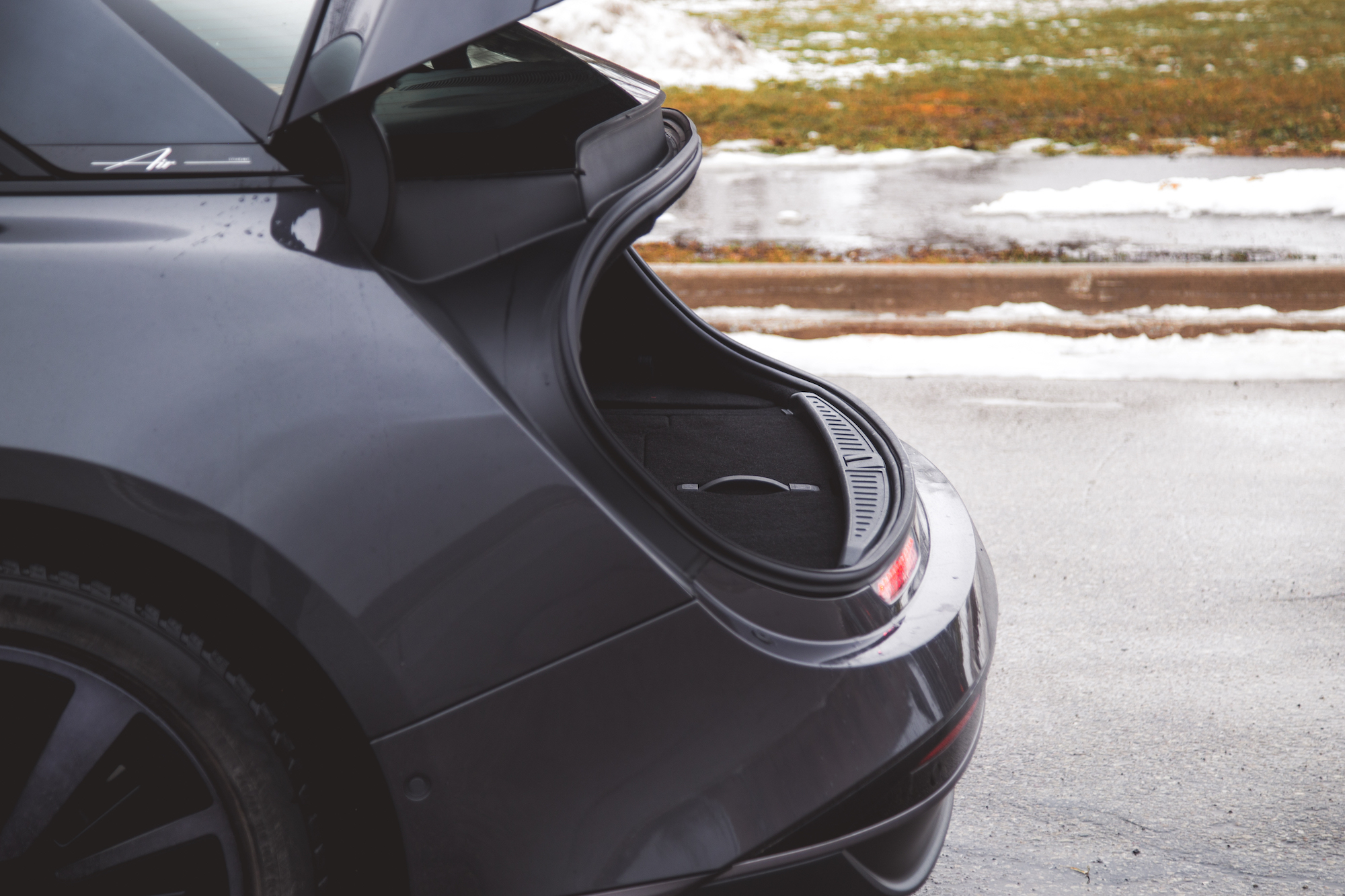
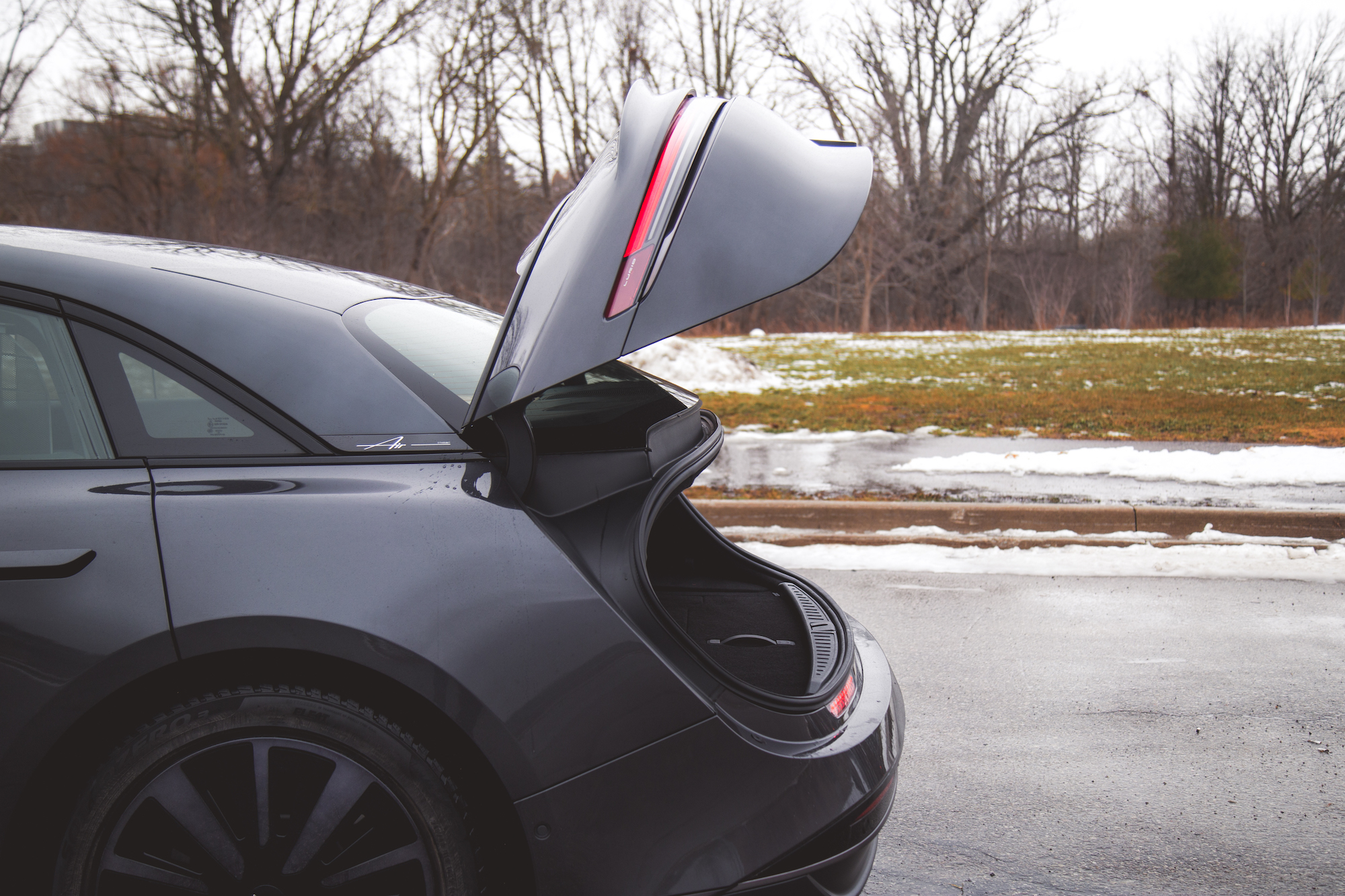
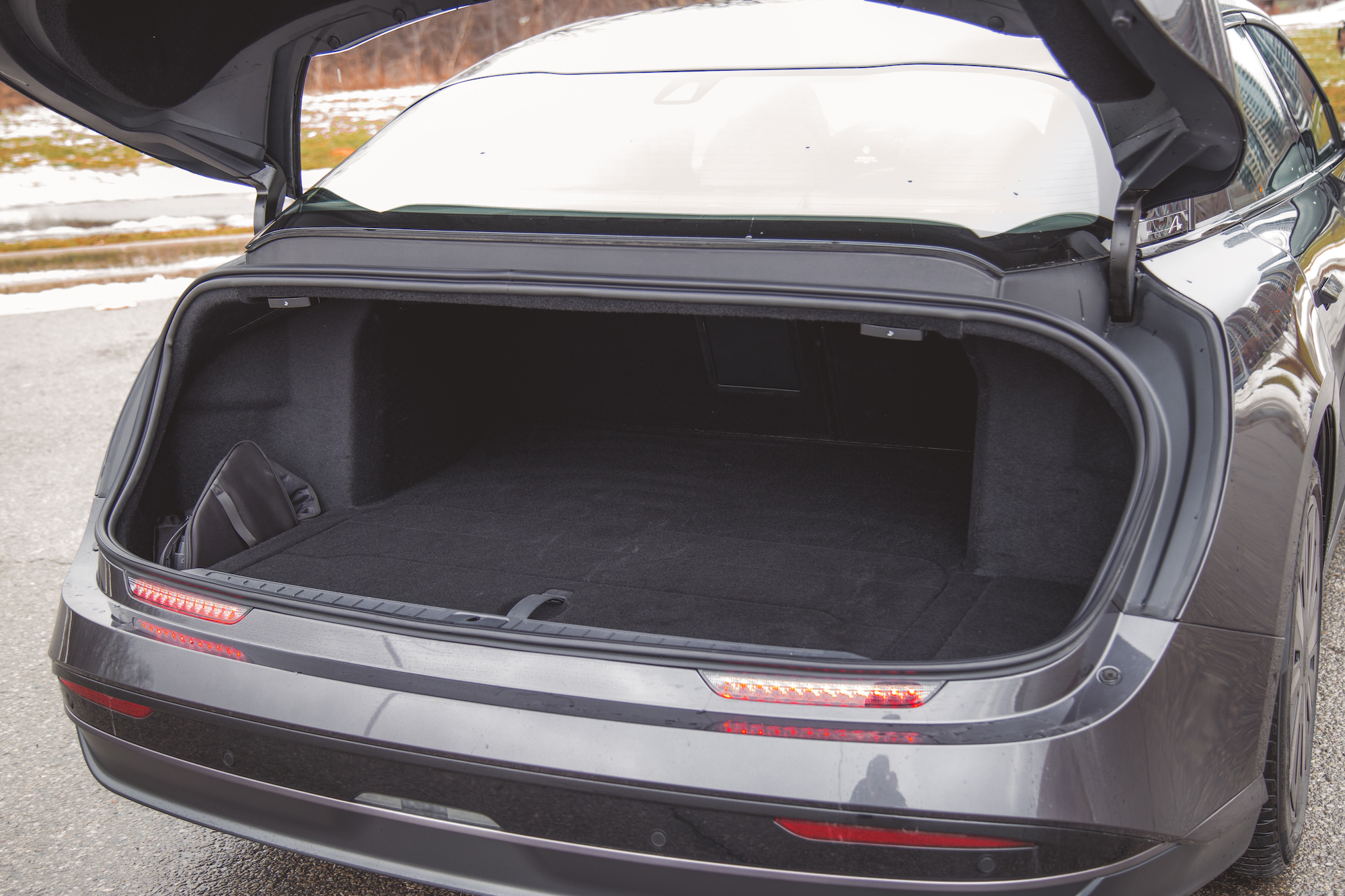
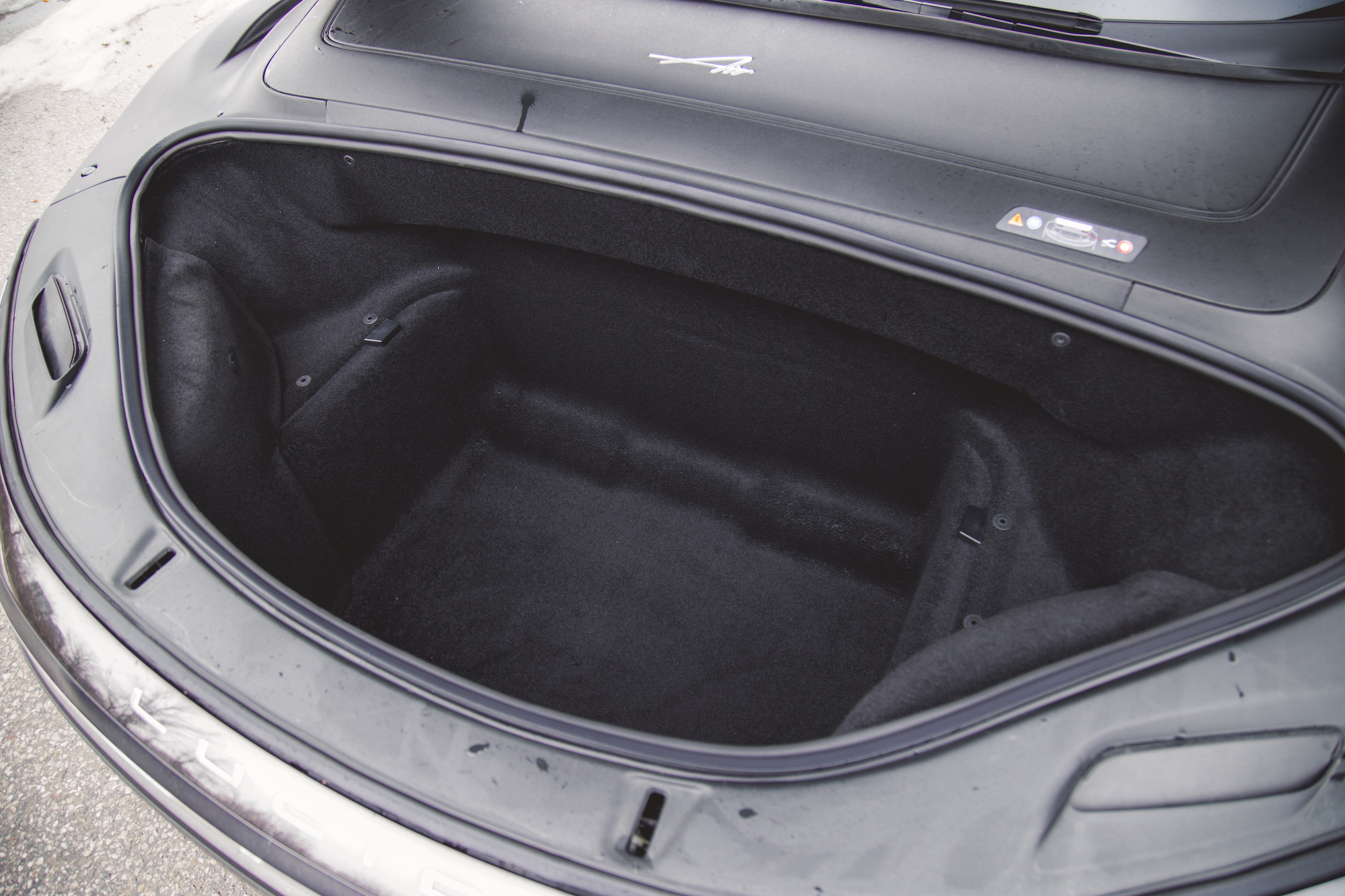
The front and rear trunks are deep and spacious, too, with the rear lid particularly interesting because the trunk sides also lift up, making it easier to load wide or long items. It’s not a very tall opening, though, so strollers and boxes will need to be measured beforehand to fit. We’ve noticed the same documented issues online about the front trunk taking multiple attempts to open properly, and the rear console screen blanking out intermittently.
Speaking of which, we usually don’t expect much from car audio systems, as they pale in comparison with dedicated home setups due to the inherent restrictions of an irregular-shaped safety box on wheels, but the Lucid’s 21-speaker Surreal Sound Pro with Dolby Atmos deserves praise for its crisp sound and strong bass. We also have to give credit to the Air’s impressive cabin insulation, which keeps out most tire and wind noise, even at triple-digit speeds, for a complete noise-cancelling effect. This goes both ways, so passerbys won’t hear you screaming about the sky being Opalite.
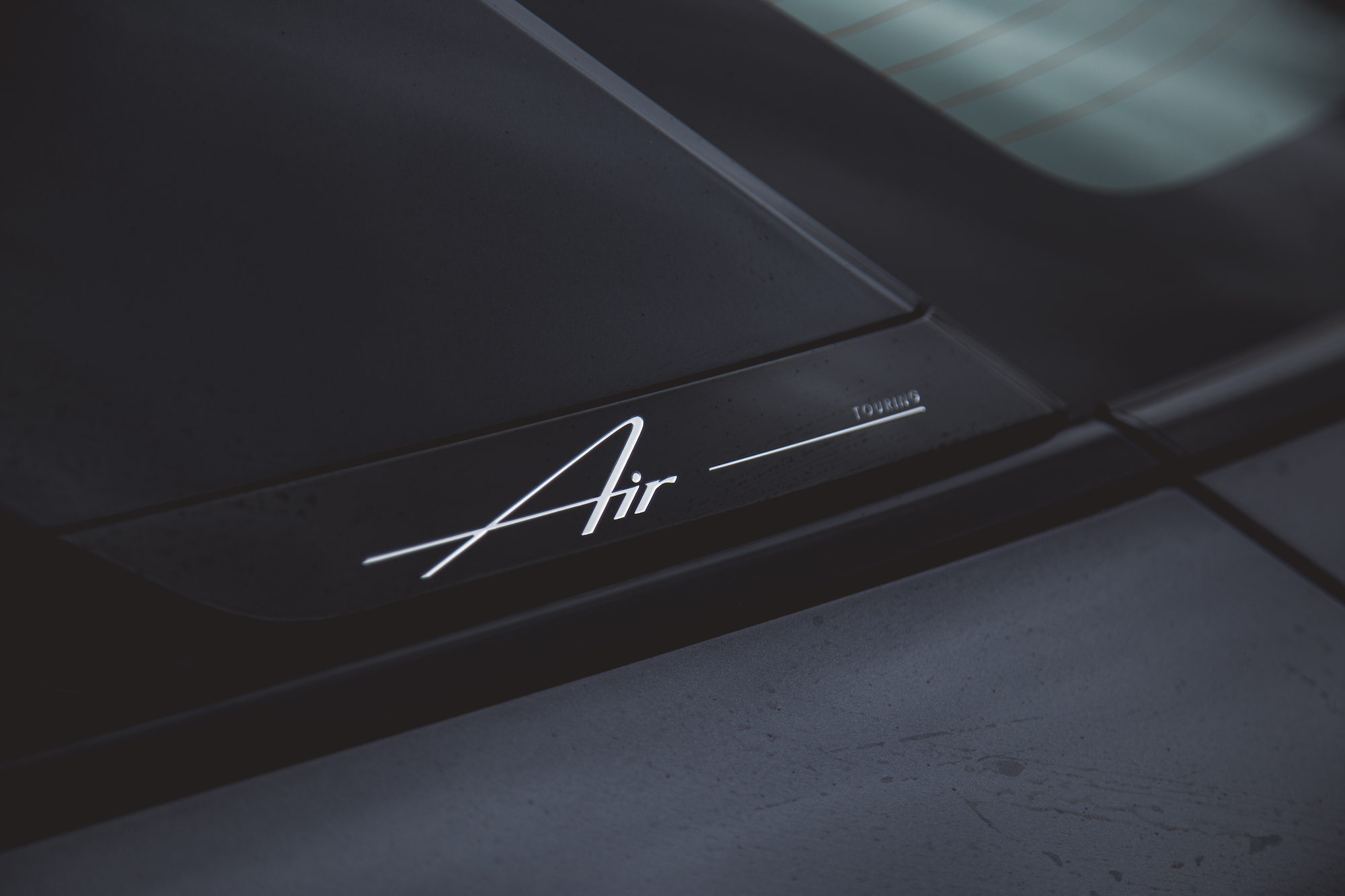
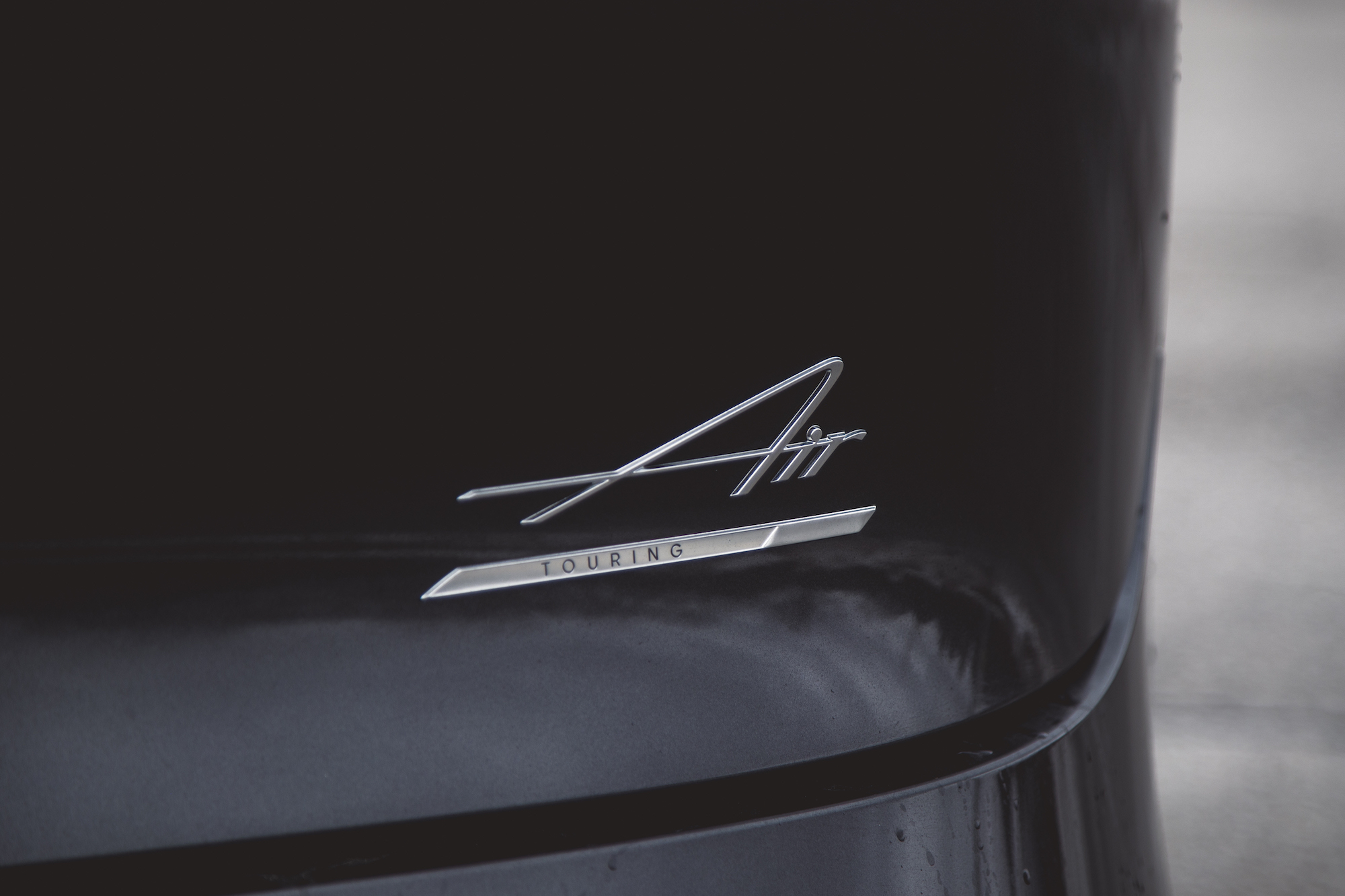
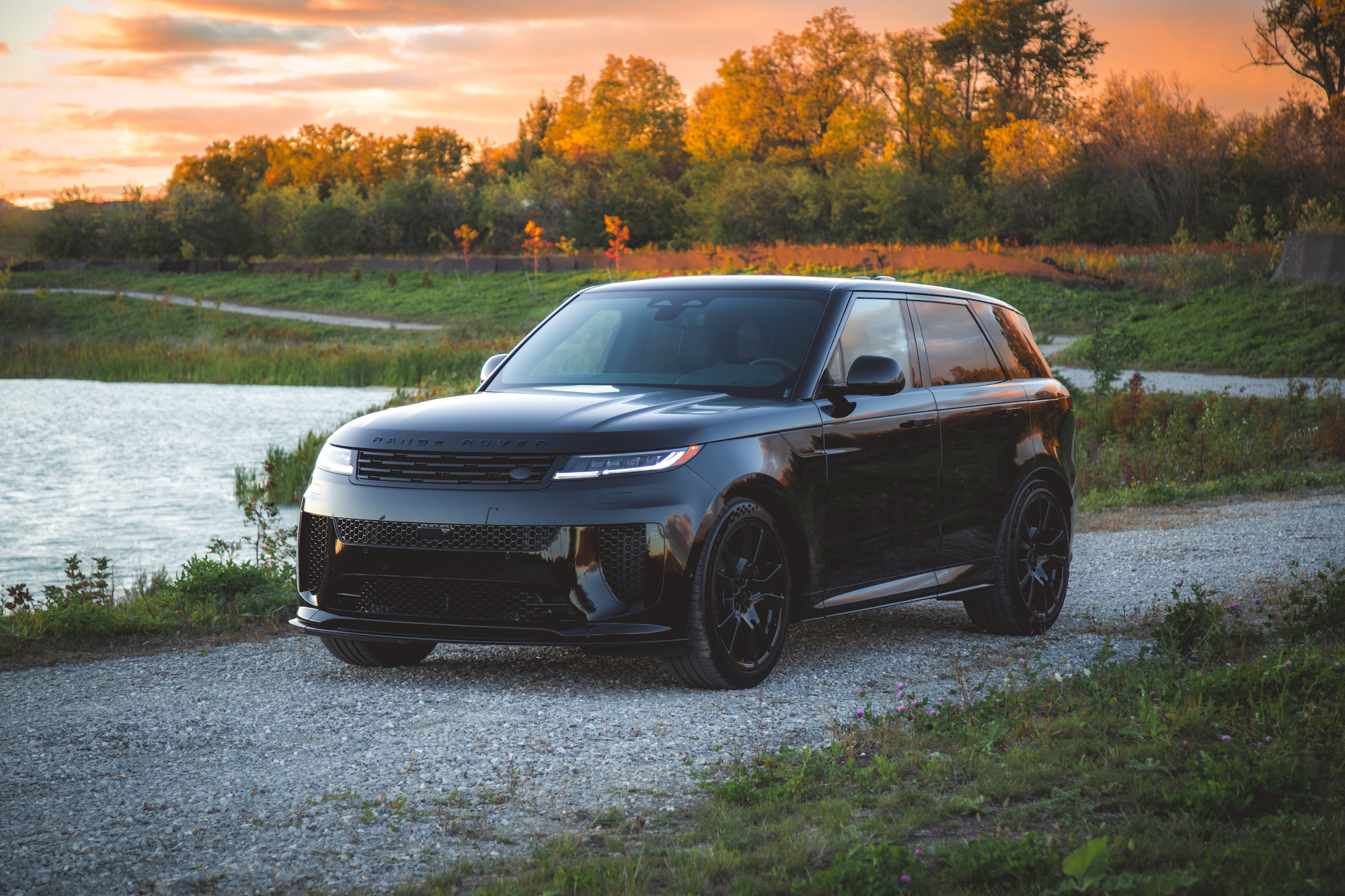
The Lucid Air is offered in four trims: Pure ($99,900, 430 hp, 676 km), Touring ($112,800, 620 hp, 694 km), Grand Touring ($161,200, 819 hp, 824 km), and Sapphire ($327,300, 1234 hp, 687 km). We tested the projected volume seller, the Touring, complete with dual electric motors, a 92 kWh battery, and 620 horsepower. With the ability to sprint from 0-100 km/h in a speedy 3.6 seconds, you will have the confidence to race for pink slips against your neighbour’s Porsche Taycan 4S (3.7s) and Range Rover Sport SV (3.8s). Steer clear of the Model S, though. You’ll need the Grand Touring (3.2s) and tri-motor Sapphire (2.0s) to demolish them instead.
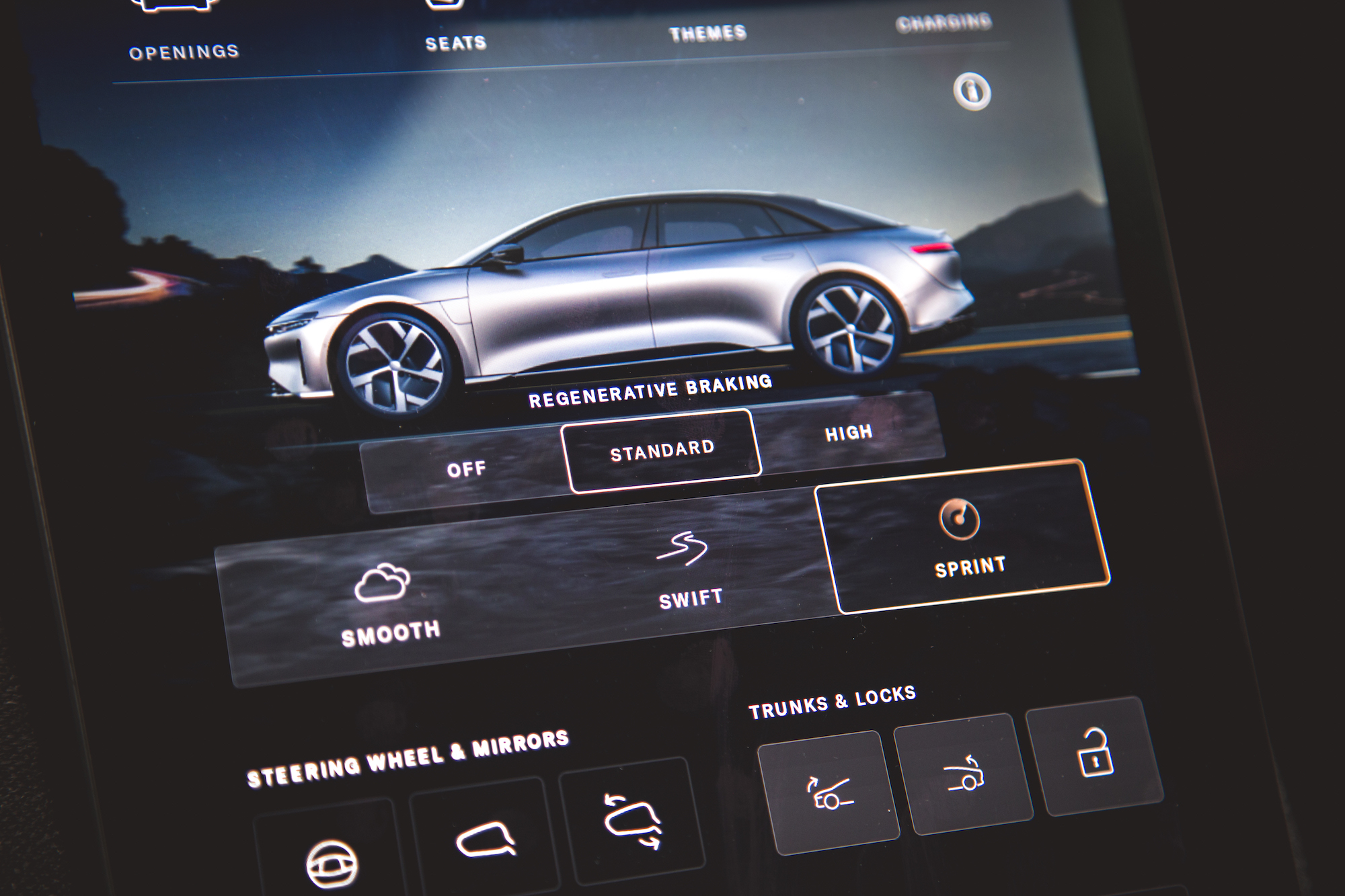
Beautiful, balletic, and ballistic, speed is never lacking with the Air Touring. A heavy throttle pedal ensures your episodes of unholy acceleration launches are deliberate, but the linear delivery and endless tidal wave of torque are an addictive and highly caffeinated bout of theatre. Piloting any turbocharged combustion vehicle after a Lucid makes it feel like they have the power delivery of a clogged Ketchup bottle.
There’s an S-Class waftability here. The Air remains calm and collected, no matter the driving situation, and stays relaxed even as it negotiates deep bumps and divots on the road. Frankly, this is what the electric Mercedes EQS should have been: a grand EV with comfy back seats and an unassailable battery, not the soapbar visuals and cramped roofline that it currently has.
Despite weighing around the same as the Taycan, the Air is not as hunkered down and sharp under cornering, and displays a moderate amount of body roll, but it’s well controlled and far from ungainly. Better yet, the plush, secure ride makes the Taycan and EQS feel wooden and stiff by comparison, with its adaptive suspension and smaller 19-inch wheels guaranteeing a coddled, isolated ride around town. Only the i7 pips the Air in overall ride quality, but that BMW belongs in a higher price bracket.
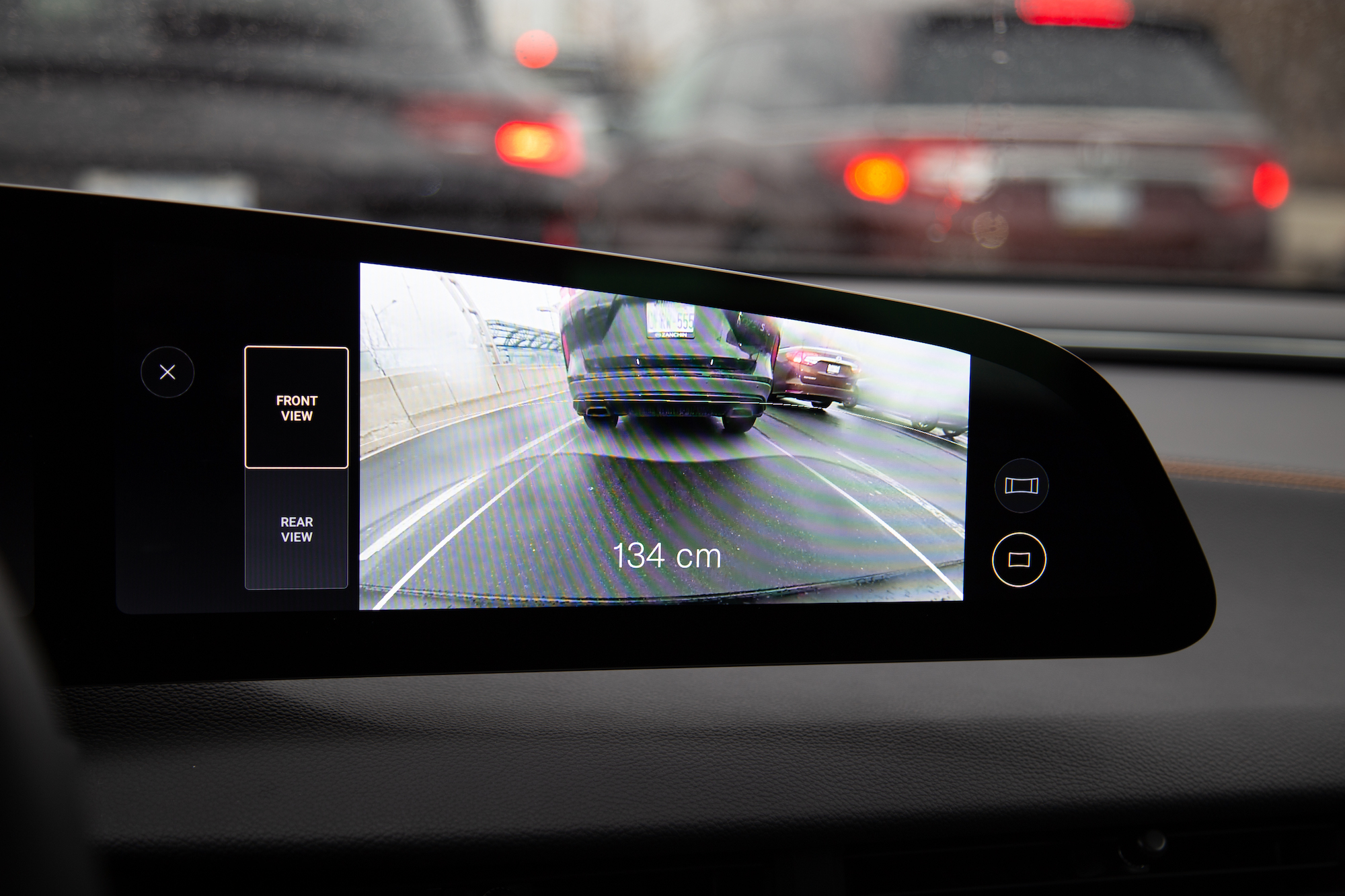
Quick steering makes it easy to hit maximum lock in narrow parking garages, but its lack of linearity and detail makes it tricky to modulate at lower speeds, where the steering becomes heavier, rubbery, and more granular. The weighty and dense throttle pedal doesn’t make things any easier, and with such a long wheelbase, the Air would greatly benefit from rear-wheel steering (as in the upcoming Gravity) to improve maneuverability. Even the BMW i5 ensured we never had to three-point turn. The army of cameras and surround-view displays keeps it manageable, and like the Volvo EX90, Lucid displays the proximity distance in centimetres, making it easier to visually gauge the distance rather than relying on the increasing volume of audio pings. It has also borrowed the side mirror camera designs from Hyundai that display live views of your blind spots whenever you signal.
We’ve left the best for last because Lucid claims a range of 694 km with the Air Touring, which is shy of the Grand Touring’s beefy 824 km thanks to its larger 118 kWh battery, but 600+ is still miles ahead of other luxury EVs, including the Taycan, EQS, and i7. Note how Porsche doesn’t even show its model’s range estimates on its website homepage, whereas Lucid’s are on proud display. Notably, the standard 19-inch Aero wheels offer the most range, while opting for the 19-inch Aeronaut and 20-inch Aero Lite wheels reduces the range by about 57 km. Our early Spring drive in single-digit weather, with a mix of city and highway driving, yielded an impressive 627 km. We did find it odd, however, that the Lucid cannot show both the battery percentage and range estimate in kilometres at the same time, forcing you to dive into the settings menu to change the display units.
Blending modern aesthetics with one of the segment’s most spacious rear cabins, the Lucid Air makes a grand statement, proving that not all electric vehicles are monotonous commuting appliances. Frenetic speed, remarkable chassis fluency, and peerless electric range only add to the Air’s relaxed and invigorating West Coast charm, and elevate our excitement and expectations for the forthcoming Gravity.
Specifications:
Model: 2026 Lucid Air Touring
Paint Type: Quantum Grey
Base Price: $112,800
Price as Tested: $144,350
Wheelbase(mm): 2,960
Length/Width/Height (mm): 4,975 / 2,196 / 1,409
Curb weight (kg): 2,272
Powertrain: 92 kWh lithium-ion battery, two electric motors
Horsepower: 620 hp
Transmission: Direct drive
Drive configuration: Dual electric motors, AWD
Claimed Range: 694 km
Observed Range: 627 km
Tires: 245/45R19; Pirelli Sottozero 3




Leave a Reply