
Have you spotted any camouflaged, taped-up, manufacturer-plated Chinese vehicles on the road yet? We certainly have. Jaecoo, Exeed, and BYD may not be household names in Canada, but they soon will be after our government slashed tariffs on Chinese-made EVs to a reasonable level. But it won’t be these foreign badges that you will catch on the roads first; it will be one much more familiar to motorsport enthusiasts: Lotus.
Homologated and ready for the Canadian market nearly two years ago, our earlier geopolitical relationship with China meant that Lotus’ first SUV, the Chinese-made Eletre, would be tariffed to the moon, and be unduly expensive to compete against the Porsche Cayenne electric, BMW iX, and Lucid Gravity. Instead, Lotus halted its operations here and waited for the right opportunity, and now that patience has paid off. They’re the first automaker to come storming out of the gates while other Chinese companies are still scrambling, and the Eletre will be on sale here in June, with deliveries beginning this September.
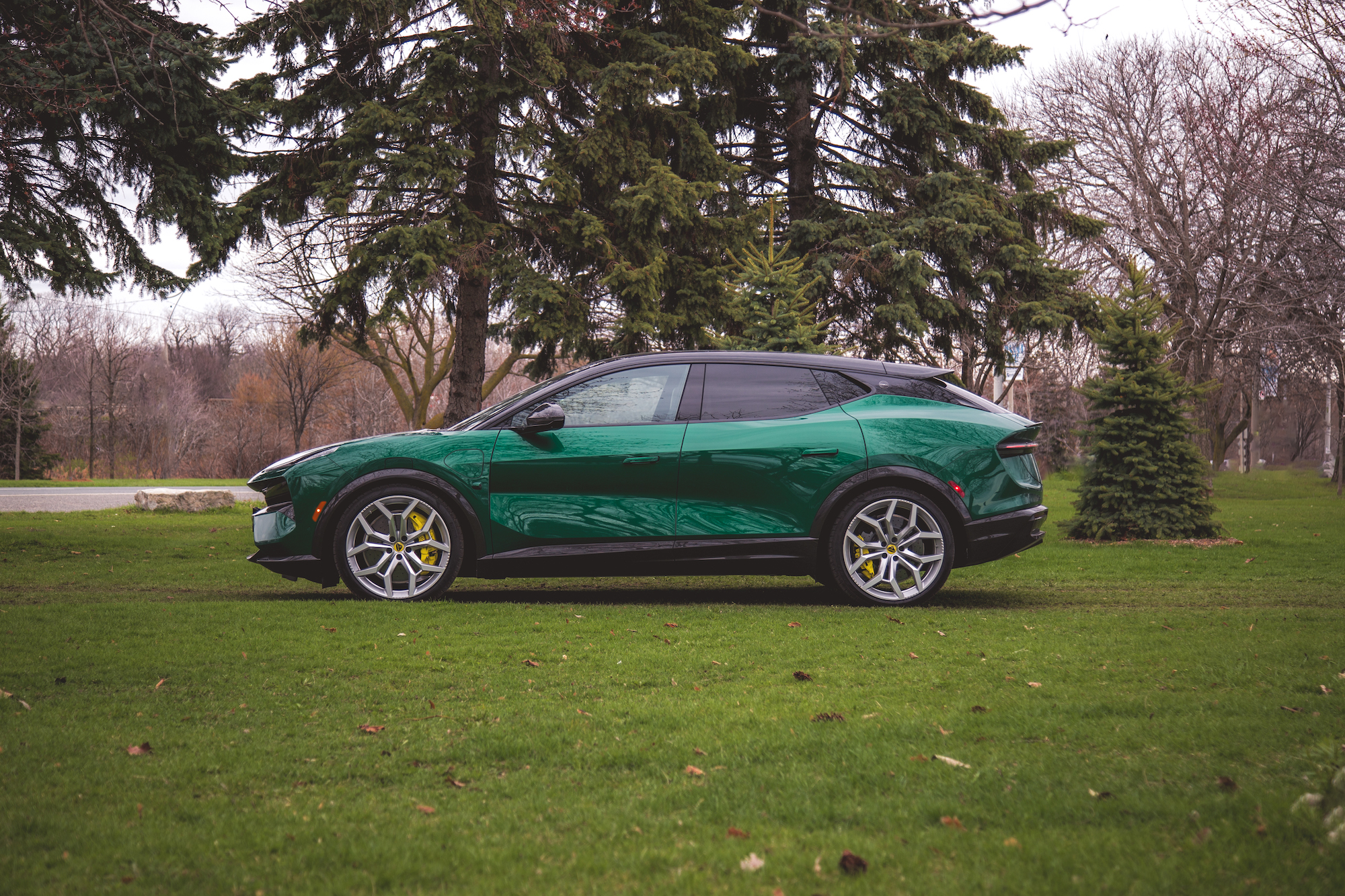
Simplify, then add lightness, founder Colin Chapman used to say. While he may be rolling in the grave at the thought of a 2,640 kg electric SUV, the market has warped since the heydays of the double-chassis Lotus 88 and downforce-generating Lotus 79 that swept up Formula 1 World Championships. That era is over. Nowadays, Porsche Cayennes, Range Rovers, and Mercedes G-Wagens rule the high-end boulevards, and Lotus wants a slice of that pie. “We’ve found a niche market between the $120,000-$160,000 range, and want to offer a luxury SUV for a premium price with competitive value,” says Massimiliano Trantini, President and CEO of Lotus Americas.

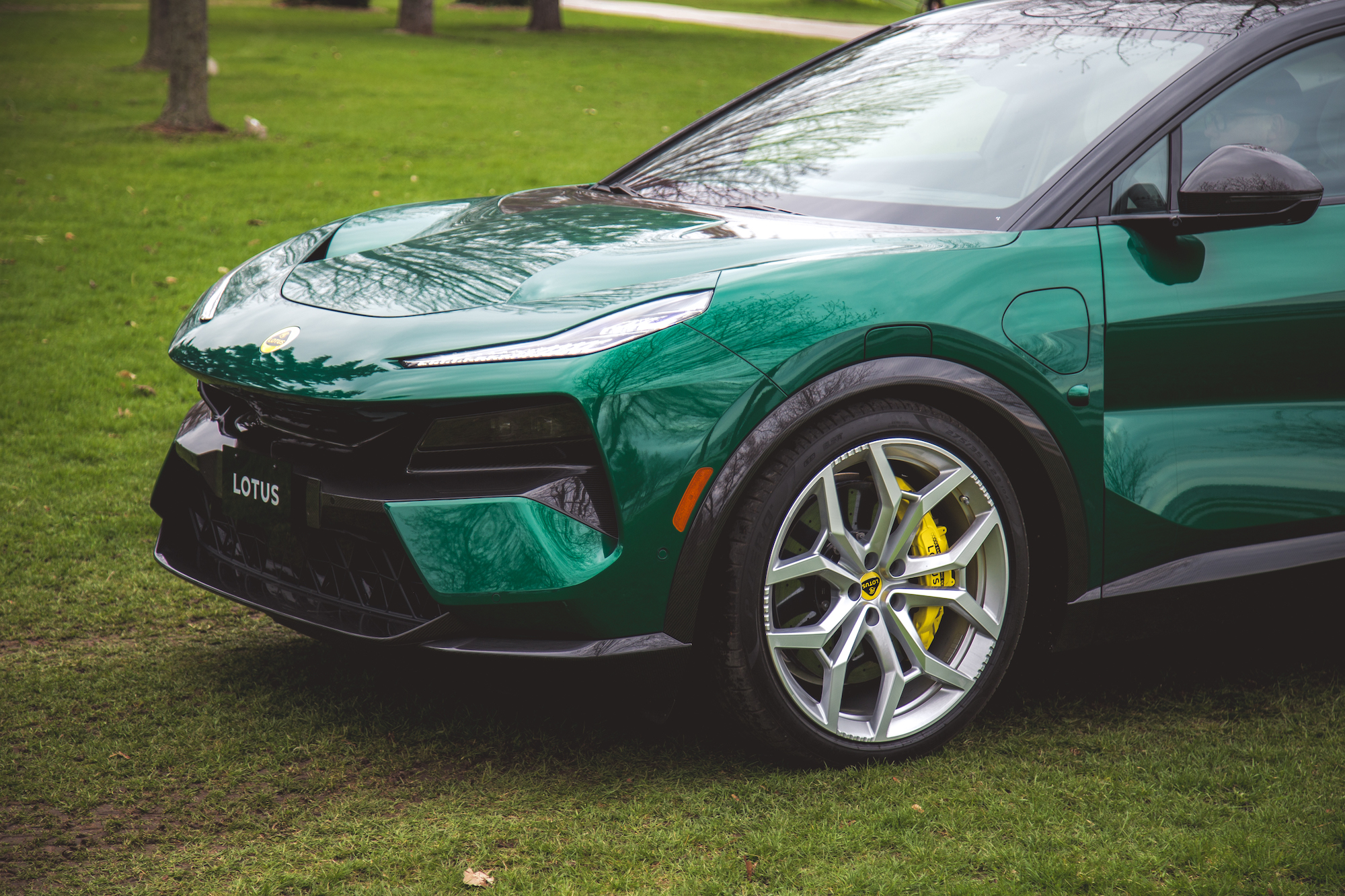
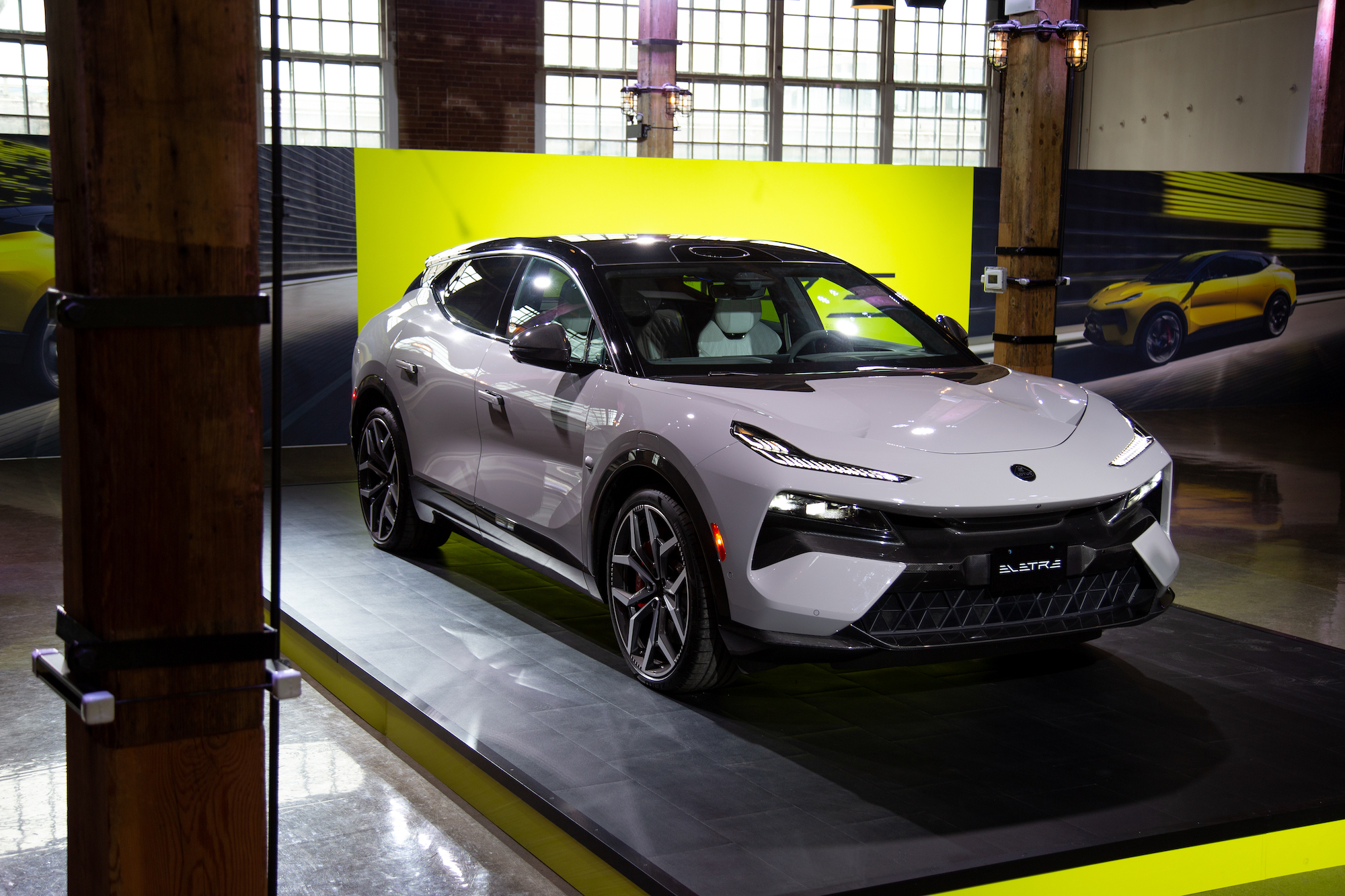
The Eletre starts at $119,900, with the Touring ($129,900) and Sport ($139,900) all utilizing the same 112 kWh lithium-ion battery pack mated to an electric motor on each axle, generating 603 hp and sprinting from 0-100 km/h in 4.5 seconds, quicker than the BMW iX xDrive60 (4.6s). Pirelli P Zero tires on 23-inch wheels are standard across the board, with Lotus still deciding what, if anything, to offer customers for winter tires.
Range is estimated at 460 km, which is competitive with the BMW iX M70 (486 km, $129,900), Volvo EX90 (495 km, $115,600), and Mercedes-Benz G 580 with EQ Technology (450 km, $206,000). Still, the Eletre’s range pales in comparison to the mile-munching Lucid Gravity Touring (542 km, $113,500) and Porsche Cayenne Coupe electric (550 km, $134,200). The Range Rover electric has yet to be launched, either, but note that the Eletre’s price, power, and overall packaging are starting to look like a reasonable deal.

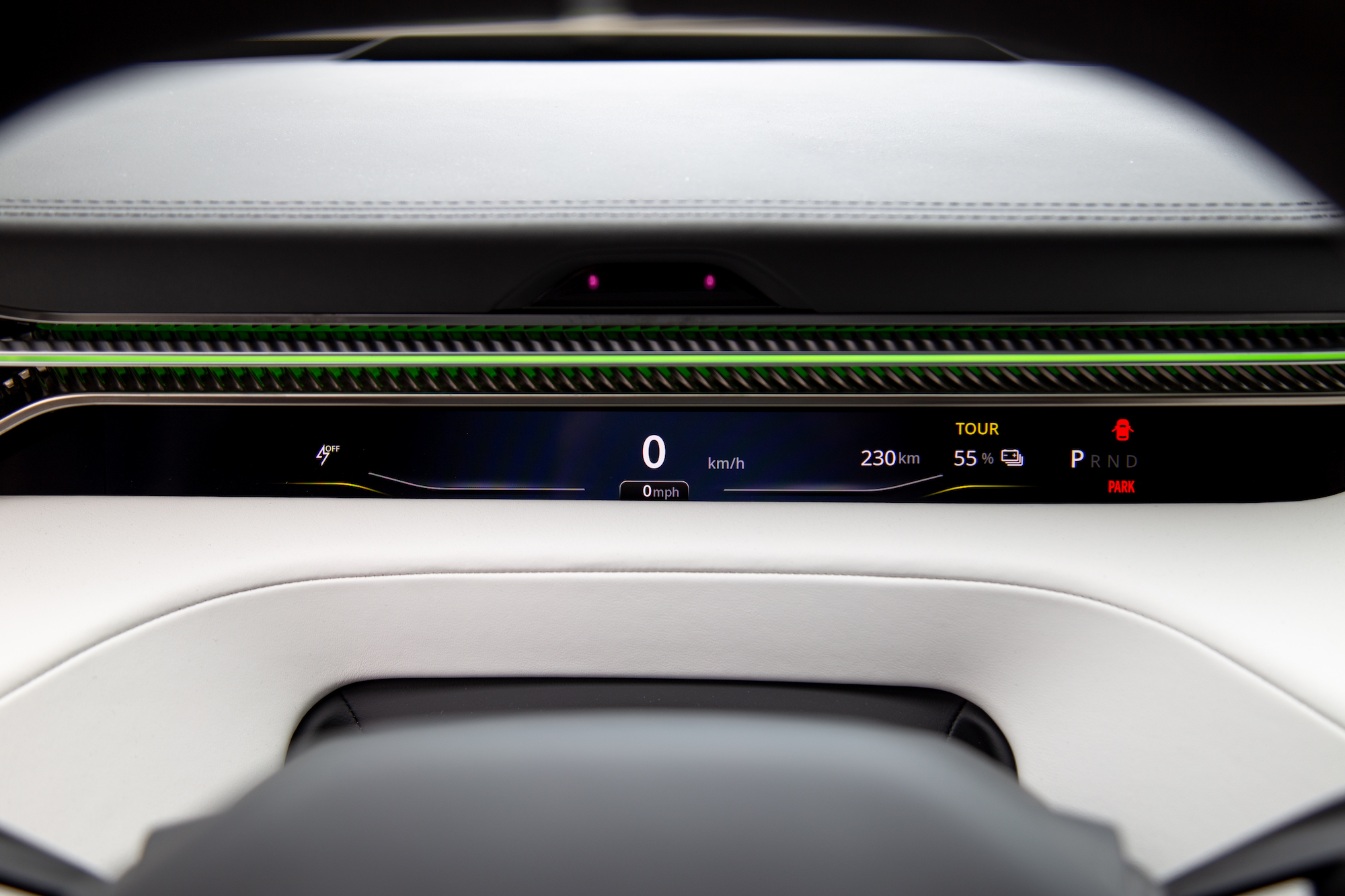
Lotus will offer a fourth model in Canada with a limited run of just 24 units, called the Eletre Carbon, the model we drove. This is the same unit available south of the border, though Americans will not have access to any other Eletre trims. Costing $179,000, the addition of uprated 675 kW electric motors and a two-speed transmission means it will generate a stonking 905 hp, 750 Nm of torque, and a 0-100 km/h time of 2.95 seconds. The range diminishes to an estimated 385 km, and while we didn’t get the opportunity to fully test this claim, our Carbon’s display read out 238 km at a 60% charge.
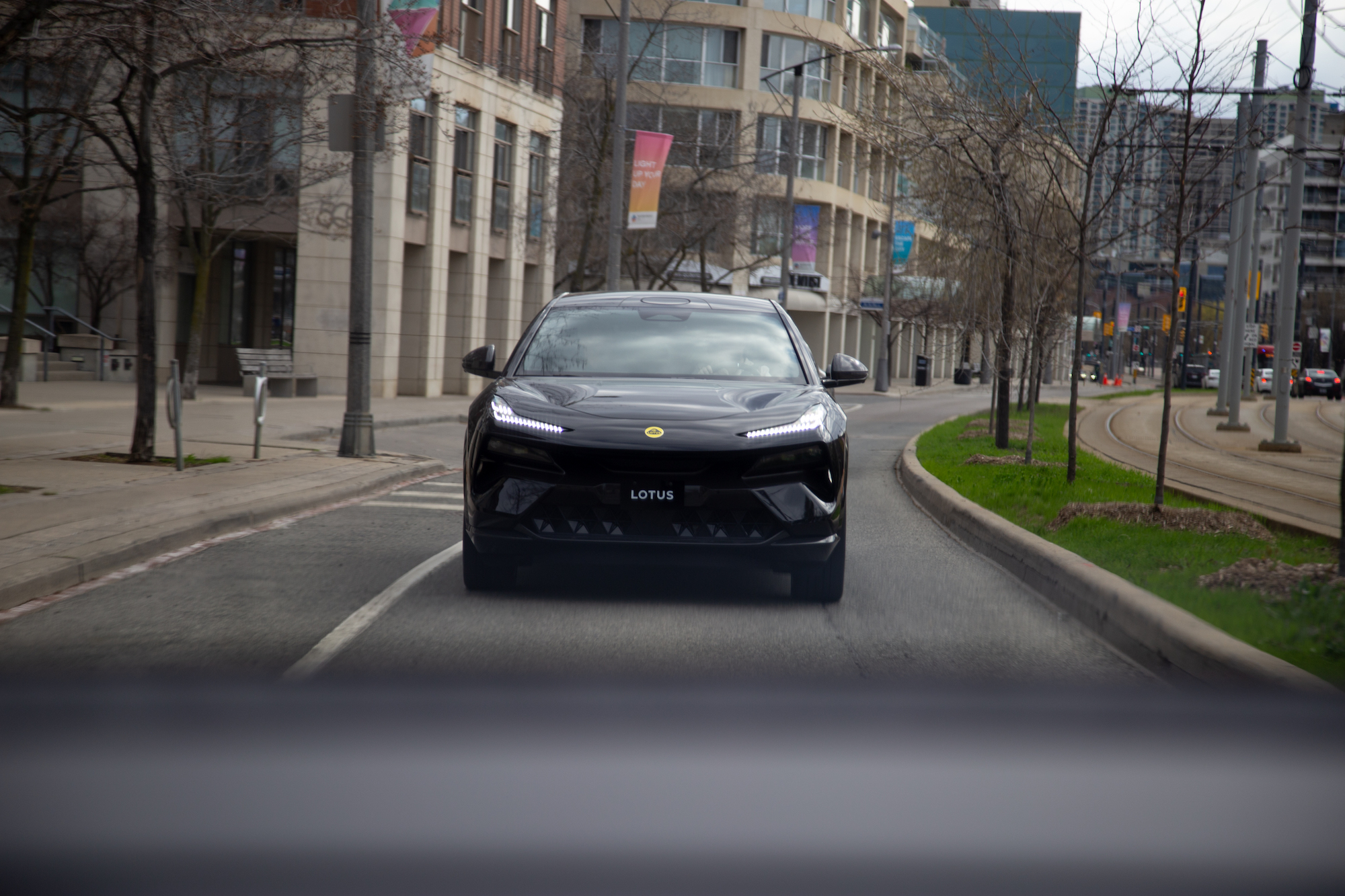
It’s difficult not to get excited about a brand new player in the game. Those expecting Exige-levels of steering feel and driveability will need to readjust their gyros – best to think of the company’s first SUV as a different kind of Lotus, a separate pedal branching off the main stem. The Chapman DNA is in there, somewhere, but it’s more of a distant third cousin than a direct descendant.
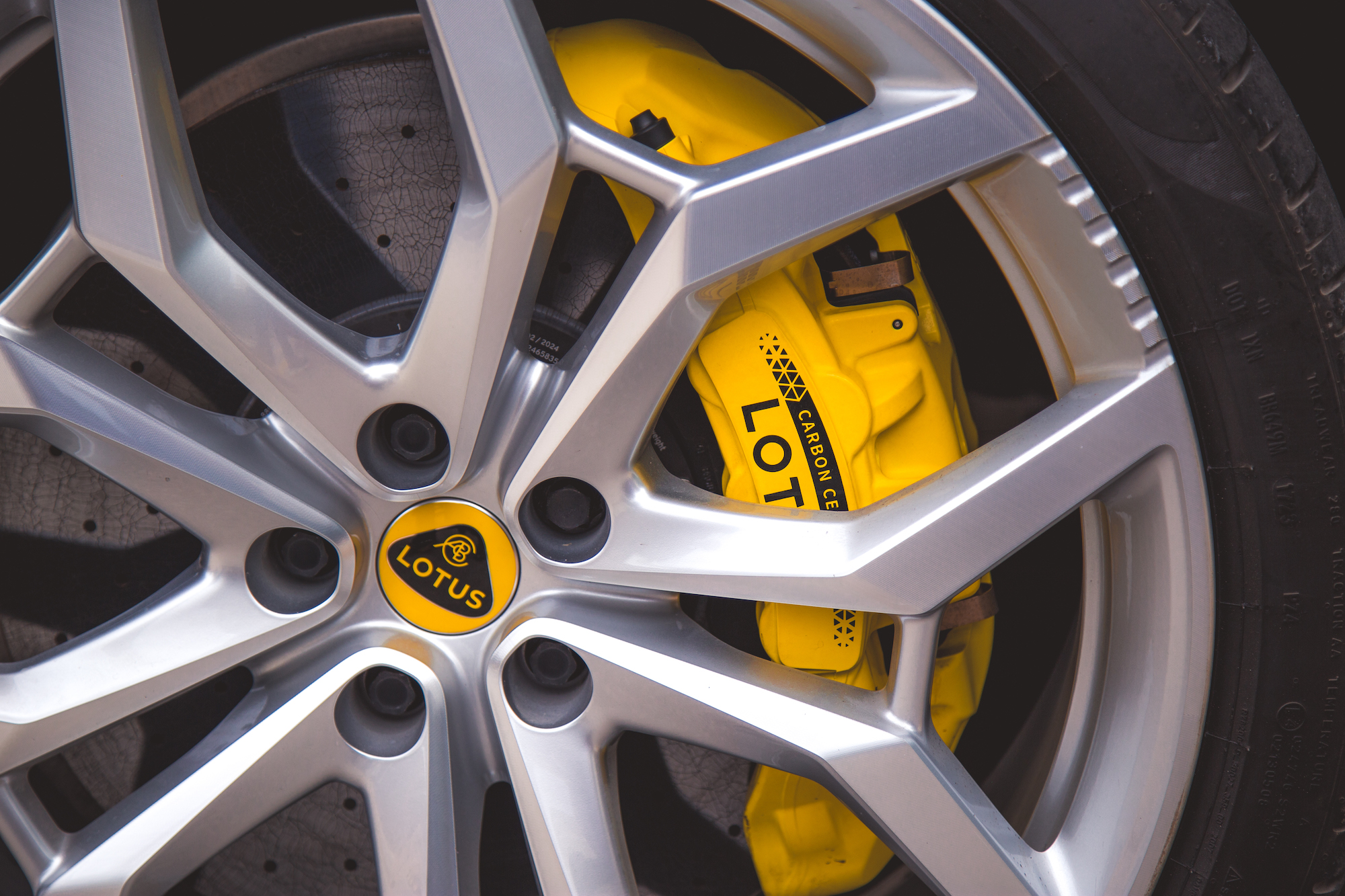
It’s appropriate that the first thing we noticed on our brief drive on congested streets was the stiffness of the dampers and the grip of the 23-inch wheels and Pirelli tires. They took a pounding on the cratered pavement, and though not as absorbent as a Range Rover Sport, the ride isn’t as punishing as a Cayenne Turbo. Selecting the Sport and Track modes stiffen the ride even further, and when we finally found some clear road, we were able to stretch the Carbon’s legs and reach unholy speeds before the 10-piston carbon-ceramic brakes reeled us back in. Canadian models will get standard steel brakes instead, and likely for the better, as these carbon brakes feel more suited to track performance, with strong but sensitive grab even with the slightest bit of pedal movement. Great for laptimes, not so great for those who prefer longer, more languid pedal travel for relaxed commuting.

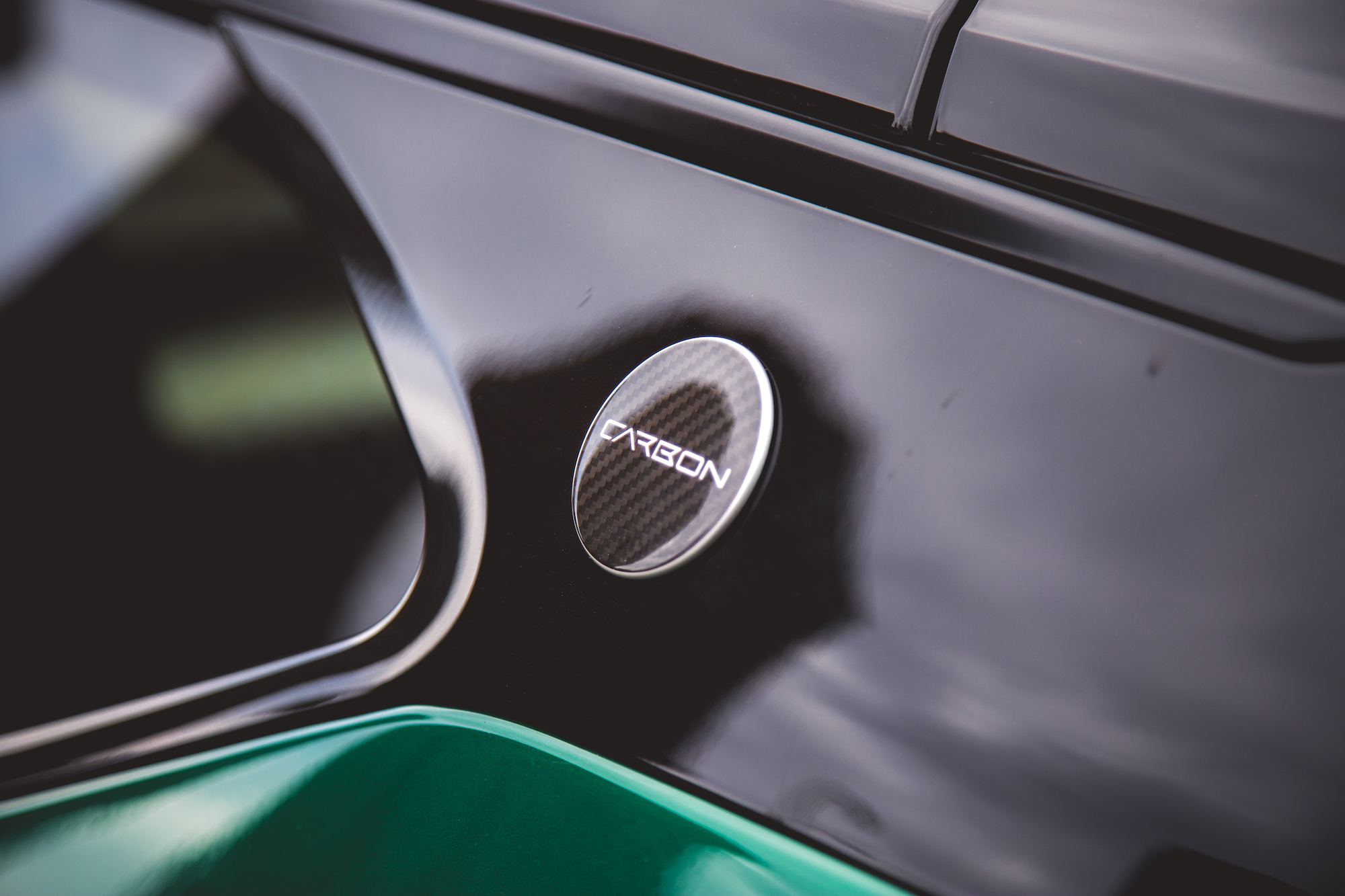
The speed is addicting, but the light-switch power delivery of potent EVs becomes monotonous and humdrum over time, and the Eletre falls victim to the same. Yet, the fluidity and polish of its power delivery are impressive, and it’s a smooth operator no matter how hard you push the go-fast pedal. Will the standard Eletre models with their ‘only’ 650 hp feel any different? Likely not, but the active air suspension, brake-based torque vectoring, active anti-roll bars, and rear-wheel steer will ensure they’re all easy to pilot. Through its robust and light steering, rhythmic suspension, and quick point-to-point pace, it’s a grown-up SUV that you can mature into from the Emira, though the Eletre is definitely more touring-focused than its marketing suggests.


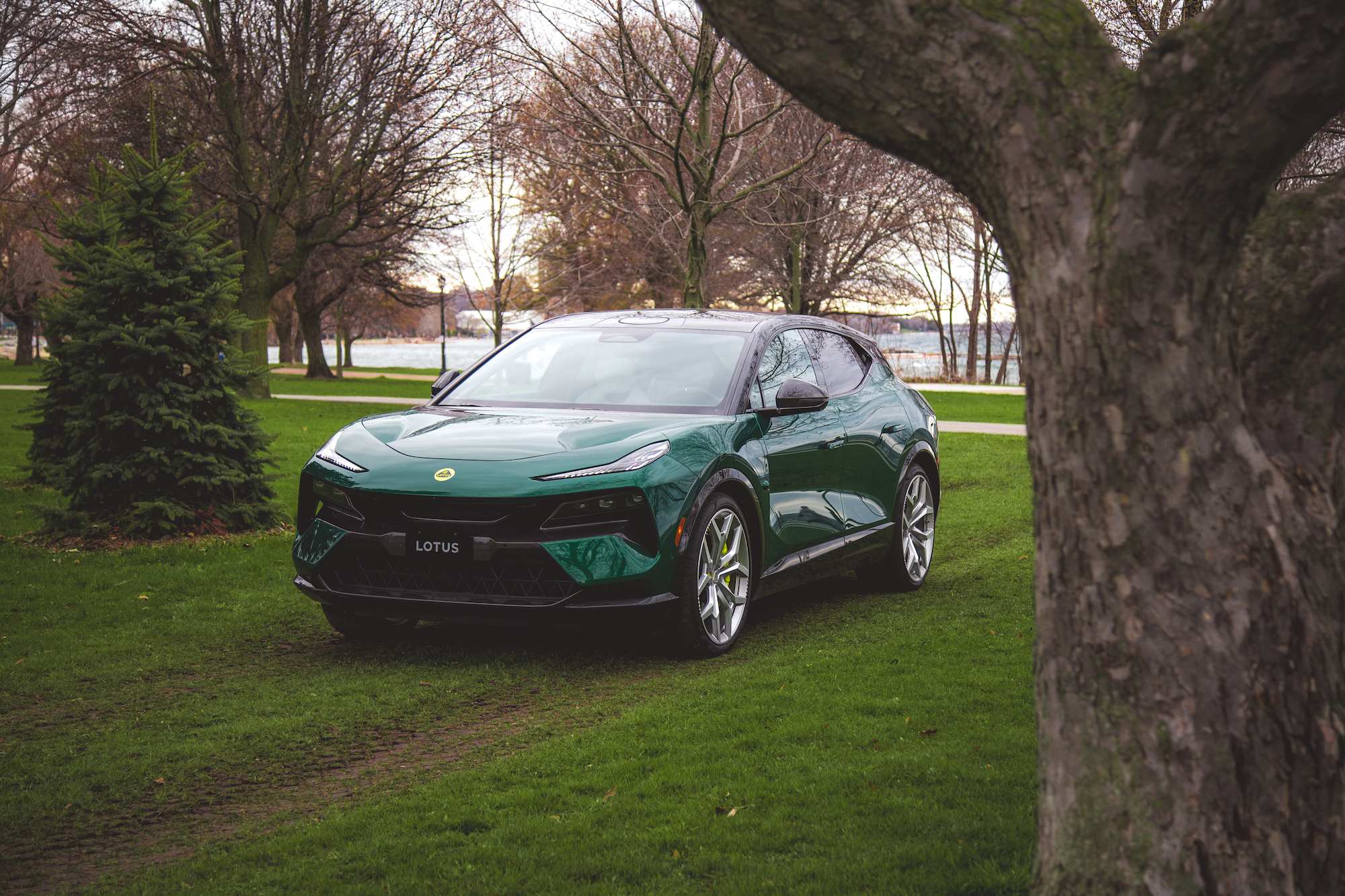
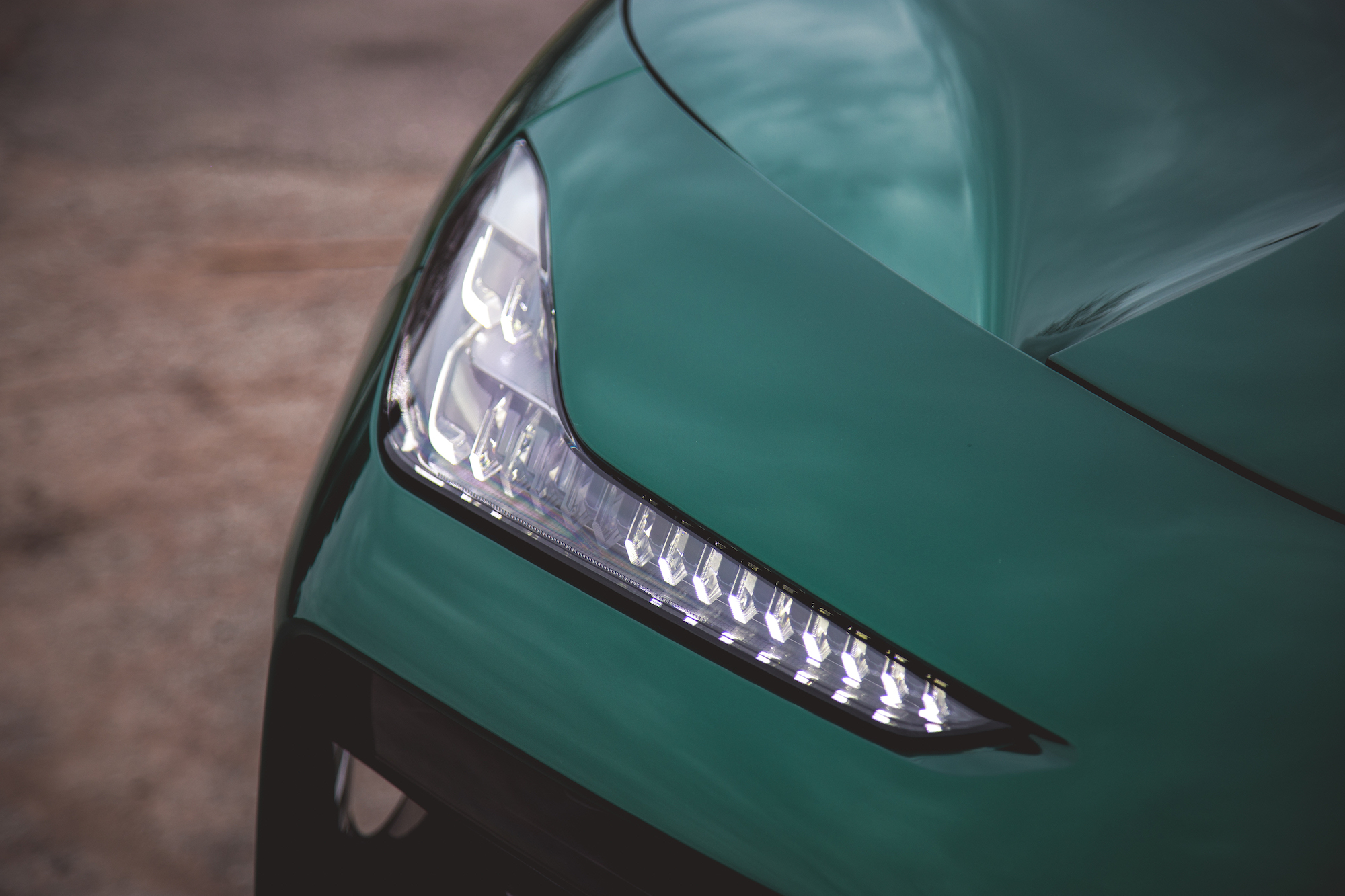
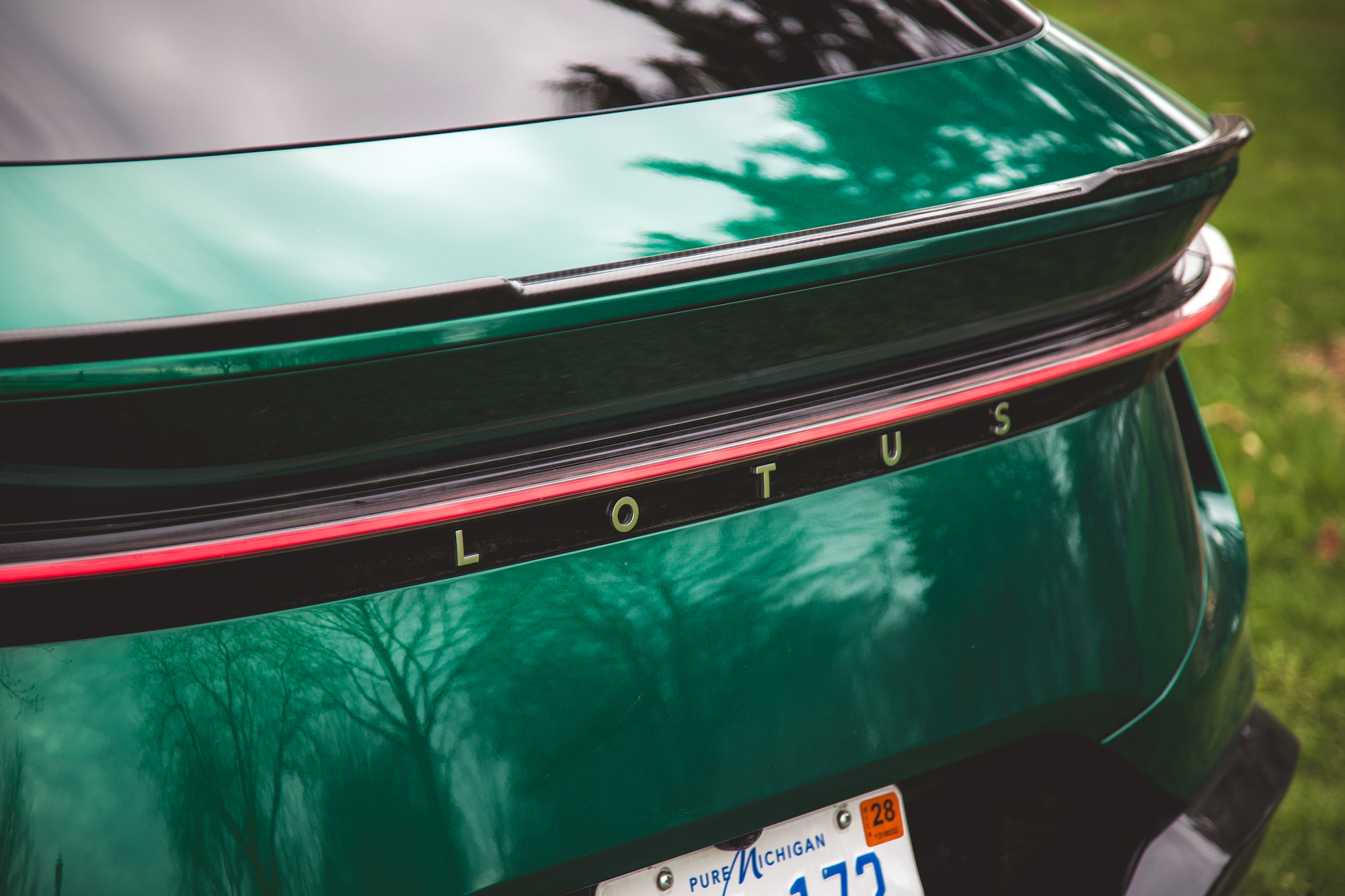
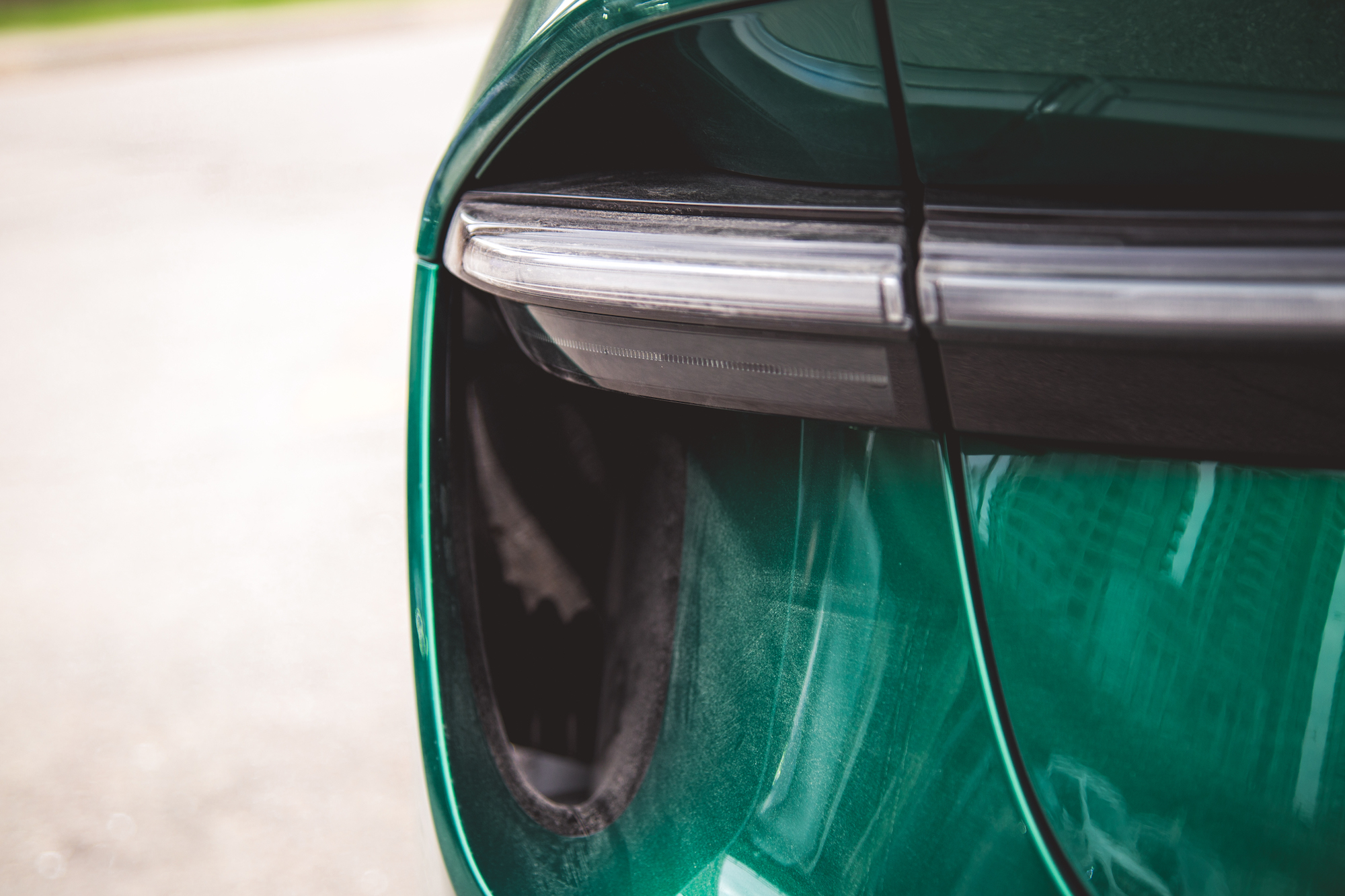
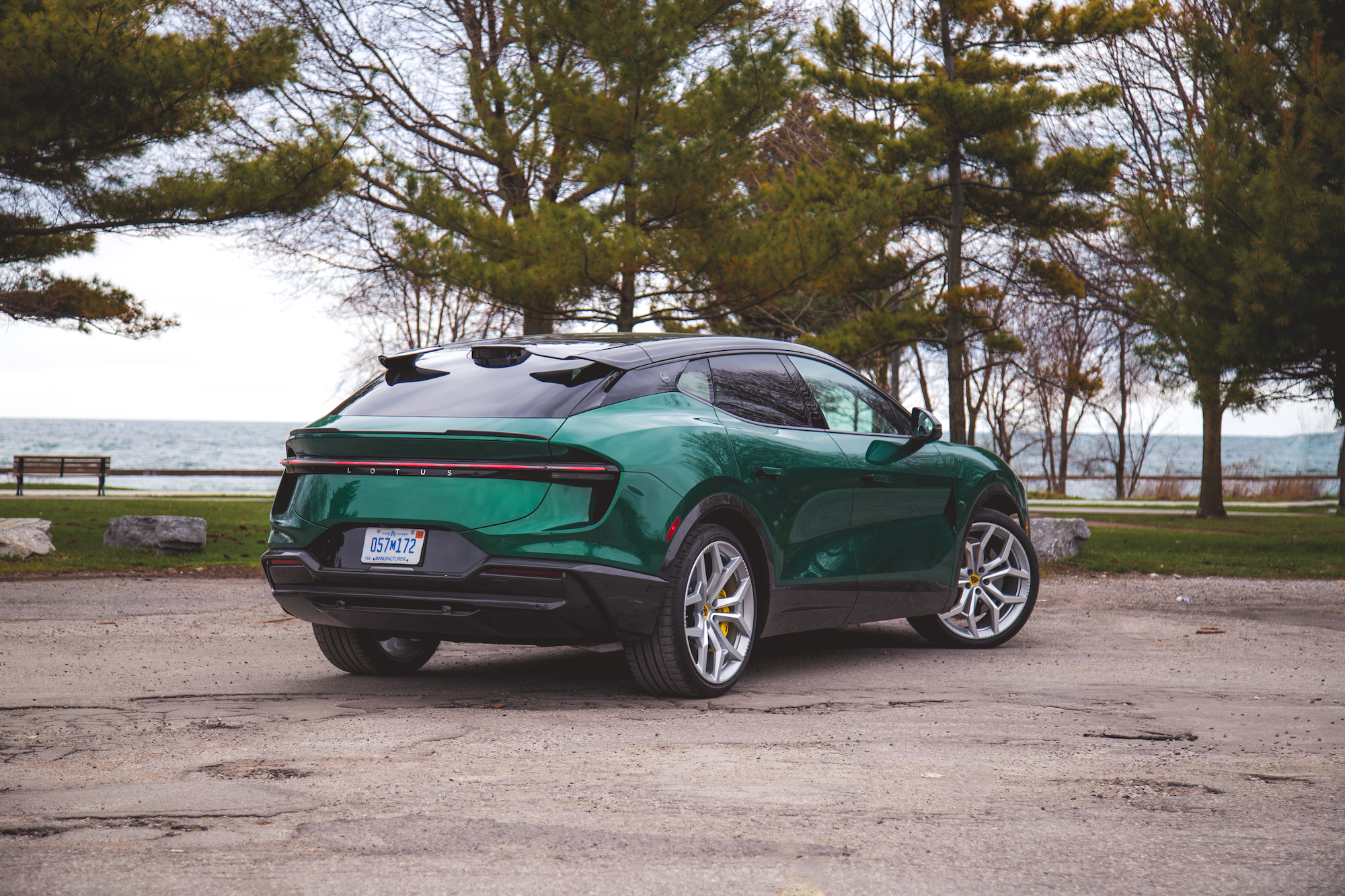
The more you look at the Eletre, the more intricate details you will discover, from the dual winged roof spoilers that hang out like a Power Ranger’s megazord, to the lower honeycomb grill that opens up like a Star Wars pod racer engine. The Eletre adopts polarizing styling that’s challenging to look away from, and while it may be an acquired taste at first, it’s nice to see a new face with a splash of colour next to the sea of white and black SUVs.

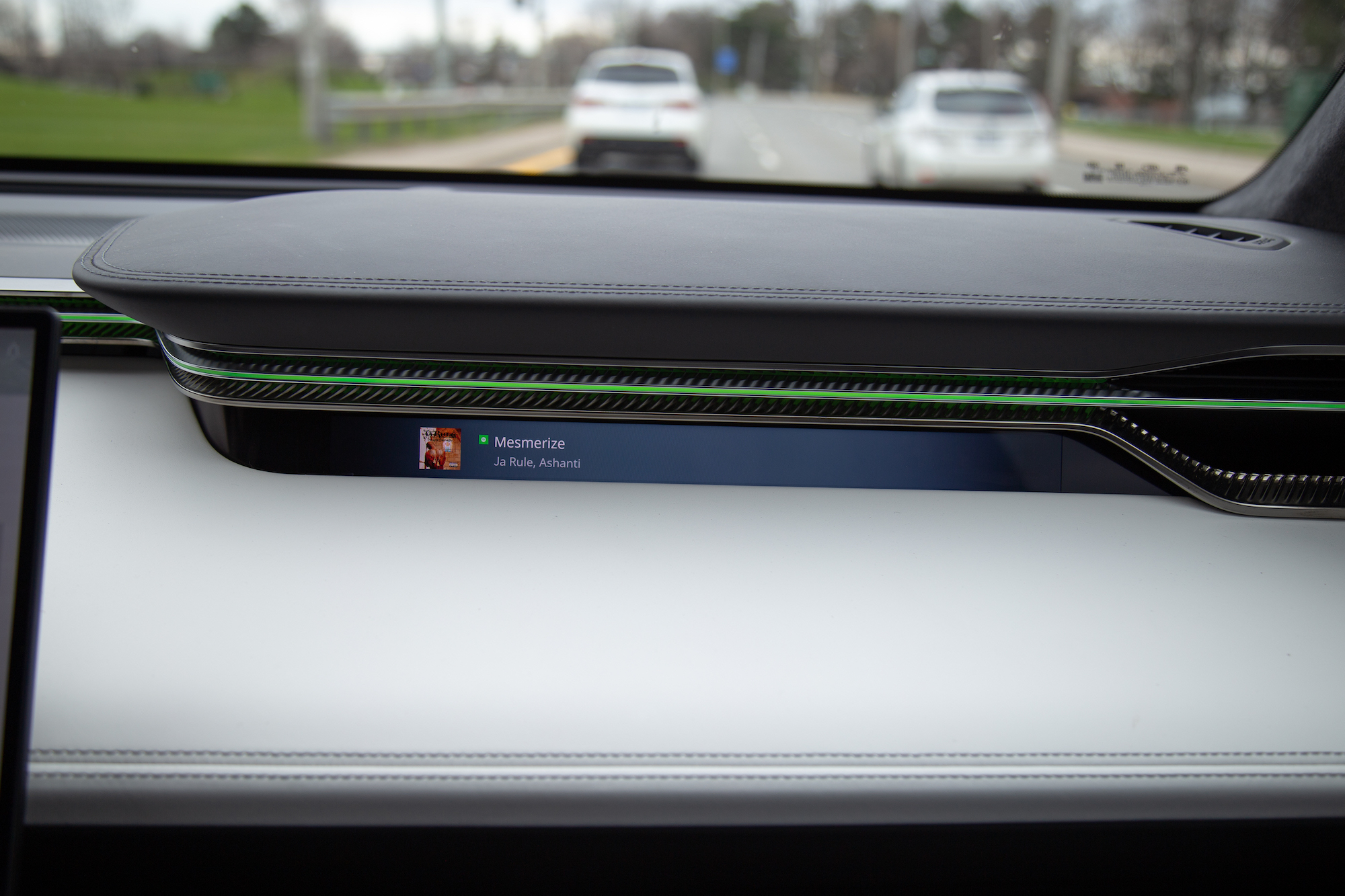
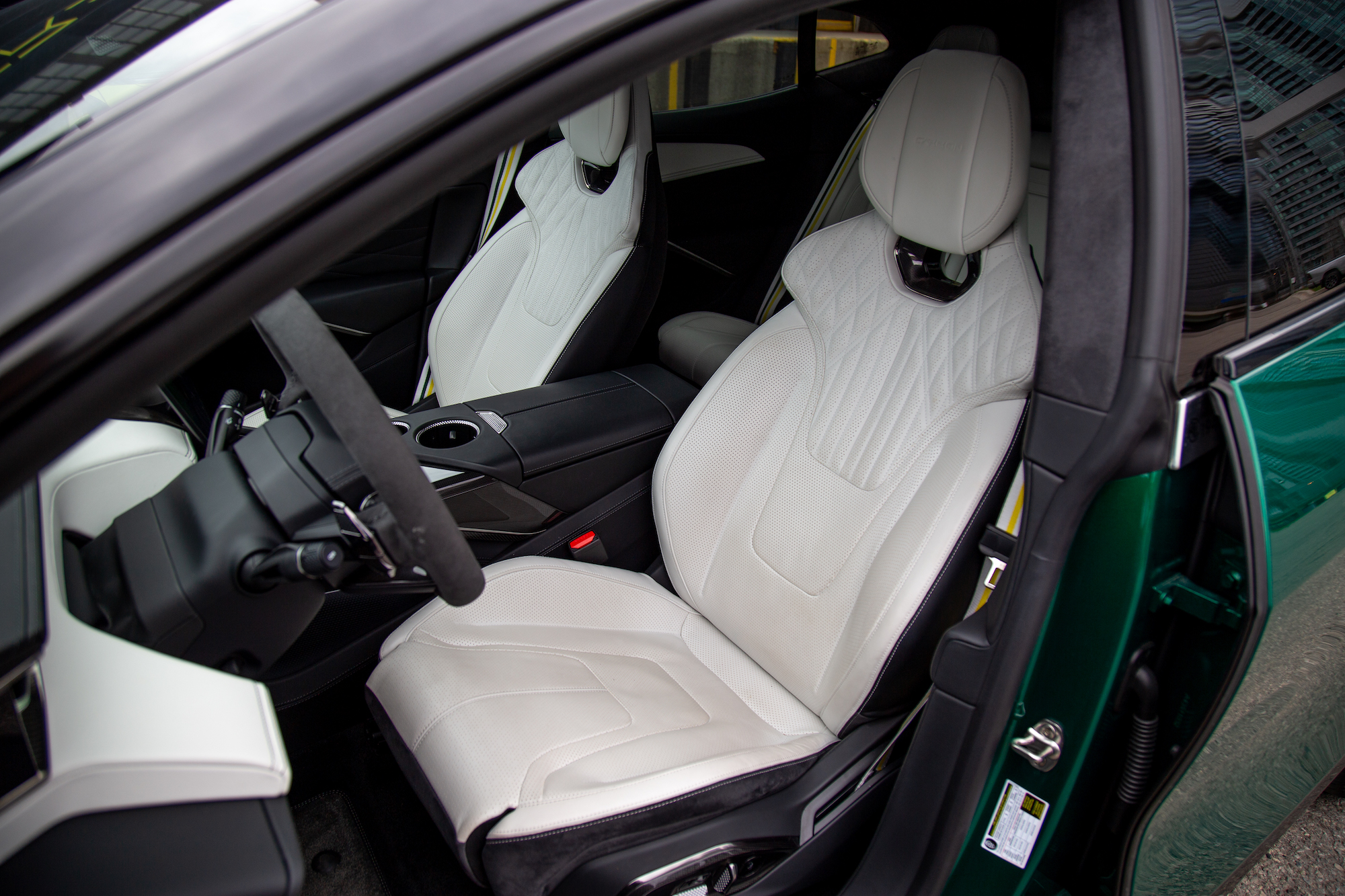
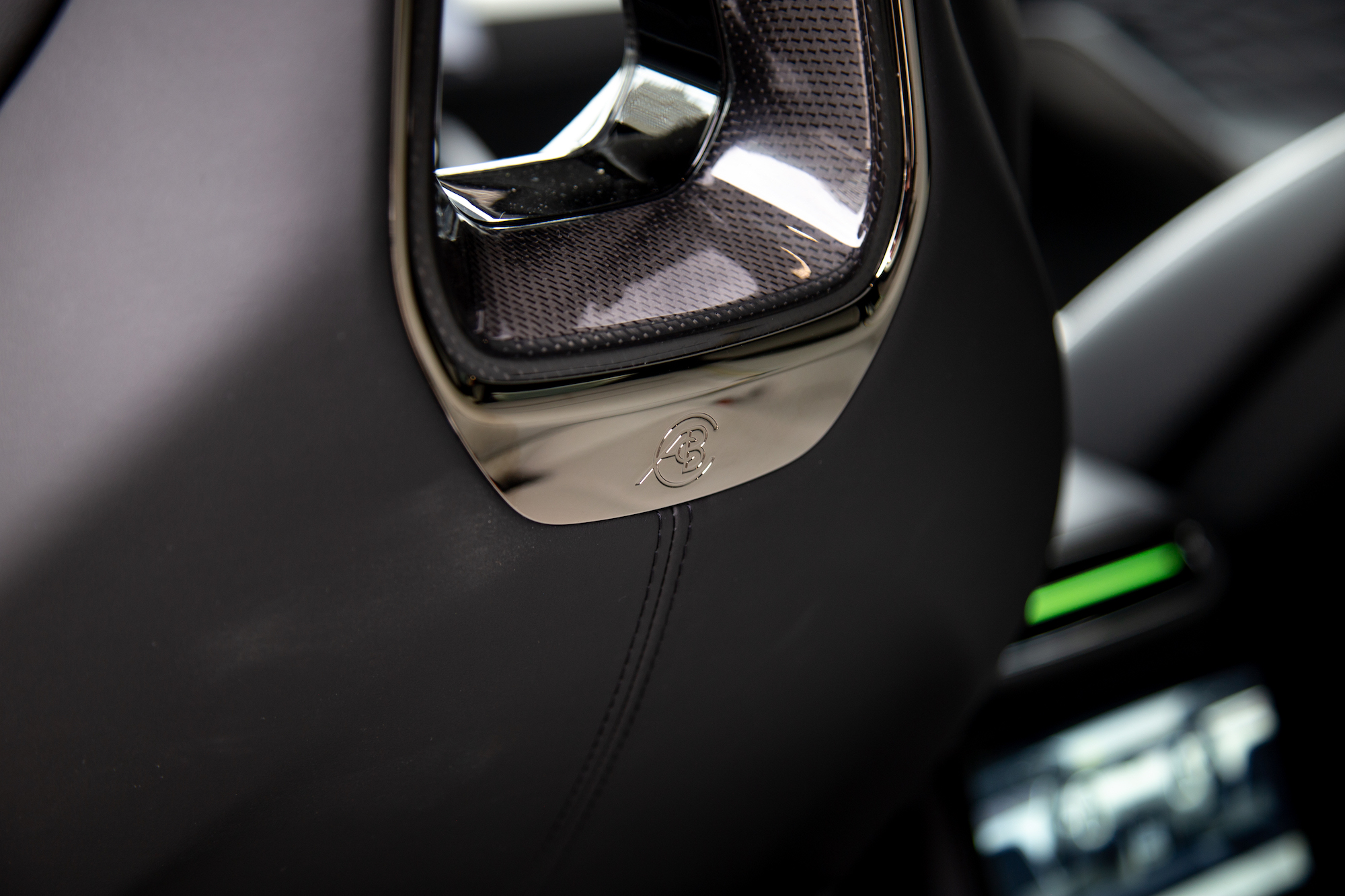
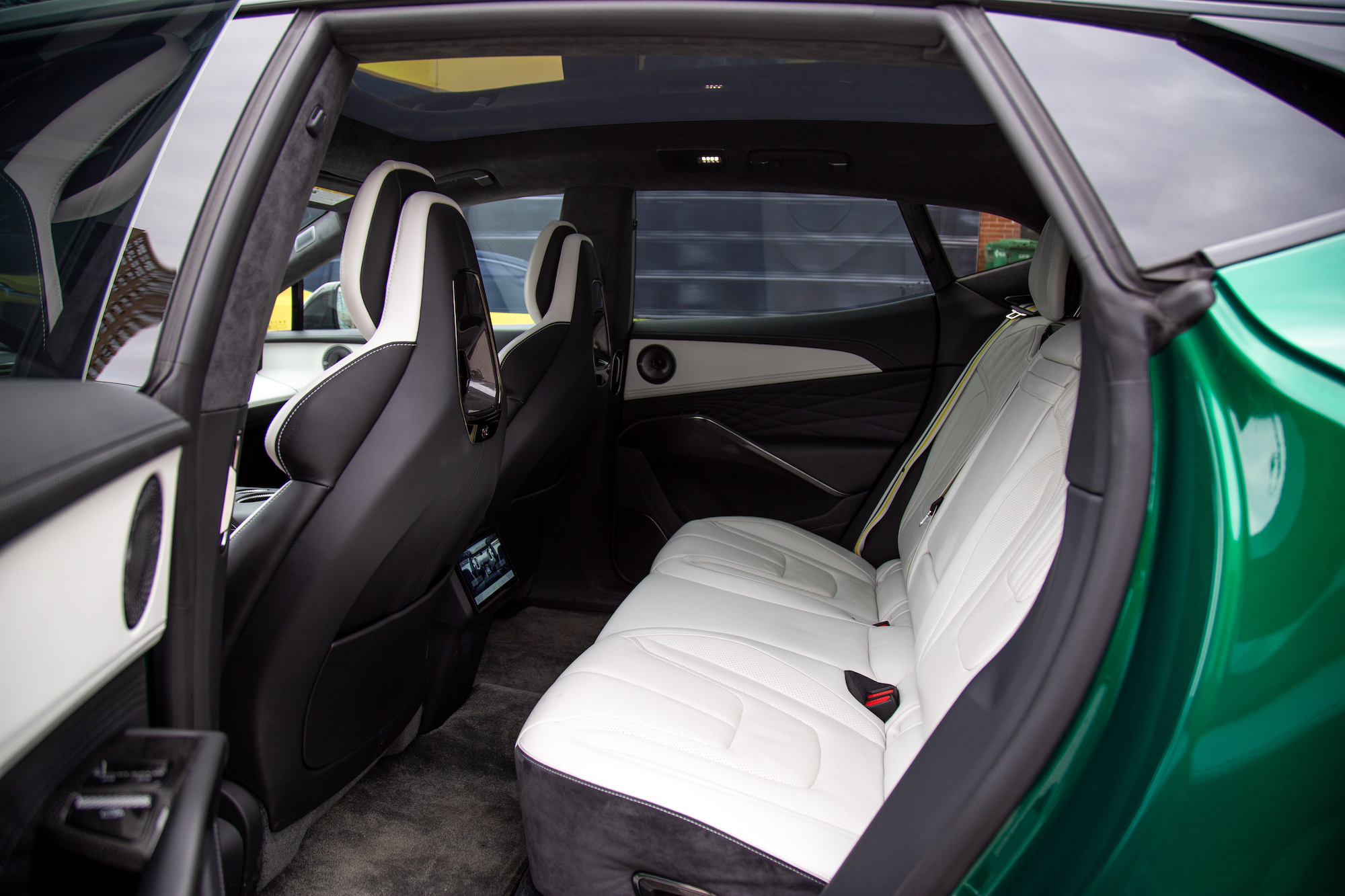
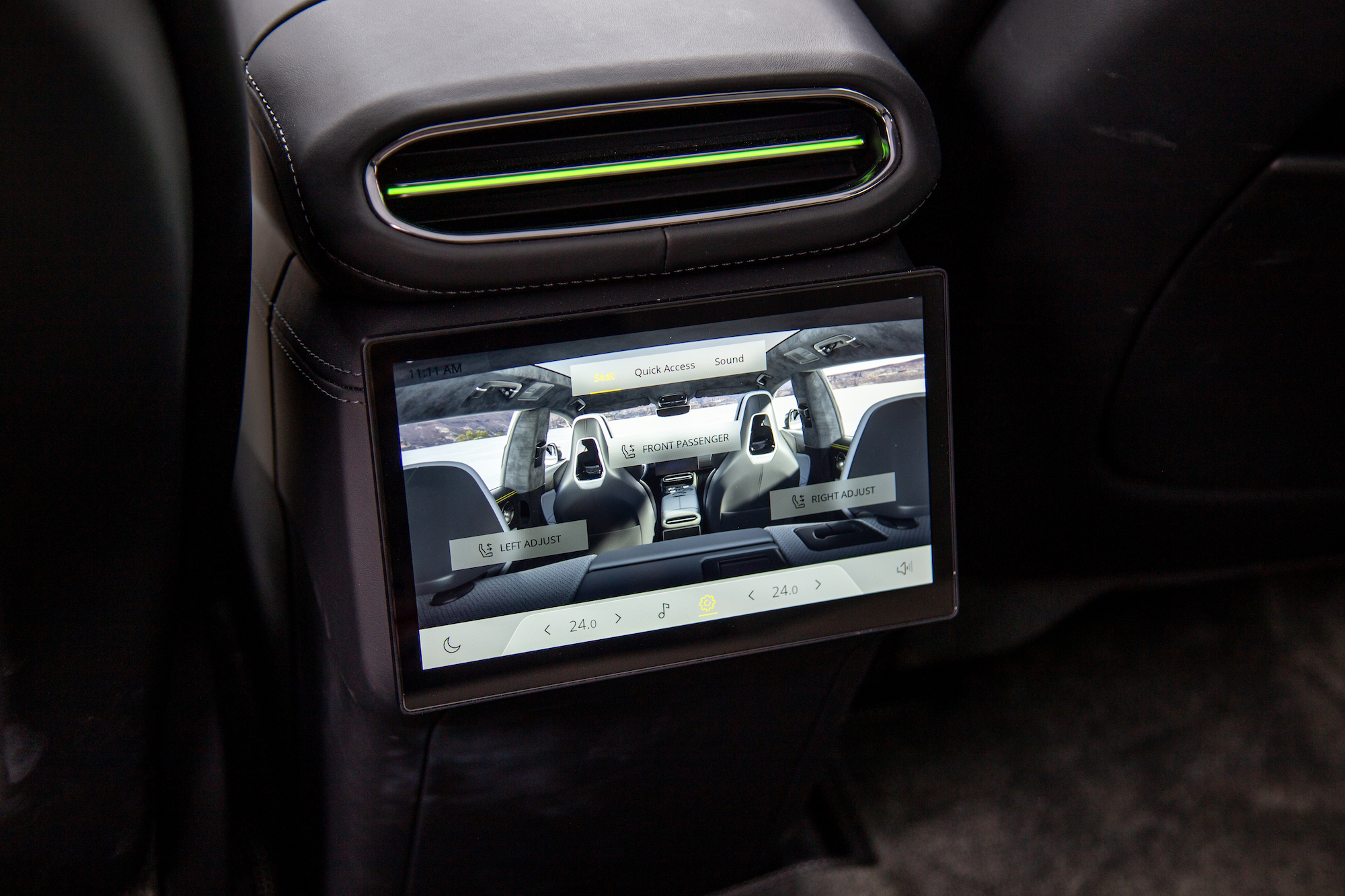
The cabin features a refreshing, wonderfully airy, and clean layout, matched by a crisp, lag-free 15.1-inch OLED center touchscreen. Carbon is lathered in all the right places, from the steering wheel to the front seatbacks, while Alcantara and Bridge of Weir leather fill the remaining gaps, the latter material being used in every British vehicle you can think of, from Aston Martins to Rolls-Royces.
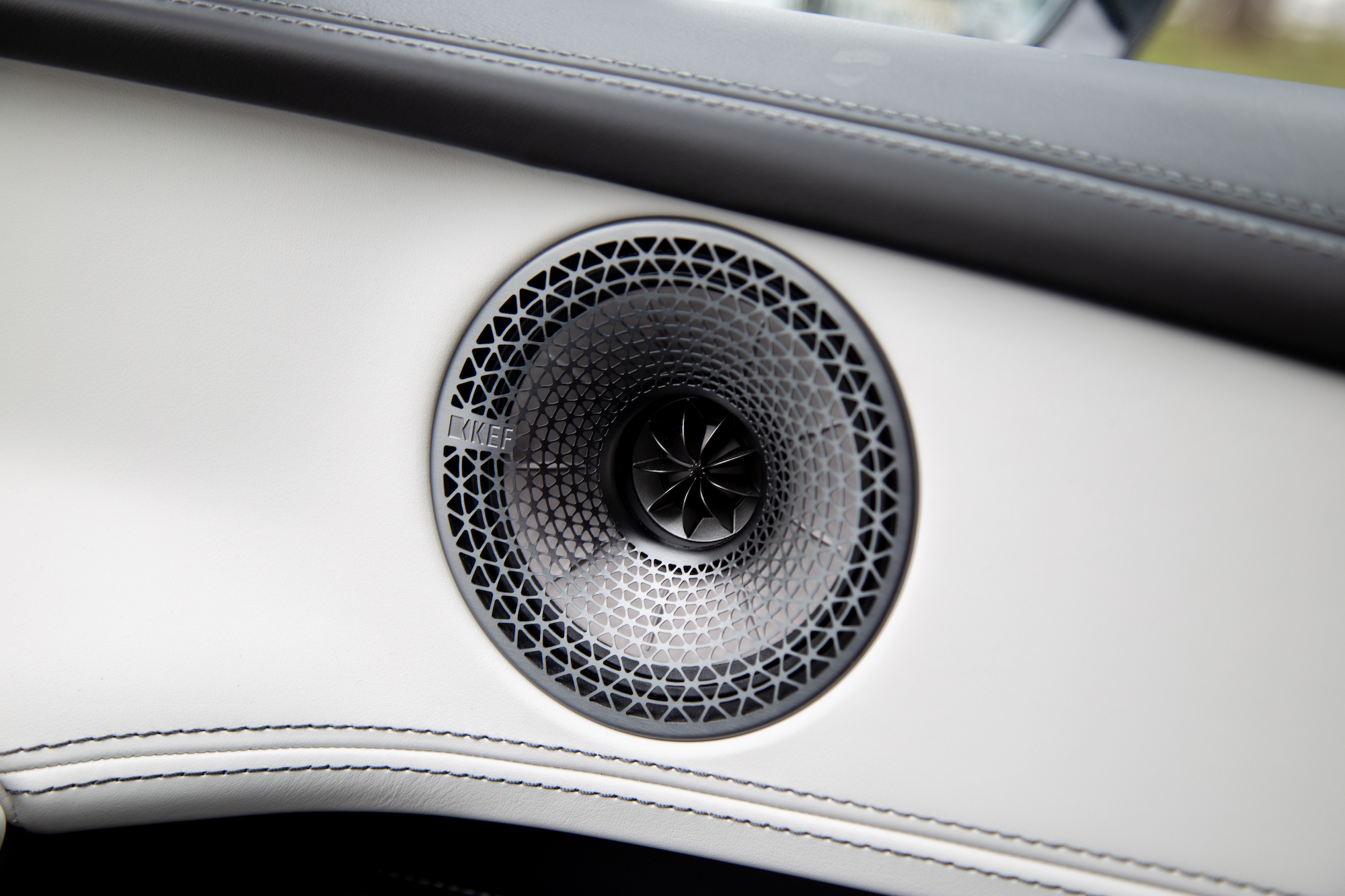
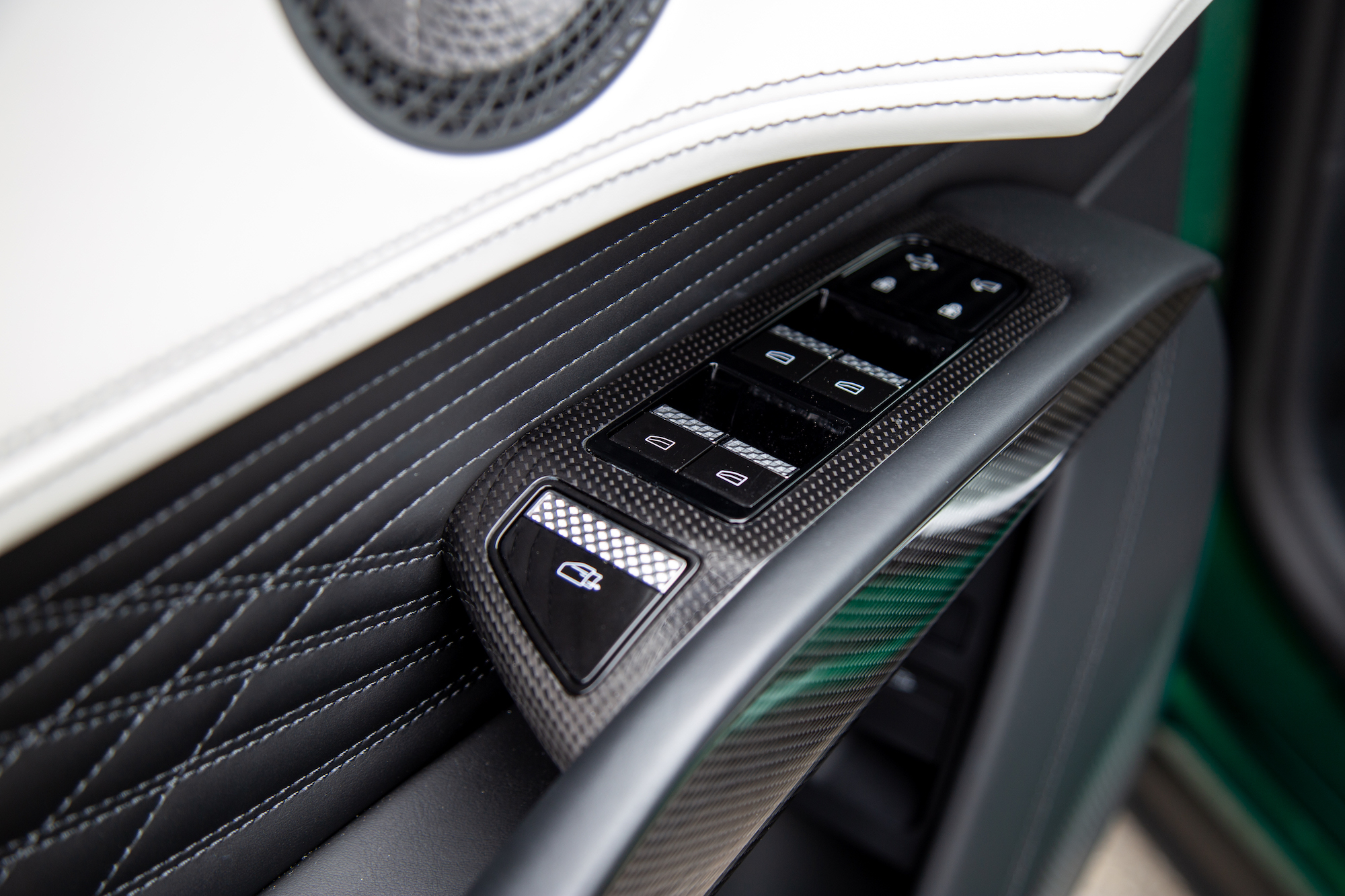
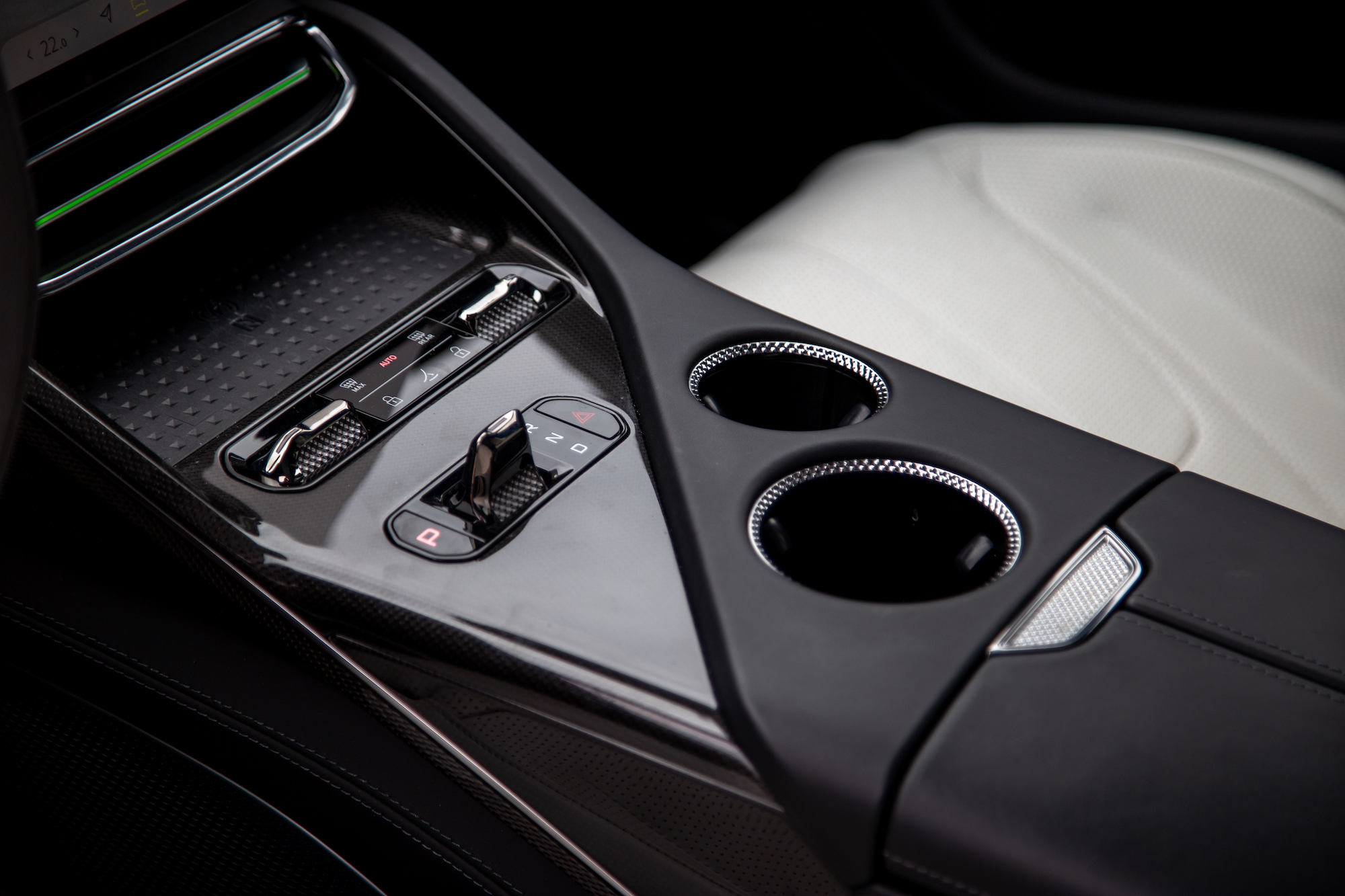
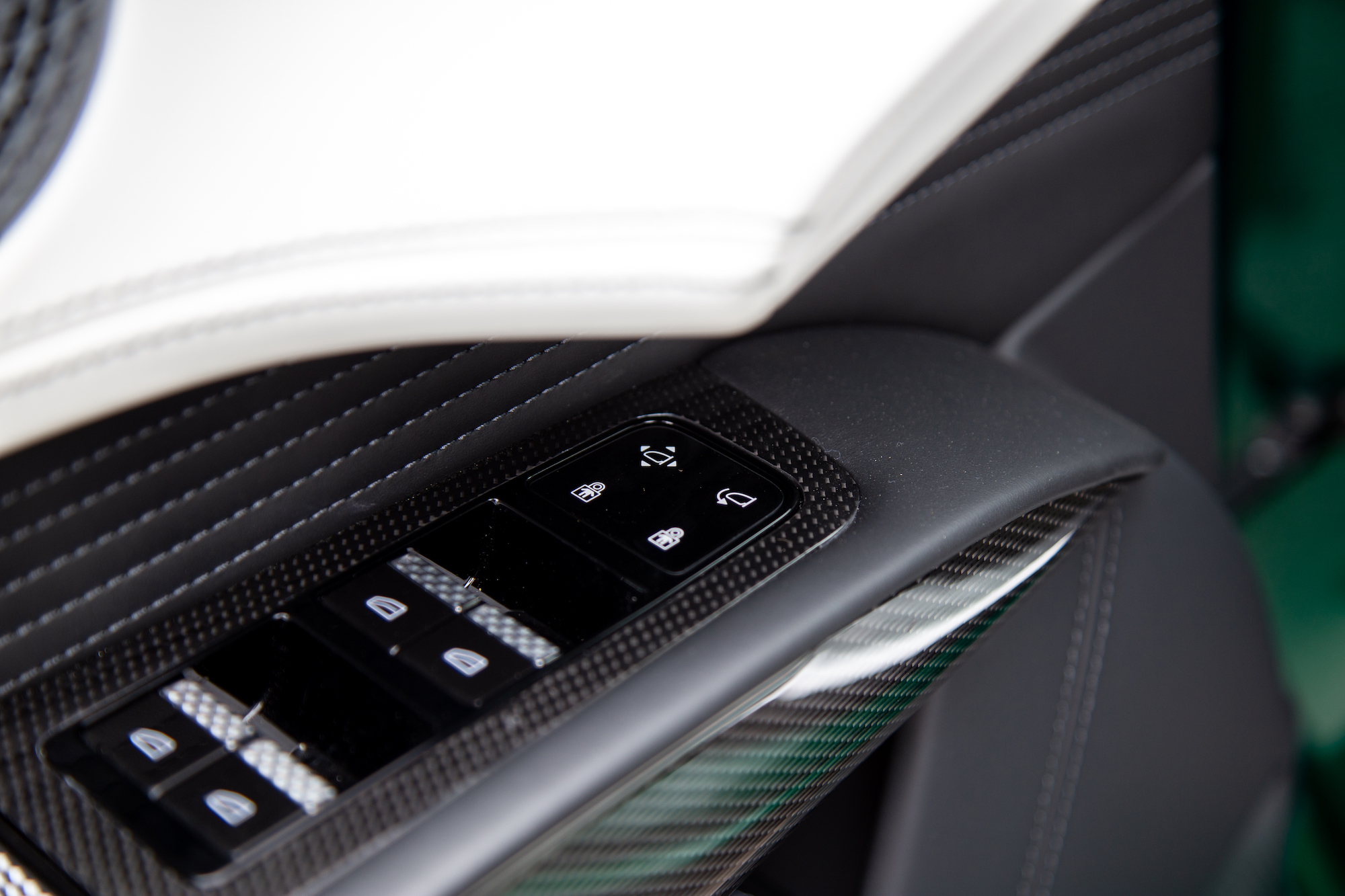
We expected the textures on the KEF speaker grills and the knurling on the switchgear to feel more premium. They are plasticky and lack the metallic robustness or shiny chrome finish found in Cayennes and Range Rovers. The same goes for the button action and levers, all of which lack that deftness and quality feedback that you get in an Aston Martin DBX.
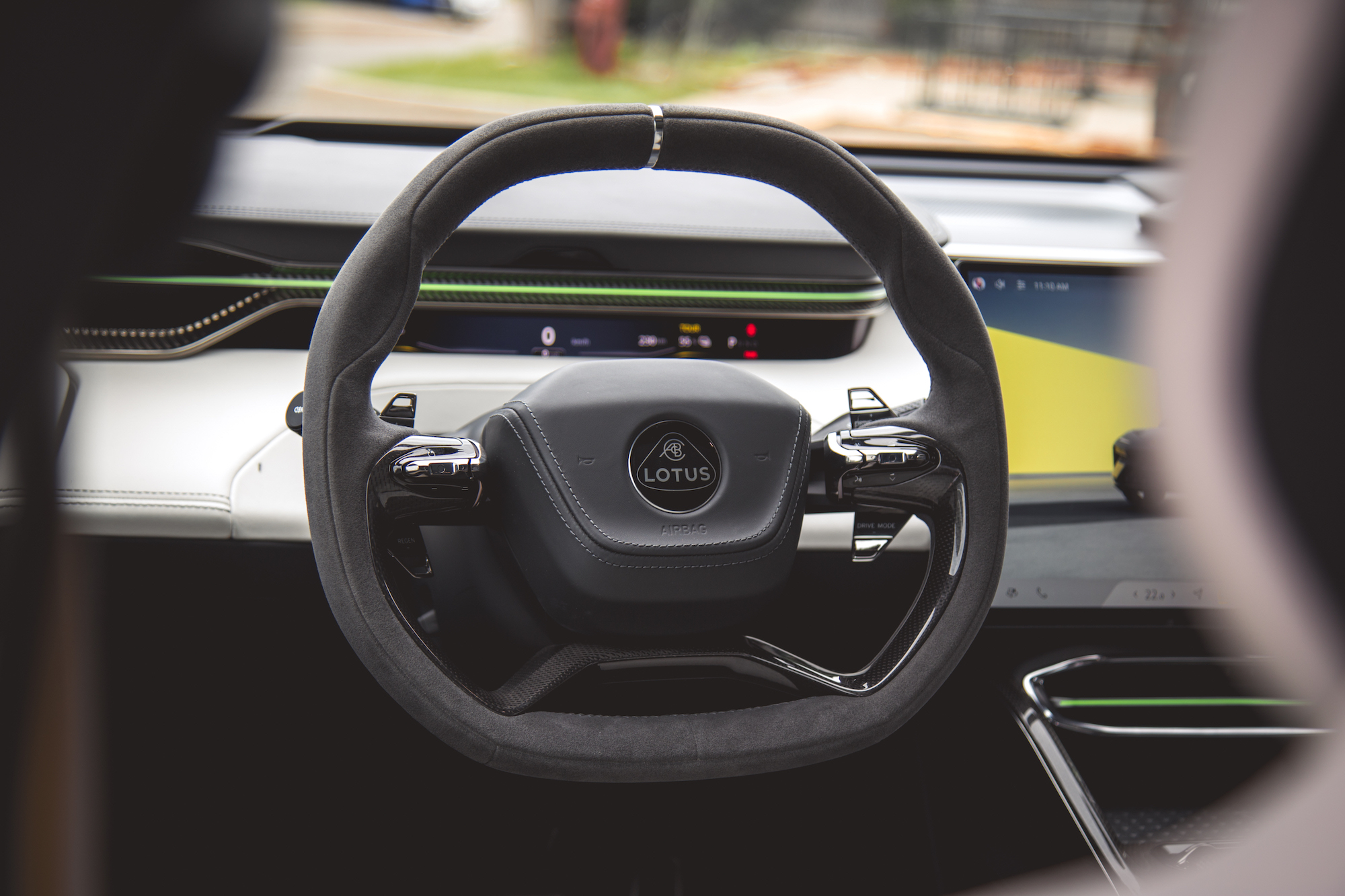
The suede on the thin-rimmed steering wheel feels great, though, and the paddle shifters are cleverly programmed to adjust brake regeneration and driving modes, giving you quick access without resorting to dedicated dials like on Mercedes and Porsches. Like Volvos, however, there are no dedicated side mirror adjustment dials. Instead, you adjust them via the steering wheel’s directional buttons. The good news is that there’s a proper, electric steering wheel adjustment lever on the left side of the column.
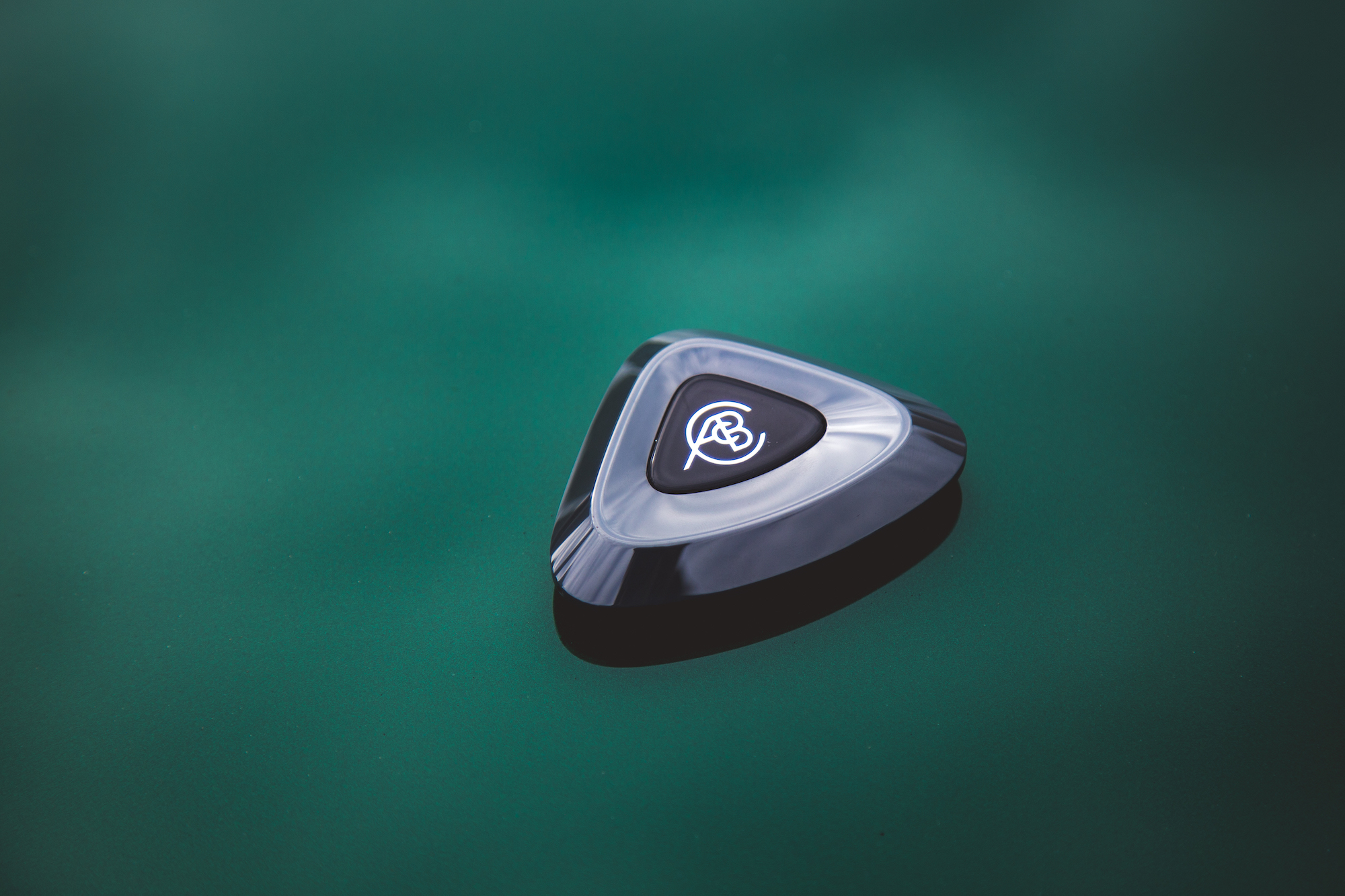
The Carbon-exclusive tricolour seatbelts in white, yellow, and green conjure up memories of the Lotus 49 and are our favourite cabin item, but the lozenge-shaped, weighty, metallic key fob comes a close second. Too often, key designs are overlooked and treated as an afterthought, which is a shame, as they’re typically the first point of interaction with your brand-new car. Maseratis and Aston Martins have always been strong proponents of offering high-grade keys, and Lotus has understood that task as well. Notably, the Eletre key differs from the Emira’s, which makes sense since they’re manufactured on separate continents.
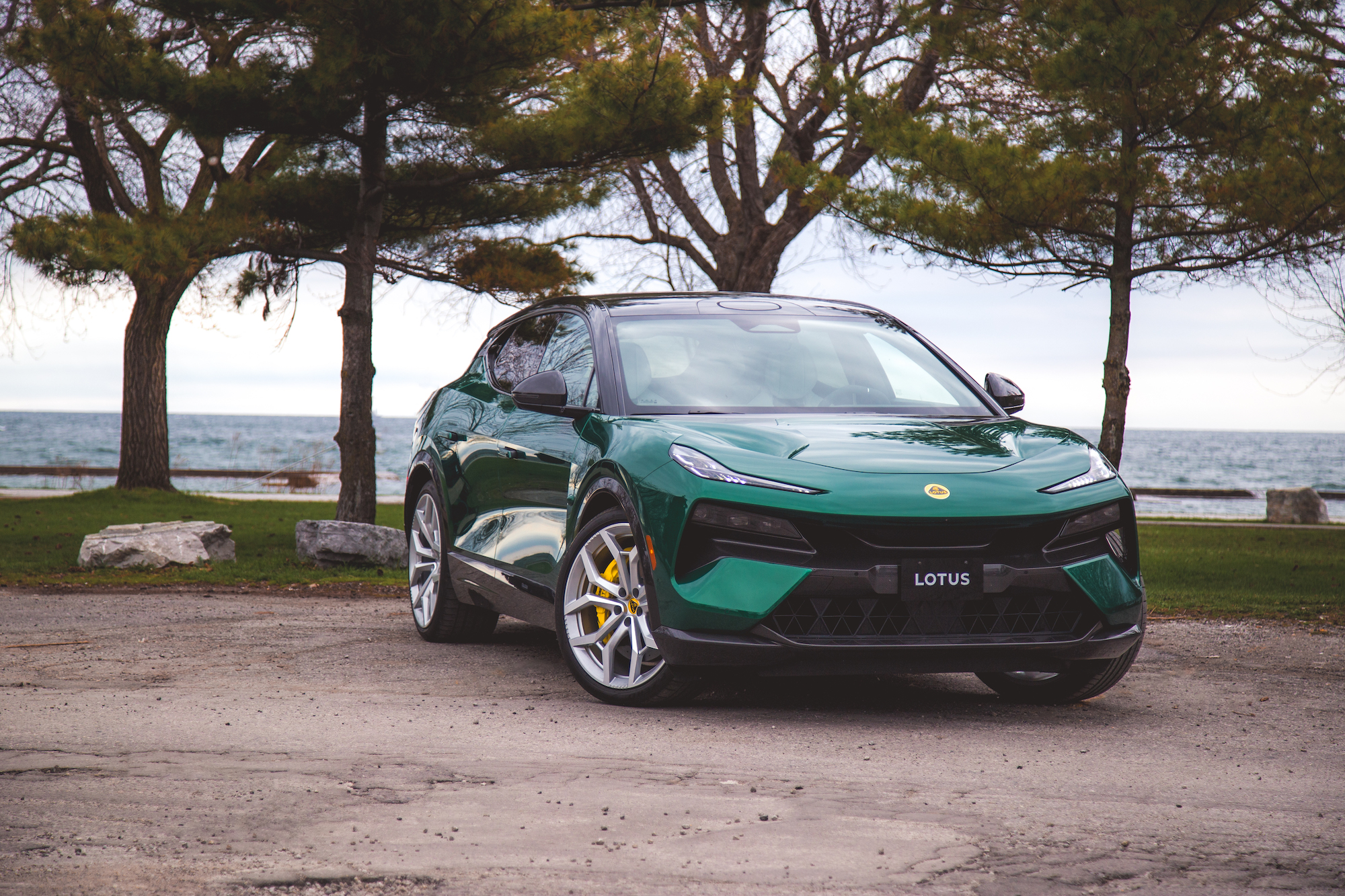
The Lotus Eletre is one of the few cars that are significantly cheaper to buy here in Canada than in the United States. Down south, the Eletre Carbon costs $229,900 USD, or about $315,000 CAD in today’s exchange rate, more than a Range Rover SV and in line with an Aston Martin DBX. Or Europe, for that matter, where it’s home turf lists it for 139,990 GBP. Bargain? In a relative sense, absolutely, but Lotus will need to contend with a market that has heard little of the brand.
The upcoming Emeya looks promising and should hold a candle to the Model S and Taycan, the delayed Evija hypercar is finally being delivered to customers in North America, and the mid-engined Emira continues to deliver wastegate-fluttering thrills with a hydraulic steering rack that breathes life back into your fingertips. The future of Lotus is promising. Let’s just hope another tariff war doesn’t happen and ruin it all again.
Specifications:
Model: 2026 Lotus Eletre Carbon
Paint Type: Galloway Green
Base Price: $179,000
Wheelbase(mm): 3,019
Length/Width/Height (mm): 5,103 / 2,231 / 1,639
Powertrain: 112 kWh lithium-ion battery, two electric motors (675 kW)
Horsepower: 905 hp
Transmission: Two-speed transmission
Drive configuration: Dual electric motors, AWD
Claimed Range: 385 km
Tires: Pirelli P Zero; 275/35R23 front; 315/30R23 rear







Leave a Reply