
Sailing discreetly in the shadows, the Infiniti QX80 has always been a quiet choice in the domain of large, body-on-frame, eight-seater SUVs. Outshone in popularity by the Cadillac Escalade, Lincoln Navigator, and Range Rover, Infiniti’s largest lacks the brand cache that fuels the adolescent’s pipedream into a grown-up pursuit, but it advantageously undercuts the competition in price, with only the Jeep Grand Wagoneer being less expensive. Don’t overlook this understated QX80, though, as it has plenty to offer.
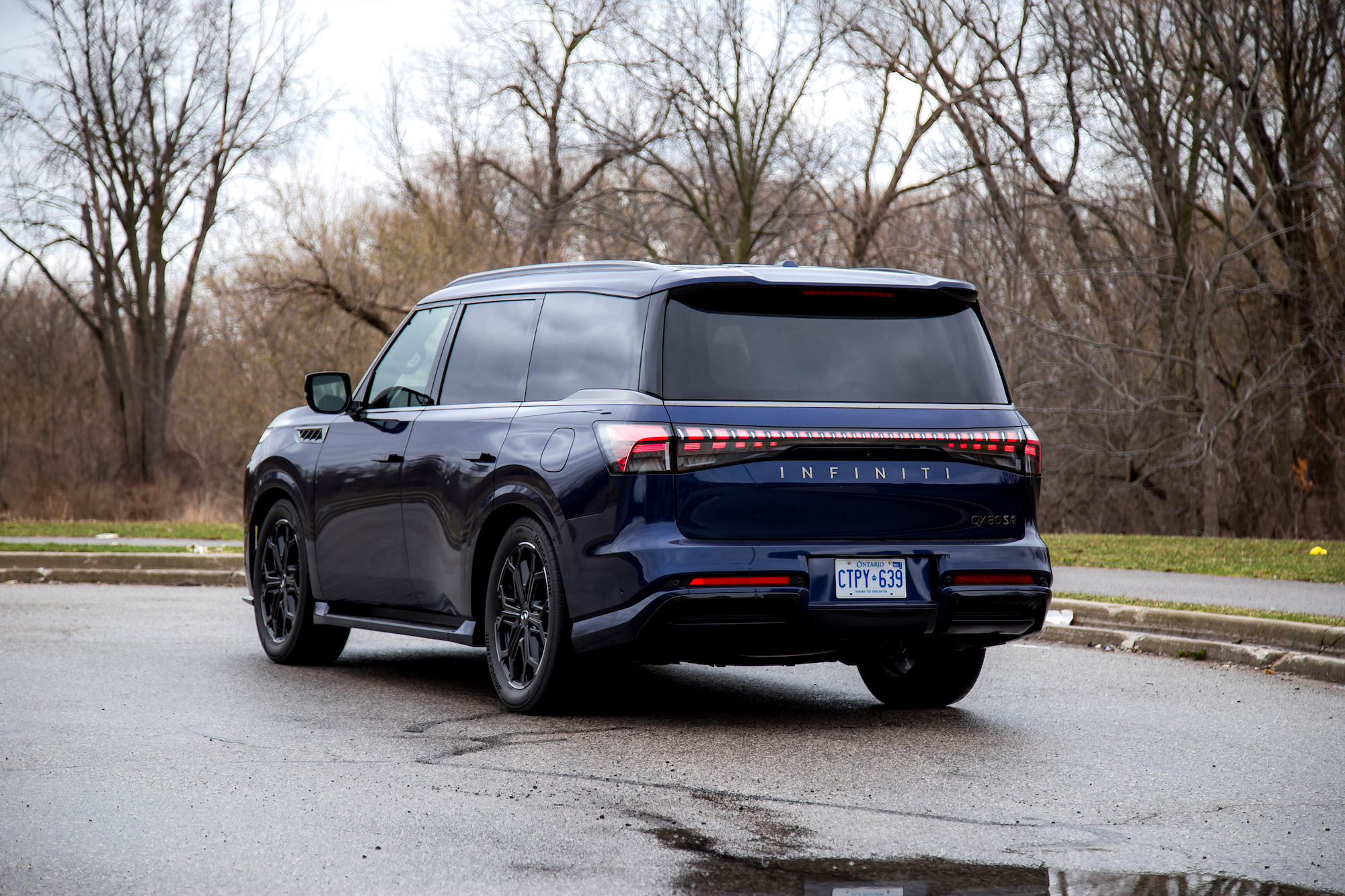
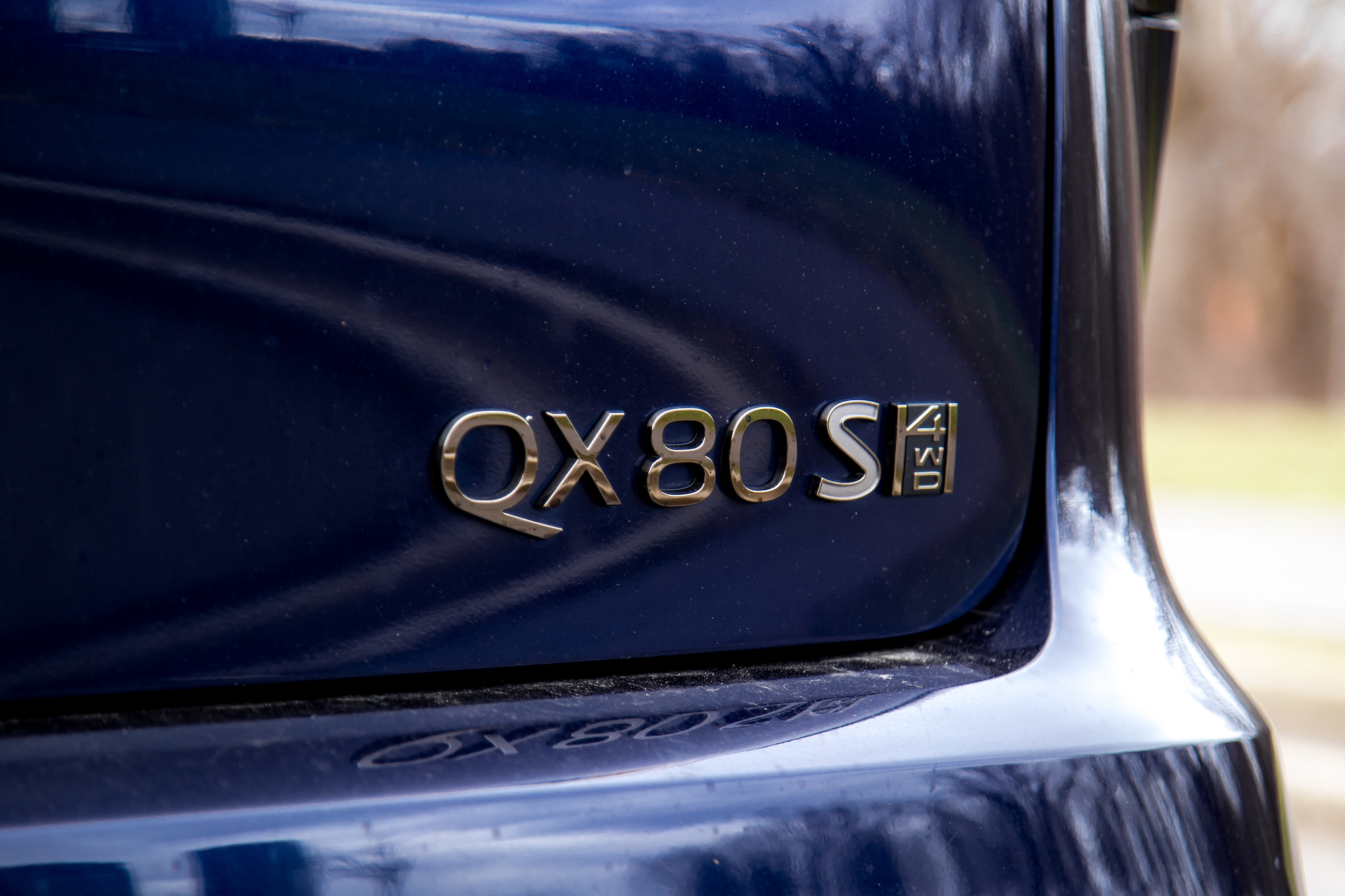
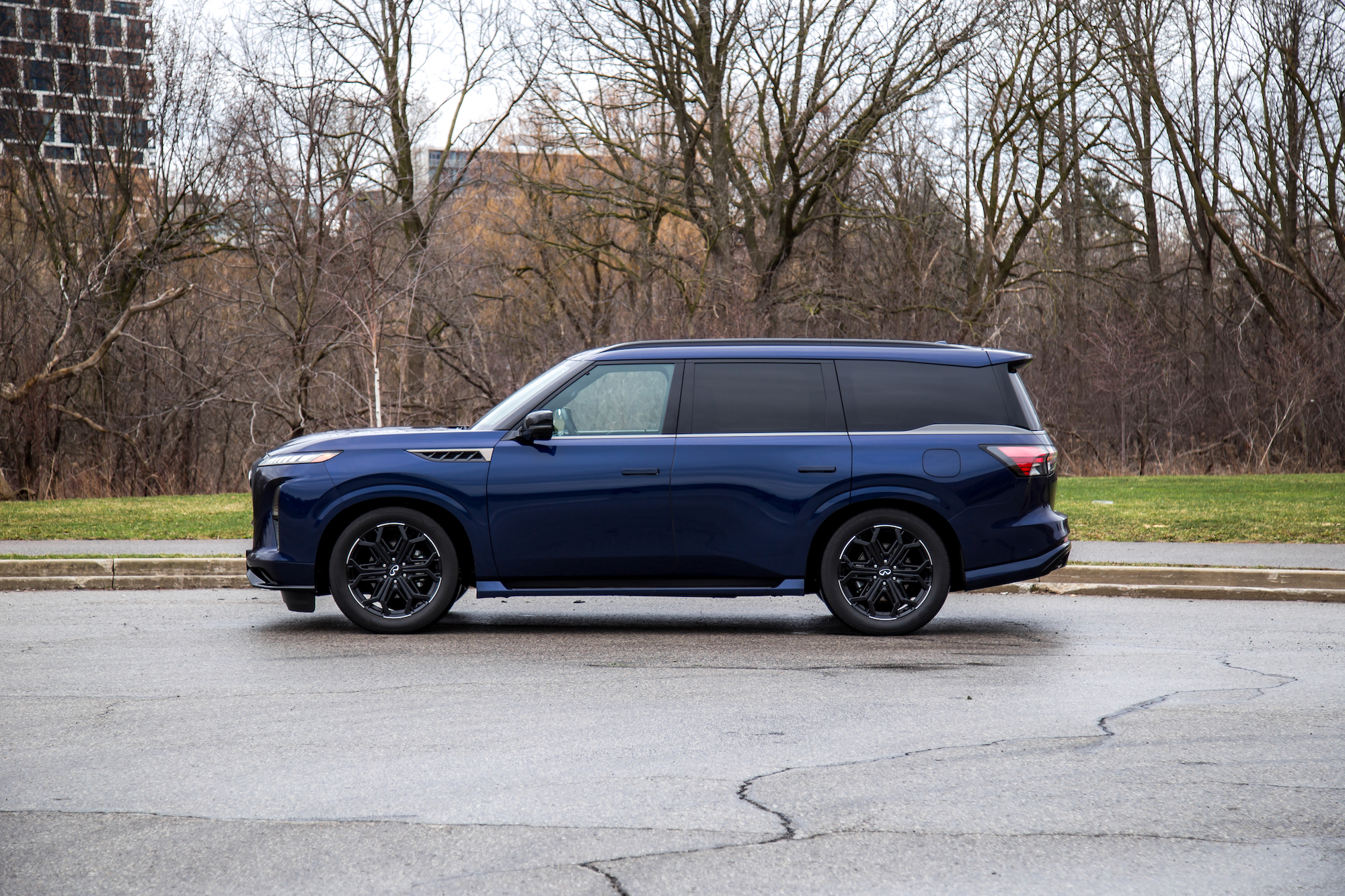
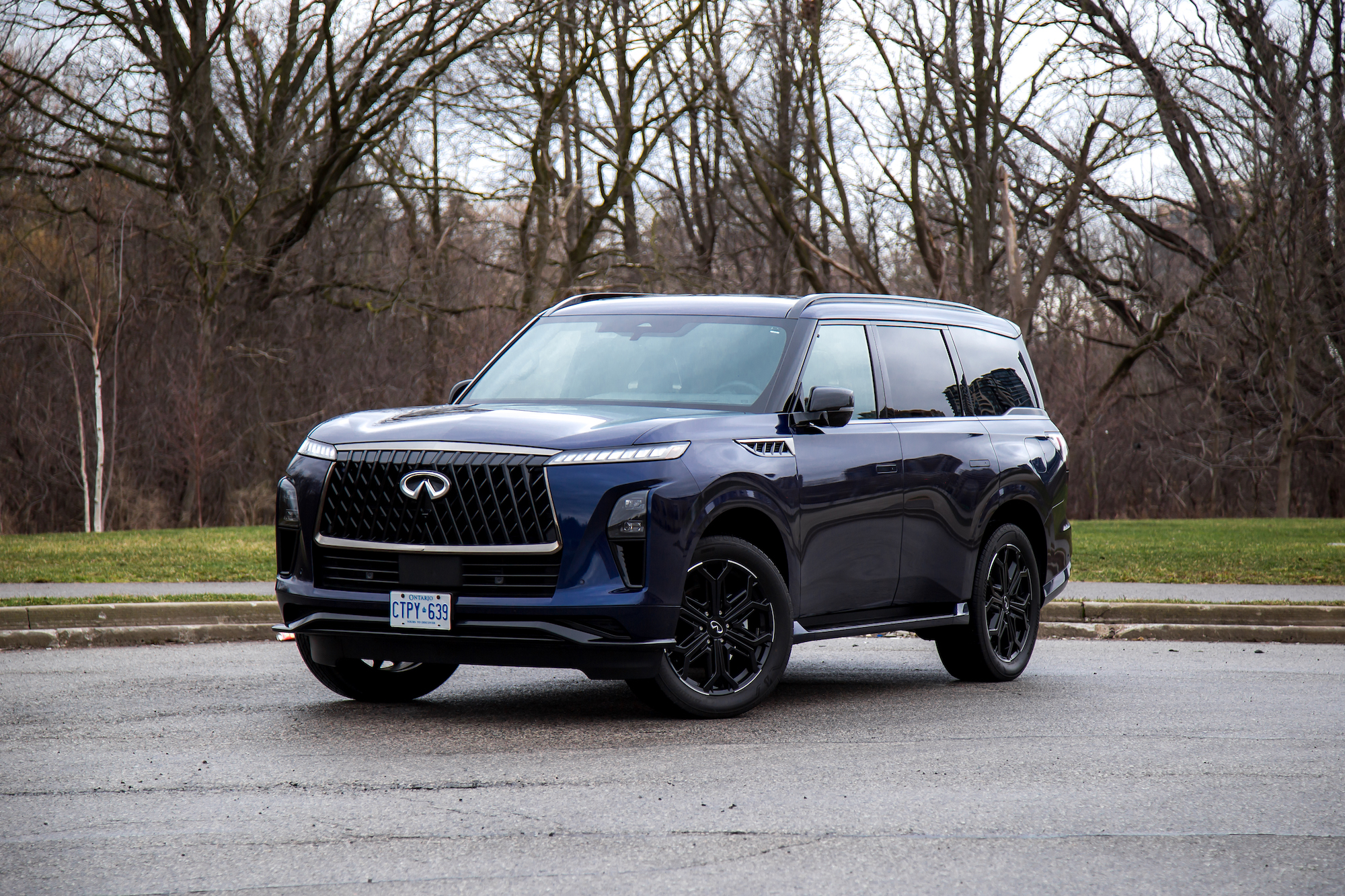
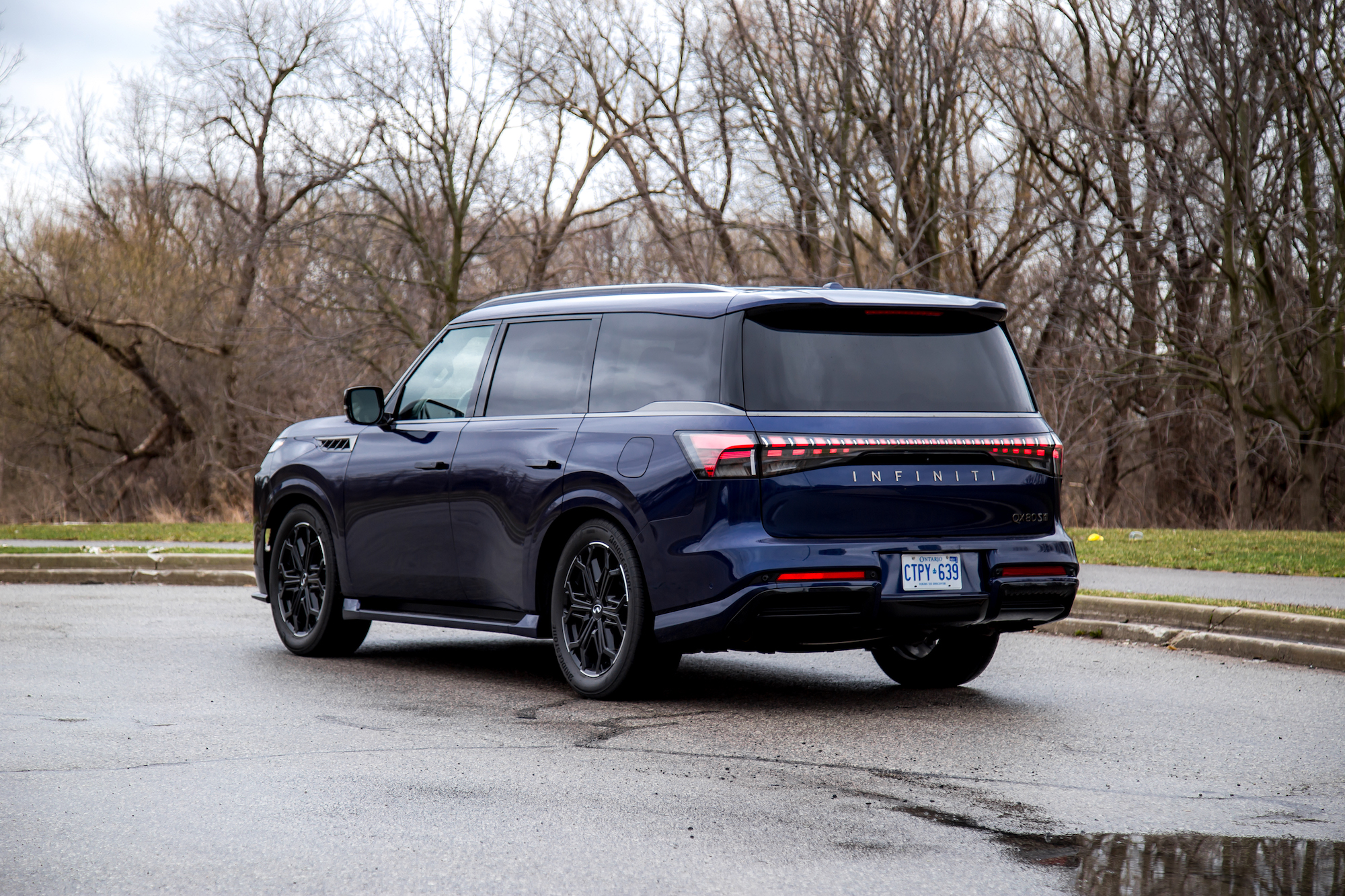
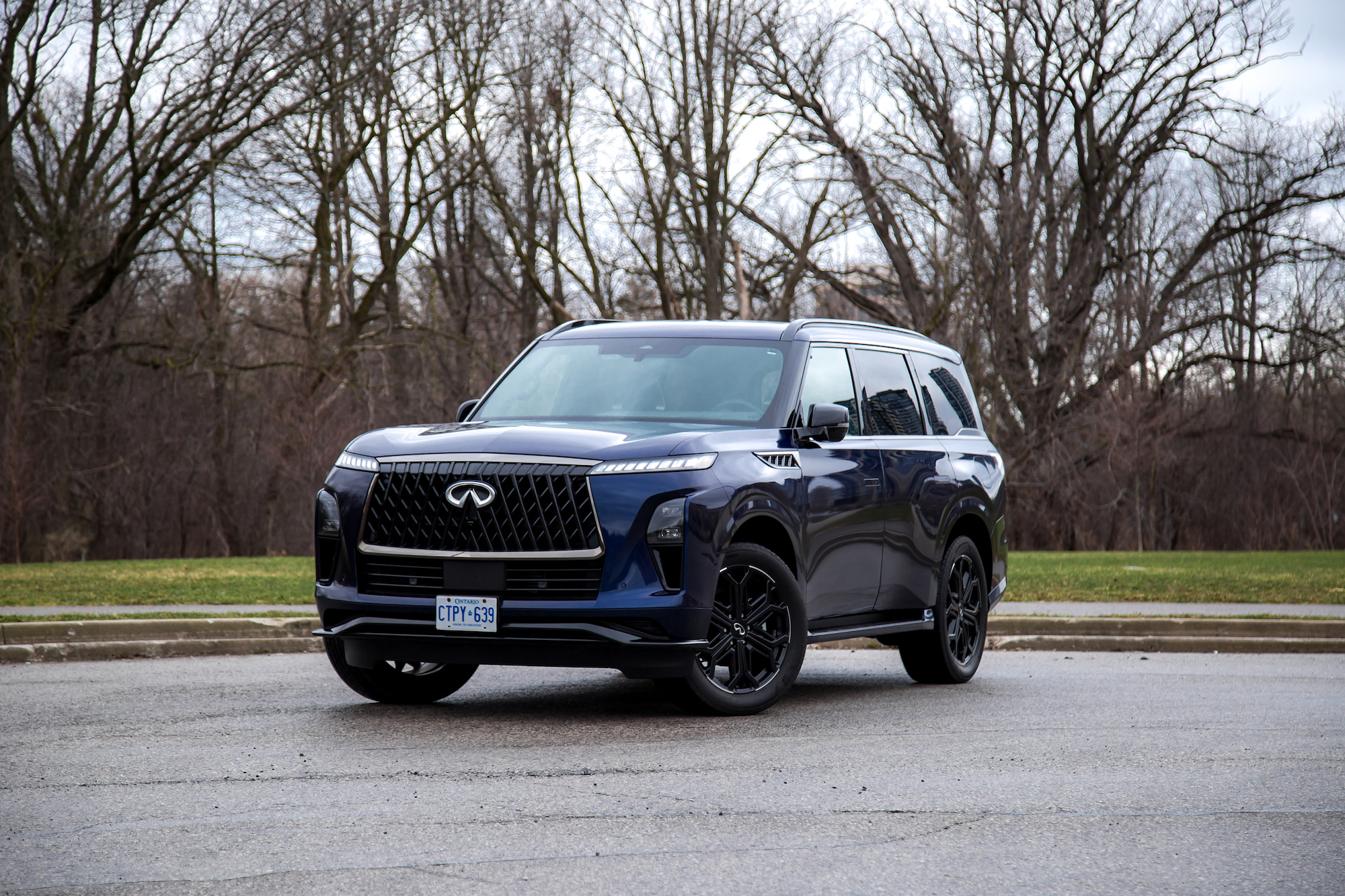
The QX80 Sport ($127,667) is new for 2026 and sits between the Luxe ($112,751) and Autograph ($139,151) trims. Denoted by the iconic ‘S’ badge on the trunklid, Sport cheekily adds only cosmetic touches, including a unique front grill, restyled front bumper, and black six-spoke 22-inch wheels. Exterior elements such as the mirror caps, trim, roof rails, and emblems have also been given the monochromatic treatment, and while four paint colours are available, the interior of the Sport is only offered in Dusk Blue.

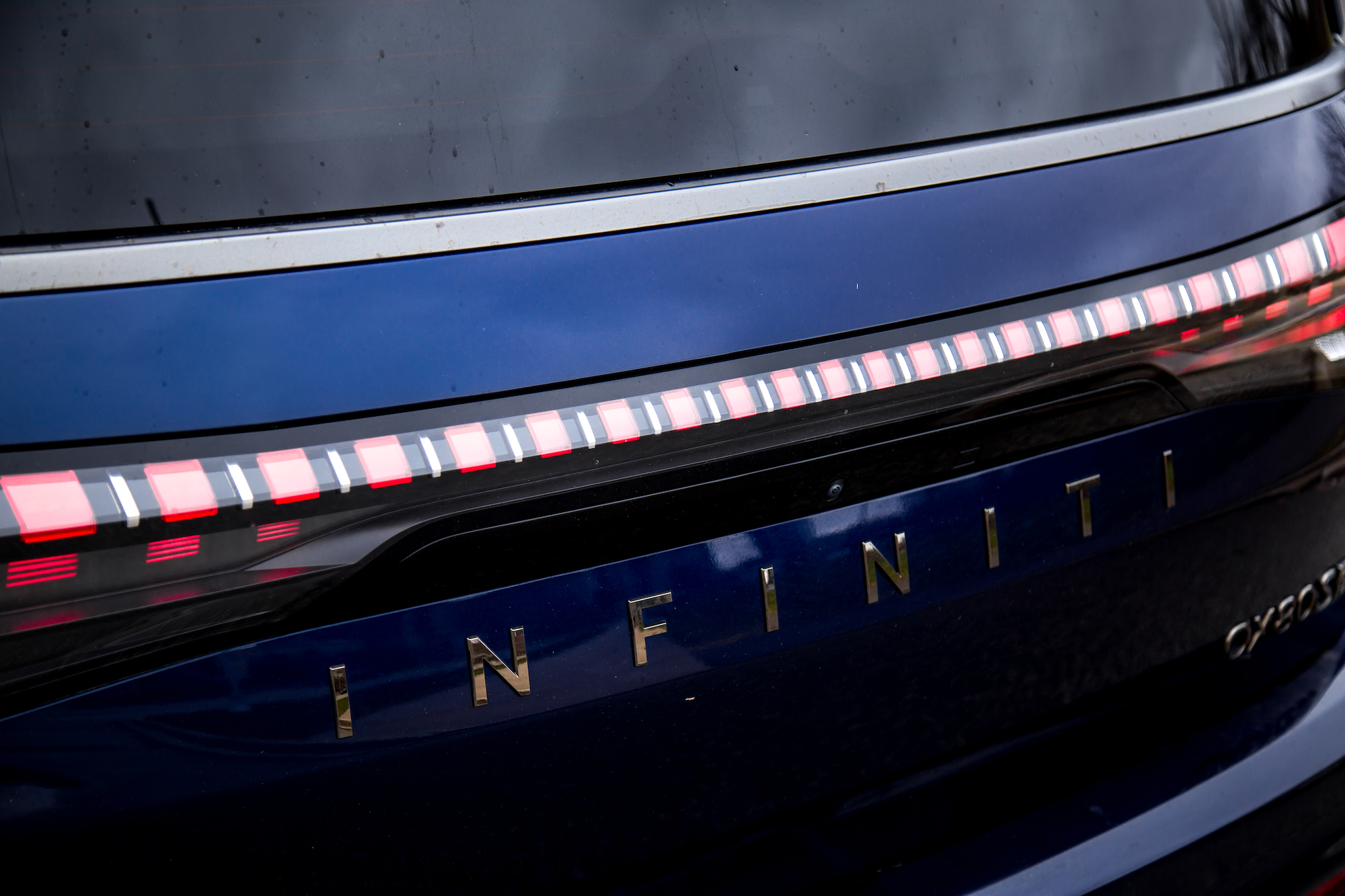
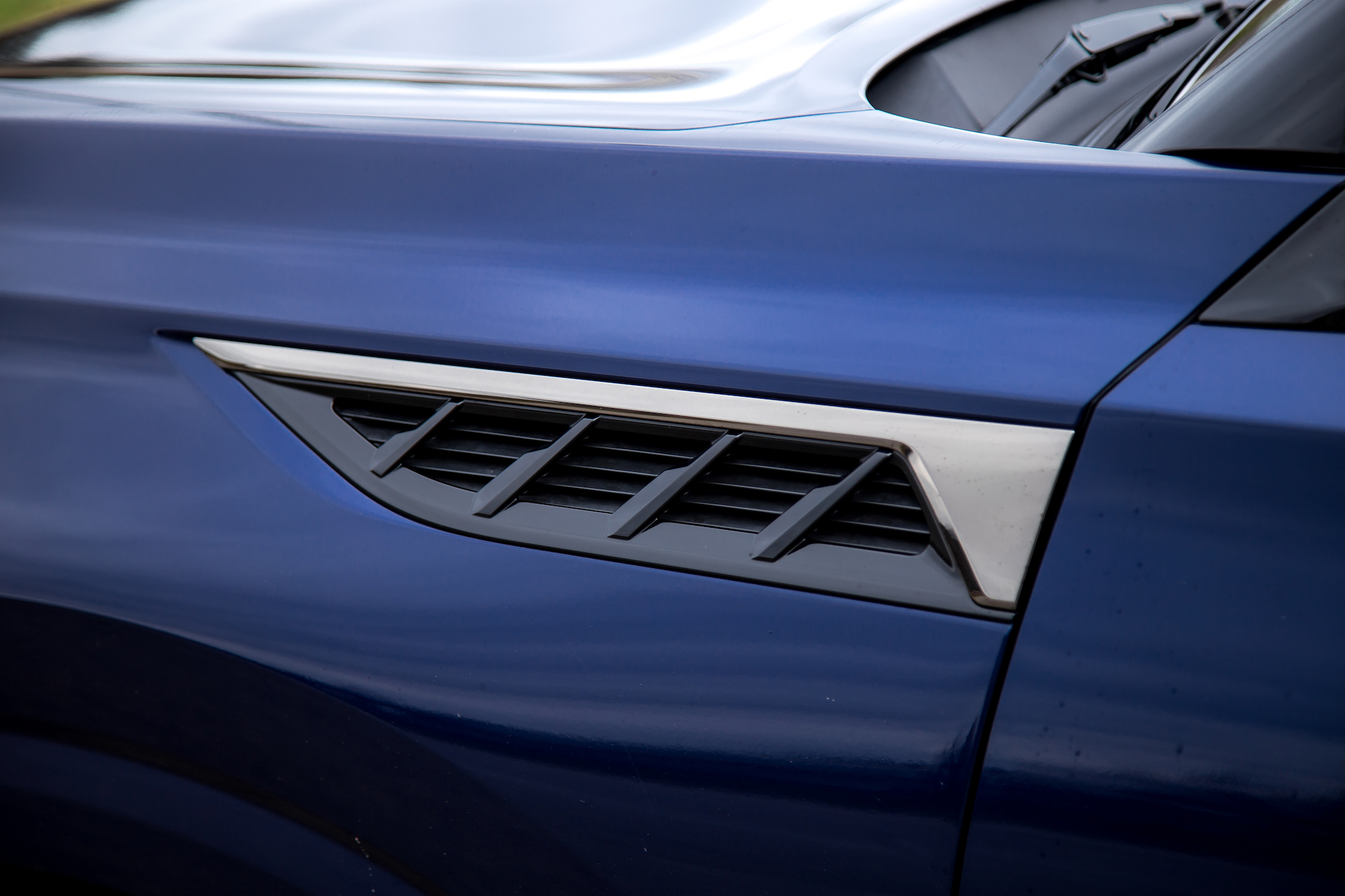
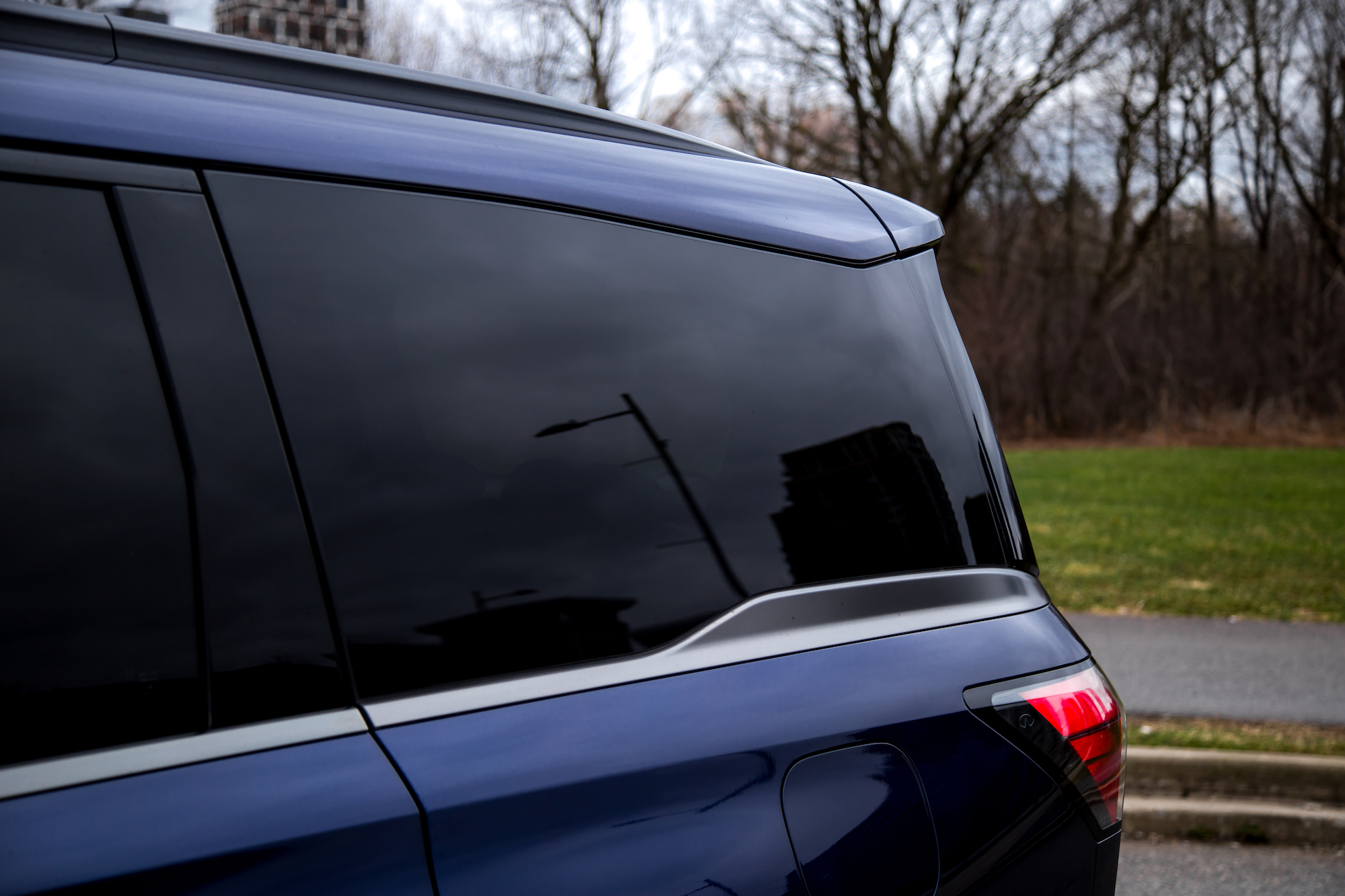
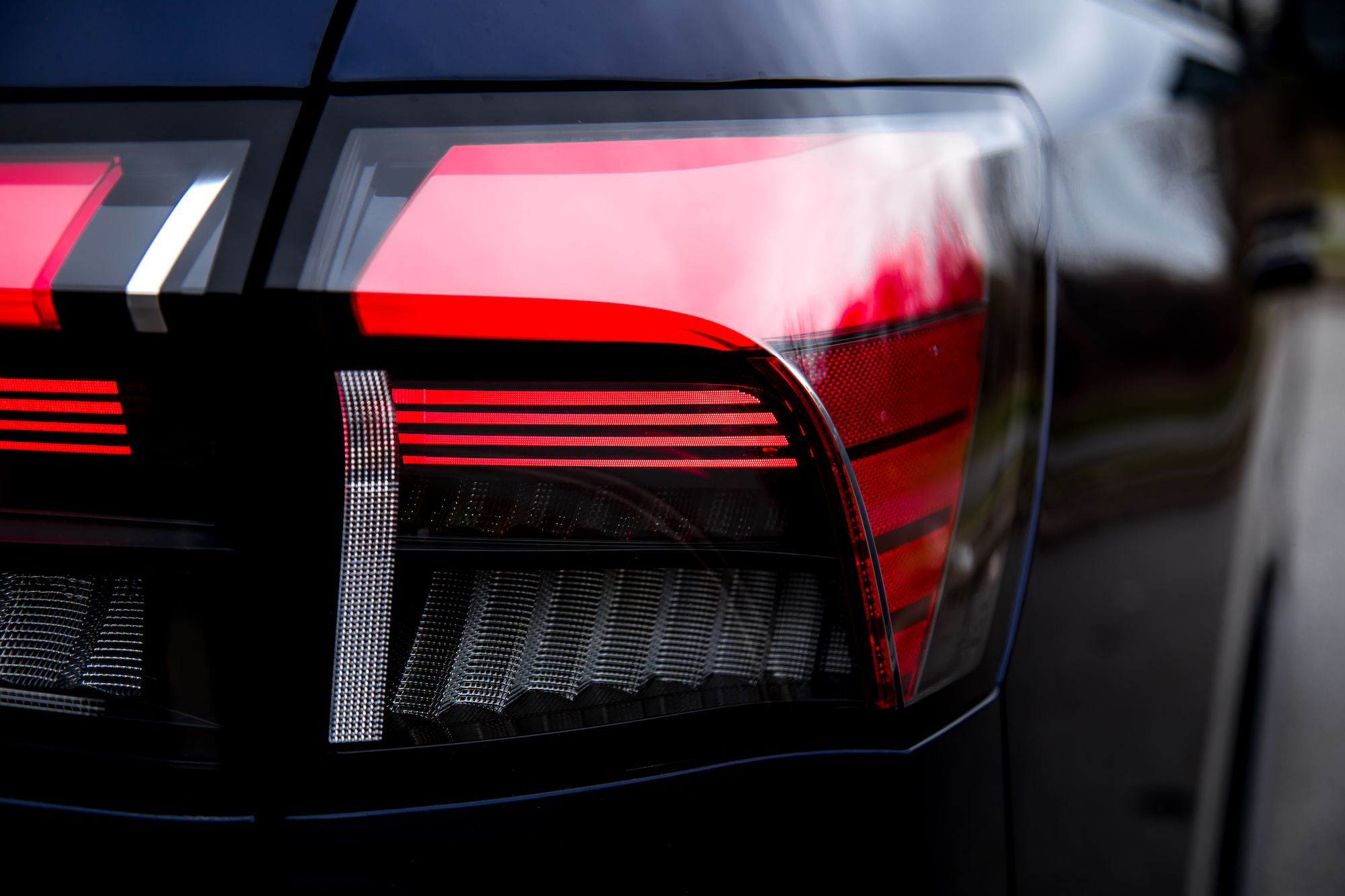
We wouldn’t call this SUV a beautiful whale, but it does ooze with presence, especially when draped in Grand Blue. Soft shoulders and blacked-out pillars make the QX80 easy on the eyes, but the ratio between the narrow-slit headlights and the overly imposing double-arch grill does not appear congruent, and the rear end looks more generic than that of the familial Nissan Armada. Flush door handles may have been made popular by Tesla and Range Rover, but that doesn’t mean they should be copied. Luckily, the QX80’s deploy very fast and are sturdy and satisfying to pull, unlike the flimsy and cumbersome examples in the Tesla Model Y and Mercedes-Benz EQE. No soft close door mechanism, though.
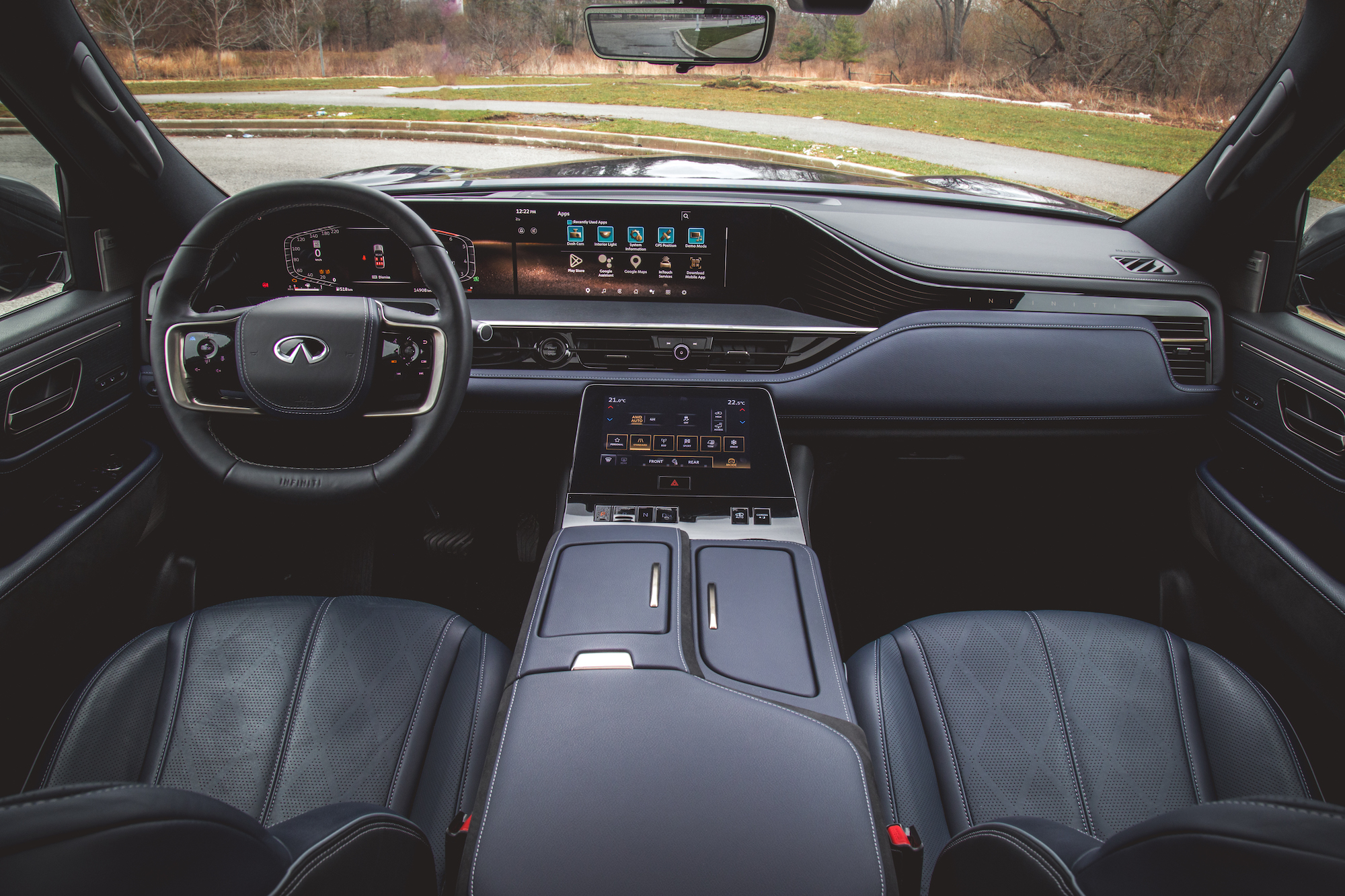
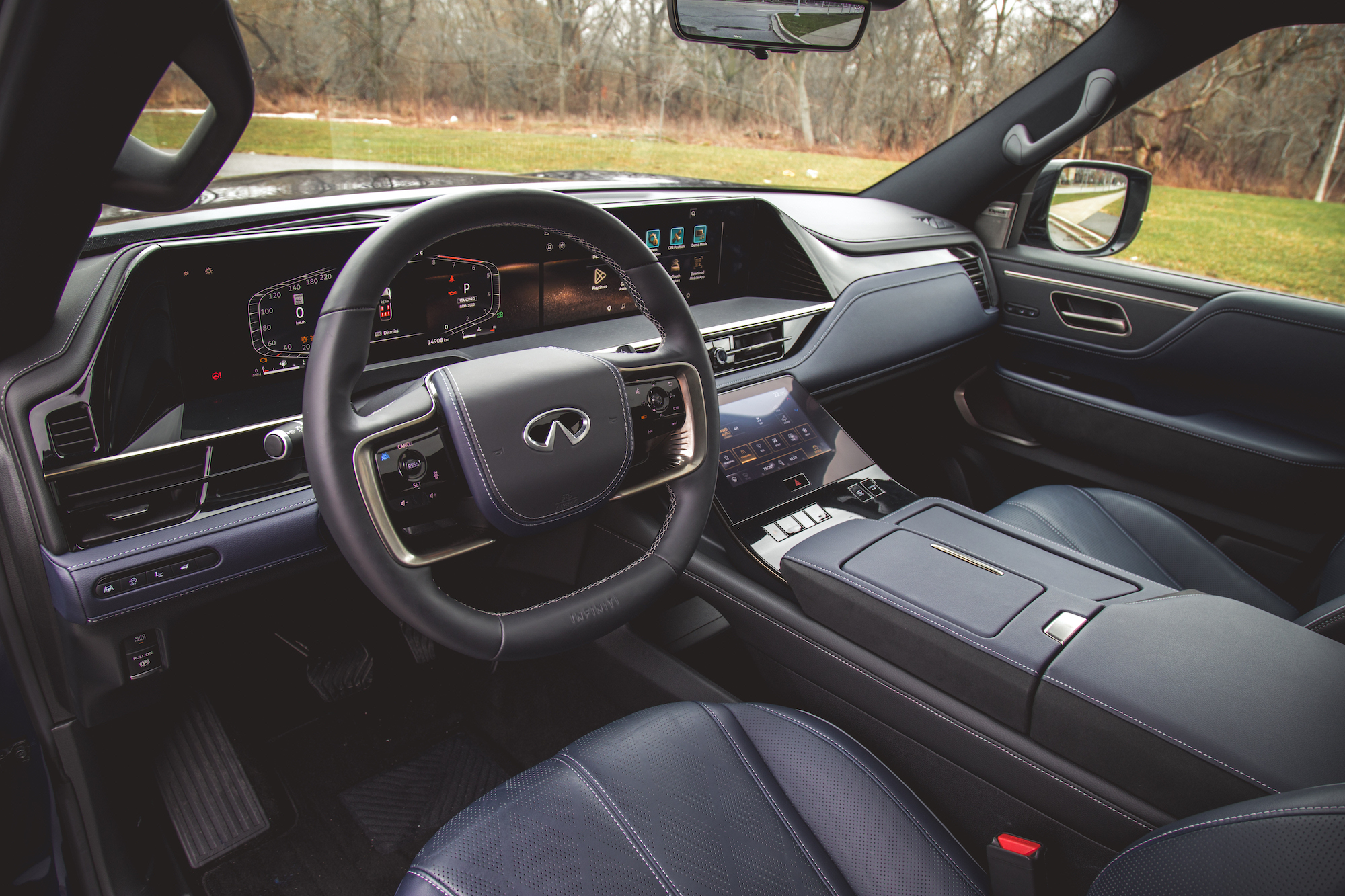
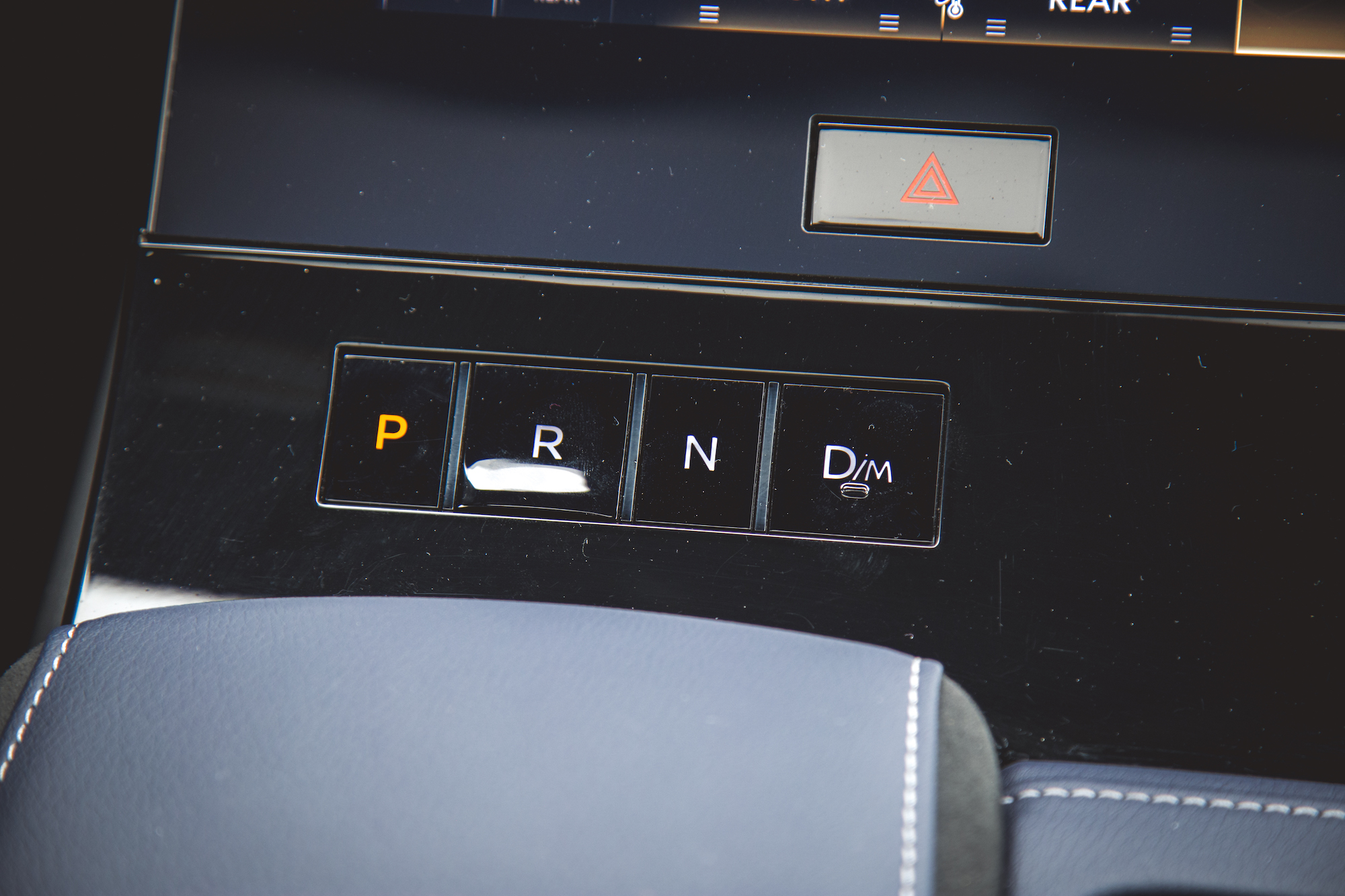
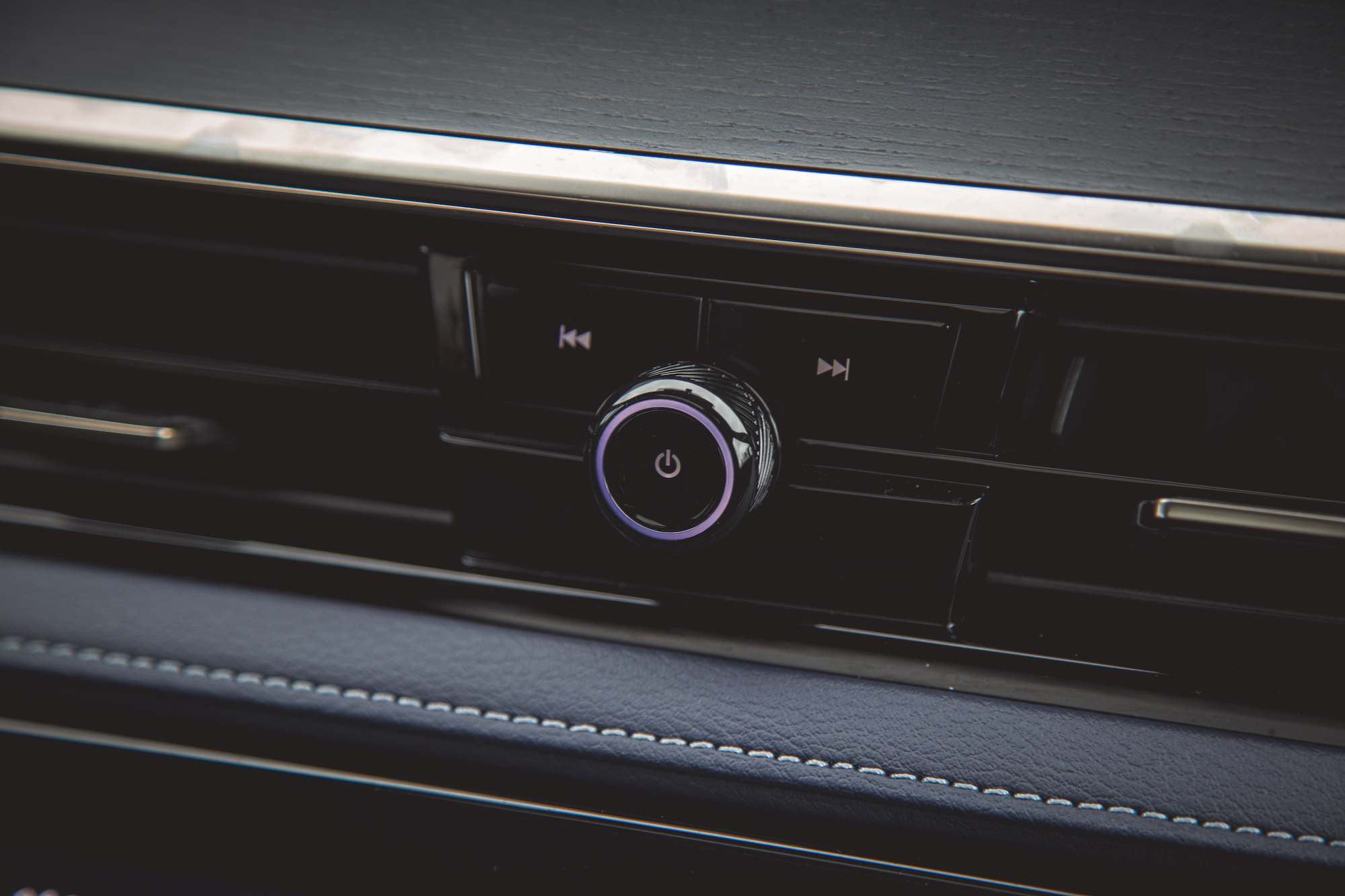
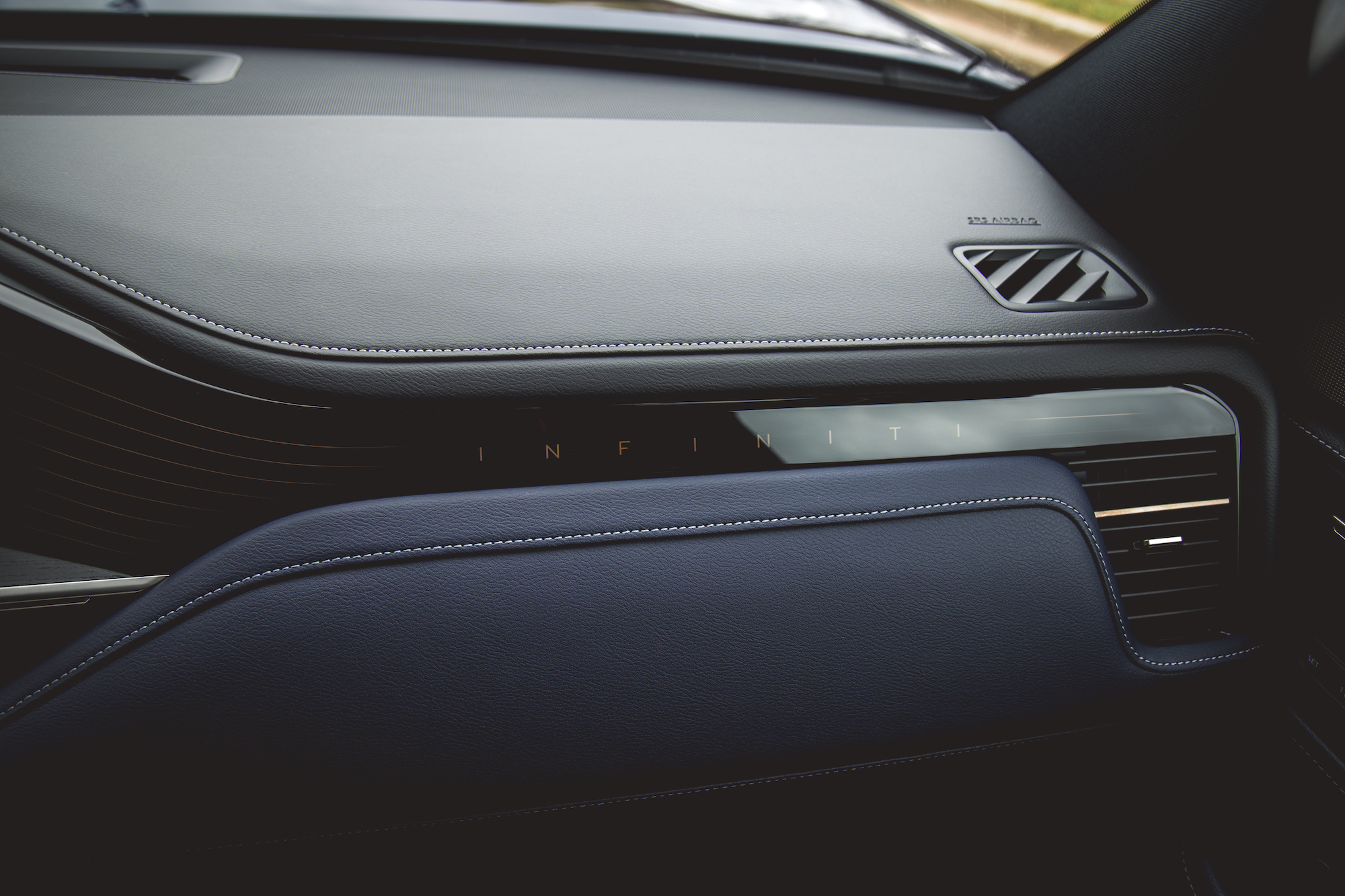
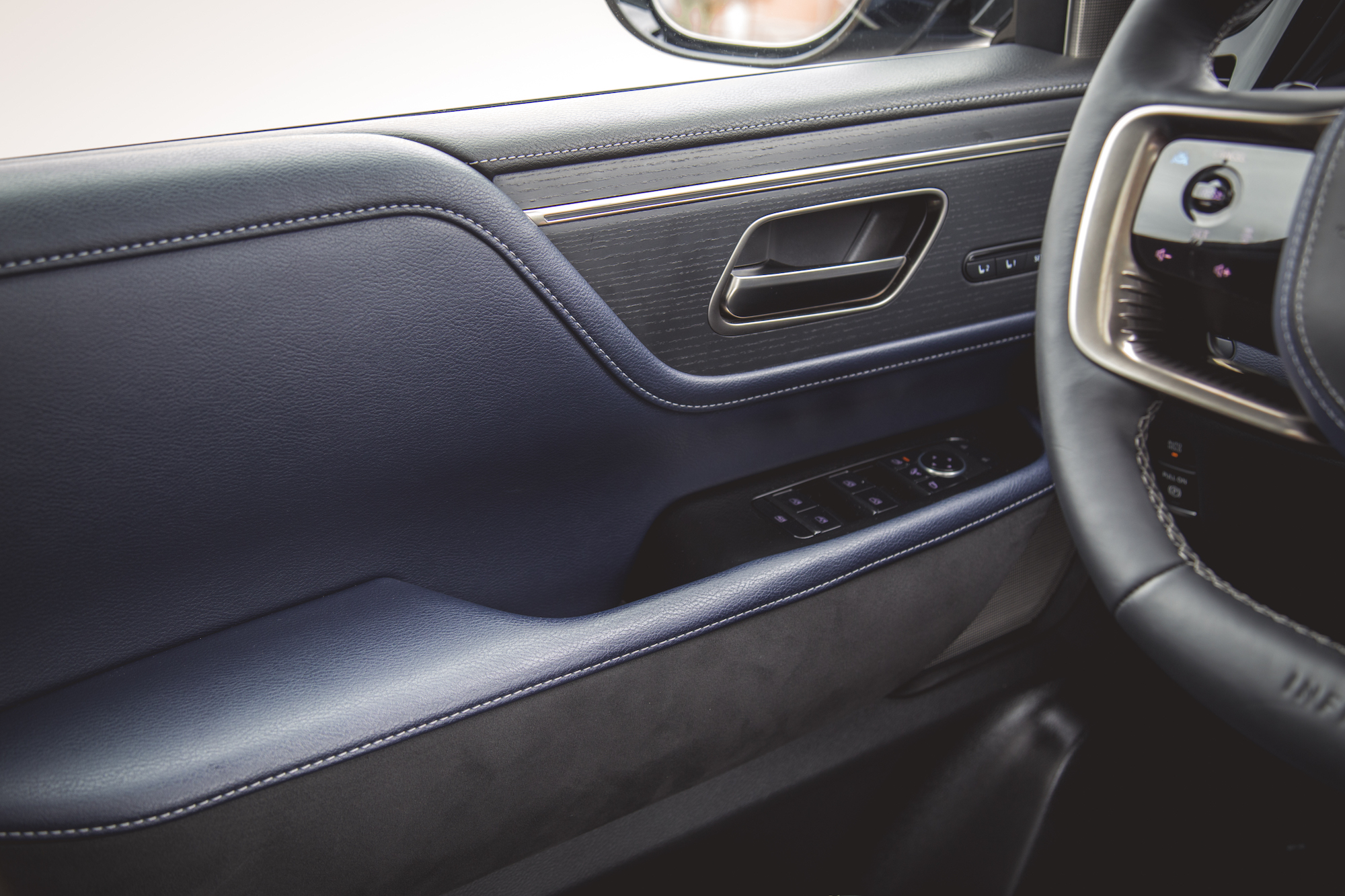
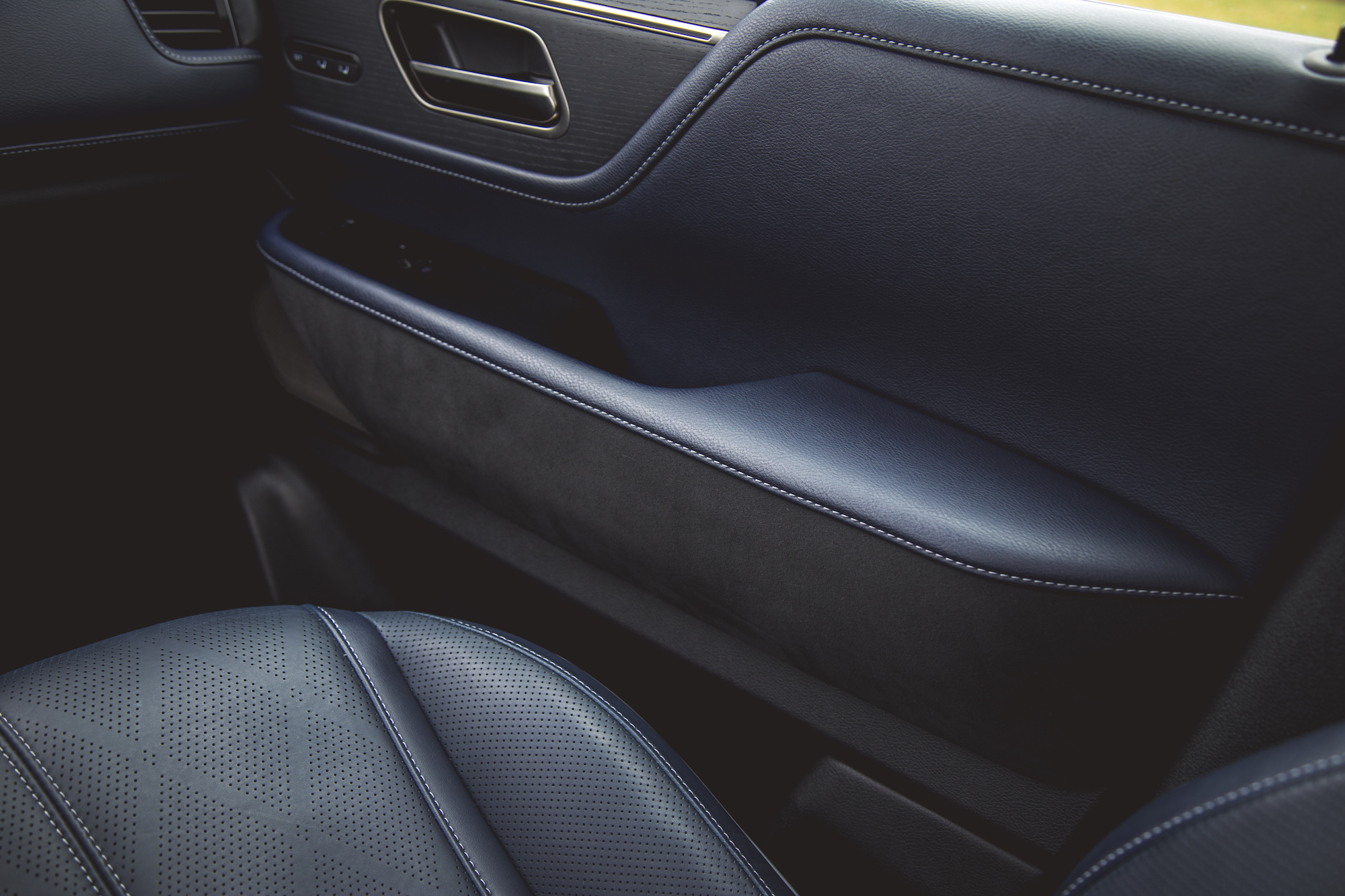
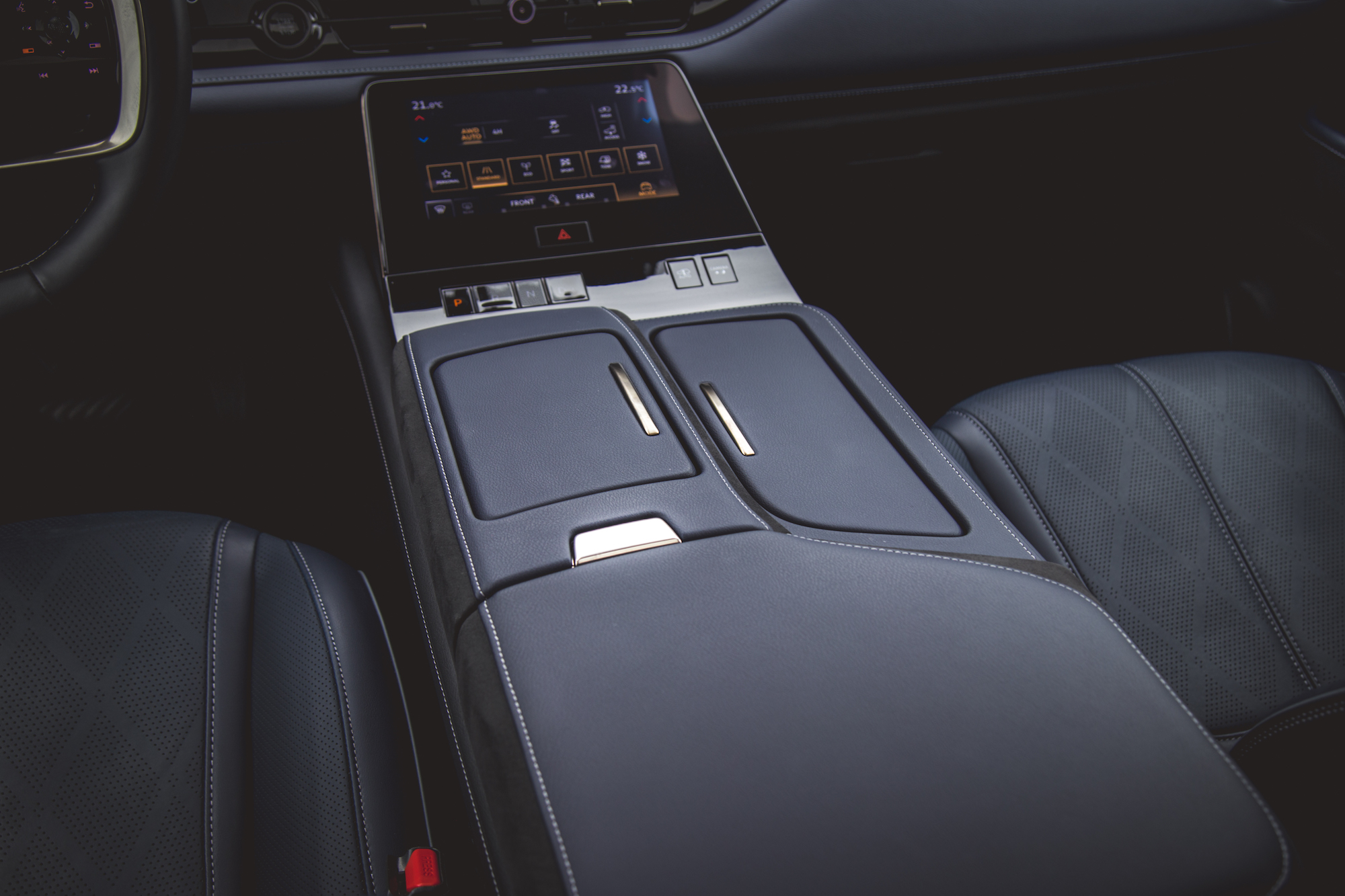
Hopping inside alleviates any possible concerns about Nissan part sharing, as the sumptuously plush semi-aniline leather seats and skillful mix of digital and physical elements, along with wood, suede, and plastic, have been well-appointed. Material quality is a step above the Escalade, and there’s a greater sense of polish and sturdiness than the Navigator and Grand Wagoneer, from not only the simple mechanisms of button damping and switchgear resistance, but also from the way the panels and console covers do not creak or wiggle around in their slots. Note that only the seats and steering wheel have been upholstered in semi-aniline material. The door panel and dashboard are covered with a rougher, more durable leather.


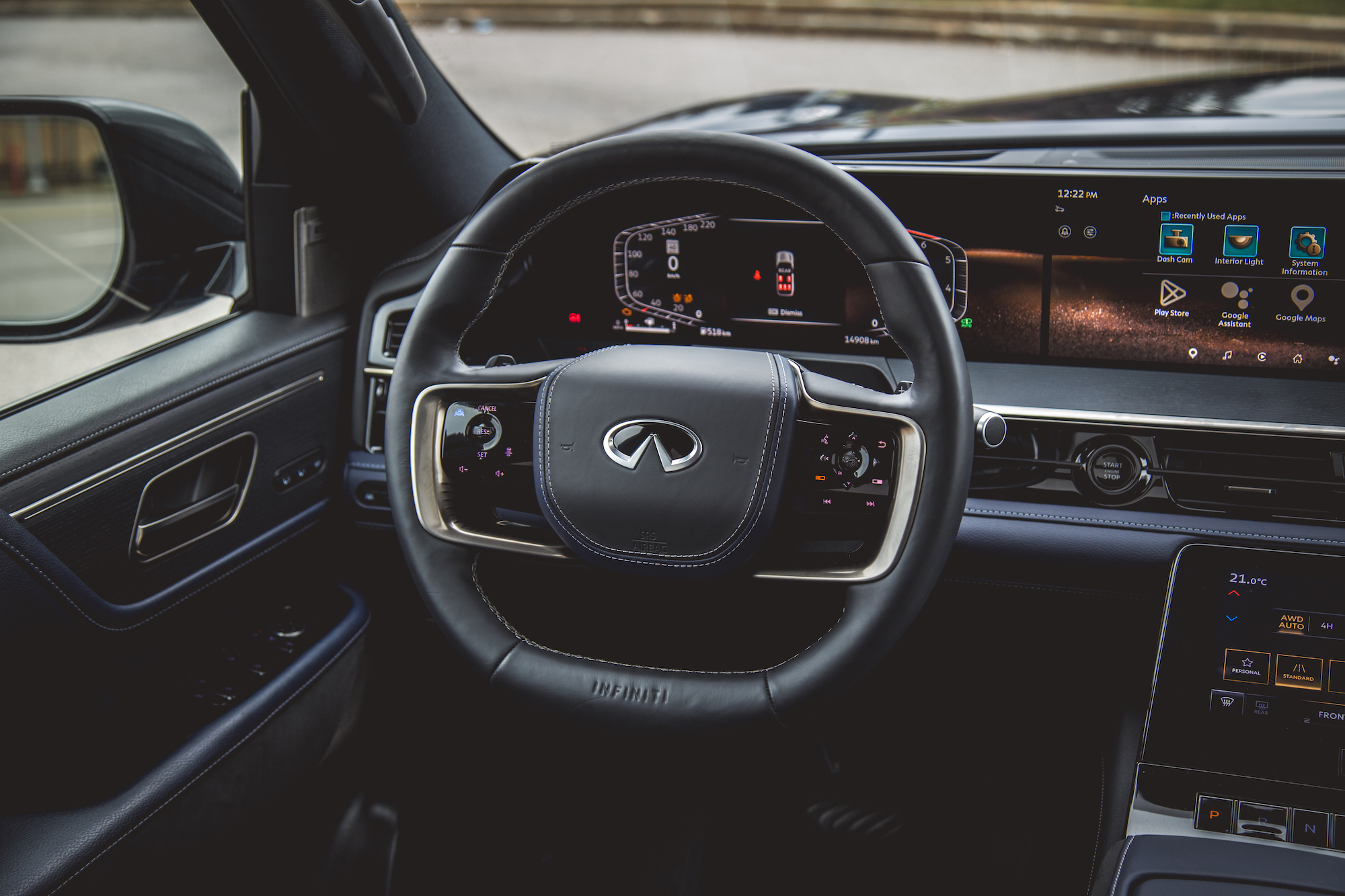
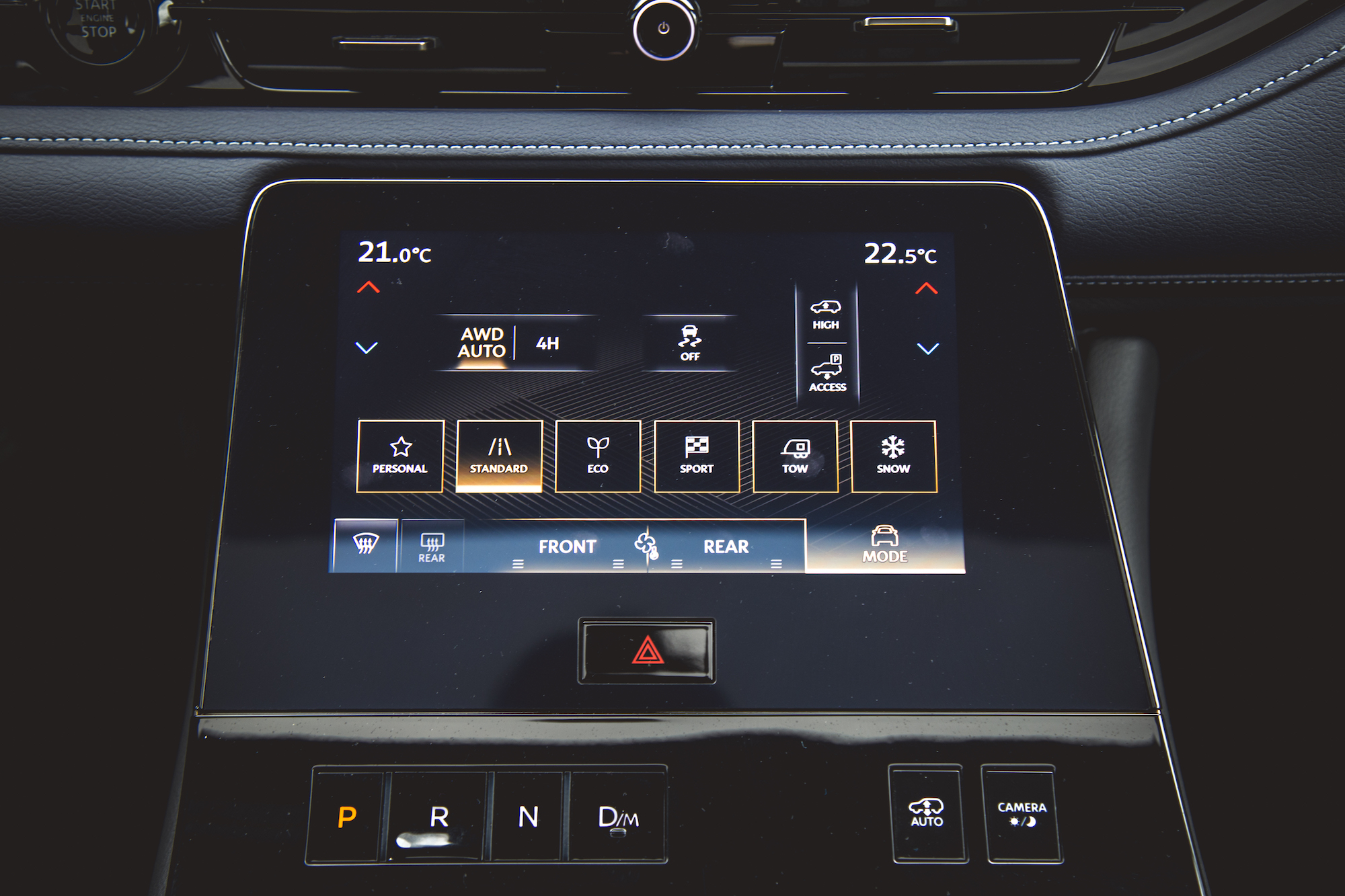
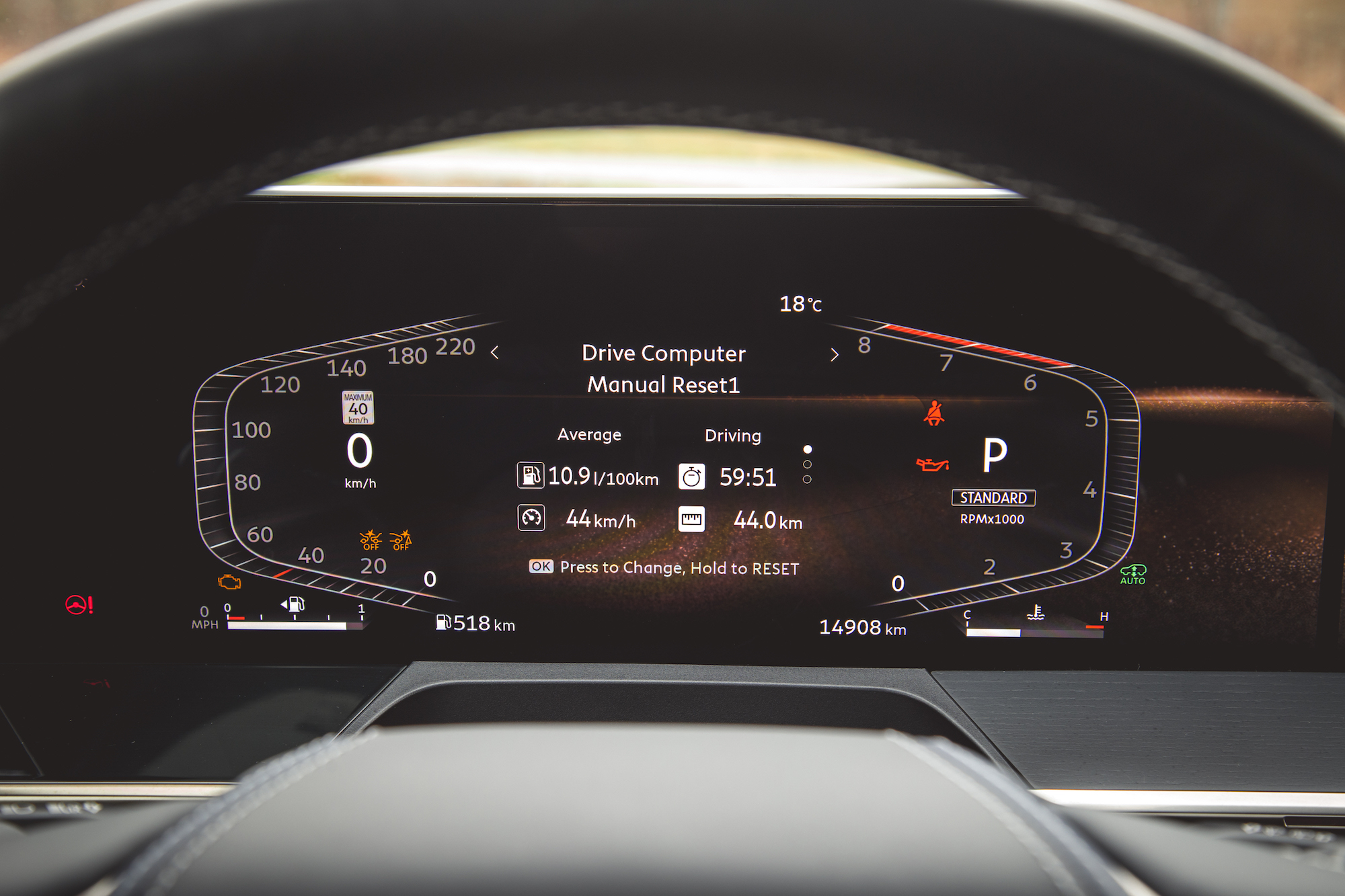
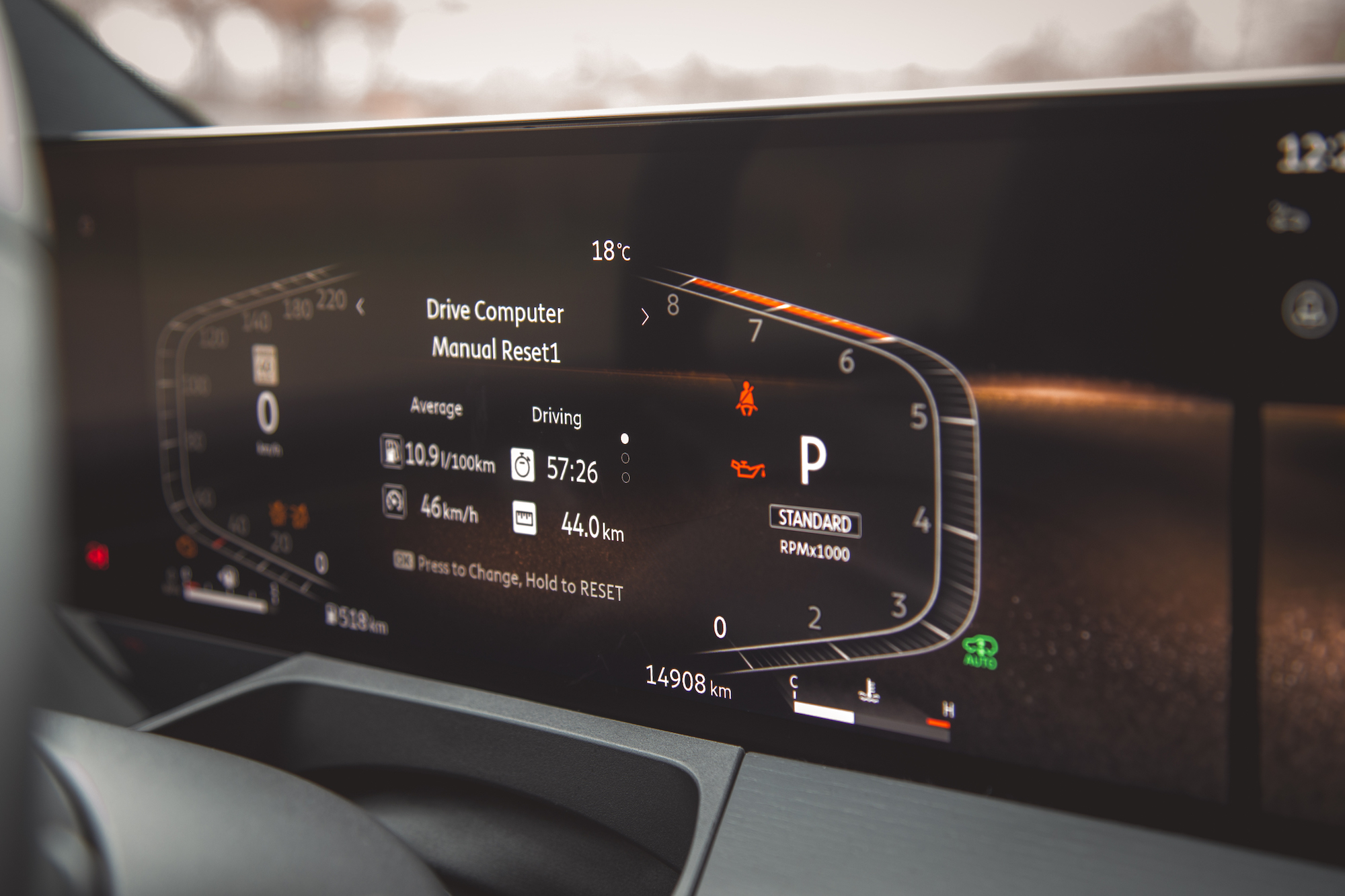
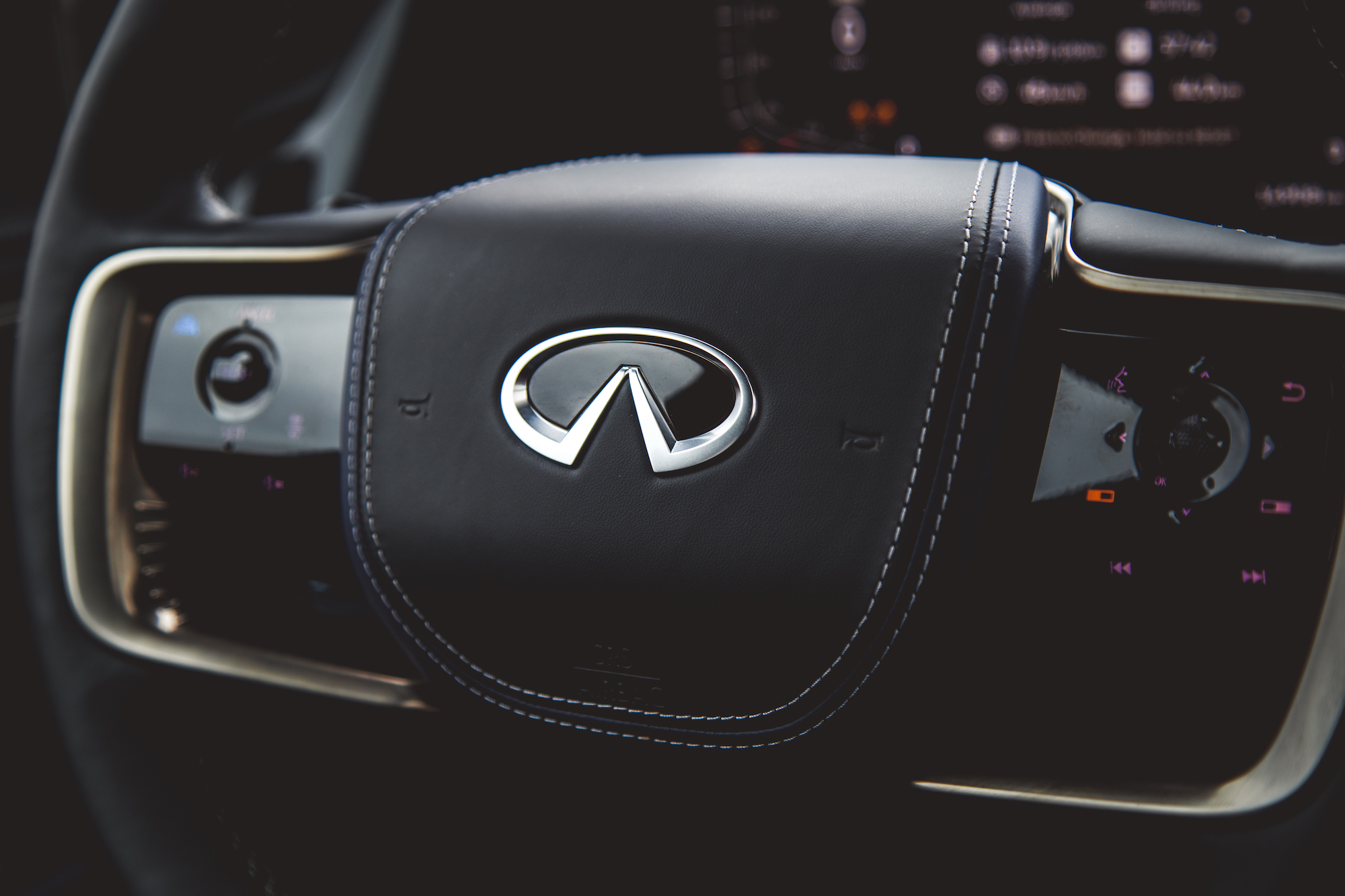
Fit and finish is excellent and on par with the equally refined Lexus LX 700h. The neatly integrated 14.3-inch displays add spaciousness to the dashboard, with flowing lines extending into the passenger compartment. An angled 9-inch screen is perched atop the center console, just like in the Escalade, and serves as a convenient touchpoint for activating climate functions and seat heating, though we prefer the functionality of the physical buttons and knobs in the Armada. The two-spoke steering wheel is a quality item, wrapped in matted-down but velvety leather, and the blue accenting around the airbag cover is a pleasant touch. We’re not sure we agree with the ‘INFINITI’ script on the bottom rim, though, as it doesn’t seem very on-brand to have multiple badges present.
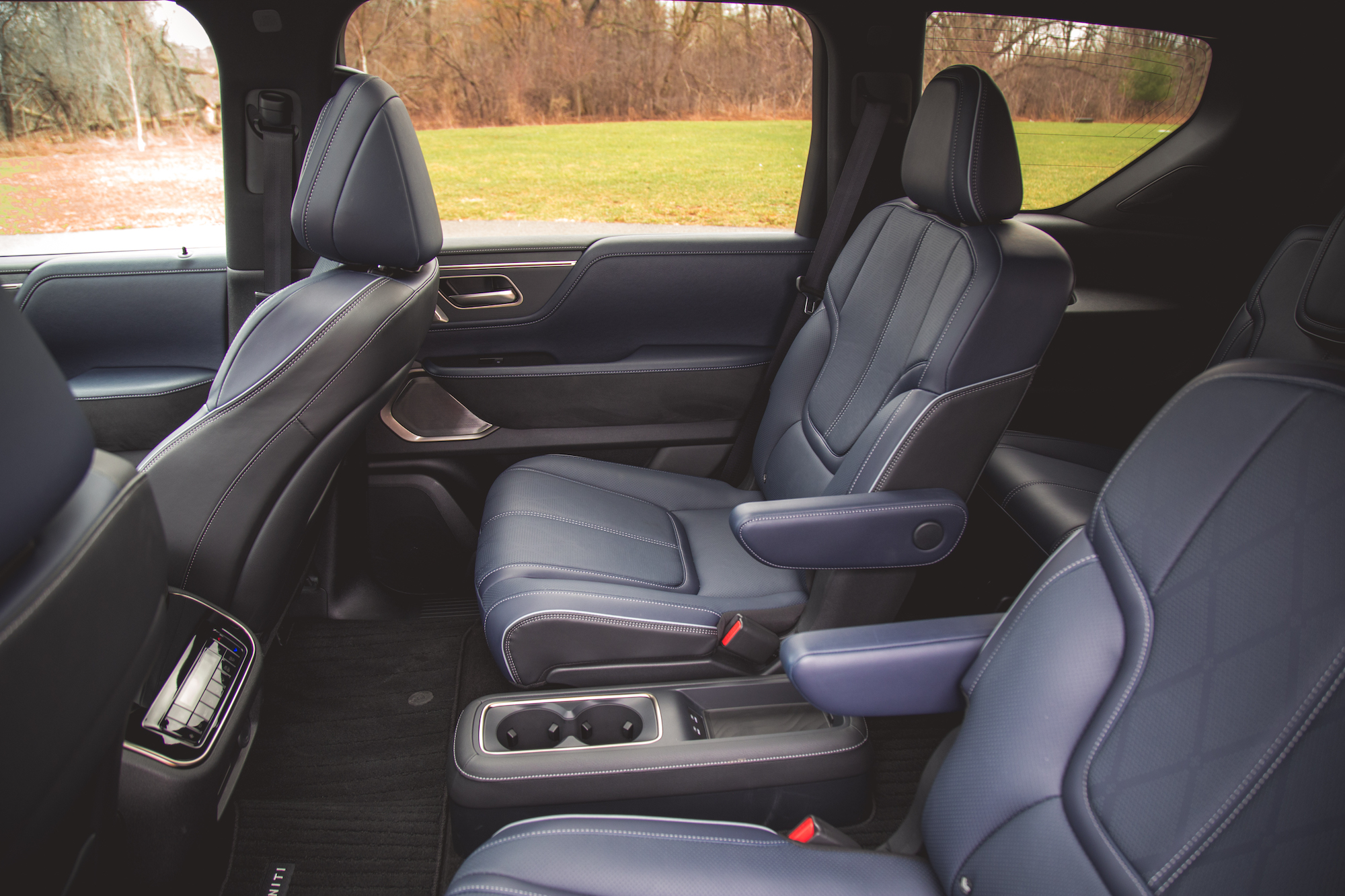
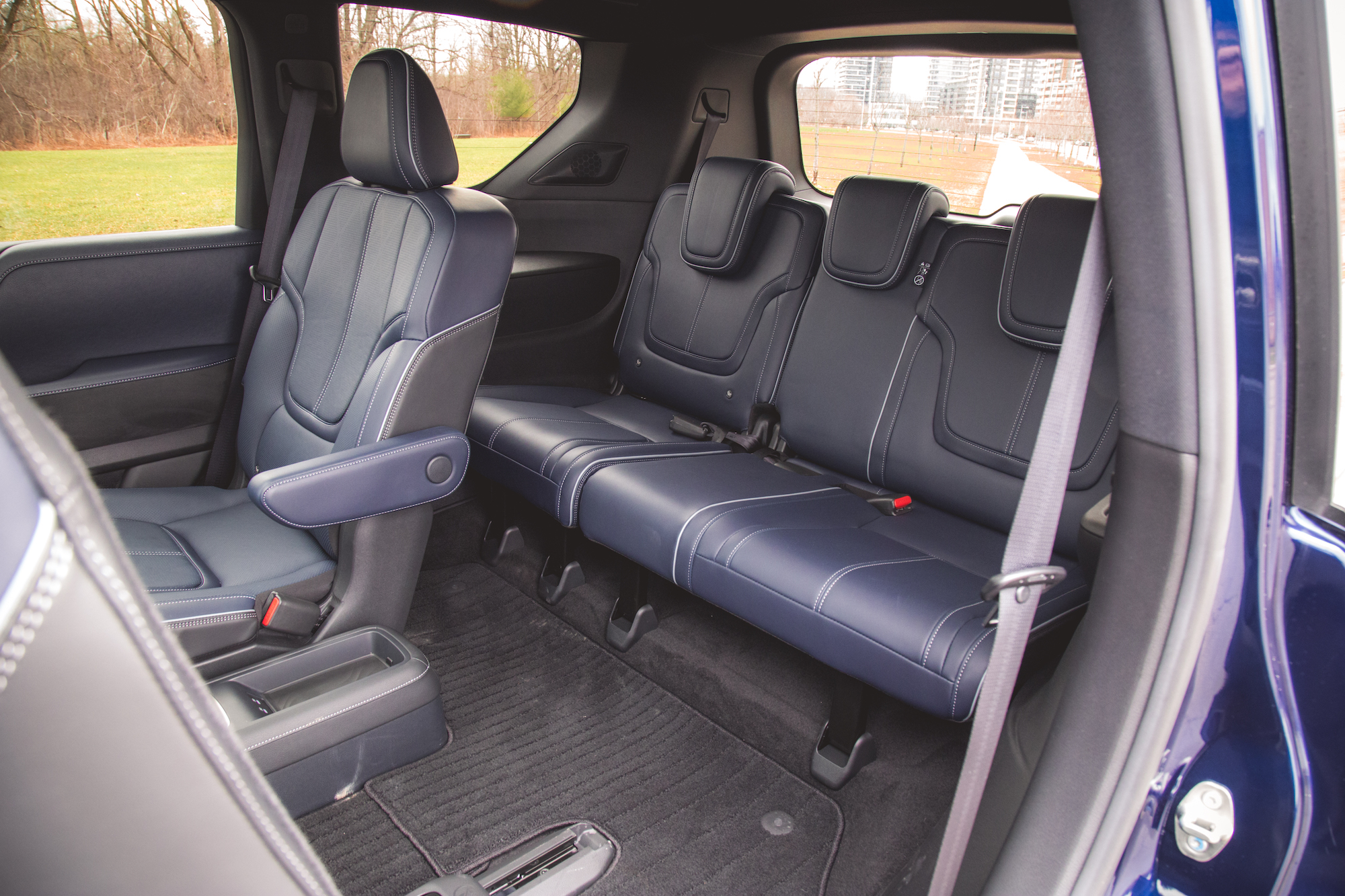
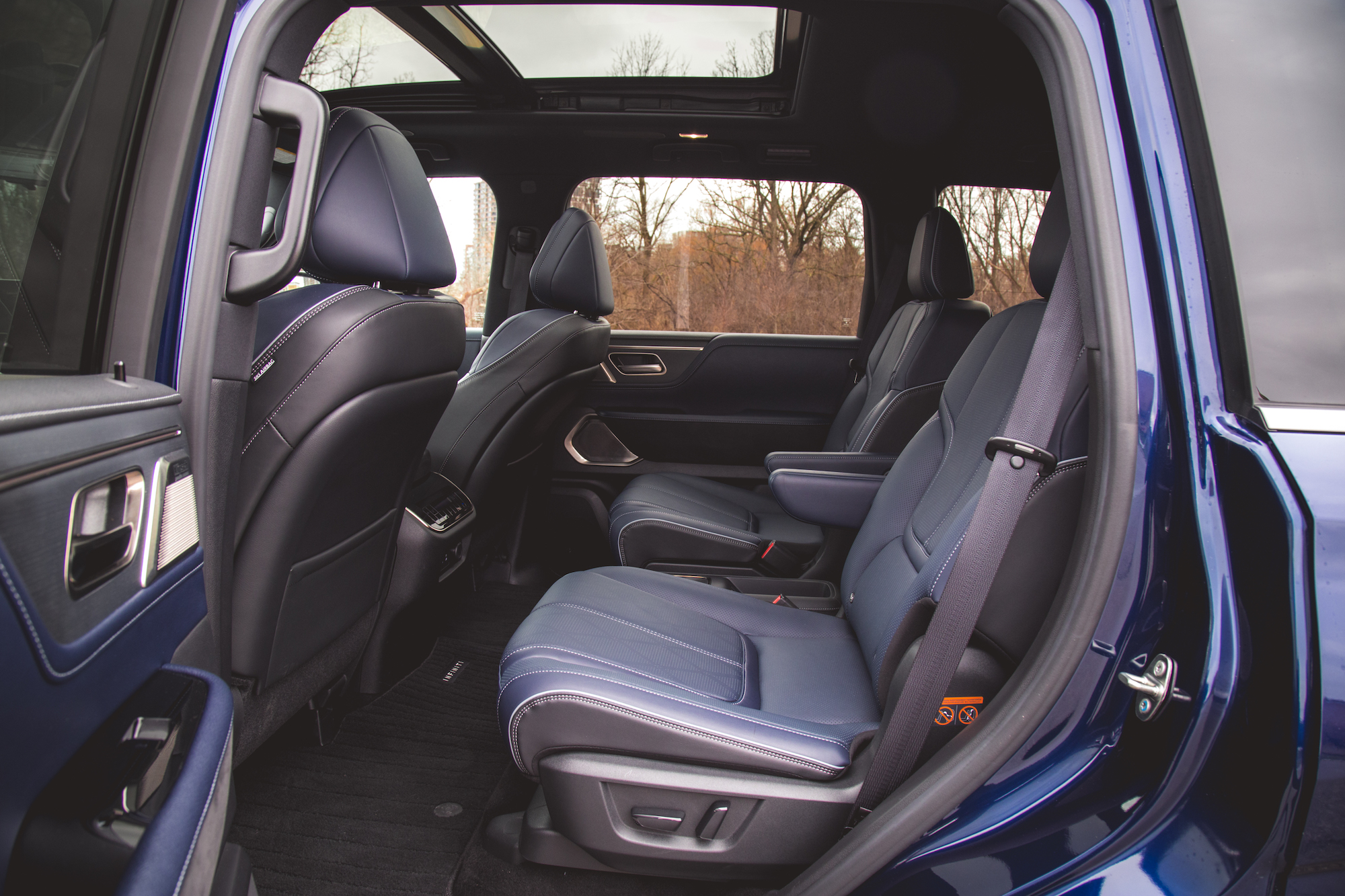
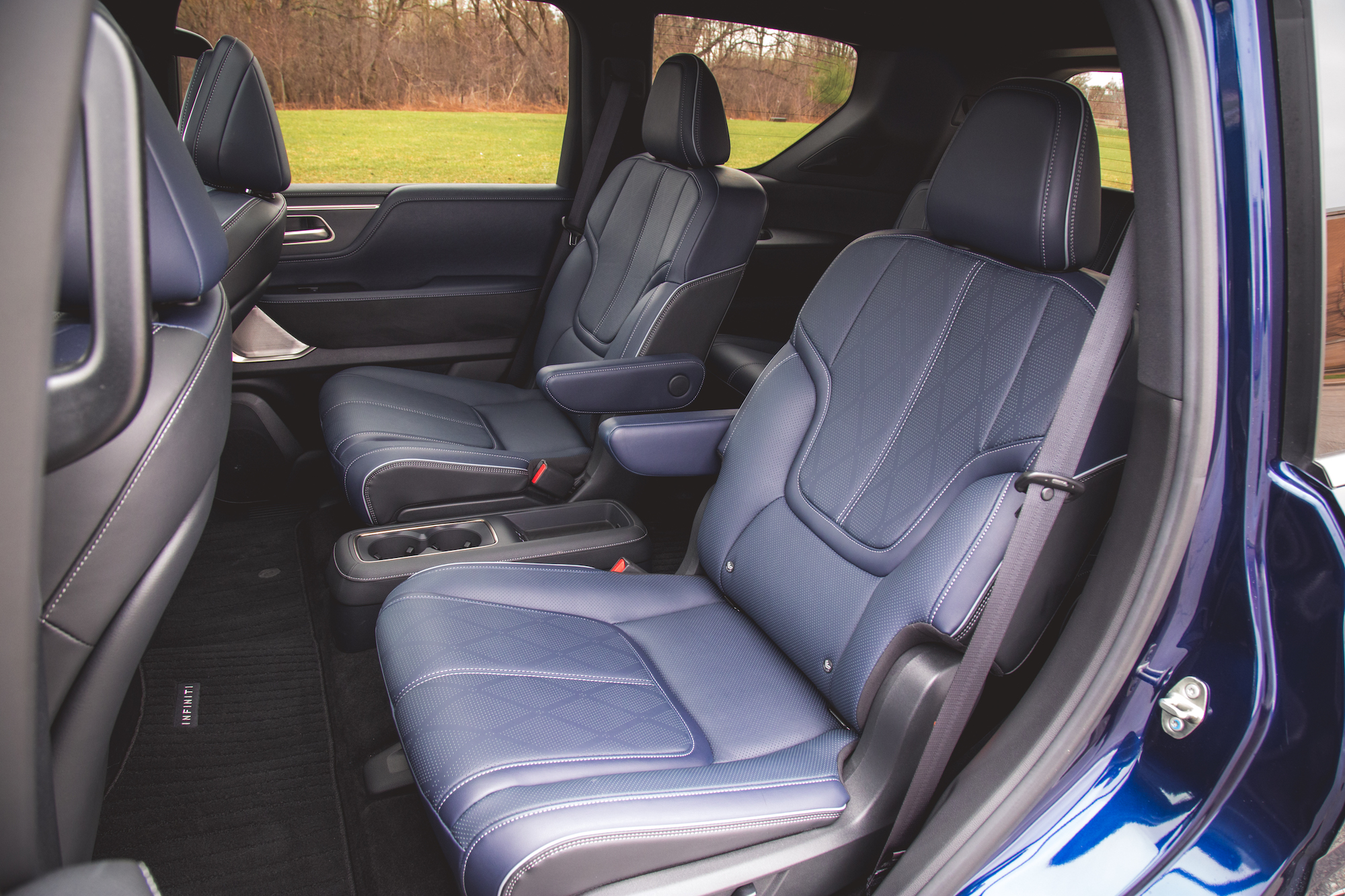
But you don’t shop for a QX80 because you’re ferrying around empty seats. There’s enough room for seven to relax comfortably, with particular care and attention paid to the third row. Boasting exceptional headroom and legroom for six-footers, the seats are heated at the back of the bus, to a volcanic temperature we might add, while the other two rows enjoy additional ventilation, and the front a massage option. Notably, only the base Luxe model is available with eight-passenger capability, while the Sport and Autograph models come exclusively with second row captain’s chairs and seven total seats.
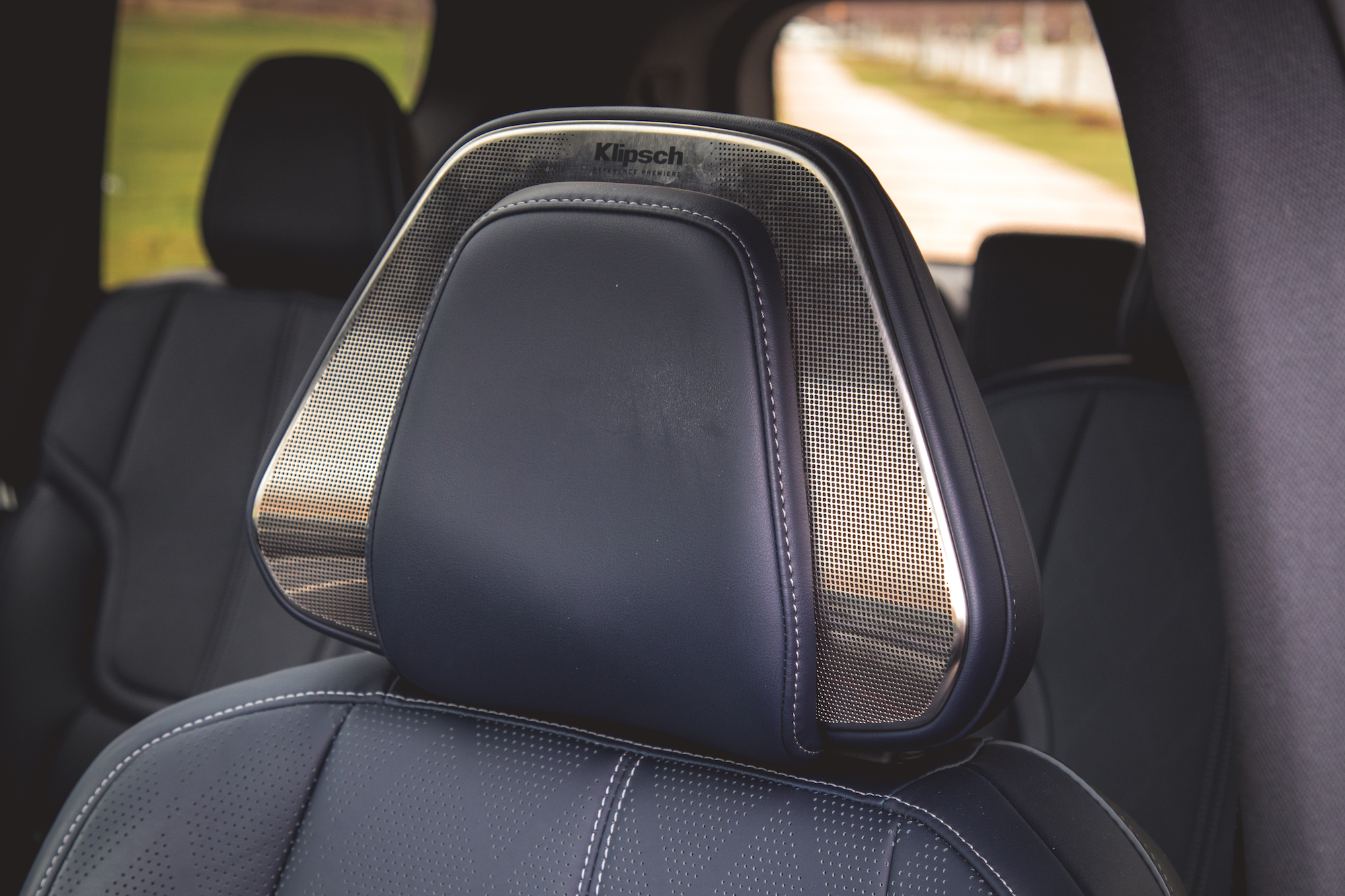

Those flared front headrests make you look like an Egyptian god, but they’re actually integrated speakers utilizing the Sport’s 1200-watt, 24-speaker Klipsch Reference Premiere Audio System. Equipped with titanium tweeters, four roof-mounted speakers, and an 8-inch subwoofer, the system produces ridiculously strong, crisp, and clear beats. The spatial audio enhances our Spotify tunes beyond our home setup and provides a punchier, bass-heavy sound compared to the Jeep’s McIntosh system. Worth mentioning is that the headrest speakers aren’t there to create a greater surround-sound effect. Rather, they’re used to pipe through navigation cues and phone calls to the driver without disturbing other passengers. Seems like a missed opportunity if you ask us, as the Range Rover Sport uses them instead to create a wonderfully three-dimensional audio stage.
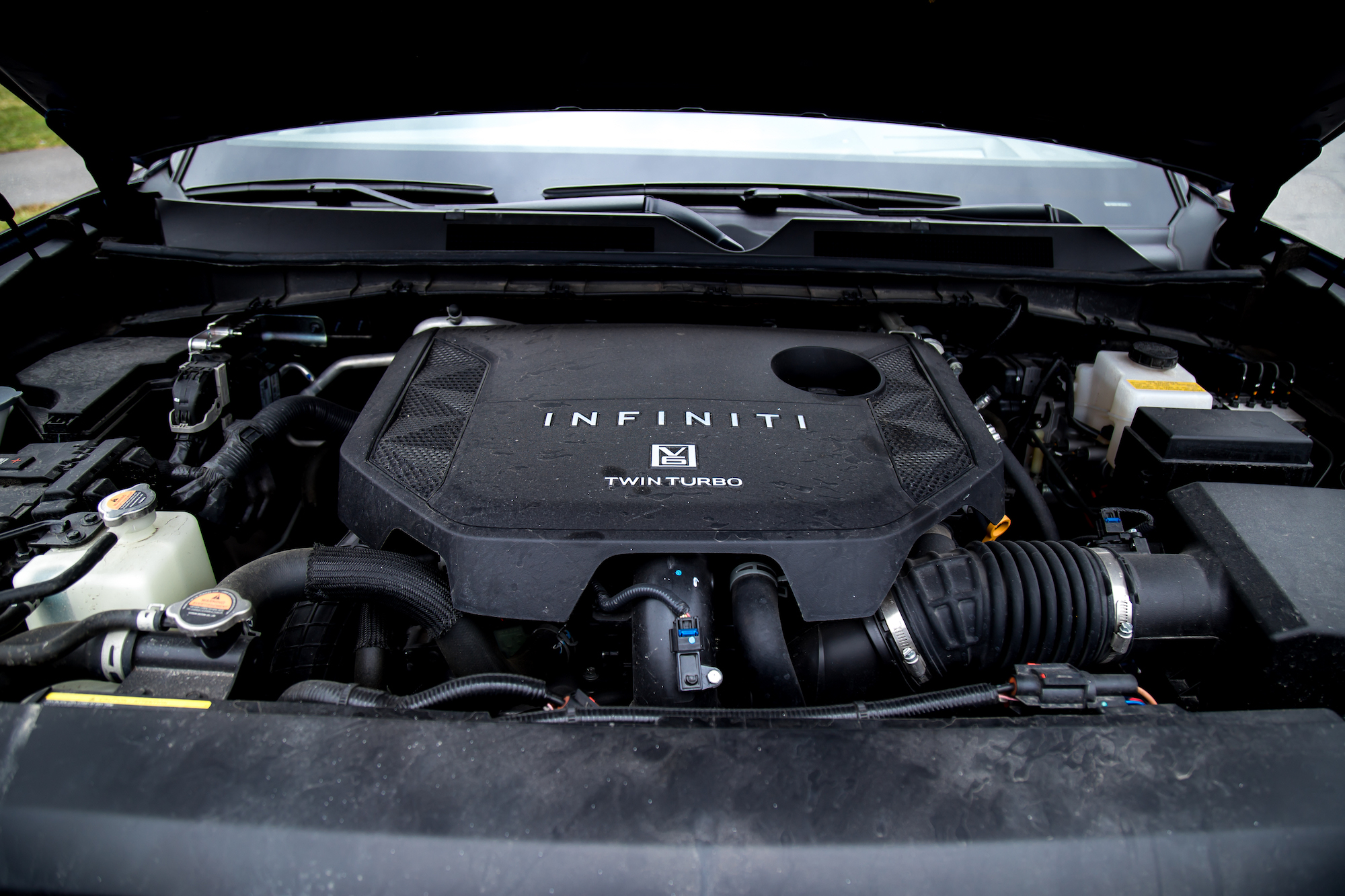
The QX80 employs the same 3.5-litre twin-turbocharged V6 (VR35DDTT) as the Nissan Armada, and generates 450 hp and 516 lb-ft of torque through its 9-speed automatic gearbox. Despite the Sport badge, there’s actually not much sport to be had here, with no change in output or handling compared to the standard model. Unexpectedly, the ride quality is clumsy, easily agitated, and lacks the absorbency that you would expect from a six-figure SUV.
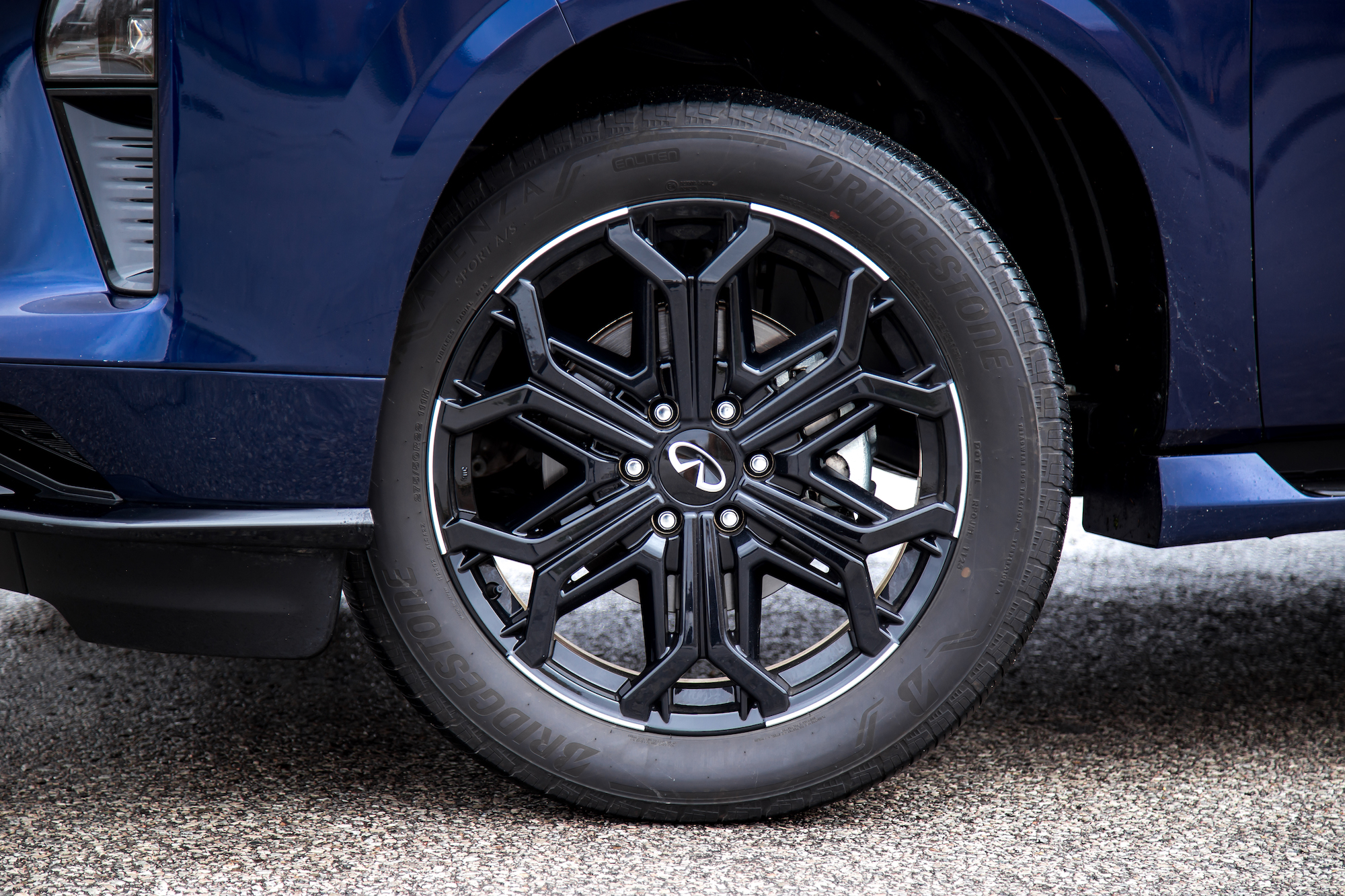
The adaptive air suspension does an adequate job of soaking up minor tremors, but sharper vertical loads will shake the chassis enough to make the 22-inch wheels feel unsettled. There’s a greater sense of fragility here when compared to the American SUVs, where a rocky road is all it takes to unsettle the smooth, rhythmic pace that the QX80 so adeptly demonstrates on a glassier road. The ride isn’t unbearable, but if you were expecting your luxury hauler to glide and melt away the pavement, and isolate you in an expensive leather-laden cocoon, then the QX80 will disappoint.
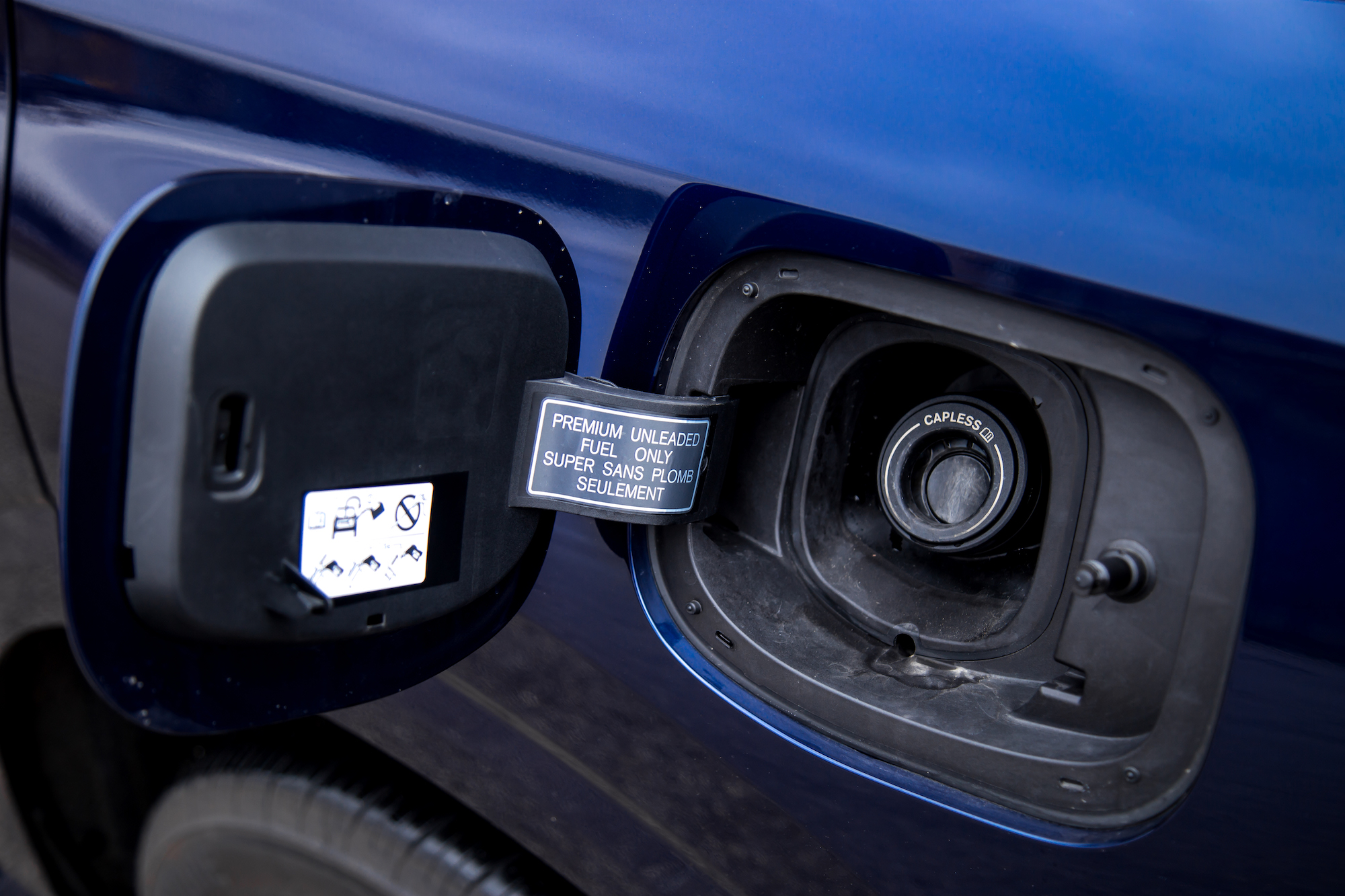
The jittery 9-speed gearbox suffers the same low-speed hiccups as the Armada, but with less frequency. The QX80 is still astonishingly quick in a straight line, deploying its 450 horses in a smooth, gentle manner. And while not as sharp and controlled under cornering as the Armada NISMO, the QX80 rewards gentle steering and patience when introducing lateral loads. Its handling is by far the most truck-like in this company, and doesn’t hold a candle to the composure of the smaller but more rigid BMW X7 and Mercedes-Benz GLS. Still, roll on the throttle with a judicious right foot, and the V6 will reward you with respectable fuel economy. We averaged 13.5 L/100km with a mix of city and highway driving, better than the 15.1 L/100km in the NISMO-tuned Armada we drove a few weeks ago.

There’s a lot to like about the Infiniti QX80 Sport. While the looks are an acquired taste, we’re impressed by the high-grade interior and material finishes that make the Navigator and Escalade feel comparatively low-rent. Is it monumentally different to drive than the Armada? Not really – the QX80 is essentially a more stylish sibling that’s been blessed by a skilled tailor. Shame about its flinty ride quality then, though ferrying around seven occupants in first-class comfort isn’t an easy feat. Its rivals just do it convincingly better.
Specifications:
Model: 2026 Infiniti QX80 Sport
Paint Type: Grand Blue
Base Price: $118,995
Price as Tested: $119,745
Wheelbase(mm): 3,076
Length/Width/Height (mm): 5,359 / 2,350 / 1,955
Engine: 3.5-litre twin-turbocharged V6
Horsepower: 450 hp
Torque: 516 lb-ft
Transmission: 9-speed automatic
Engine & Drive Configuration: Front engine, 4WD
Observed Fuel Consumption (L/100km): 13.5
Tires: 275/50R22; Bridgestone Alenza Sport A/S



Leave a Reply