
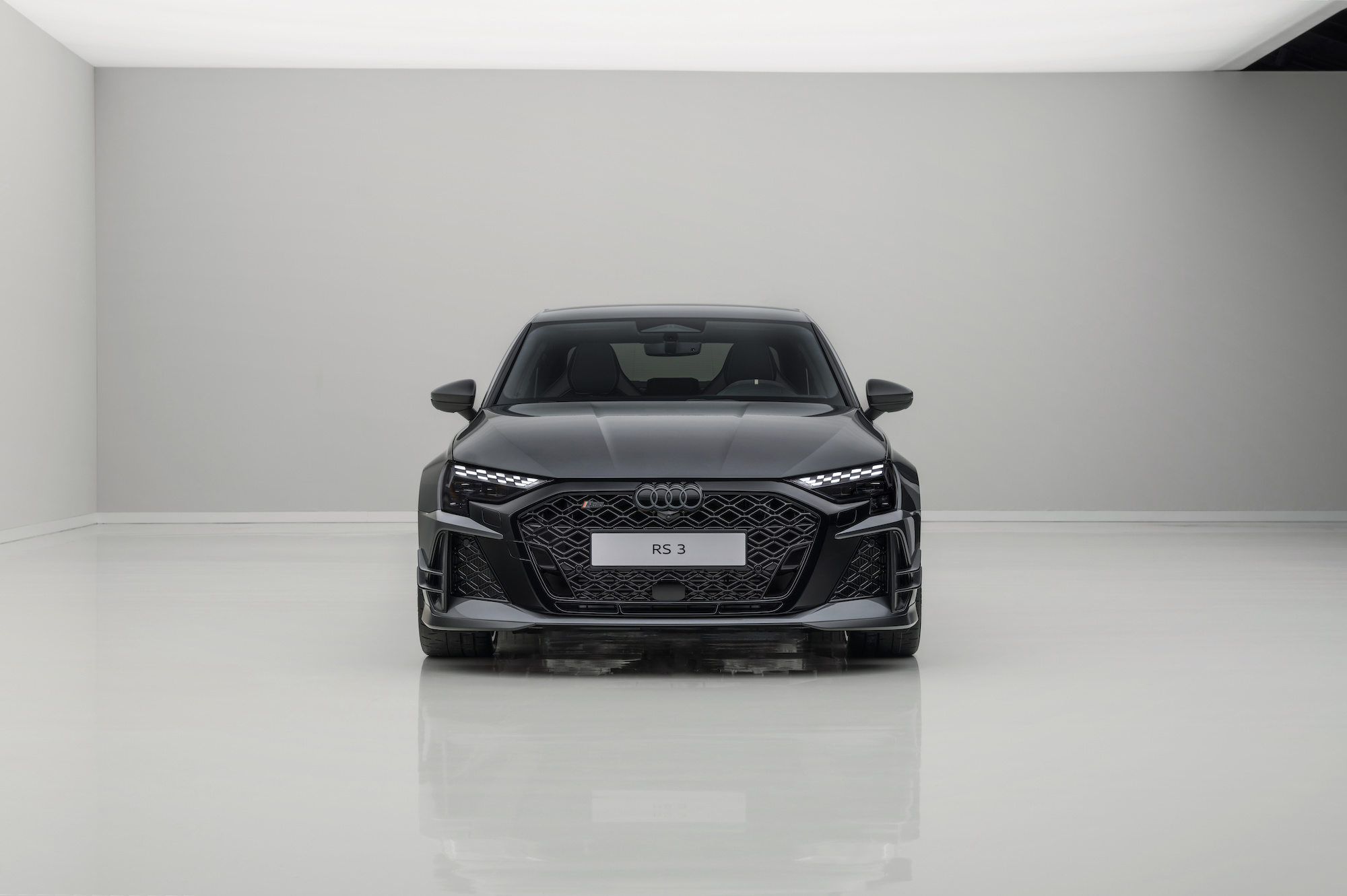
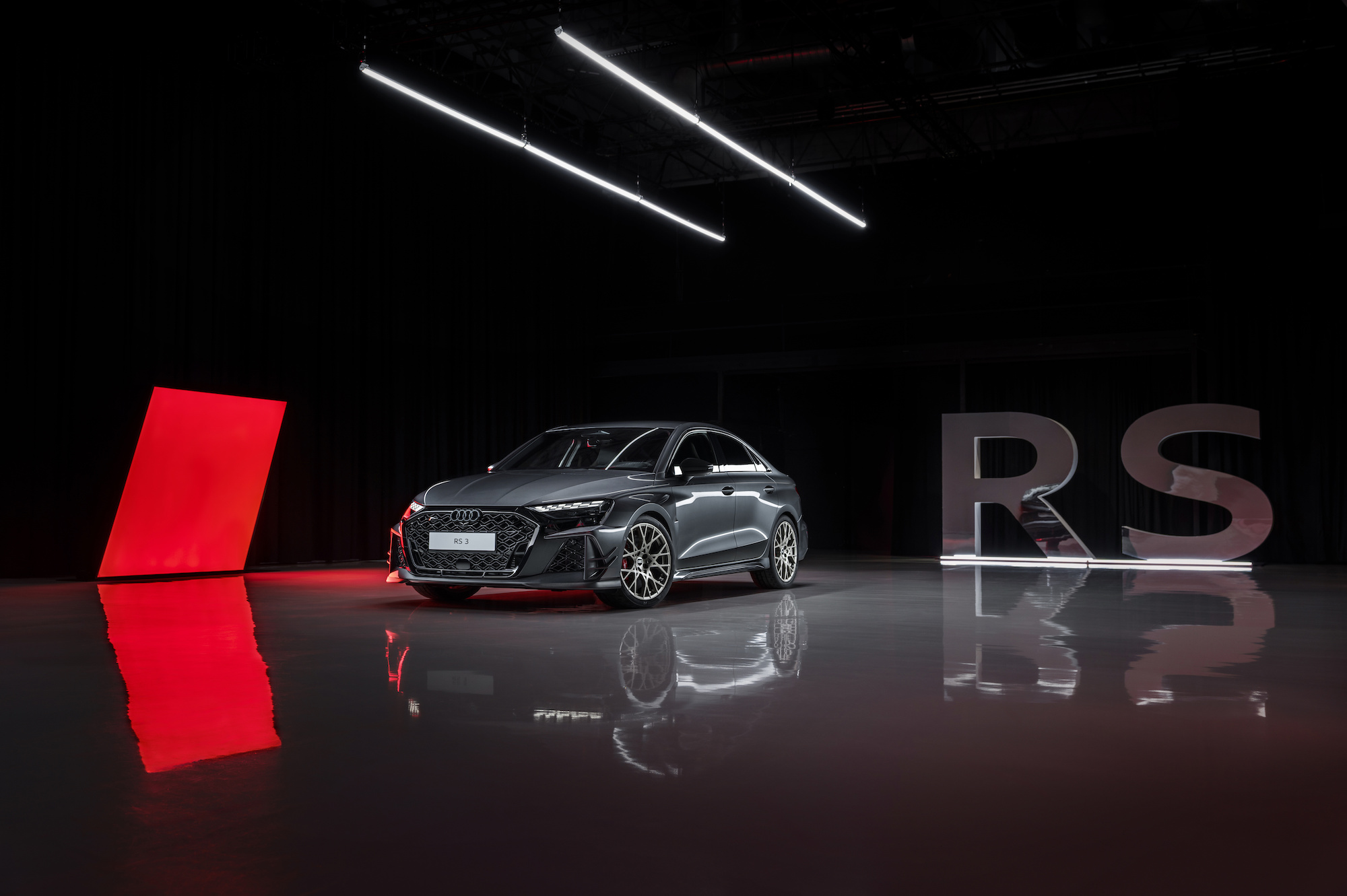
The RS3 recently made a comeback to our Canadian shores, and Audi is already celebrating 50 years of its oddball, five-cylinder engine with this RS3 Competition Limited. Capped at 750 units globally, with the number of Canadian allocations yet to be released, Audi threw everything at their smallest sedan, in the same vein as the RS 6 GT. That includes an adjustable coilover suspension, stiffer rear stabilizer bar, and exclusive interior and exterior elements.
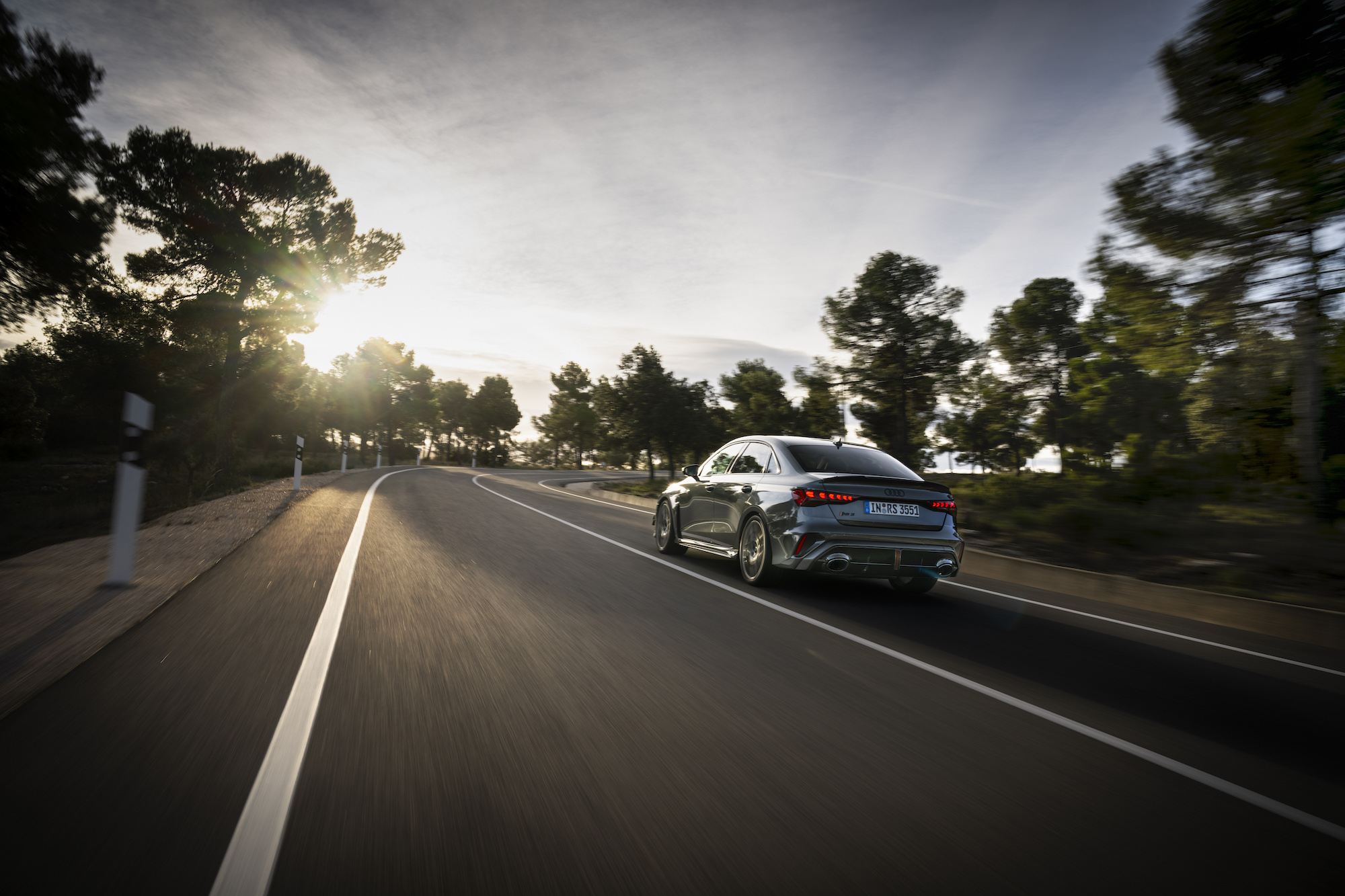
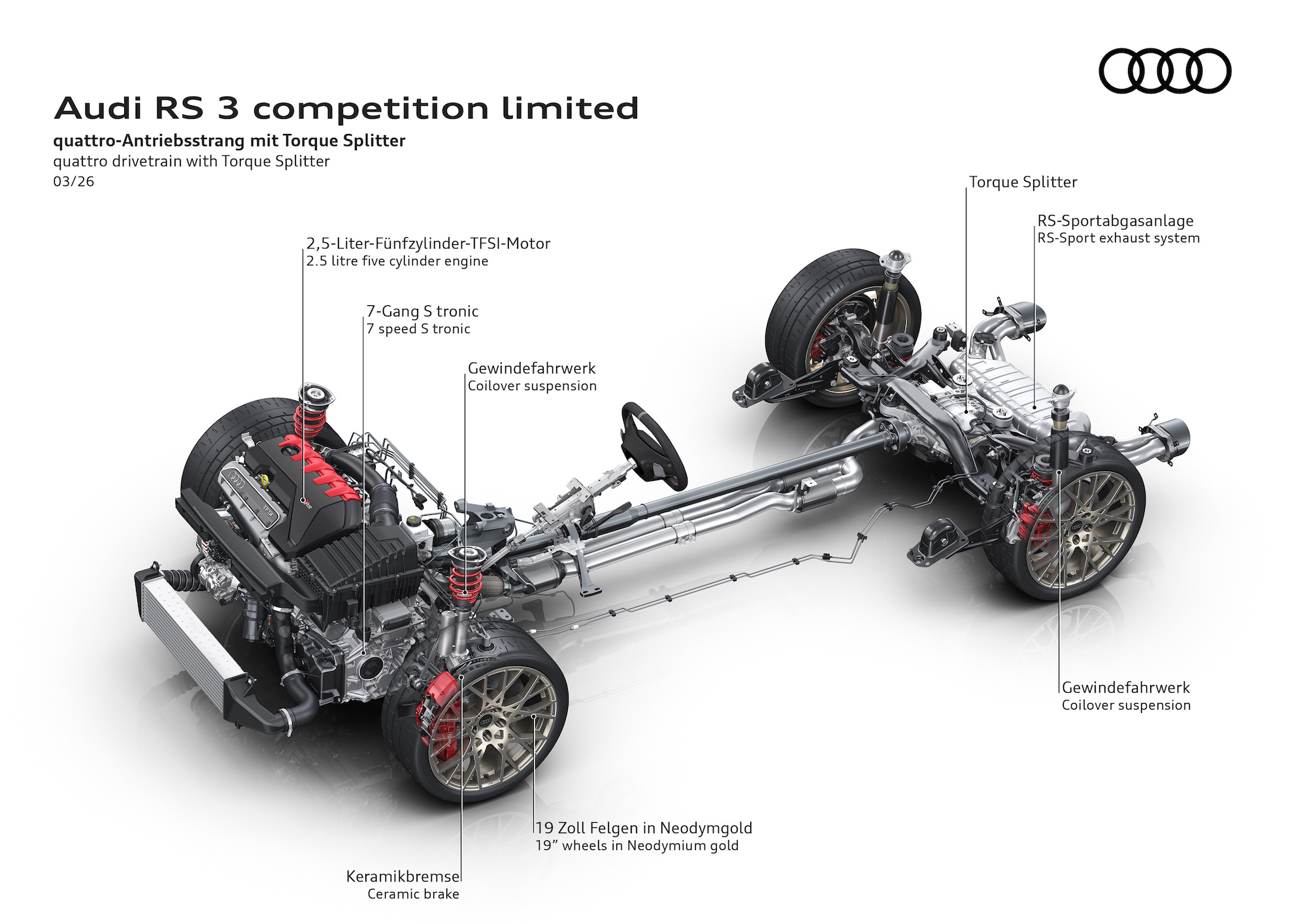
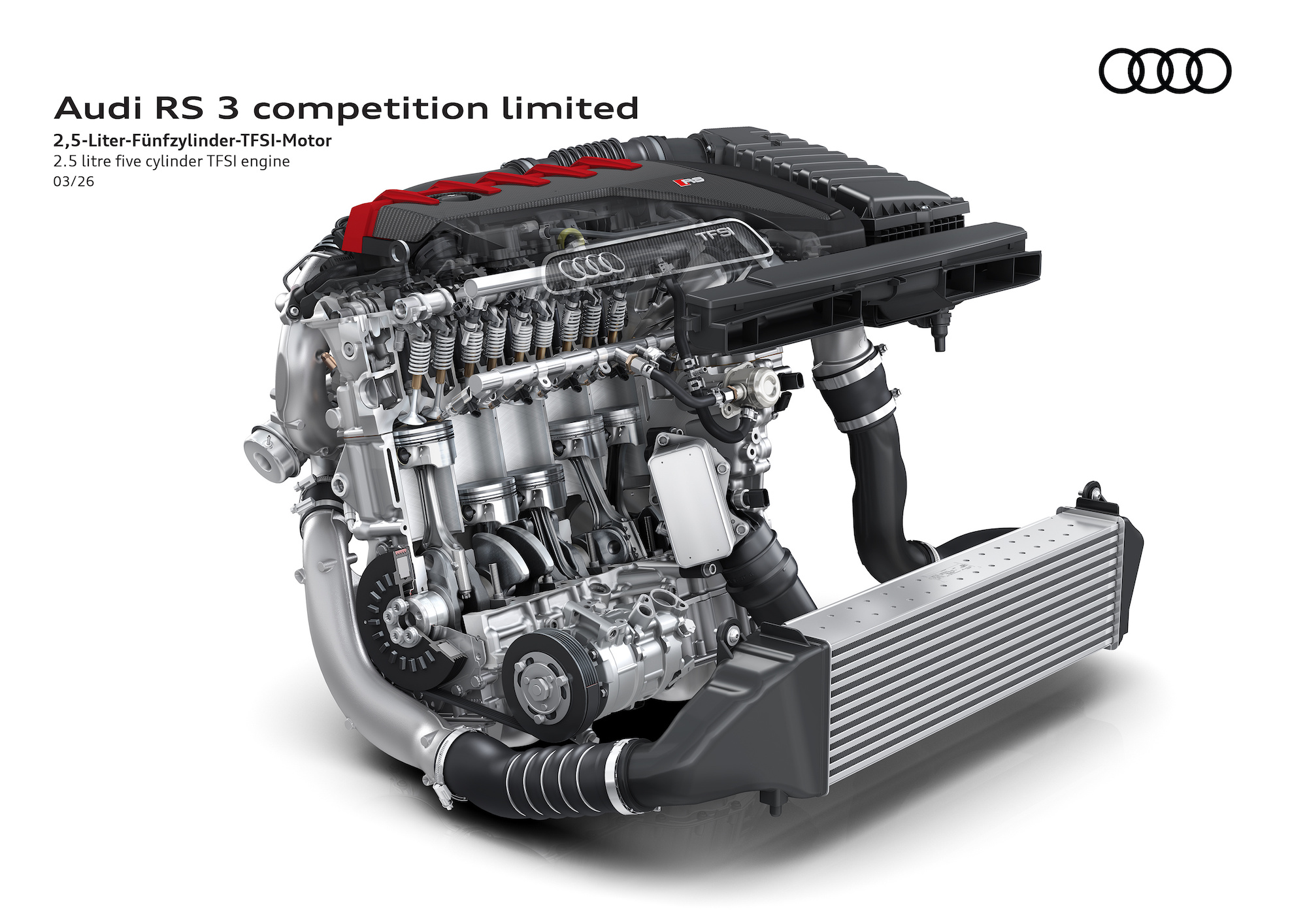
Despite this being a celebration of the five-cylinder engine, Audi didn’t bother tinkering with what they believe is automotive perfection. We’re inclined to agree after our test drive of the 2025 model, with the 2.5-litre turbo-five producing scintillating, mini-V10 vocals as it moonshots to 7,000 rpm. Power output remains unchanged at 394 hp and 369 lb-ft of torque, routed through a 7-speed dual-clutch transmission to a quattro all-wheel-drive system.
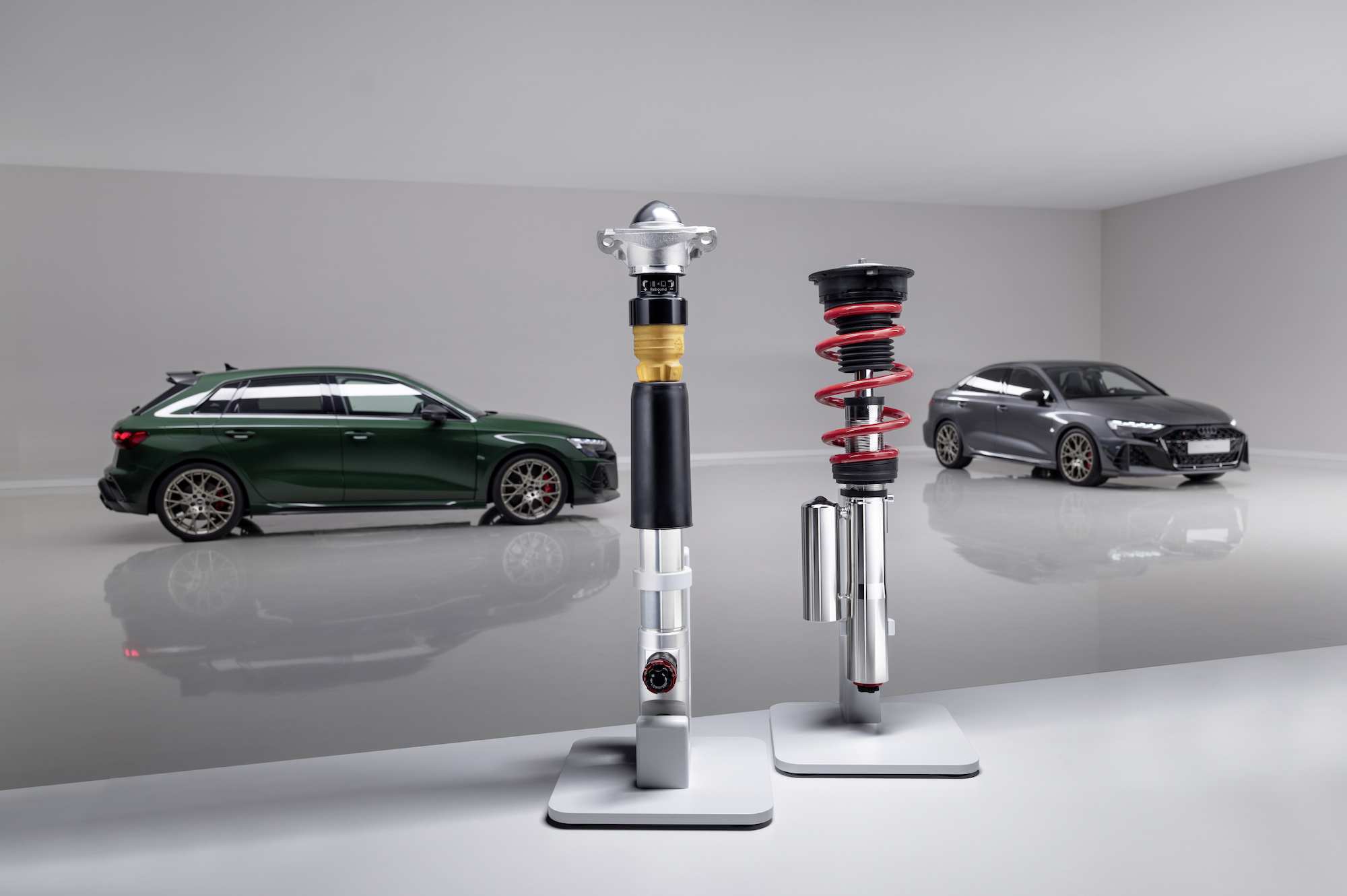
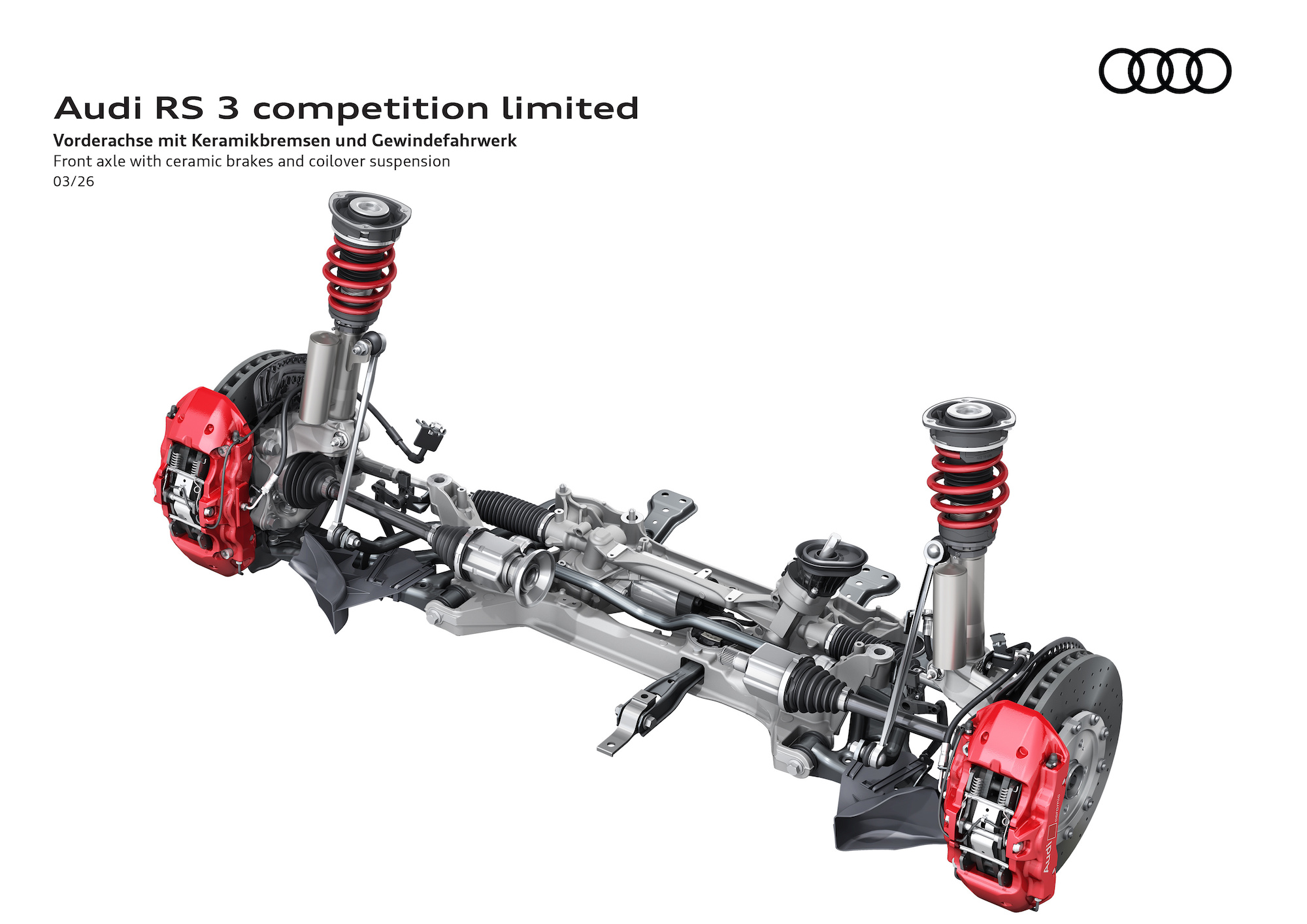
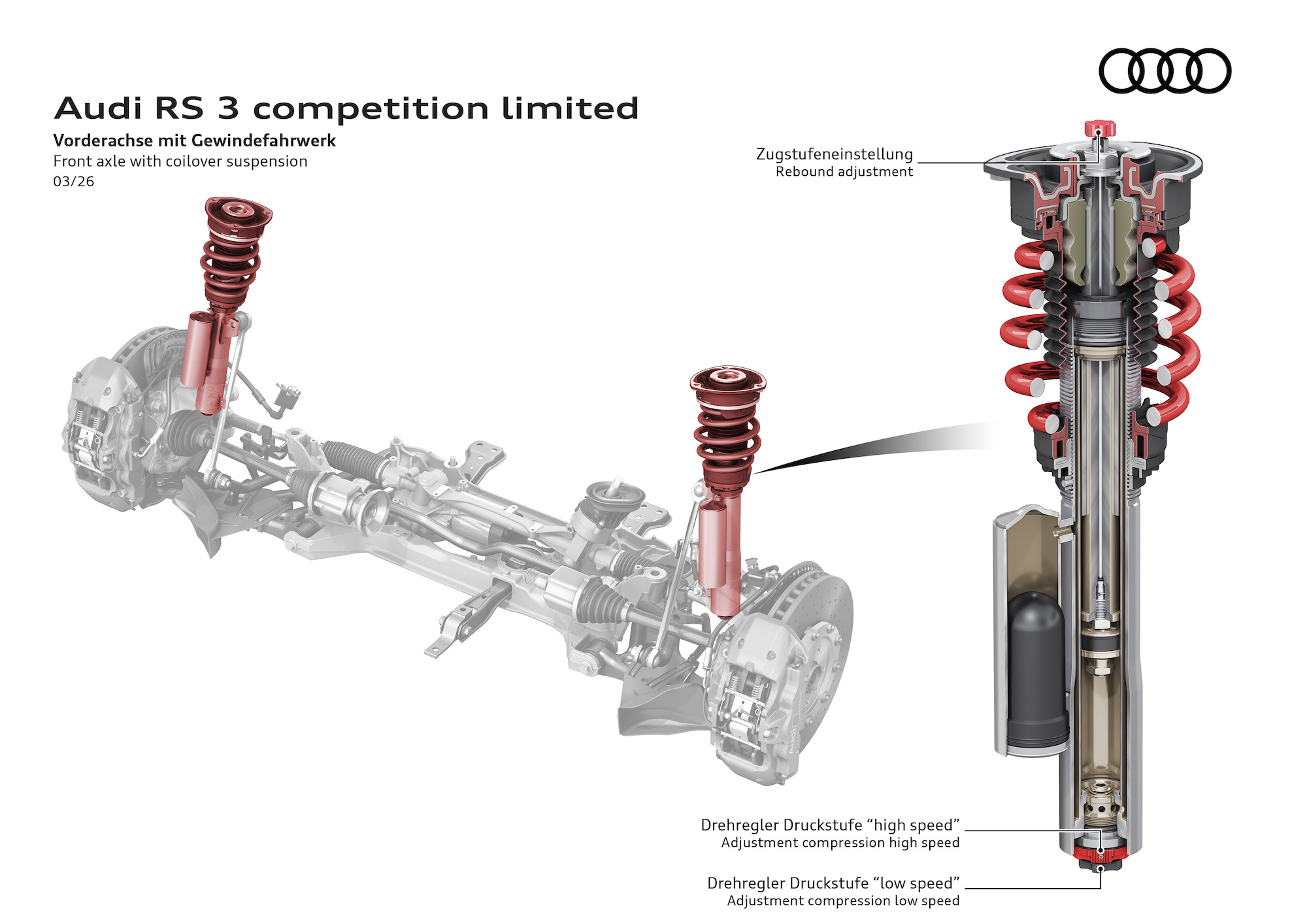
The most notable additions to the Competition are the coilover suspension and the rear stabilizer bar, both of which should improve handling, enabling sharper, more precise road control. The new three-way adjustable dampers allow for separate control of low-speed and high-speed compression and rebound. This is the same as the RS6 GT, which sourced theirs from KW, but note that these are not parameters you can adjust with quick button presses. Audi includes a toolkit to let you get down and dirty and manually tinker with the settings.
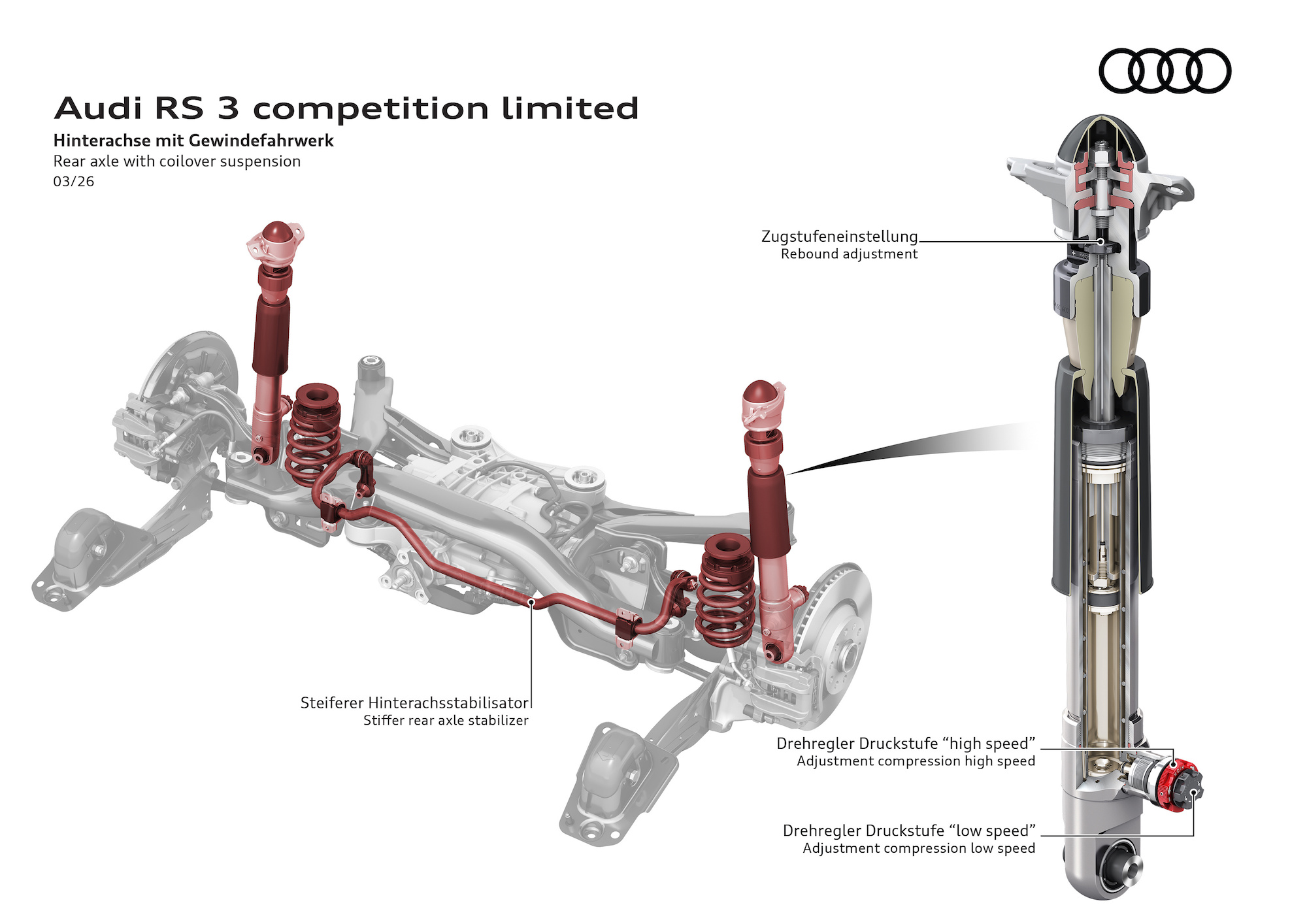
Low-speed compression handles how the shocks behave under conditions such as weight transfer under acceleration and braking, and under cornering loads. Audi offers 12 adjustment levels, whereby adding stiffness (a higher number) makes the suspension stiffer, hence better turn-in and more direct handling. Softening it back makes for a more comfortable but lazier ride.
High-speed compression, on the other hand, is how the shocks behave when they hit deep ruts, potholes, or sharp impacts, sending them moving at higher speeds, hence the name. Here, there are 15 adjustment levels, with a stiffer setting resulting in sharper chassis feedback, while a softer setting means more damping and better impact absorption, and a smoother ride.
The adjustable rebound settings are the exact opposite of the compression settings, and are how the shocks behave when bouncing back from their compression. No one expects the casual driver to understand or even tinker with these settings, much like the Ohlins dampers that Volvo installed on their Polestar Engineered offerings, but it’s a nice-to-know-you-have feature, and we expect most of those toolkits to collect dust as these collector items attempt to appreciate in value.
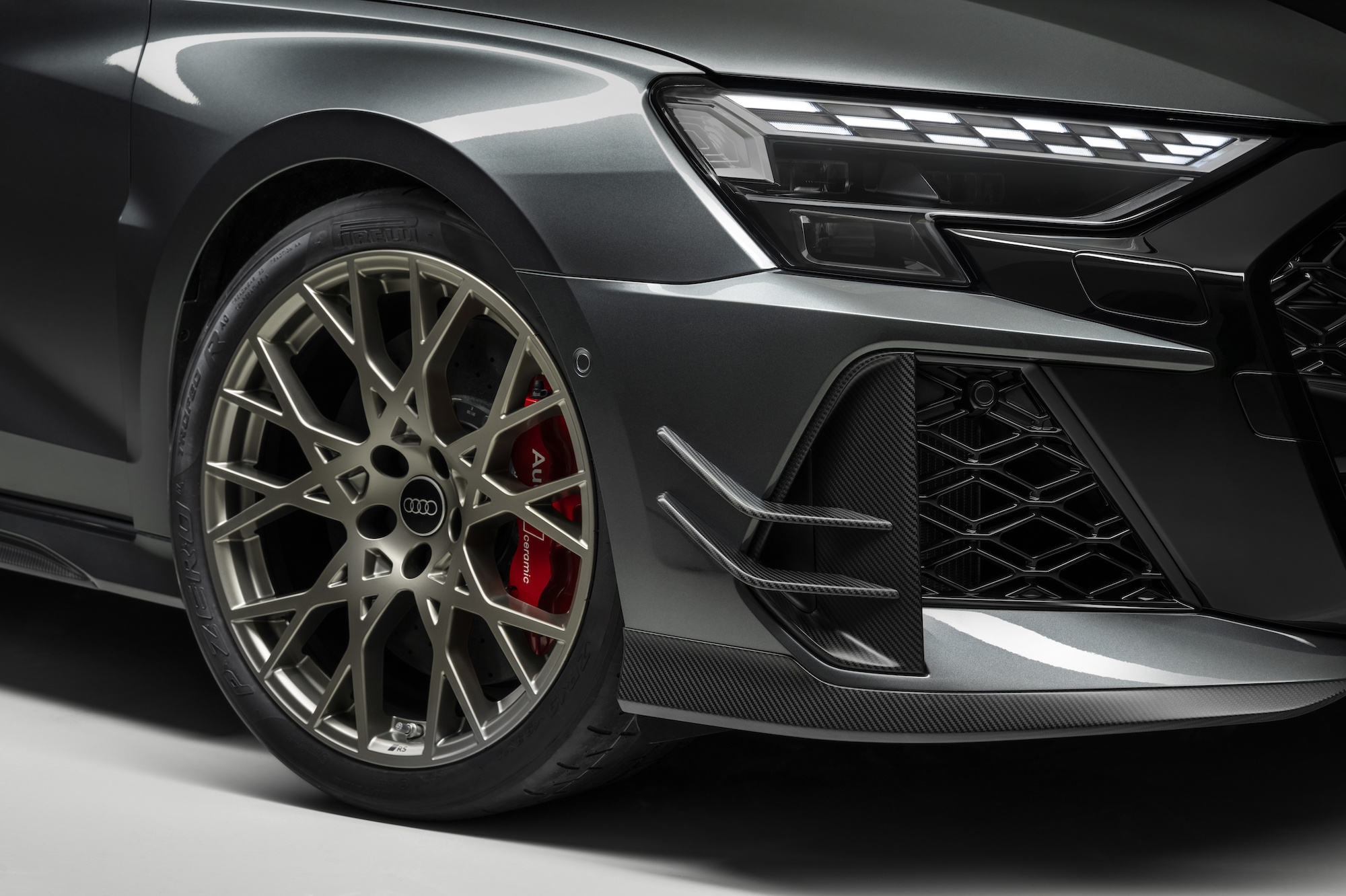
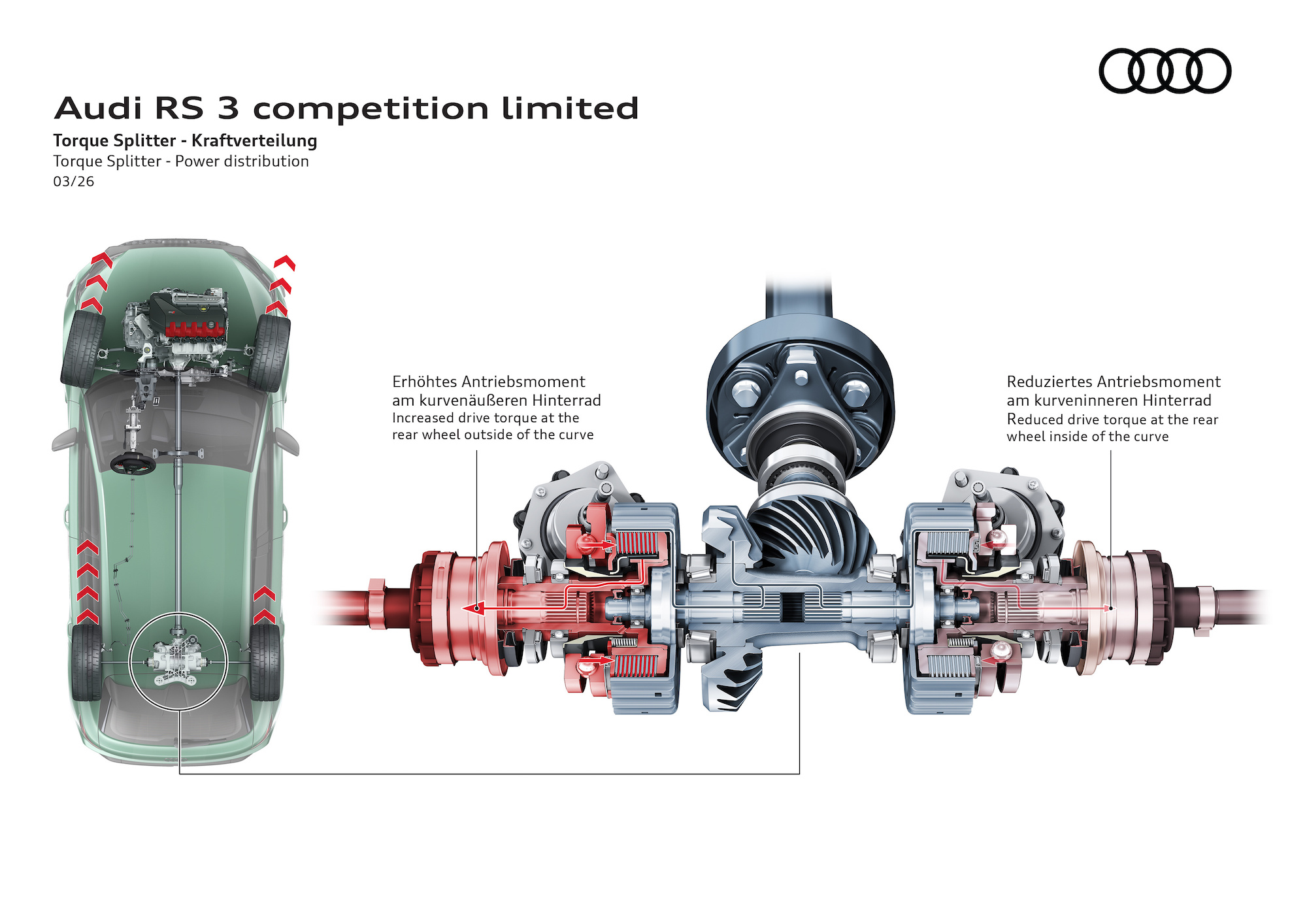
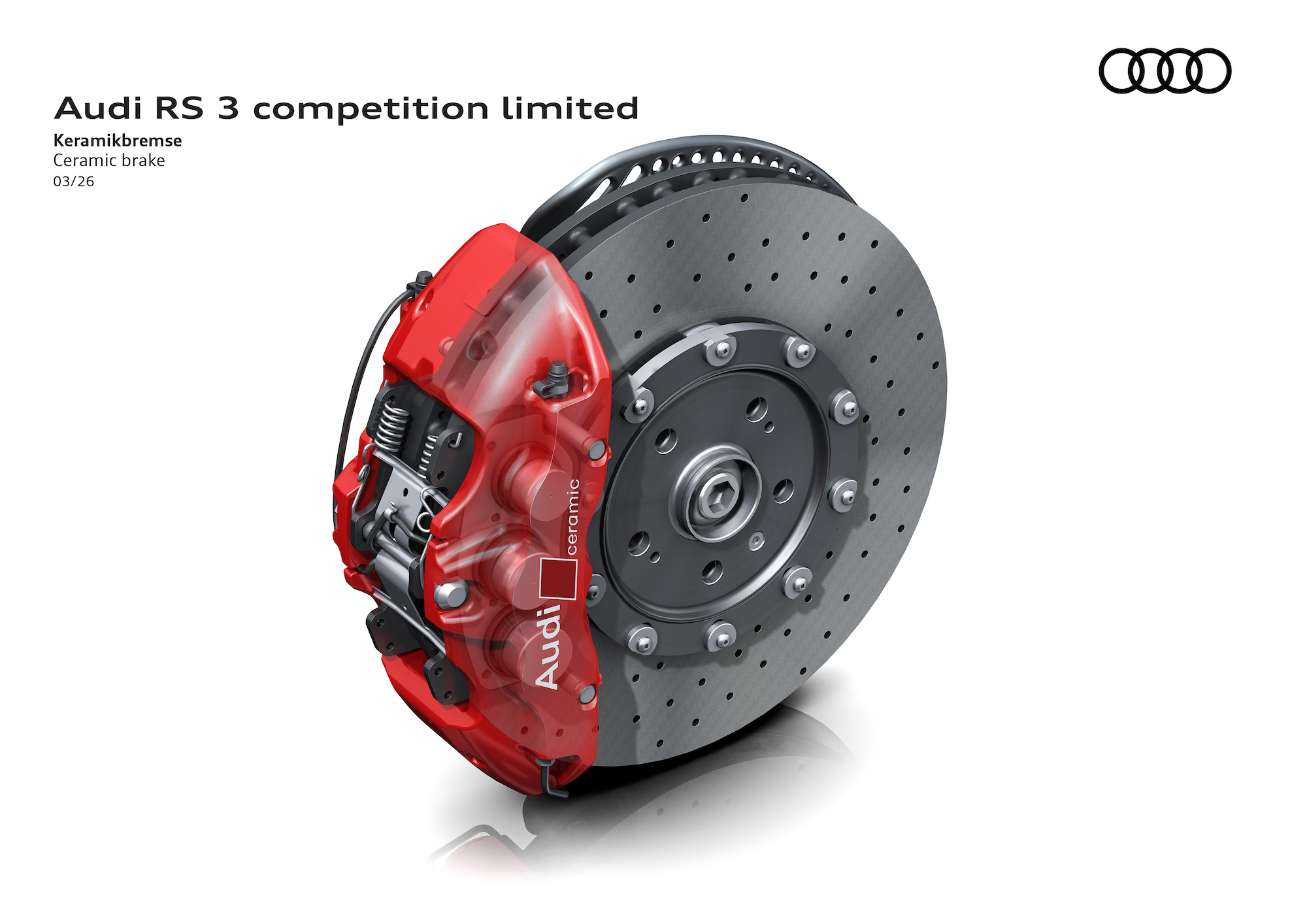
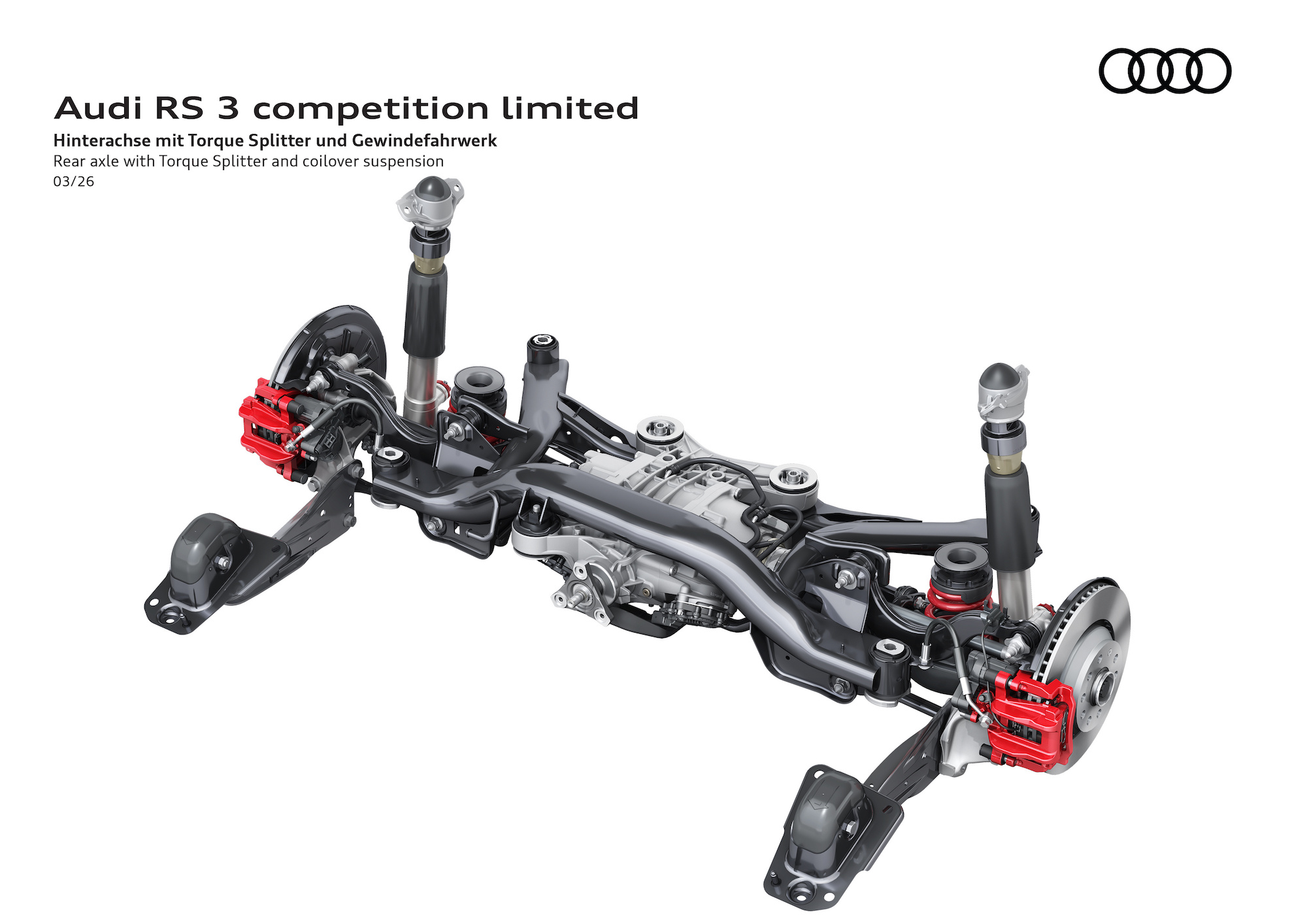
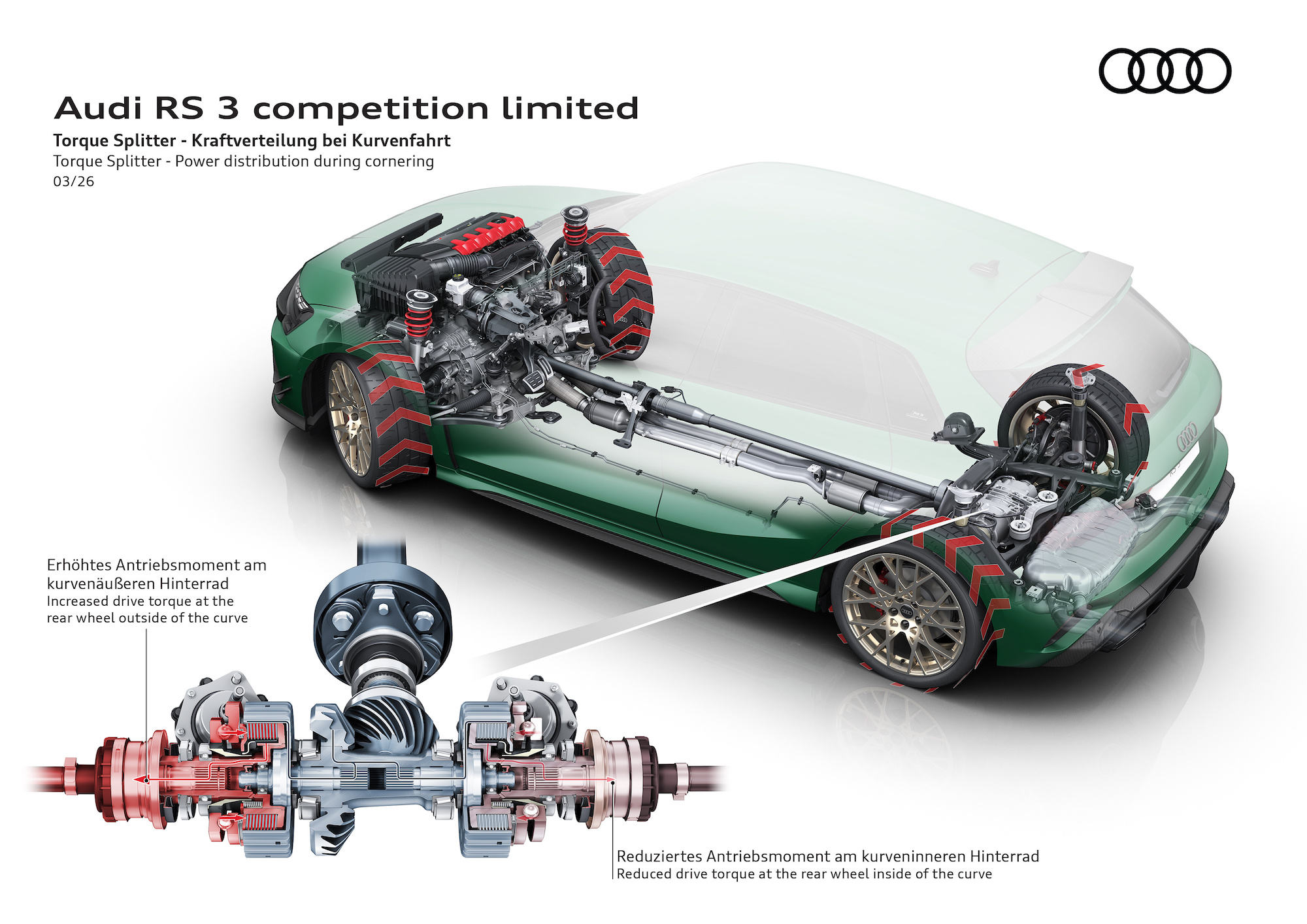
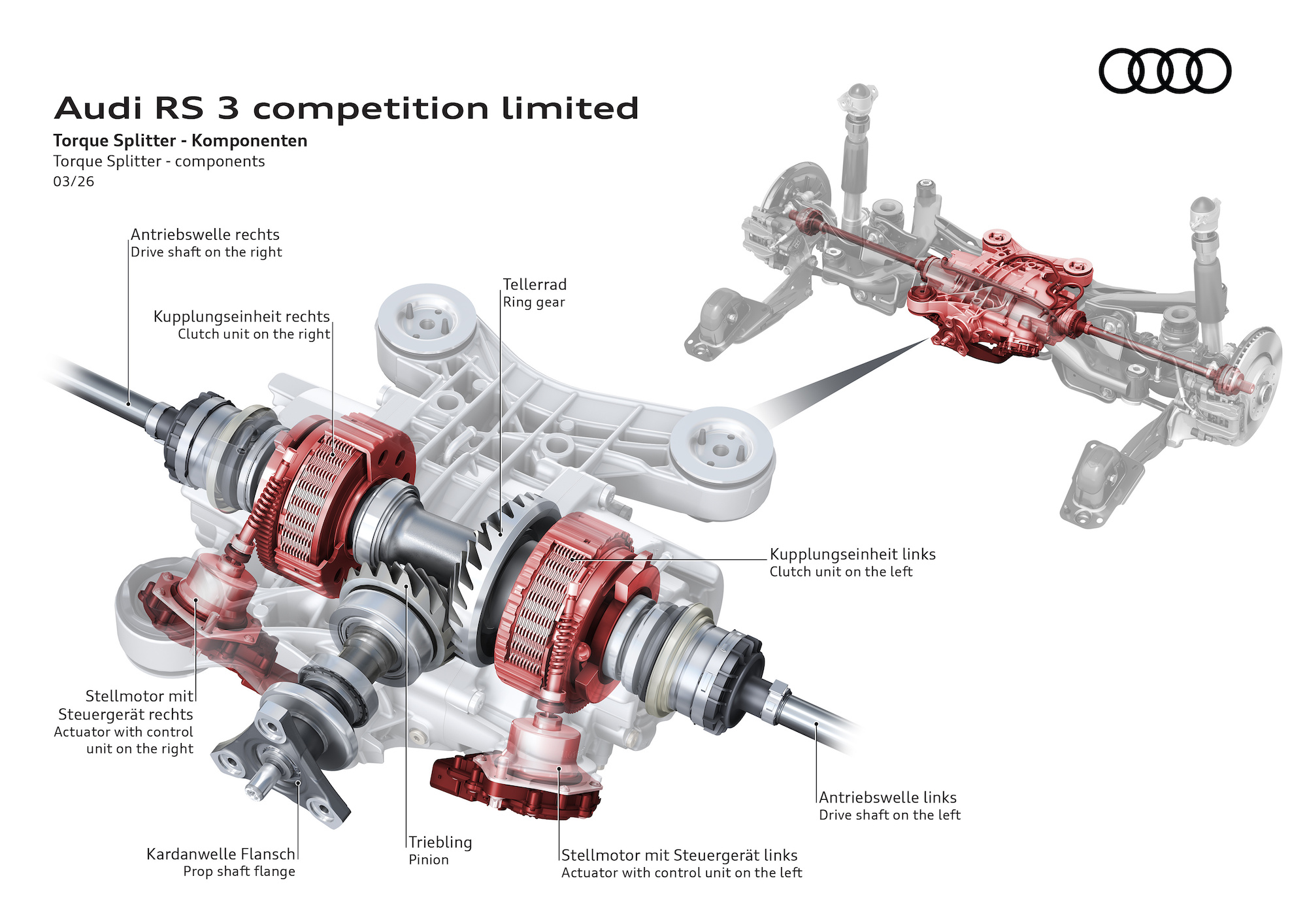
Otherwise, the coilovers should pair well with the RS3’s torque splitter, which delivers fully variable torque distribution at the rear, and carbon ceramic brakes to reel you back from unholy speeds. You can even opt for semi-slick Pirelli P Zero Trofeo tires for shaving seconds off your laptimes.
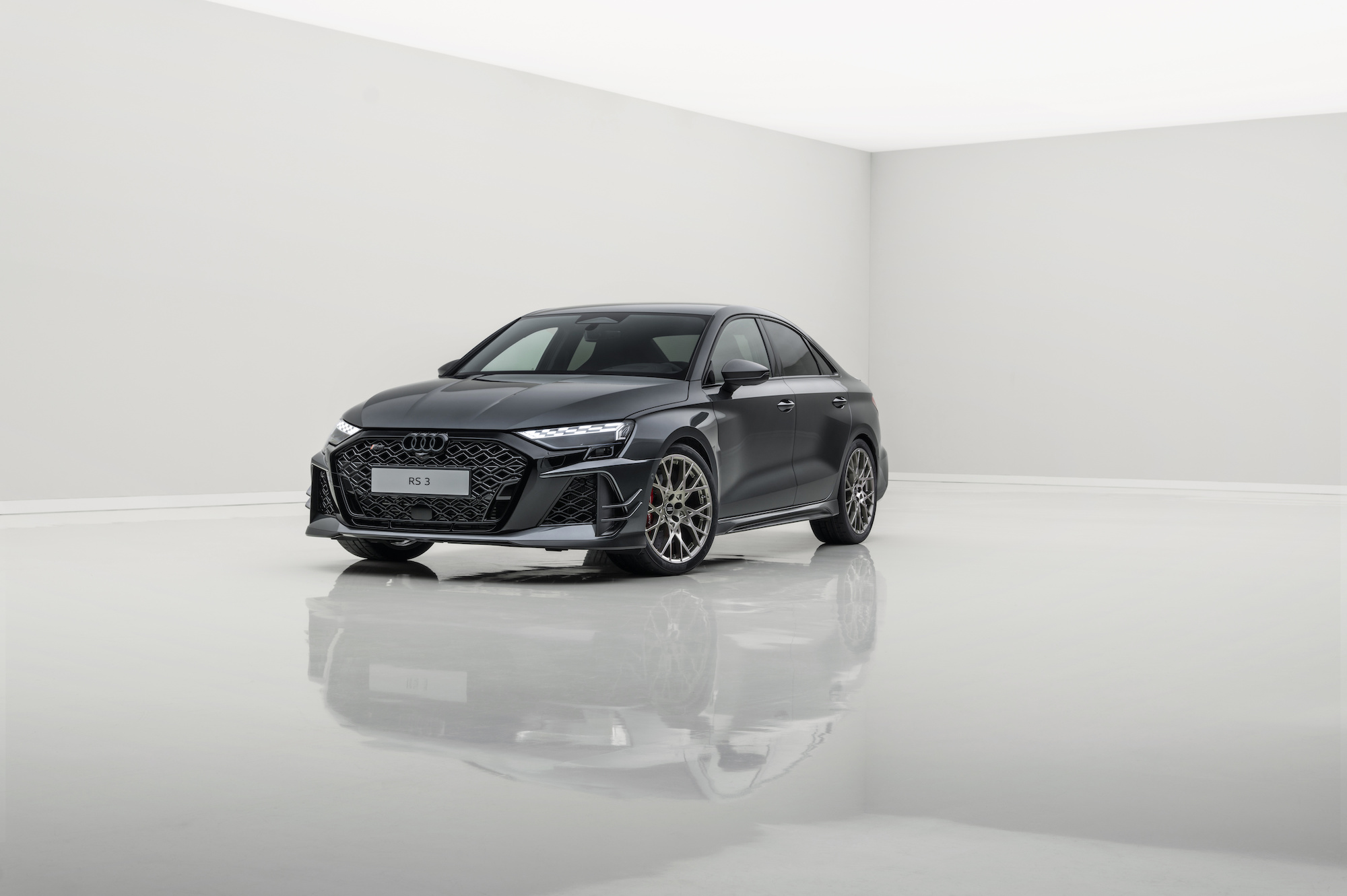
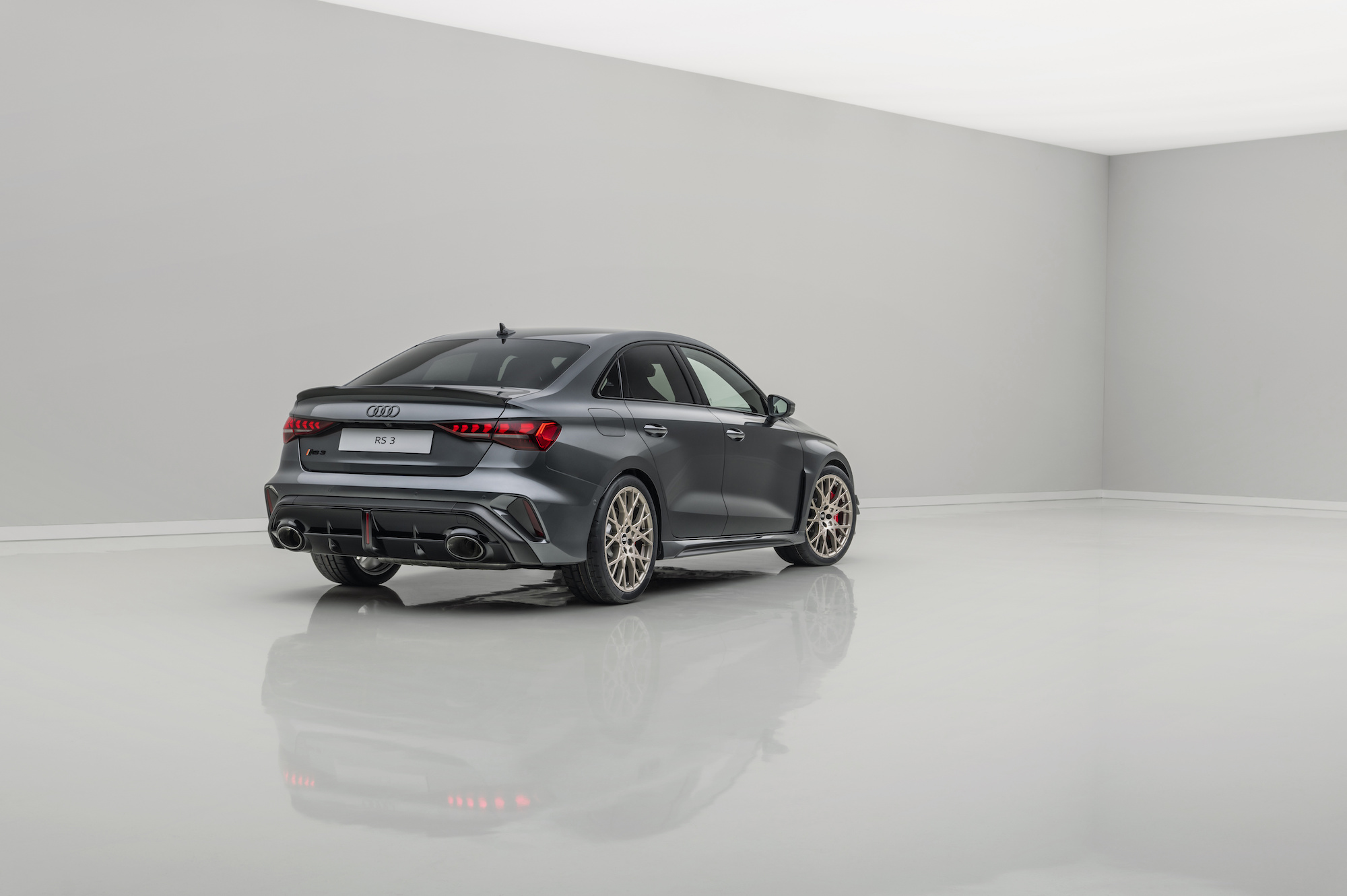
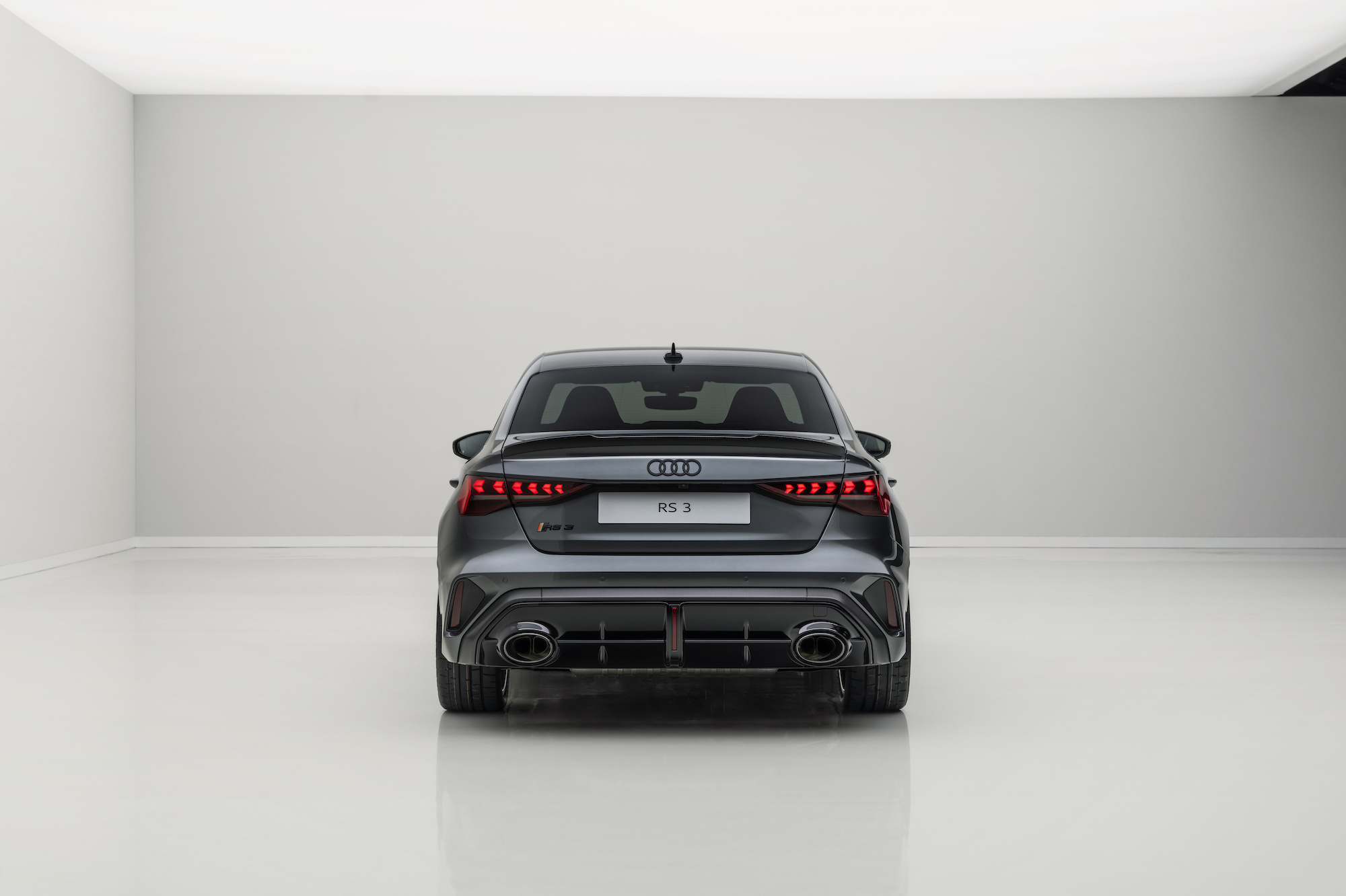
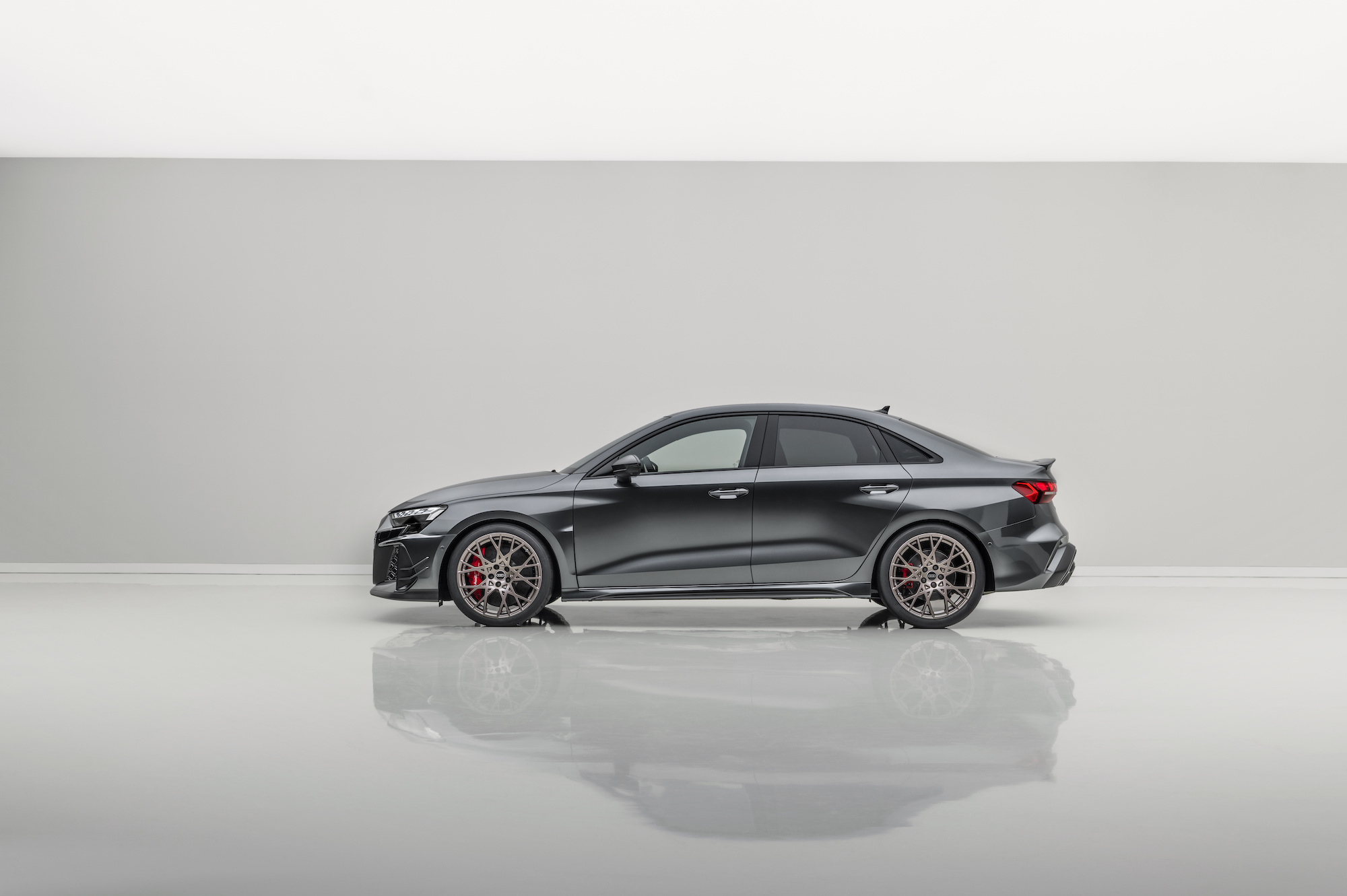
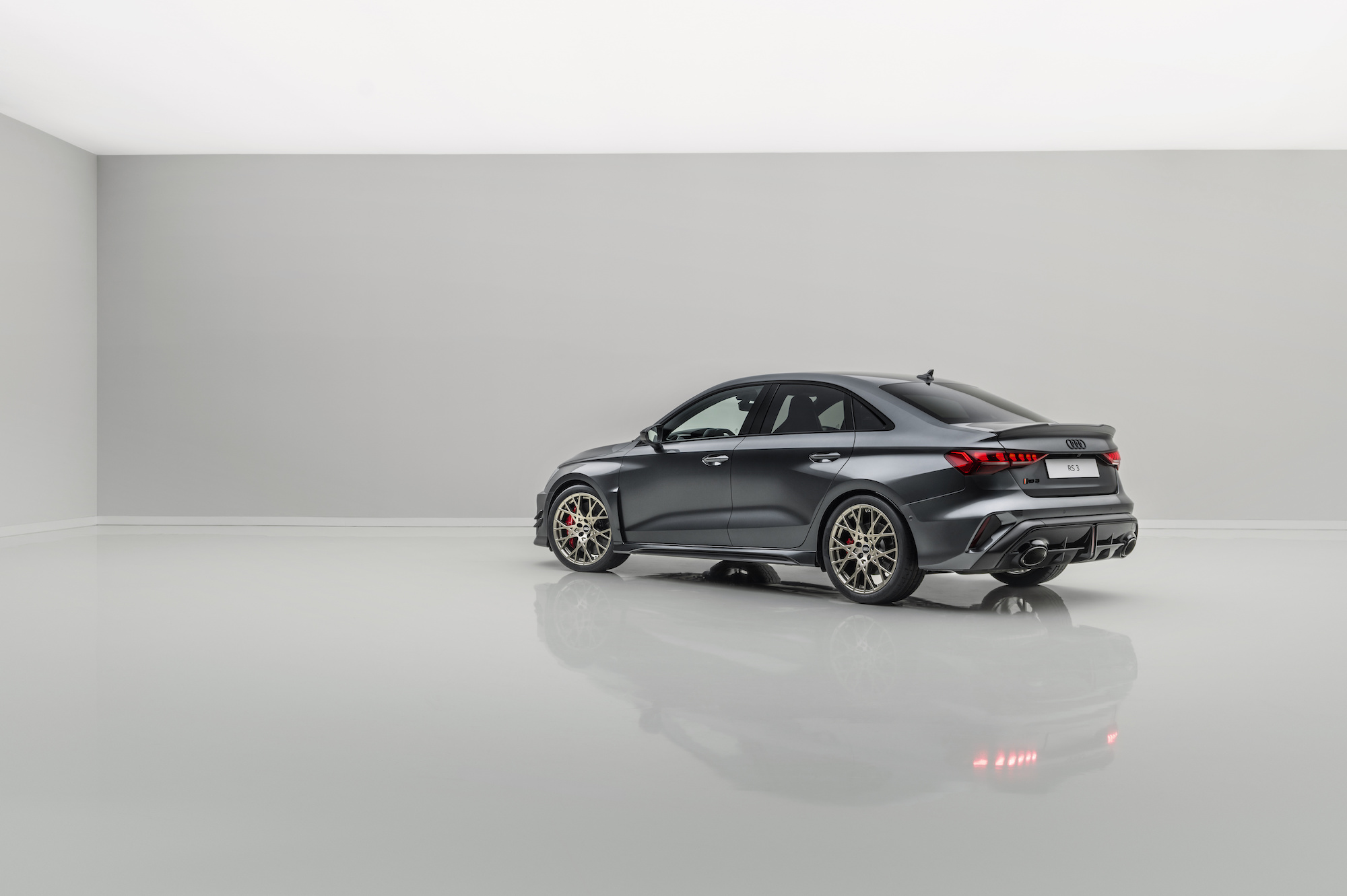
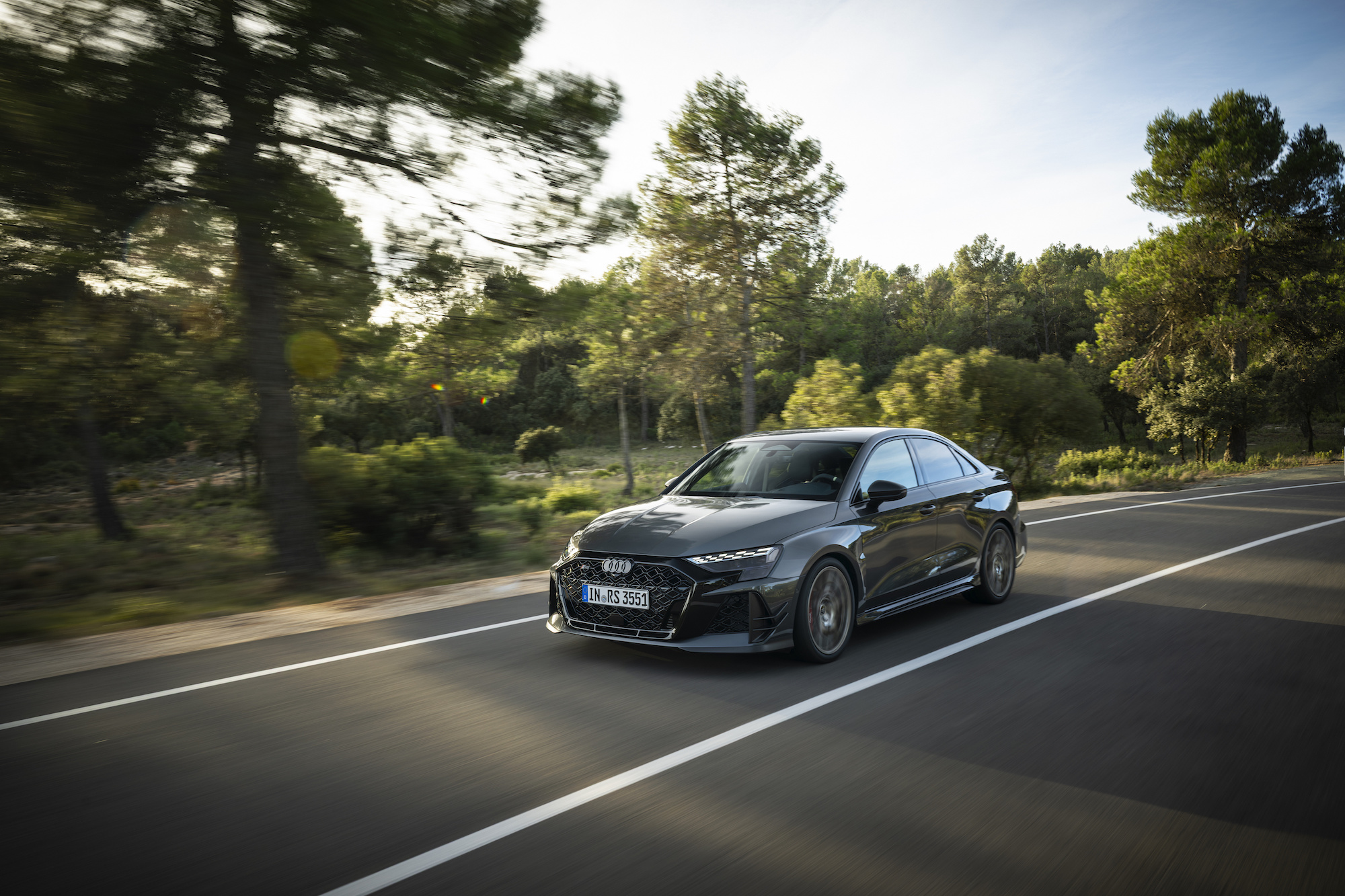
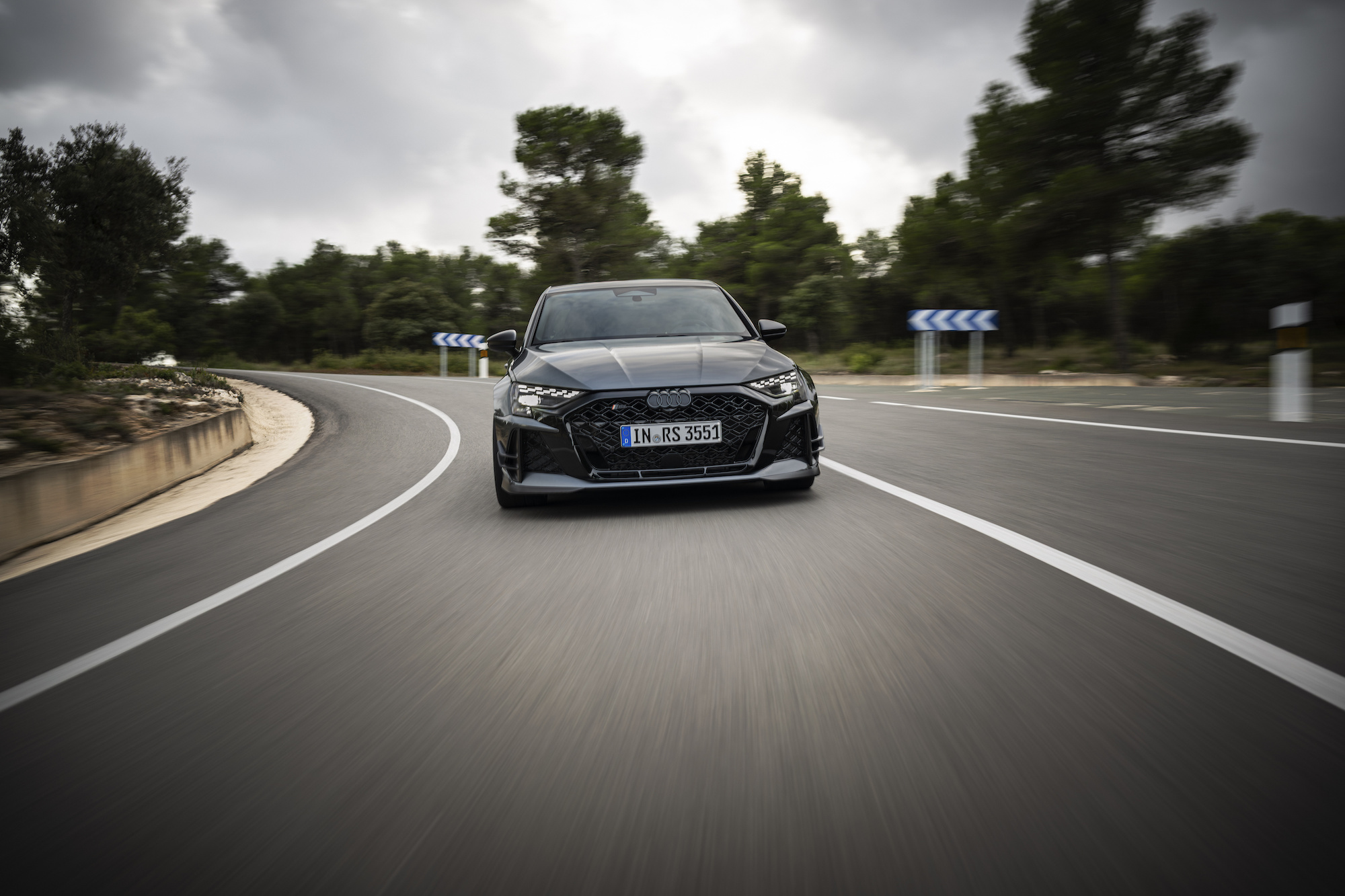
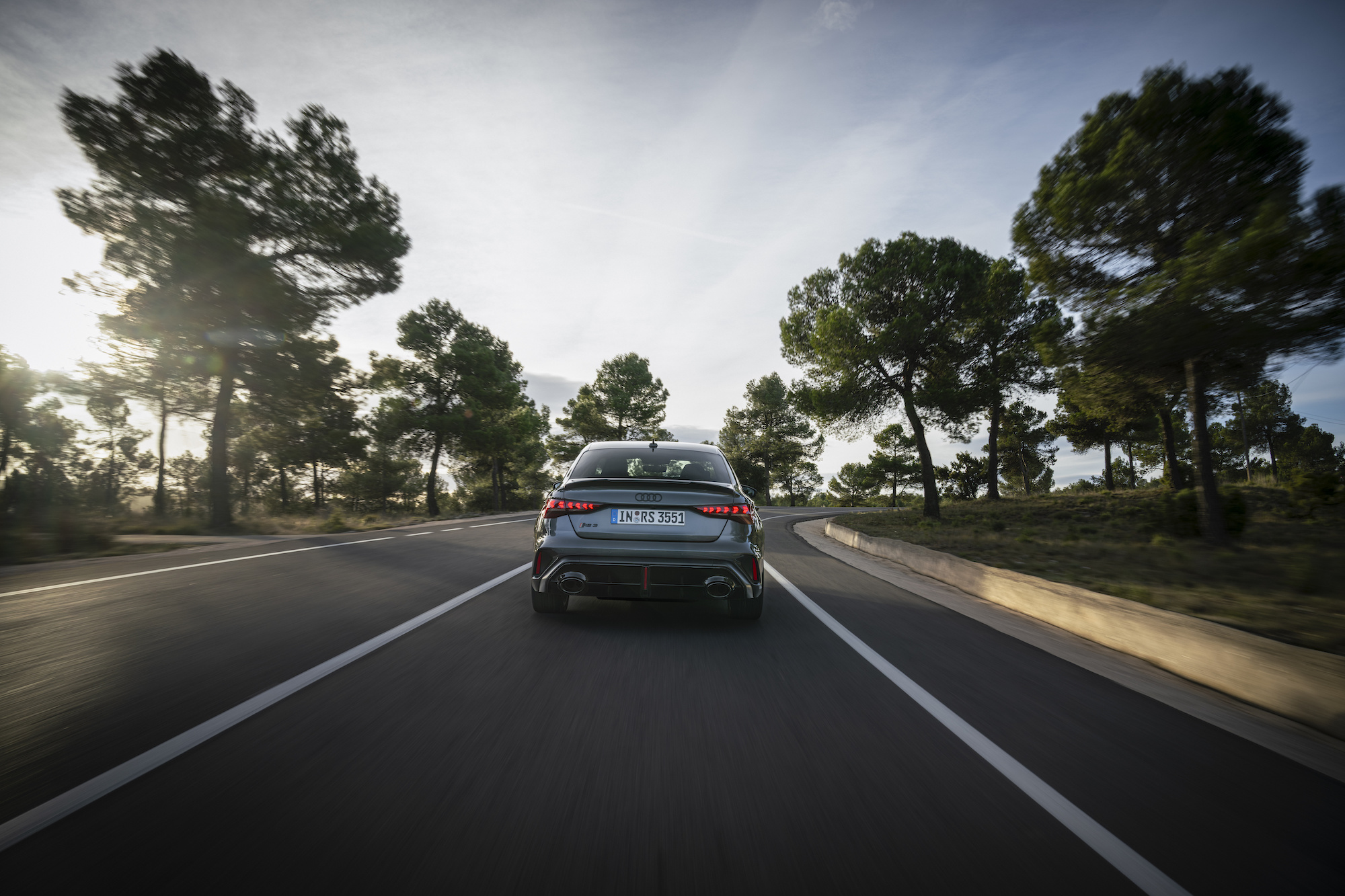
Carbon is the name of the game, with the matted element making up much of the front end, including the mirror caps, side skirts, and rear spoiler. Peek under the hood, and you will find carbon there as well. 19-inch wheels in Neodymium gold matte sit flush in the wheel arches and complement the three available paint colours: Daytona Gray, Glacier White, and Malachite Green, the latter of which is exclusive to the Competition.

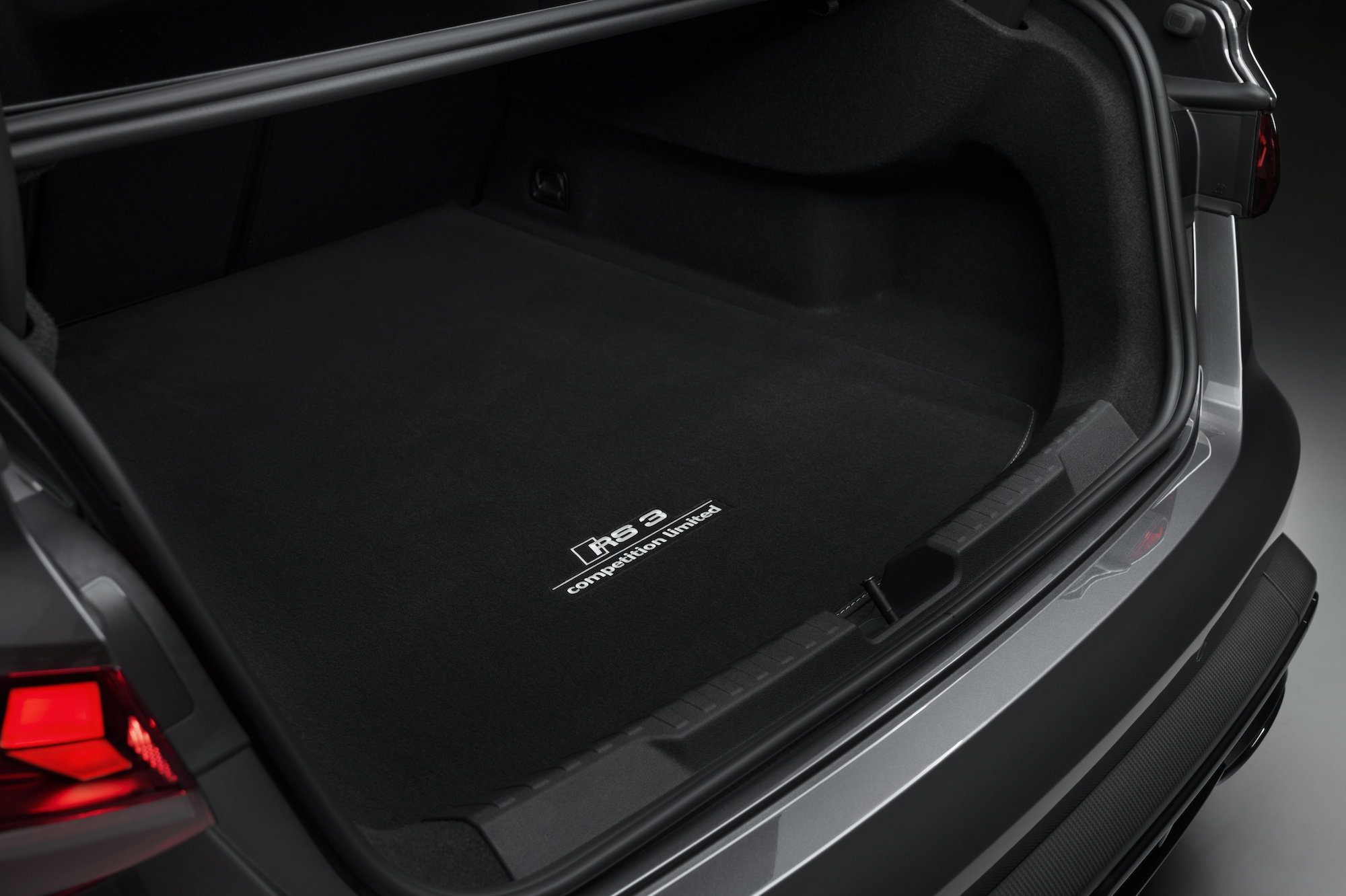
Inside is carried over from the standard RS3 but with an exclusive colour mix of black, Neodymium gold, and Ginger White. The door puddle lights project ‘RS 3 competition limited’ to let your passengers know you spent a bit extra, and the same goes for the seats and floor mats. Like the RS6 GT, there’s an etching in the center console that displays your model’s serial number, and it’s actually the model # and not a generic #1/500 like in the Honda Civic Type R. Our favourite addition however is the white background on the instrument display, a nod to the white dials on the RS2 Avant, the first RS five-cylinder engine model in 1994.

Don’t get your hopes up on the hatchback. Only the sedan variant is coming to Canada. No pricing has been released, but with the standard model’s base price of $78,250, you can expect the Competition Limited to tickle the $100,000 mark when it releases into showrooms later this year.





Leave a Reply