
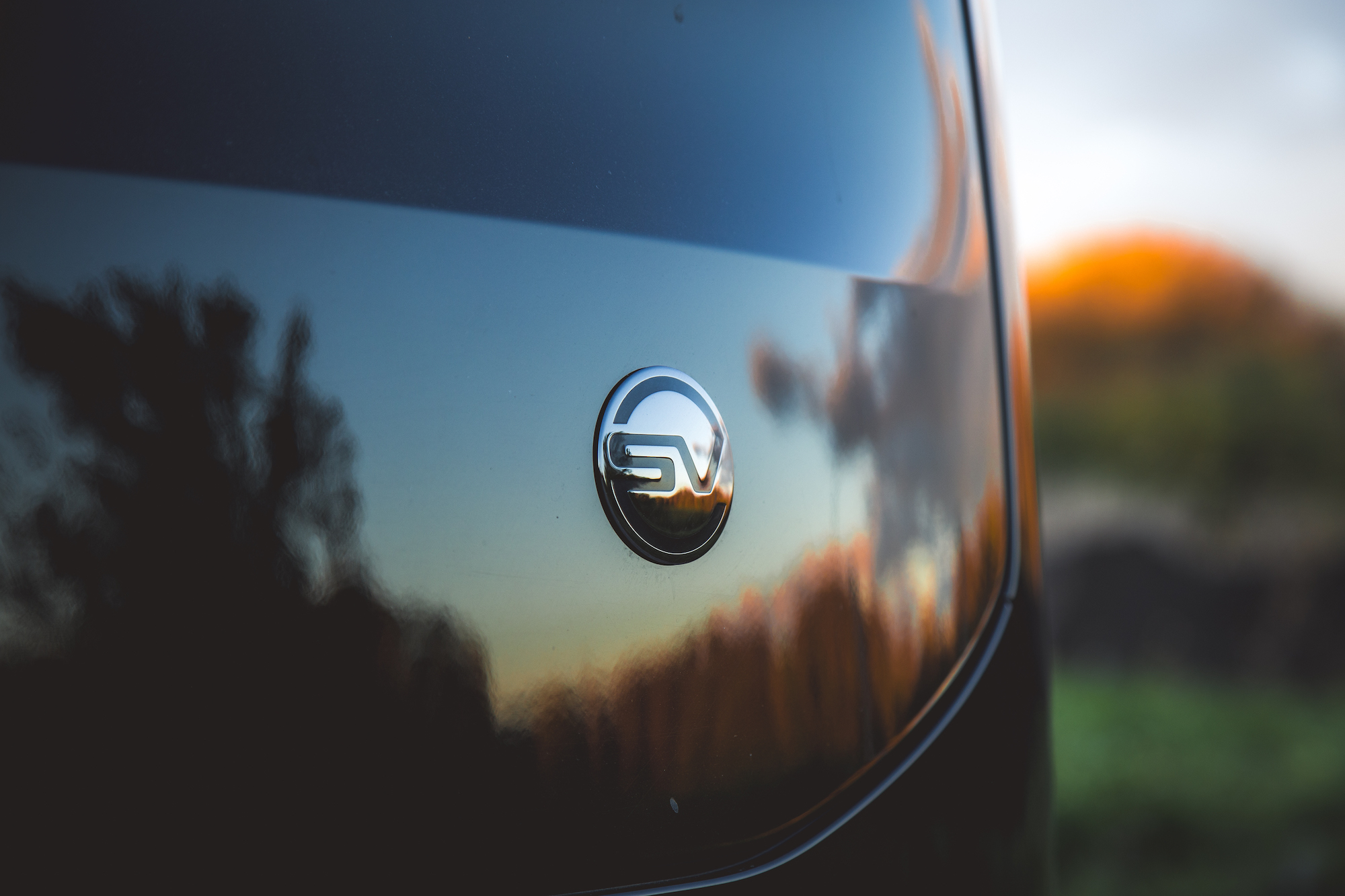
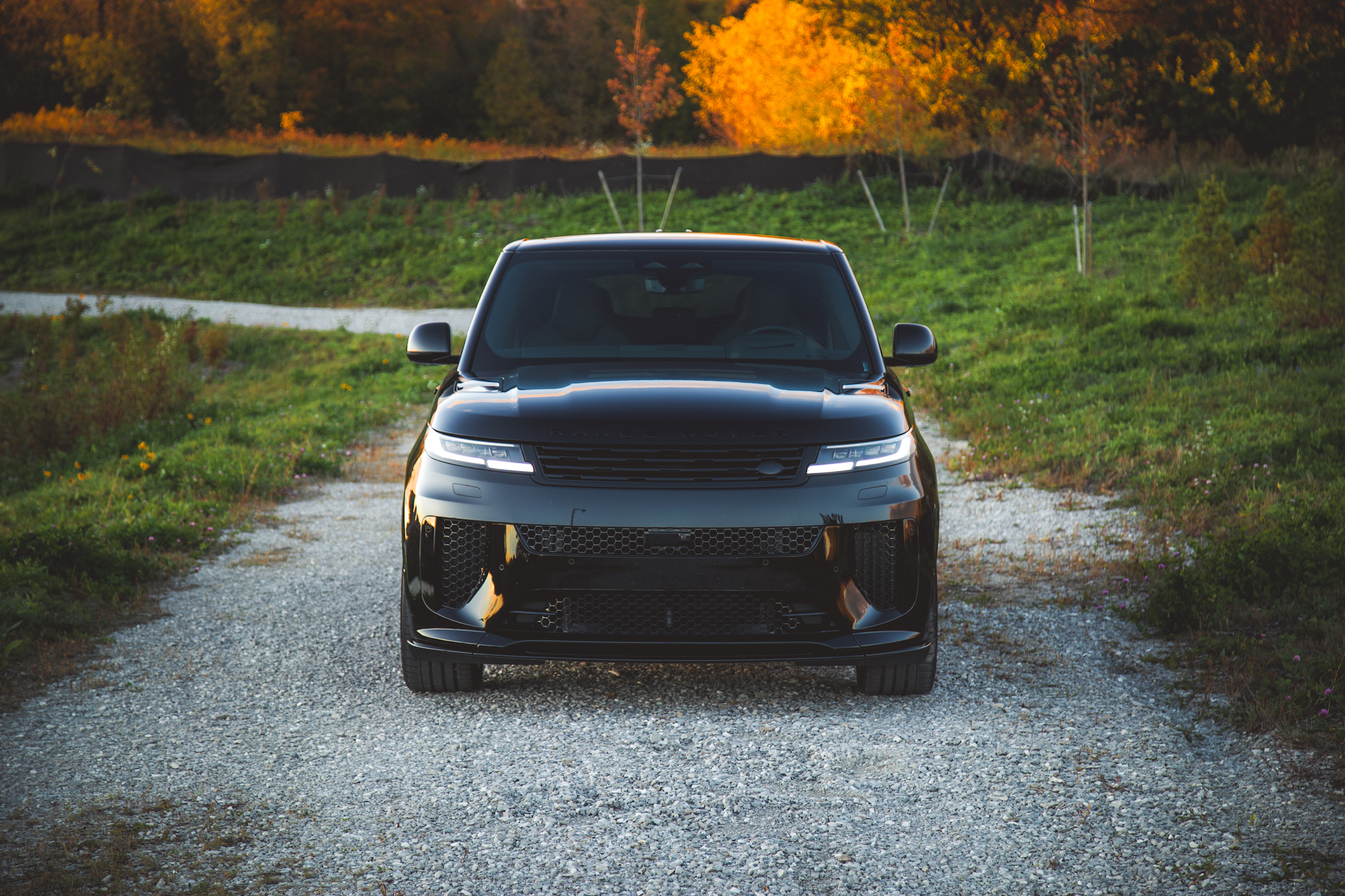
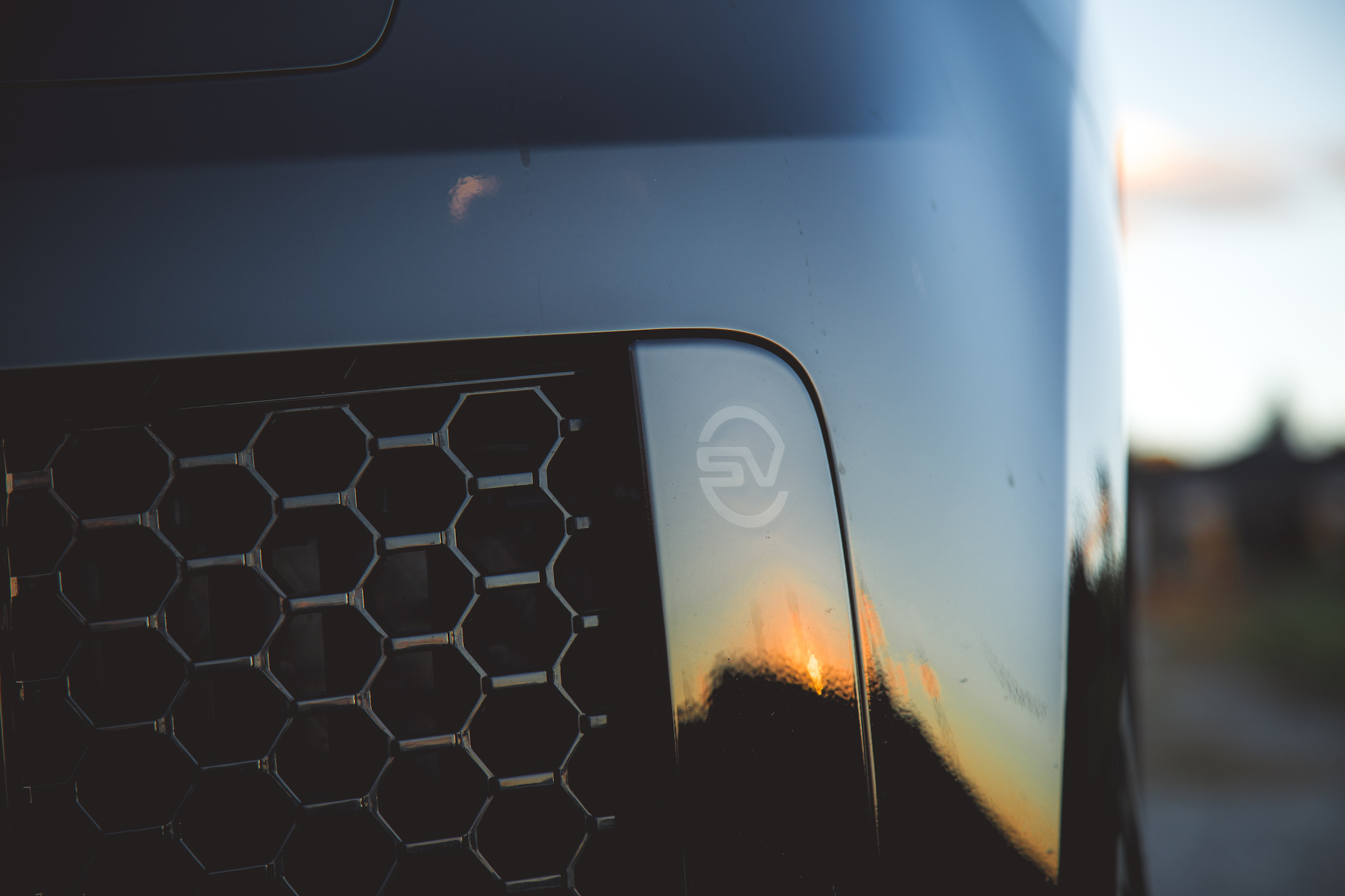
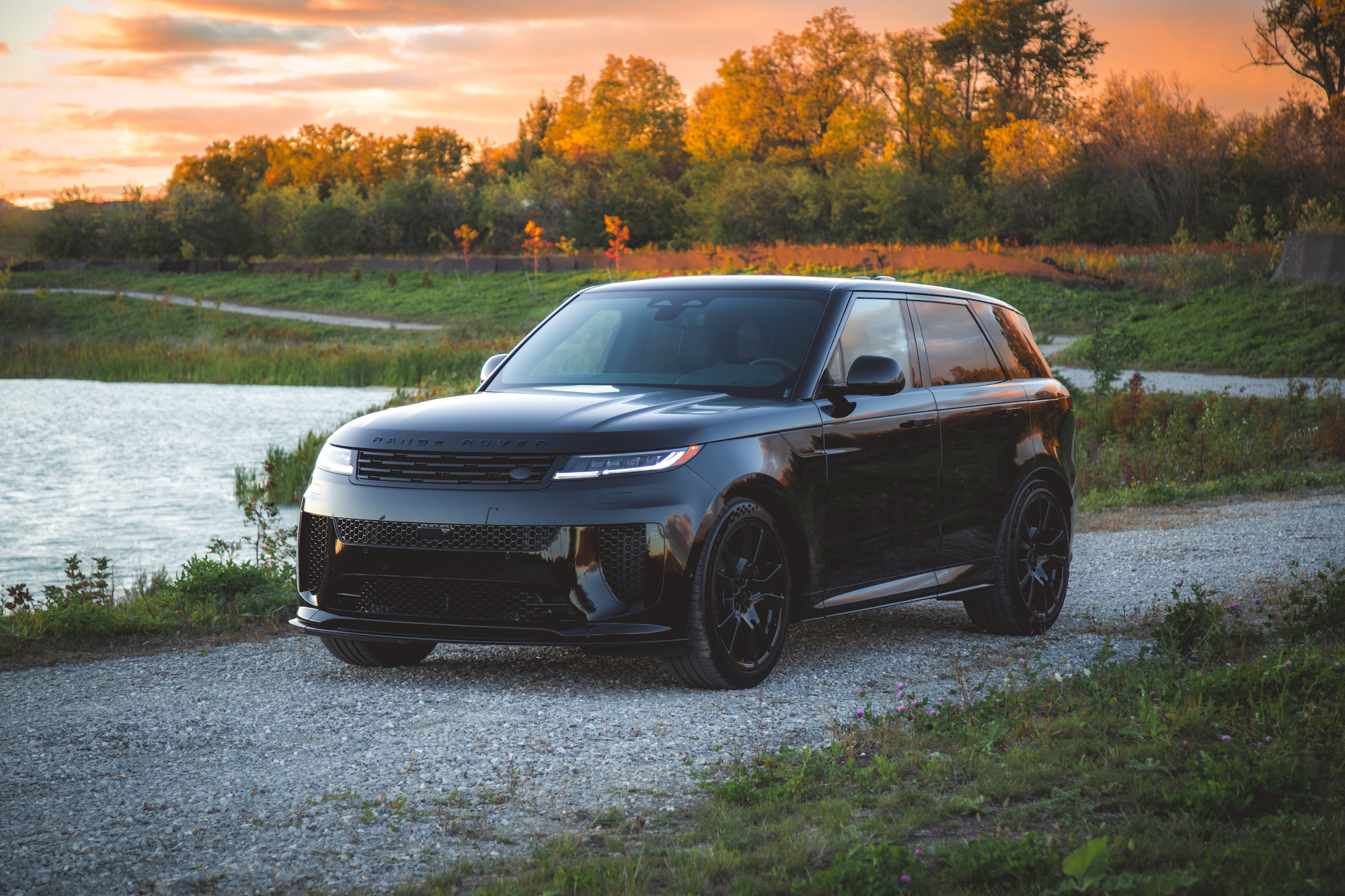
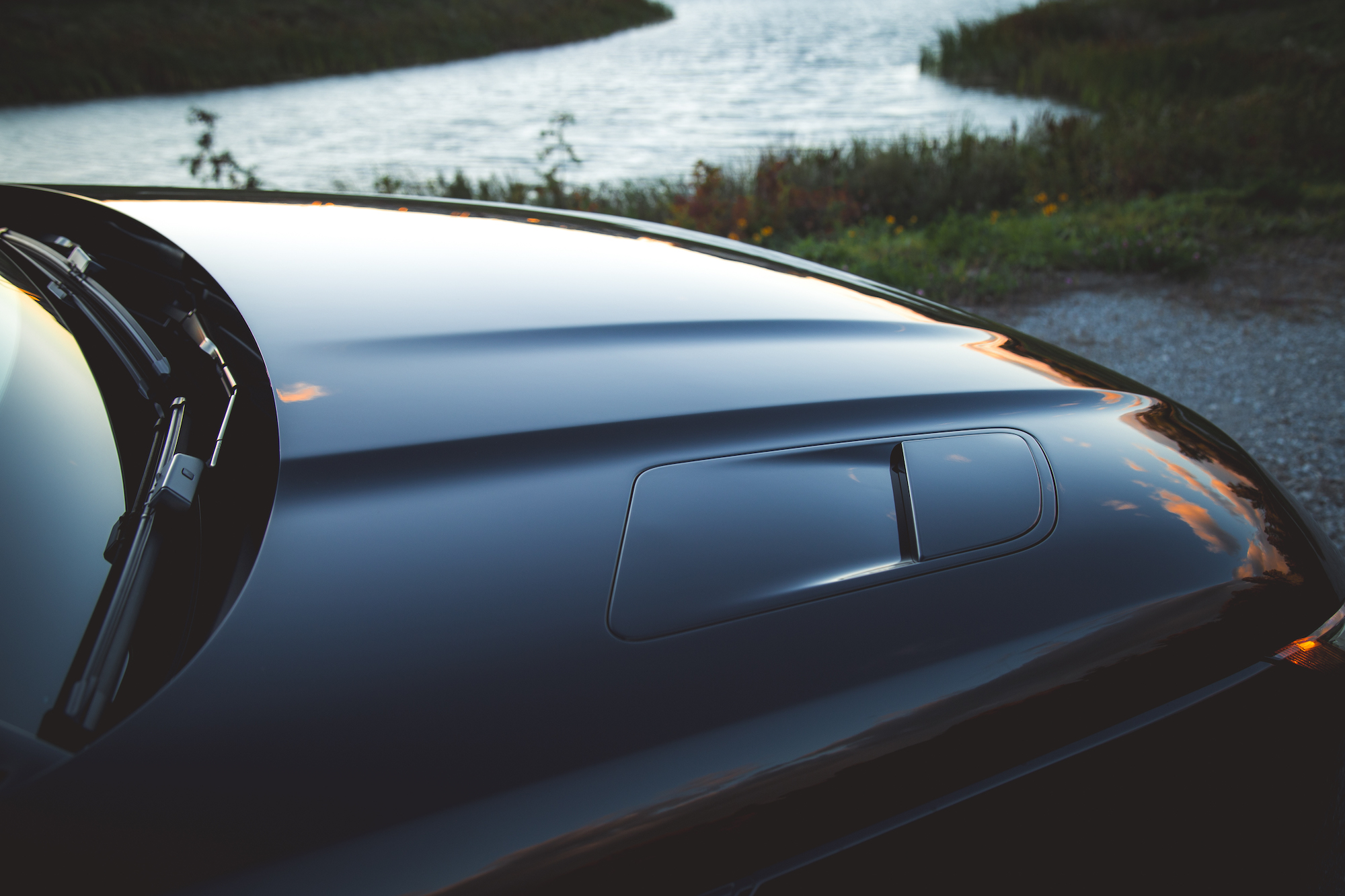
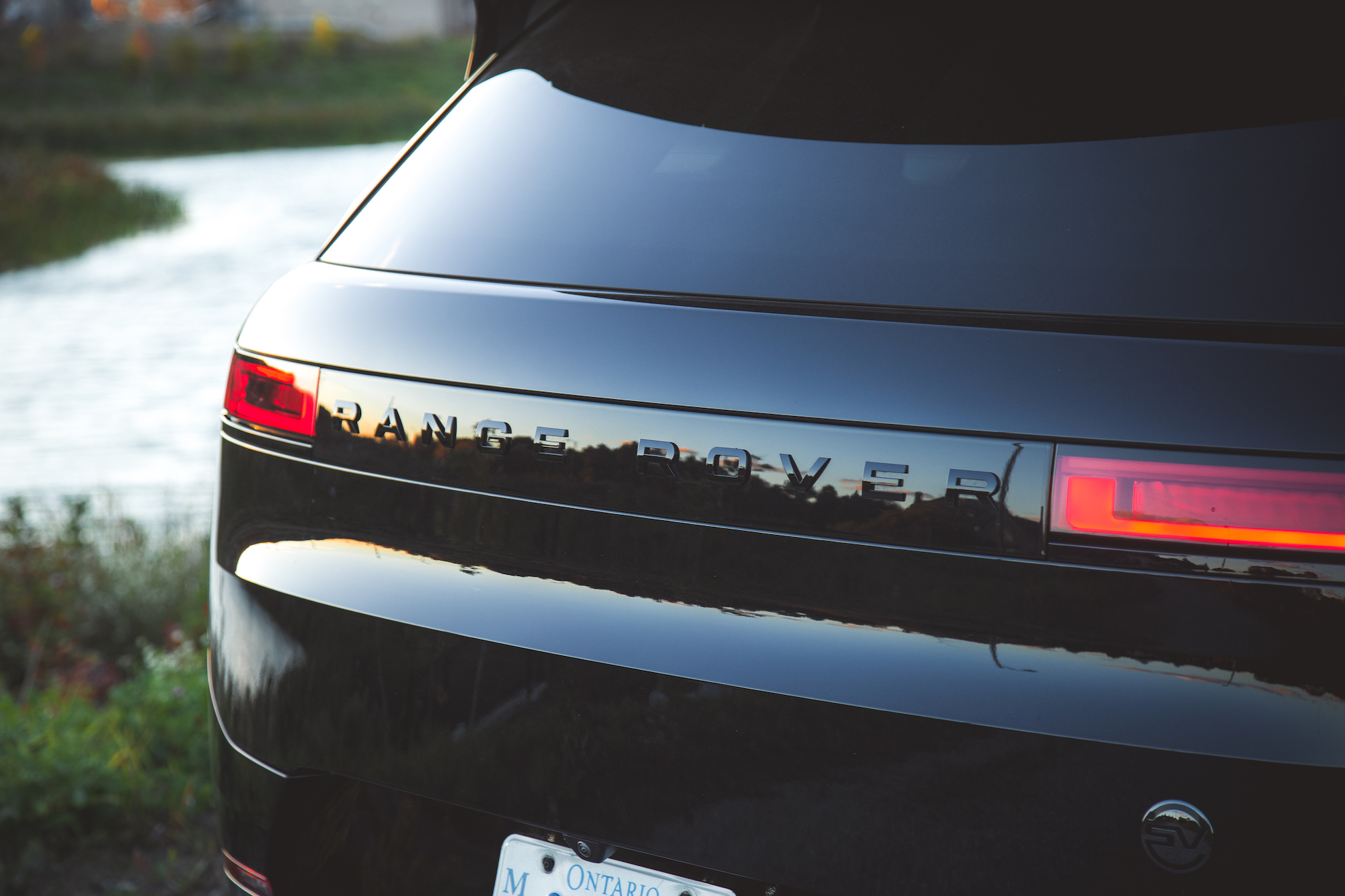
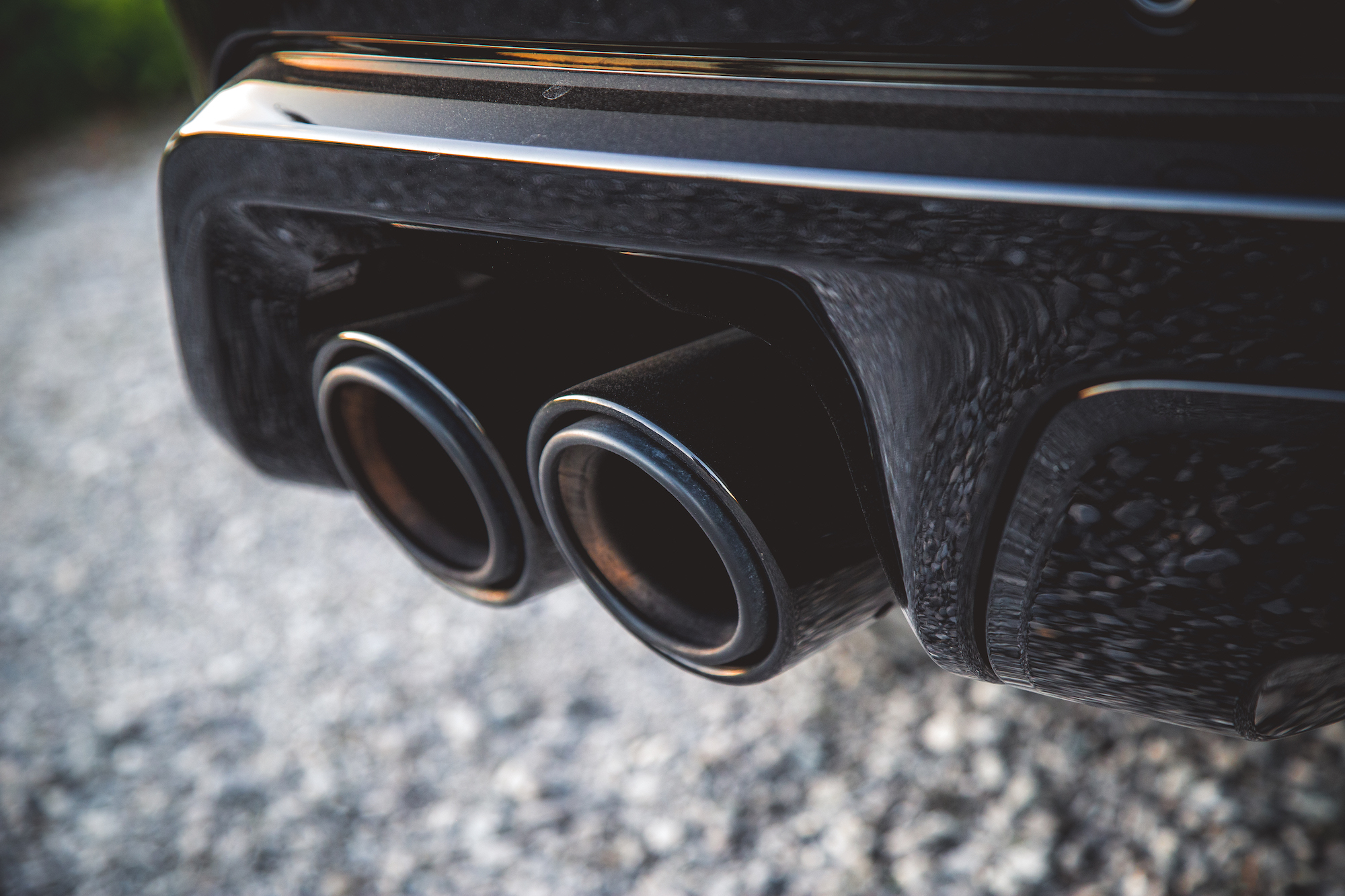
Black on black isn’t exactly an imaginative blueprint, but it’s certainly desirable, so much so that Range Rover has created a full Black edition for its top-tier Sport SV. It comes dressed in glossy Narvik Black paint, a black-painted carbon-fibre hood, 23-inch gloss-black wheels, and darkened finishes for virtually every exterior detail, including the badges and exhaust tips. No one smiles when they see this mean machine. It’s full business, and looks every bit as serious as it drives.

Fortunately, the Sport SV has the hardware to back up its menacing appearance, with hydraulic interlinked dampers, adaptive air suspension, rear-wheel steering, brake-based torque vectoring, optional eight-piston Brembo carbon-ceramic brakes, and the widest rear tires ever fitted to a Range Rover. But it’s the dark heart of this beast that gives it the firepower to outrun a BMW X5 M Competition and Porsche Cayenne GTS. The SV is a transplant recipient of BMW’s S63 engine, a 4.4-litre twin-turbocharged V8 specially tuned for Range Rover and augmented by a mild-hybrid system. It produces 626 hp and 553 lb-ft of torque, channelled through an eight-speed automatic transmission and four-wheel-drive system.
We lament the passing of the supercharged 5.0-litre V8, which remains available in the Land Rover Defender V8, because we would gladly sacrifice some power for its chainsaw-ripping noise and British villain energy. Still, among the current crop of eight-cylinder engines, Range Rover has chosen one of the best possible replacements. We’re very familiar with this BMW V8, and although the S63 is no longer the newest iteration of BMW’s M engine, it has powered everything from the F90 M5 to the F96 X6 M Competition. It has that fizzy, infectious character with minimal lag and an elastic powerband that delivers silky acceleration as its tidal wave of torque gently wafts you toward the horizon.
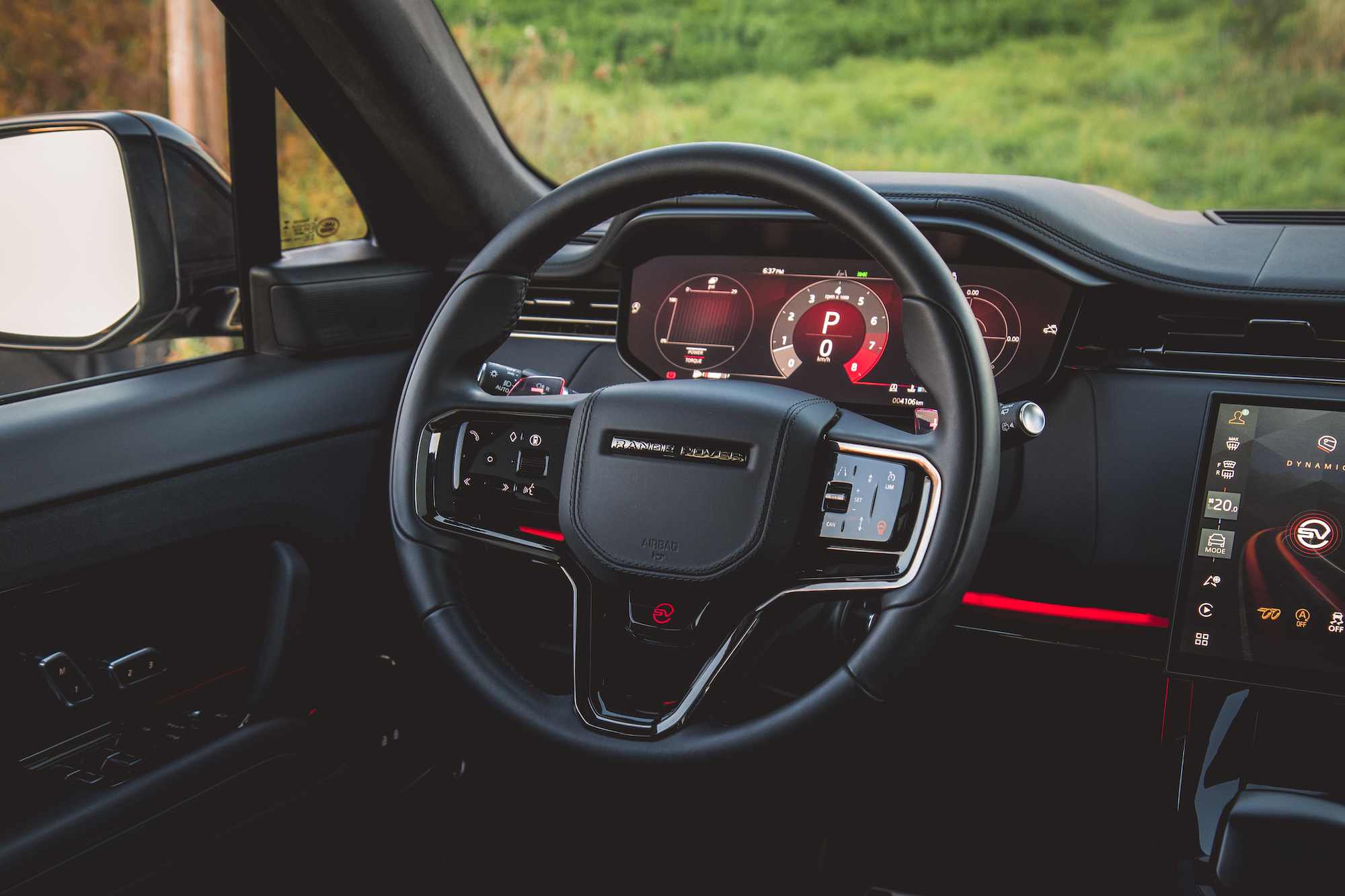
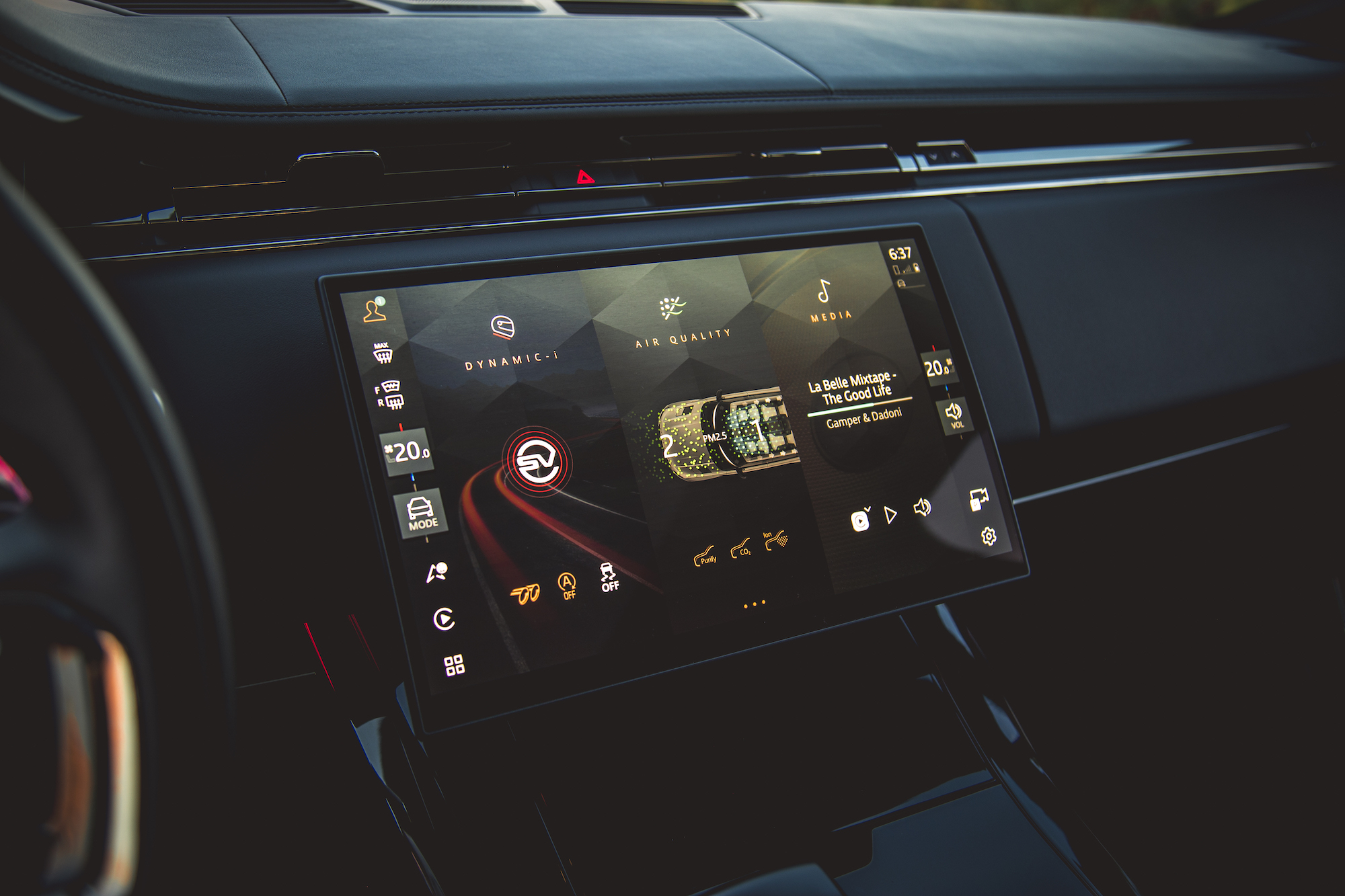
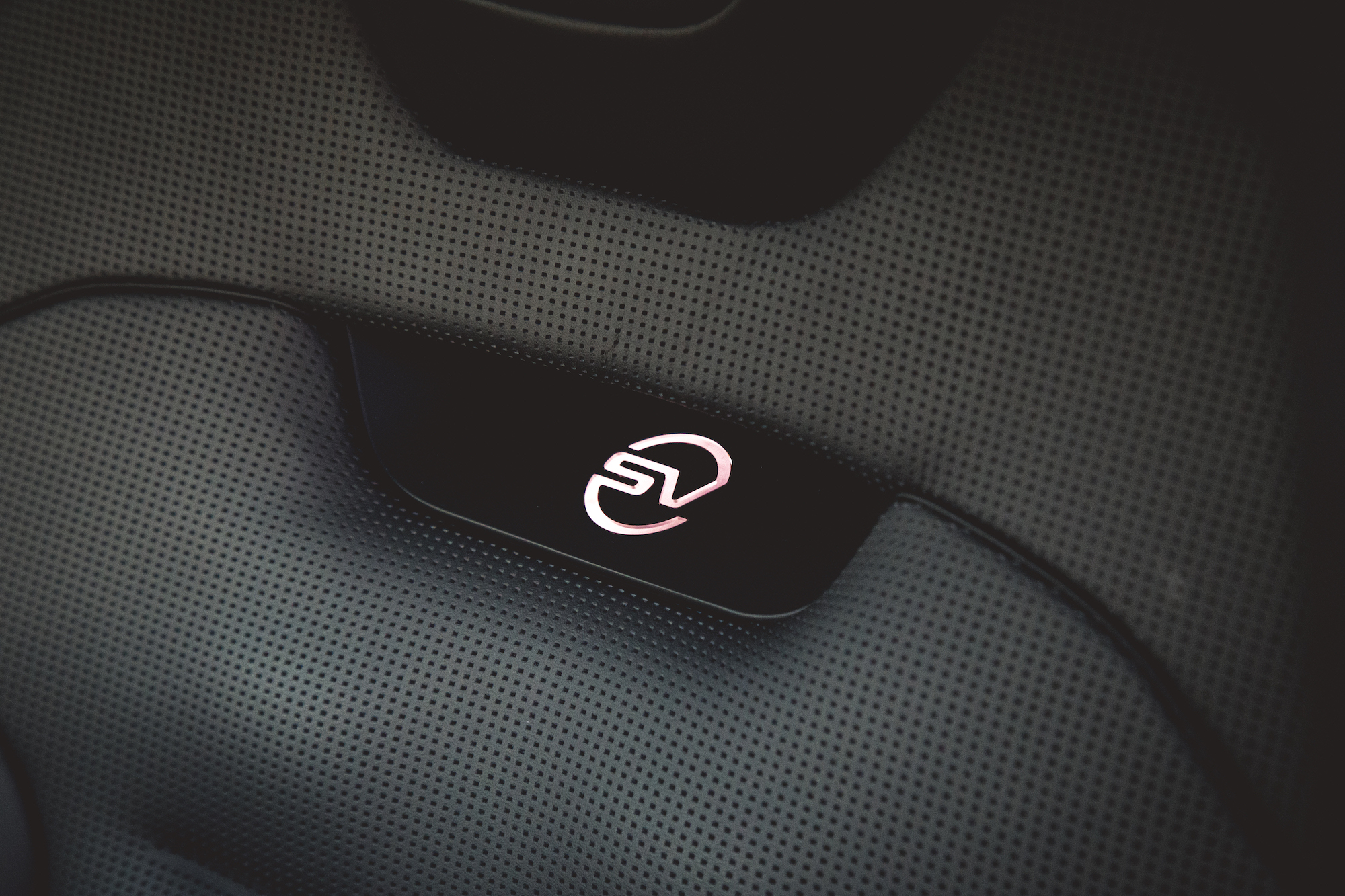
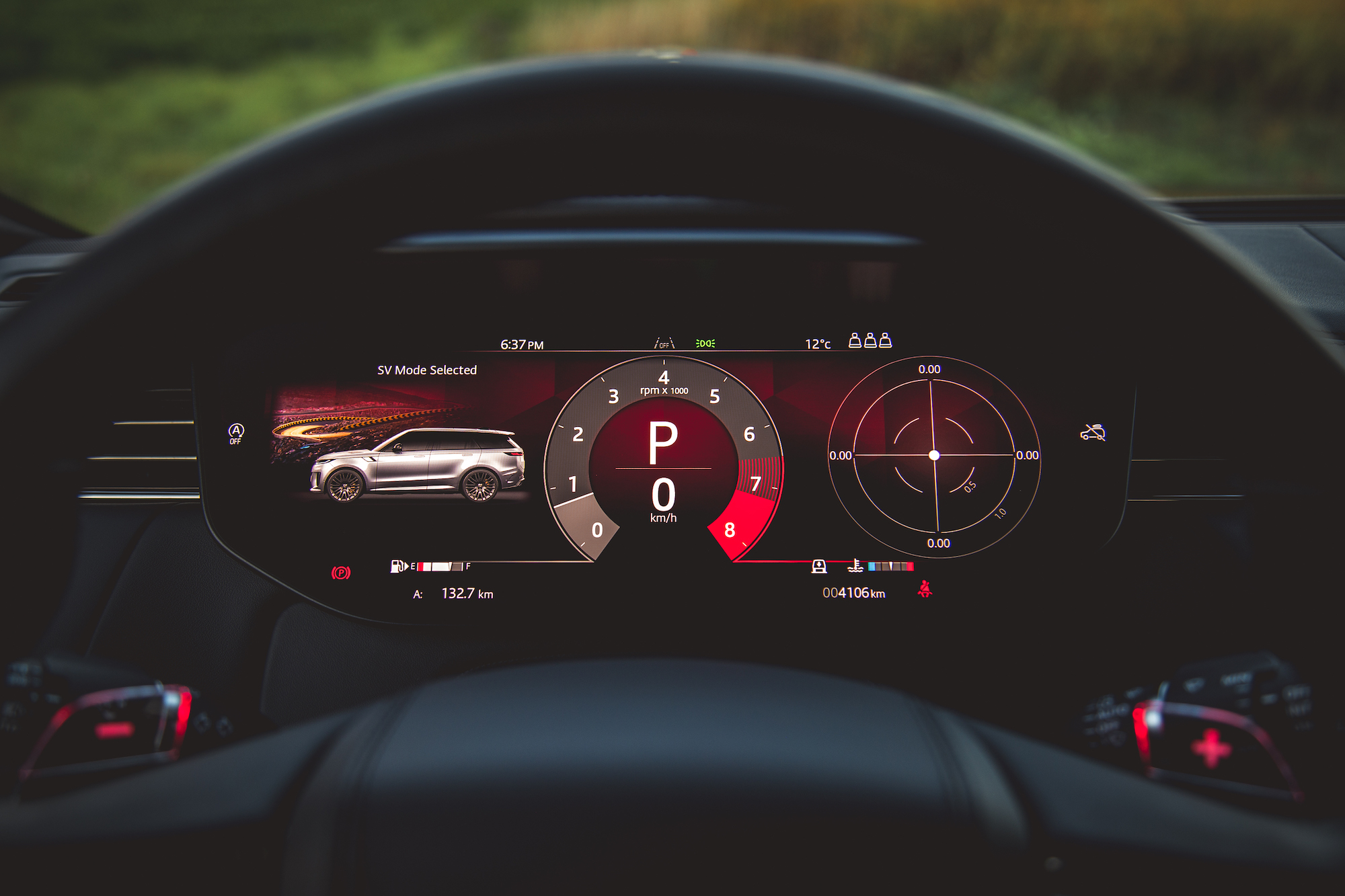
The SV revs to a lofty 7,200 rpm, and the gears are dispatched rapidly without fuss, the transmission gliding into each ratio with the polish we’ve come to expect from a ZF eight-speed. Press the illuminated SV button on the steering wheel and the Range Rover goes into military readiness. The suspension drops 15 mm to lower the centre of gravity and sharpen rotation, the steering firms up and becomes more responsive, the throttle and shifts are quickened, and the exhaust erupts into a more resonant, harmonious bellow. The honeyed soundtrack will be instantly recognizable to BMW M enthusiasts, a cover version of those signature bass-heavy V8 thrum and throttle-lift pops, but layered with a higher-pitched mechanical whine that sounds almost Aston Martin-like.
The engine takes on a considerably more sinister personality, hurling this 2,635 kg SUV toward blurrier speeds with the force of a Saturn V rocket. We’re assuming that’s what SV stands for. Anchoring you back from ballistic speeds are optional carbon-ceramic brakes, a $9,200 indulgence that also removes 34 kg of unsprung mass. Their stopping power is prodigious, but we would have preferred more bite from the pedal. The brake-by-wire system feels tepid on initial application and requires a moderate amount of leg pressure to build confidence toward a stop. That could partly be down to the trick suspension itself, which suppresses forward pitch under braking and consequently shifts some of the weight transfer away from the front axle.
That’s because the Sport SV’s real headline isn’t its uprated powertrain, but its ingenious 6D Dynamic suspension system. It replaces conventional anti-roll bars with hydraulic interlinked dampers designed to control pitch, roll, yaw, and seemingly everything else you learned about Newtonian physics. Essentially, all four corners are hydraulically connected in an X pattern, using fluid pressure to counteract the opposing loads and pendulous forces that a conventional anti-roll bar would otherwise manage. McLaren employs a similar philosophy in the 750S.
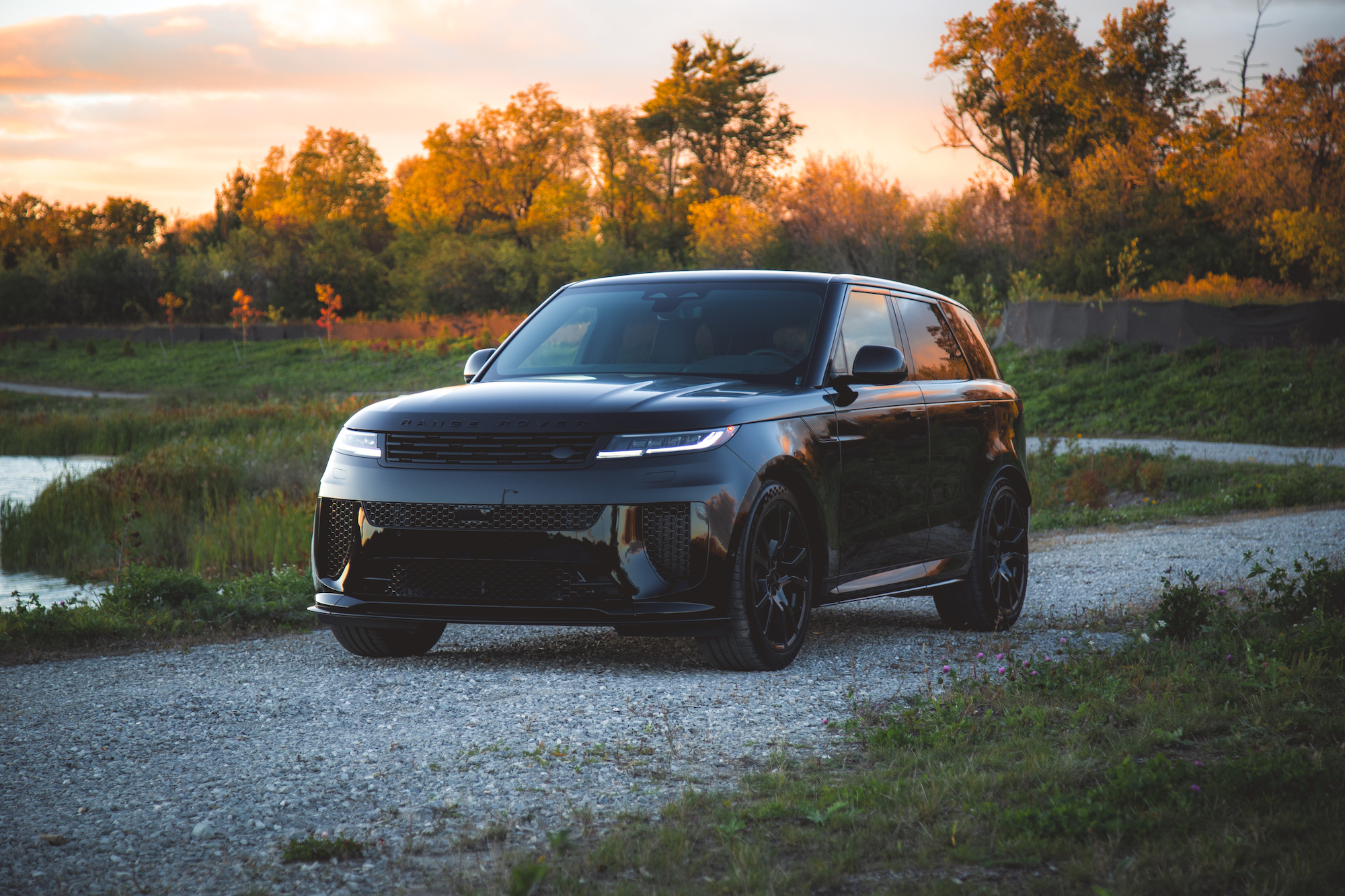
Frankly, we enjoy a little body roll in our sports SUVs. It gives you a sense of the available lateral grip and lets you feel how the chassis is loading, breathing, and communicating with the road beneath it. The SV’s brief, however, was to largely eliminate those movements. And it works. Combined with the height-adjustable air springs, hard braking doesn’t throw occupants forward, while hard launches don’t send the nose skyward as they can in an Escalade or Navigator. Some roll remains at higher speeds, but it’s far more balletic through every phase of a corner. Excess movement has been trimmed away, slack has been tightened, and the SV no longer wastes energy on the unnecessary gestures that normally accompany a large SUV.
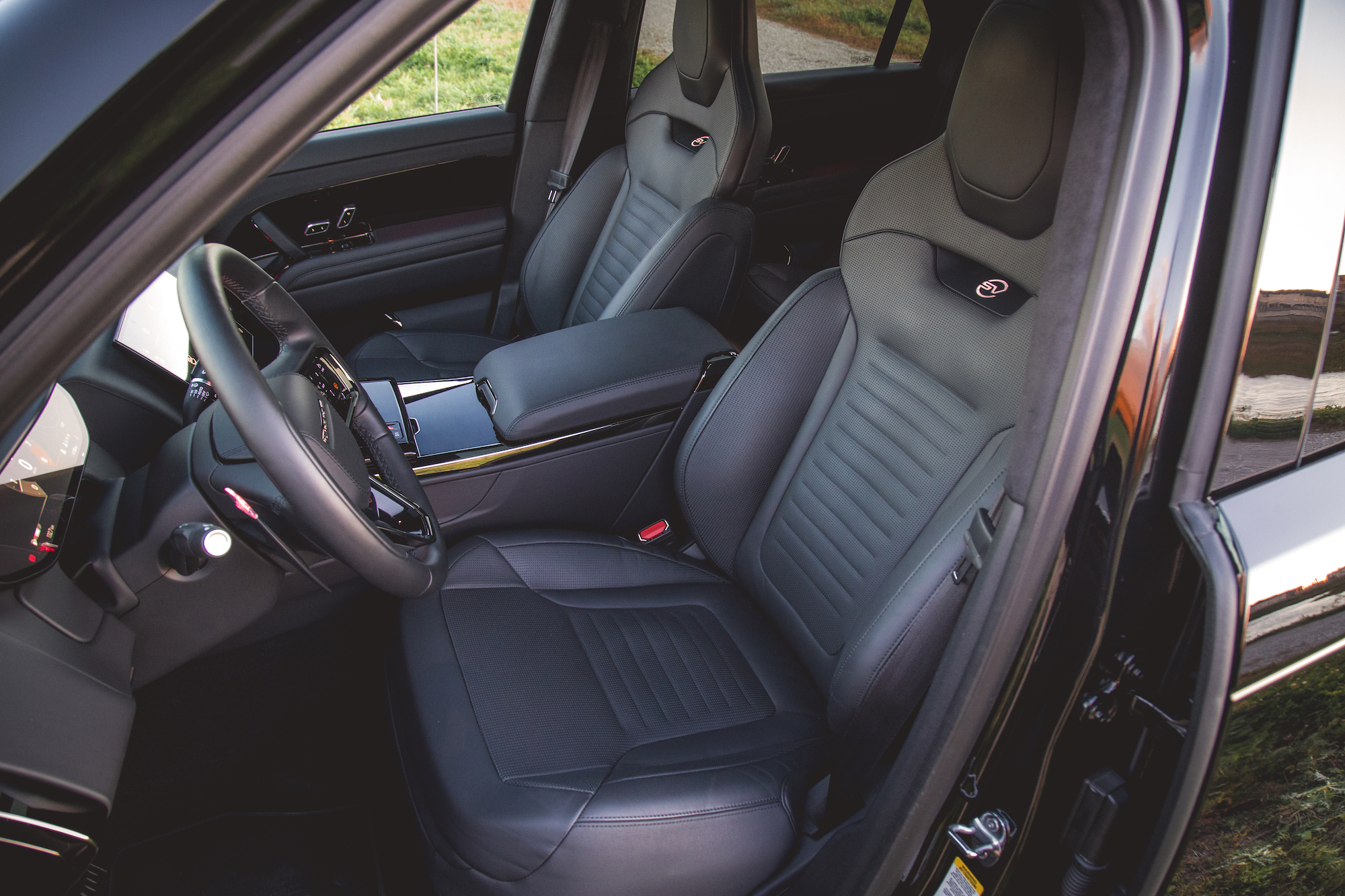
Tight corners followed by short straights provide the best demonstration of what the suspension can do, keeping the body remarkably level as though an invisible hand is propping up one side of the vehicle. From behind the wheel, though, what you’ll notice even more is the alert and reactive steering, a stark departure from the long, languid steering racks we’ve come to expect from Range Rover. The rear-wheel steering can occasionally feel overzealous, much like the Mercedes EQE and EQS SUVs. It disguises the Sport’s considerable dimensions remarkably well, but by eliminating so much of the rotational effort, it also sacrifices some play, bandwidth, and steering feel. Still, its ability to turn on a dime is impressive, and the overall handling is sublime.
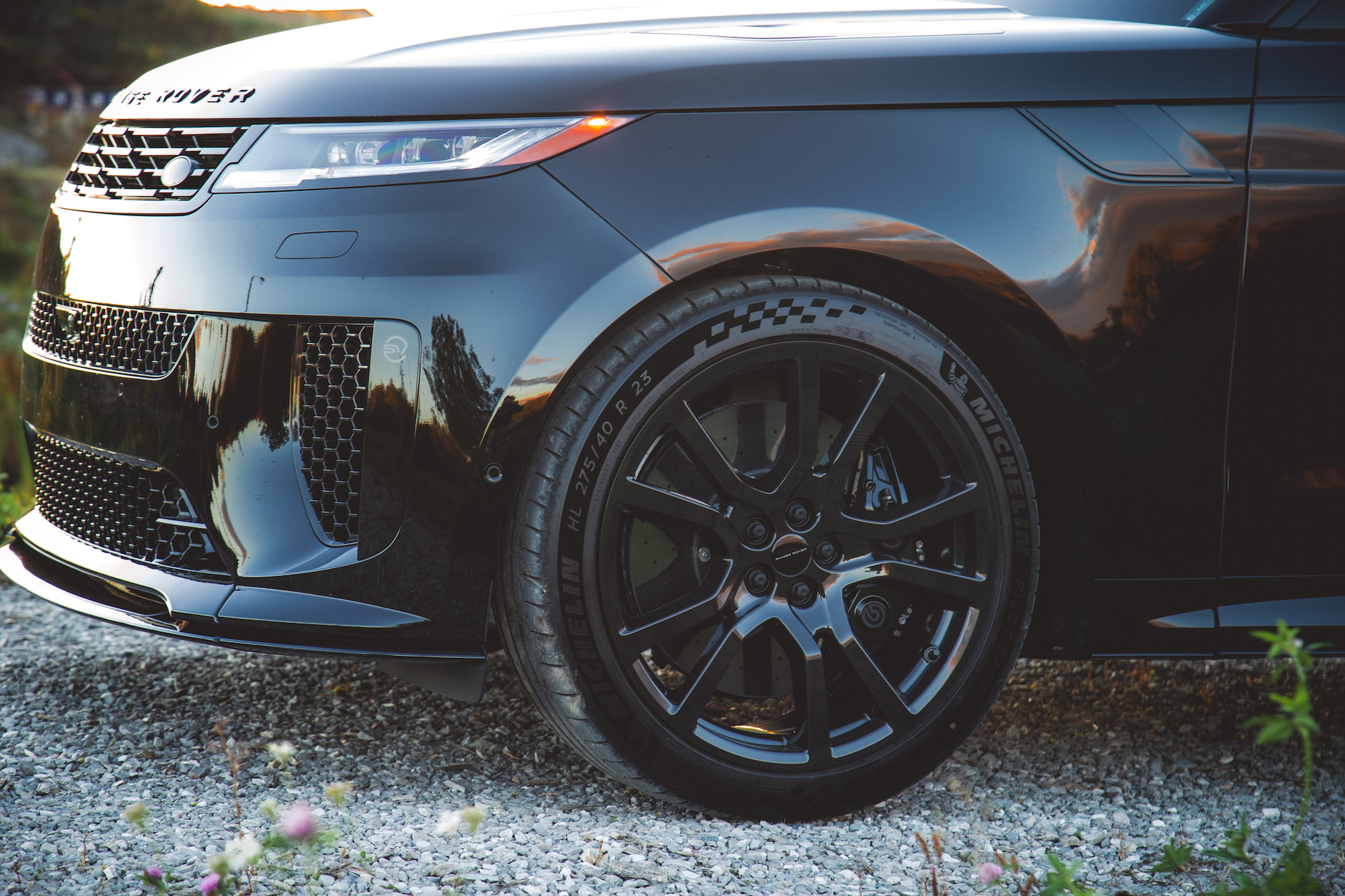
The last Sport SV we drove ran Michelin Pilot Sport All-Season 4 tires on 23-inch wheels, and that combination delivered a surprisingly comfortable ride that soaked up bumps with relative ease. This SV is equipped with carbon fibre wheels wrapped in Michelin’s newer Pilot Sport S 5, and while the lighter material reduces unsprung weight and the tire delivers considerably more lateral grip, it also adds more reverberation and an underlying firmness that makes us wish for a 22-inch wheel. It’s noticeably firmer and more unsettled than the previous SV, bringing it closer to the busier ride quality of the standard Sport models. Still, it’s far from intolerable and ultimately delivers the kind of tautness you’d expect from a sport-tuned SUV.
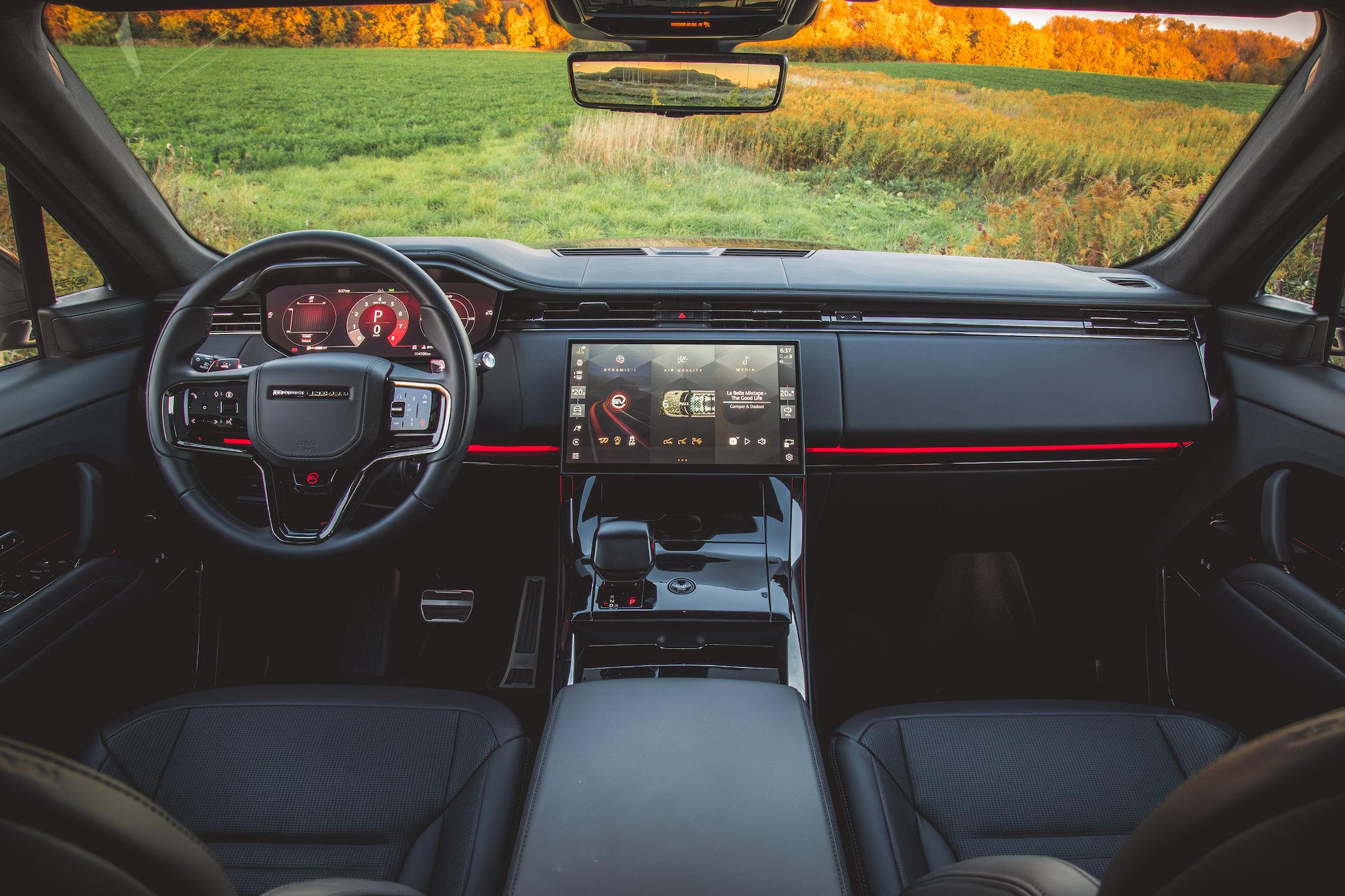
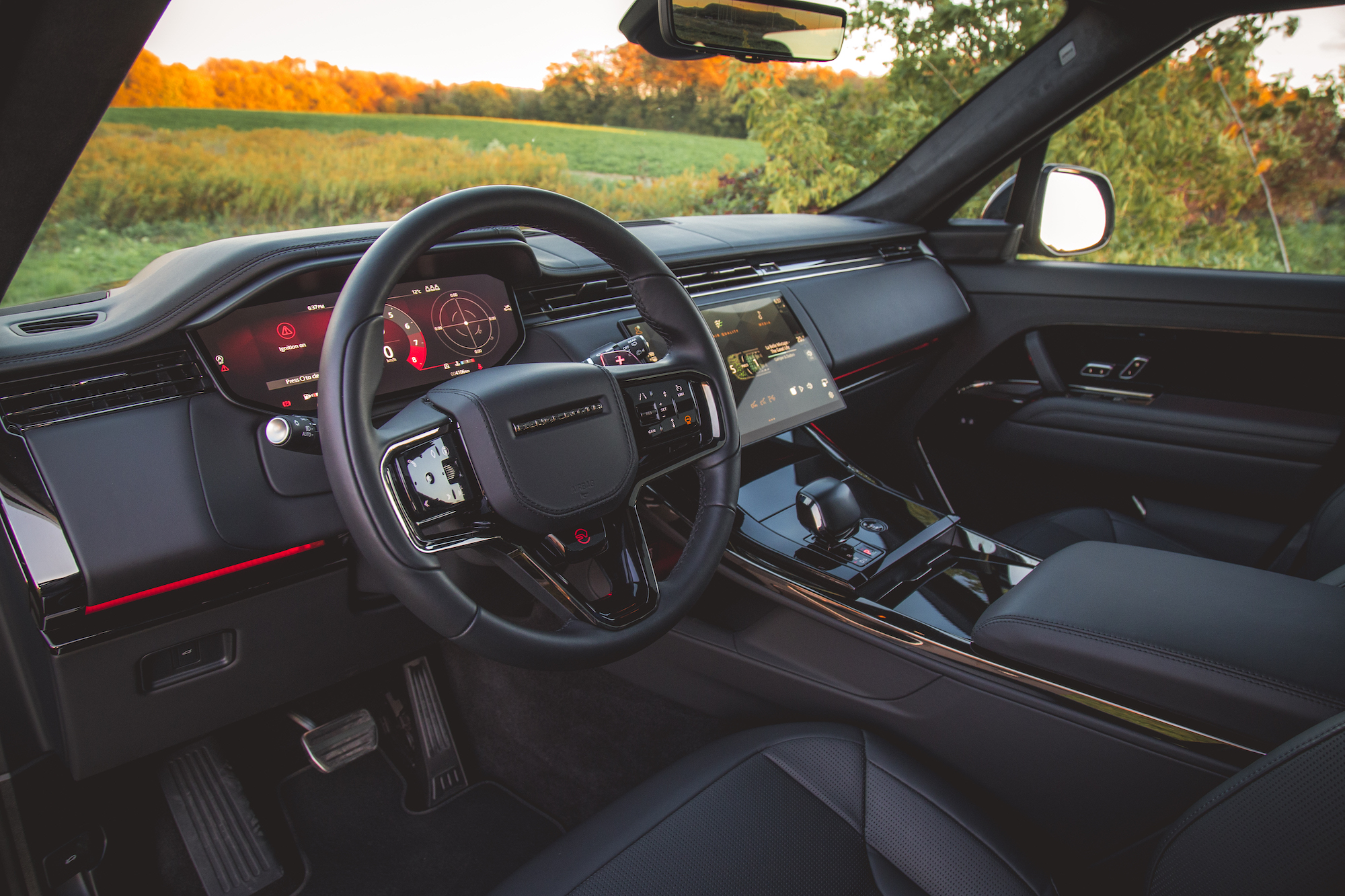
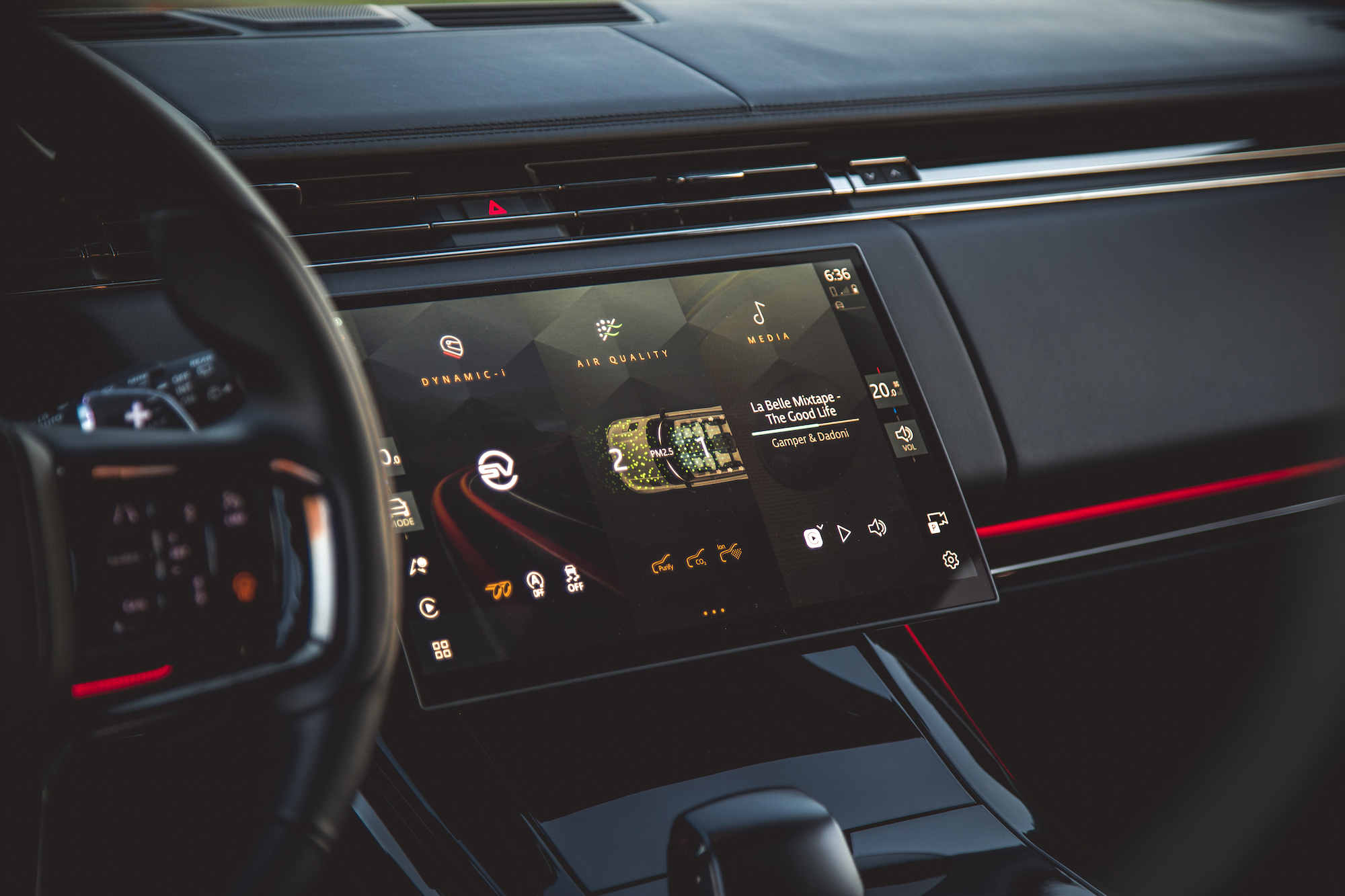
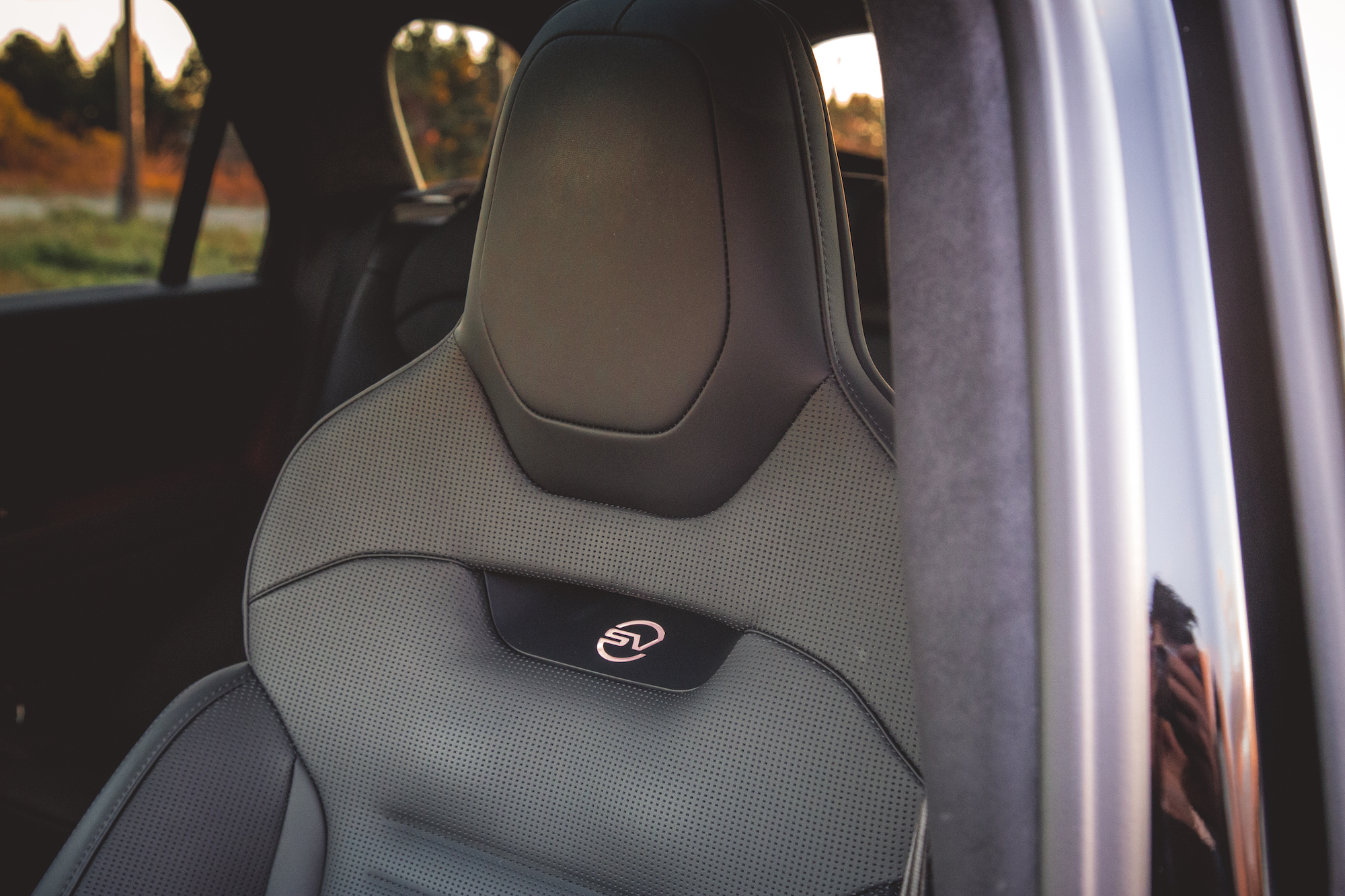
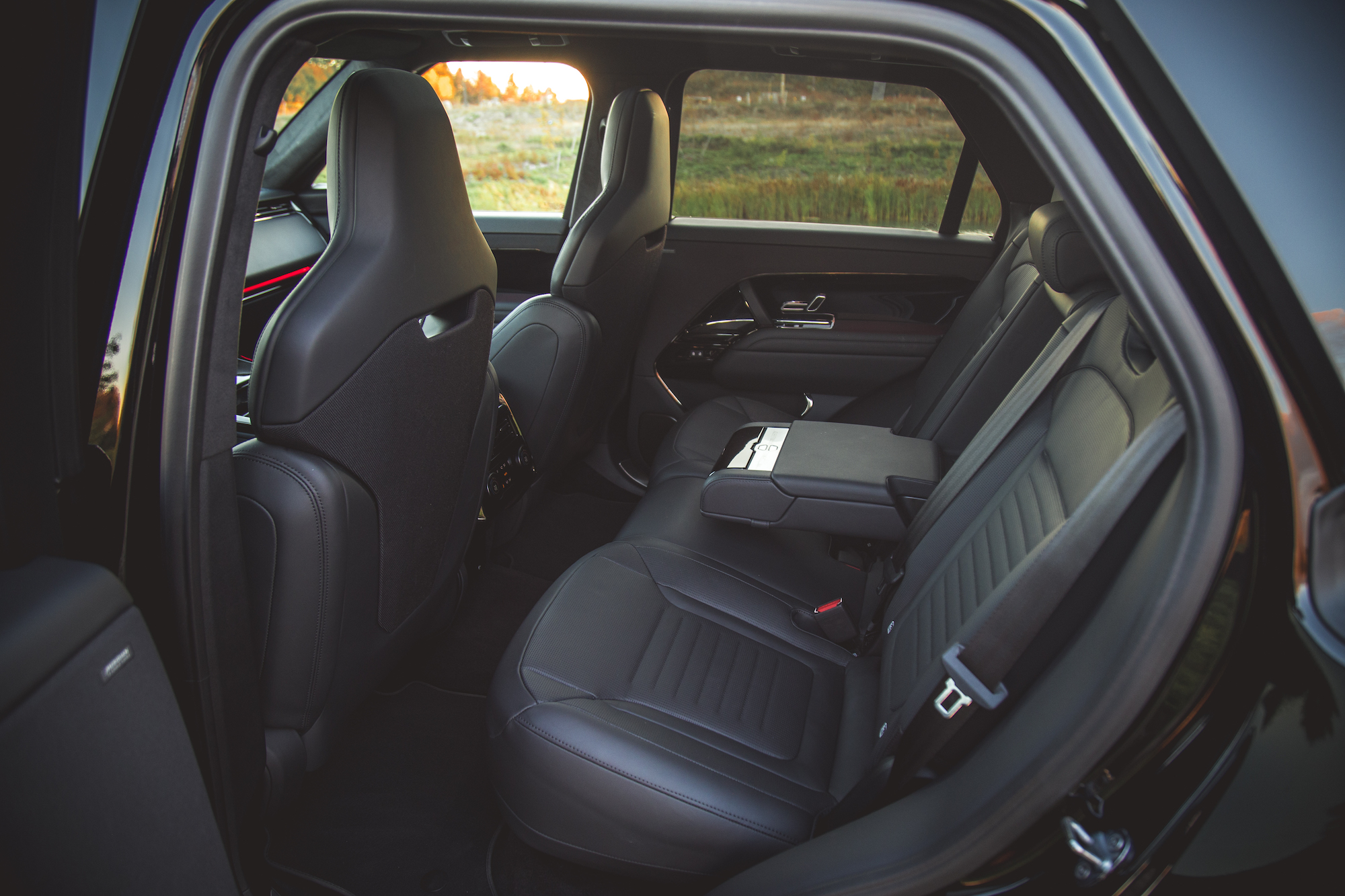
Climb inside, and you’ll immediately recognize the family resemblance that ties the Range Rover lineup together, from the Evoque to the full-size Range Rover. We do miss the centre console arrangement of the 2023 model, which gave us dedicated dials for cabin temperature, drive modes, and audio volume, although deleting them has created a little more storage space. Otherwise, the cabin is largely carried over, with a handful of SV-specific touches.

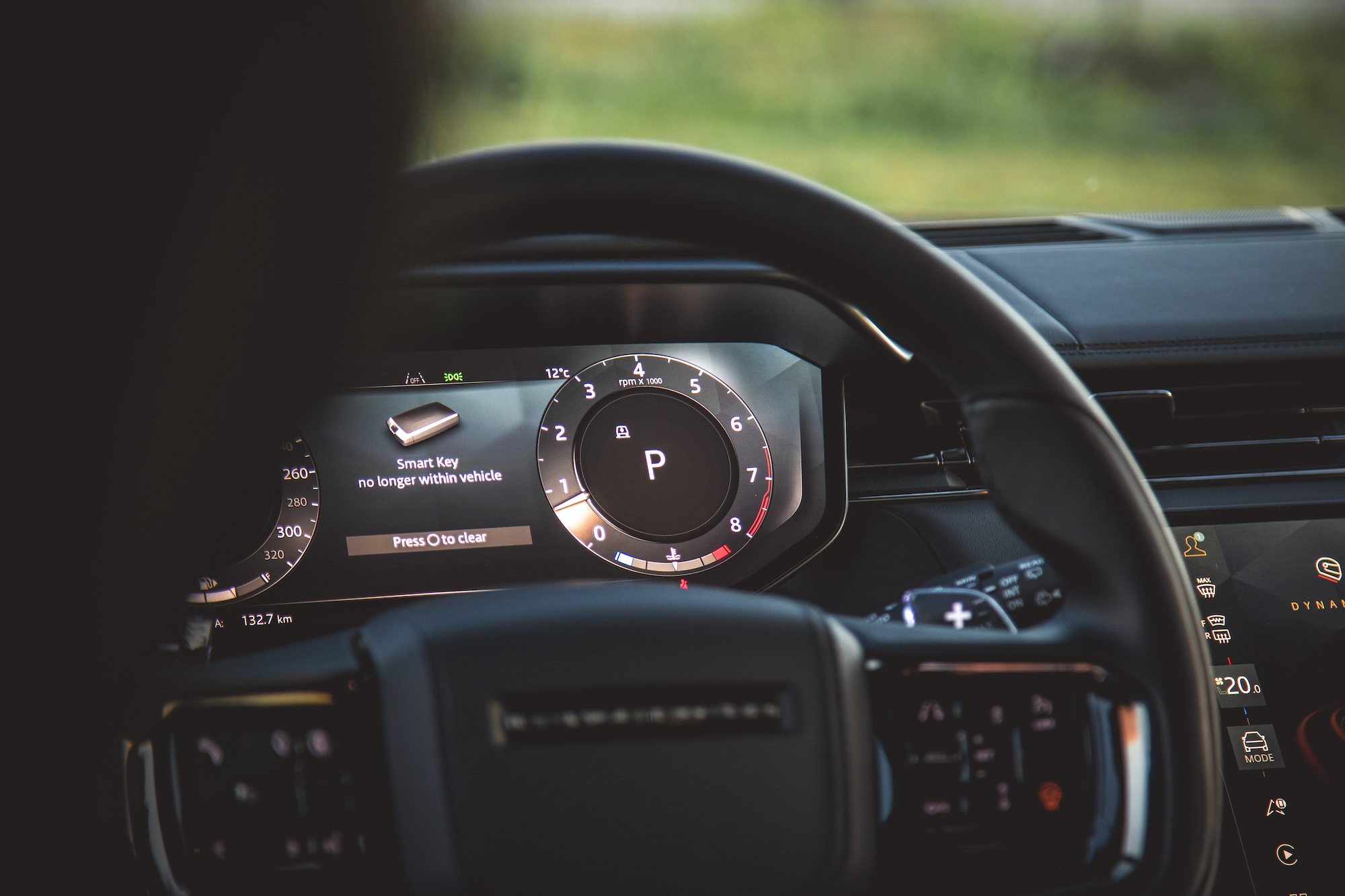
The steering wheel has been beefed up with larger paddle shifters featuring glass-like tips and a dedicated SV button, all of which glow crimson red when activated. The leather rim is thicker, although the thumb grips remain awkward. They curve upward and inward, making it difficult to properly wrap your thumbs around them, so the wheel never feels quite as natural to hold as it should. Gripping it at the 10- and 2-o’clock positions provides a more secure hold.
The integrated button pads aren’t our favourite method of interaction, but they’re considerably more intuitive than the haptic controls used in the Volvo EX90 and Maybach GLS. There’s still a dedicated volume dial on the steering wheel, although there isn’t one near the touchscreen. As with every current Range Rover, there’s also a diamond-shaped button that can be programmed as a shortcut for features such as the massage function or heated seats. It’s a thoughtful touch that gives the driver genuine flexibility, unlike the systems in some Porsches and Audis that restrict programmable buttons to less frequently used functions.
The Range Rover Sport SV is an easy recommendation if the $200,000+ price tag and choppier ride aren’t major deterrents. It’s an edgier five-seater family hauler with sublime chassis fluency and a peachy V8 that begs to be revved. No matter the spec, and no matter how black and tinted it is, the SV’s lavish cabin quality, immense performance envelope, and extraordinary breadth make its minor inconveniences easy to forget.
Specifications:
Model: 2026 Range Rover Sport P635 SV Black
Paint Type: Narvik Black
Base Price: $174,500
Price as Tested: $200,460
Wheelbase(mm): 2,998
Length/Width/Height (mm): 4,970 / 2,047 / 1,814
Curb weight (kg): 2,635
Engine: 4.4-litre twin-turbocharged V8
Horsepower: 626 hp @ 6,000 – 7,000 rpm
Torque: 553 lb-ft @ 1,800 – 5,855 rpm
Transmission: 8-speed automatic
Engine & Drive Configuration: Front engine, 4WD
Observed Fuel Consumption (L/100km): 14.5
Tires: Michelin Pilot Sport S 5; 275/40R23 front; 305/35R23 rear



Leave a Reply