
For more than a decade, Toyota has been quietly experimenting with bold, flashy, and decidedly unconventional paint colours for its TRD Pro models. The strategy seemed simple: gauge demand for eye-catching hues while adding personality to its most capable trucks and SUVs. It began in 2015 with Inferno, whose immediate popularity paved the way for Quicksand the following year. Since then, Toyota has rolled out a colourful parade of shades, including Cement, Calvary Blue, Voodoo Blue, Army Green, Lunar Rock, Electric Lime, Solar Octane, Terra, and Mudbath.

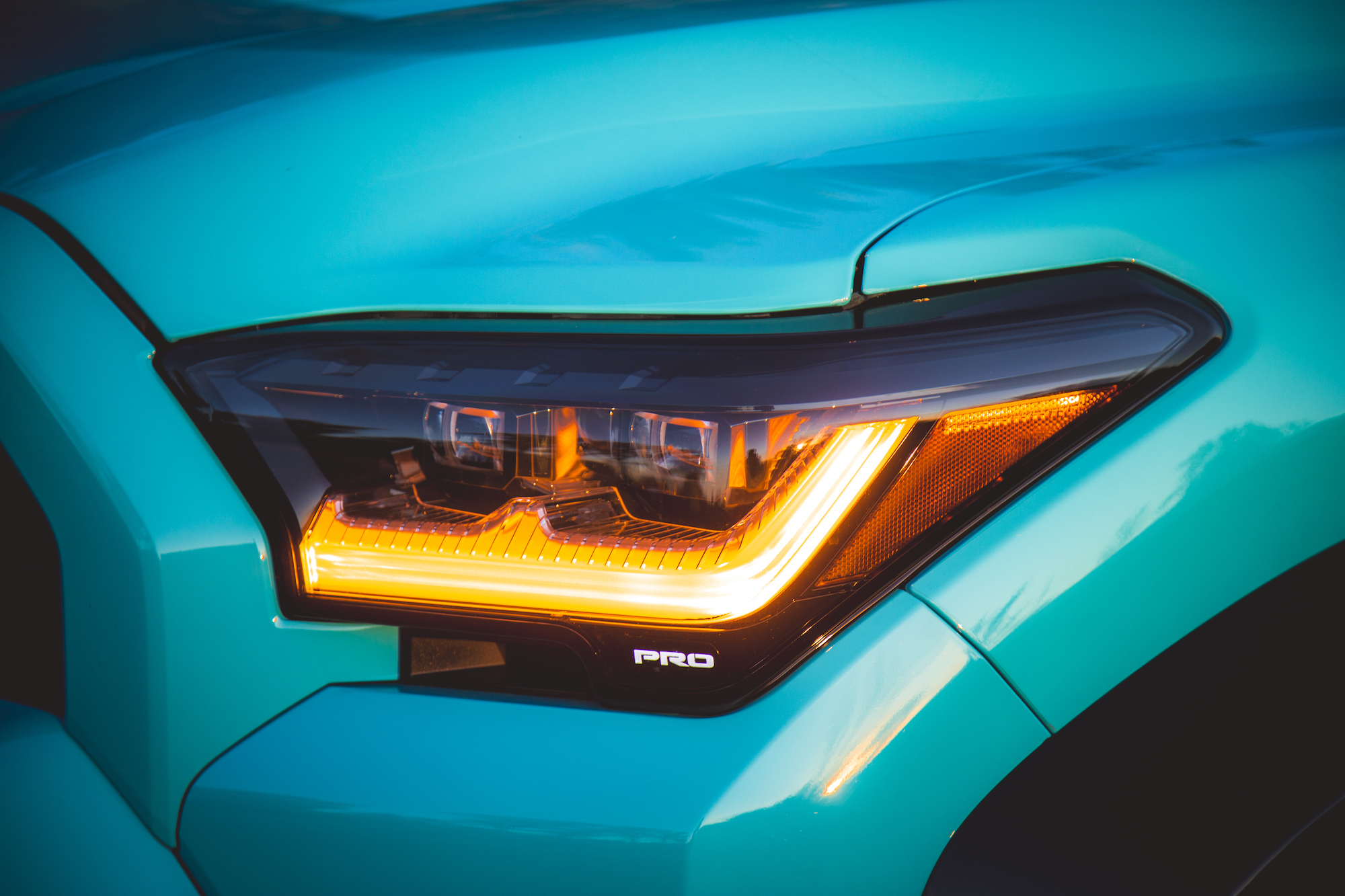
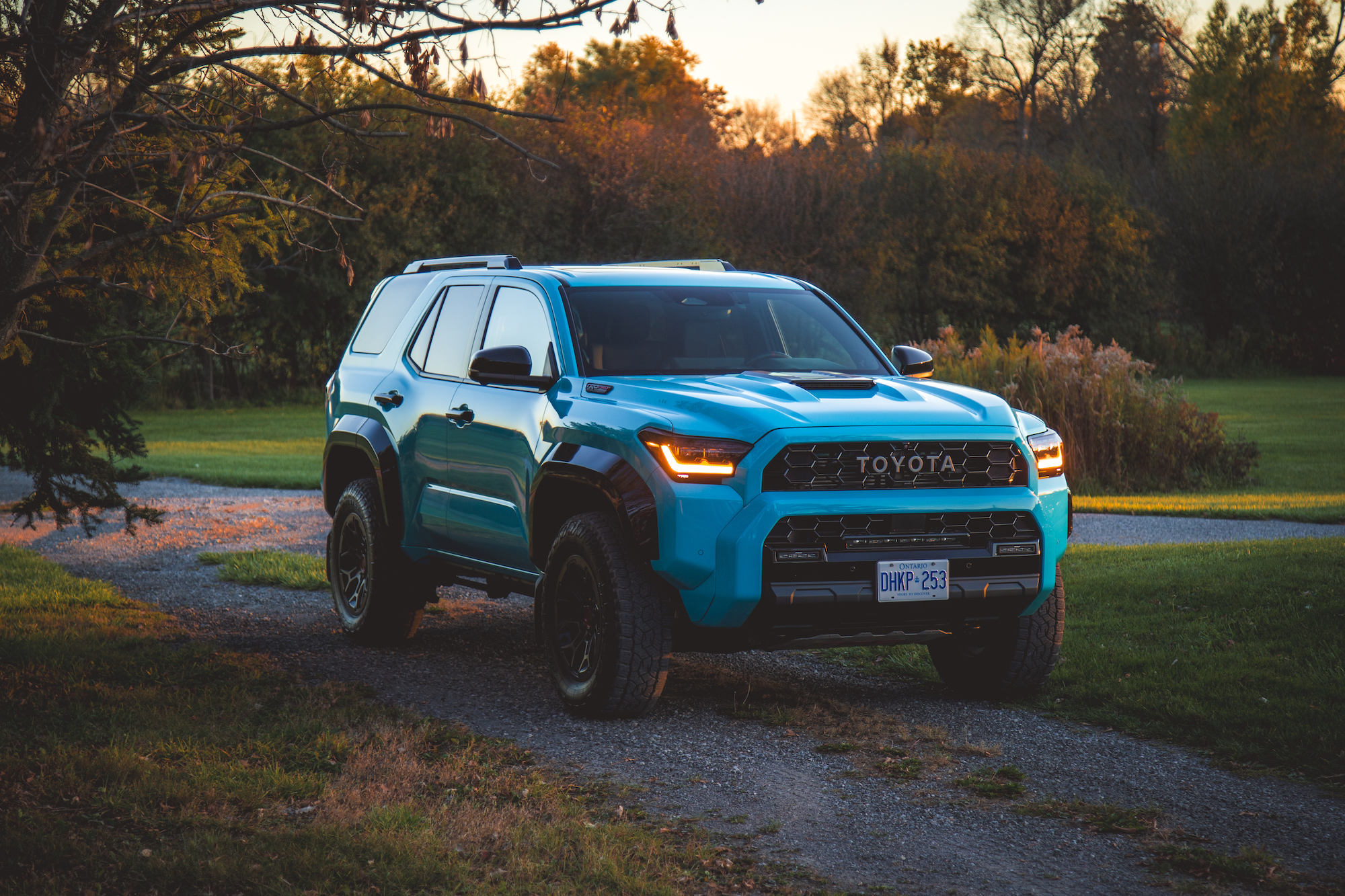
For 2026, Toyota added Wave Maker, a turquoise hue a little more saturated than Tiffany Blue and strikingly similar to Porsche’s Miami Blue. It’s a spectacular colour, and one that’s also available on the TRD Pro versions of the Tacoma, Tundra, and Sequoia. On the 4Runner, it complements the SUV’s sinister styling, especially with its yellow daytime running lights that lend it a fantasy Miami-meets-Dakar vibe.
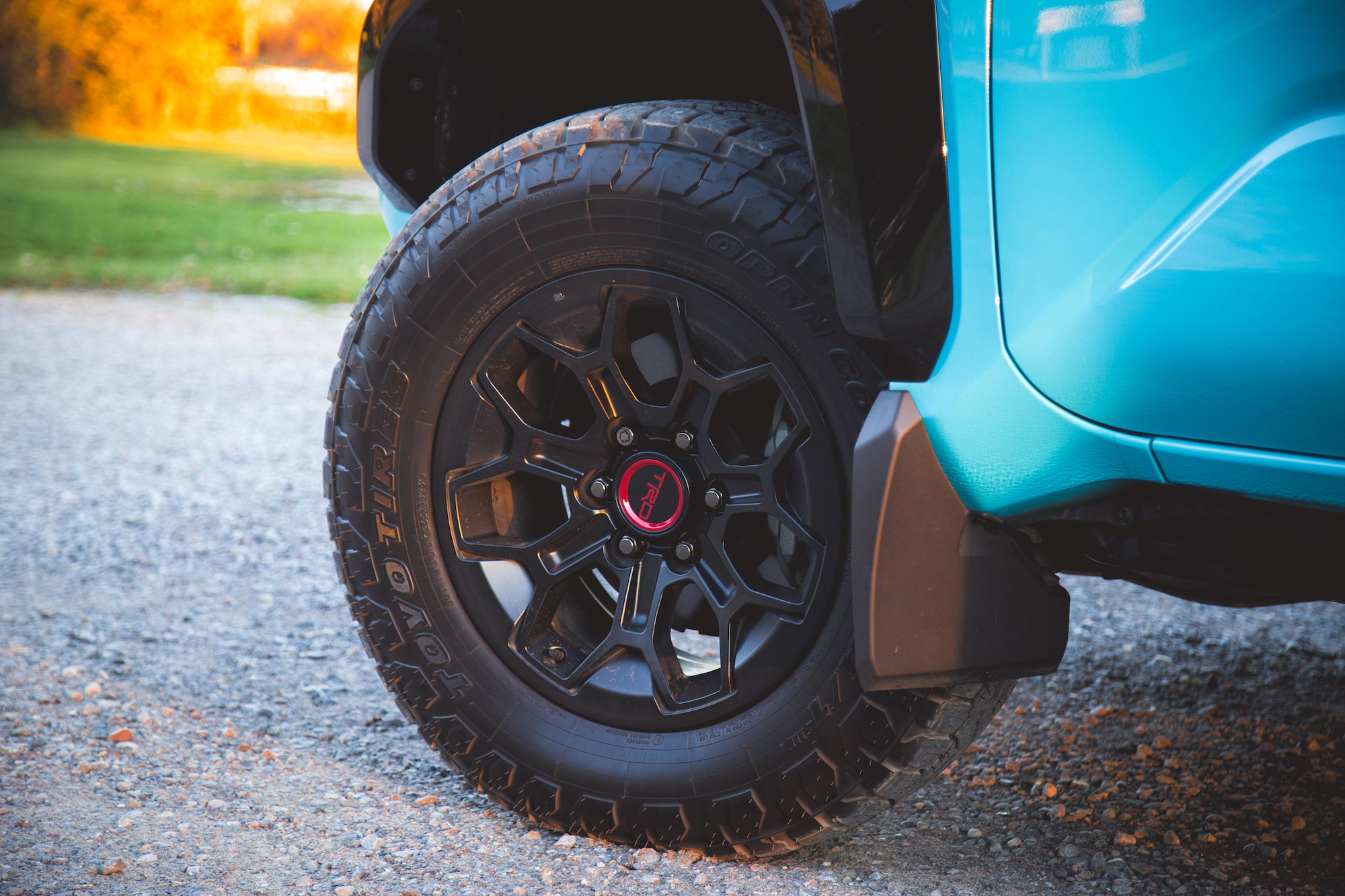
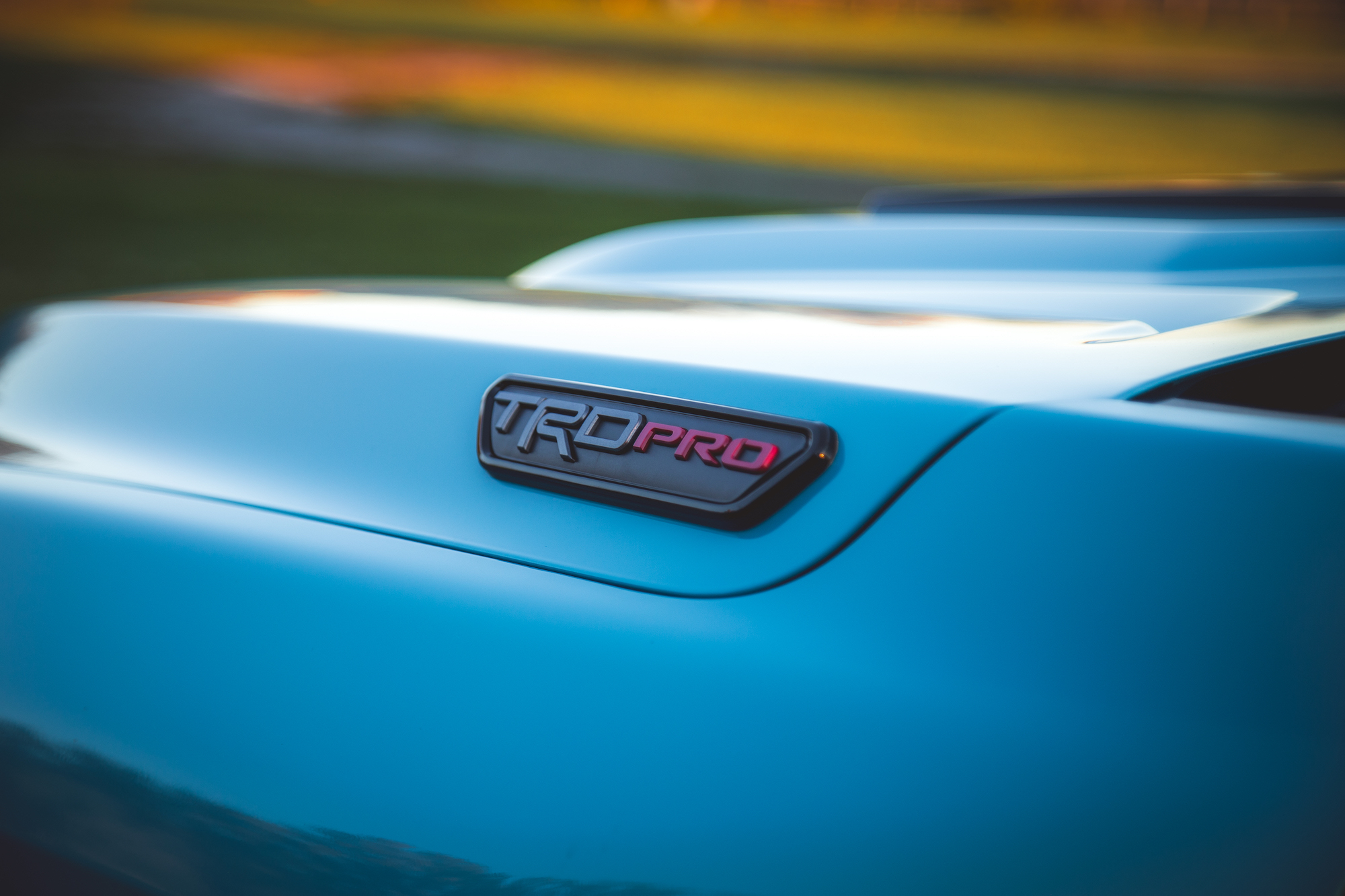
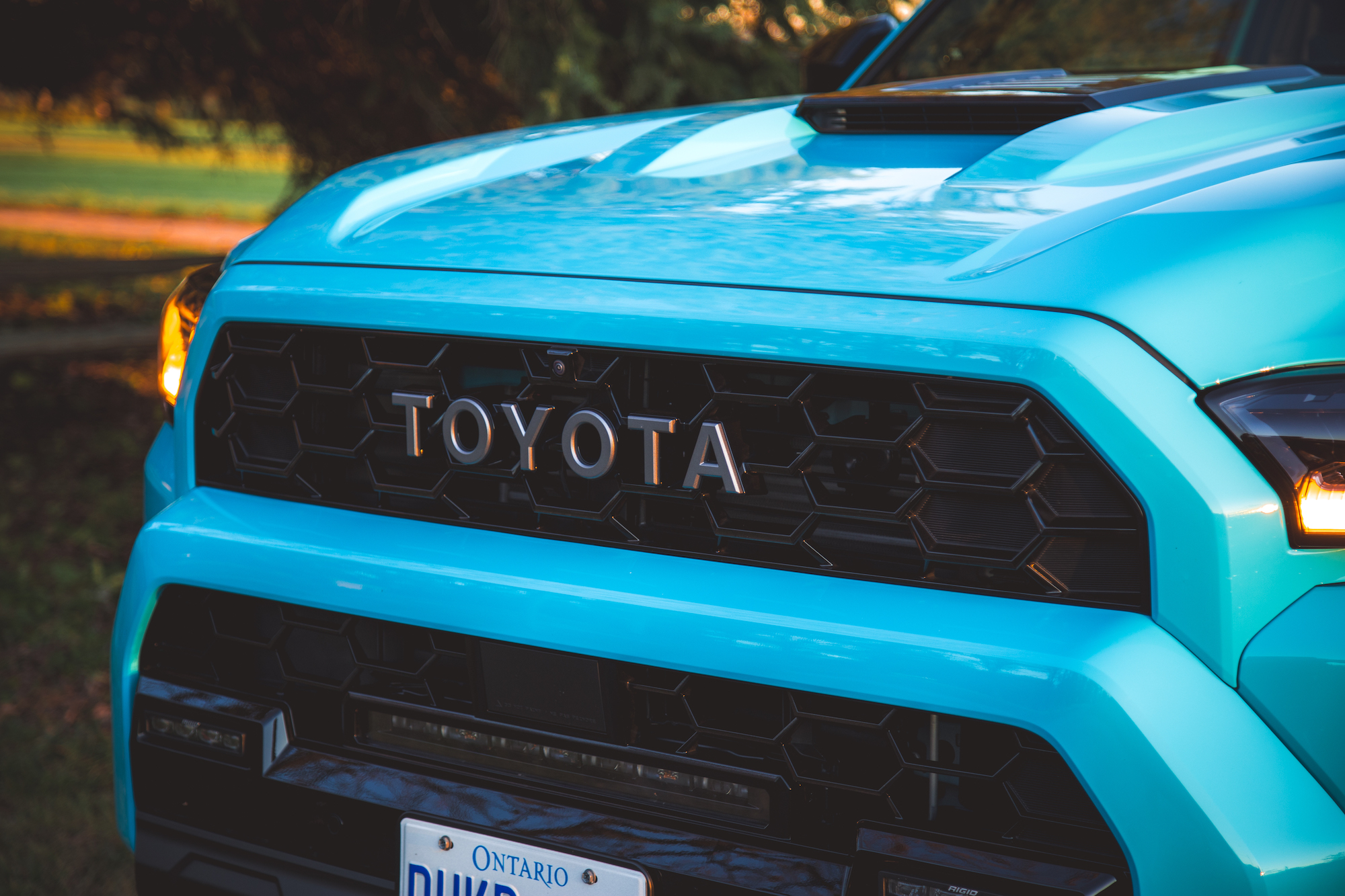
The TRD Pro arsenal deepens that aesthetic, with a TOYOTA-scripted grille, hood scoop, aluminum front skid plate, Rigid LED fog lamps, TRD Performance air intake and exhaust, and 33-inch Toyo Open Country all-terrain tires wrapped around 18-inch alloy wheels, all of which leave little doubt about its intentions. Then there are the FOX shock absorbers, complete with three damper settings, to help ensure that the 4Runner’s tough-guy appearance is backed by some serious off-road hardware.
The TRD Pro comes exclusively with Toyota’s hybrid powertrain. A 2.4-litre turbocharged four-cylinder engine works alongside an electric motor and a 1.87-kWh nickel-metal hydride battery, the same setup used in the Land Cruiser. Combined output stands at a healthy 326 horsepower and 465 lb-ft of torque, channelled through an eight-speed automatic transmission.
Rather than serving as a standalone source of propulsion, the hybrid system primarily supplements the engine, adding torque and improving efficiency. As with Toyota’s other hybrids, the engine can shut down under light loads, such as during low-speed cruising, but the 4Runner’s weight and intensive demands mean it seldom occurs.
The efficiency gains are nevertheless worthwhile. We averaged a respectable 12.0 L/100 km over a mix of city and highway driving, an impressive result considering the chunky all-terrain tires and the vehicle’s off-road remit. Better still, the engine runs on regular 87-octane fuel. The TRD Performance exhaust also gives it a suitably deep, burly soundtrack, trading the outgoing model’s naturally aspirated 4.0-litre V6 for a more modern interpretation of truck-like muscle.
Unfortunately, the hybrid powertrain doesn’t deliver the immediate response you might expect. In theory, electric torque should bridge the gap while the turbocharger spools up, but there’s a noticeable delay between pressing the accelerator and getting meaningful forward momentum. The transmission can also seem caught off guard, hesitating to find the appropriate gear when more power is requested. We prefer the more linear and predictable response of the non-hybrid powertrain, even if the hybrid makes a stronger case for itself at the fuel pumps.
Be that as it may, few people buy a 4Runner because they’re searching for an efficient daily driver. They want an invincible road tank, something that can traverse seemingly any terrain in almost any weather without breaking a sweat. That sense of imperviousness is central to the TRD Pro’s appeal. Its elevated driving position, generous ground clearance, all-terrain tires, and FOX dampers give it the confidence to shrug off obstacles that would have lesser SUVs reaching for the brakes. Pockmarked roads are dispatched with indifference, curbs are easily mounted, and gravelly cottage roads feel no different from the driver’s seat than a glassy stretch of highway.
Of course, that halo of invulnerability comes at a cost. The Toyo Open Country tires aren’t intolerable for everyday driving, as we’ve encountered the same tires on the Lexus LX 700h and GX 550 Overtrail+. Still, don’t expect the 4Runner to handle vertical oscillations with much finesse or settle gracefully after being thrown into a fast corner. The chassis takes its time recovering, and the ride can feel busy over successive bumps. After a week, however, you begin to acclimatize. Once you accept that this isn’t a vehicle particularly interested in pampering its occupants, the unsettled ride becomes less of a concern. Instead, you find yourself concentrating on other aspects of driving, such as feathering the throttle to encourage electric assistance and keep the engine from firing up unnecessarily.
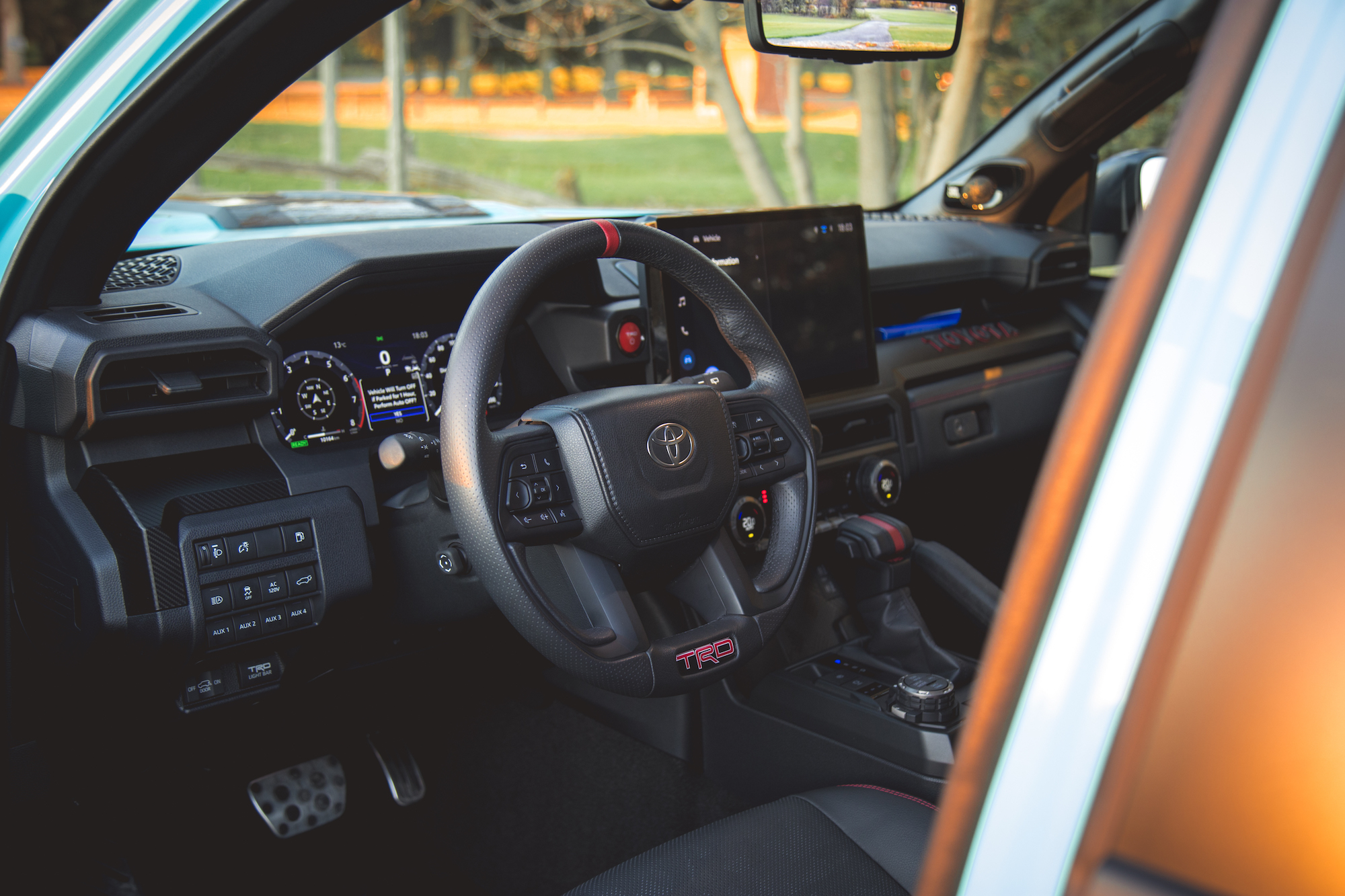
There’s plenty of off-road kit to explore, too, including a disconnectable stabilizer bar, a locking rear differential, and an off-road cruise-control system. Four auxiliary switches to power accessories and aftermarket equipment sit to the left of the steering column, making it easy to outfit the 4Runner for more serious adventures. Another clever touch is the dashboard-mounted JBL speaker, which can be removed from its dock for portable listening. It’s a small but thoughtful feature for campers and outdoor enthusiasts who want to bring their soundtrack along for the journey, with the added convenience of being able to sync it with the vehicle’s audio system.
Step inside, and the 4Runner reveals a more comfortable, surprisingly accommodating side to its rugged personality. Toyota has paid attention to the little things, including a broad, padded window sill that provides a natural place to rest your arm. It’s an almost domestic touch in an otherwise decidedly utilitarian cabin, like settling into your living-room couch after a day spent outdoors.
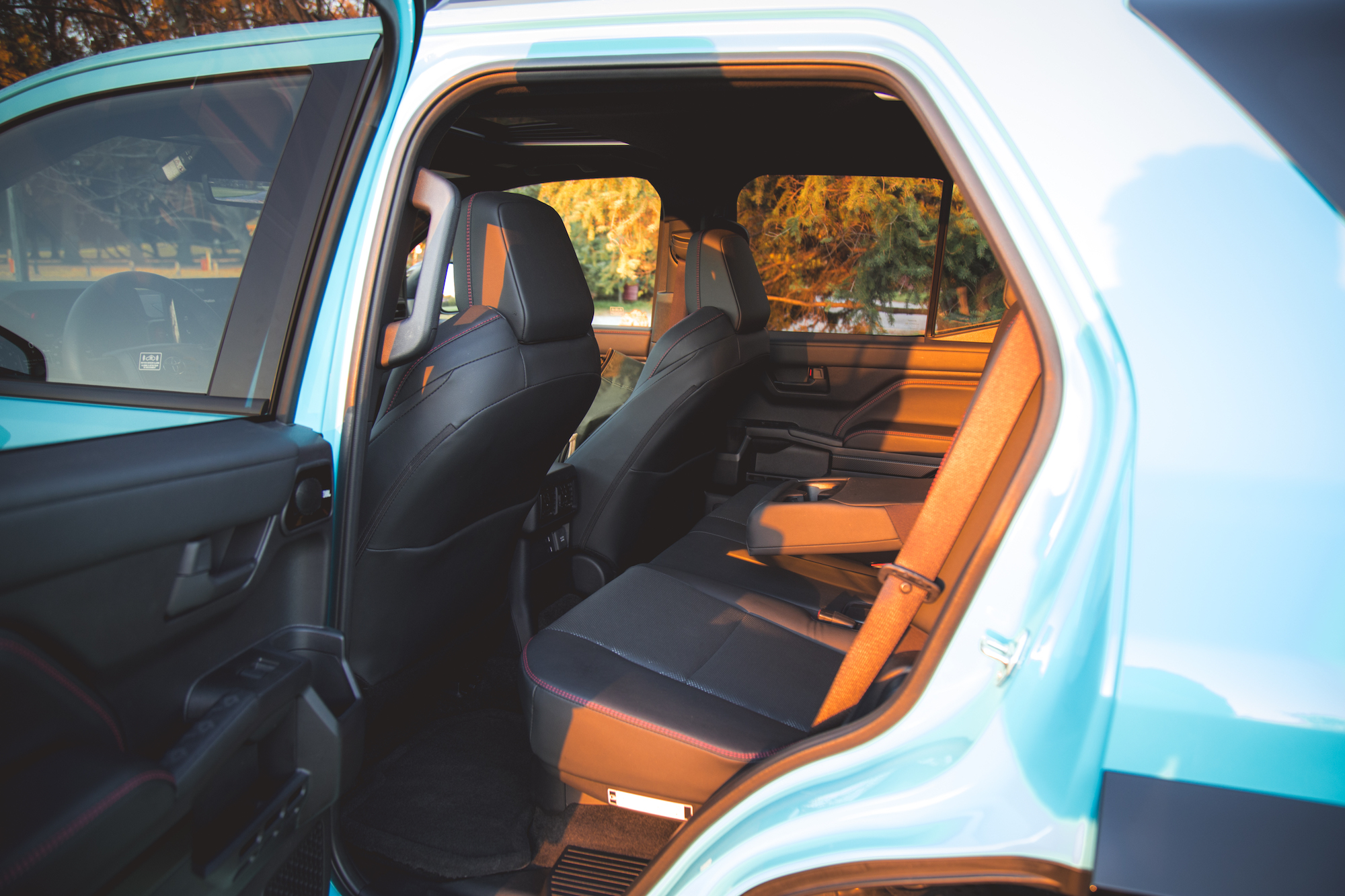
The signature power-operated rear window is another welcome carryover. Its switch sits on the headliner beside the sunroof controls, and with everything electrically operated, opening up the cabin takes only a few quick presses. Lower all the windows, slide open the sunroof, and the 4Runner enters full open-air mode. Wind buffeting remains surprisingly subdued, with little turbulence intruding into the cabin even at highway speeds. These aren’t headline-grabbing innovations, but they’re the sort of thoughtful details that make a meaningful difference over time.
Up front, the TRD Pro features a supersized 14.0-inch central touchscreen, the largest display we’ve encountered in a Toyota or Lexus. Its interface is familiar from more mainstream models such as the Corolla and Camry, prioritizing straightforward functionality over visual extravagance. The generous screen real estate makes the large icons and text easy to read, while the chunky steering wheel offers a range of physical buttons for infotainment controls. The wheel feels substantial in the hands, and although paddle shifters are absent, we can’t imagine many TRD Pro owners losing sleep over it.
Toyota is no longer the quiet, conservative automaker it once seemed to be, content to sell beige Camrys and efficient Priuses to the masses. Today, it’s making headlines in motorsport, challenging for the top step of the World Endurance Championship with its TR010 Hybrid, dominating the World Rally Championship with the GR Yaris Rally1, and showcasing its technical ambitions through its involvement in Formula 1 with Haas.
Its increasingly adventurous paint palette is another sign of a company willing to loosen its tie and show some personality. Wave Maker might not make the 4Runner any quicker, quieter, or more comfortable on pavement, but it does give an already distinctive SUV an unmistakable presence. And in a segment where ruggedness is practically a prerequisite, standing out from the crowd is no small feat. The 4Runner TRD Pro is as brash and uncompromising as ever, but now it has the colour to match.
Specifications:
Model: 2026 Toyota 4Runner Hybrid TRD Pro
Paint Type: Wave Maker
Base Price: $68,857
Price as Tested: $82,358
Curb weight (kg): 2,488
Engine: 2.4-litre turbocharged four-cylinder, electric motor, 1.87-kWh nickel-metal hydride battery
Horsepower: 326 hp
Torque: 465 lb-ft
Transmission: 8-speed automatic
Engine & Drive Configuration: Front engine, 4WD
Observed Fuel Consumption (L/100km): 12.0
Tires: Toyo Open Country all-terrain 33-inch tires; 18-inch wheels

Leave a Reply