
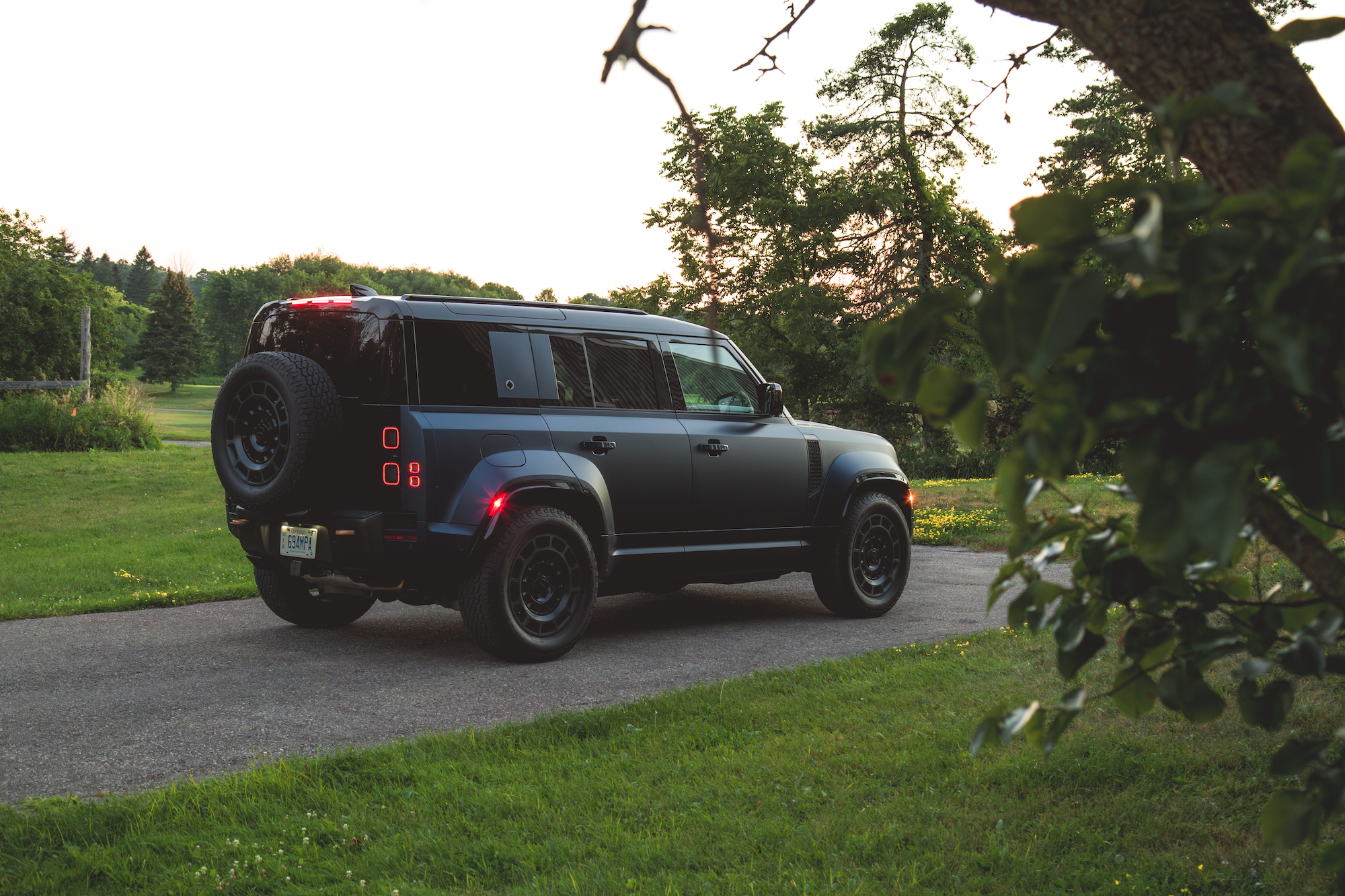
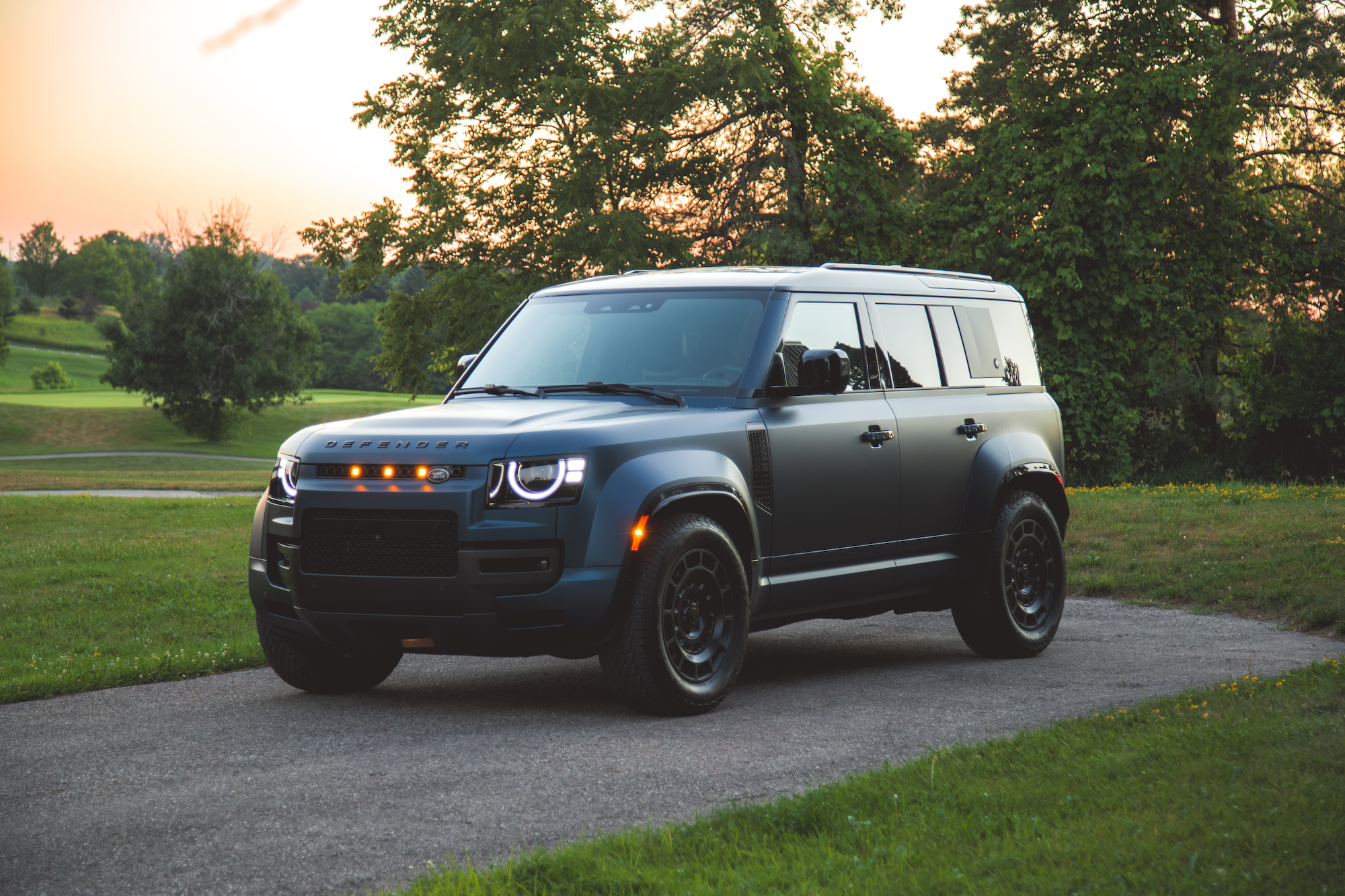
The Defender is receiving a mid-cycle refresh for 2027 with updated styling and revised powertrains, but the current models have been flooding the streets lately thanks to attractive incentives and lease deals. While these entry-spec models are perfectly adequate with their four- and six-cylinder engines, it’s the Defender Octa that sits at the top of the food chain with its raucous V8 engine and 626 horsepower. It’s what the creatures in Hoppers would call the apex predator.
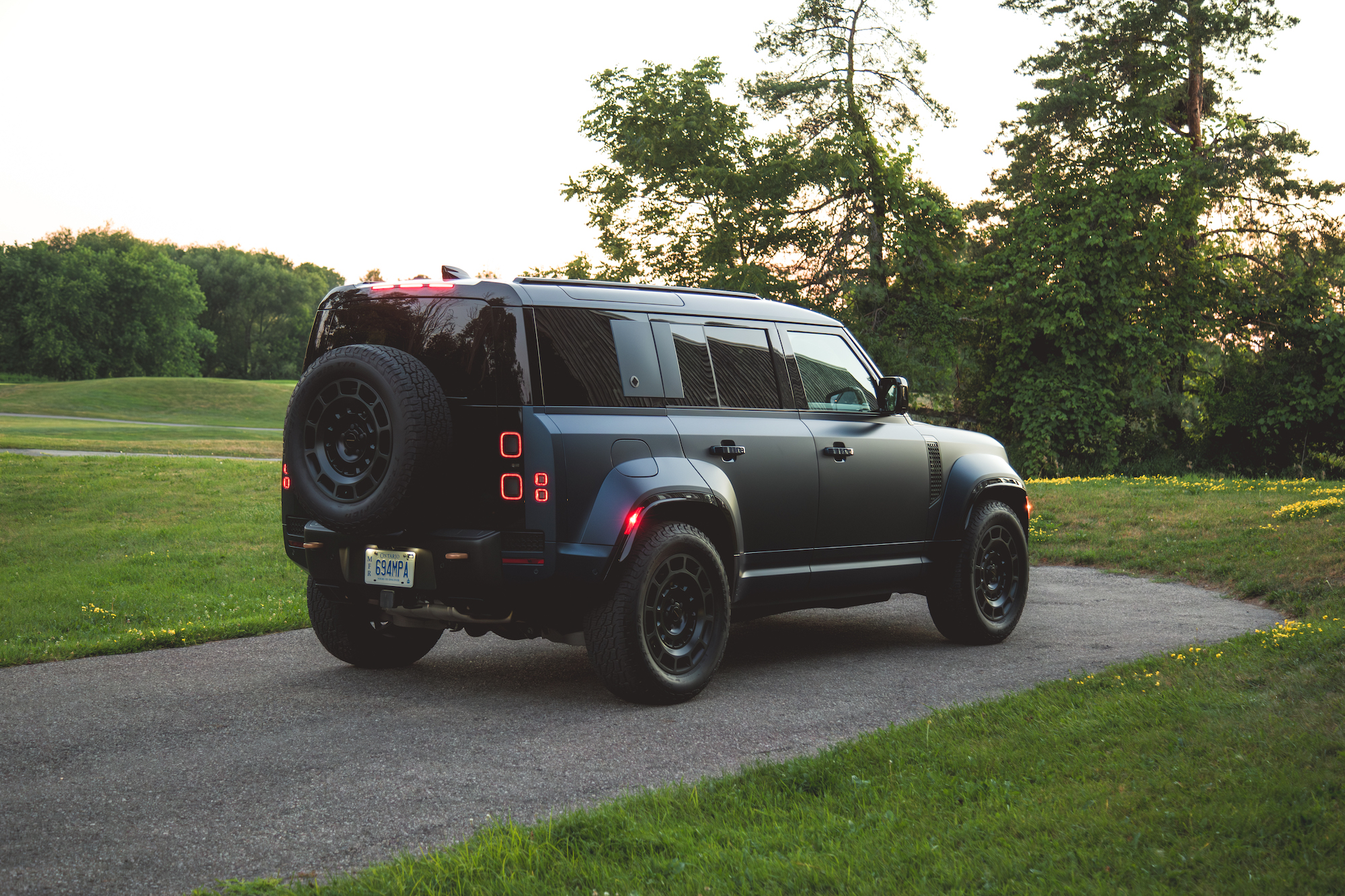
Like what Raptor is to Ford or Rubicon to Jeep, Octa adds clever mechanical sorcery to the Defender’s repertoire, enhancing overall performance and its ability to conquer all types of terrain. Its blood is pumped by a BMW-sourced heart, a 4.4-litre twin-turbocharged V8 that generates 626 hp and 553 lb-ft of torque through an 8-speed automatic gearbox. As a result, the Octa will sprint from 0 to 100 km/h in 4.0 seconds, making it slower than the Audi RS Q8 (3.6s) and BMW X5 M Competition (3.9s), but quicker than the Mercedes-AMG G63 (4.5s).
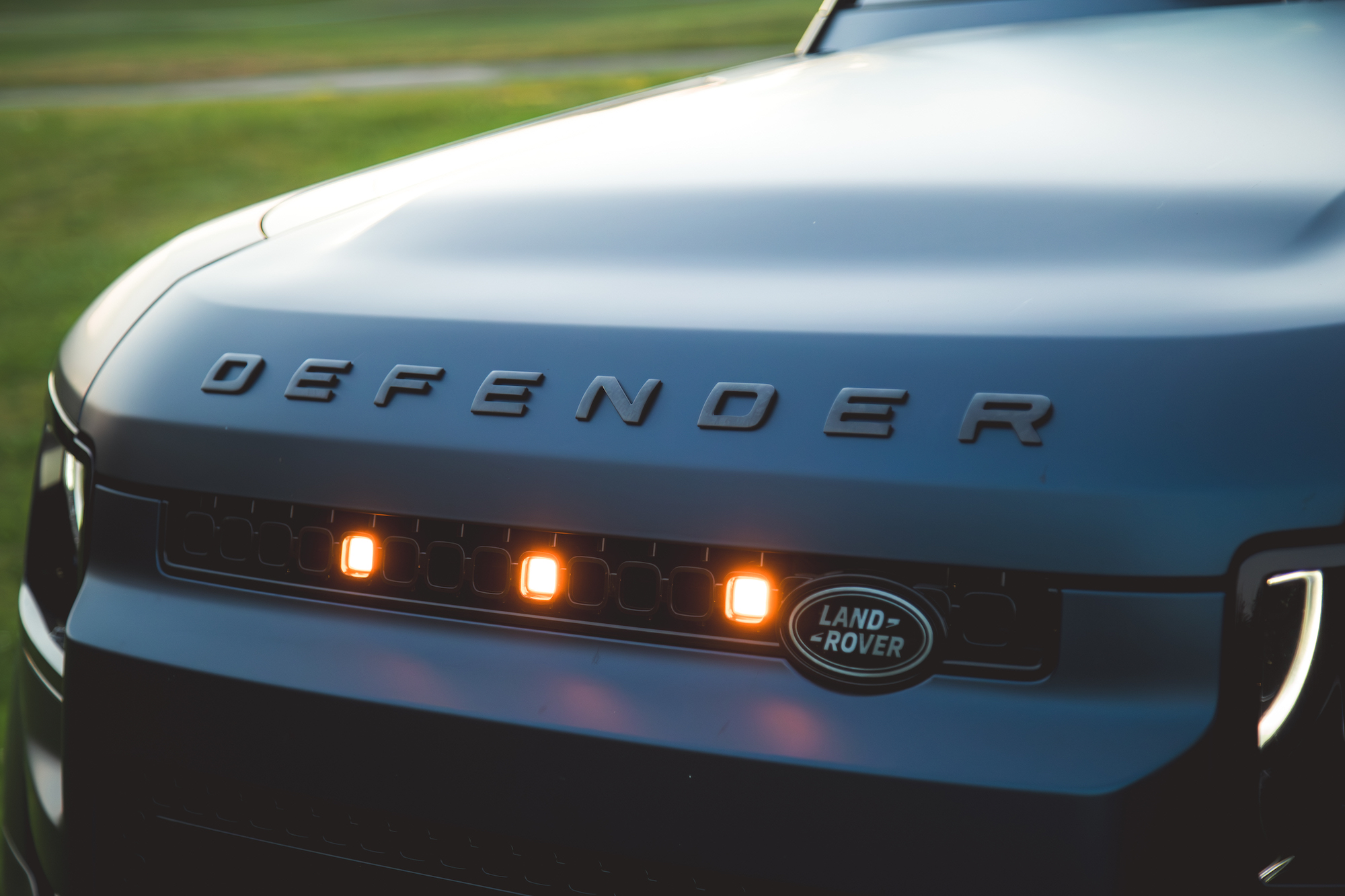
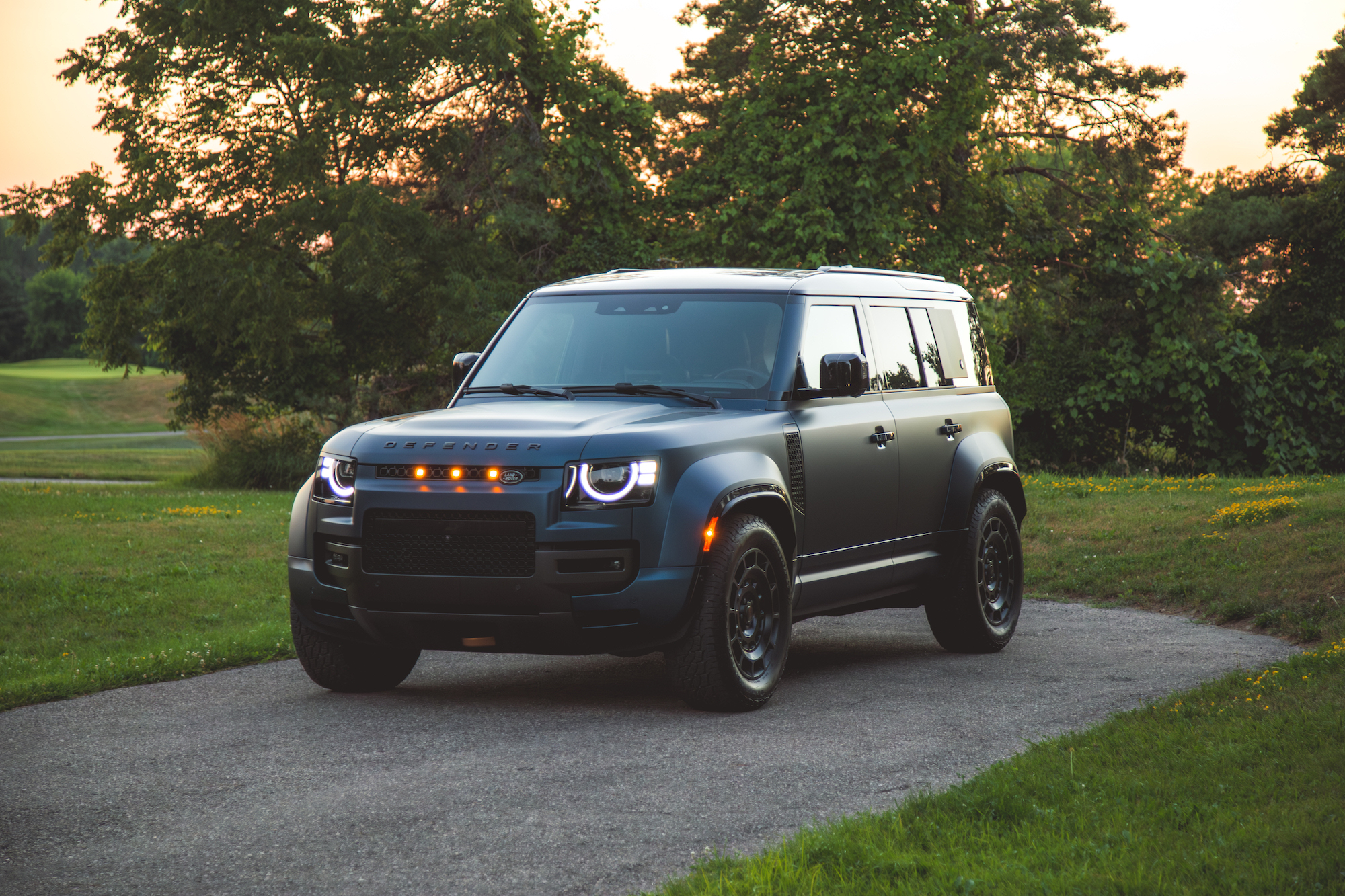
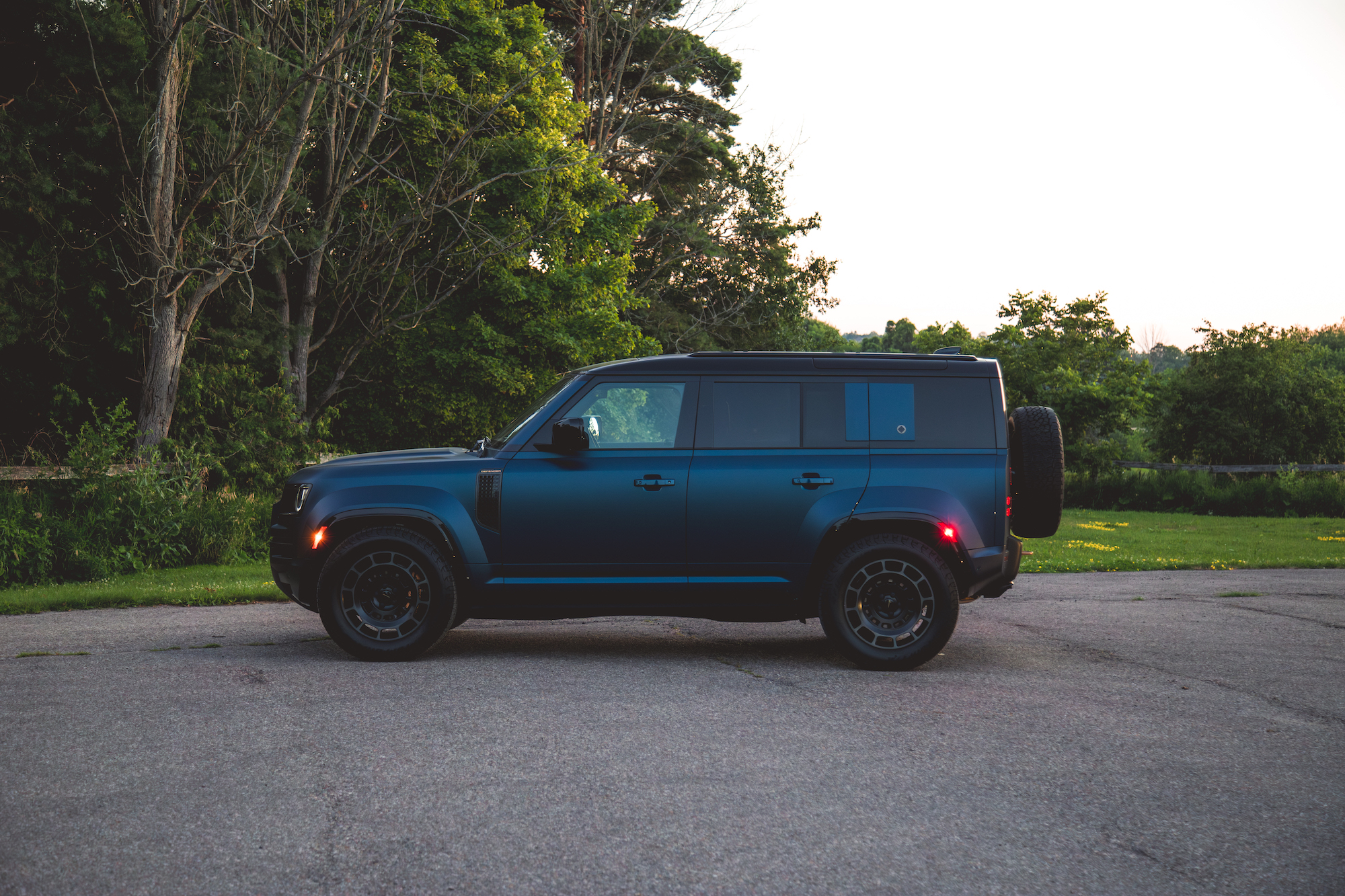
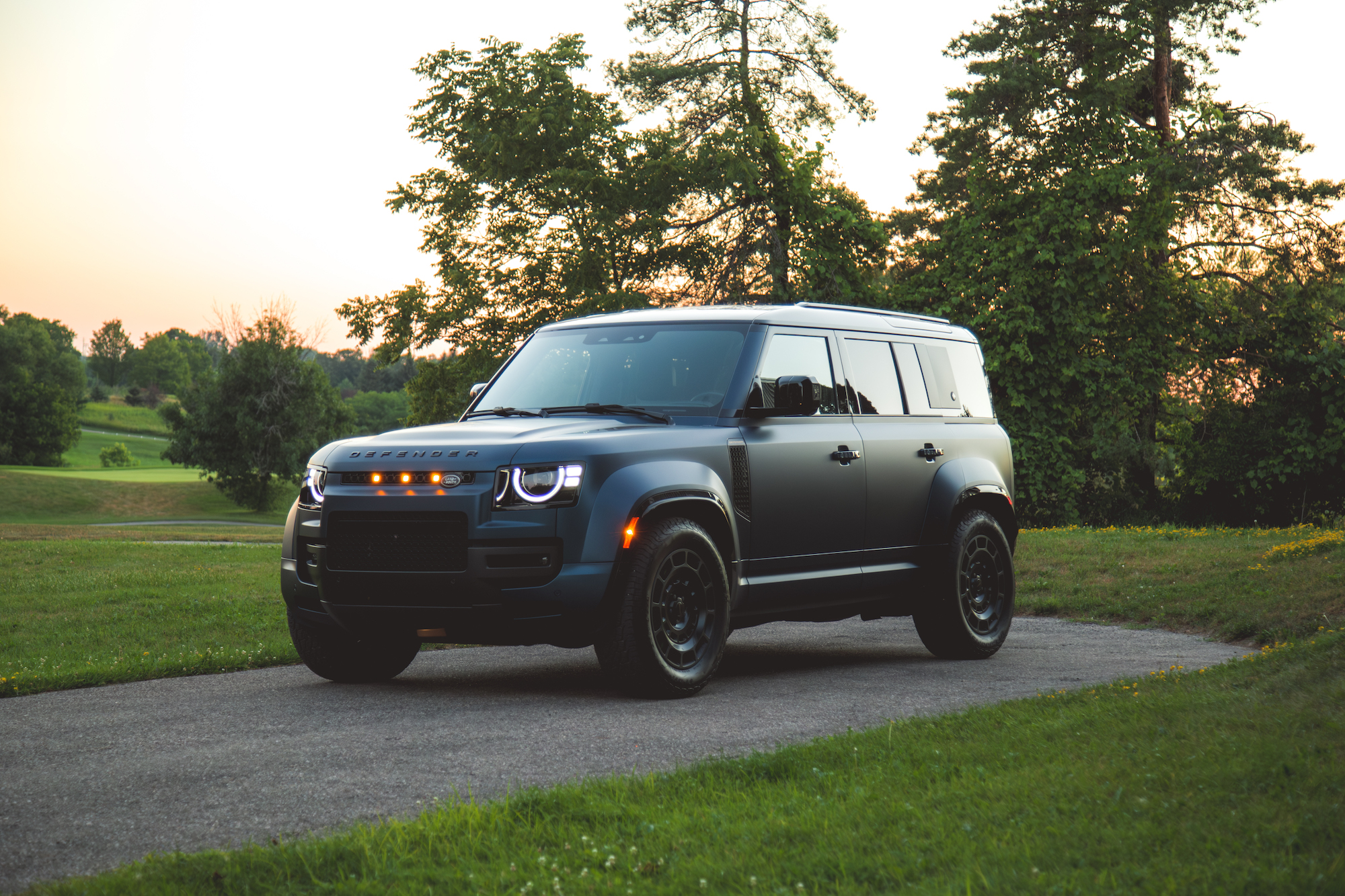
The eight-cylinder fires up with a quick, energetic spin of the starter, followed by a bark and crackle as the engine exhales through open exhaust valves. The resonance is gritty, and at full song, the Octa sounds part rally car, backing up its impressive acceleration with bursts of burbles and artillery fire when you explore the upper reaches of the rev range. Torque surges in quickly, but the weight makes it feel more gradual than the spec sheet suggests, as it’s carrying an extra 371 kilos compared to an inline-six variant. Still, every drive ends with you glancing back at the mean, geometric silhouette, as the fiery V8 cools to a chorus of ticking hot metal.
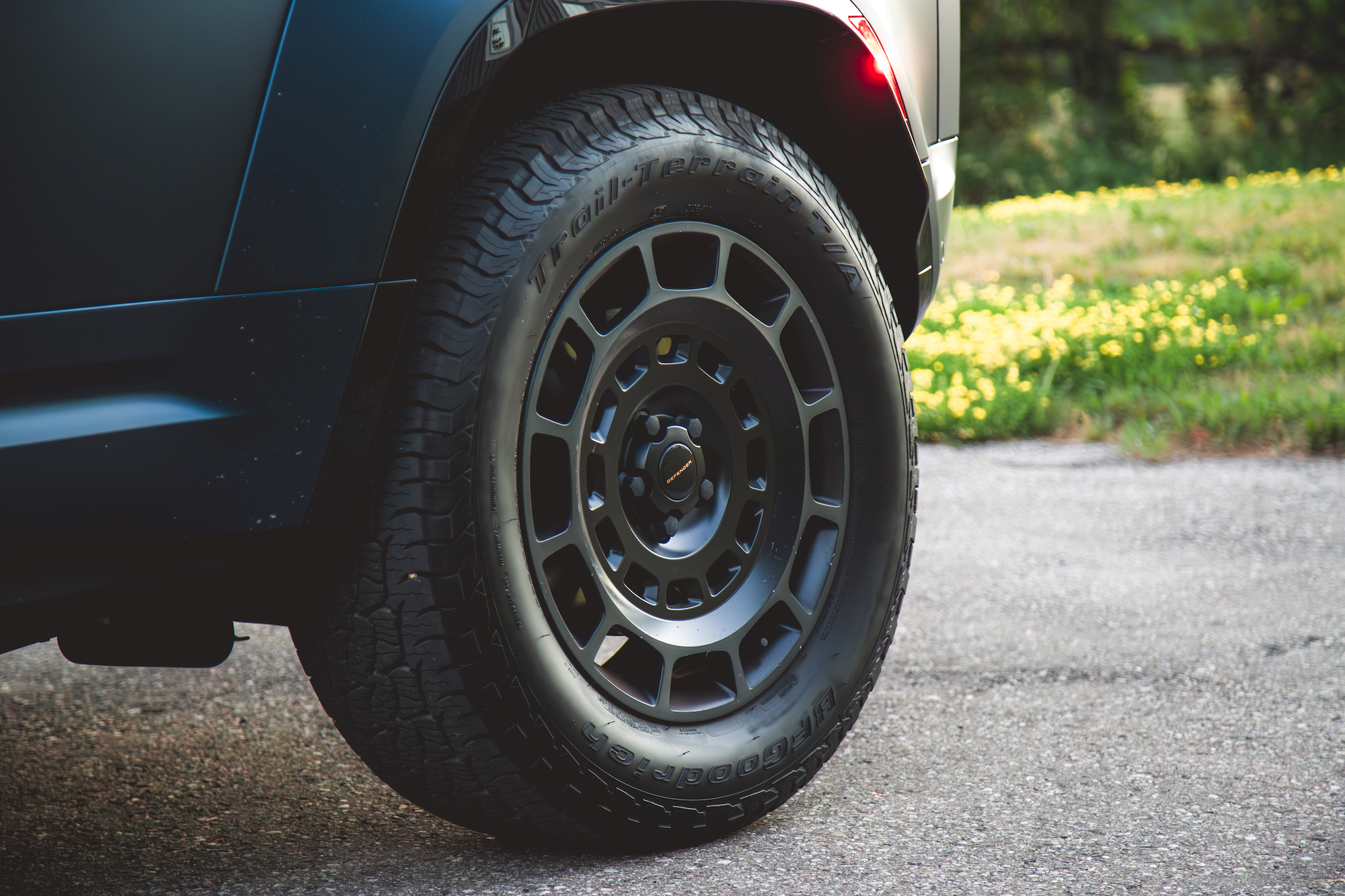
The Octa not only targeted speed as a goal but also handling and road compliance with its new 6D Dynamic suspension system. Symbolizing the six axes of motion (x, y, z, pitch, roll, yaw) that vehicles can move through, it replaces conventional anti-roll bars with hydraulically interlinked dampers that reduce unwanted motion for a better articulated ride. Essentially, all four corners of the vehicle are connected in an X pattern, and each uses fluid pressure to counteract the opposing loads and pendulous forces that a traditional anti-roll bar would handle. Mercedes and McLaren both employ similar setups.

The standard Defender rides with enough pliancy and composure to embarrass a Wrangler or Bronco on suburban streets, but the Octa is stiffer by design to handle heavier loads in extreme conditions. Unsurprisingly, then, it rides busier than even the G63 AMG, with more rumbles and vertical oscillations seeping through to the seats. You’re more aware of the bumps, but consistent damping adds a layer of polish that will feel familiar to Defender drivers.
The 6D system has the greatest impact on body control and pitch reduction. Hard braking doesn’t throw occupants forward, and hard launches do not pitch the nose skywards like in an Escalade or Navigator, both of which are impressive for such a high-riding SUV. Roll is still present at greater speeds, but the Octa is more balletic through every stage of a corner. Excess movements are suppressed, the pendulous slack has been tightened, and the Octa no longer wastes energy on unnecessary gestures for ride comfort.
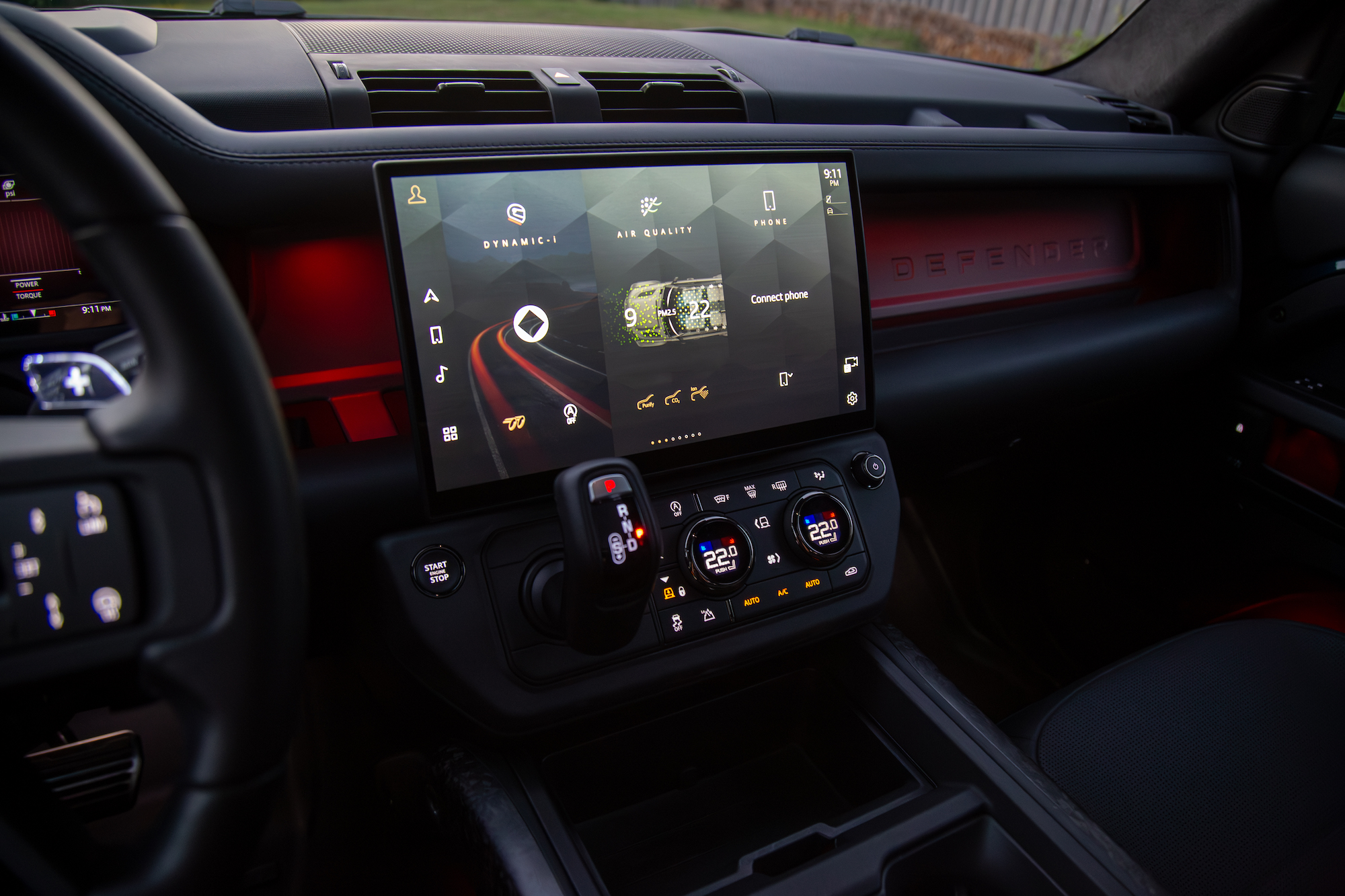
If road comfort and compliance are top priorities in an SUV, then the Octa’s dynamic additions will feel wholly unnecessary. The standard model, ironically, feels more focused and singular in its mission. Its movements are less busy and reactive, and the ride is plusher and more isolating. The Octa is an exercise in what’s possible, and its minor yet considered tweaks do deliver an upswing in engagement and driver entertainment. Unlike the other Defenders, the Octa better captures the essence of speed and provides staggered layers of involvement, along with the challenges of getting it to boogie on a winding road. But dialling it back reveals an acceptable layer of security and compliance, letting you take your hands off the wheel and enjoy the Octa’s splendid cabin.
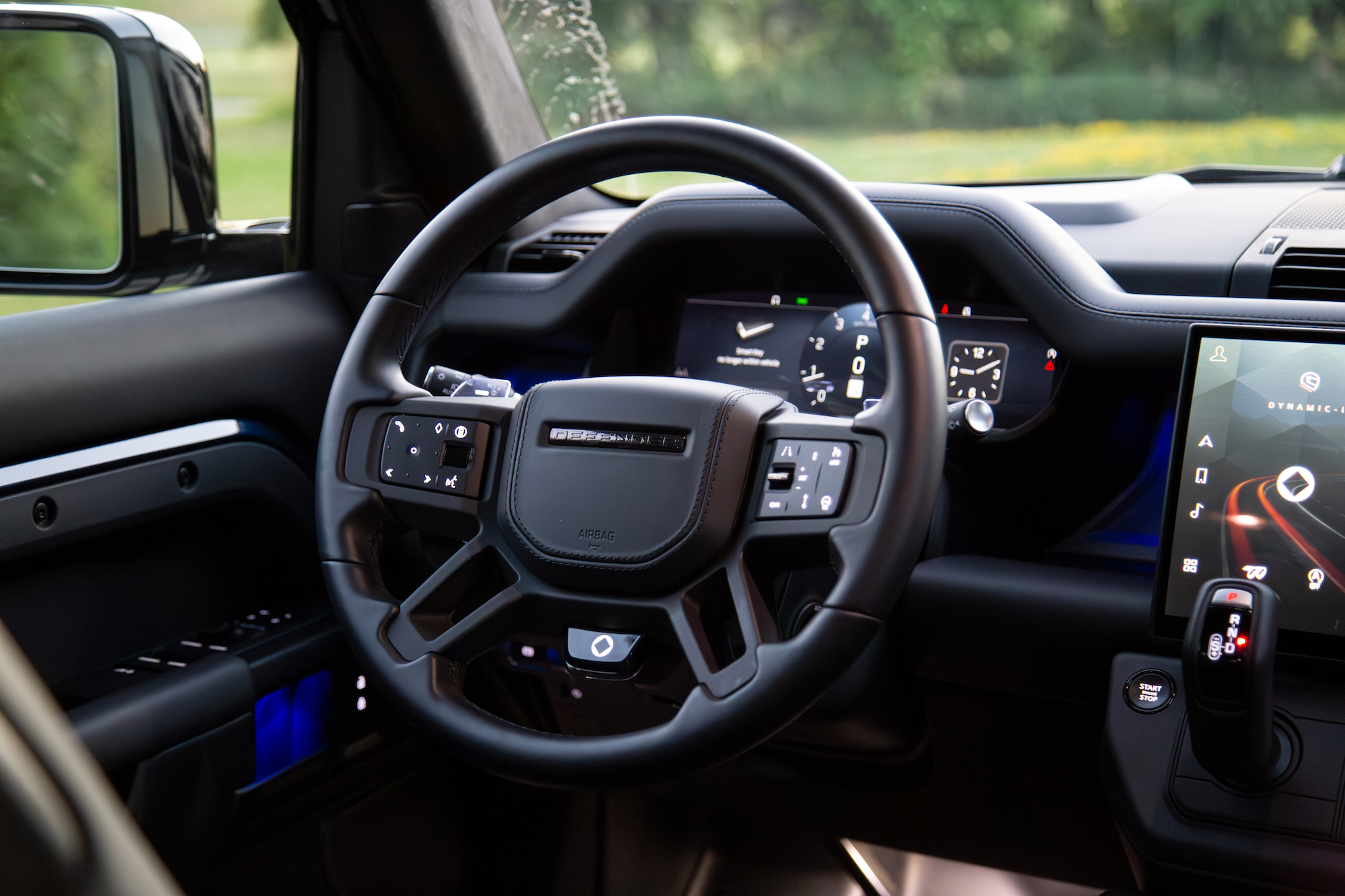
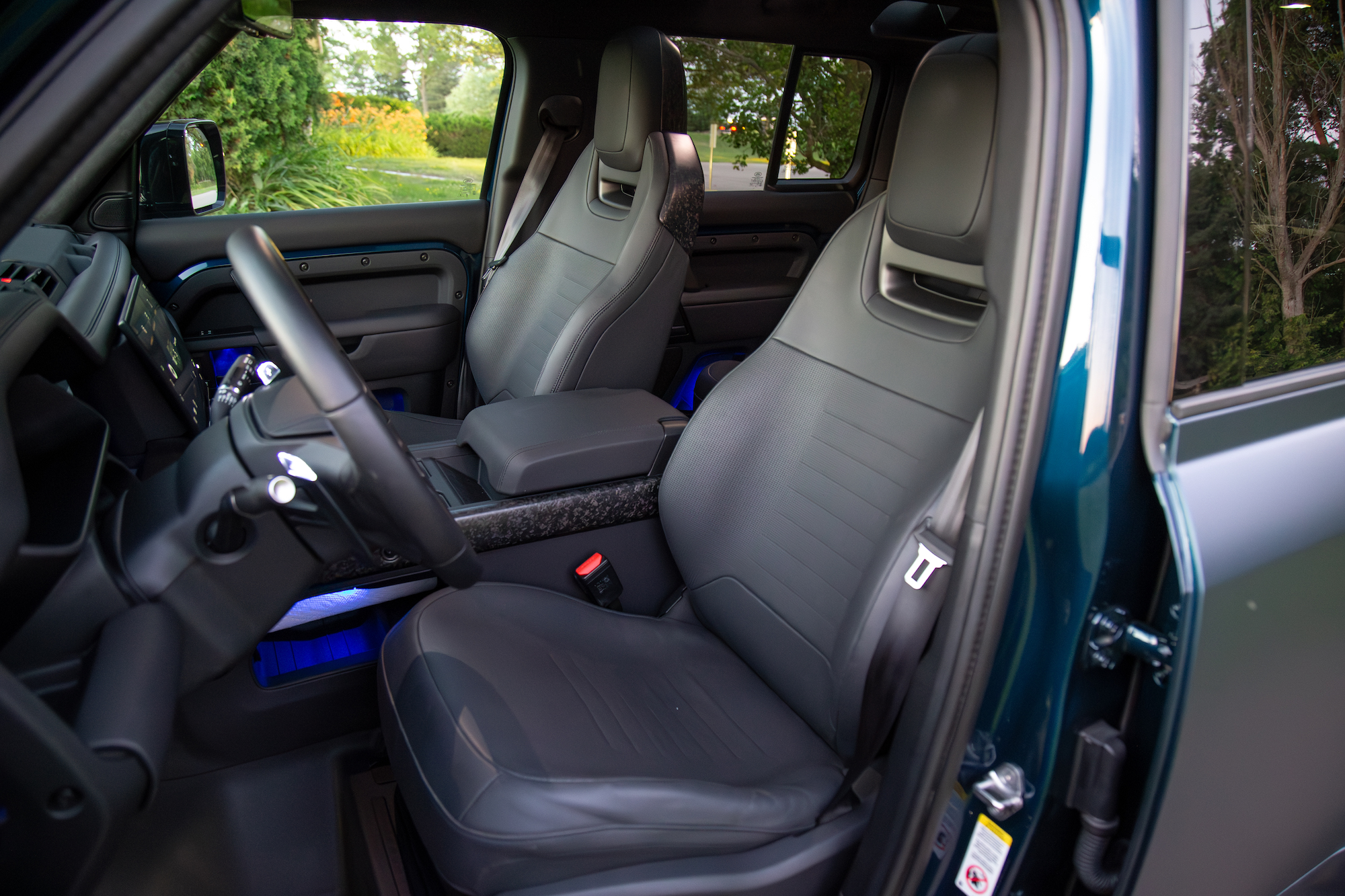
From the interior alone, the Octa immediately feels more expensive than its standard variants. Most surfaces are lined with plush, soft leather, from the dashboard bar to the gear shifter. Even the switchgear has been upgraded, with dark chrome dial surrounds replacing the generic plastic gloss. The headliner is lined in suede, and the semi-aniline leather seats are smoother than a pebble at the bottom of the ocean. While the touchscreen remains the primary method of interaction, there’s less of a software focus, with a panel below it dedicated to ventilation, seat climate, and driver modes. The same ethos has been applied to the large-diameter steering wheel, replete with clicking buttons and physical toggles.

The Defender Octa is an astutely engineered SUV that combines curb appeal and desirability with a befitting dynamic repertoire. While the standard Defenders handle the more menial day-to-day tasks marginally better, the Octa’s bellowing V8, trick suspension, and resonant exhaust make those trips radically more engaging and entertaining.
Specifications:
Model: 2026 Land Rover Defender P635 OCTA
Paint Type: Sargasso Blue (with factory matte protection film)
Base Price: $179,400
Price as Tested: $199,260
Wheelbase(mm): 3,023
Length/Width/Height (mm): 5,003 / 2,064 / 1,995
Curb weight (kg): 2,695
Engine: 4.4-litre twin-turbocharged V8, 48-volt mild hybrid
Horsepower: 626 hp @ 5,855 – 7,000 rpm
Torque: 553 lb-ft @ 1,800 – 5,855 rpm
Transmission: 8-speed automatic
Engine & Drive Configuration: Front engine, 4WD
Observed Fuel Consumption (L/100km): 15.2
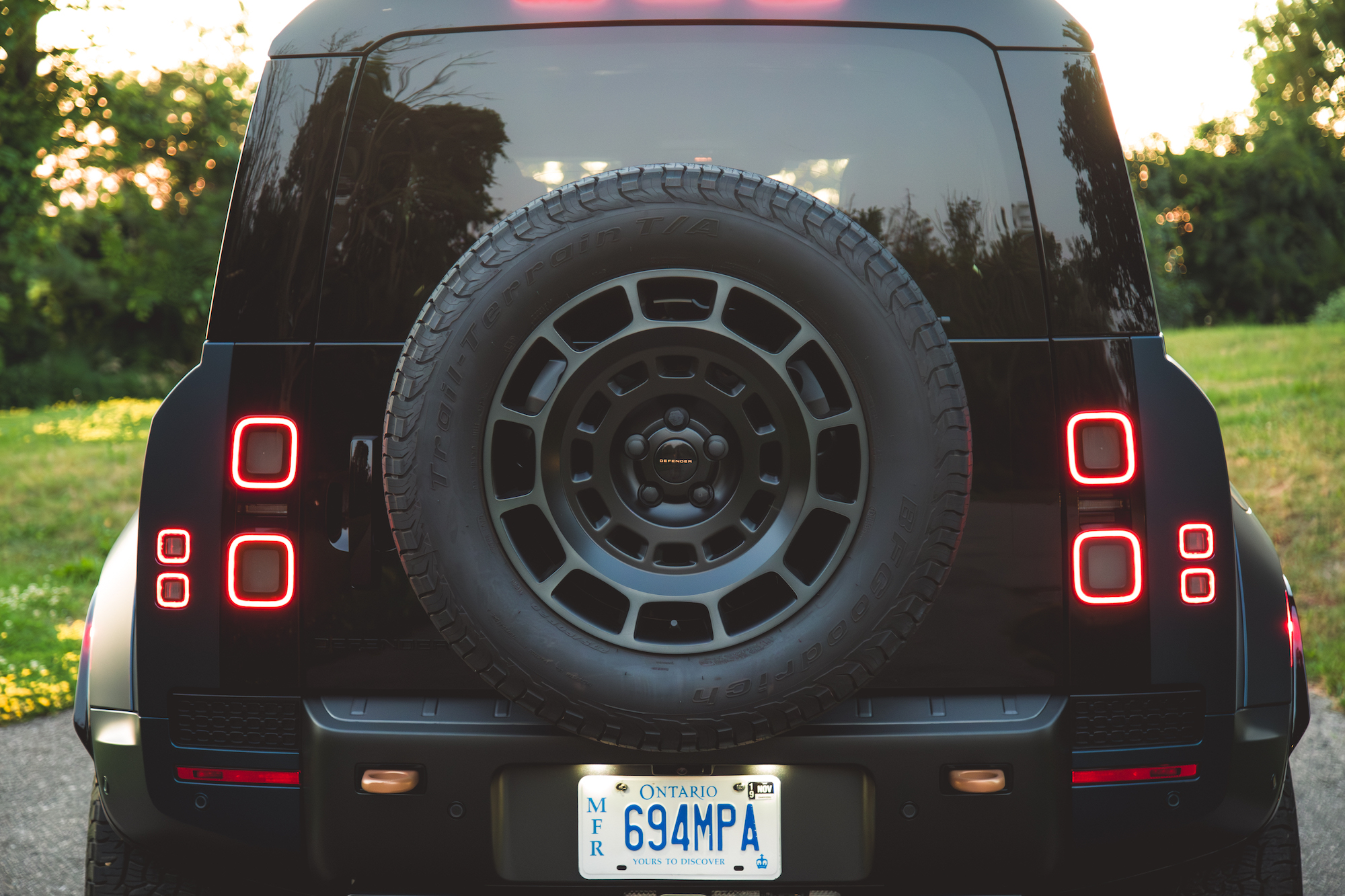
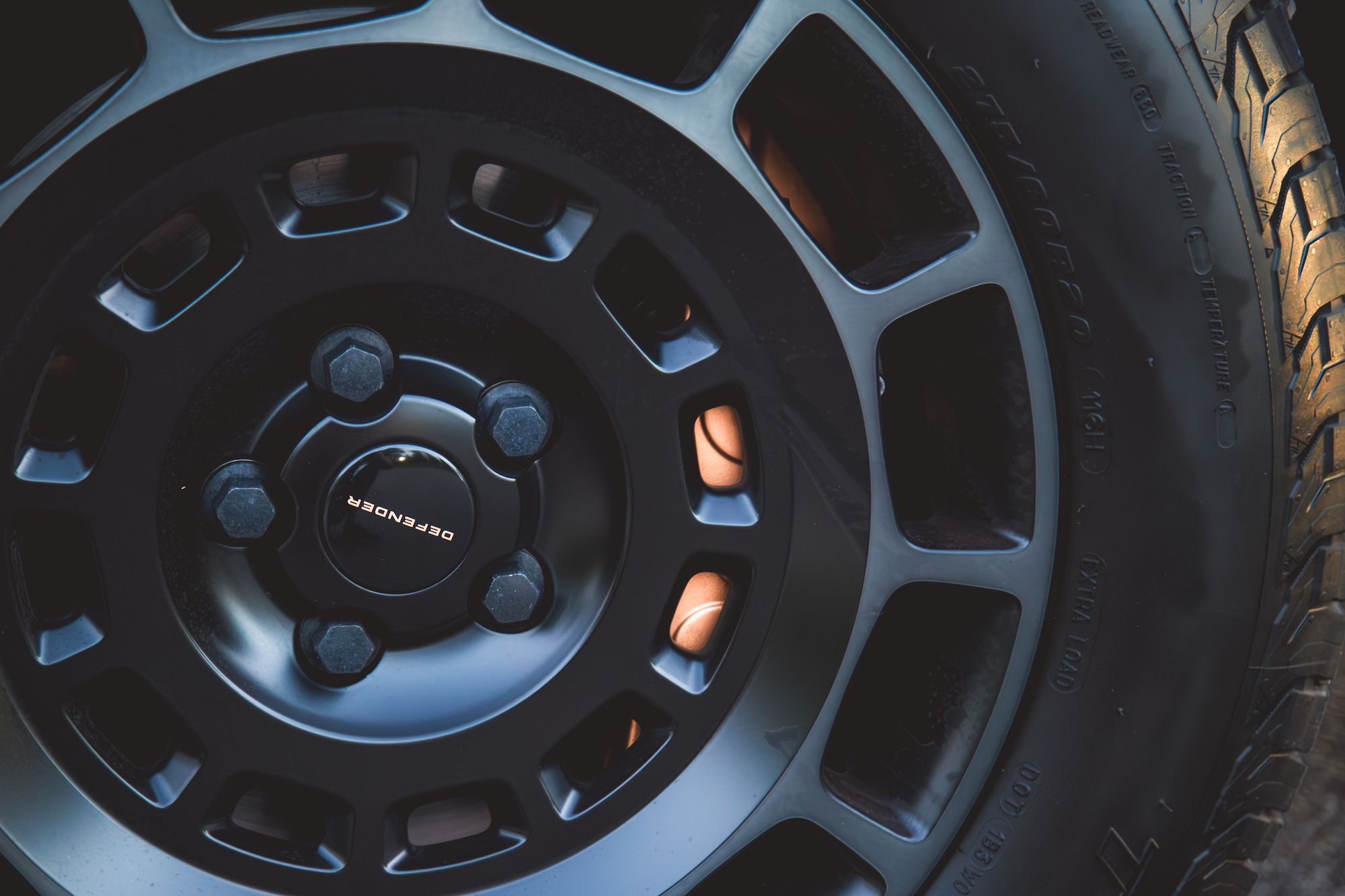
Tires: BFGoodrich Trail-Terrain T/A; 275/60R20



Leave a Reply