
Buyers looking for a luxury three-row SUV are spoiled for choice. The BMW X7 and Mercedes-Benz GLS are the top candidates, but they’ve become rather expensive and live in their own tax brackets. On the Japanese end, those who loved the RX but needed to ferry an extra row of passengers found a remedy in the GX or LX, large off-road SUVs based on rigid truck platforms. They rode nicely and were incredibly durable, but were unwieldy to drive, thirsty and expensive on the wallet, and cabin space was compromised by narrow body dimensions. Lexus attempted to address this issue with the long-wheelbase RX L, but the third row proved too tight and was virtually unusable for adults.
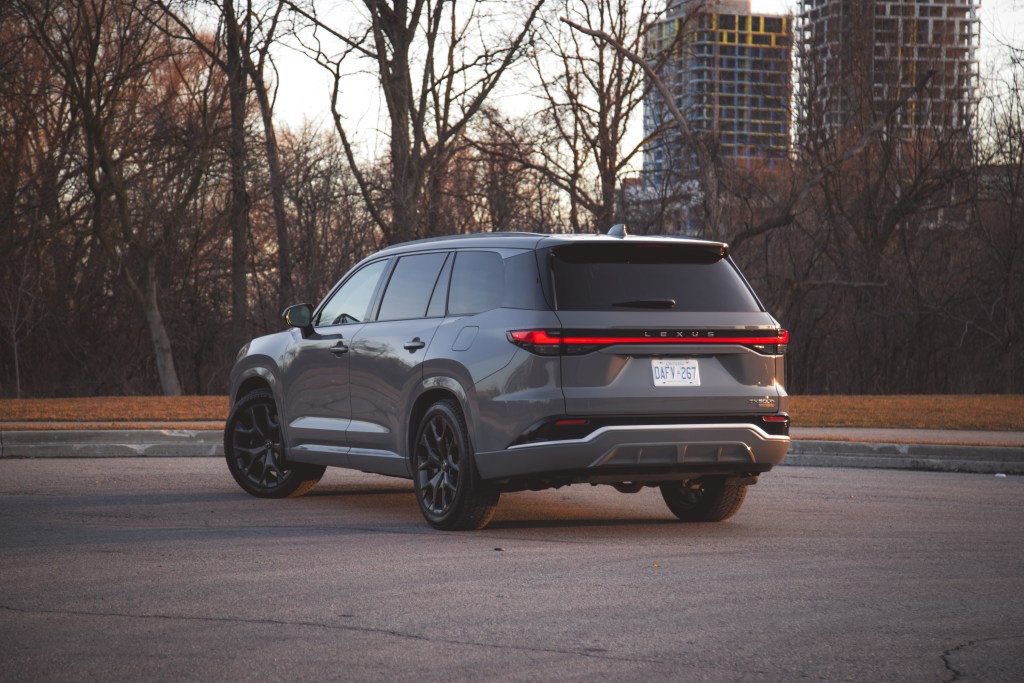
The new Lexus TX aims to solve that issue, a three-row SUV that sits on the same platform as the RX and NX, but is roughly the same size as the Toyota Grand Highlander. It’s a fresh alternative with seven-passenger capability, three powertrain choices, rear-wheel steering, and all the leather you would expect from a premium product.

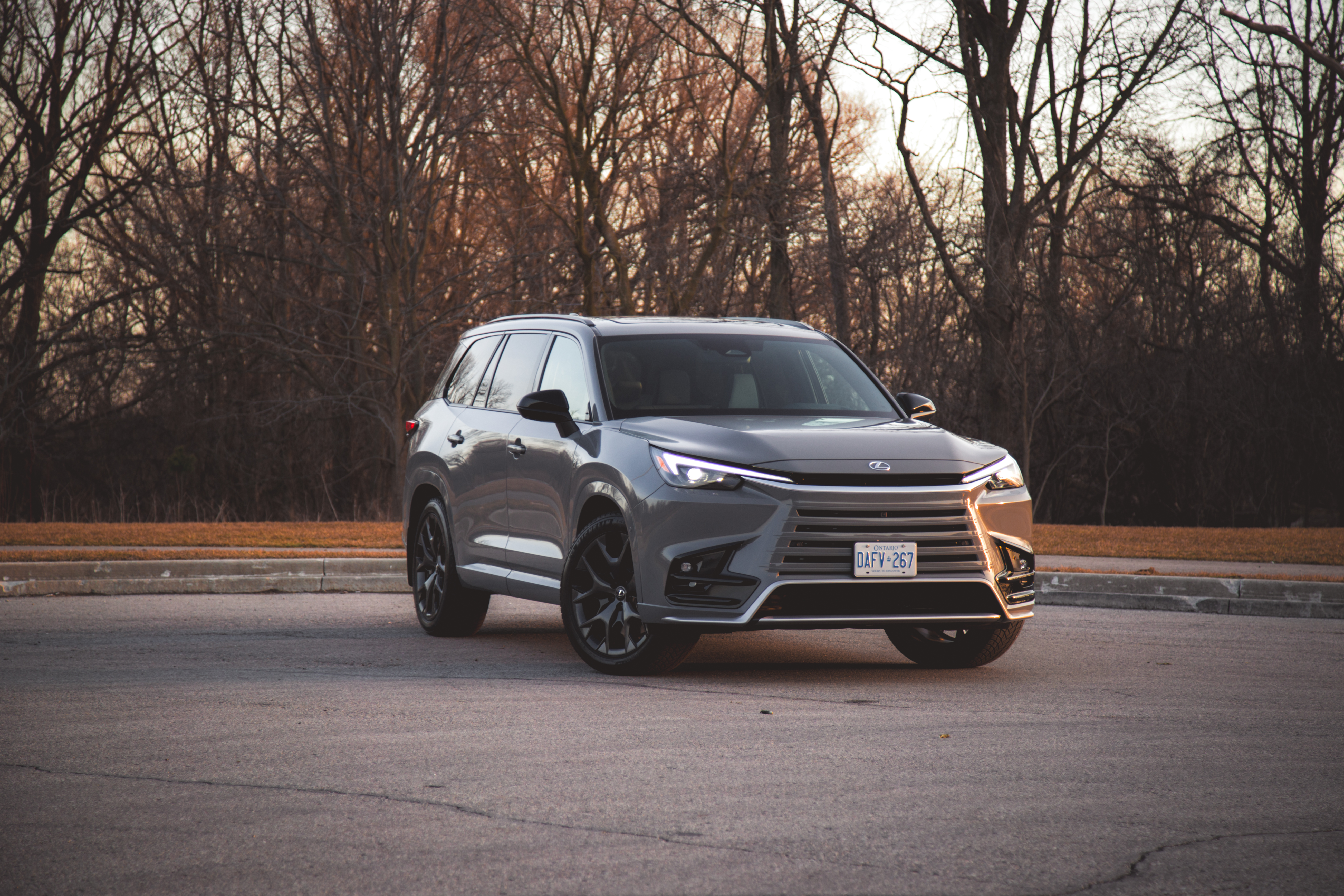
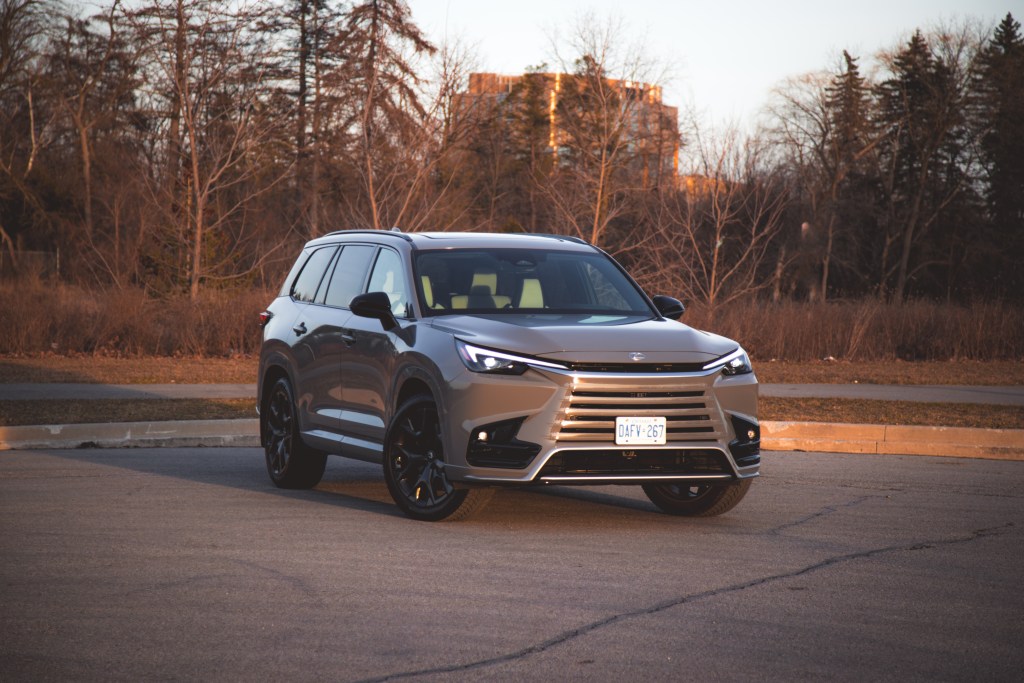
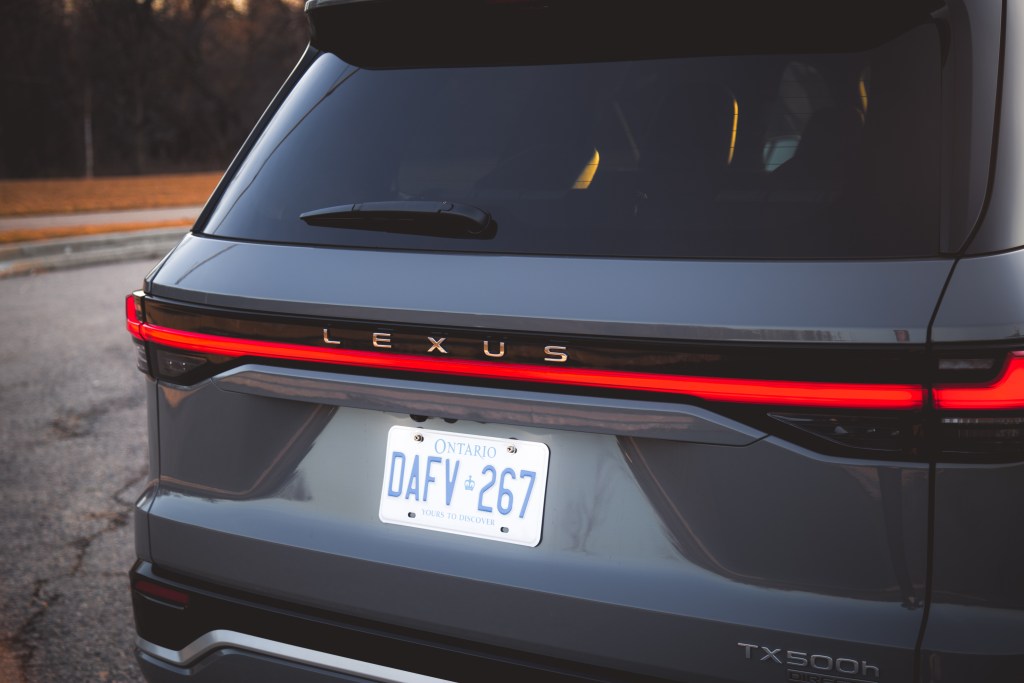
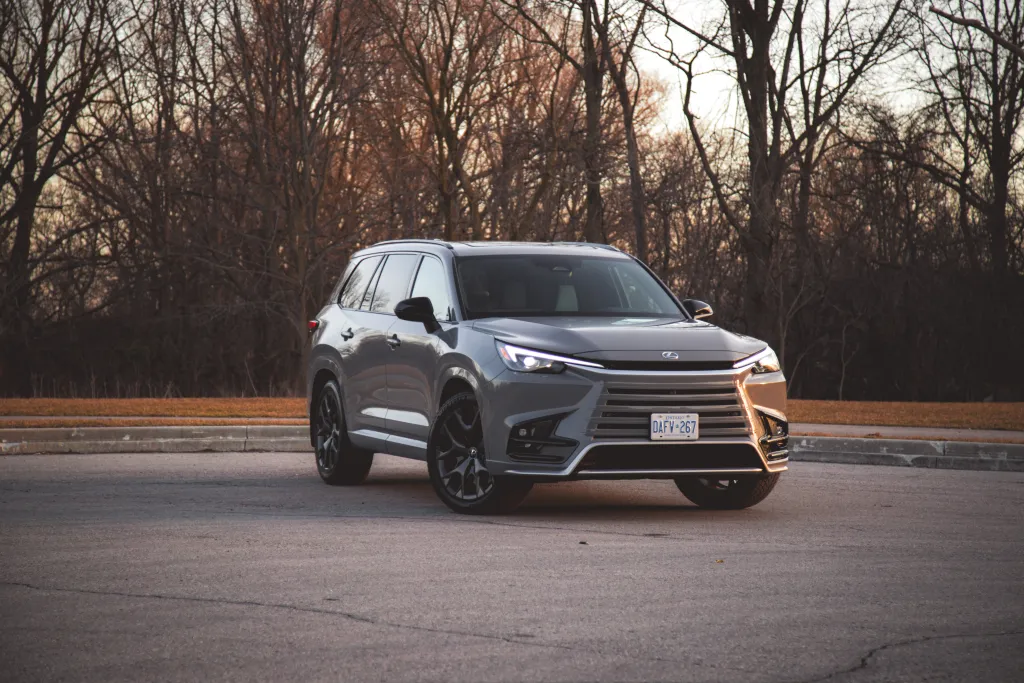
From our perspective, the TX is the best-looking Lexus in years. We’re glad they’ve manicured the spindle grill into a less offensive design. The silhouette of the spindle remains but it’s much more streamlined and less shouty. We want Lexus models to look like the way they drive – calm, soft, relaxing – and the TX finally achieves that. We dig the new Incognito paint, which appears similar to Audi’s Nardo Grey. However, to the untrained eye, it may be difficult to discern that it’s a Lexus, as the TX doesn’t currently resemble any other model in their lineup.

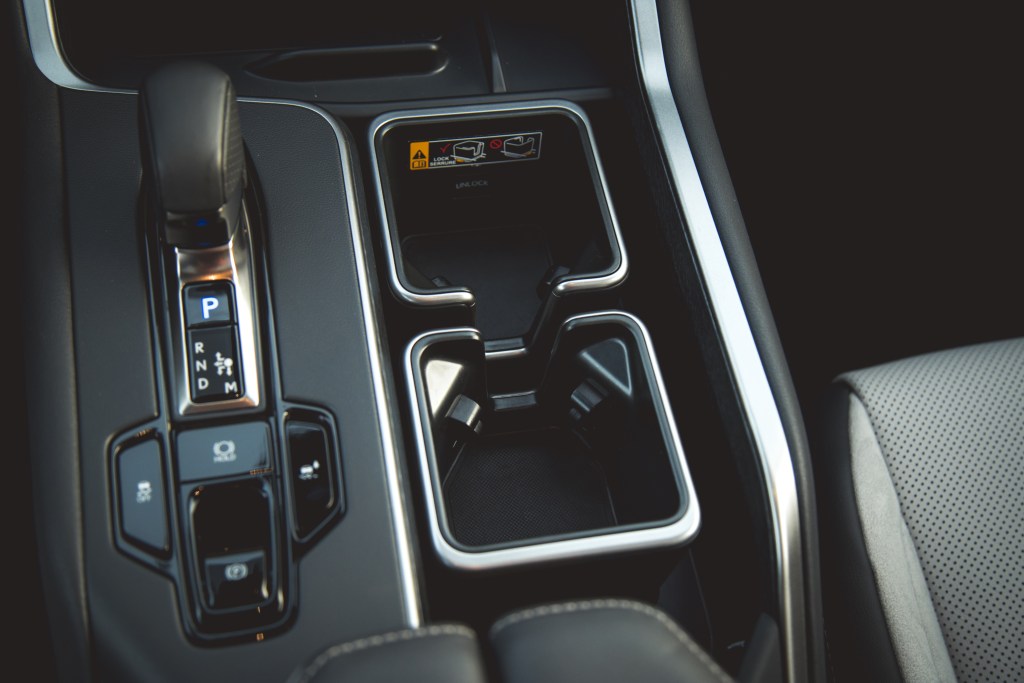
The cabin is a carbon copy of the RX but blown up in proportion. There’s a large touchscreen, a small gear lever lifted off the LC, and an innovative cupholder design that allows them to be detached with ease should you need to store larger items and don’t require individual compartments. After all, organization sparks joy. The same cupholder system is found between the second row of seats. They work incredibly well, and we prefer them to the detachable holders in the Mercedes GLC.

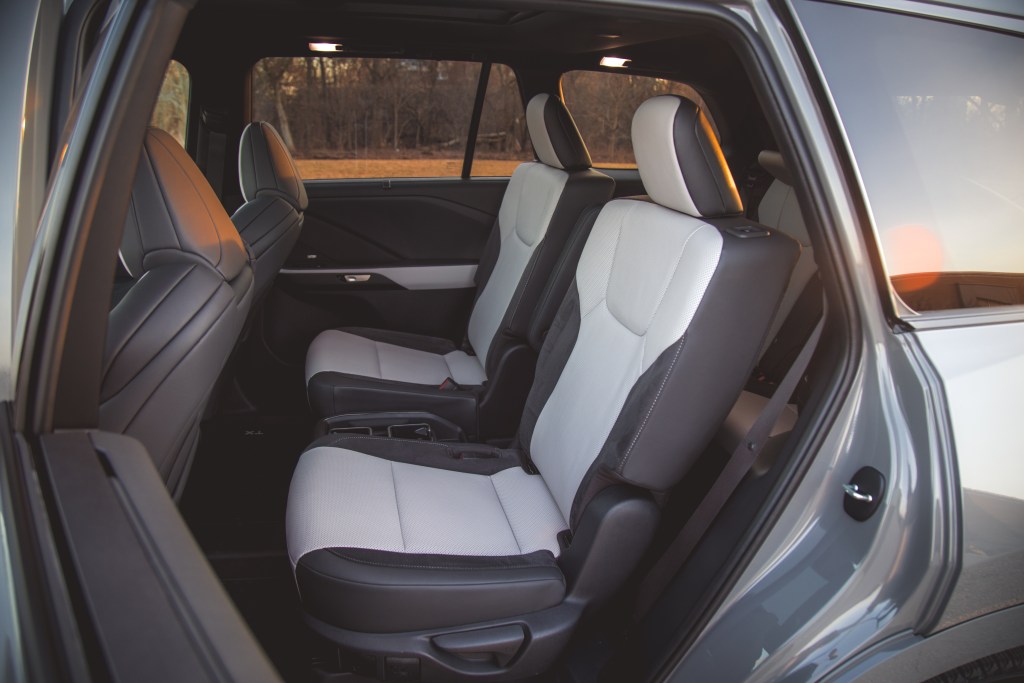
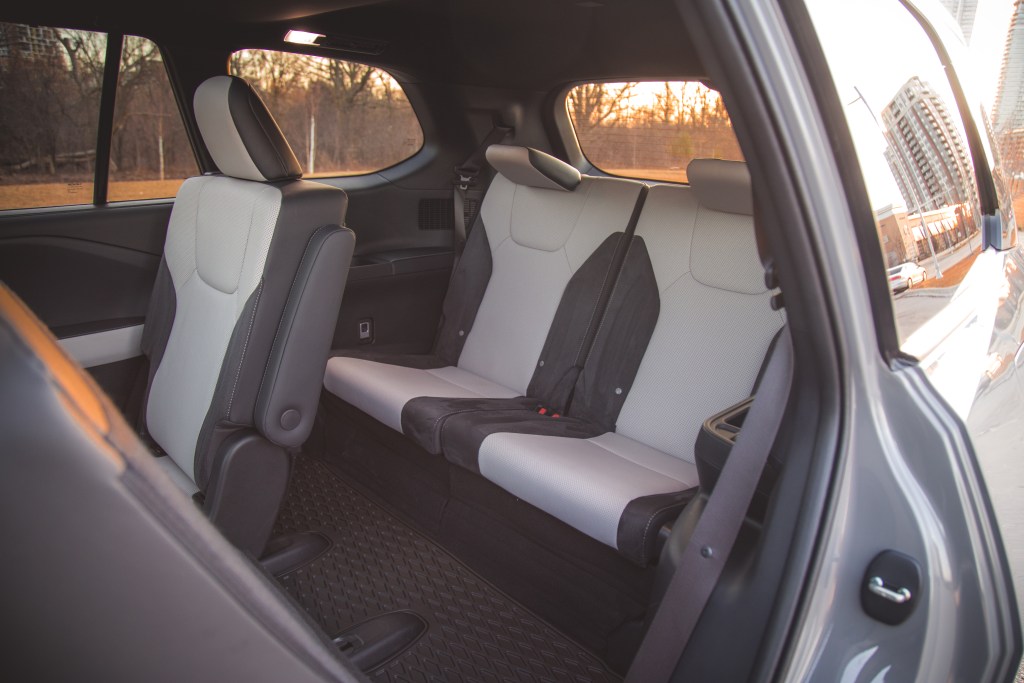
Access to the third row of seats is made easy with a button on the second-row seat shoulder that throws it forward on its rails. The resulting entry portal is a decent size and once situated, we discovered generous space for my six-foot figure. Headroom and legroom are excellent but our favourite feature was the electronic recline button, which allows for a more relaxed seating position, a rarity in this segment. Of course, this does limit the usable trunk space. Otherwise, the individual USB-C plugs are much appreciated, but we would have liked seat heating back here as well.
The center touchscreen is massive and somewhat easy to navigate. There’s a bit of a learning curve and the small button prompts don’t help, but it’s a large improvement over the last-generation Lexus interfaces that utilized the frustrating trackpad. TX models with the head-up display equipped get a slightly different steering wheel button layout. The pads on the left and right respond to haptic touch and will sense your fingers hovering over them without being pressed. Annoyingly, there’s a delay between touch and the button registering it. So if you quickly use your finger and press the pad, it won’t register anything. You must first touch it, let the head-up display acknowledge the touch, and then click the button. This becomes frustrating when you want to quickly change a song or flip the driver’s gauge display. On the bright side, the trackpad offers multiple uses, including adjusting the cabin temperature. So, if you’re lazy like us and prefer to stay seated, this can be quite helpful.

Currently, there are two TX powertrains on offer. The TX 350 is equipped with a 2.4-litre four-cylinder turbocharged engine with an 8-speed automatic and all-wheel drive, generating 275 horsepower and 317 lb.-ft. of torque. This is the same engine unit used in the NX 350 and RX 350. The TX 500h on the other hand, which is the model we tested, utilizes the same engine but pairs it with a 64 kW electric motor for a total output of 366 hp and 406 lb-ft. of torque. This hybrid TX also utilizes a six-speed automatic and AWD. Notably, a TX 550h+ is coming soon, which will be a plug-in hybrid V6 with 404 hp.

The TX 500h provides excellent forward thrust for its size and we never found it underpowered or underwhelming, even when demanding acceleration at triple-digit speeds. The six-speed gearbox can hang onto revs for too long and be hesitant to shift at times, making it rather noisy under operation, but we only noticed this when the engine wasn’t properly warmed up. We enjoyed the hybrid’s bias towards electric-only driving when cruising at low discreet speeds, and combined with feather-light and conservative throttle application, allowed us to yield an impressive 9.9 L/100km, making it one of the most efficient three-row SUVs on the market. Of note, the TX 500h still requires premium 91-octane fuel.

Furthermore, thanks to an adaptive suspension, the TX 500h rides incredibly well. It’s soft and absorbent, sponging up the majority of bumps on the road, and remains stable at high speeds. Compared to the GX and LX, this TX is like riding on a cloud. The rear wheel steering system, standard on the TX 500h, adds an extra layer of maneuverability at low speeds, and it now rotates like a slimmed-down RX. Drivers making the upgrade from an RX but are feeling daunted by the size of the TX will have nothing to fear.

The only sore spot we discovered about the TX was the weak brakes. You have to stand on the brake pedal to get a decent initial bite. They’re not springy like in other electric or hybrid SUVs like the Mercedes-Benz EQS SUV and are positively linear by comparison, but they don’t feel adequate for this large SUV, and subsequently snap a bit of confidence out of the driver.
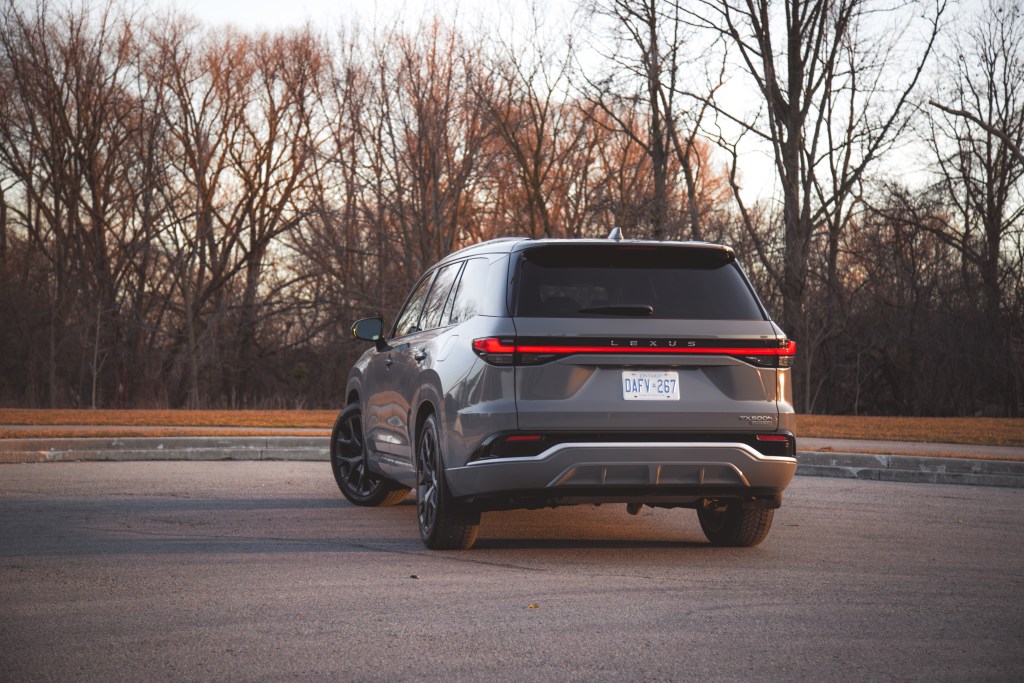
The new Lexus TX fills in a gap that we didn’t notice existed. It’s an easy recommendation for those who desire a premium product with seven-passenger capability, thanks to its remarkable road composure, spacious and reclinable third-row seats, and efficient hybrid powertrain. The brakes need more bite and haptic touch pads on the steering wheel remain a frustration, but these are but minor setbacks on what is quickly becoming one of our favourite three-row SUVs.
Specifications:
Model: 2024 Lexus TX 500h F Sport Performance 3
Paint Type: Incognito
Base Price: $84,200
Price as Tested: $90,200
Wheelbase(mm): 2,950
Length/Width/Height (mm): 5,170 / 1,990 / 1,780
Curb weight (kg): 2,245
Engine: 2.4-litre turbocharged inline-four, 64 kW electric motor
Horsepower: 366 hp
Torque: 406 lb-ft
Transmission: 6-speed automatic
Engine & Drive Configuration: Front engine, 4WD
Observed Fuel Consumption (L/100km): 9.9
Tires: 255/45R22






Leave a Reply