
Some cars seem almost destined for electrification, from the Fiat 500e and Rolls-Royce Spectre to the Range Rover. Battery power suits them naturally: the absence of exploding pistons makes for a quieter drive, the elimination of a bulky powertrain allows for better cabin packaging, and the immediacy of electric torque gives throttle inputs an almost video-game-like response.
The MINI Countryman is another beneficiary of the electric treatment. Freed from the clunky gearboxes and boisterous exhaust notes of its combustion-powered counterparts, this charming British hatchback has traded its colourful uniform for a slick leather jacket and freshly pressed denim. The result is still unmistakably MINI, but with a smoother, silent personality.
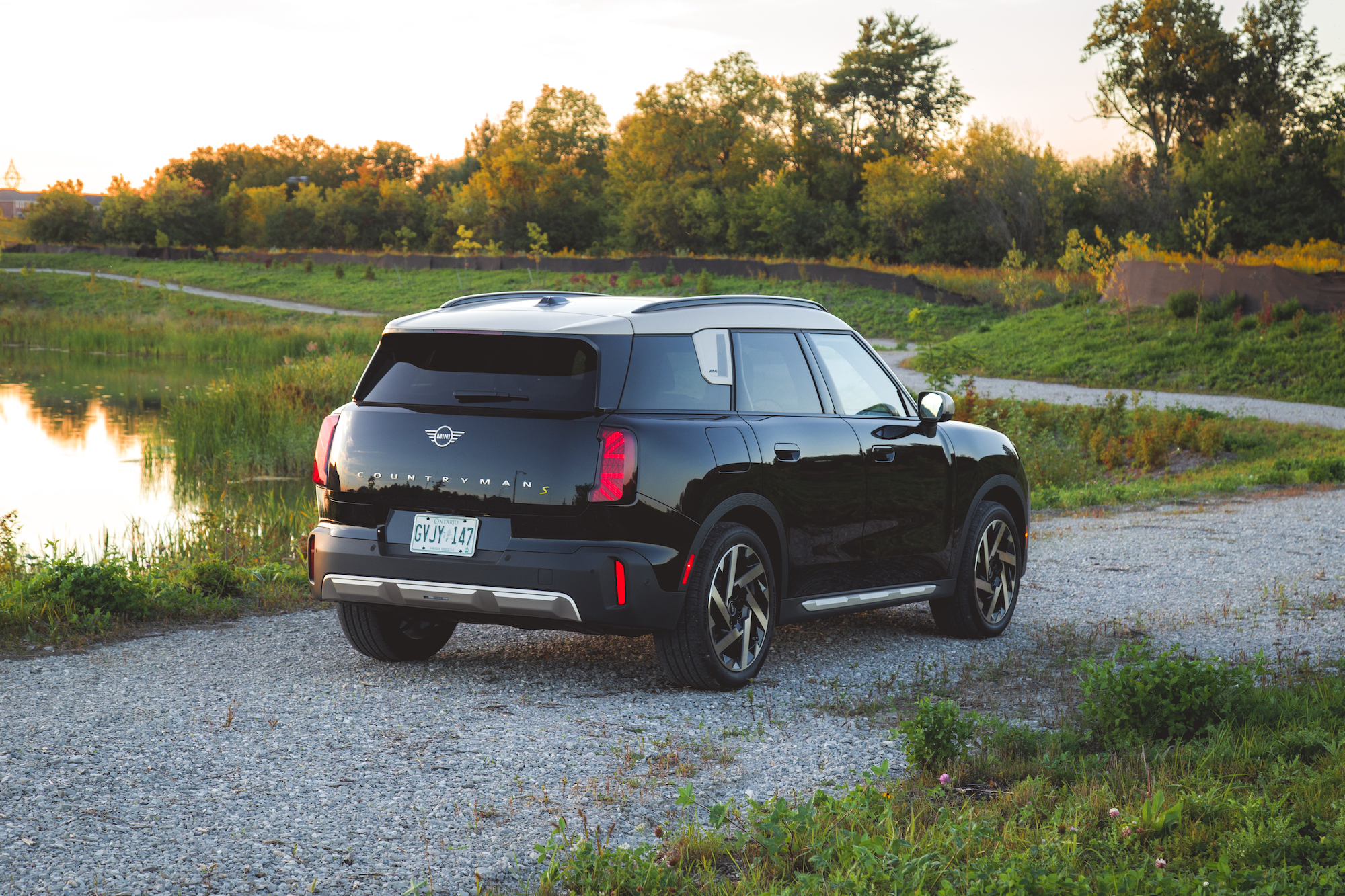
With an MSRP of $59,990, the Countryman SE sits at the top of MINI’s price ladder, edging out even the JCW variant with its sport-tuned suspension and overwhelming advantage of one horsepower (312 hp). The JCW is also just two-tenths quicker from 0 to 100 km/h, at 5.4 seconds versus 5.6 for the SE. But we think the electric model better suits the Countryman’s platform with its more forgiving ride, immediately accessible low-end acceleration, and church-silent cabin that makes this grown-up SUV more pleasant to live with. It also means avoiding MINI’s lousy seven-speed dual-clutch transmission and its hesitant, disjointed shifts at low speeds.
But $60,000 is still a hefty entry fee, and a tough pill to swallow when there’s a BMW i4 sitting just a hair higher at $62,900. The new Mercedes-Benz CLA 350 EV undercuts the MINI at $55,900 while offering both more power and greater range, as does the $51,919 Volvo EX30. It would be foolish not to also consider the Toyota bZ AWD at $53,390 or the Tesla Model 3 AWD at $49,990.
So, does the Countryman SE offer enough to justify its premium price tag? We’re not so sure, especially since there’s only one electric configuration to choose from. The SE pairs a motor on each axle for all-wheel drive with a 64.7 kWh lithium-ion battery, producing 308 hp and 364 lb-ft of torque. MINI estimates 341 km of range, while our own summertime driving came remarkably close, returning 350 km on a full charge.

Despite wearing the dubious distinction of being the heaviest MINI, the SE drives remarkably well, isolating occupants from poor road surfaces while retaining the classic hunkered-down, on-rails behaviour that every MINI should have. Beefy steering and excellent Hankook iON evo AS tires give it impressive grip and on-road confidence, while the driving experience never feels overly artificial despite being governed by lines of code rather than compression ratios, even if the numb, enigmatic steering leaves much to interpretation. Compared with the EX30 and CLA, the Countryman’s swollen dimensions make directional changes slower and lazier, but instantaneous torque and the absence of a fragmented gearbox give it a surprising turn of pace. In fact, it feels quicker than the JCW, but that just might be the spaceship noises.
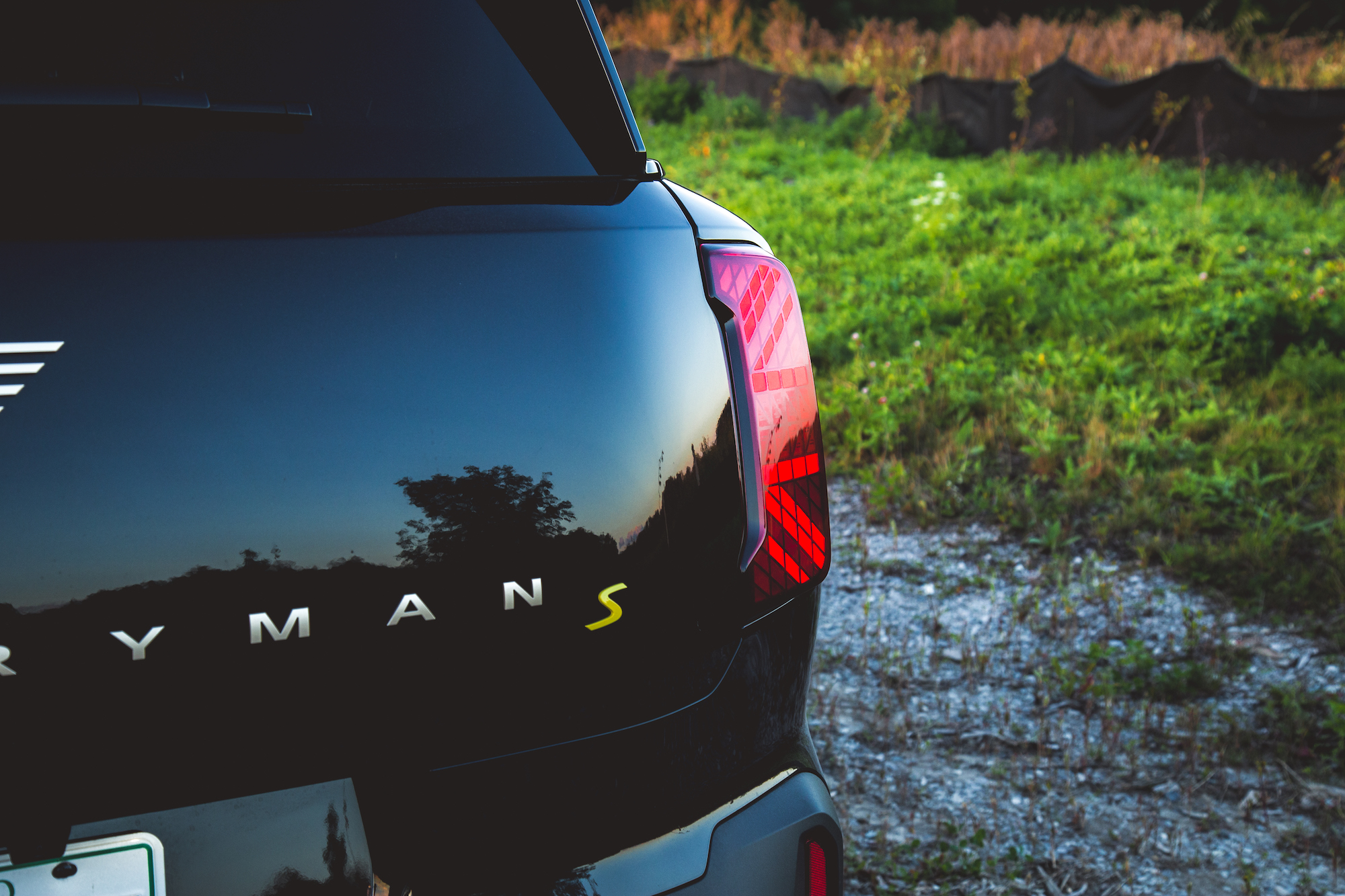
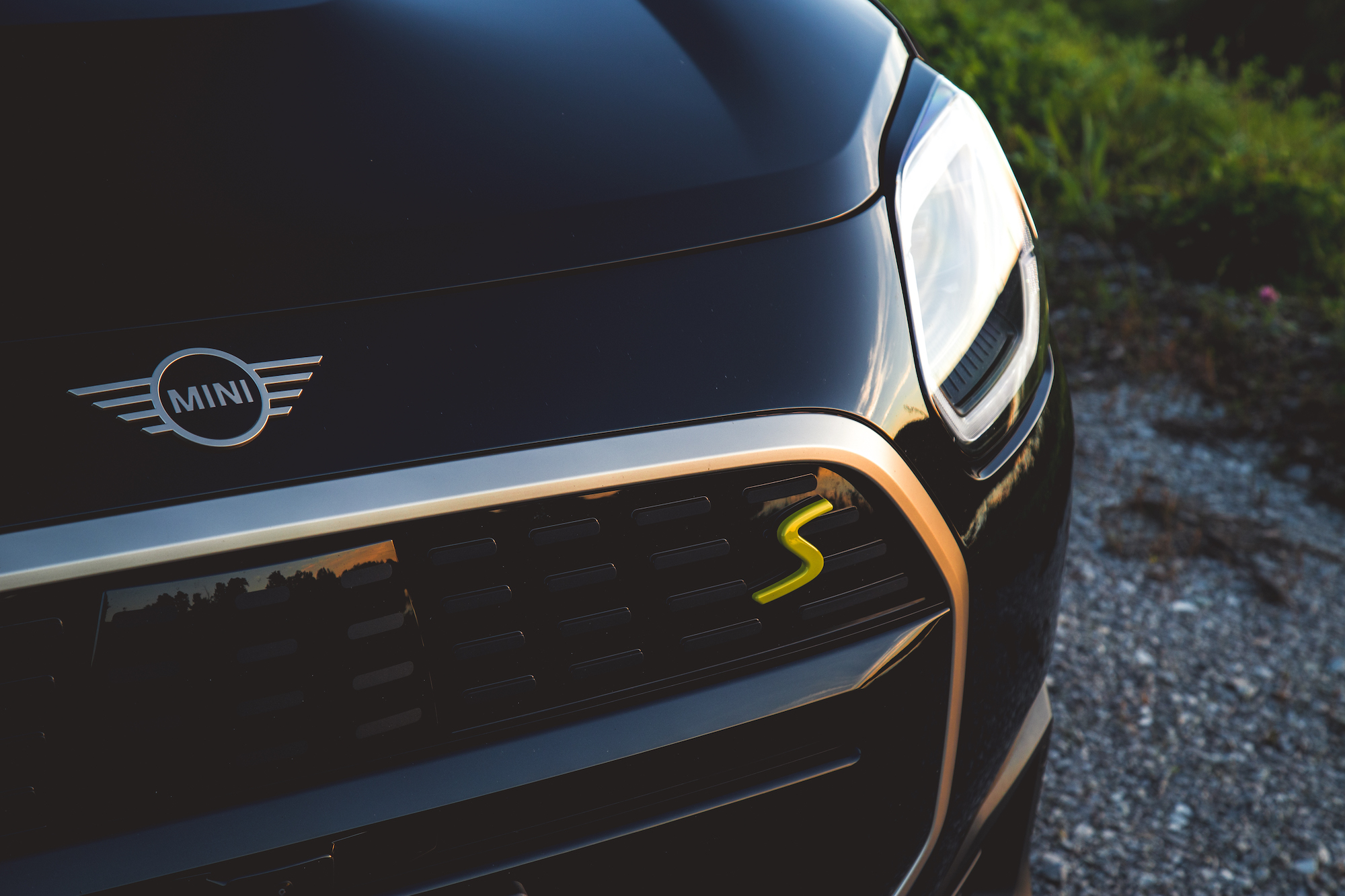
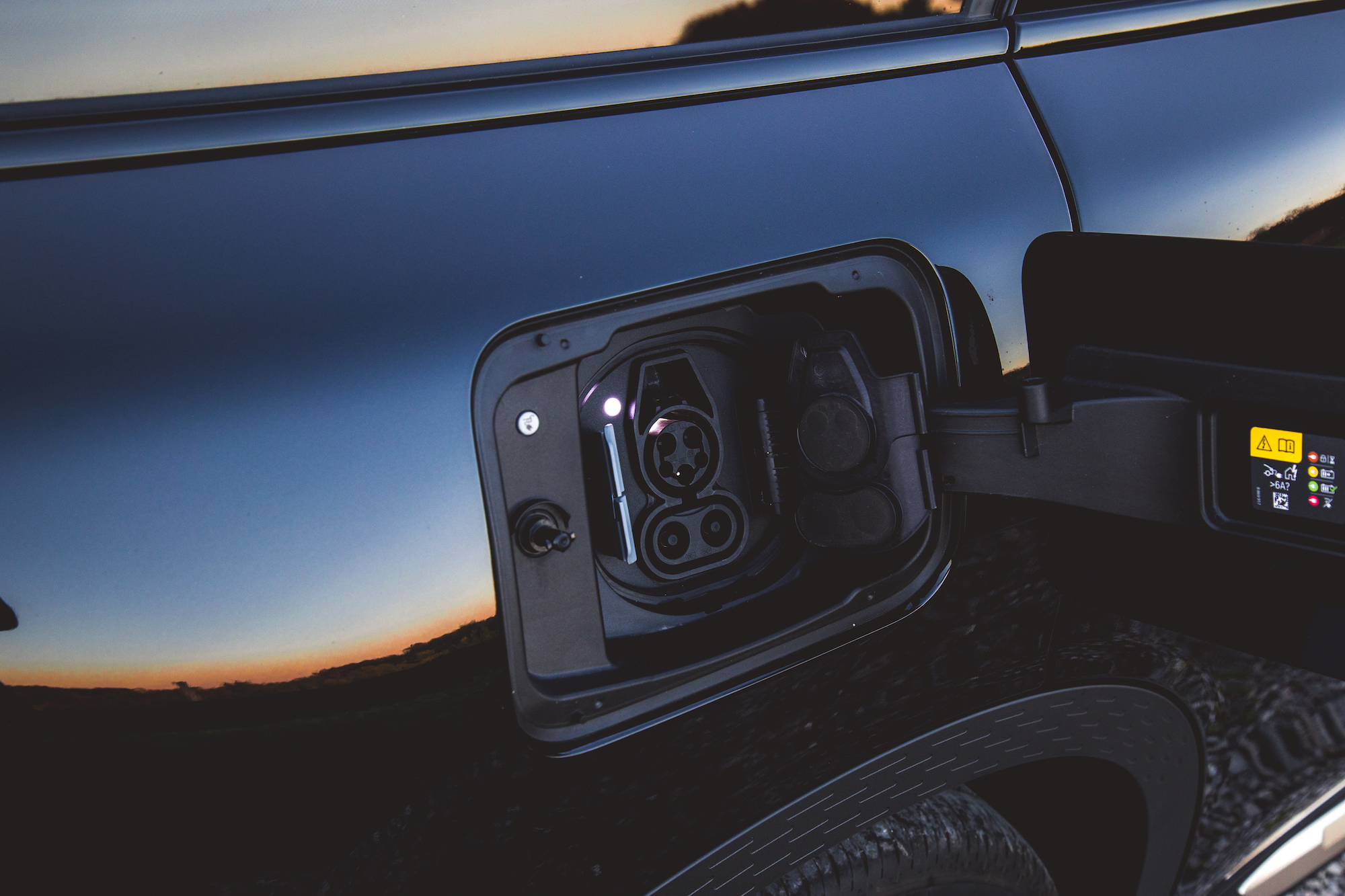
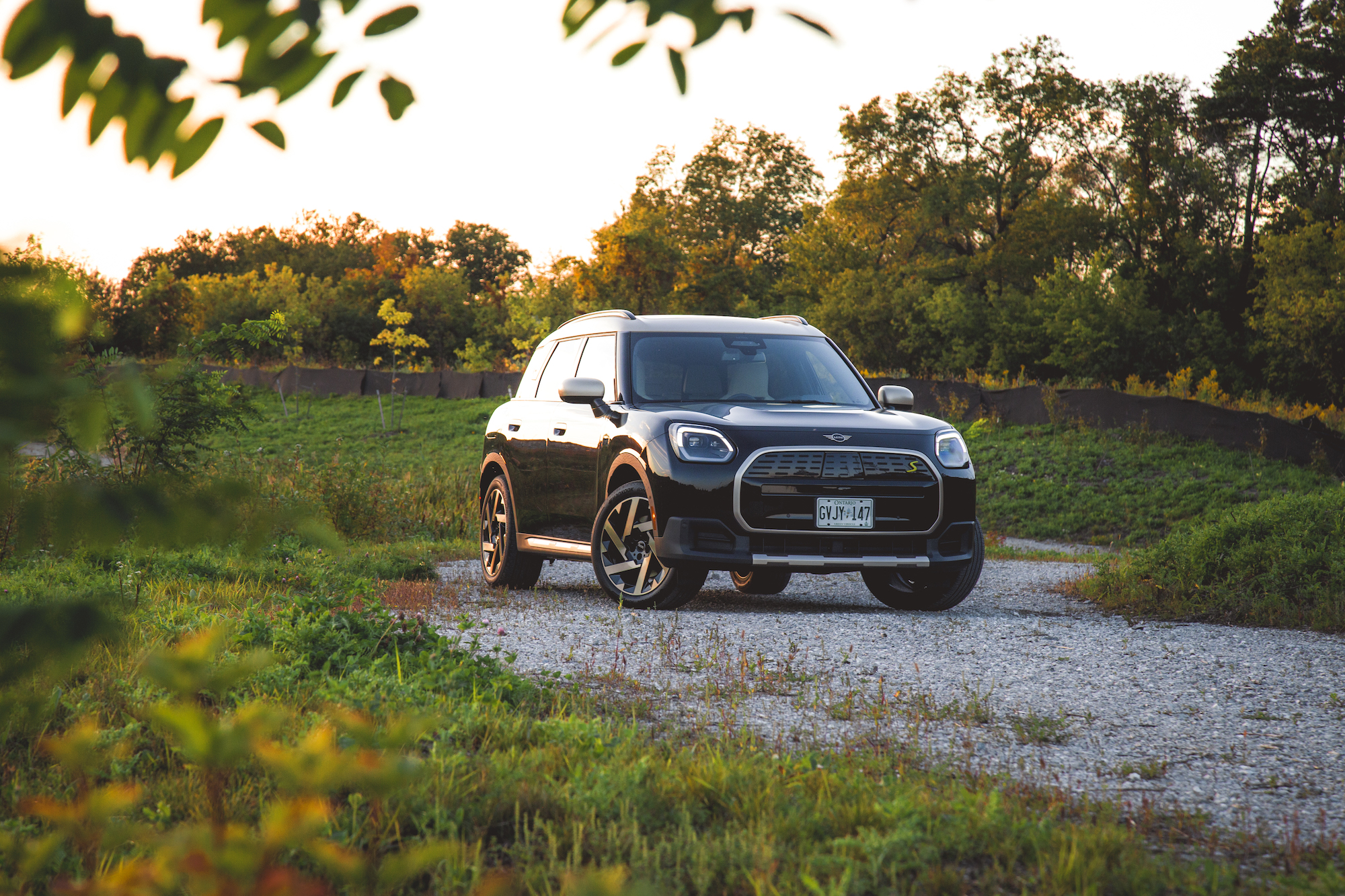
The SE is difficult to distinguish from its gas-powered siblings. Look closely, and you’ll find a sealed-off front grill, a yellow S badge on the trunk lid, and green license plates, while the charging port takes the place of the fuel opening on the passenger-side rear quarter.
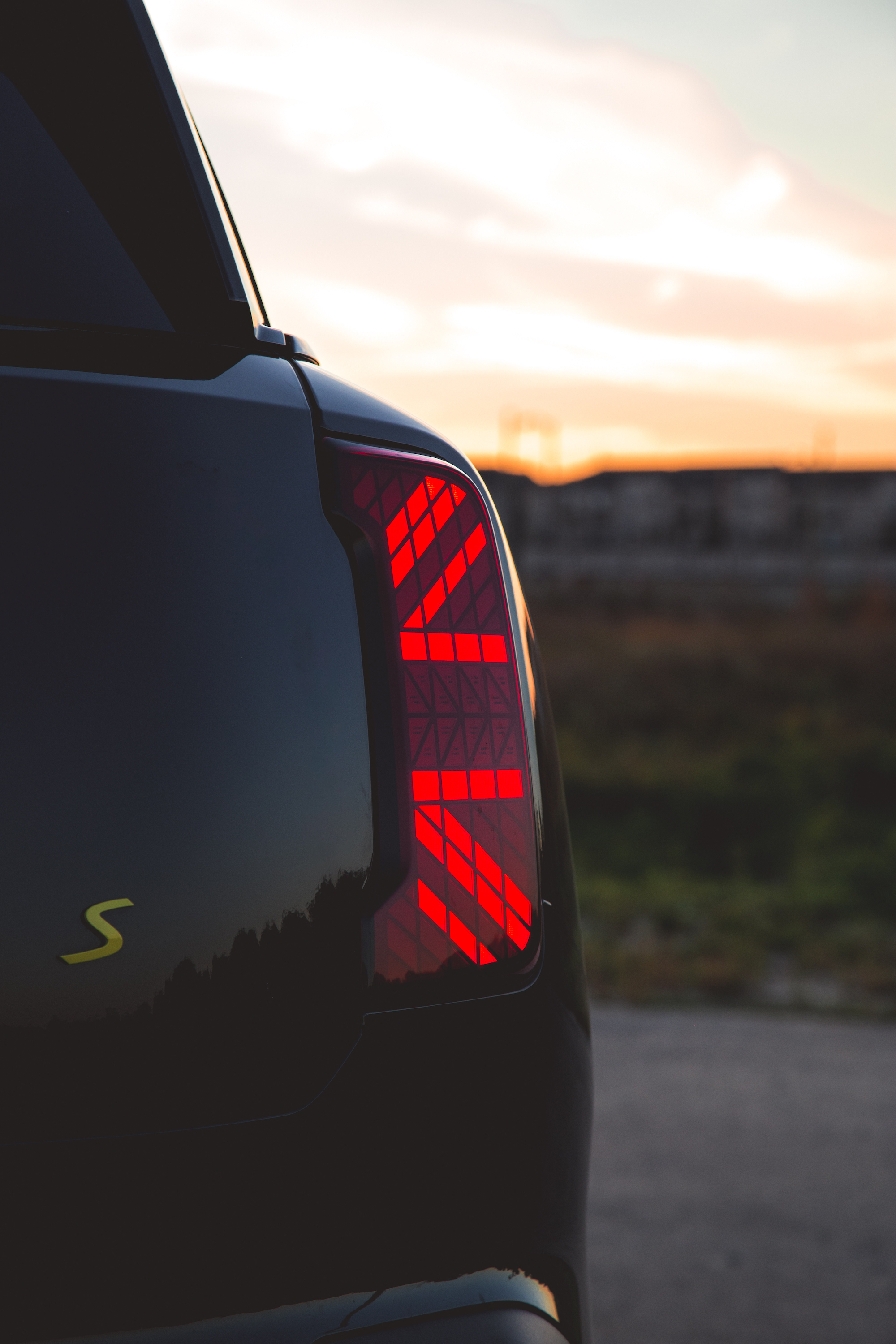
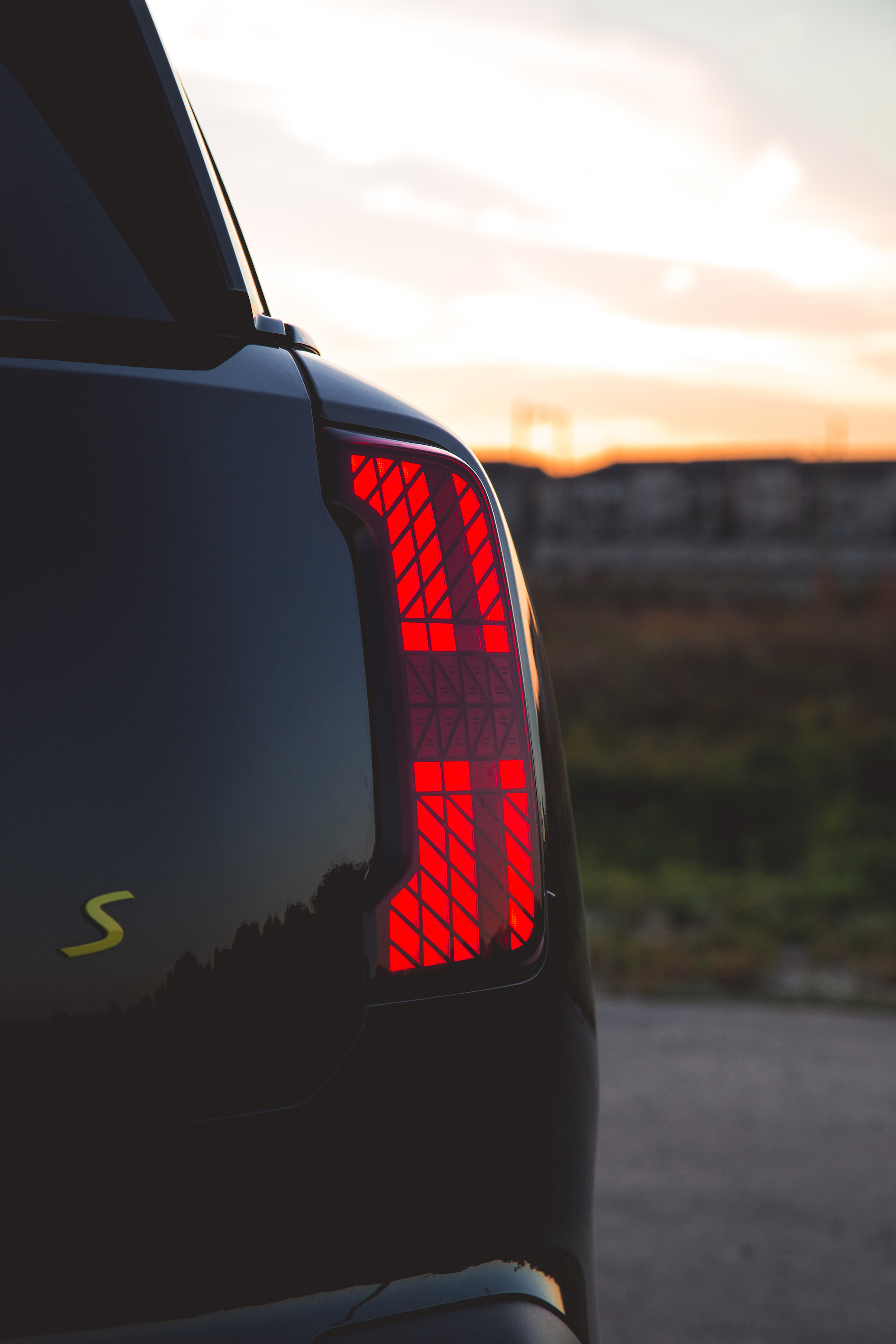
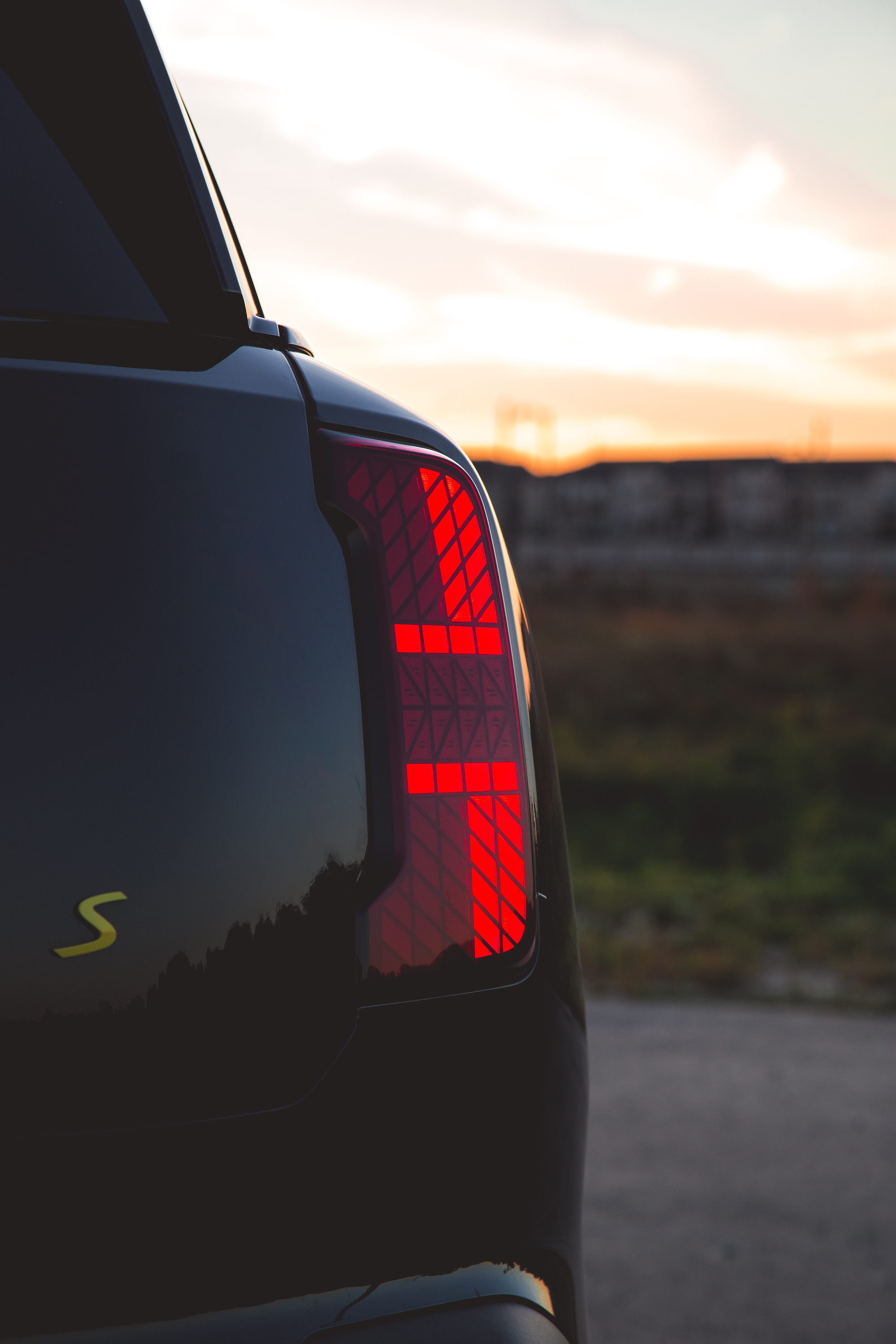
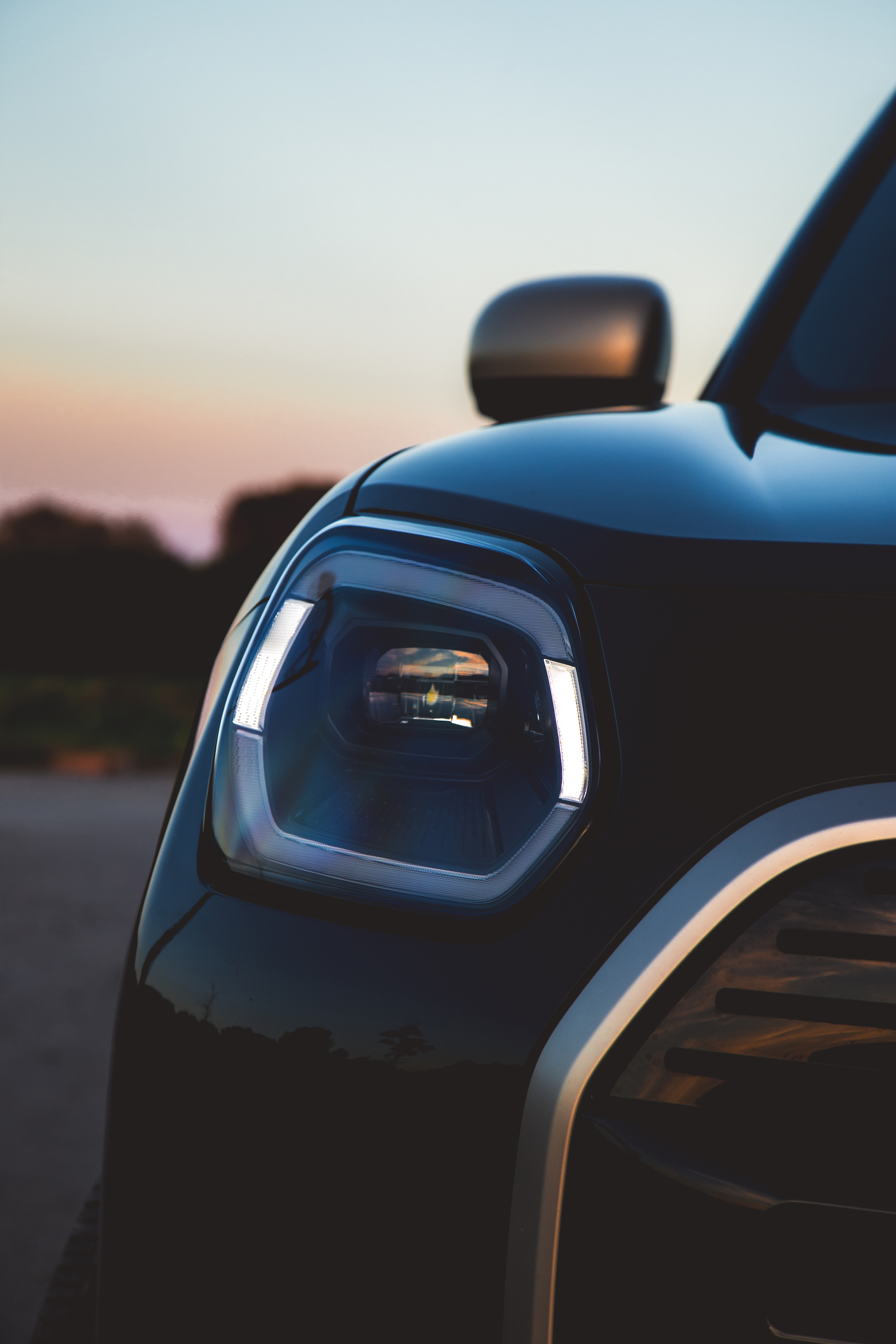
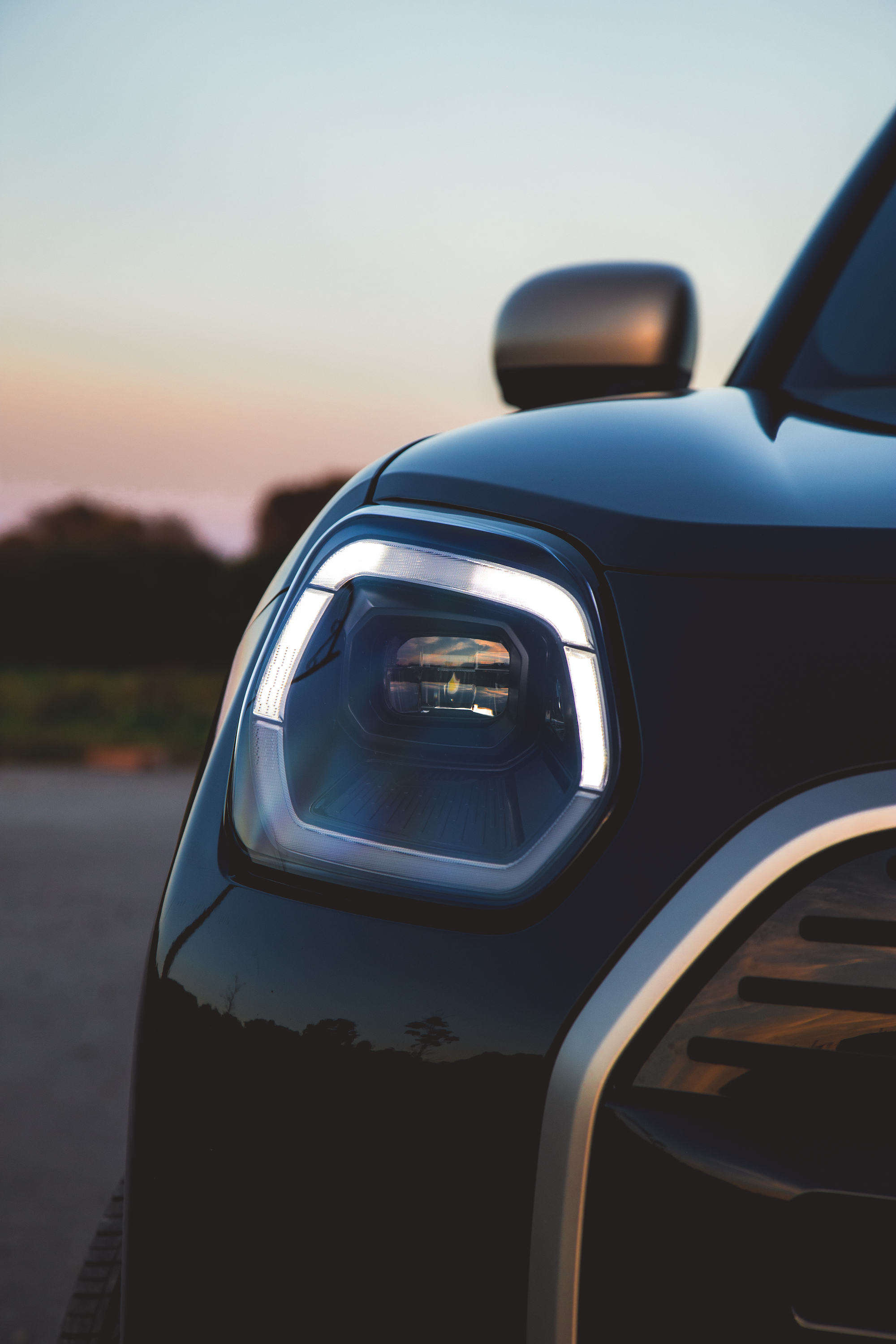
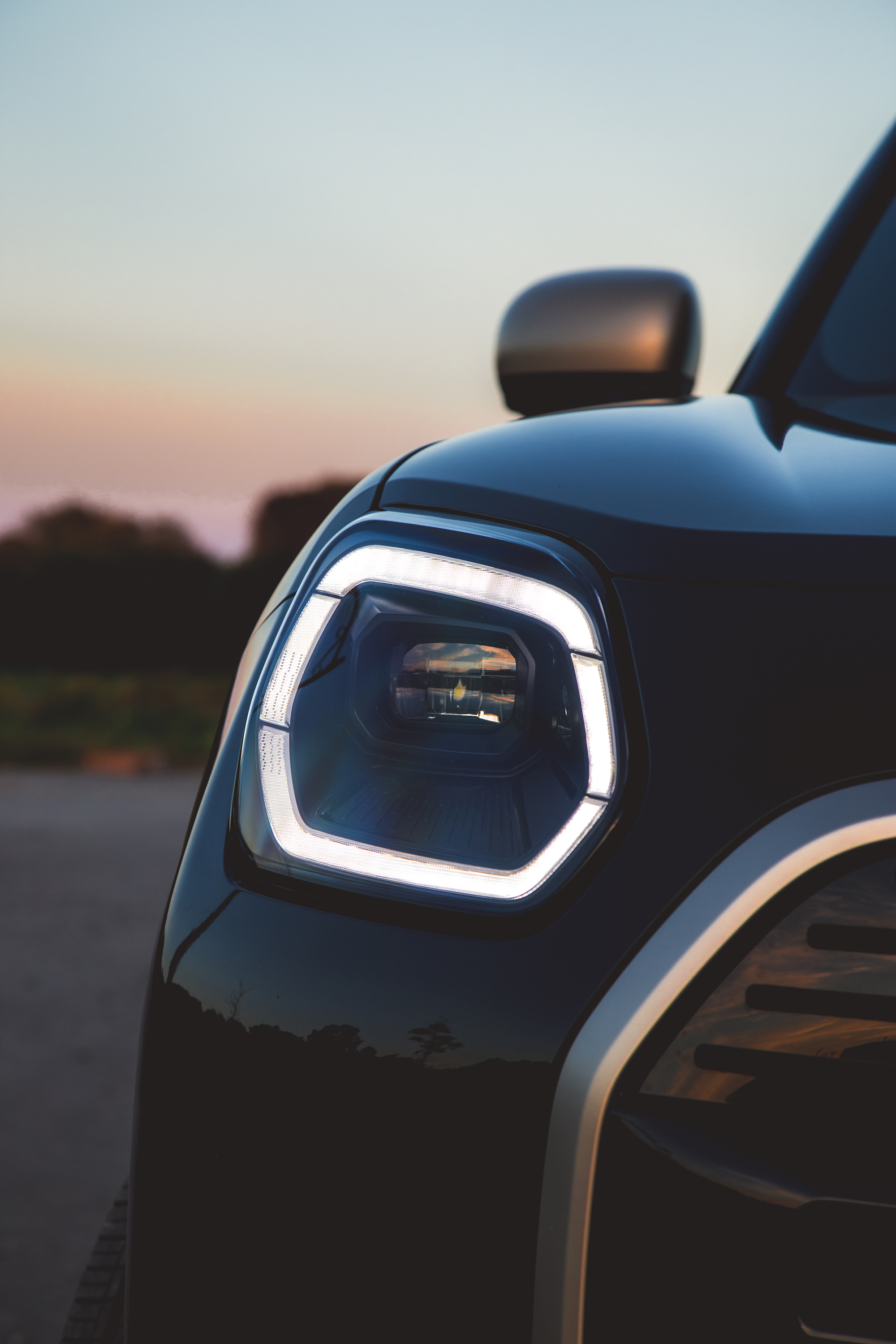
More interestingly, this is our first encounter with MINI’s configurable headlights and taillights, which offer three different designs using the base lighting elements to create distinctive patterns, ranging from the British Union Jack to what looks like a paddle shifter. We haven’t encountered this kind of factory personalization on another car, and it’s a clever way to make the Countryman feel a little more personal without resorting to aftermarket modifications. Between the customizable light signatures, patterned roofs, and coloured side mirrors, no automaker seems to embrace personalization quite like MINI.
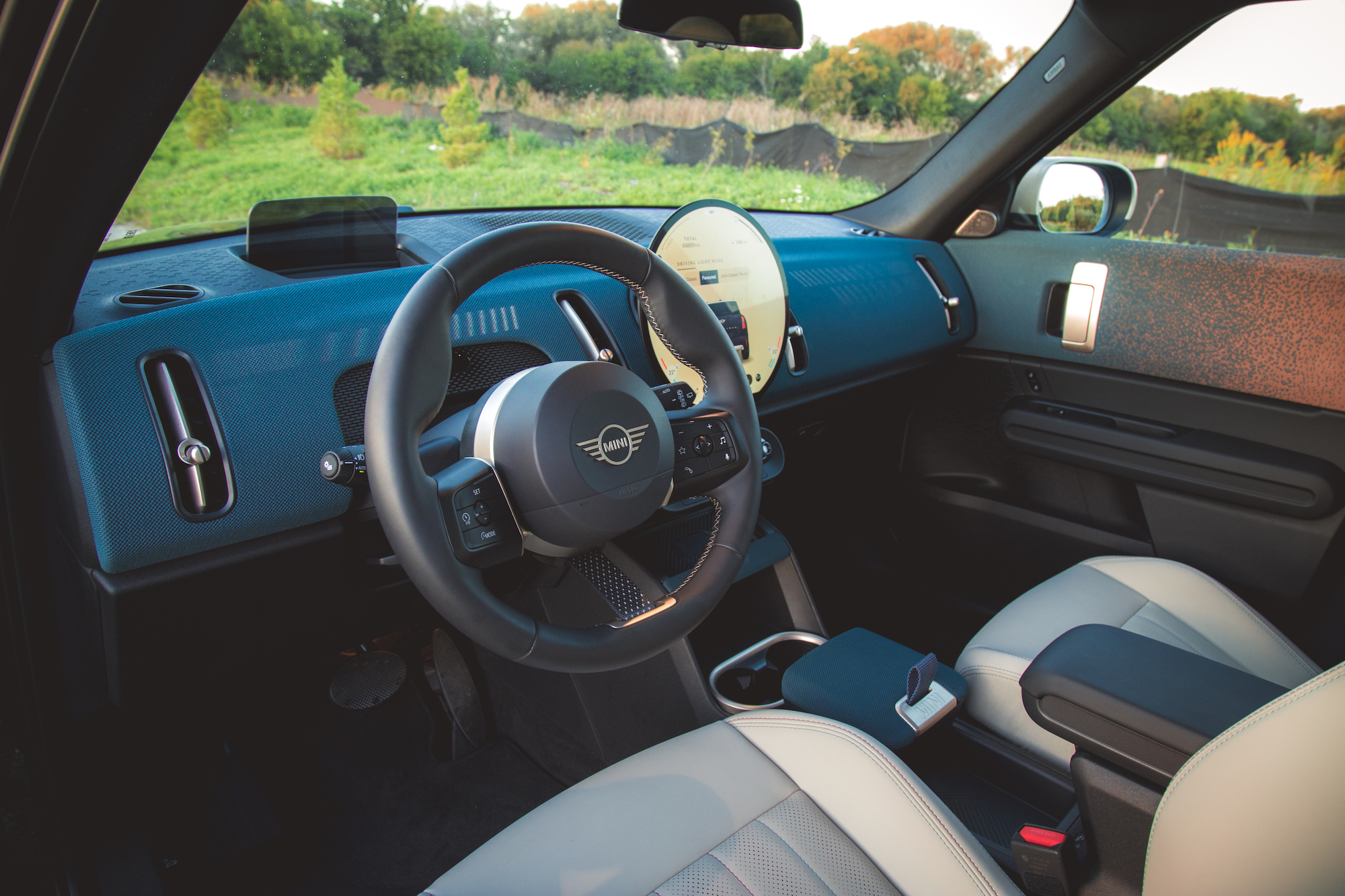
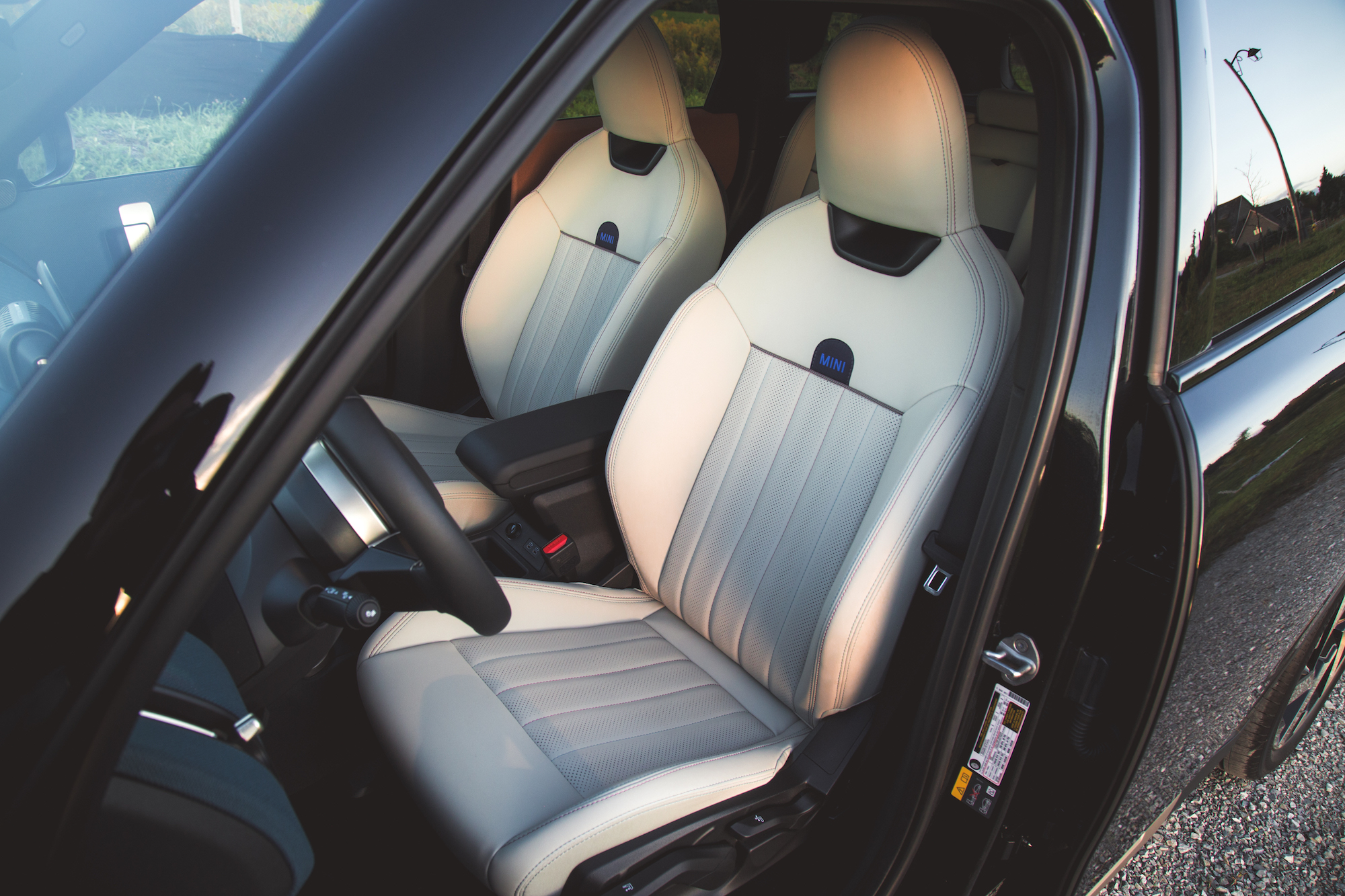
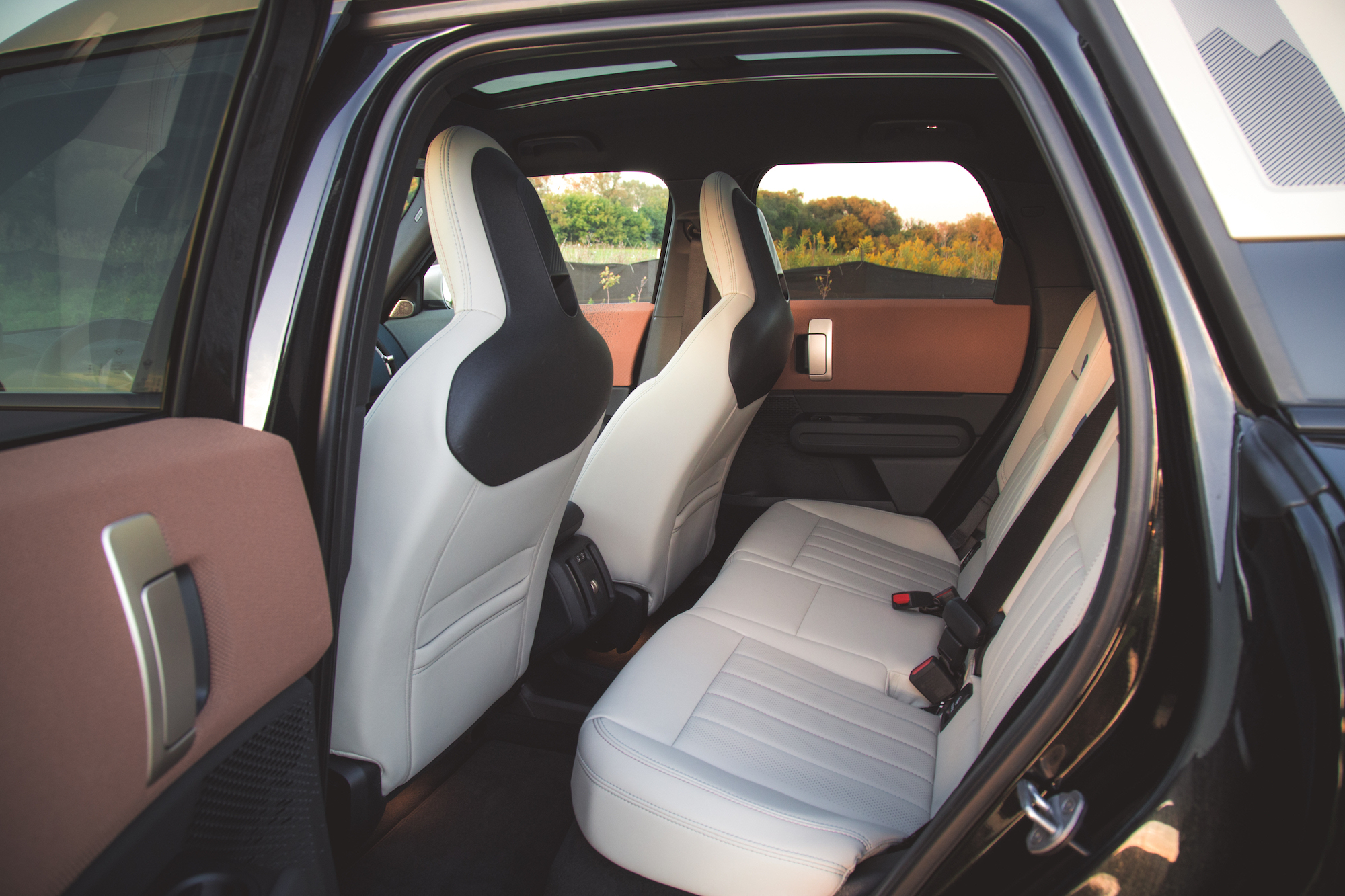
The interior doesn’t bring any electrified flourishes, instead being a copy-and-paste of the standard Countryman cabin. That’s hardly a bad thing, since it remains one of the more pleasant interiors in the segment, but the fact that power-operated, memory front seats cost an extra $1,000 mildly irked us. We actually prefer manually adjustable seats for their quick, no-nonsense movements and appreciate having the choice, but making power adjustment an option feels a little stingy when the SE already commands such an inflated price.
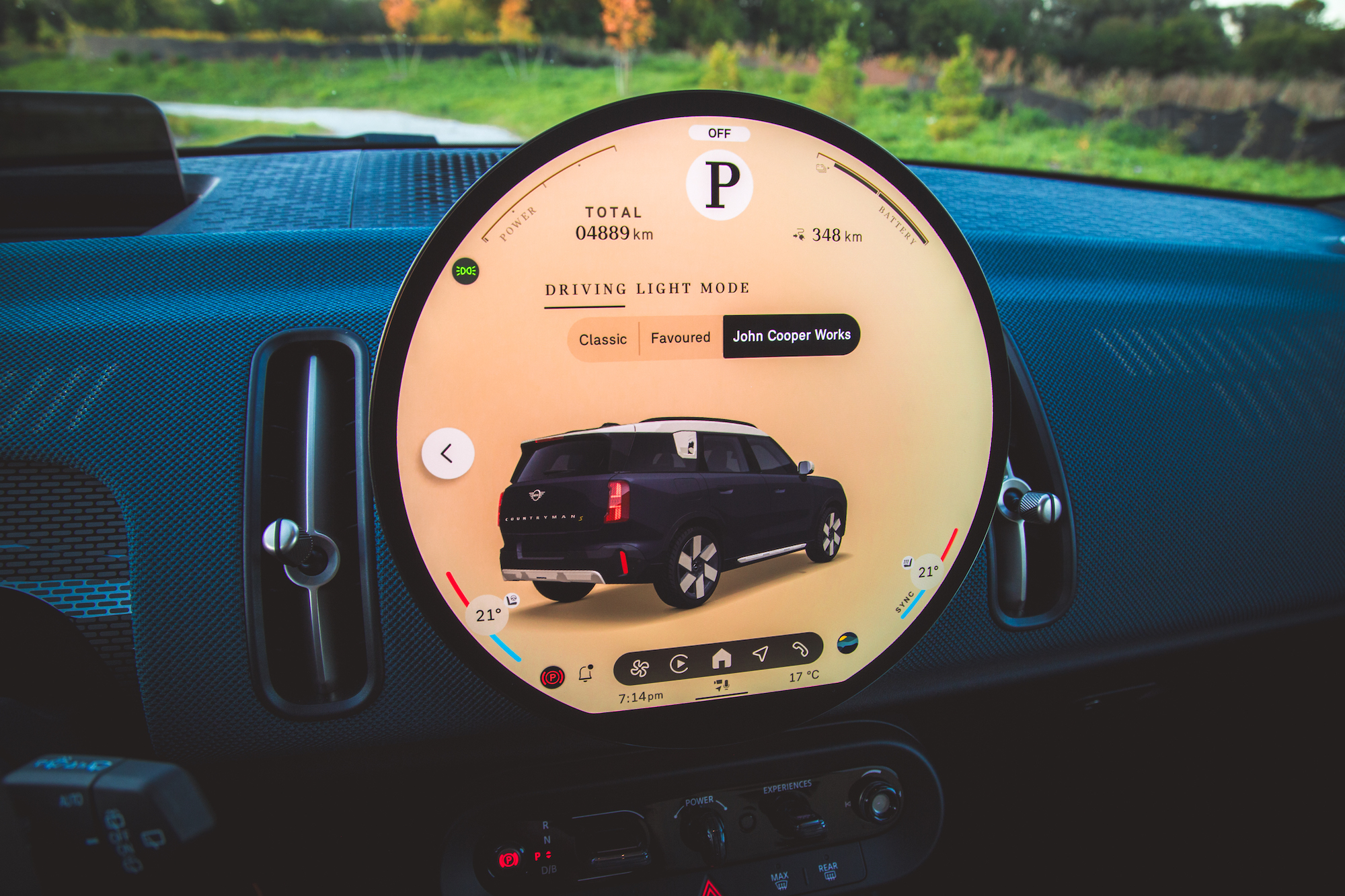
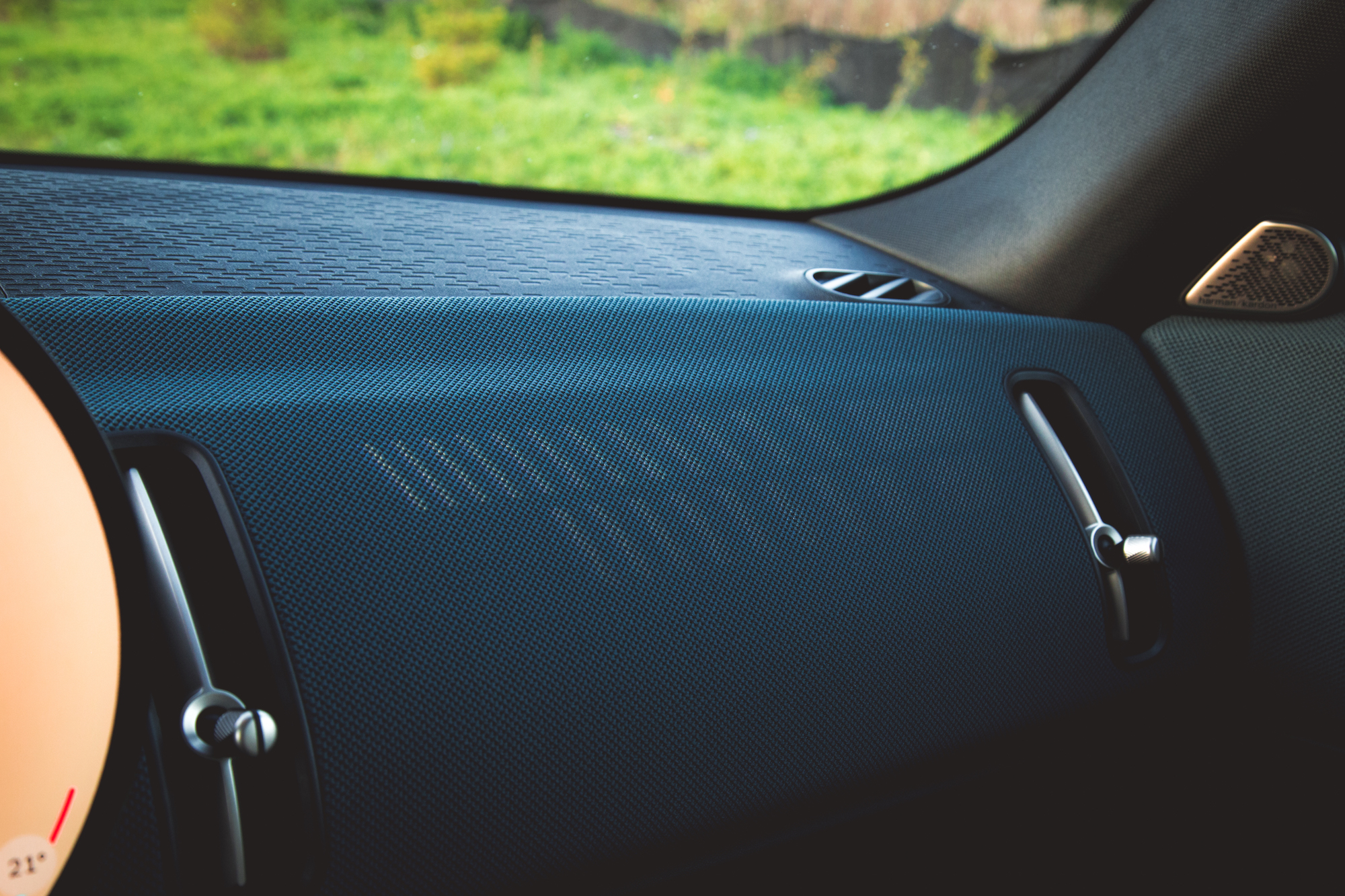
The star of the show is the frameless 9.4-inch centre OLED touchscreen, a modern interpretation of the original MINI Cooper, whose instruments were famously mounted in the middle of the dashboard. Splashes of blue and orange bring colour and personality to the cabin, while the backlit panelling amplifies the sense of space and makes the interior feel particularly inviting. That playful detailing continues onto the steering wheel, from its chunky leather grips to the decorative fabric strap wrapped around the bottom spoke.
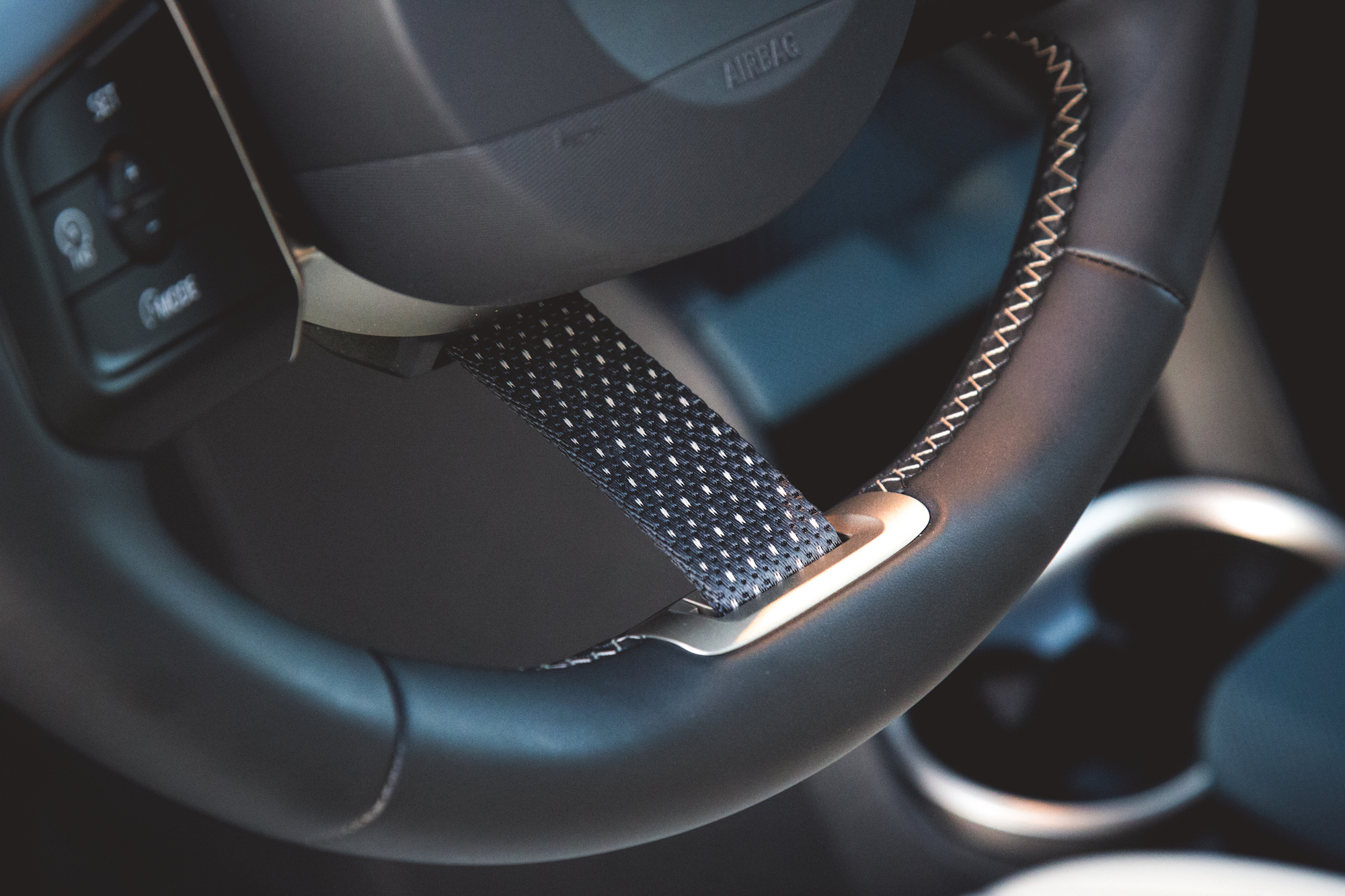
More importantly, the steering wheel gets actual buttons and rotary dials rather than the haptic touch controls favoured by Mercedes and Audi. They have a satisfying, tactile action and are logically laid out, making them easy to operate without taking your eyes off the road. BMW-sourced switchgear is scattered throughout the cabin as well, from the window controls to the flush-mounted door handles, lending a touch of German precision to MINI’s otherwise whimsical interior.
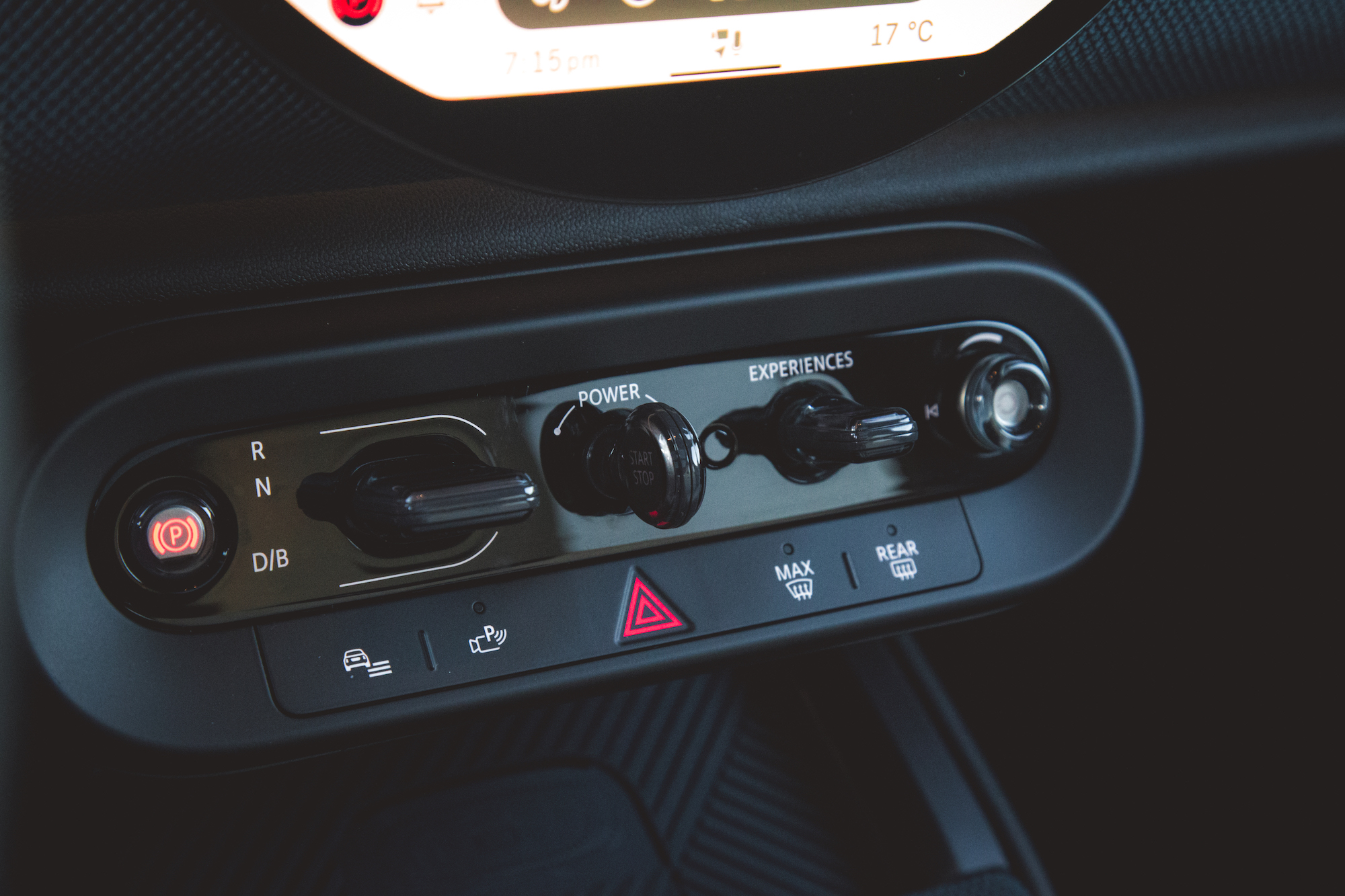
While the previous generation of MINIs borrowed airplane-style toggle switches to make you feel like a pilot, this model takes a different approach with a turn-key switch, reminiscent of Porsche’s ignition controls. It’s a playful throwback to the traditional ignition sequence that adds a little ceremony to starting the Countryman. Even the dashboard joins in, illuminating with different colours and patterns depending on the selected driving mode.
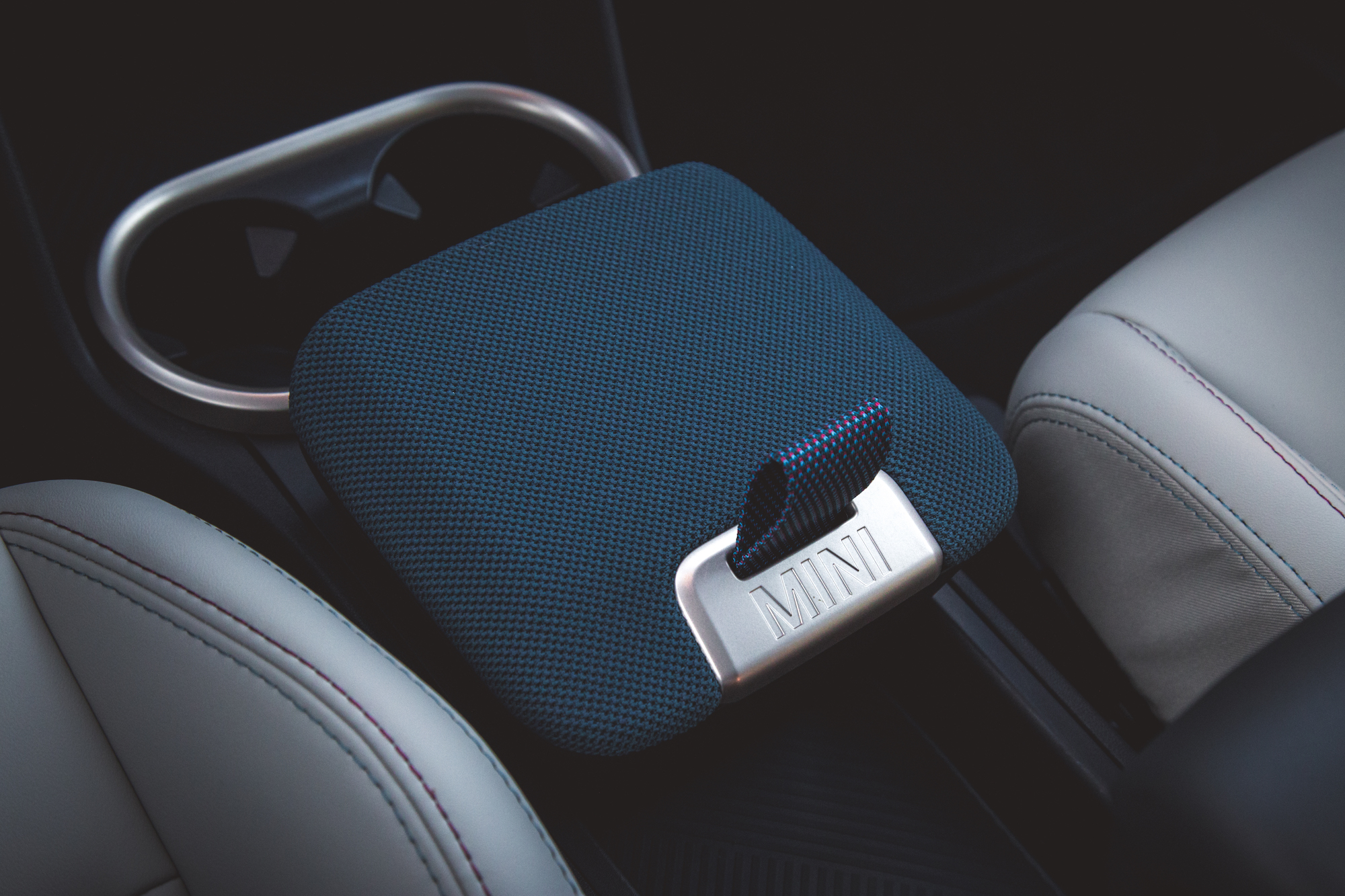
The thoughtful details continue throughout the cabin. There’s a handy cubby beneath the centre console that opens via a pull strap, while the wireless charging pad sits on an elevated dock for easier access. The centre armrest has also been redesigned so it no longer crowds your elbow when reaching for the cupholders. None of these touches are particularly revolutionary on their own, but together they make the cabin feel carefully considered, with each layer serving a clear ergonomic purpose.
The electrified Countryman SE benefits from intrinsic silence, accessible performance, and zero-emission travel, making it a better MINI for all the right reasons. Yet, while the SE is undoubtedly the most well-rounded version of the Countryman, we’re not entirely convinced its range and performance justify the premium price when the smaller Volvo EX30 and Mercedes-Benz CLA 350 EV outperform it in both respects, albeit with less cargo space. Neither can match the MINI’s visual magnetism, wealth of personalization, or ergonomic interior, however. Those are meaningful qualities that give the Countryman an appeal that the spec sheet can’t quantify, making the SE less of a savvy purchase and more of an emotional one.
Specifications:
Model: 2027 MINI Countryman SE ALL4
Paint Type: Midnight Black II Metallic
Base Price: $59,990
Price as Tested: $68,440
Wheelbase(mm): 2,692
Length/Width/Height (mm): 4,445 / 1,844 / 1,640
Curb Weight (kg): 2,081
Powertrain: 64.7 kWh lithium-ion battery, two electric motors
Horsepower: 308 hp
Torque: 364 lb-ft
Transmission: Single-speed
Drive Configuration: Front and rear electric motors, AWD
Observed Range: 350 km
Tires: Hankook iON evo AS; 245/45R19


Leave a Reply