
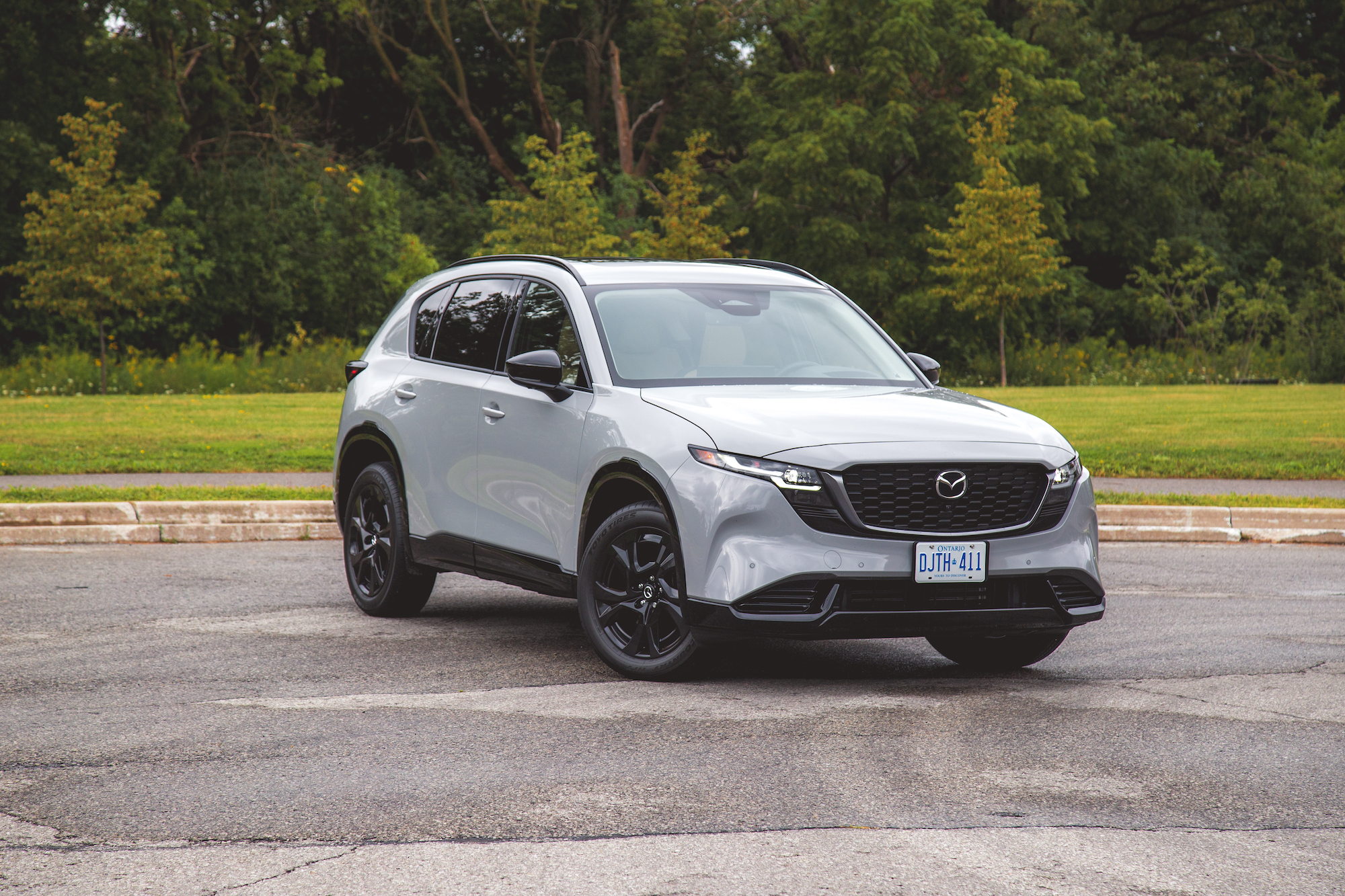
Automakers rarely change their logos without reason. A new colour palette, a simplified shape, or a shift from an emblem to a wordmark can signal a seismic transition into a new corporate era, particularly as brands adapt to an increasingly digital world. Mazda is the latest to make the change, updating its familiar wings-in-oval emblem and a simpler “Mazda” wordmark that is prominently displayed across its new vehicles. The company says the redesign is intended to “improve visual clarity and recognition in digital environments like smartphones and computer displays.” It’s part of a broader industry trend that has already seen the Jaguar leaper disappear and once-proud hood ornaments, such as Mercedes-Benz’s three-pointed star, become increasingly scarce.
Does this shift in brand identity carry through to the third-generation CX-5? Mazda’s five-seat SUV has long played second fiddle to the Honda CR-V and Toyota RAV4, not because it’s half-baked or lacking in substance, but because it’s missing competitive powertrains, electrification, and more functional cargo space. We’re not entirely convinced the new CX-5 completely changes that equation, but it certainly moves the needle in the right direction.
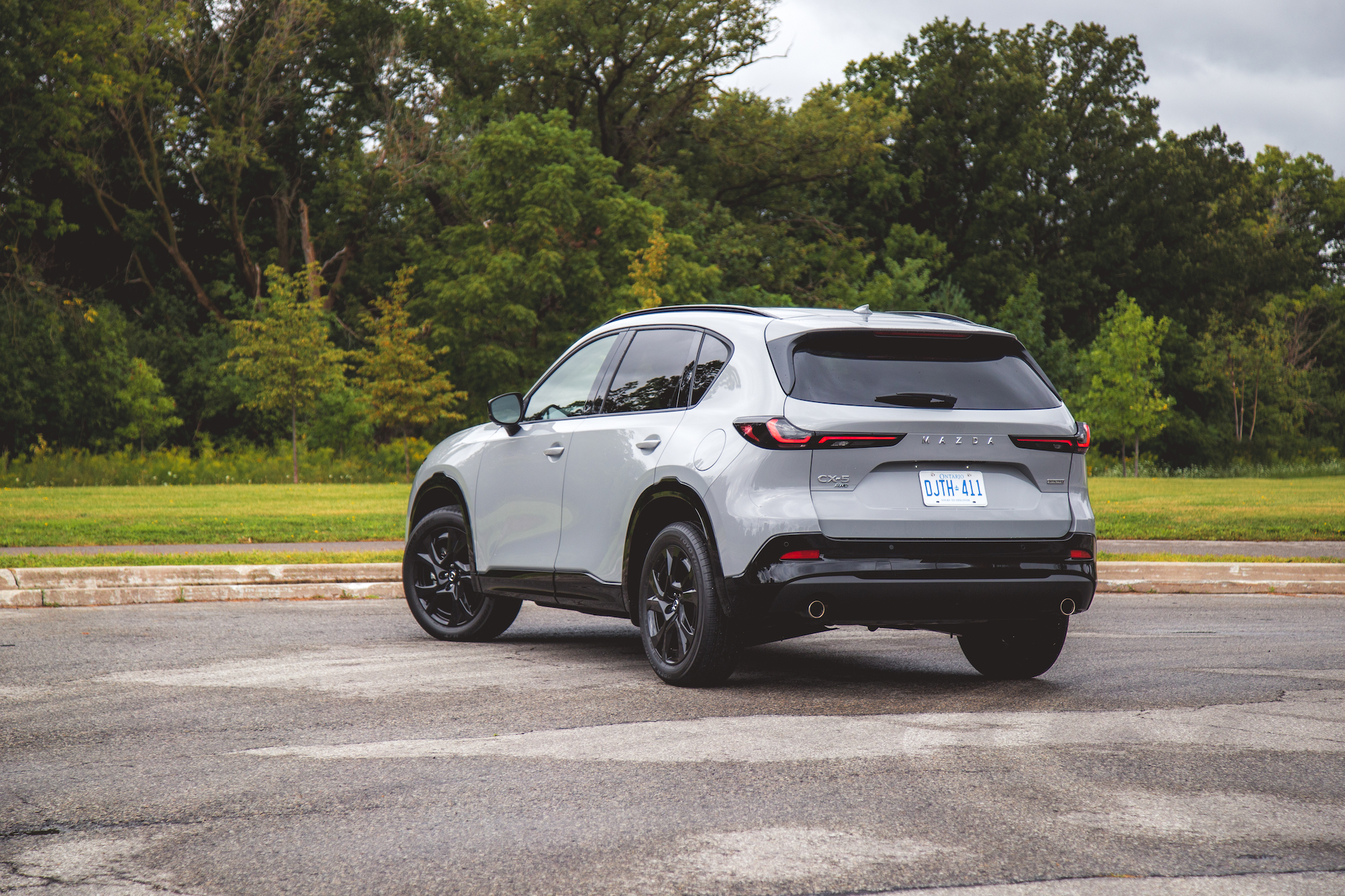
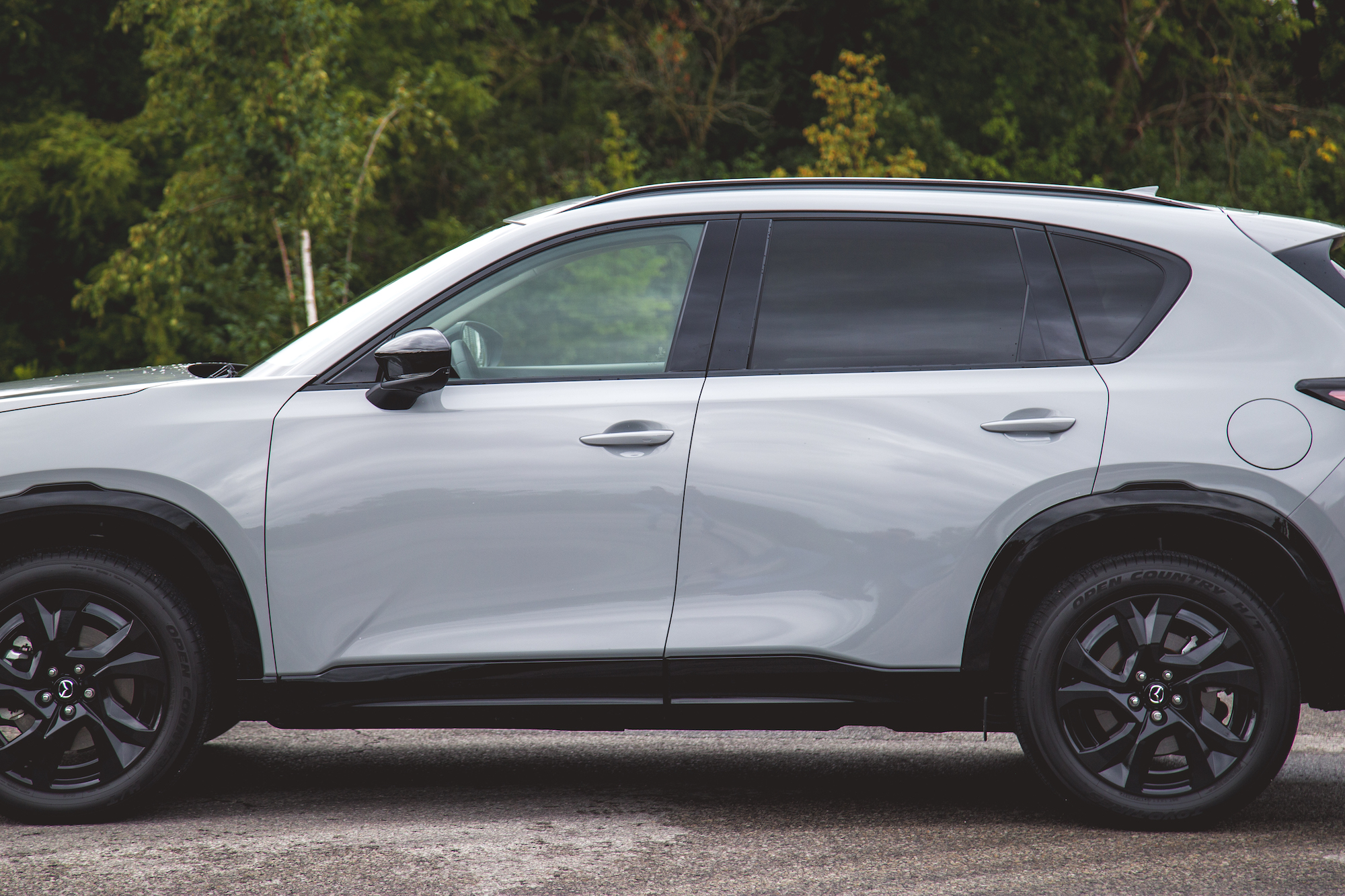
First impressions are promising, especially when you’re greeted by calming hot spring music every time you climb aboard. Longer and wider than its predecessor, the new CX-5 makes better use of its footprint with a roomier cabin, with the biggest gains found in the rear quarters. The rear doors are notably larger than those up front and swing open to a full 90 degrees, creating an enormous entry portal much like the Lucid Air’s. It makes sliding in and out remarkably easy, and is beneficial if you’re regularly ferrying passengers, accommodating elderly occupants, or using your CX-5 as a ride-hailing chariot.
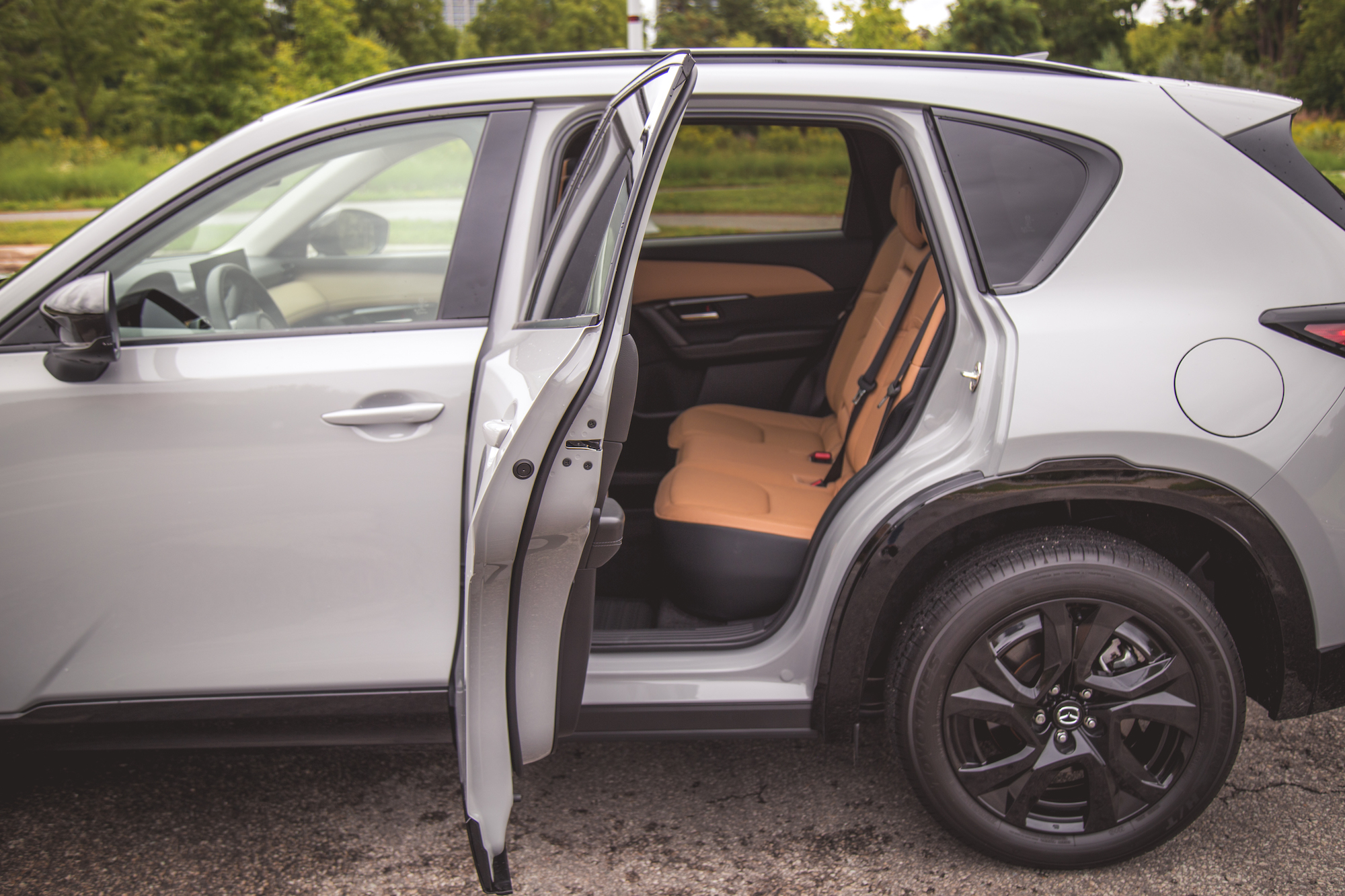
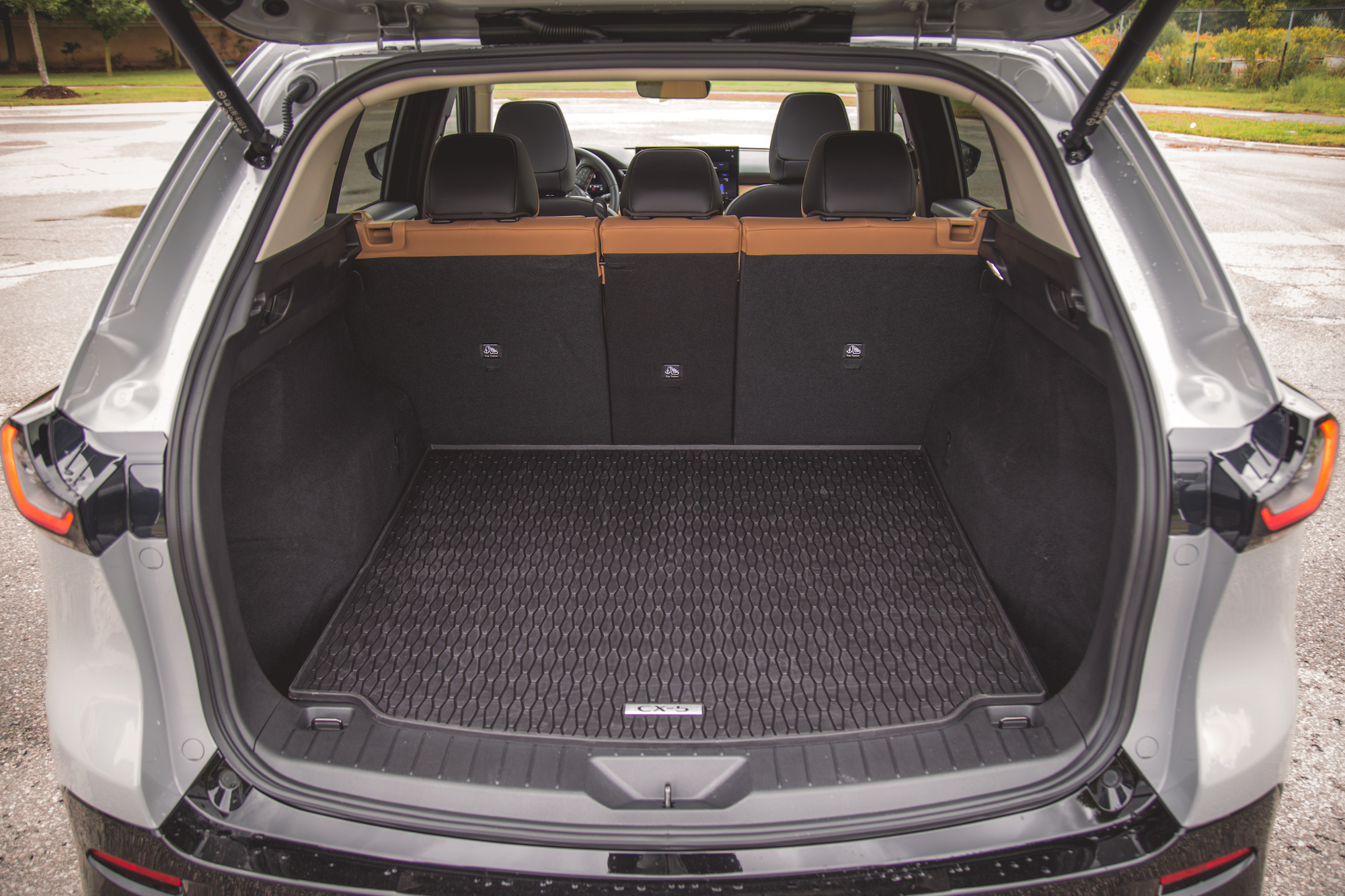
Rear cabin space is generous too, but you do sit fairly low and upright. Cargo capacity has also increased, giving Mazda a stronger foothold in the segment. And with the CX-50 now absent from the Canadian market due to tariffs, the CX-5 finds itself as Mazda’s sole contender in this increasingly popular middle ground of SUVs.
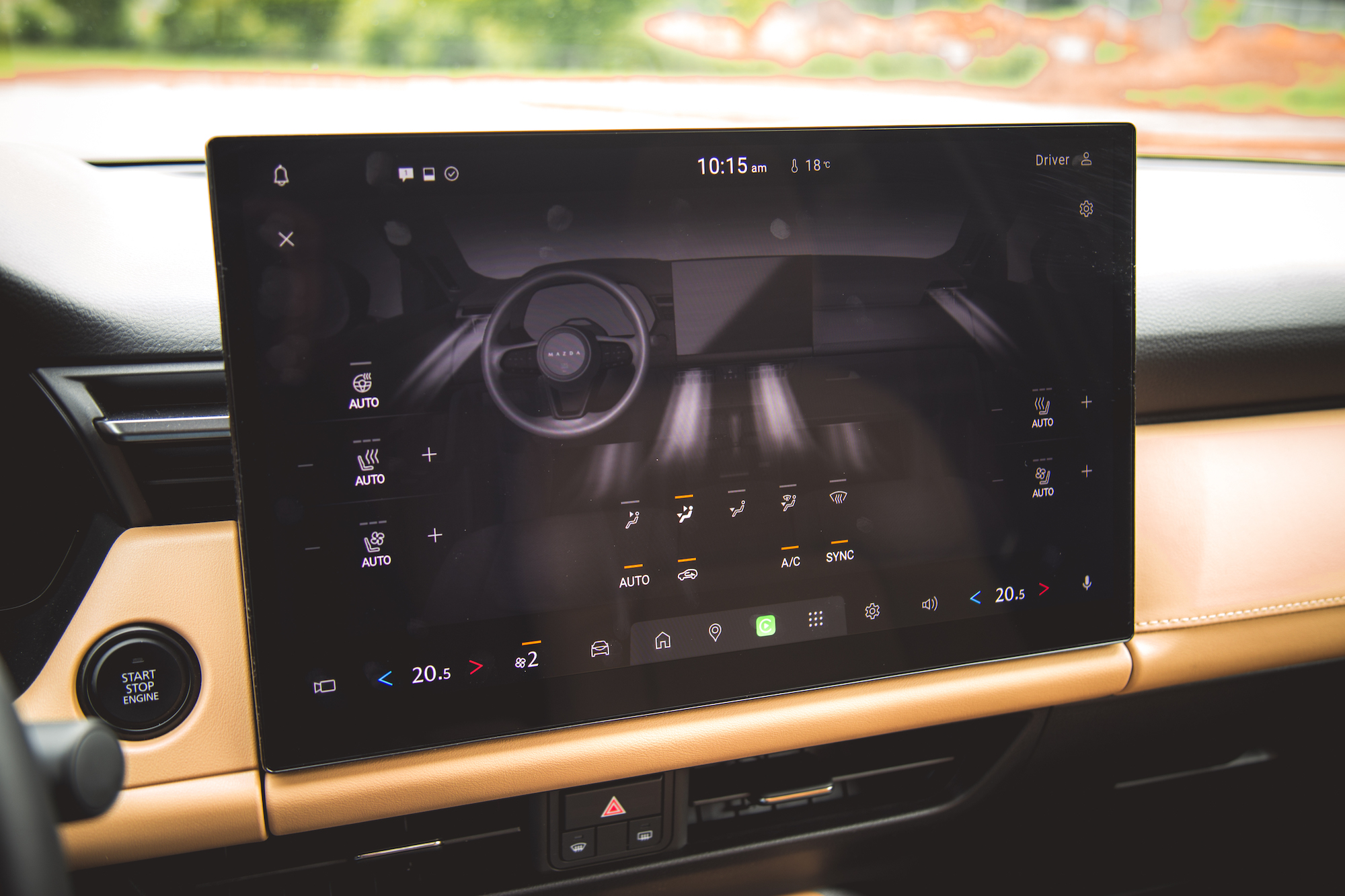
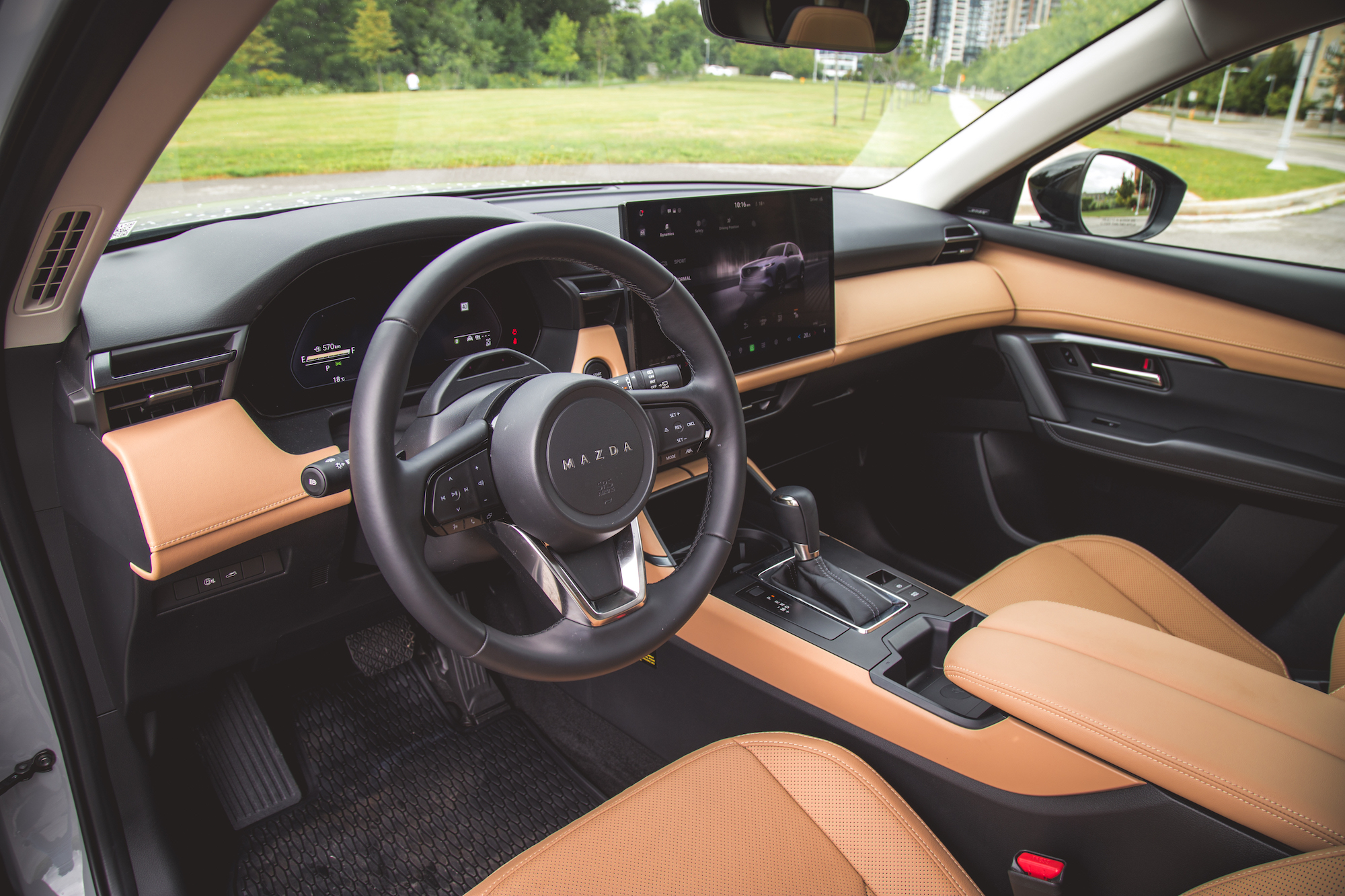
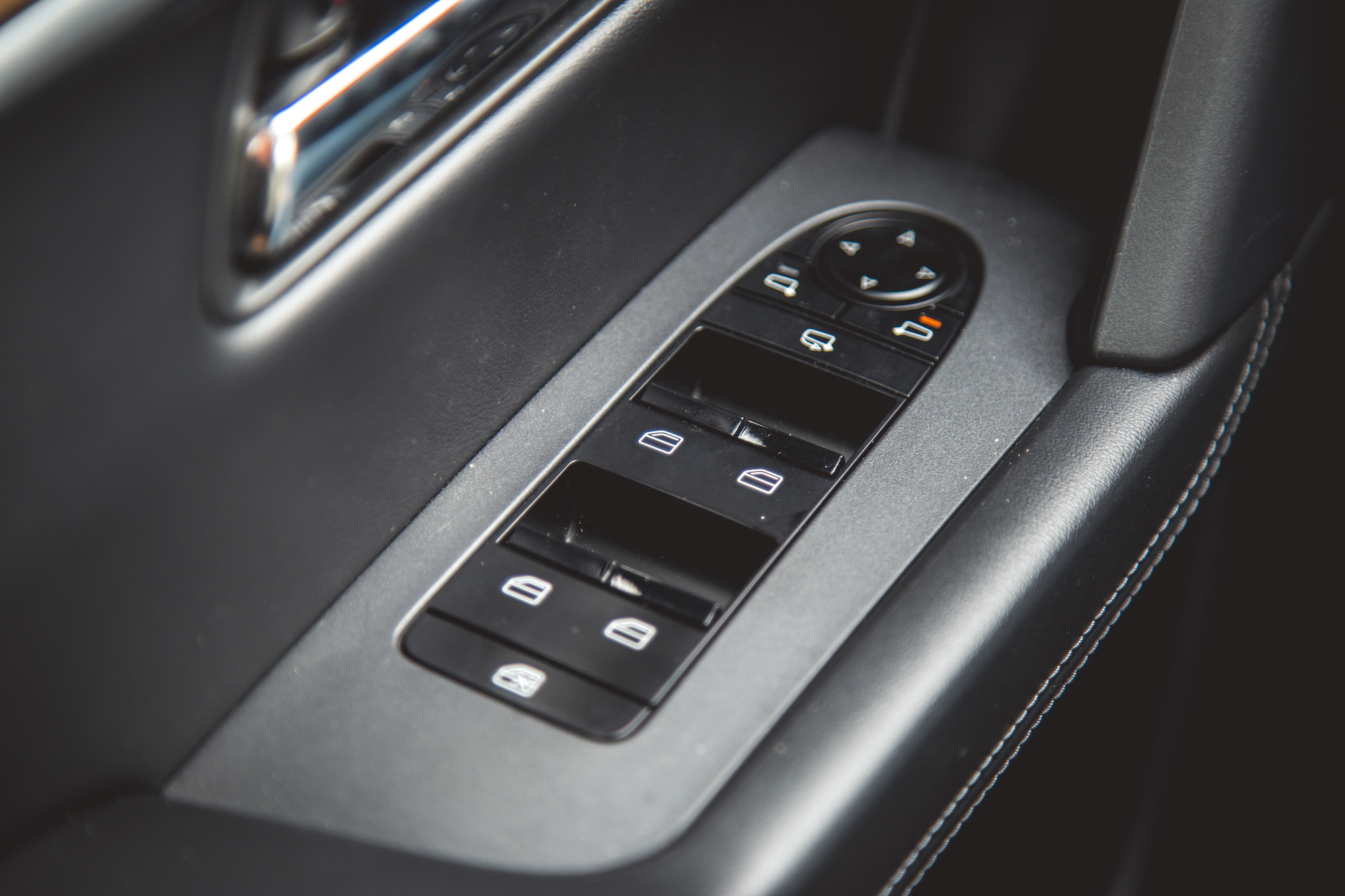
We’ve long waxed poetic about Mazda interiors, particularly their high-grade switchgear and resistance to screen-heavy designs. Many of their metallic-feeling knobs and buttons felt better than those in current BMWs and, thankfully, remain a fixture on other Mazda SUVs such as the CX-30 and CX-70. But the CX-5 breaks with tradition by adopting a sprawling 15.6-inch touchscreen, and much like Volvo’s, it also handles the seat memory and climate controls. It’s an infuriating compromise that undermines one of Mazda’s greatest strengths of designing interiors that feel upscale, intuitive, and thoughtfully engineered. It’s almost as though Mazda finally decided it was time to embrace the digital age just as everyone else is realizing it may not have been all it was cracked up to be. More modern? Absolutely. More functional? Quite the opposite.

The screen is crisp and integrates Google’s ecosystem, but the presentation isn’t quite as polished, with some menus displaying surprisingly low-resolution renderings of the CX-5. Certain button prompts are frustratingly small, and you can tell they tried to squeeze as much information as possible onto the display. Still, the menus are logically arranged in a format similar to BMW’s, and we appreciate having the camera button within easy reach in the lower left corner. Mazda has also retained its ASMR-like turn indicator clicks, while adding a few thoughtful touches, including adjustable turn indicator volume and steering wheel control sensitivity.
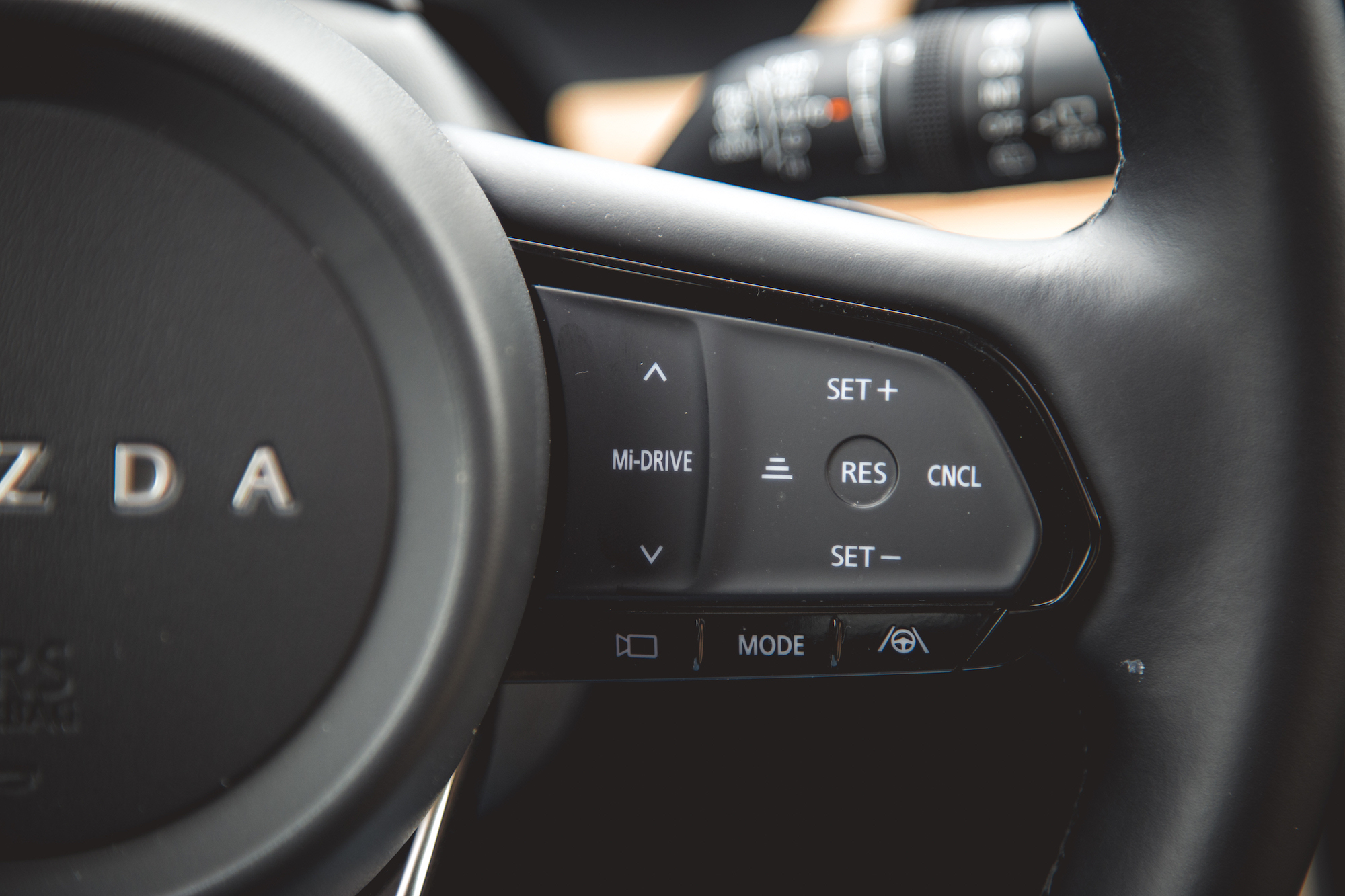
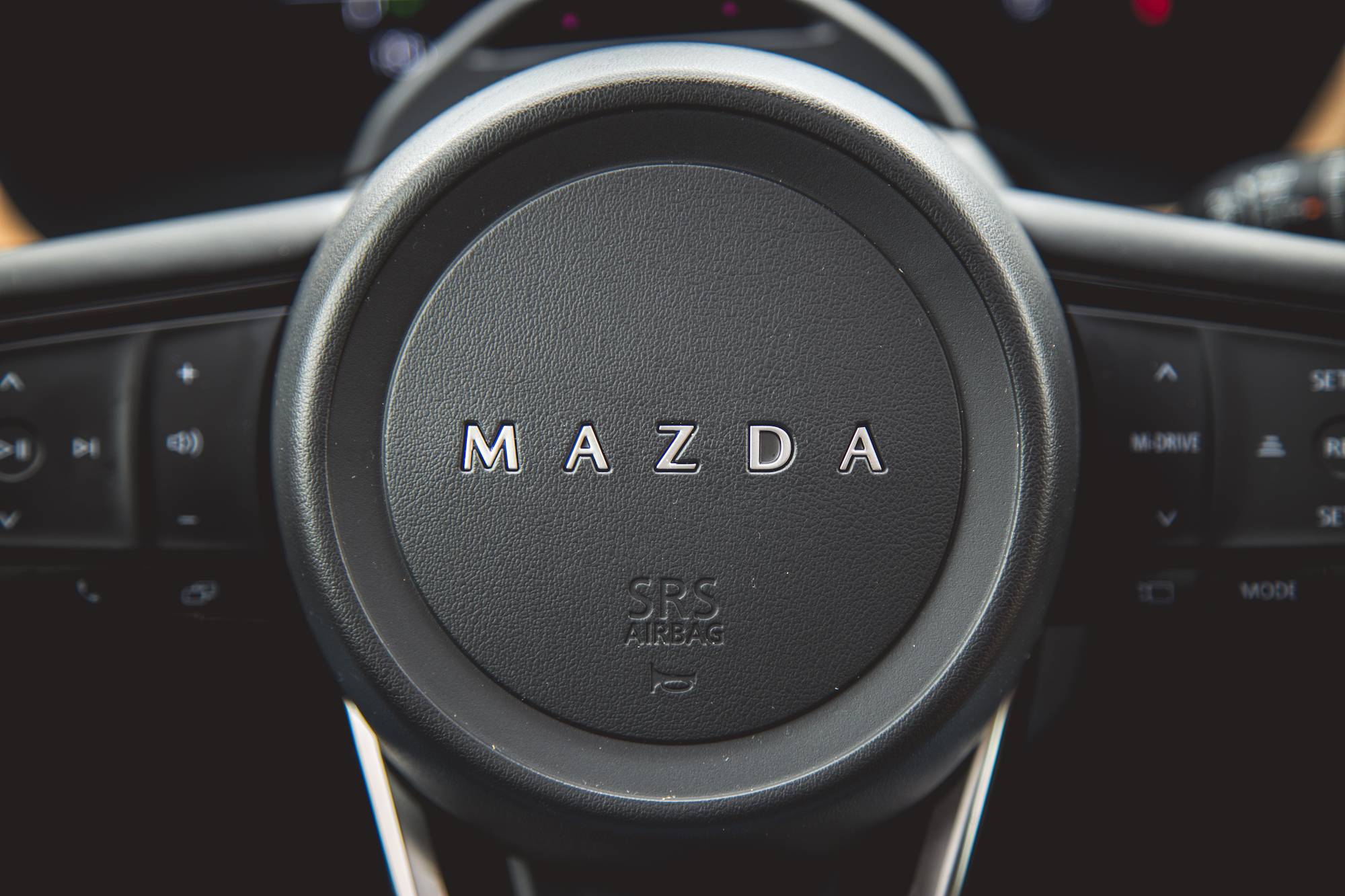
The chunky airbag cover emblazoned with the MAZDA script won’t be winning any design awards, but the leather-wrapped wheel feels soft with actual buttons hiding behind the rubber pads. Many lack ridges or dividers, but they engage positively, and we appreciate the integrated Mi-Drive selector, a reminder of Mazda’s focus on driver engagement. But with limited steering wheel telescoping range and the pedals positioned too close to the seat, we could never find a comfortable driving position for our six-foot frame, leaving us either hunched toward the wheel or with our legs cramped in the footwell.
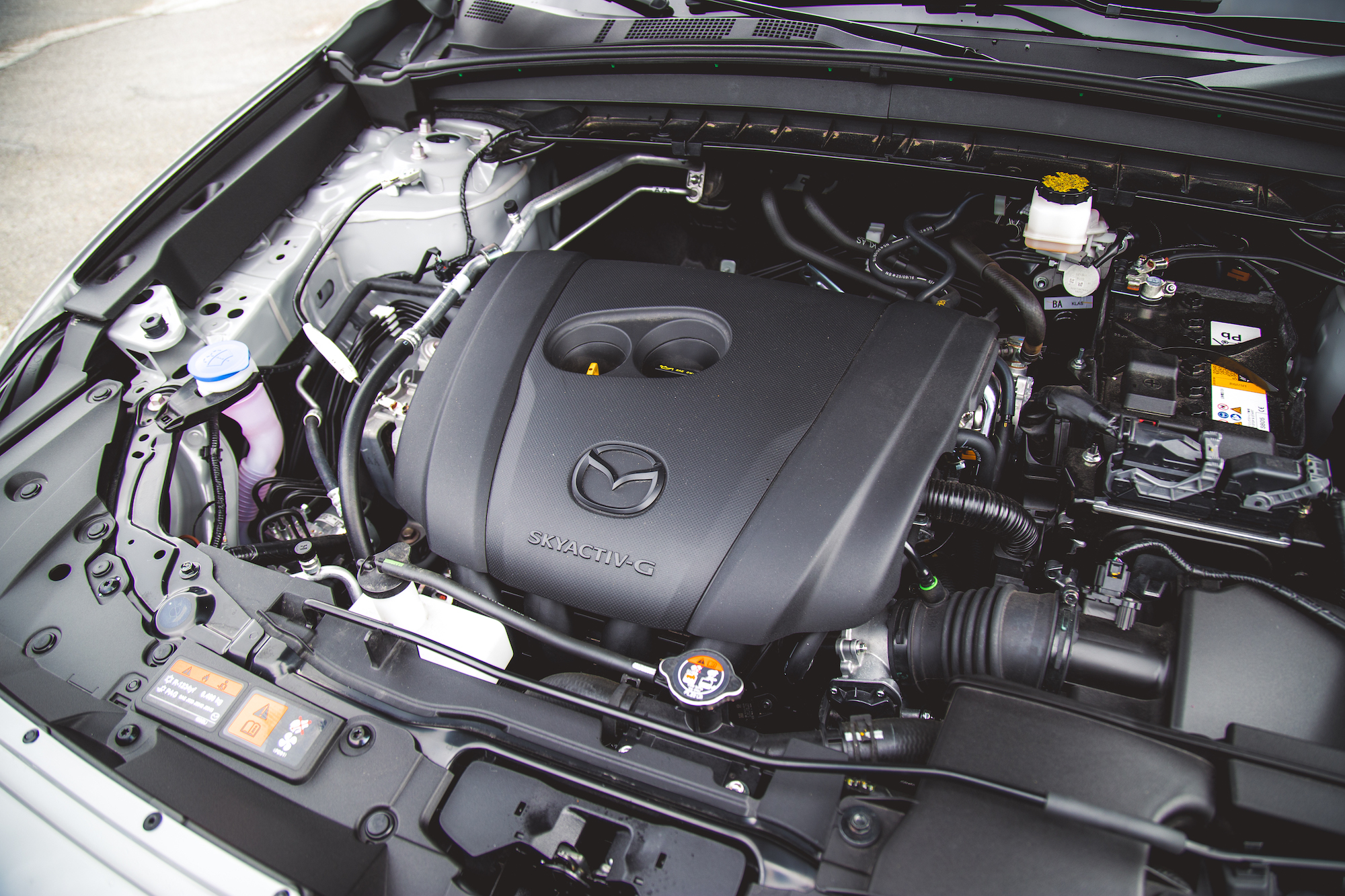
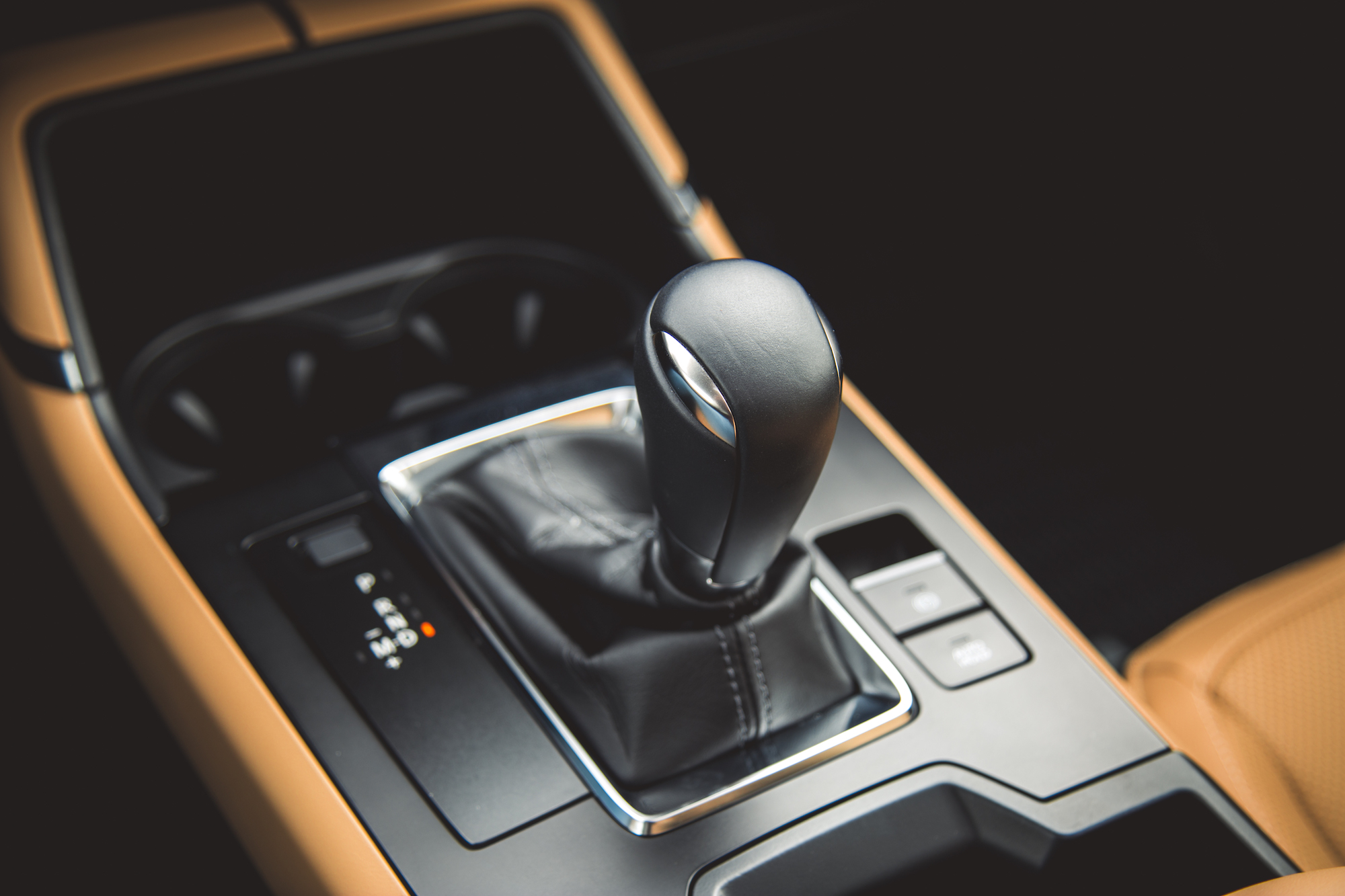
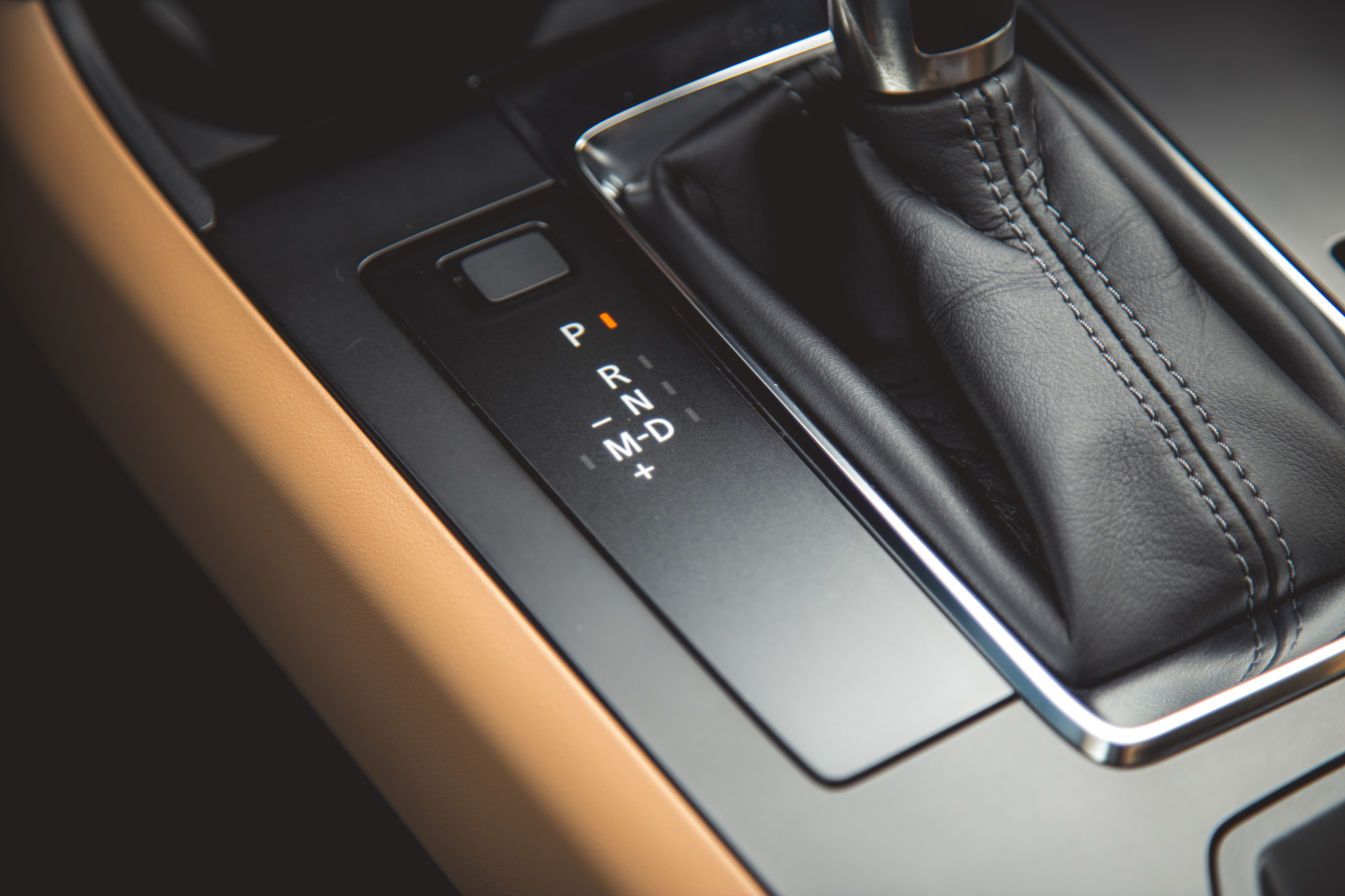
Mazda has stayed true to its roots in the powertrain department, retaining a conventional six-speed automatic rather than adopting the characterless CVTs found in the Honda CR-V and Toyota RAV4. The engine itself carries over unchanged from the outgoing CX-5, the Skyactiv-G 2.5-litre DOHC 16-valve four-cylinder producing 187 hp and 186 lb-ft of torque, but we wouldn’t be surprised to see a hybrid variant within the next year or so.
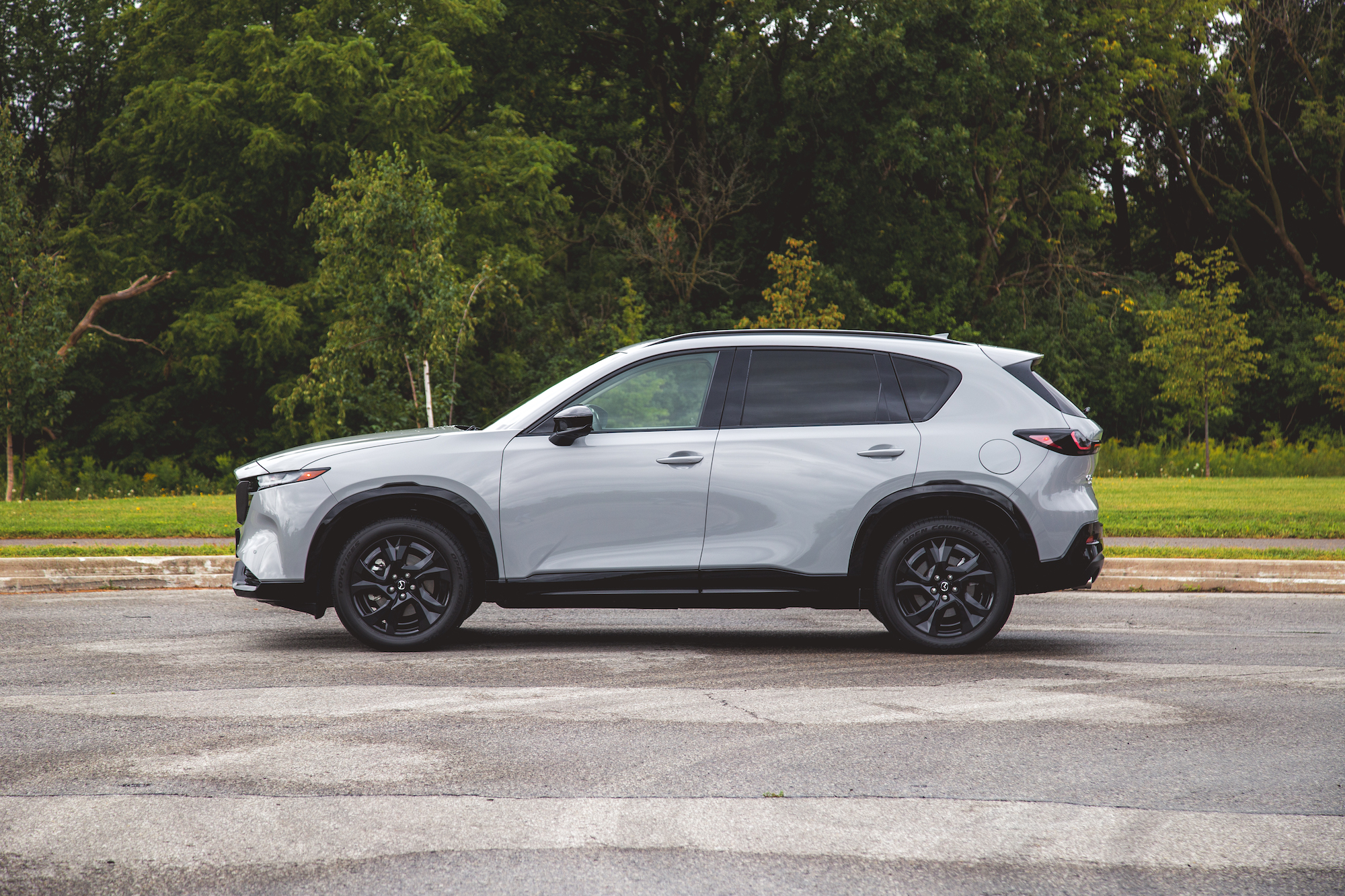
Acceleration is glacial at best, and while the powerband is linear, the engine is hardly inspiring, lacking both immediacy and the forward propulsion needed to make the CX-5 feel lively. It would benefit greatly from a turbocharger, though this naturally aspirated unit remains impressively smooth and quiet once you settle into cruising speeds. The CX-5 holds its own on a winding road, with an agile front end that faithfully follows steering inputs, while the firmer suspension gives the chassis a sense of composure and confidence. But its inability to deliver meaningful thrust hampers its ultimate pace. At least Mazda utilizes the best transmission in the segment, with six forward gears that respond quickly and shift smoothly enough to make you want to play with the paddles.
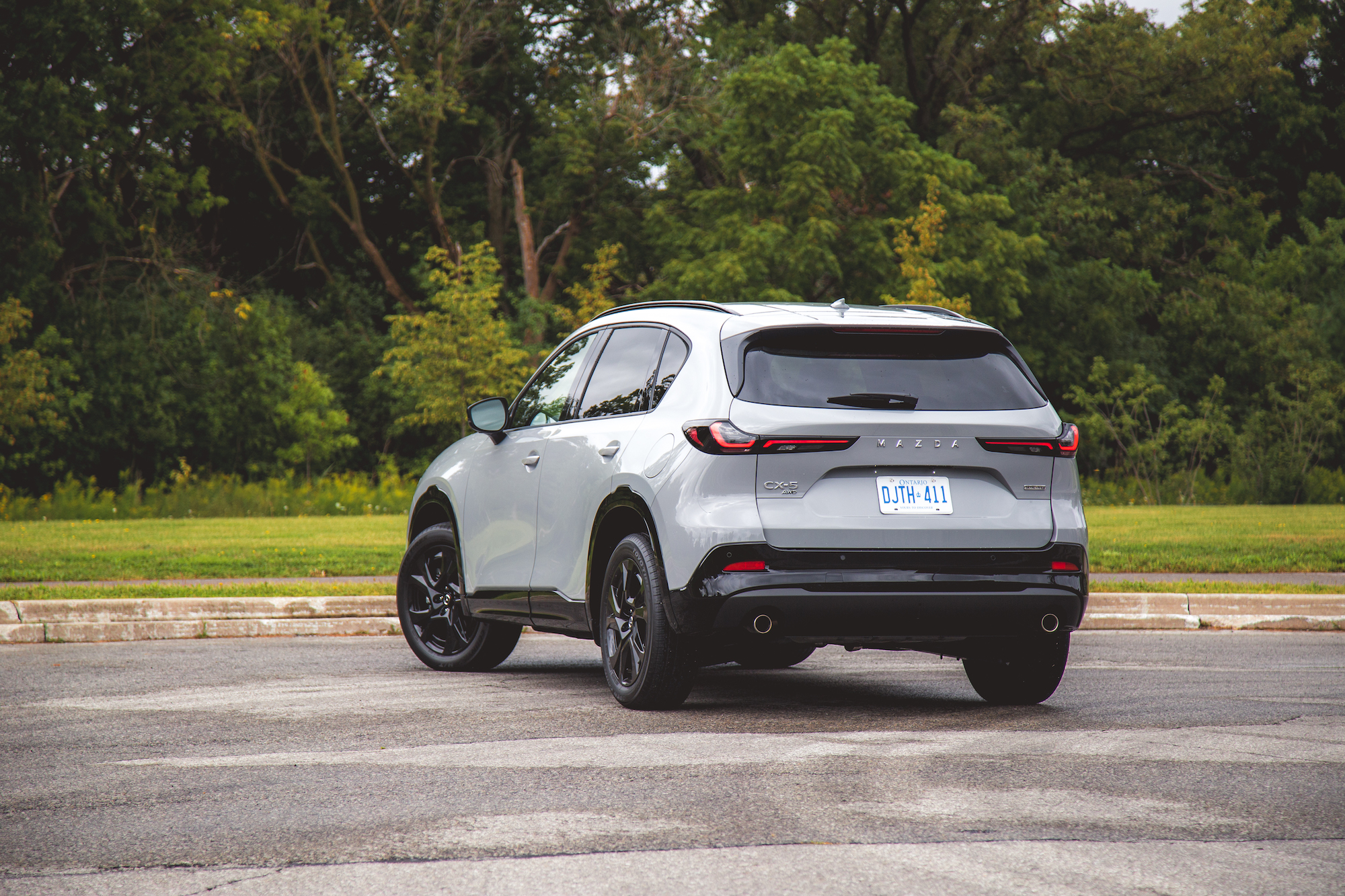
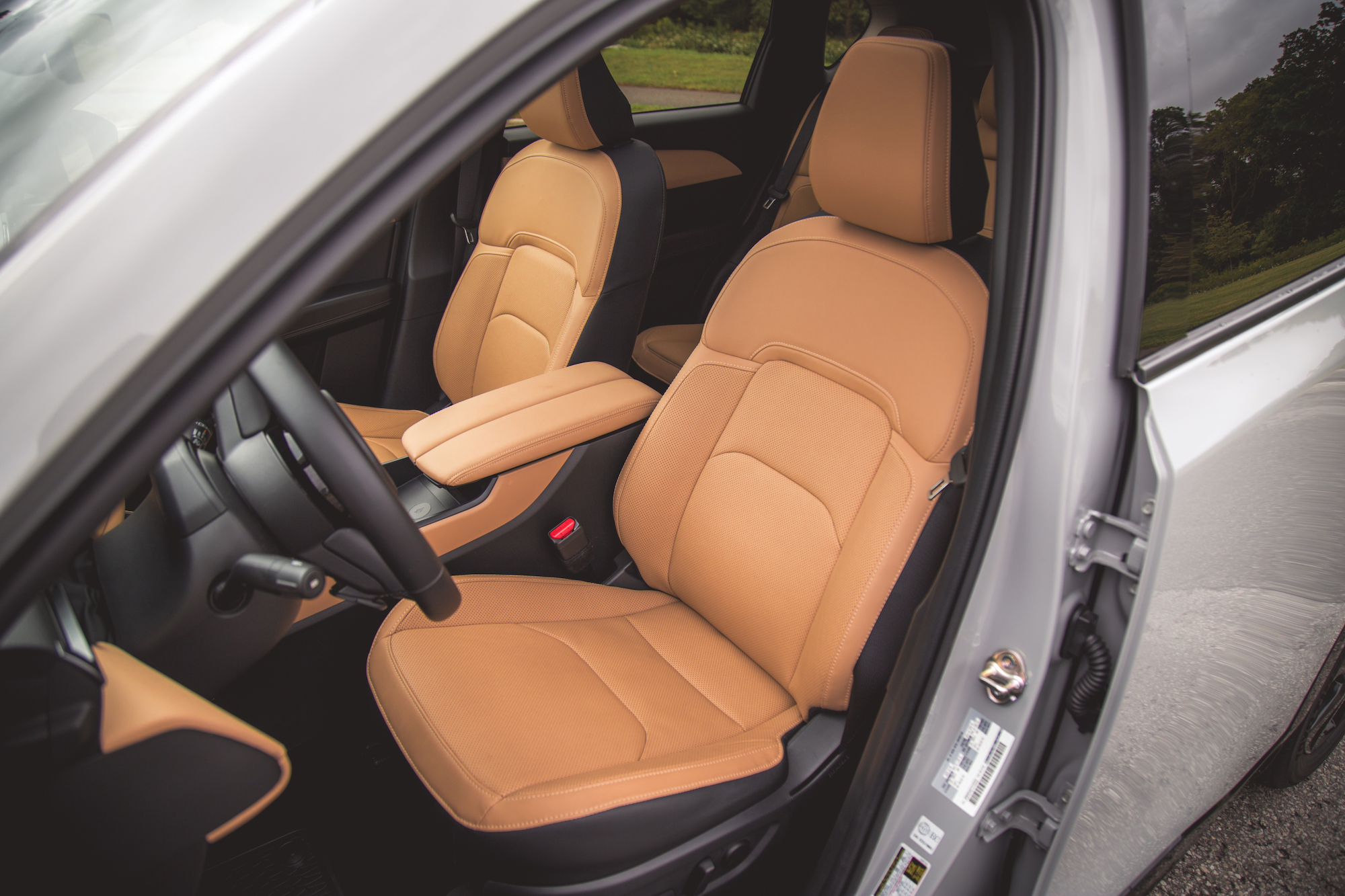
Despite a moderate loss in user functionality, the updated CX-5 compensates with other ergonomic advantages, such as its large rear entry portal, generous cabin space, and built-in Google system. The interior is well-built but ultimately lacks the traditional zen qualities and upscale switchgear that once allowed Mazda to shine amongst its peers.
Price is firmly on the CX-5’s side, though, coming in below equivalent versions of the Toyota RAV4 and Honda CR-V. However, Honda’s turbocharged engine and Toyota’s fully hybridized lineup make mincemeat of the Mazda when it comes to power and efficiency, while Toyota’s recent foray with the RAV4 GR Sport has shown us that even the segment’s perennial safe choices are willing to inject some fun into their popular SUVs. The new CX-5 is appreciably better in many ways, but its rivals are steadily closing the gap in the areas where Mazda once held a clear advantage.
Specifications:
Model: 2026 Mazda CX-5 GT Premium
Paint Type: Aero Grey Metallic
Base Price: $46,700
Price as Tested: $47,250
Wheelbase(mm): 2,815
Length/Width/Height (mm): 4,690 / 1,892 / 1,690
Curb Weight (kg): 1,747
Engine: 2.5-litre four-cylinder
Horsepower: 187 hp @ 6,000 rpm
Torque: 186 lb-ft @ 4,000 rpm
Transmission: 6-speed automatic
Engine & Drive Configuration: Front engine, AWD
Observed Fuel Consumption (L/100km): 10.1
Tires: Toyo Tires Open Country H/T; 225/55R19







Leave a Reply