
Despite being a relative newcomer to the automotive industry, Lucid has already established itself as a serious contender in the EV space. Blending modern luxury with stately styling and an exceptionally large battery, the Lucid Air is an antidote to range anxiety, coming in four distinct flavours: Pure ($99,900, 430 hp, 676 km), Touring ($112,800, 620 hp, 694 km), Grand Touring ($161,200, 819 hp, 824 km), and Sapphire ($327,300, 1,234 hp, 687 km).
We tested the Touring with its dual electric motors, 92 kWh battery, and 620 horsepower. That’s enough to propel this sizeable sedan from 0 to 100 km/h in a brisk 3.6 seconds, giving you the confidence to race for pink slips against your neighbour’s Porsche Taycan 4S (3.7s) or Range Rover Sport SV (3.8s). Just steer clear of the Tesla Model S. You’ll need the Grand Touring’s 3.2s sprint, or the tri-motor Sapphire’s absurd 2.0s, to put one in its place.
Otherwise, the Air Touring never leaves you wanting for speed. A weighty throttle pedal ensures those risky launches are deliberate, but once summoned, the seemingly endless tidal wave of torque makes for an addictive, highly caffeinated piece of theatre. Stepping back into any turbocharged vehicle makes it feel like they have the power delivery of a clogged Ketchup bottle. The Air also has an S-Class-like waftiness, remaining calm and collected regardless of the driving situation, and soaking up deep bumps and road imperfections with unflappable composure.
Though it weighs roughly the same as the Taycan, the Air isn’t nearly as hunkered down or sharp in corners, exhibiting a moderate amount of body roll. It’s well controlled, though, and never feels ungainly or unsettled. Better yet, its plush, secure ride makes both the Taycan and Mercedes-Benz EQS feel comparatively wooden and stiff, with the adaptive suspension and smaller 19-inch wheels delivering a wonderfully coddled, isolated ride around town. Only the BMW i7 manages to better the Air’s overall ride quality, though it also sits in a higher price bracket.
Quick steering makes it easy to reach full lock in tight parking garages, but its lack of linearity and feedback makes low-speed maneuvering awkward. At parking lot speeds, the wheel feels increasingly heavy, rubbery, and granular, while the dense, weighty throttle pedal doesn’t make delicate inputs any easier. Given the Air’s considerable wheelbase, rear-wheel steering would be a welcome addition, much like what’s coming to the Gravity. Even the BMW i5 rarely had us reaching for the three-point turn.
Thankfully, an army of cameras and surround-view displays makes the Air’s dimensions easier to manage. Like the EX90, Lucid displays proximity distances in centimetres, allowing you to judge exactly how much room remains rather than relying solely on the frantic chorus of parking sensors. Lucid has also borrowed a clever trick from Hyundai, with cameras integrated into the side mirrors that provide a live view of the blind spot whenever you signal. They’re small touches, but useful ones in a car that can feel cumbersome at low speeds.

The Air Touring’s 694 km claimed range is one of its biggest selling points. It falls short of the Grand Touring’s formidable 824 km, courtesy of that model’s larger 118 kWh battery, but anything north of 600 km still puts the Lucid comfortably ahead of most luxury EVs, including the Taycan, EQS, and i7. Porsche doesn’t even bother displaying the Taycan’s range estimate on its website, while Lucid practically wears its numbers as a badge of honour.
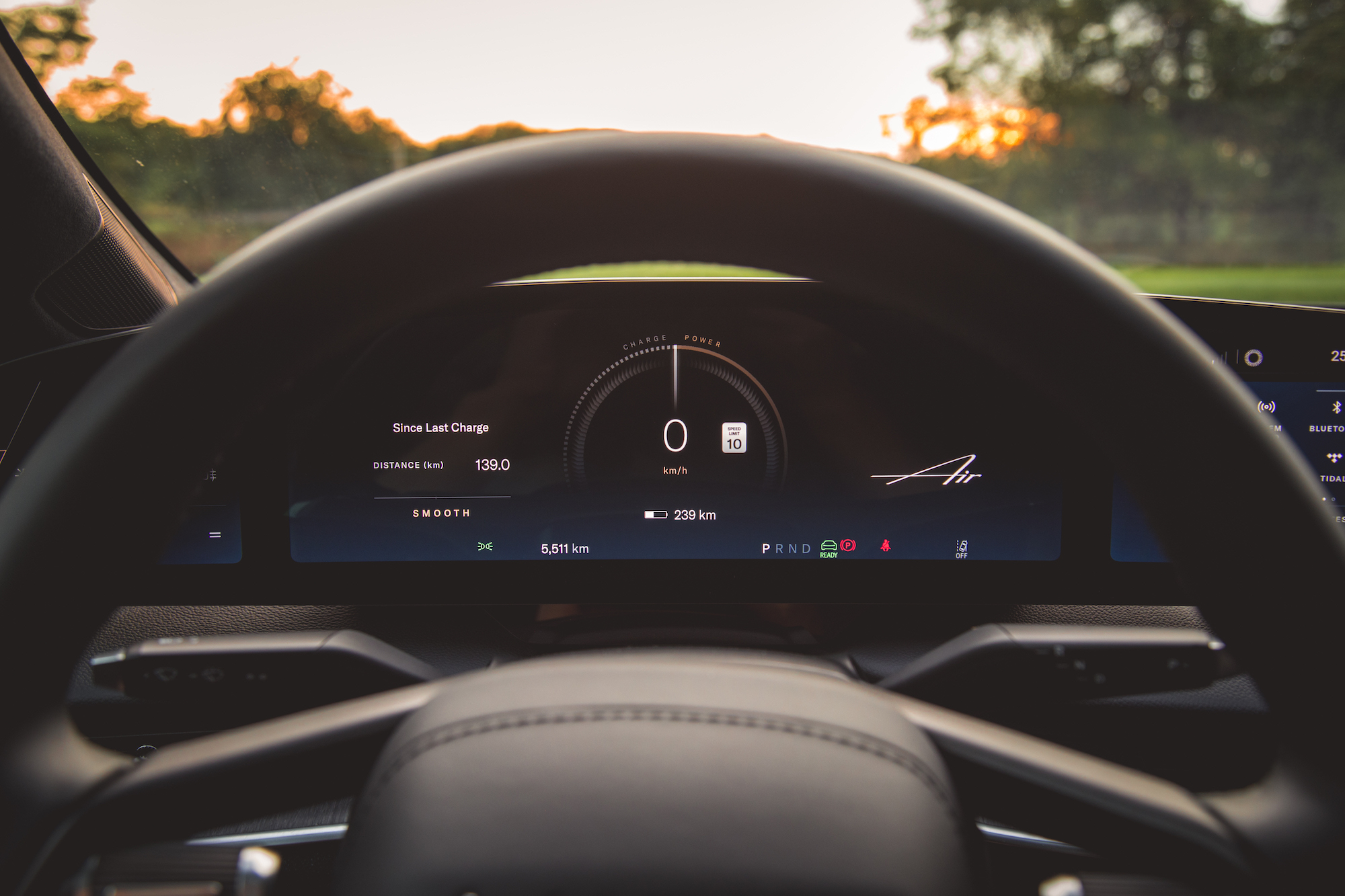
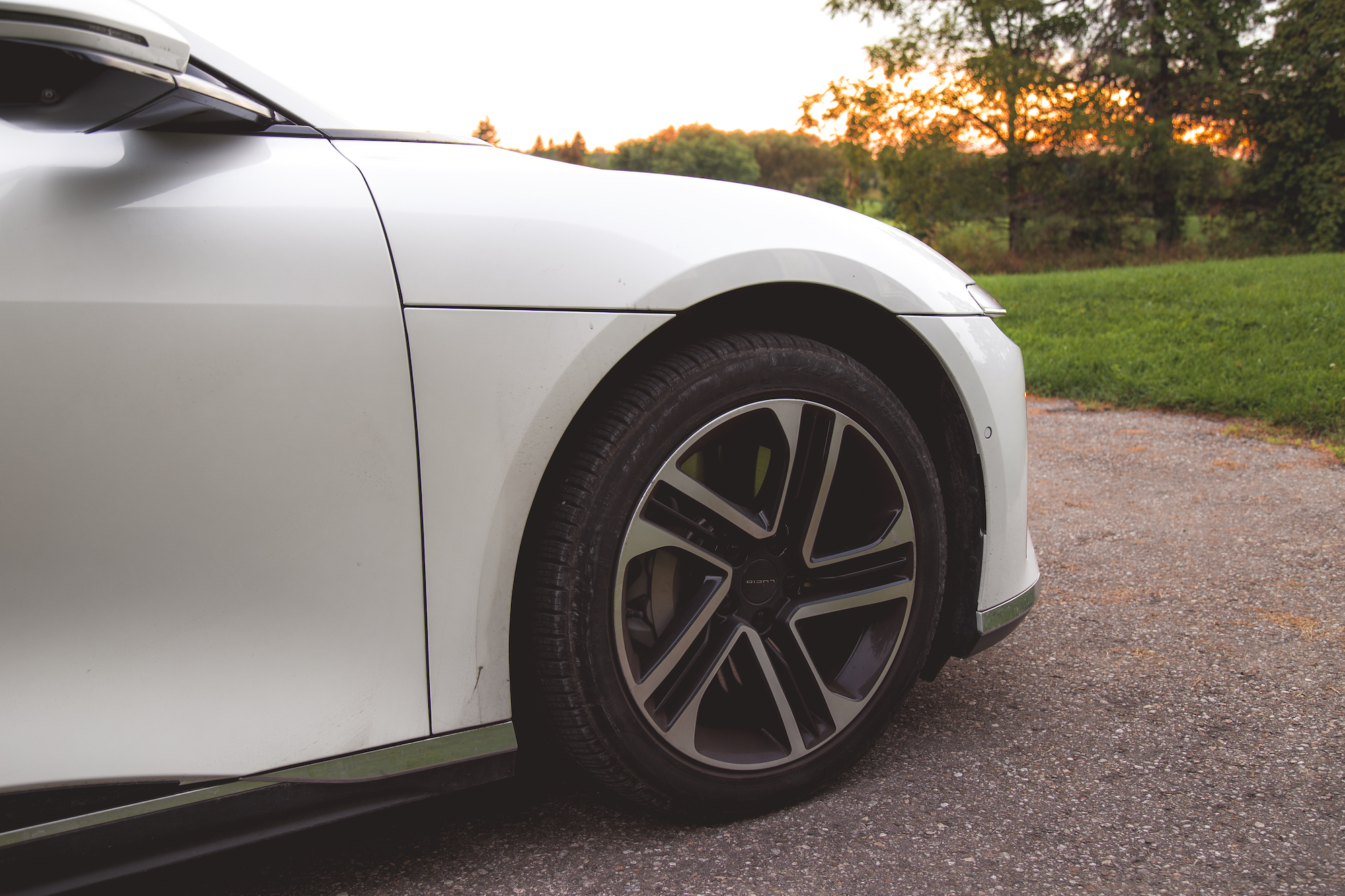
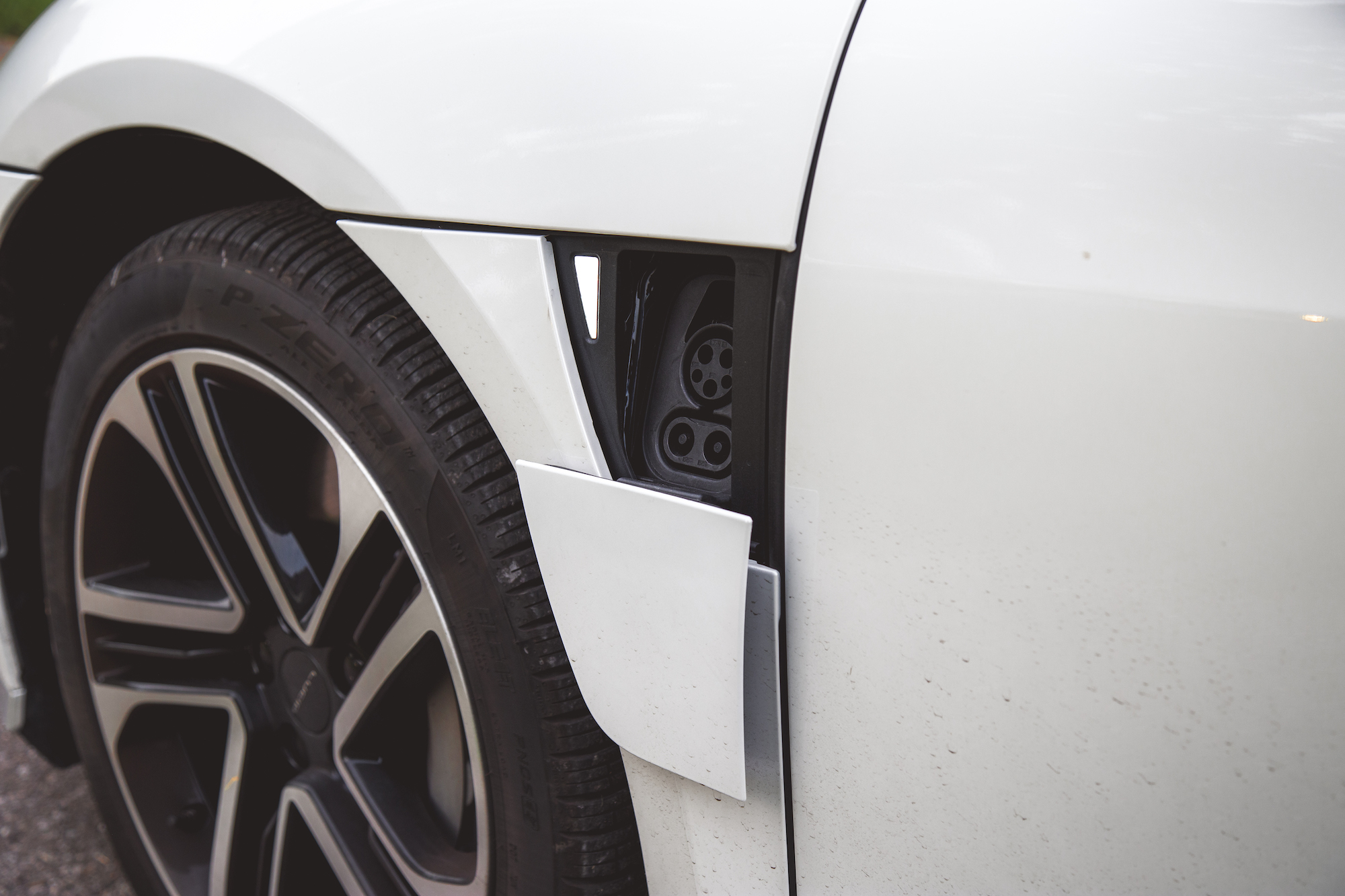
Wheel choice makes a meaningful difference, too. The standard 19-inch Aero wheels deliver the maximum range, while the 19-inch Aeronaut and 20-inch Aero Lite designs knock roughly 57 km off the estimate. Our summer test in double-digit temperatures, combining equal city and highway driving, returned an impressive 655 km, remarkably close to the official figure. Still, its range takes a wallop on lengthier highway trips at a sustained speed of 120 km/h, dwindling to 520 km.
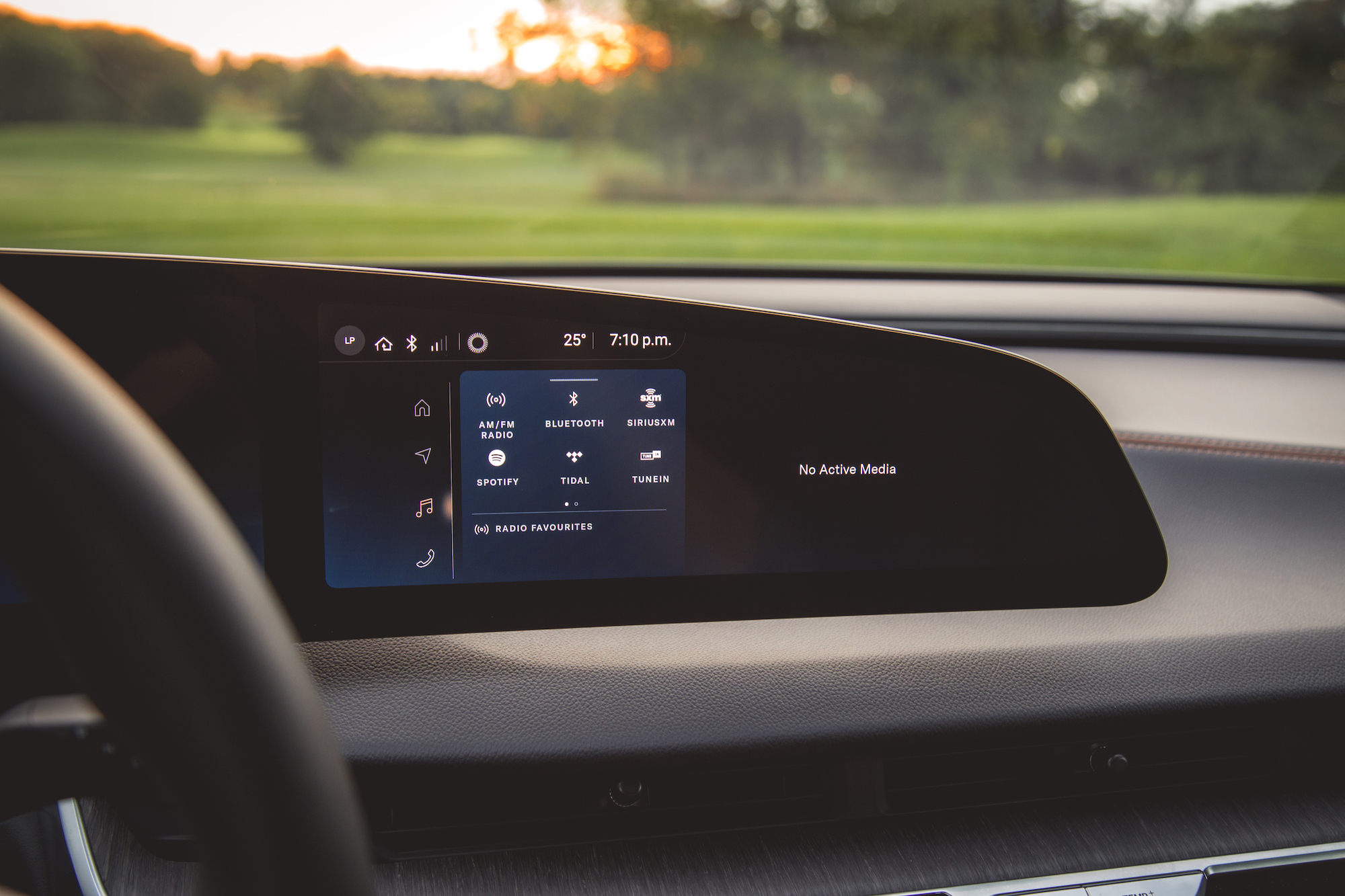
One peculiar omission remains, however. The Air won’t display battery percentage and estimated range in kilometres simultaneously. Instead, you have to dive into the settings menu to switch between the two. In a car so obsessed with efficiency, making drivers choose between two of the most important pieces of EV information feels unnecessarily fussy.

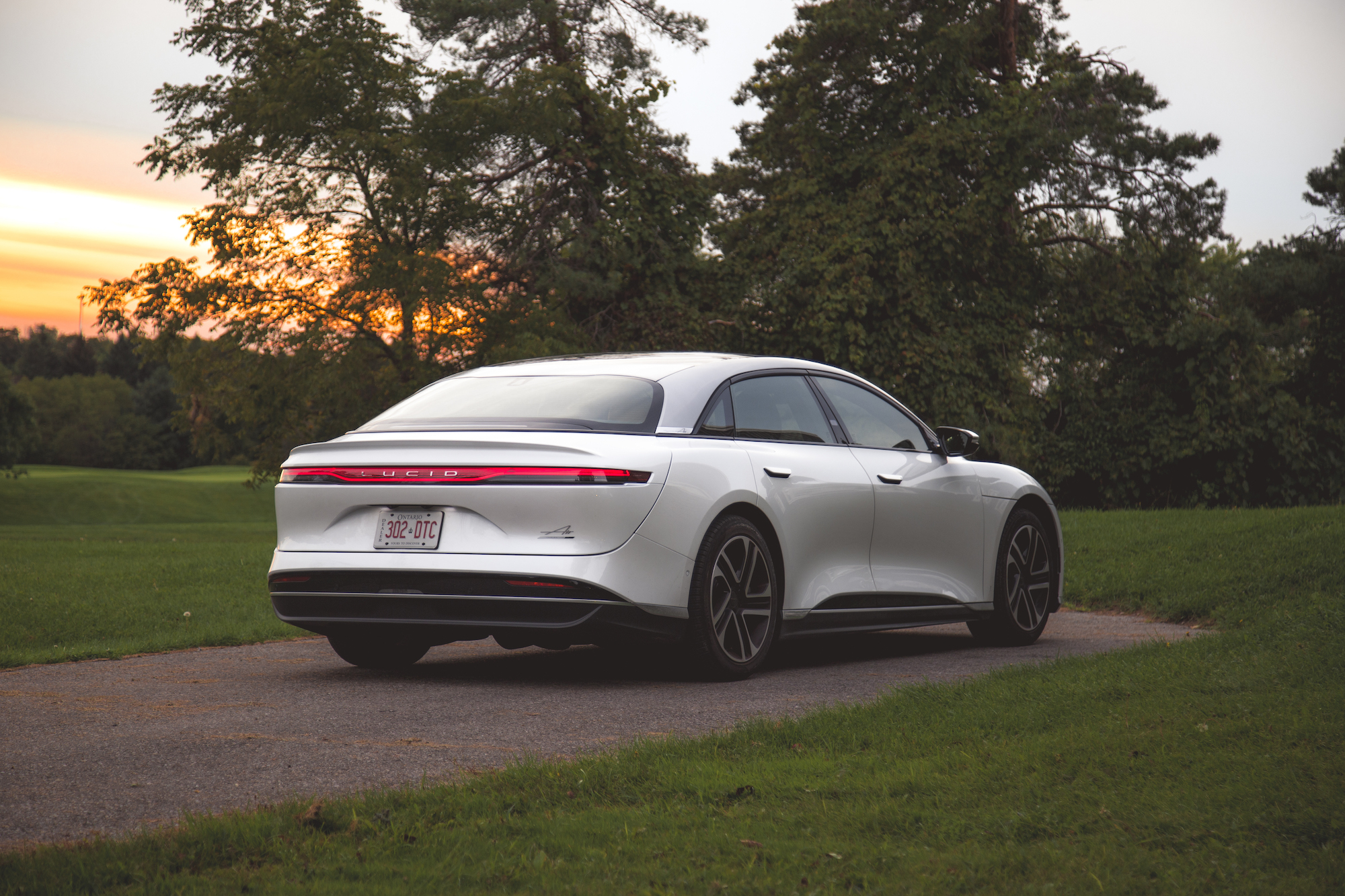
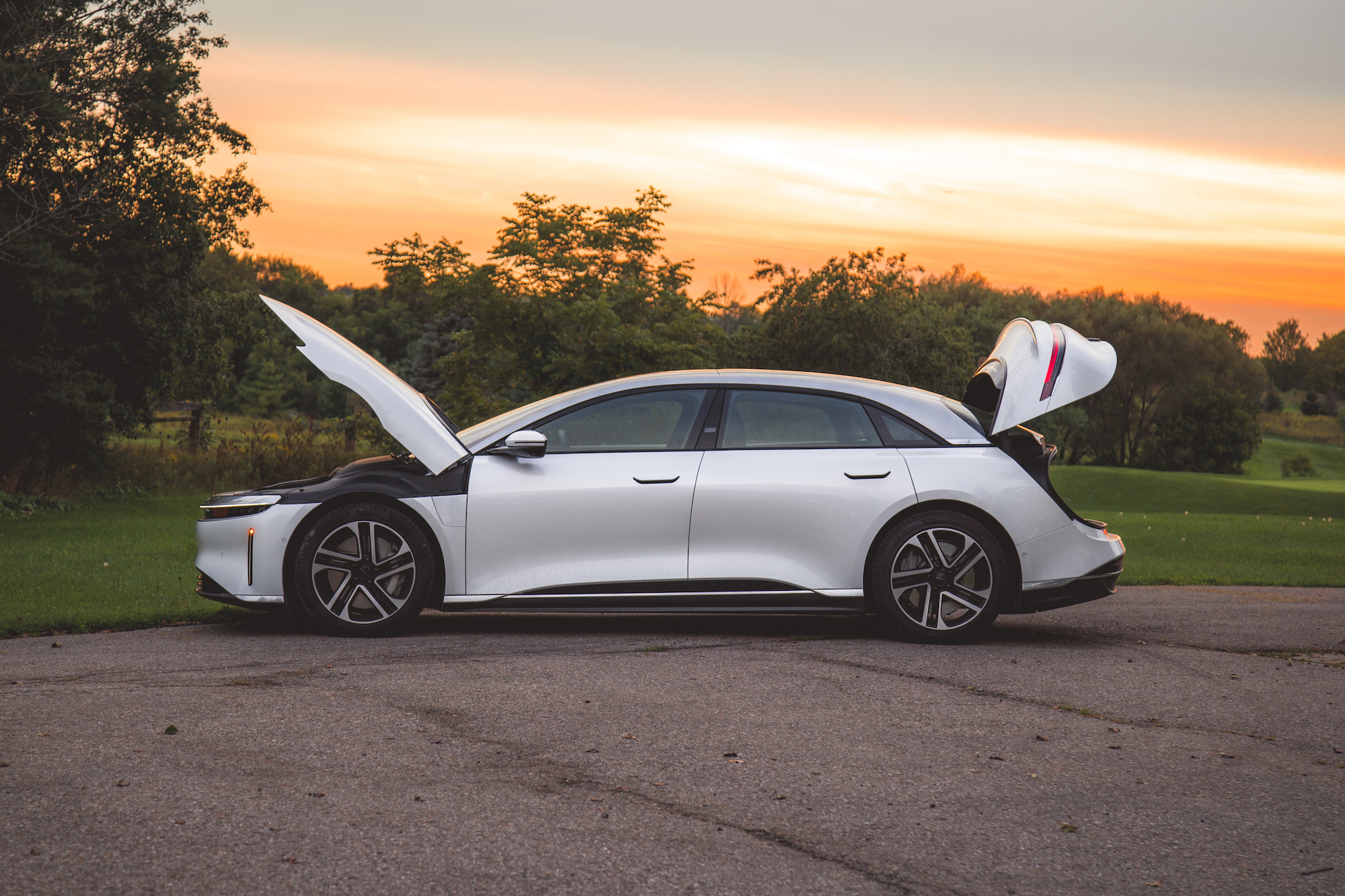
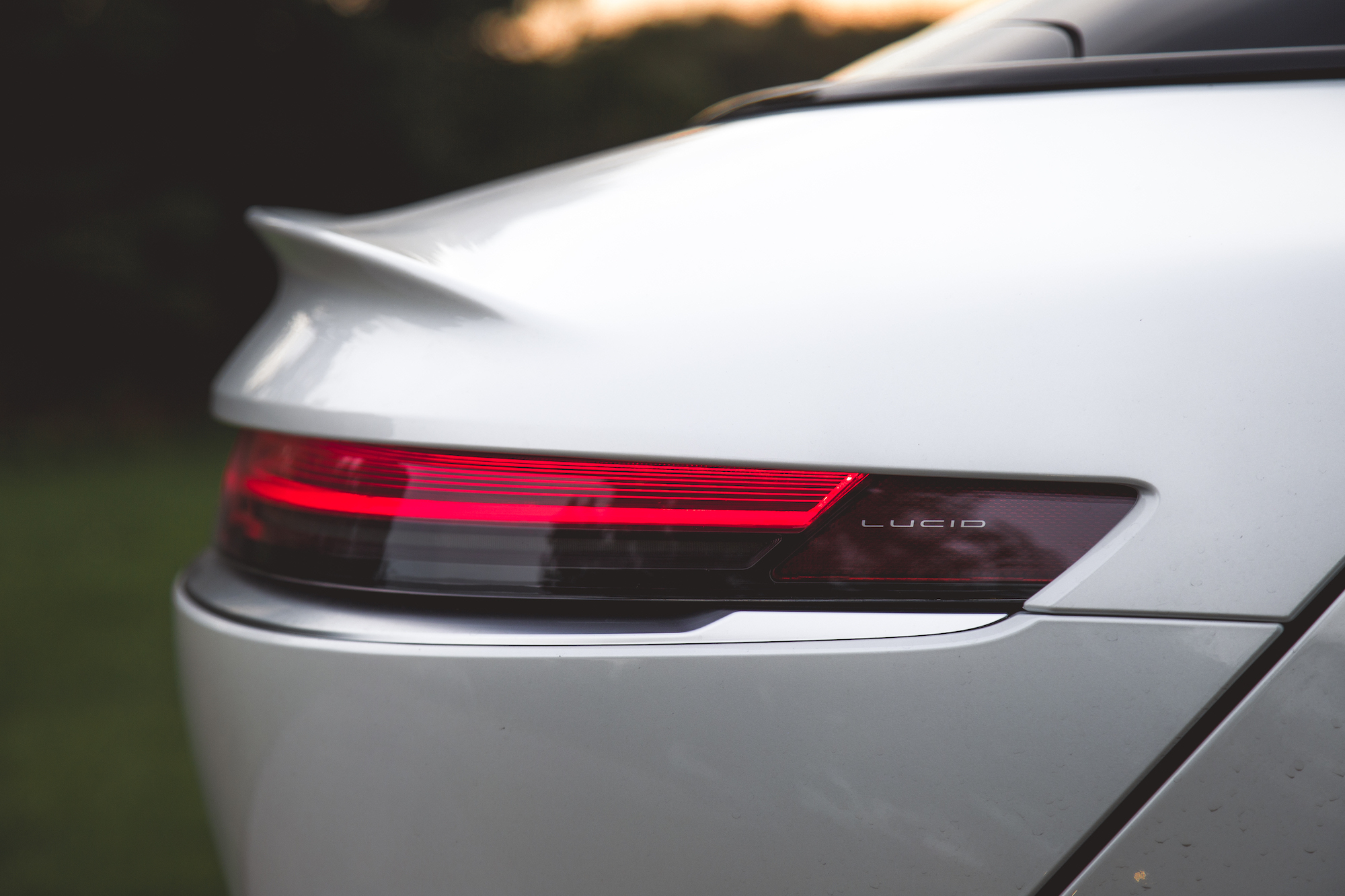
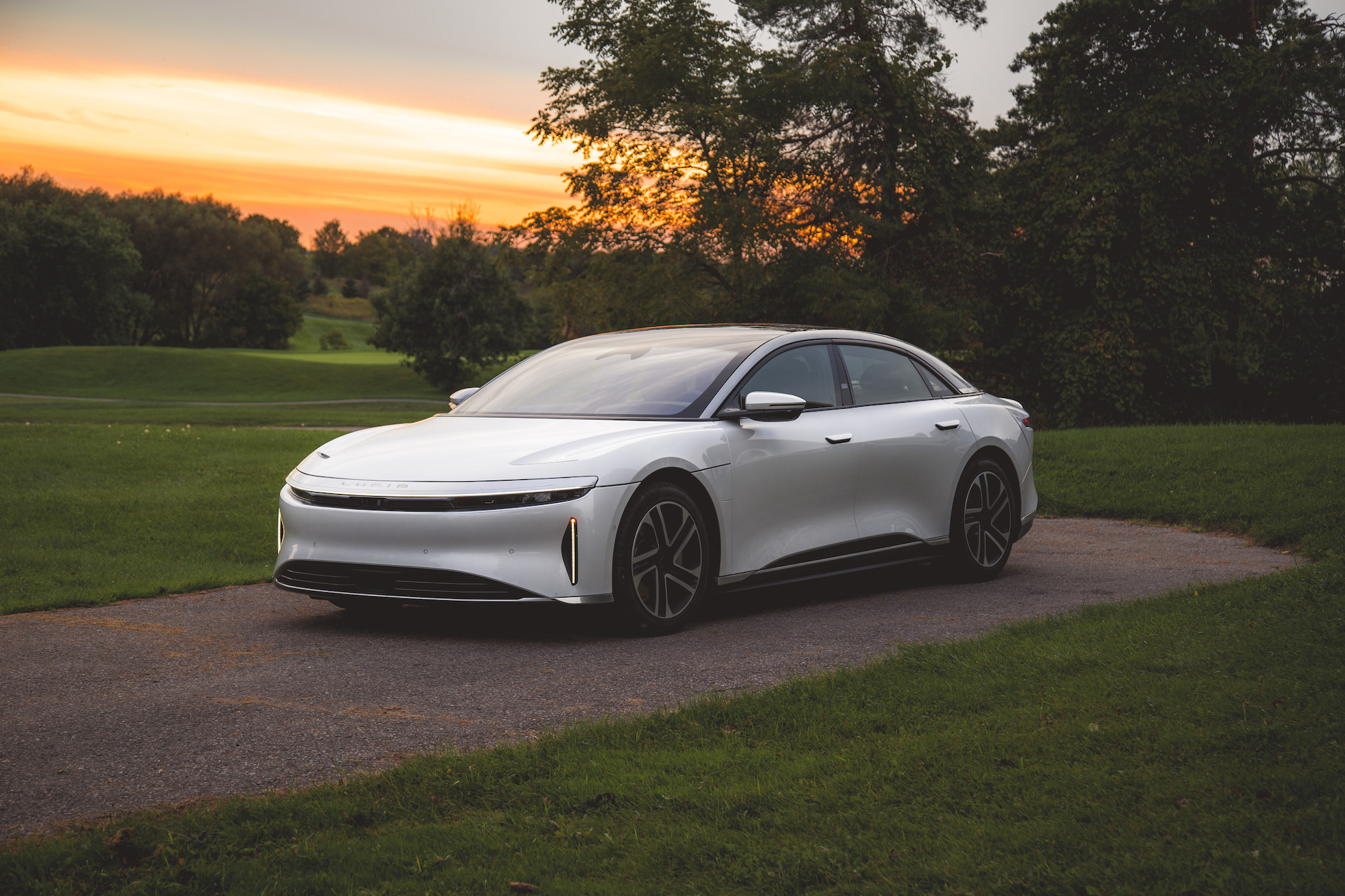
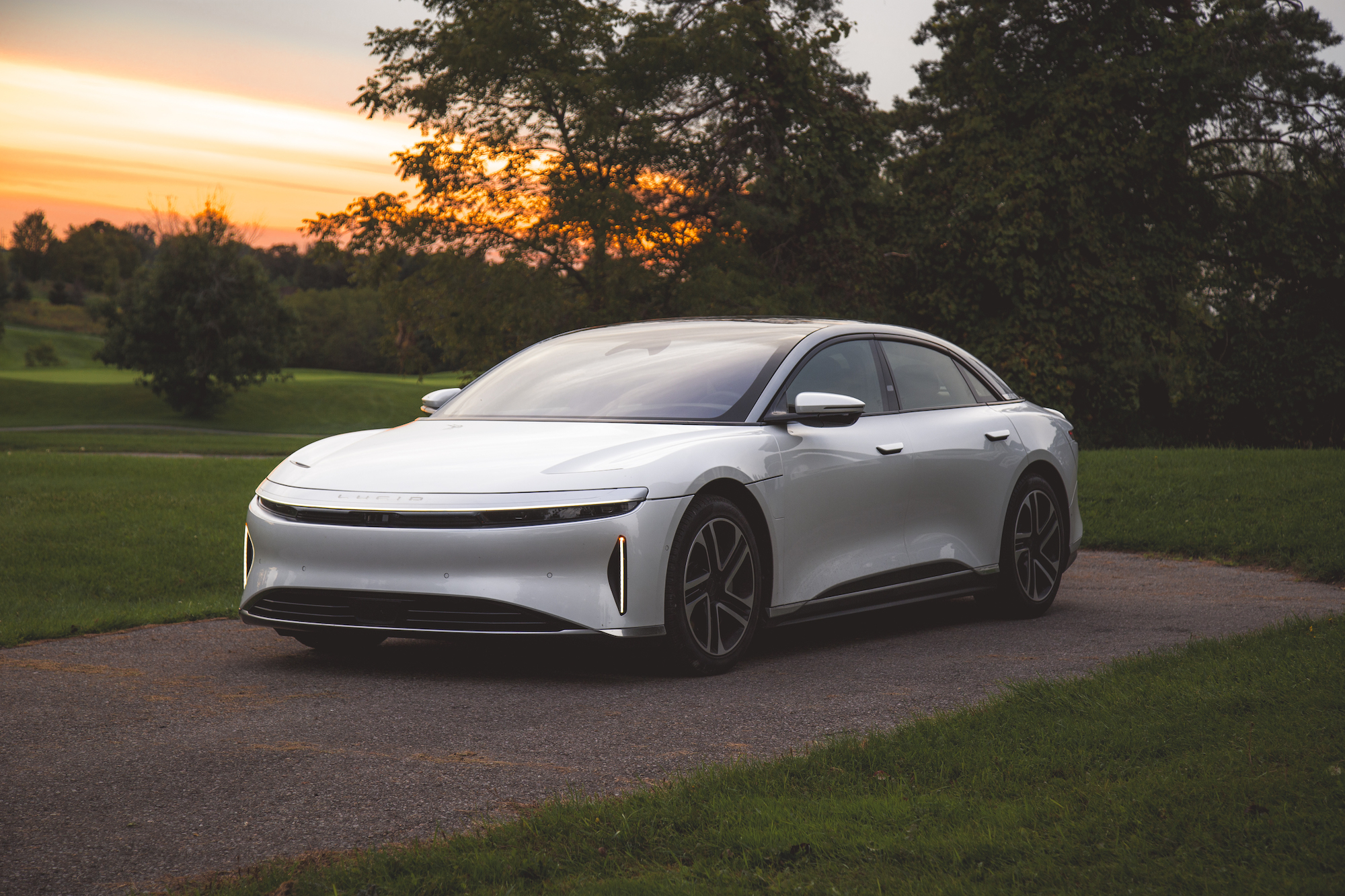
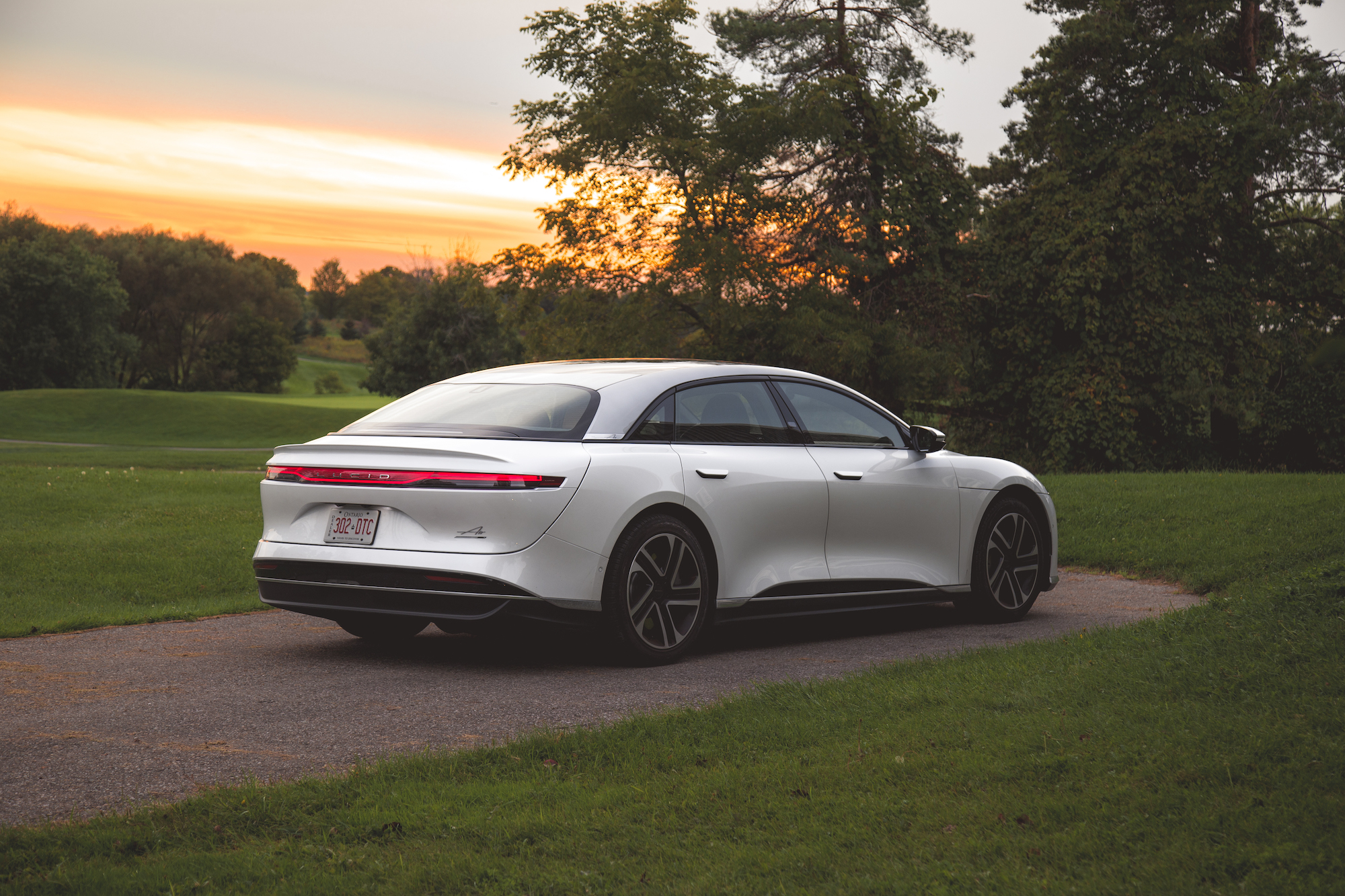
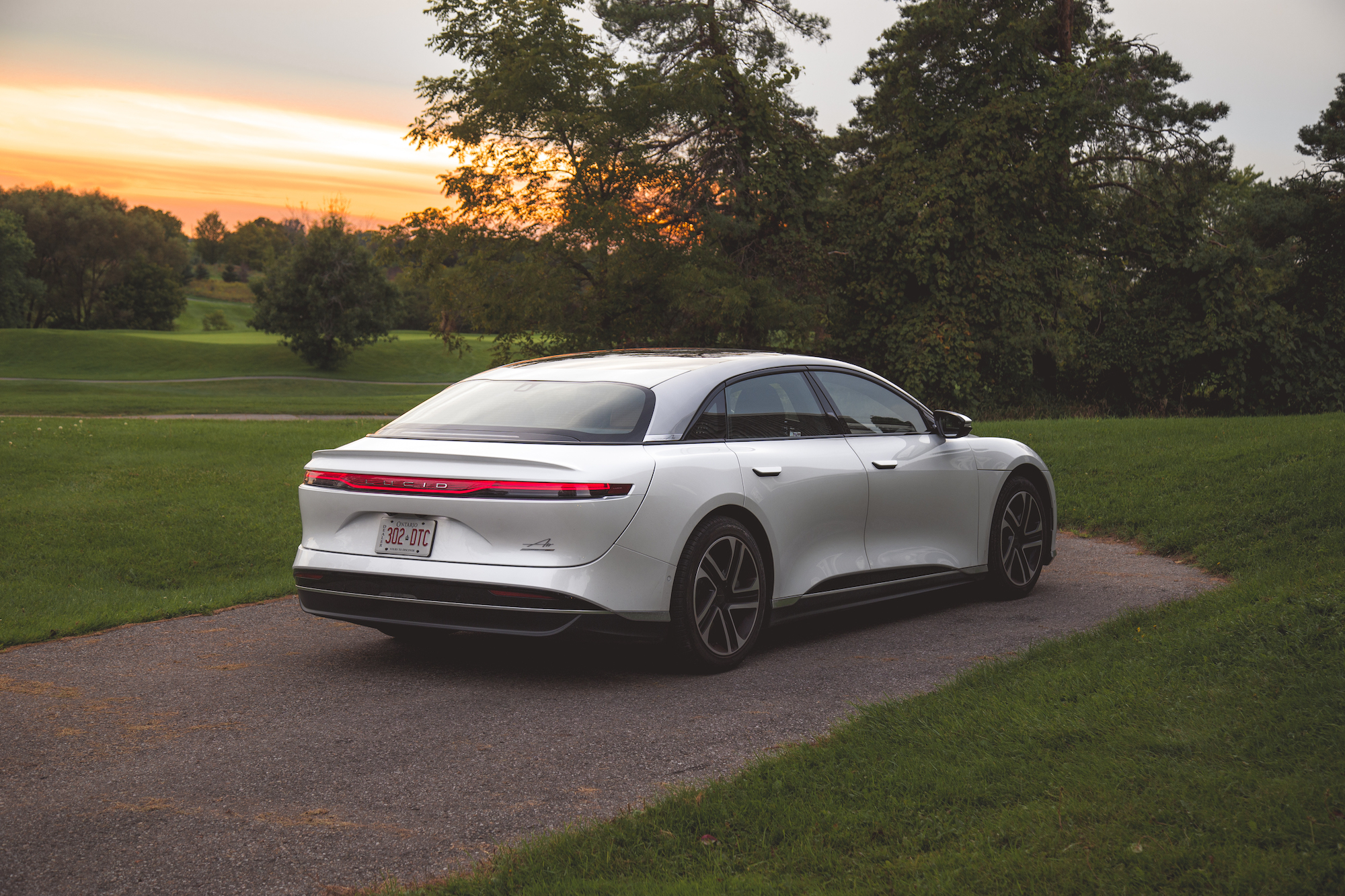
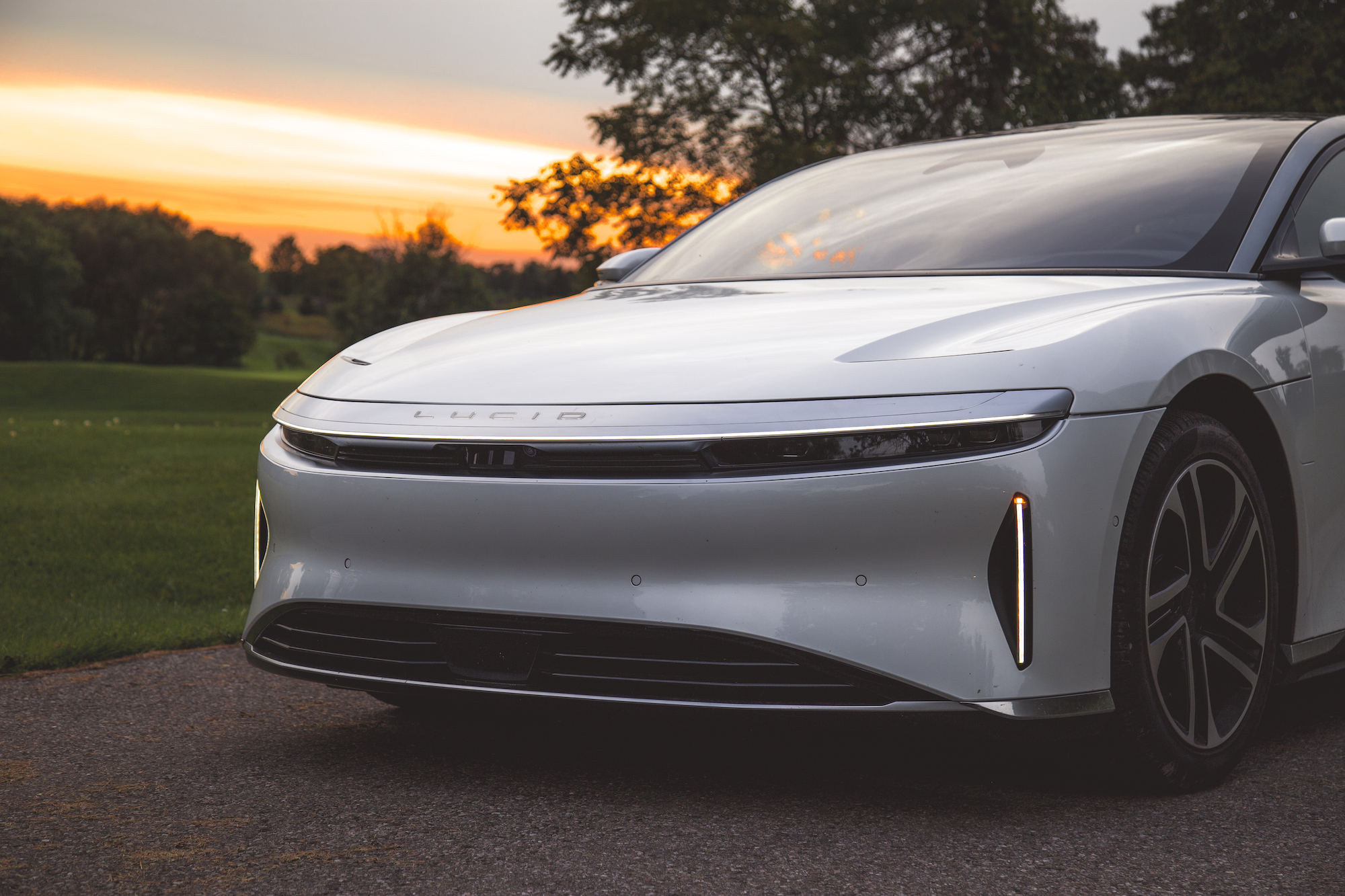
Longer than a Range Rover Sport but shorter than a BMW 5 Series, the Air carries a lengthy footprint, though its dramatically swooped roofline keeps it lower to the ground than an EQS and on par with a Porsche Taycan. Finished in Stellar White Metallic, its rounded bodywork lends it a futuristic presence, with considerably more curb appeal than the Tesla Model S’s now-familiar silhouette.

The retractable door handles are one Tesla-inspired feature Lucid could have left behind. Sleek and flush with the bodywork, they look the part but lack the ease and functionality of a conventional handle, and are frustratingly inconsistent in responding to the key fob, retracting into their sockets when approached, or simply refusing to open. At least the doors themselves are extremely light, but we have to wonder just how much those handles actually contribute to the Air’s aerodynamic efficiency.
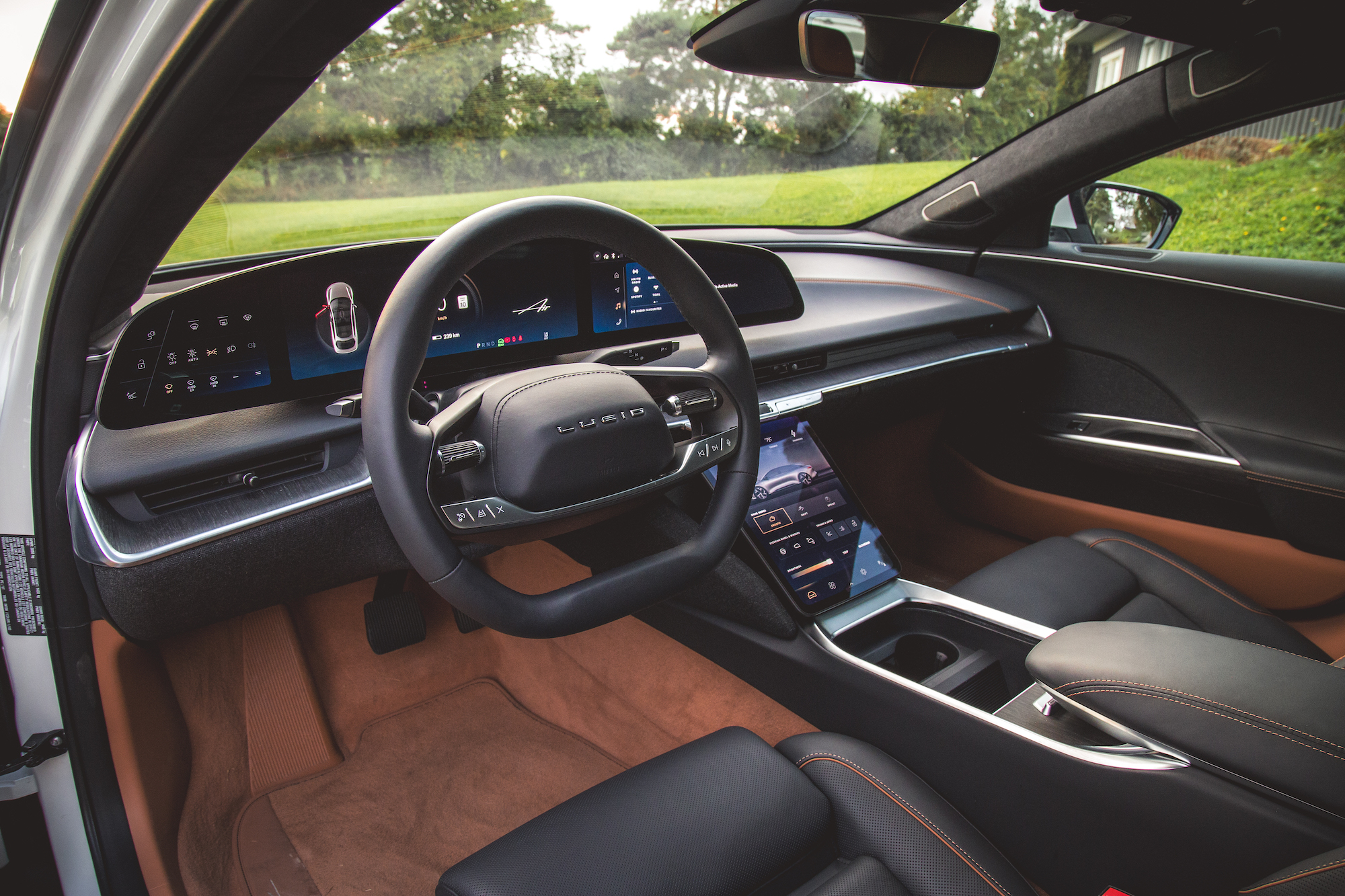
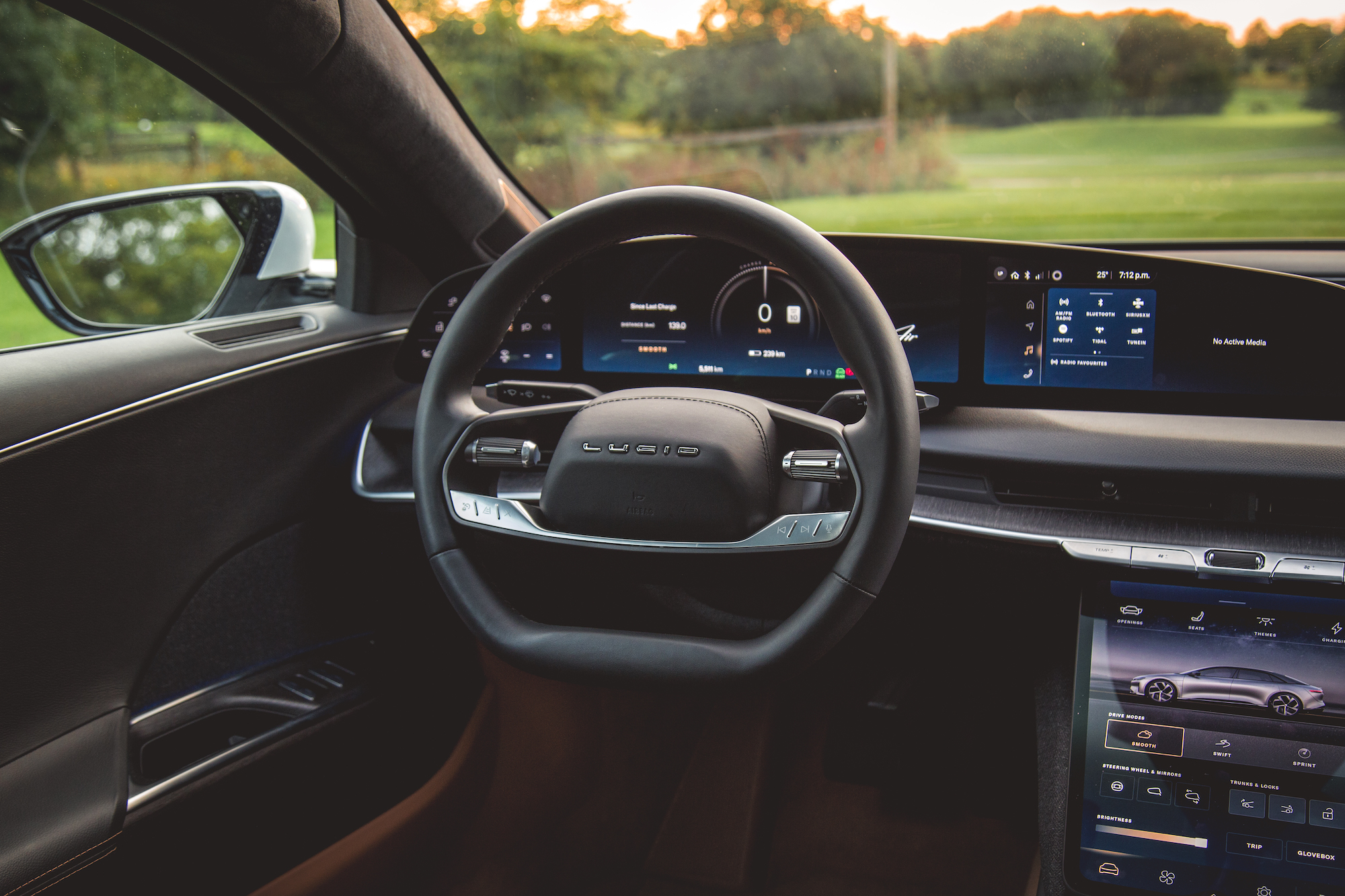
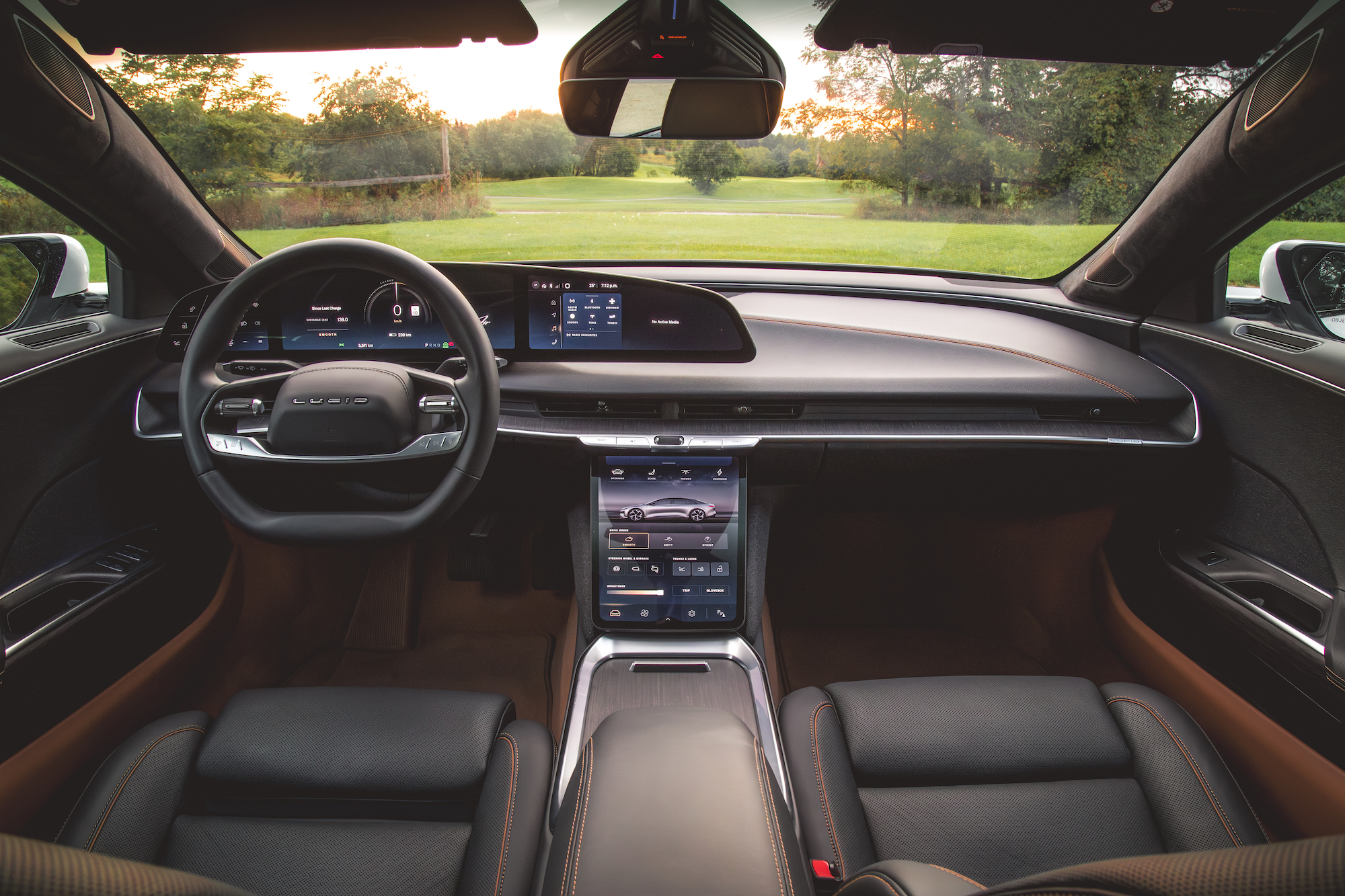
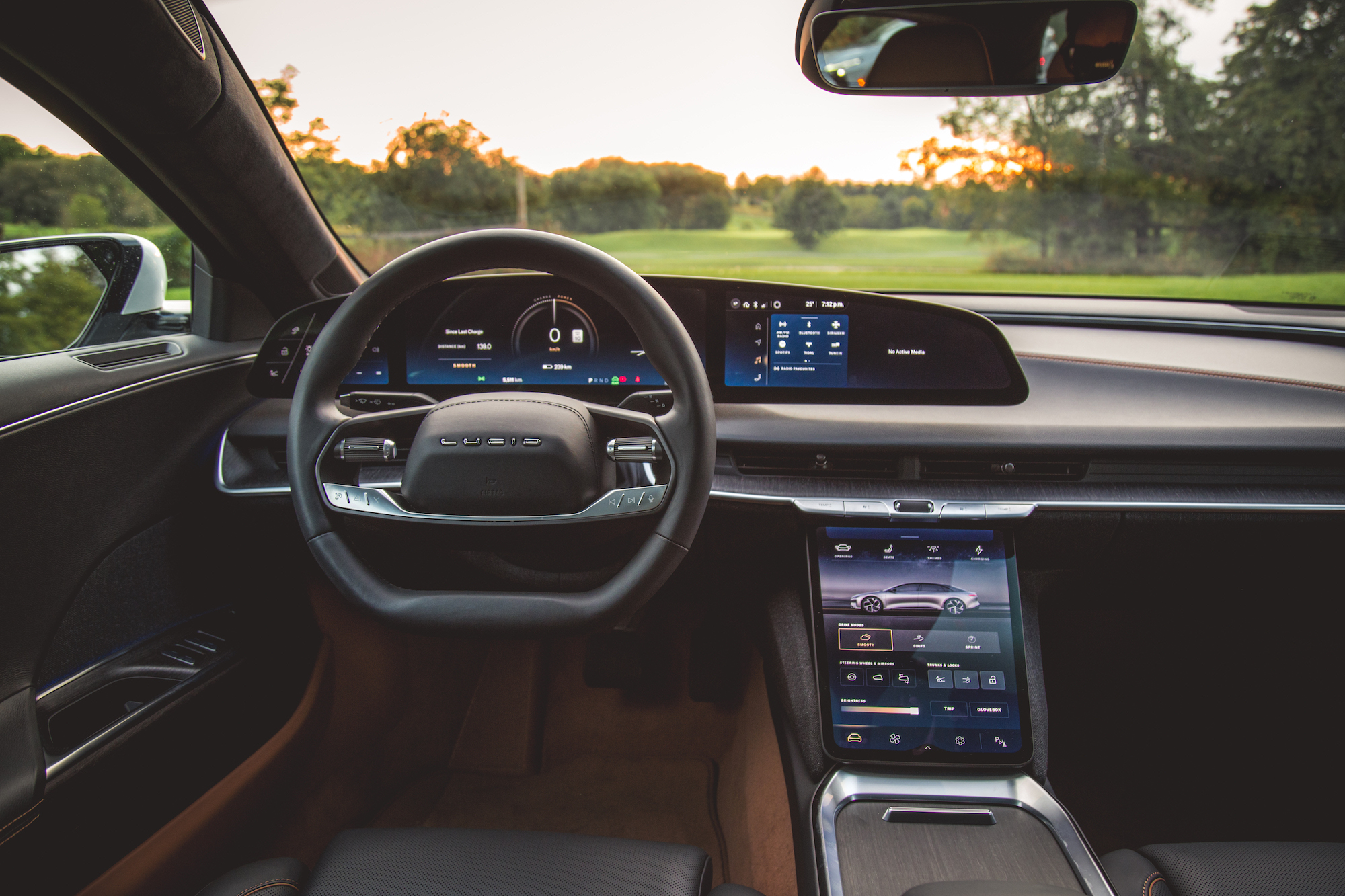
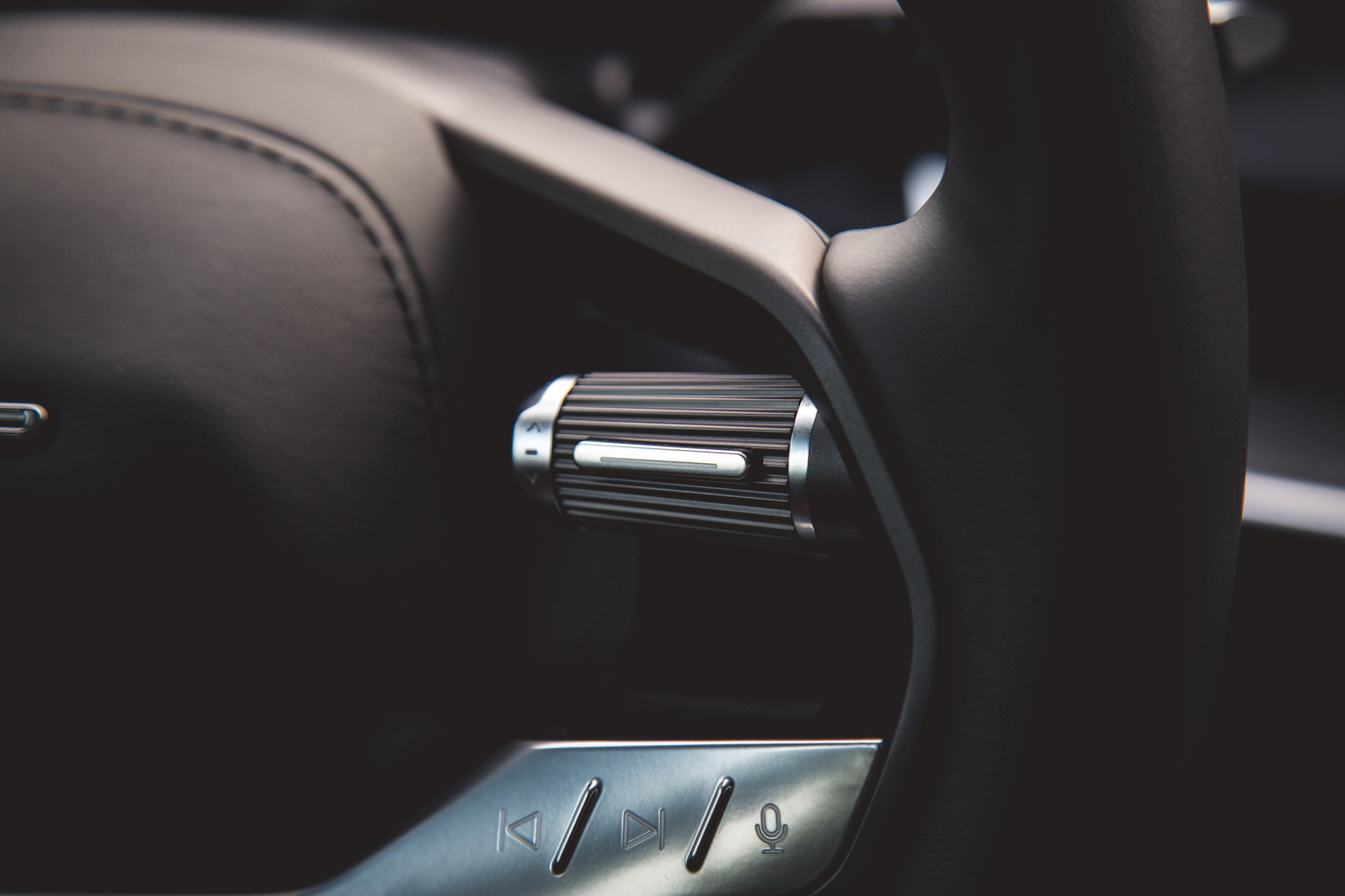
The cabin blends the sumptuousness of a Cadillac with the technological minimalism of a Tesla, all wrapped in a mid-century modern aesthetic. Clean lines, organic shapes, and intuitive functionality take precedence, while a thoughtful mix of textures and materials gives the Air its own identity. Turbine-shaped switchgear is integrated into the steering wheel and centre dash, with dedicated buttons for the temperature and volume, while the 12.5-inch touchscreen handles the rest.
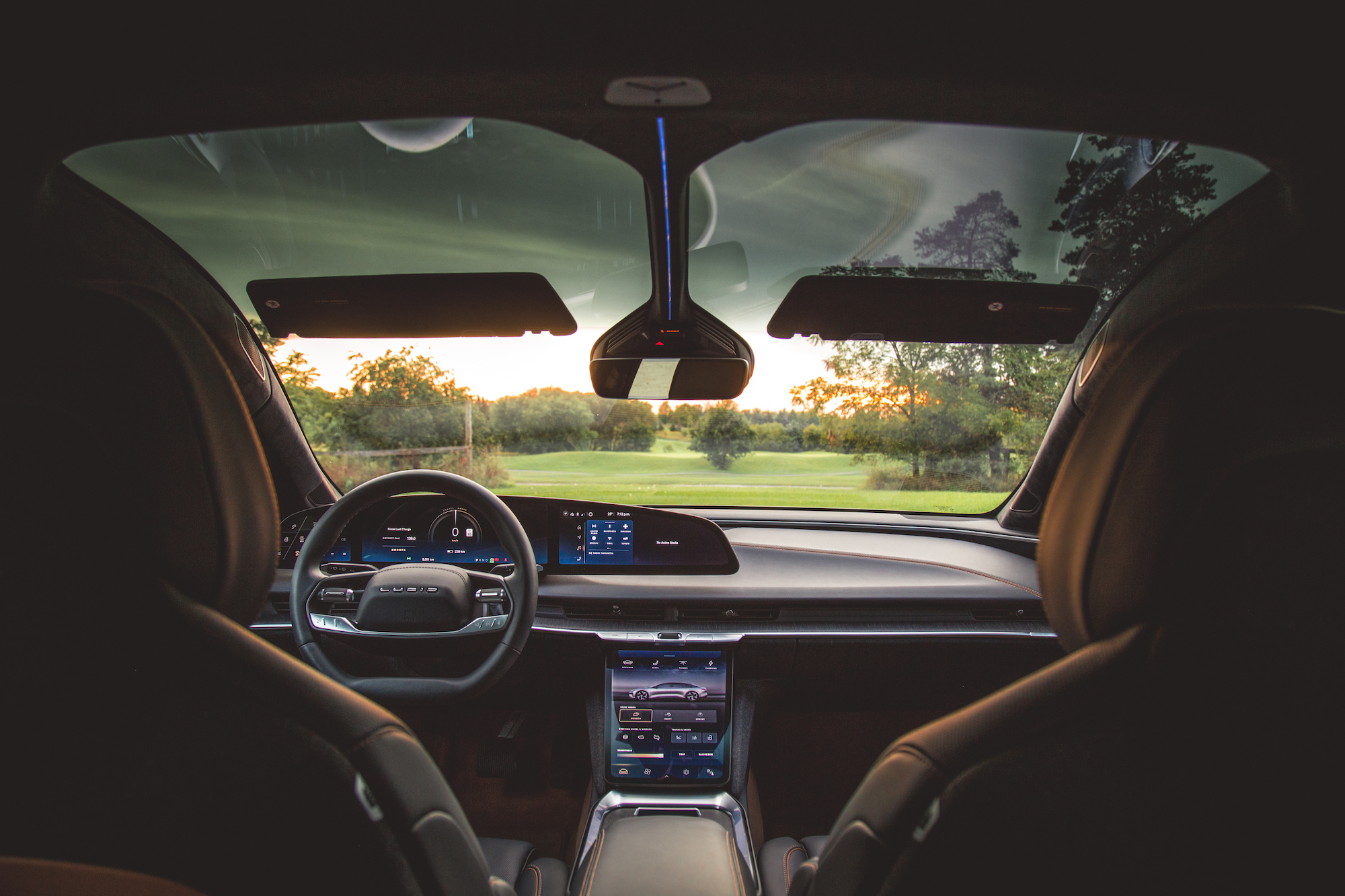
The generous use of dark wood and leather adds welcome warmth, but the execution isn’t consistent. The seats are trimmed in soft, buttery leather, making the rougher, thinner, and cheaper-feeling leather covering the doors and dashboard feel particularly out of place. Still, the cabin is flooded with natural light through the one-piece windshield Lucid calls the Glass Canopy, a $5,000 option that stretches from the base of the dashboard to above the driver’s head. The sunshades inevitably interrupt that expanse of glass, but you can push them aside when you don’t need them. It looks spectacular, but we’d rather not find out what replacing one of these windshields costs. Those less willing to gamble on an expensive repair can stick with the standard aluminum roof instead.
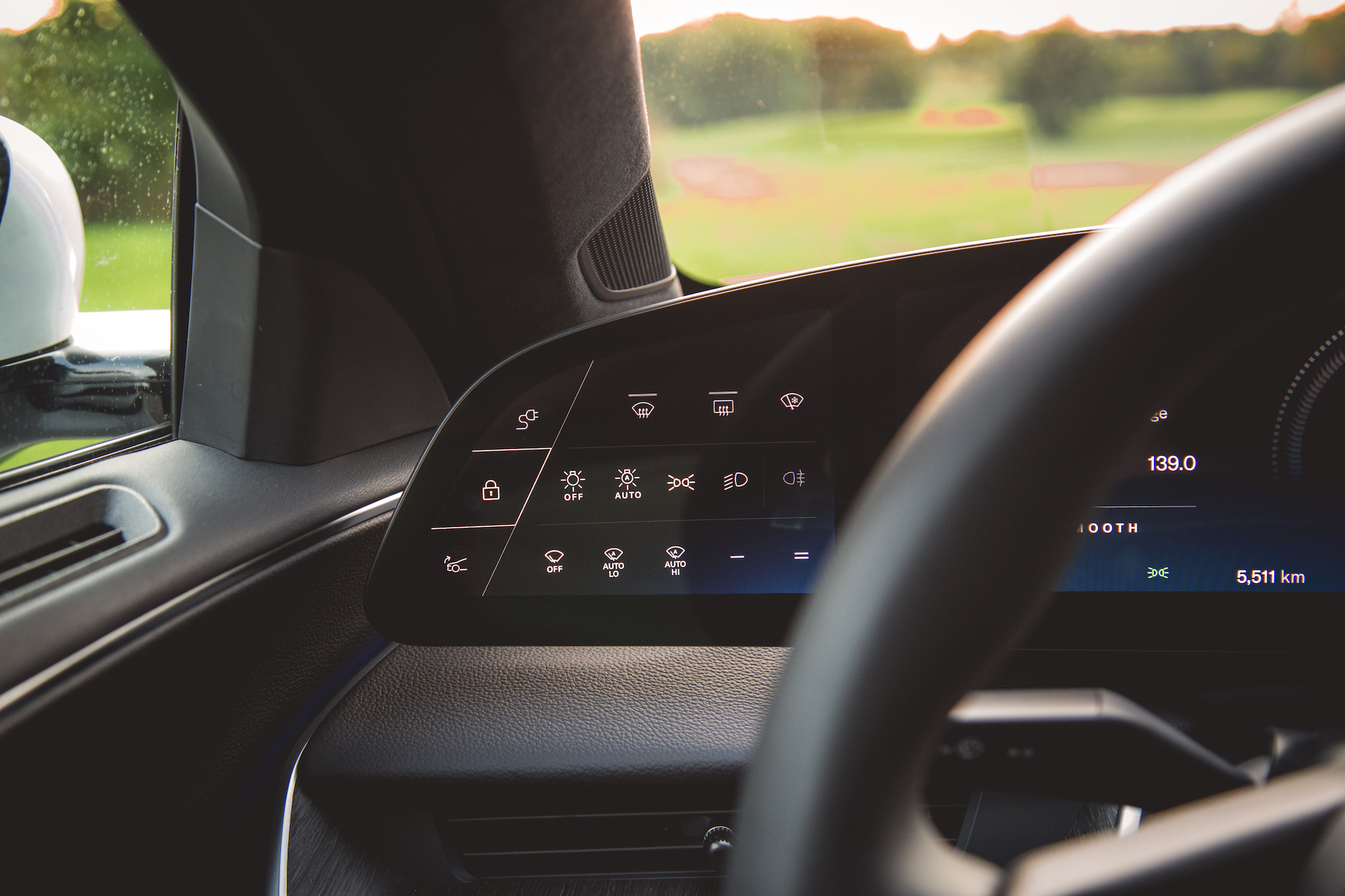
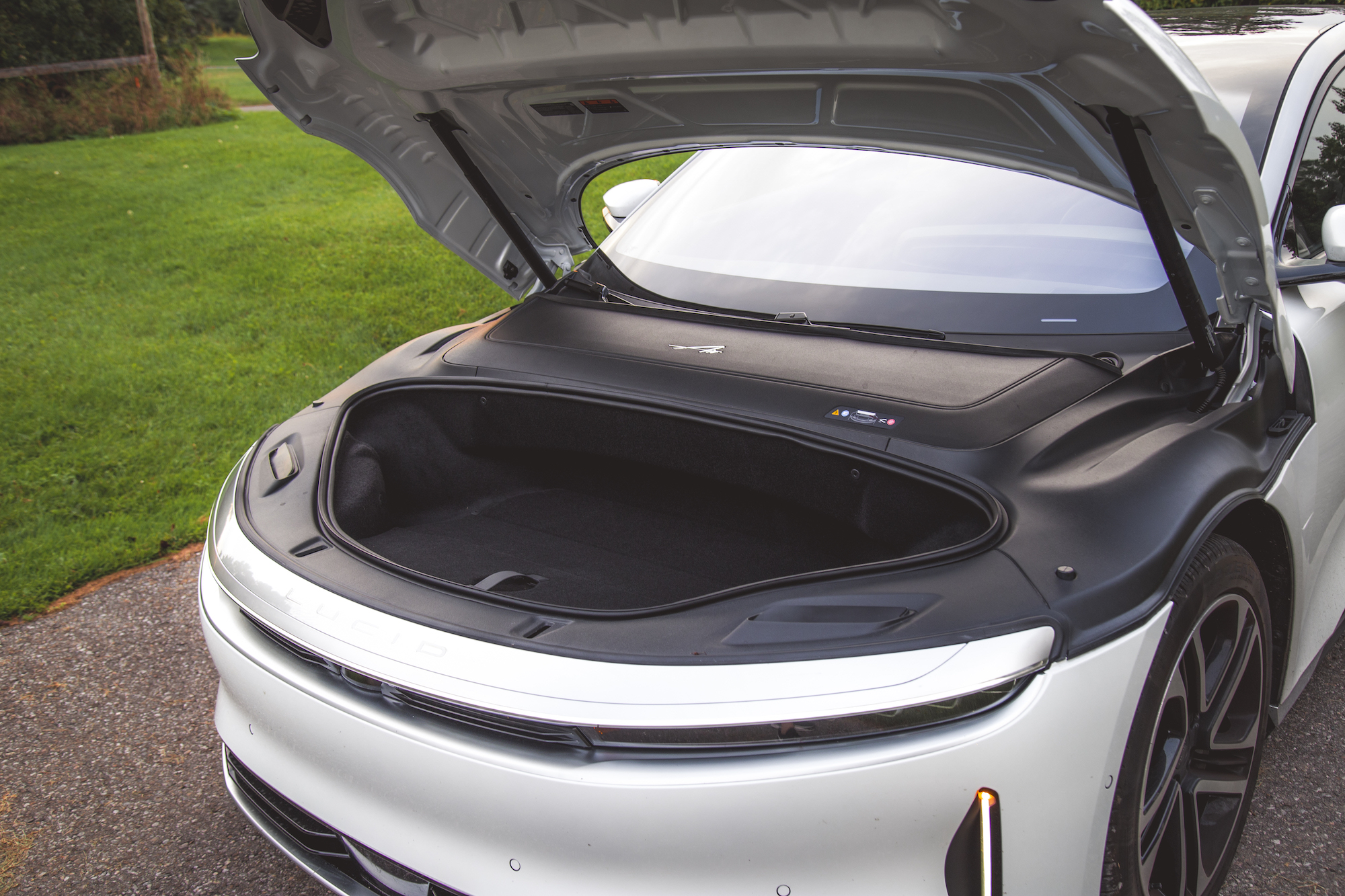
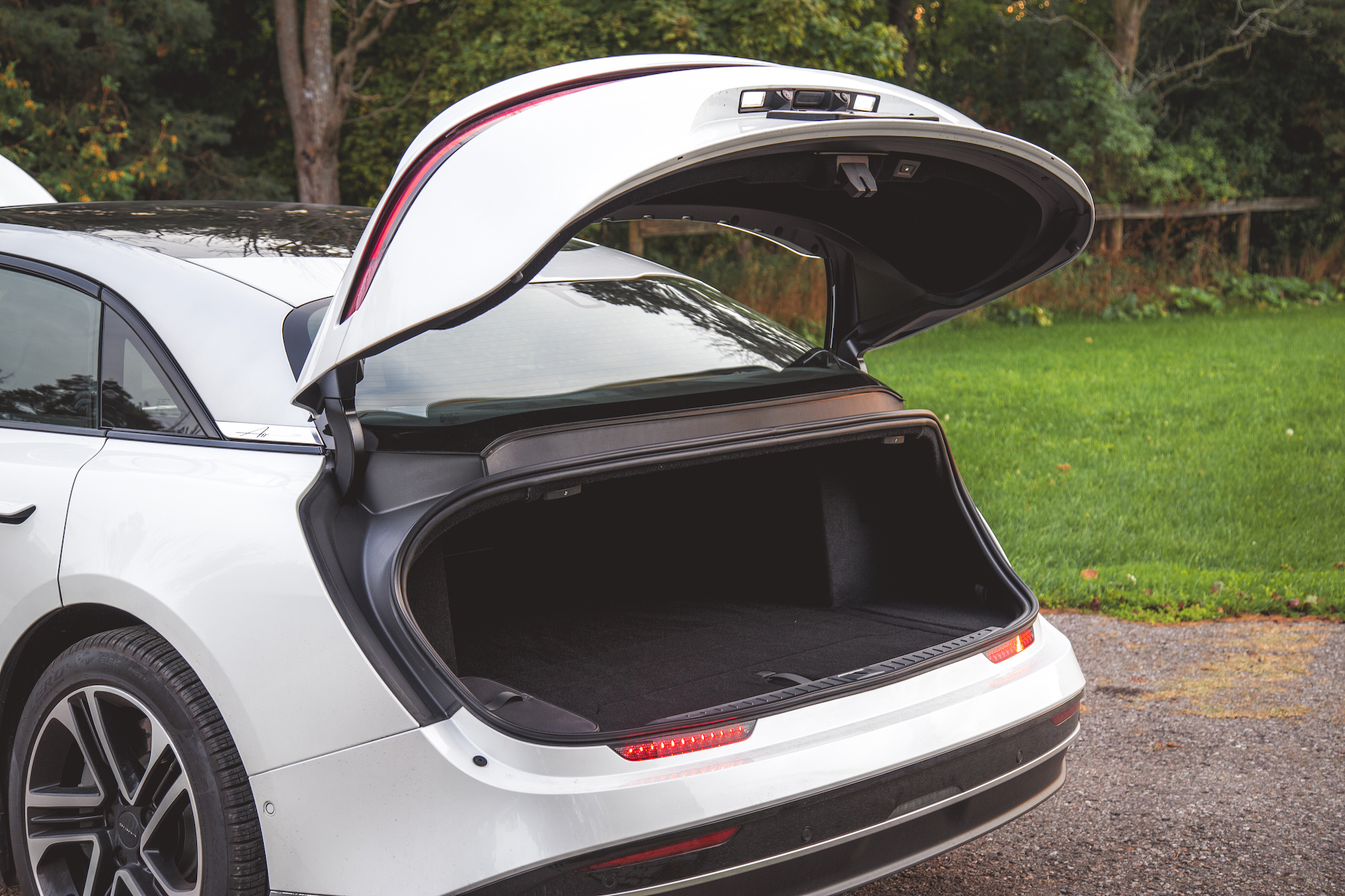
Unfortunately, the Air’s software-heavy practice extends to functions that have no business living on a touchscreen, such as the steering wheel and side-mirror adjustments. You’ll typically adjust these settings once or twice before saving them to the memory presets, but Lucid’s pursuit of minimalism doesn’t stop there. Even opening the trunk and glovebox requires a tap on the display, turning otherwise instinctive actions into unnecessary exercises in touchscreen choreography. We’ve heard endless tales of software glitches and maladies that continue to plague owners, but we did not encounter any during our week-long test with the software updated to version 2.10.0.
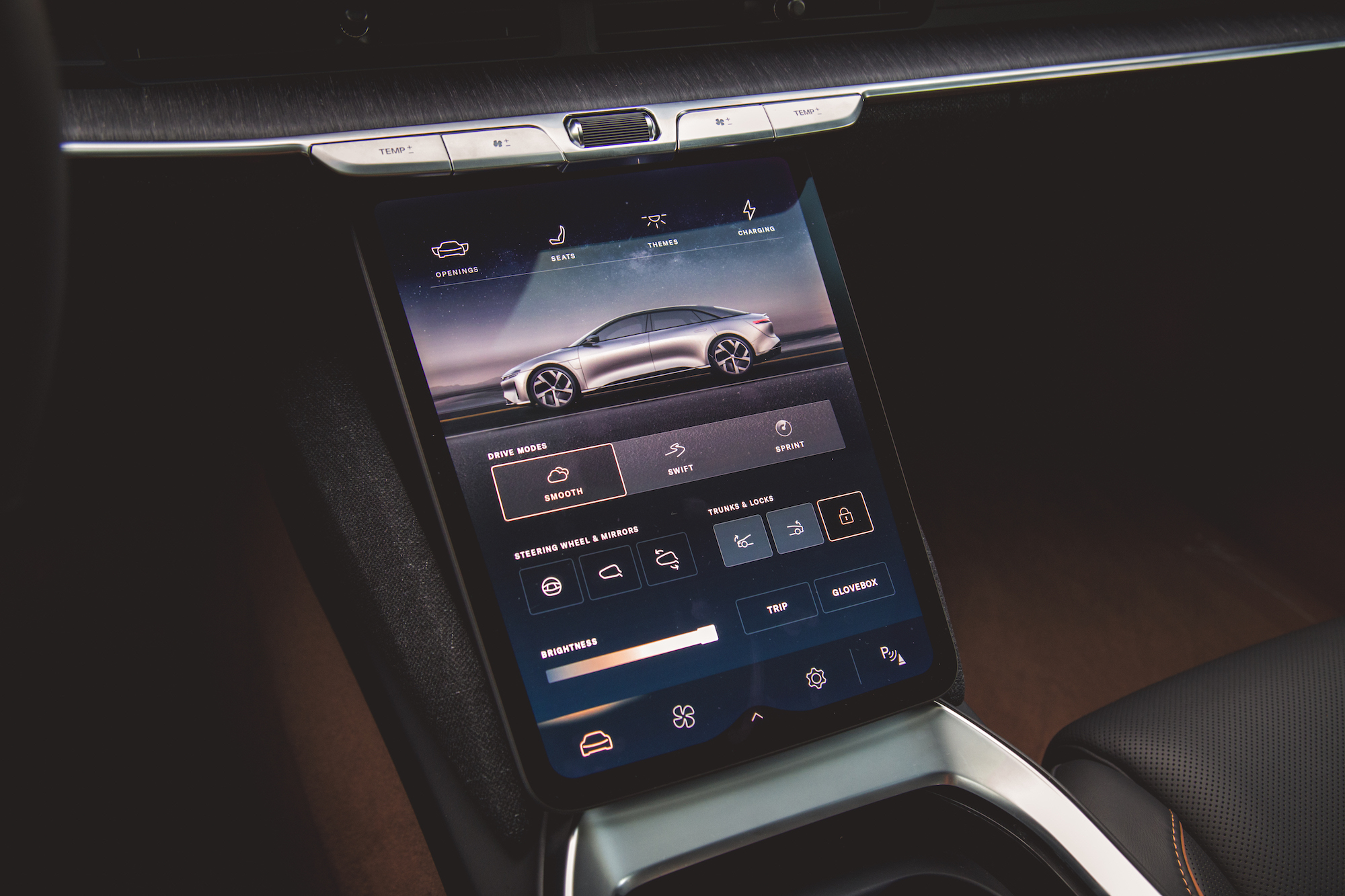
At least the vertically oriented touchscreen sits within easy reach. Despite occupying most of the centre stack, it can electronically retract with a quick swipe, revealing a deep, recessed storage compartment behind it, and complements the centre console and shallow cubby beneath the armrest.

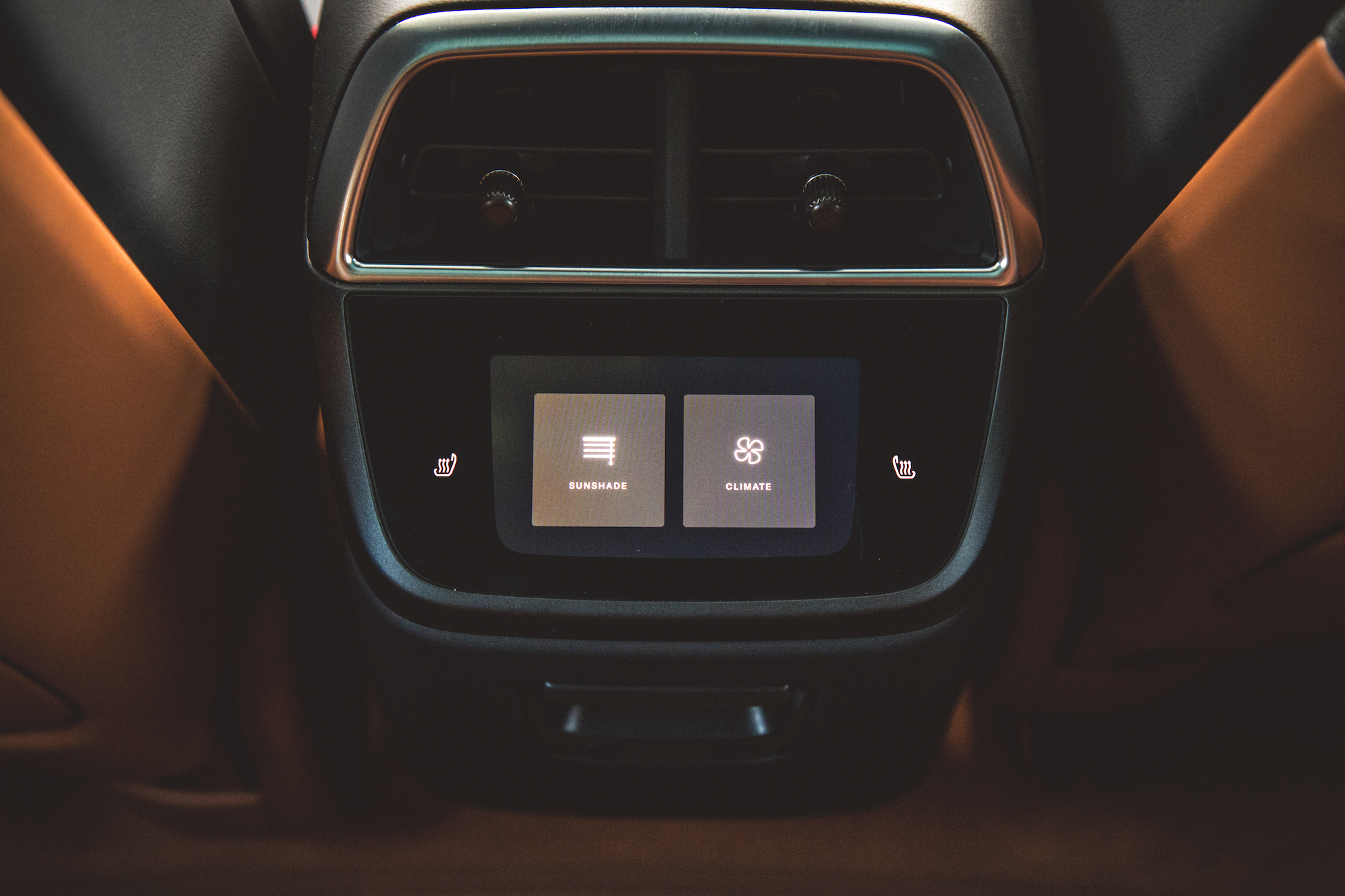
The same philosophy applies to the rear cabin, where abundant headroom and legroom make the Taycan, i5, and EQS feel comparatively cramped. Even with the narrow slit windows, the large glass canopy and brown leather brighten up the space. Legroom is similar to what you would find in the standard-wheelbase BMW i7 and Mercedes-Benz S-Class, but the non-adjustable seatbacks are too upright and the seat cushions too short to assume any reclined, laid-back position. The front seats also lack the adjustability found in its rivals, and the fixed headrests are positioned too far forward, making our necks uncomfortable after a day’s worth of driving.
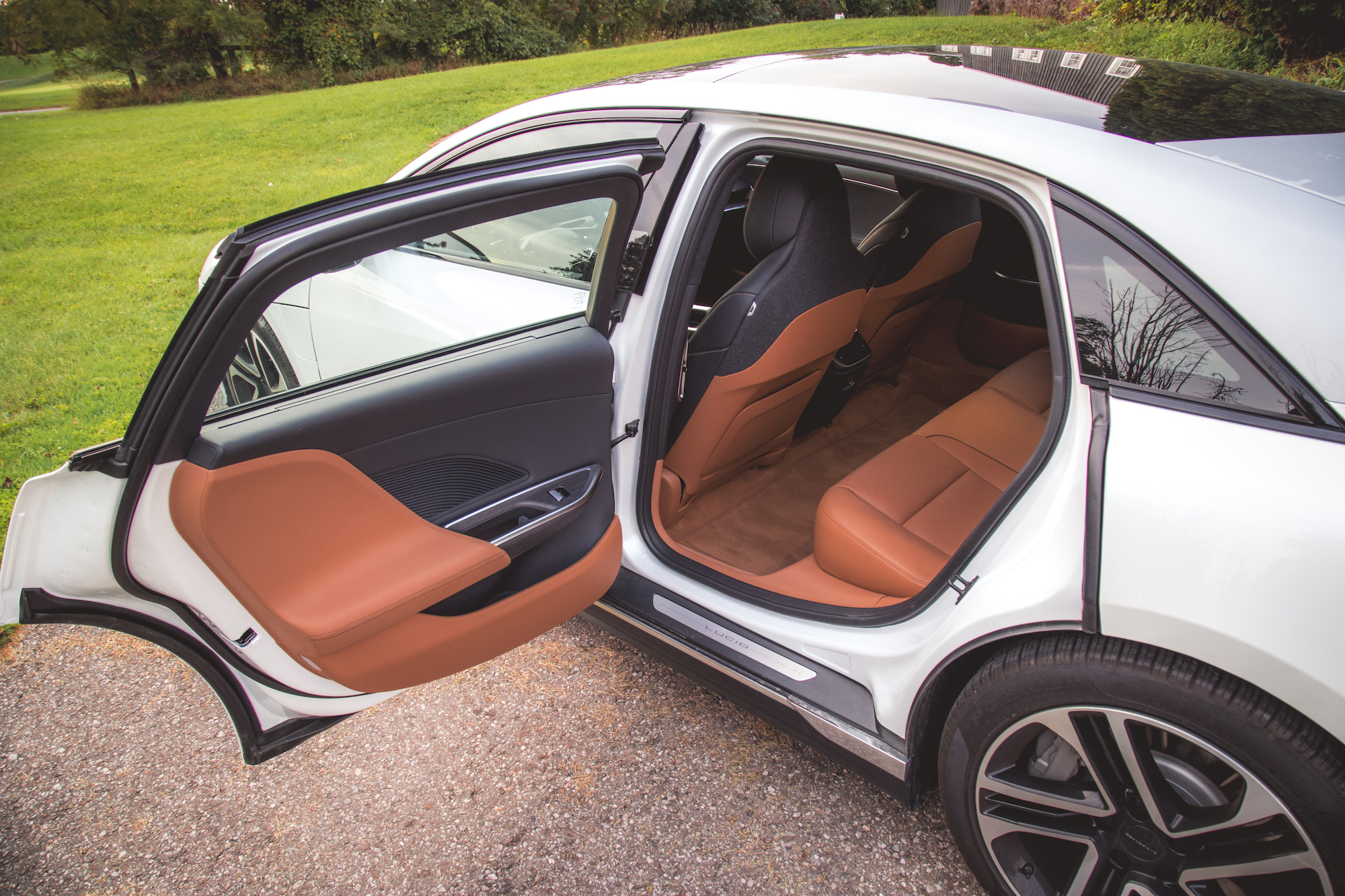
Ingress is something of a love-hate relationship in the Air, depending on where you’re sitting. The sedan sits painfully low to the ground and looks like a sports car next to the Lexus ES 500e, with a roofline that’s hampered by gravity and giving taller front occupants a jolt to the noggin if they don’t remember to duck on the way in. The rear doors, however, swing open a full 90 degrees like the Mazda CX-5, revealing one of the widest entry portals we’ve encountered and hinting at the Air’s potential as a ride-hailing favourite. There are no self-closing doors, however, while soft-close functionality is reserved as an option for the Touring model.

Blending modern aesthetics with one of the segment’s most spacious rear cabins, the Lucid Air makes a grand statement, proving that not all electric vehicles have to be soulless commuting appliances. Frenetic acceleration, remarkable chassis fluency, and class-leading range only add to the Air’s relaxed yet invigorating West Coast character. It’s an EV that feels every bit as ambitious as its numbers suggest, and while the forecast shows some tumultuous weather ahead, we’re convinced that the Air and Gravity are strong foundational products that will keep the company steady and surefooted.
Specifications:
Model: 2026 Lucid Air Touring
Paint Type: Stellar White Metallic
Base Price: $110,500
Price as Tested: $123,350
Wheelbase(mm): 2,960
Length/Width/Height (mm): 4,975 / 2,196 / 1,409
Curb weight (kg): 2,272
Powertrain: 92 kWh lithium-ion battery, two electric motors
Horsepower: 620 hp
Transmission: Direct drive
Drive configuration: Front and rear electric motors, AWD
Claimed Range: 694 km
Observed Range: 655 km
Tires: 245/45R19; Pirelli P Zero All-Seasons





Leave a Reply