
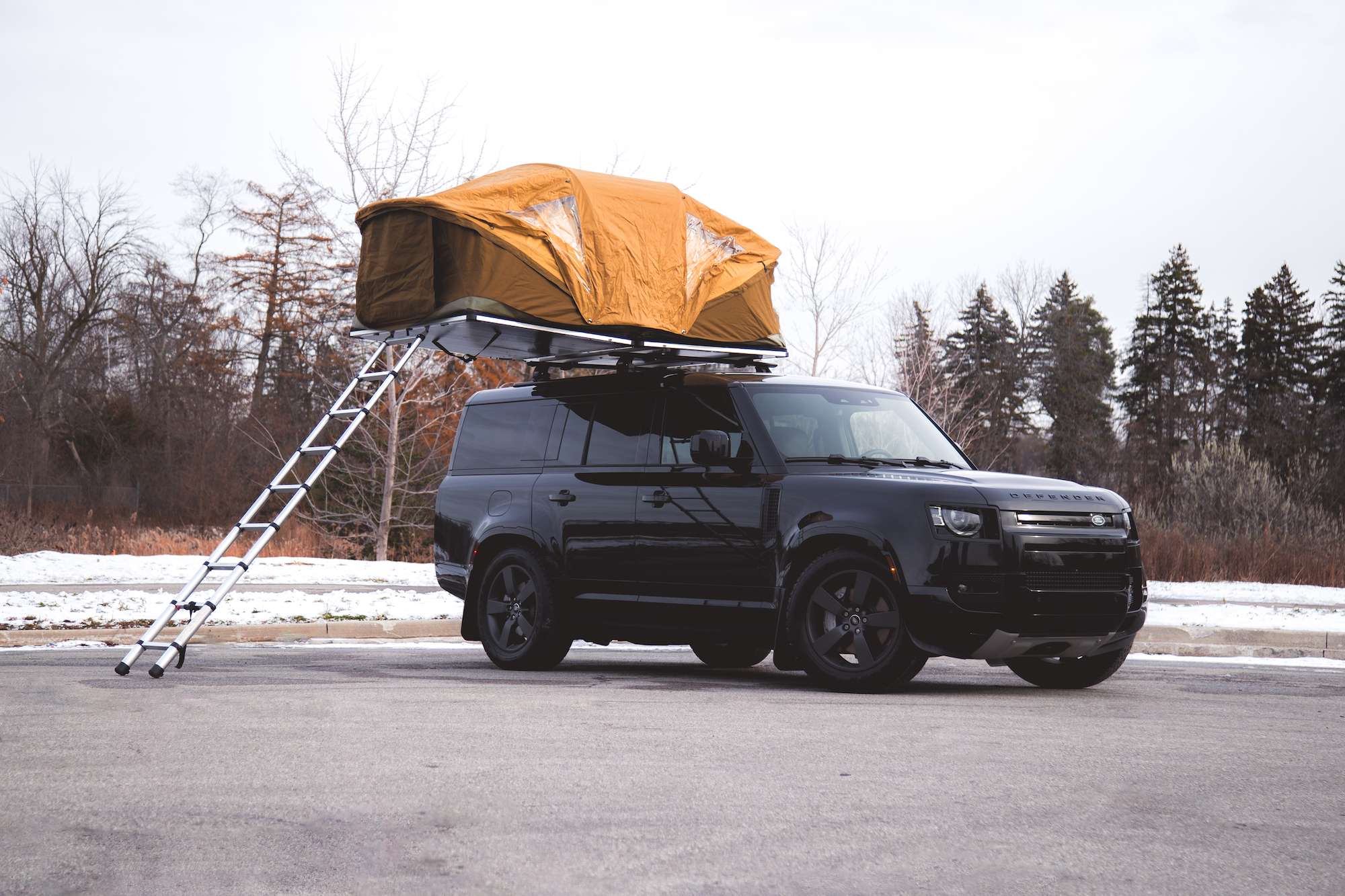
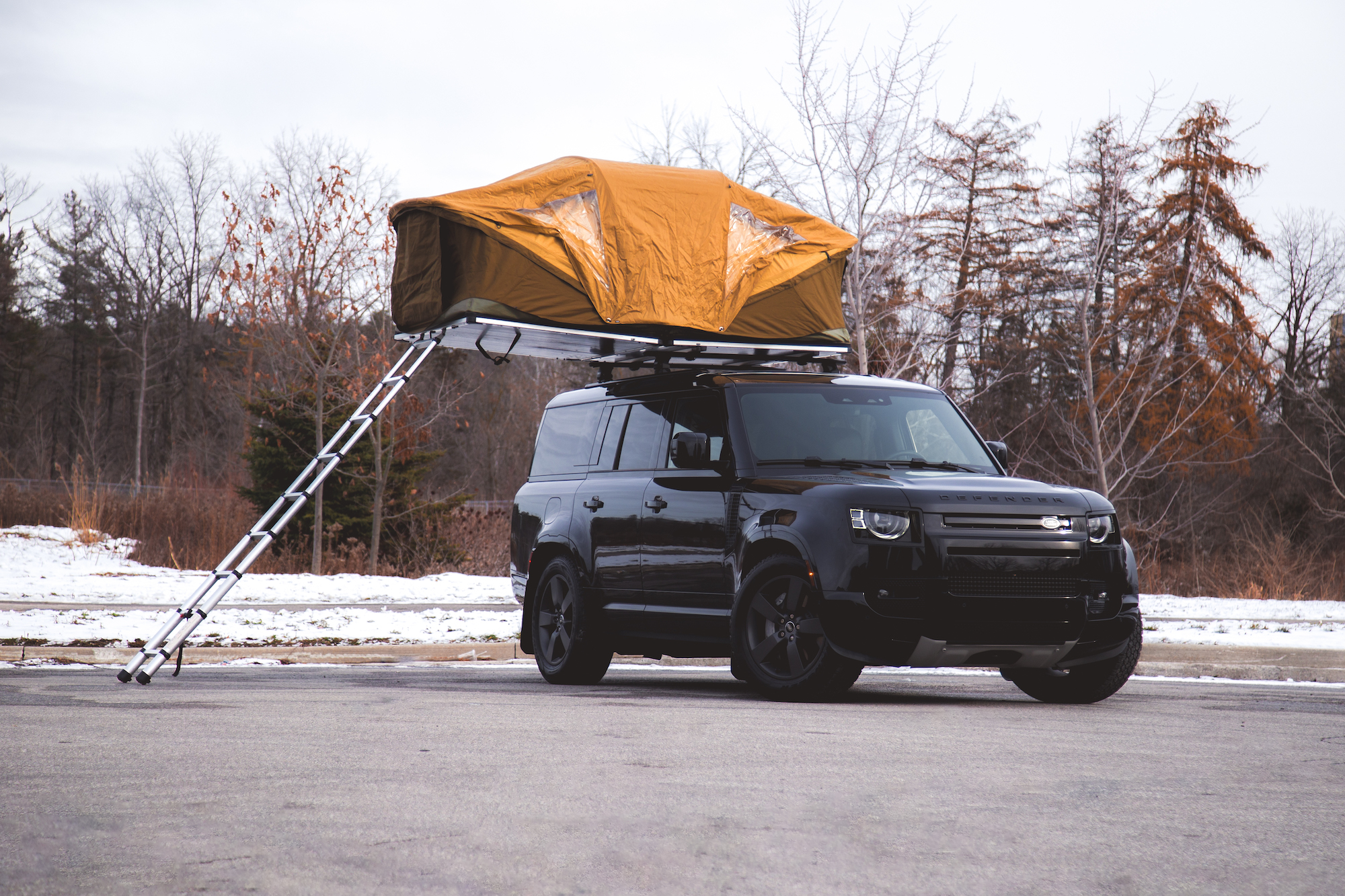
Are rooftop tents worth it? Camping with ground tents has been the norm for ages, but the development of robust, sturdy rooftop tents has made them a viable, quickly deployable option for catching shut-eye, especially if you frequently change camping spots, need extra cargo space for other gear, or enjoy the relative safety and security of being above ground. Our Land Rover Defender 130 came equipped with a Thule Approach soft-shell tent (medium size, $3,500), already bolted to the roof rack, and we’re here to see how it affects the car’s handling and whether it’s as easy to set up as they say.
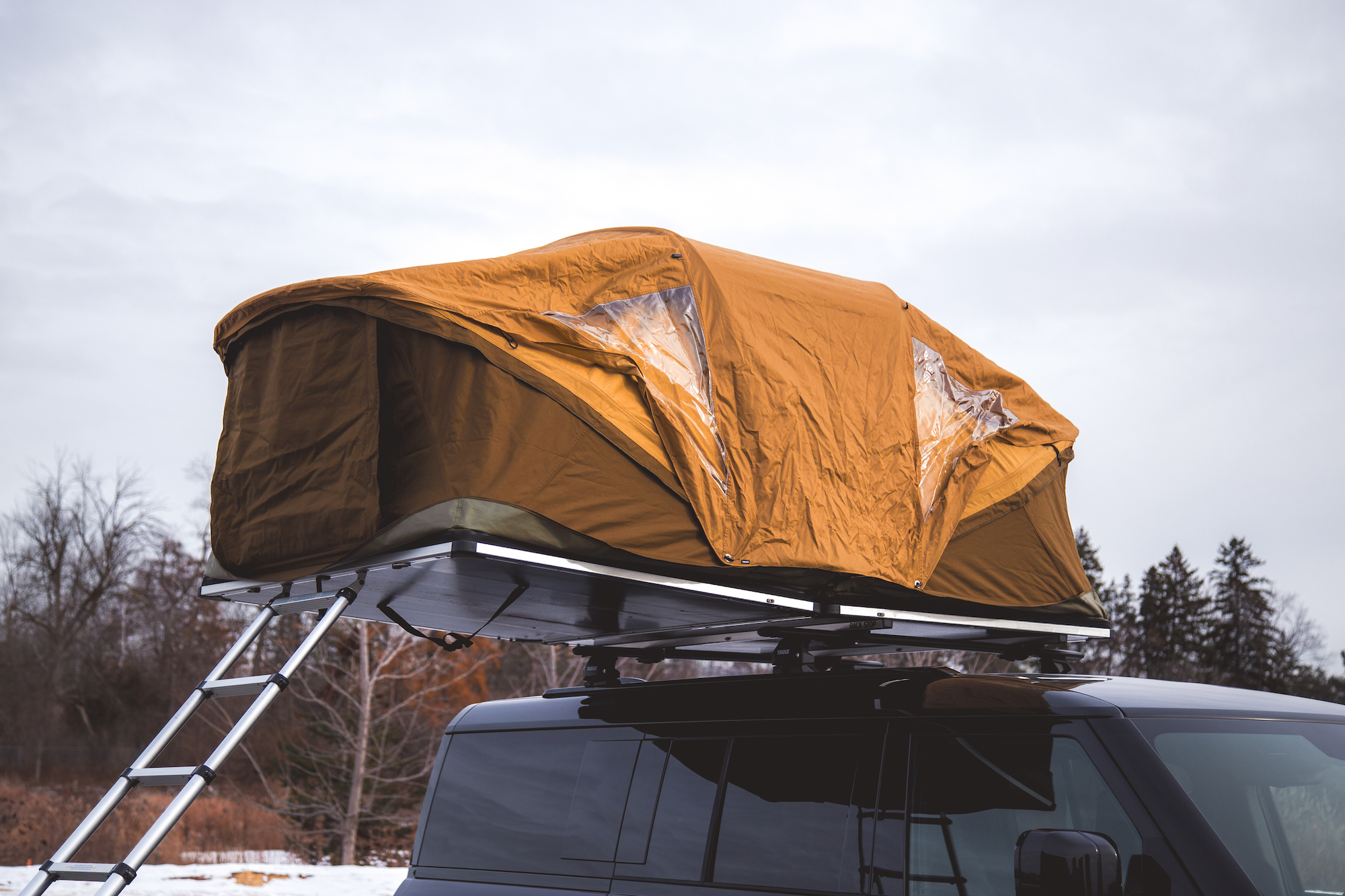
The Thule Approach tent fits on most Defenders with a roof rack, and comes in three colours: gray, yellow, and blue. There are two sizes: Medium (like ours) that fits 2-3 people inside, though three is a bit of a stretch unless it’s a small child, and Large that fits 3-4, both supporting up to 300 kg. The tent took only 10 minutes to set up, and that will easily drop to under 5 minutes with more familiarity. No screws, appliances, or handyman knowledge needed—only a glance at the paper manual.


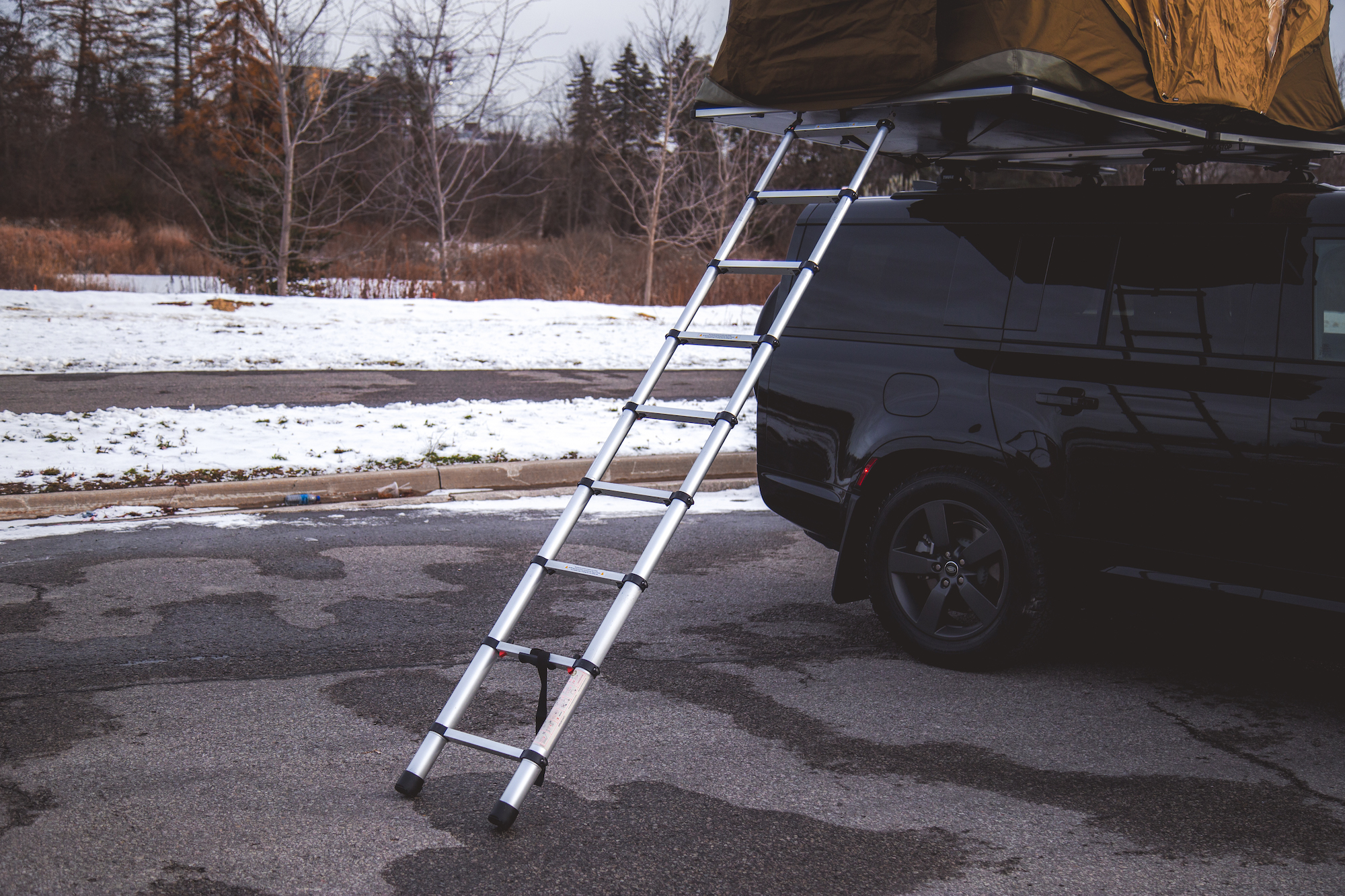
Unzip the black fabric cover, pull the ladder rails toward you to extend them and the tent will unfold at the same time like a pop-up card. That’s it. In fact, the most challenging part of the setup is breaking it all down, throwing the cover back on, and zipping it up for a clean, snug fit. There’s a removable rain cover as well.

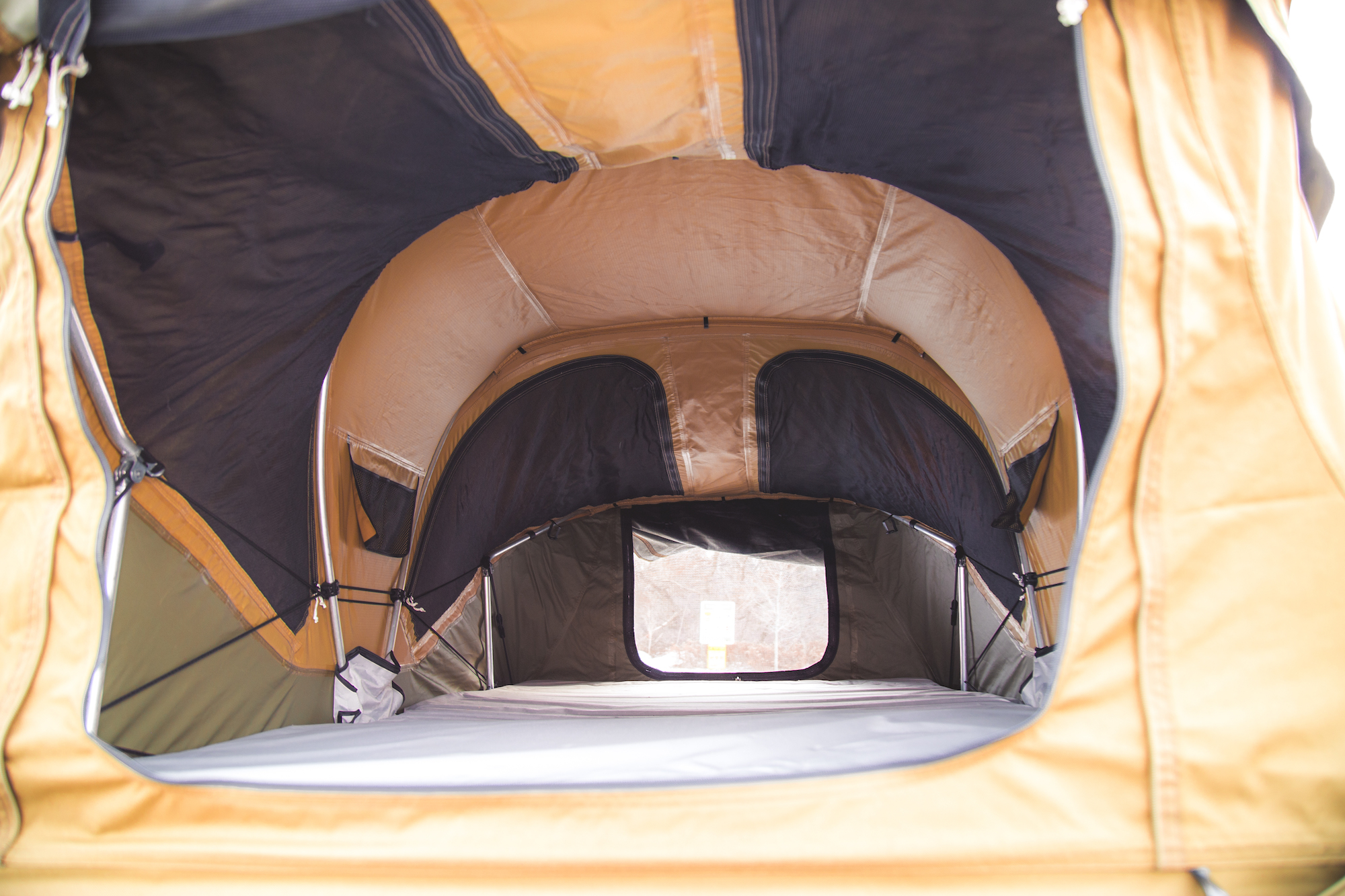
Early December frost kept us from camping outside, but the tent is lined with a foam mattress that’s reasonably comfortable to lie down on, meaning you don’t need to bring along your own sleeping bag, only a blanket and pillow. The interior is spacious with large zip-up openings on both sides, integrated bug screens, and openable windows that let in light and offer a panoramic view of your surroundings, giving you a new perspective as you gaze up at the night sky. In our case, we could see beyond the vast reaches of the mall parking lot and realized how much easier it was to spot our Defender in a sardine-packed Black Friday weekend. We also had a few lightbulb moments: this tent would be great for music festivals or drive-in movie theatres.
The Defender also proved to be the perfect four-wheel drive pairing. The Thule Approach Medium tent weighs 58 kg on its own, adding to the Defender’s planetary mass for a total curb weight of 2,585 kg. A drop in the bucket, in some ways, but it’s a testament to the engineering that you barely hear any wind noise or turbulence caused by the roof-mounted box, even at triple-digit speeds and in high wind situations. You can even operate the sunroof normally, as it doesn’t interfere with the view or the mechanism.

Granted, it is shocking how much a car’s handling changes when you mount a heavy tent on the roof, elevating its center of gravity and giving the Defender a more nautical, ungainly feel in corners. Lazier and more aloof when changing directions, you can feel the Defender’s hesitancy to rotate, but not to the point that it wants to tip over. The platform feels stable and solid thanks to an air suspension, and only takes an hour or two to acclimate, like giving a professional marathon runner a 20 kg dumbbell to ballast on their head – they won’t tip over, but they might run a little funny at first.
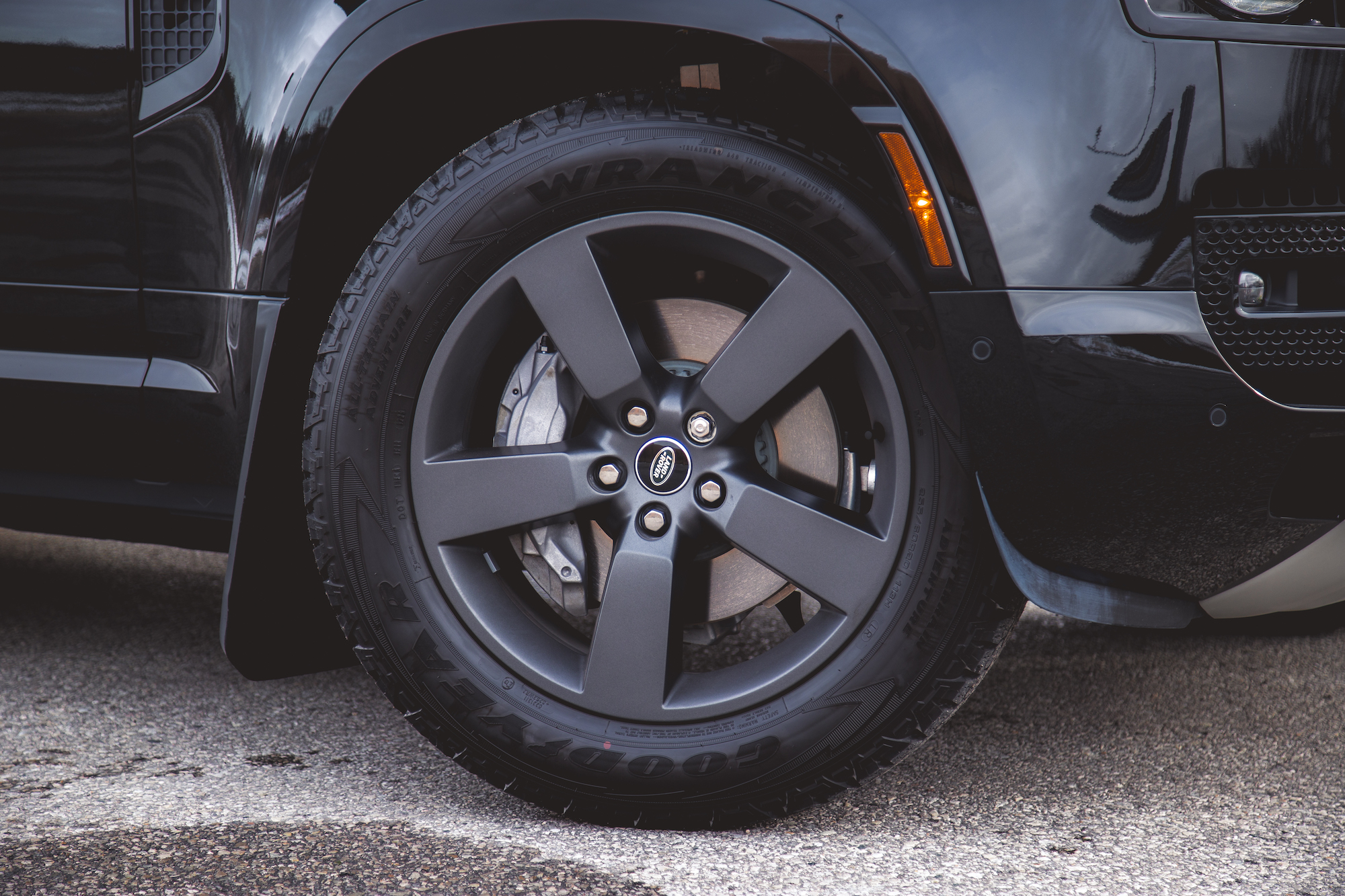
After piloting the rabid Defender Octa with its pinpoint sharpness and sport-tuned reactivity, it’s revealing just how much we missed the standard Defender’s longer, lazier, and more languid steering rack. The vehicle feels more relaxed in this environment, with slower movement and more calculated roll. The chassis speaks more and rides with greater plushness and absorbency, even with the 20-inch all-terrain tires equipped. The P400 powertrain is also well-suited to the extra weight. The 3.0-litre turbocharged inline-six produces 395 hp and 406 lb-ft of torque through an 8-speed automatic. While it feels and sounds mildly strained at the top end on wide-open throttle, acceleration is smooth and well-managed, with enough residual torque for strong, lively overtakes and bursts of speed. The Defender 130 P400 is rated to hit 0-100 km/h in 6.6 seconds, but you can knock that down a couple of notches with the tent mounted.
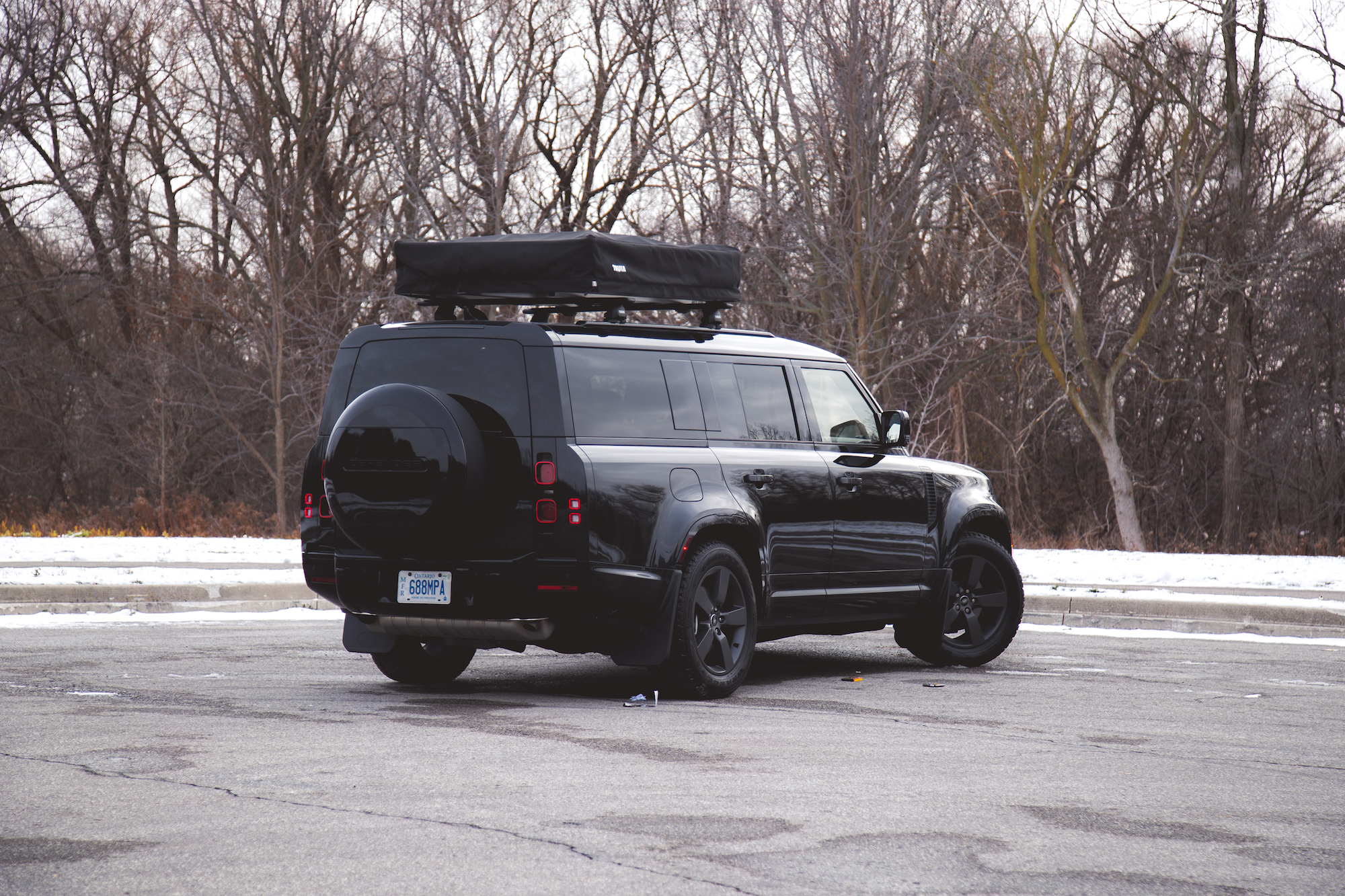
We will have to wait until the warmer months to camp out and fully immerse ourselves in the Thule tent, but our week with the Defender has shown us that it’s the perfect pairing for heavy rooftop tents, thanks to its strong engine and robust suspension. If you’re looking for a rooftop tent, be sure to check your car’s roof weight capacity and if the tent is compatible with your roof rack system. Thule has a comprehensive website that checks for matching vehicles and suitable roof racks, but it’s always helpful to inspect your car’s manual. They may be more expensive than standard ground tents, but their deployment speed, above-ground security, and spacious interior with plenty of natural light make them a compelling choice for outdoor campers and nomadic explorers.
Specifications:
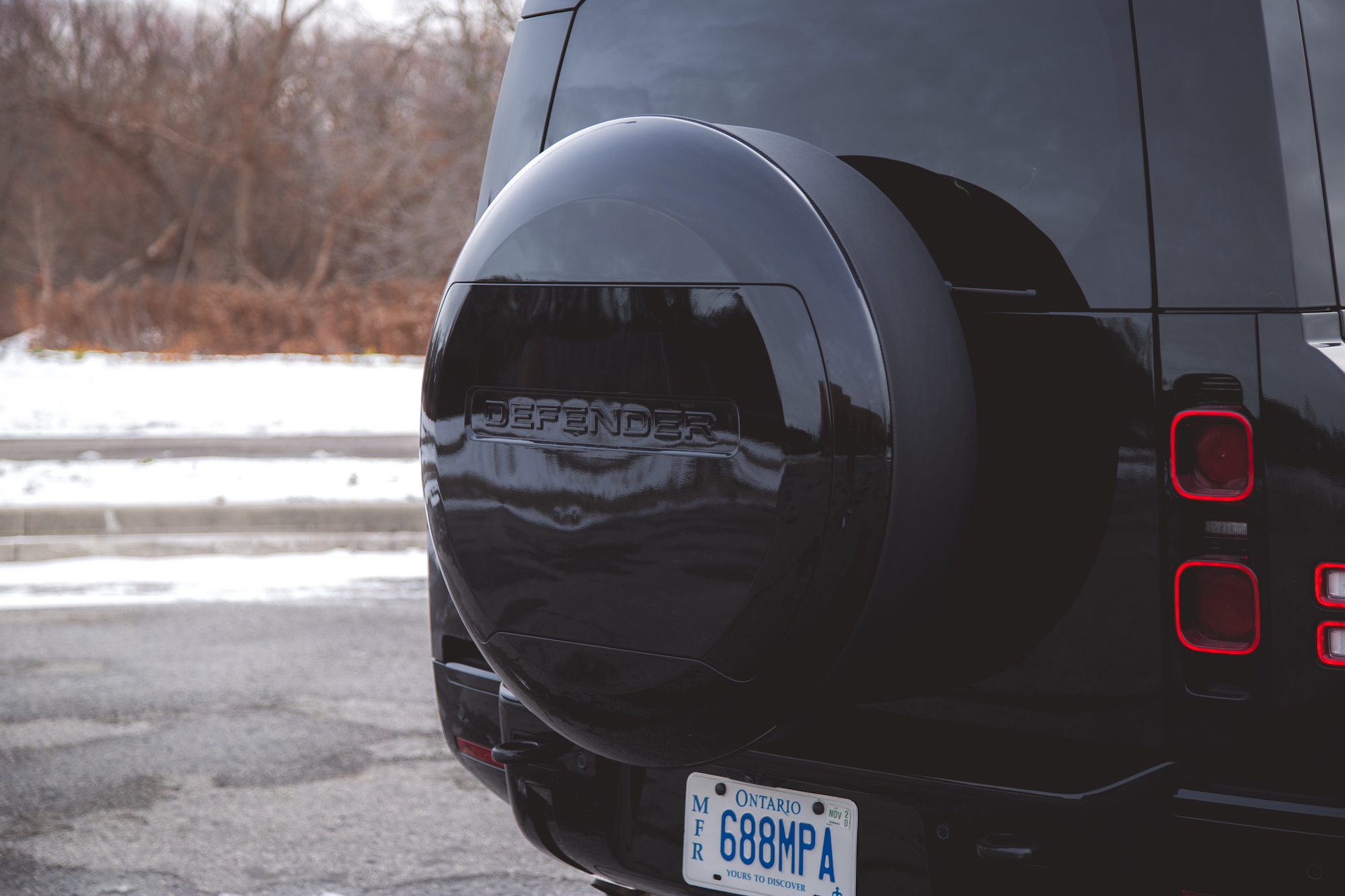
Model: 2026 Land Rover Defender 130 P400 X-Dynamic SE
Paint Type: Santorini Black
Base Price: $98,600
Price as Tested: $109,050 + $3,500 (Thule Approach M tent)
Wheelbase(mm): 3,022
Length/Width/Height (mm): 5,099 / 2,008 / 1,970 (not incl. tent)
Curb weight: 2,527 kg + 58 kg (tent) = 2,585 kg total
Engine: 3.0-litre turbocharged inline-six
Horsepower: 395 hp @ 5,500 – 6,500 rpm
Torque: 406 lb-ft @ 2,000 – 5,000 rpm
Transmission: 8-speed automatic
Engine & Drive Configuration: Front engine, 4WD
Observed Fuel Consumption (L/100km): 15.5
Tires: Goodyear Wrangler All-Terrain Adventure; 255/60R20









Leave a Reply