
Remember those ‘choose your own adventure’ books where you assume a protagonist’s role, and make important plot choices by flipping to a specific page? That’s what it feels like when choosing a 4Runner, the ultimate off-roading fantasy novel. And now you’ve reached the fork in the road: TRD Pro or Trailhunter? Both are about the same price but have entirely different personalities. Turn to page 38 if you want to go high-speed desert running in the Mojave with the TRD Pro, or instead turn to page 97 to traverse overland on the rocky, forested, and oceanic paths of the Baja Peninsula with the Trailhunter.

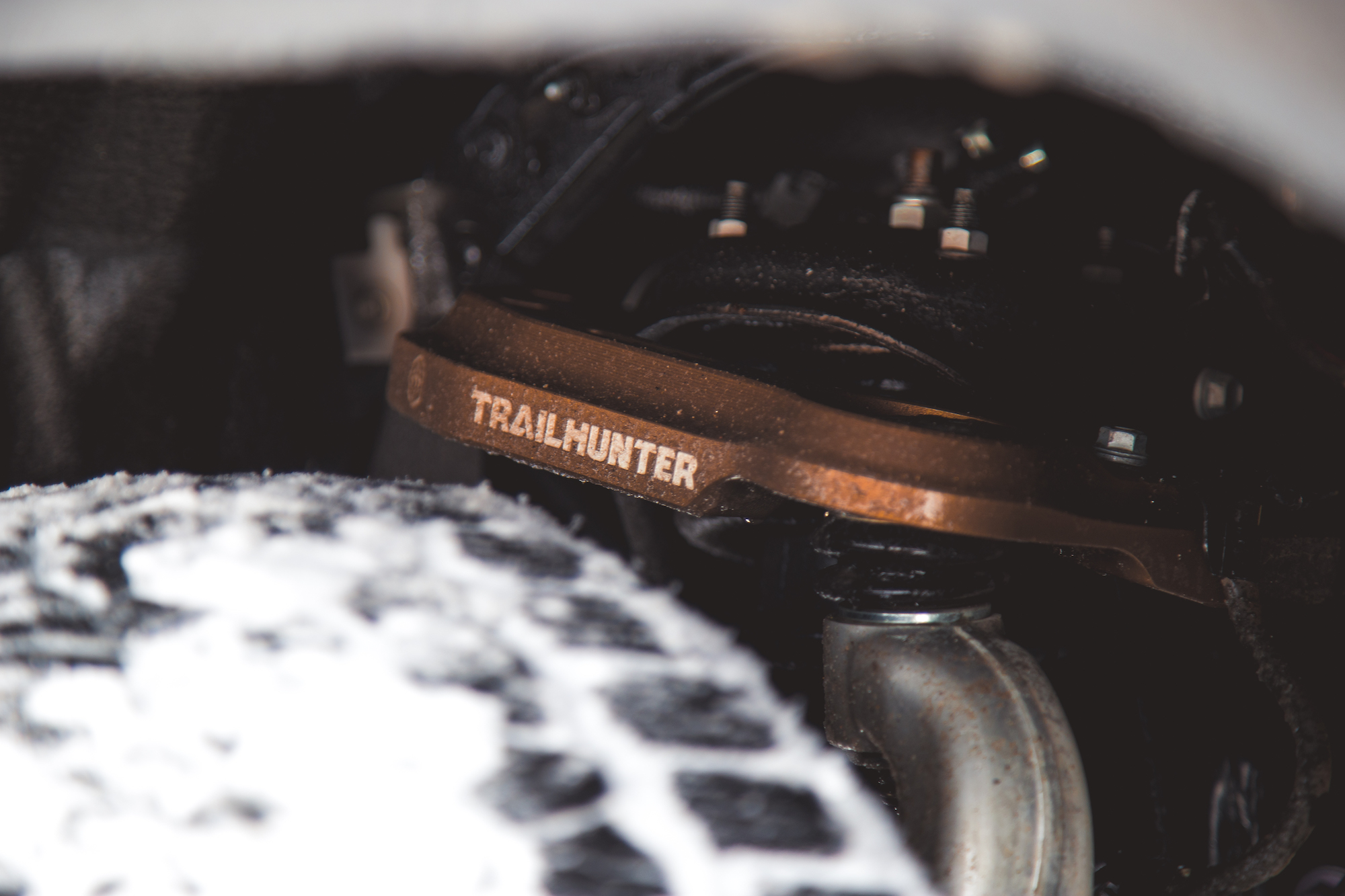
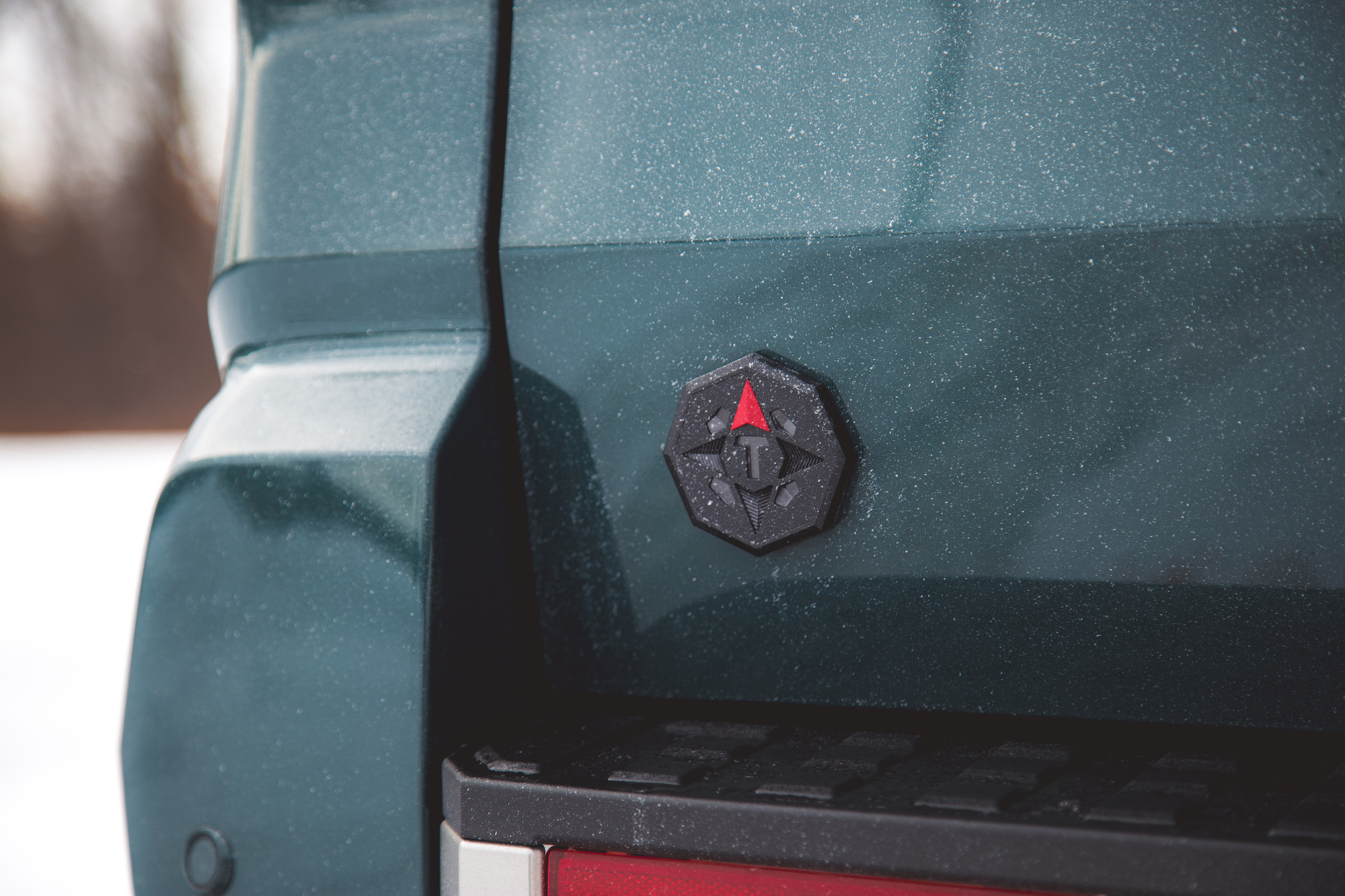
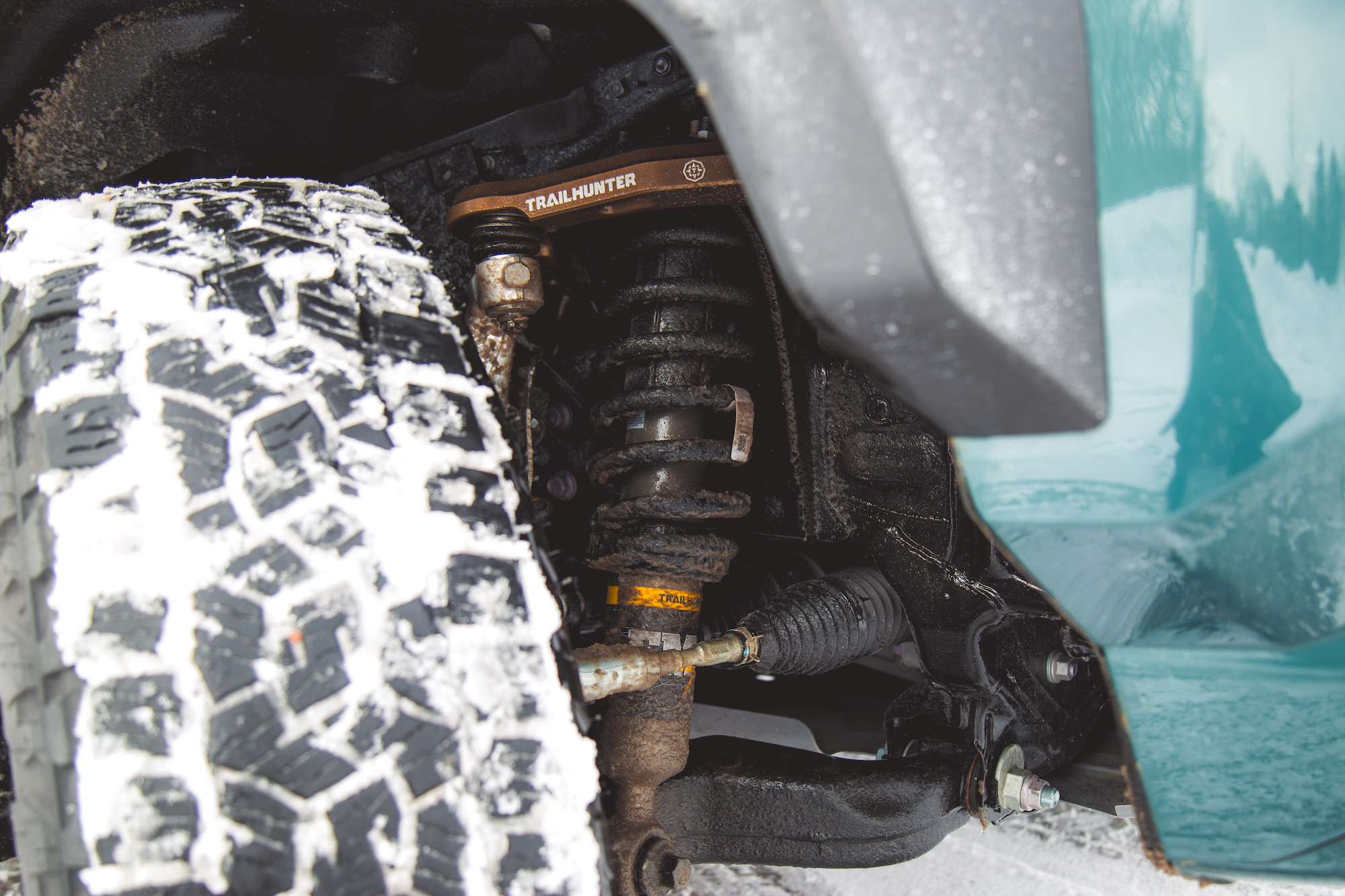
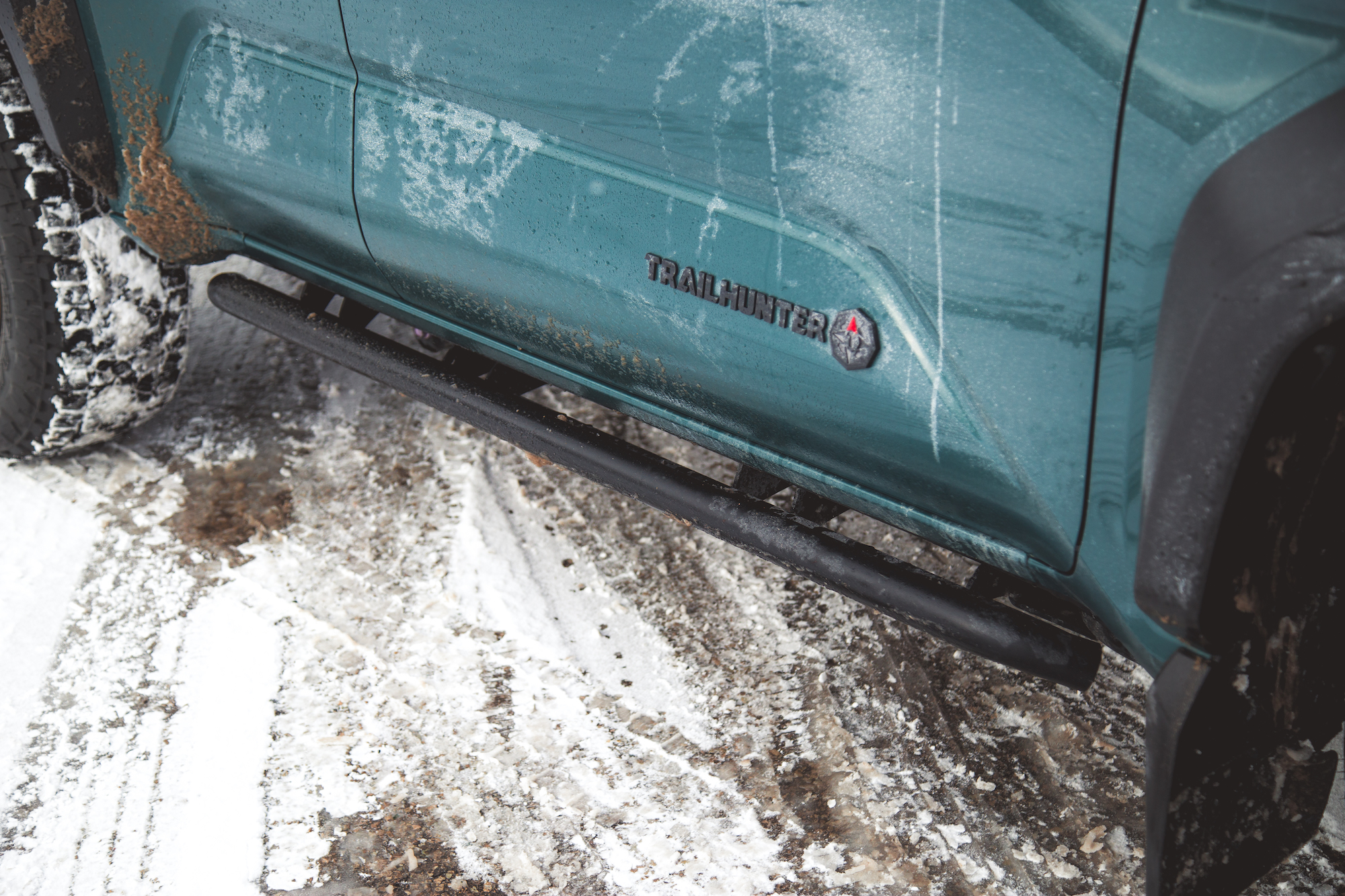
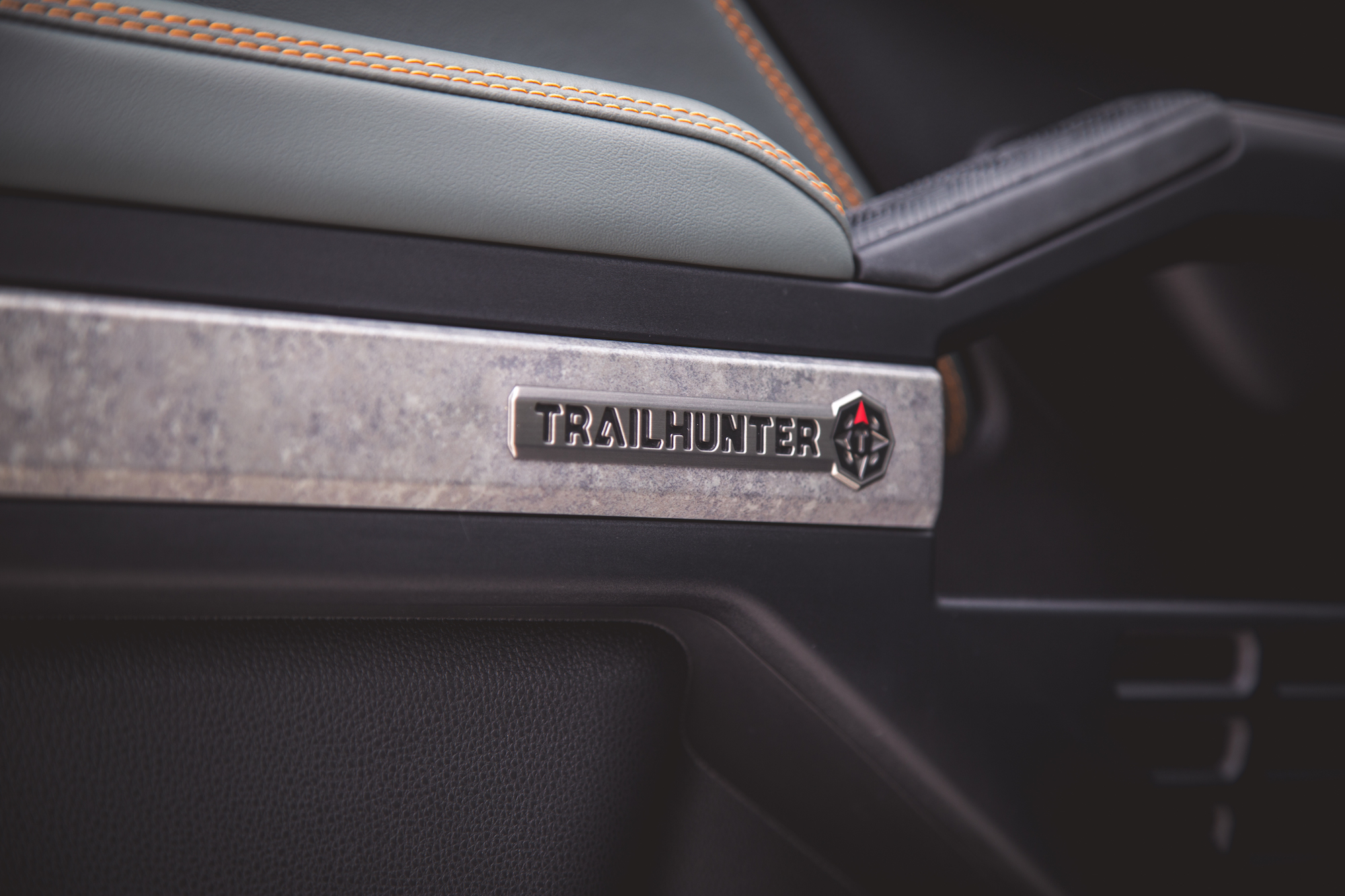
While both are clearly overkill for your grocery runs, selecting a persona for your 4Runner is liberating, like selecting your hero’s abilities and apparel at the start of a video game: Patagonia fleece, or Arc’teryx shell? The Trailhunter is equipped with Old Man Emu shocks with 2.5-inch forged monotube shocks and external remote reservoirs, which are better for lower-speed rock crawling and water fording compared to the TRD Pro’s FOX shocks. It also comes with an ARB roof rack and Rigid colour-selectable fog lights that shine white or yellow (TRD is yellow only), giving it BMW CS motorsport vibes. While the Trailhunter doesn’t have a sunroof like the TRD, it does have stronger Hot Stamped Steel (HSS) skid plates for underbody protection, and side frame-mounted rock rails that aren’t very useful as doorsteps, so shorter folks might have a difficult time with ingress, especially without any grab handles.

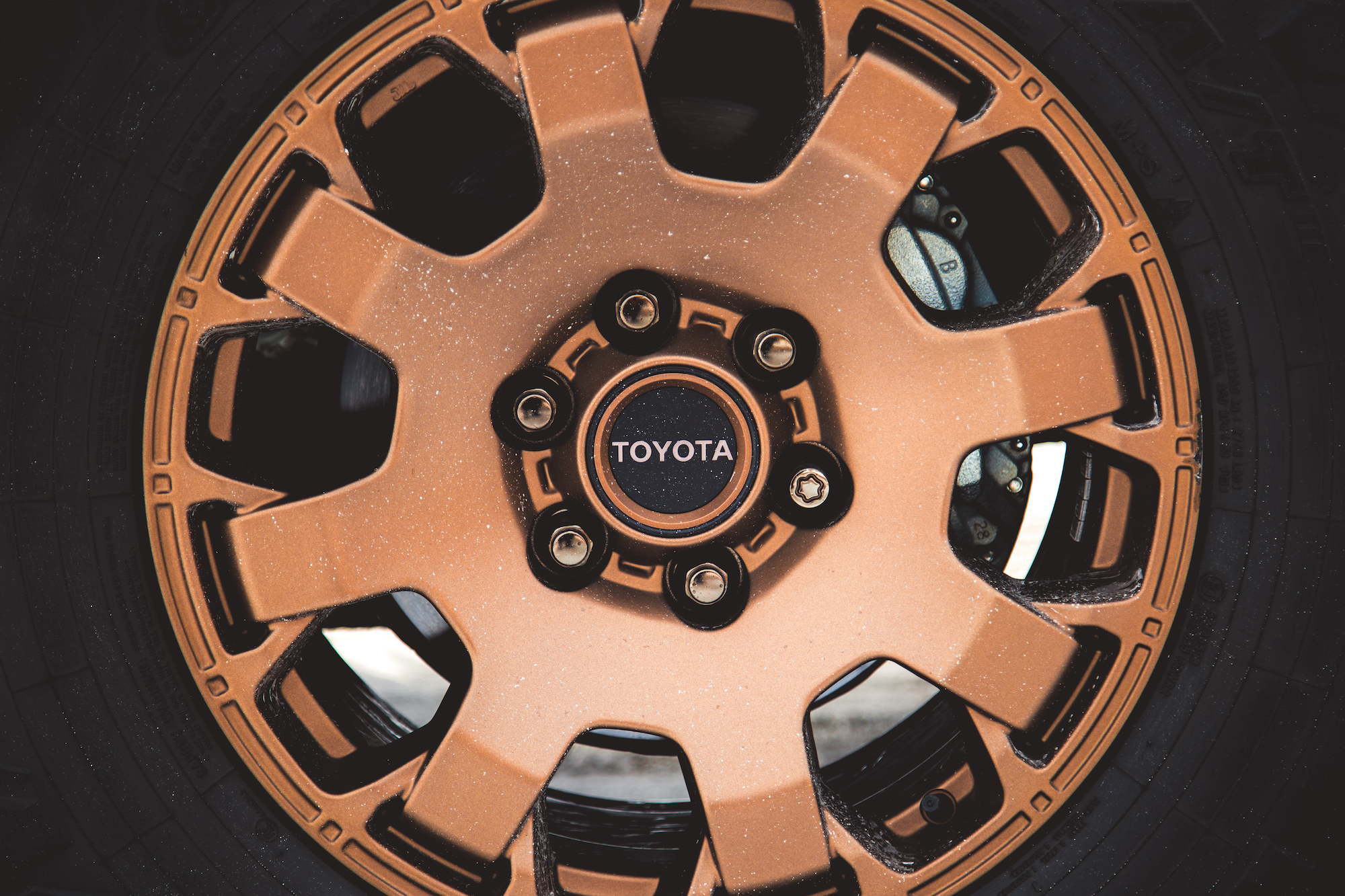
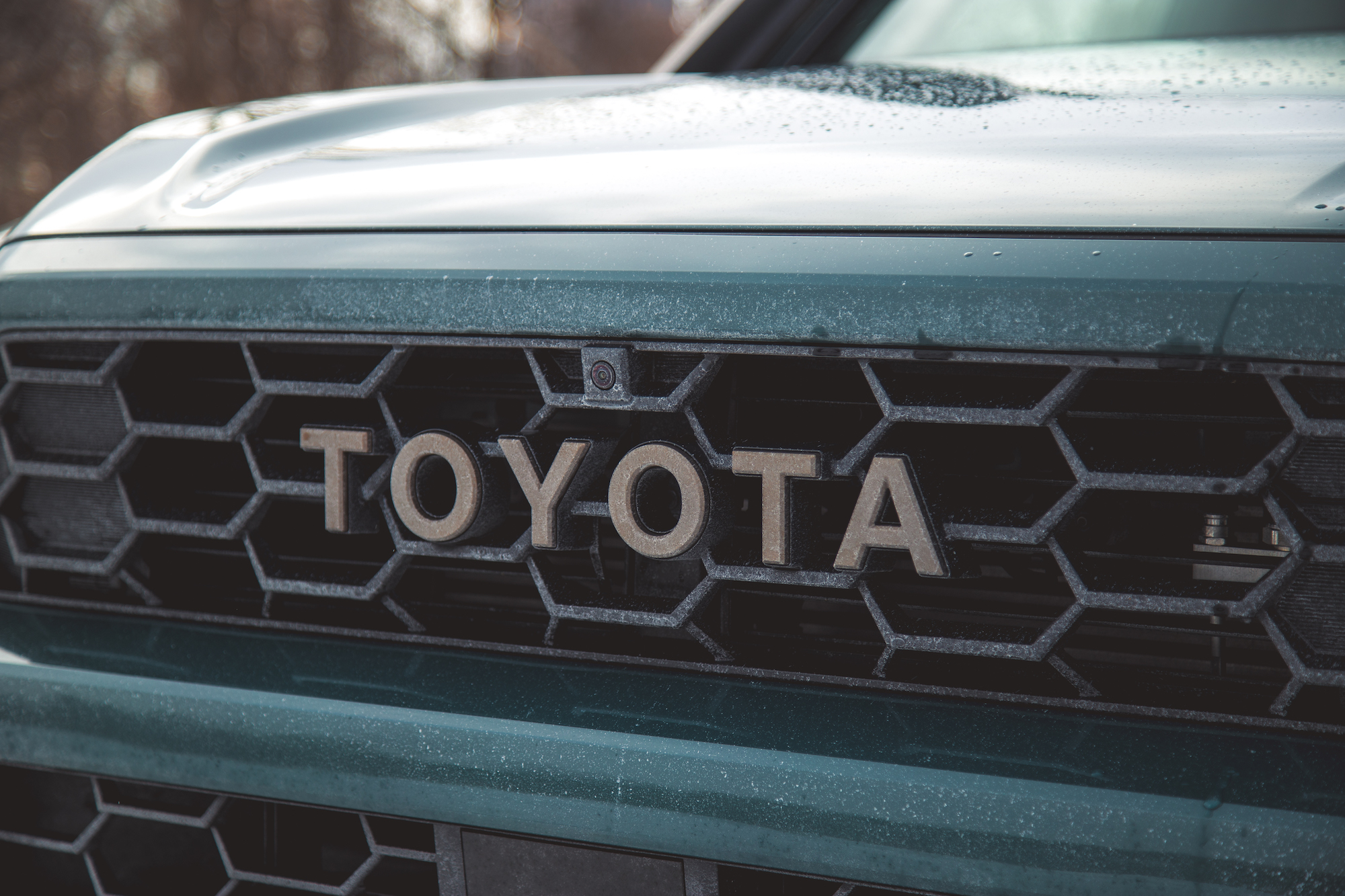
There is an onboard air compressor and a passenger-side A-pillar-mounted snorkel that channels turbo whistling noises off throttle. Roll down the passenger window and there is enough wastegate flutter to pass as the official WRC soundtrack. That said, the lack of the rowdy, thrilling exhaust vocals from the TRD exhaust system makes the Trailhunter appear noticeably thin, hollow, and slow. They both wear the same Toyo Open Country all-terrain 33-inch tires, but each with its own alloy wheel design; the Trailhunter’s an attractive bronze that’s almost worth the premium alone. They also have exclusive paint colours, like this greenish Everest, which contrasts nicely with foggy, forested backdrops.

When it comes to casual driving on the beaten path, the differences between the two are few. Both are uncomfortable and cumbersome to drive, but piloting them imparts a sense of invincibility on the road thanks to their elevated seating position, off-road tires, and raised suspension. But that also slashes any hope of on-road civility. The Toyo Open Country tires aren’t unbearable as a daily driver – we’ve experienced the same tires in the Lexus LX 700h and GX 550 Overtrail+. Don’t expect them to handle vertical oscillations with grace, or settle quickly after negotiating a deep rut. It’s undeniably off-road capable as a result, but we’re certain most of these rigs will be destined for more basic uses.

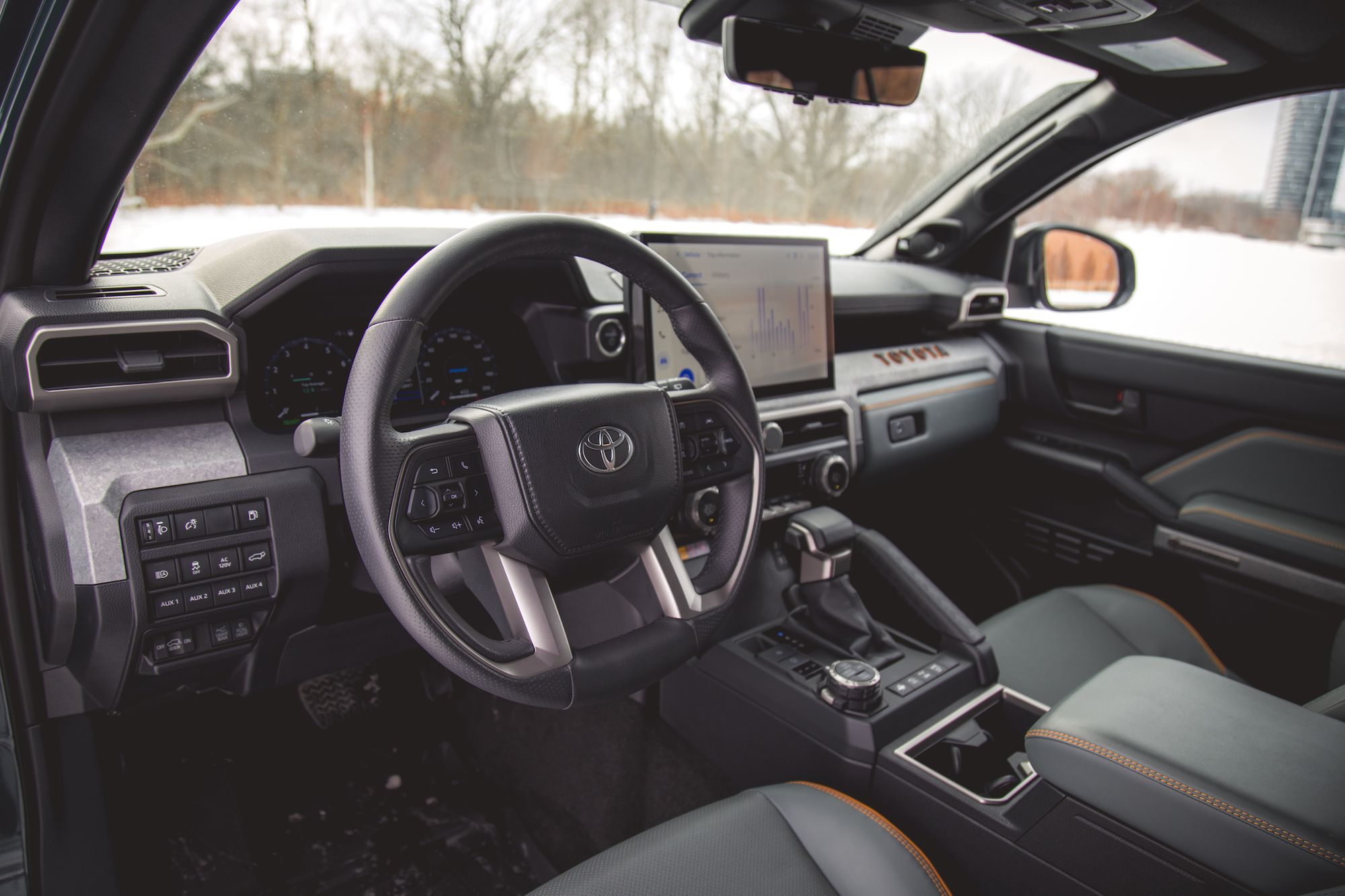
Without any off-road trails in immediate sight, the recent snowmaggedon in Toronto, with 30 cm of snow blanketing the unplowed roads, made for a worthy substitute. Despite the low grip conditions, the Toyo tires dug in deep, delivering acceleration and hard braking maneuvers without as much as a sweat. The traction and stability control did kick in from time to time, notably on icier roads with hardened, packed snow or when lateral grip was at a premium. These are areas where the Land Cruiser and GX 550 felt more capable and effective, further muddying Toyota’s model overlap. However, there are plenty of tools in the armoury to negate those advantages, such as disconnecting stabilizer bars, a locking rear differential, and an off-road cruise control system. We liked the mode dial’s multiple rotators for adjusting the drive mode or the transfer case. However, the dial itself lacks typical Toyota quality, especially when compared to the premium materials elsewhere; its sharp edges and plastic sheen make it look like a flinty 3D-printed knock-off.


The 4Runner is available in both hybrid and non-hybrid trims. Our Trailhunter was the former, utilizing a 2.4-litre turbocharged four-cylinder engine mated to an electric motor and a 1.87-kWh nickel-metal hydride battery, the same type used in the Land Cruiser, and produces a healthy 326 hp and 465 lb-ft of torque through an 8-speed automatic transmission.

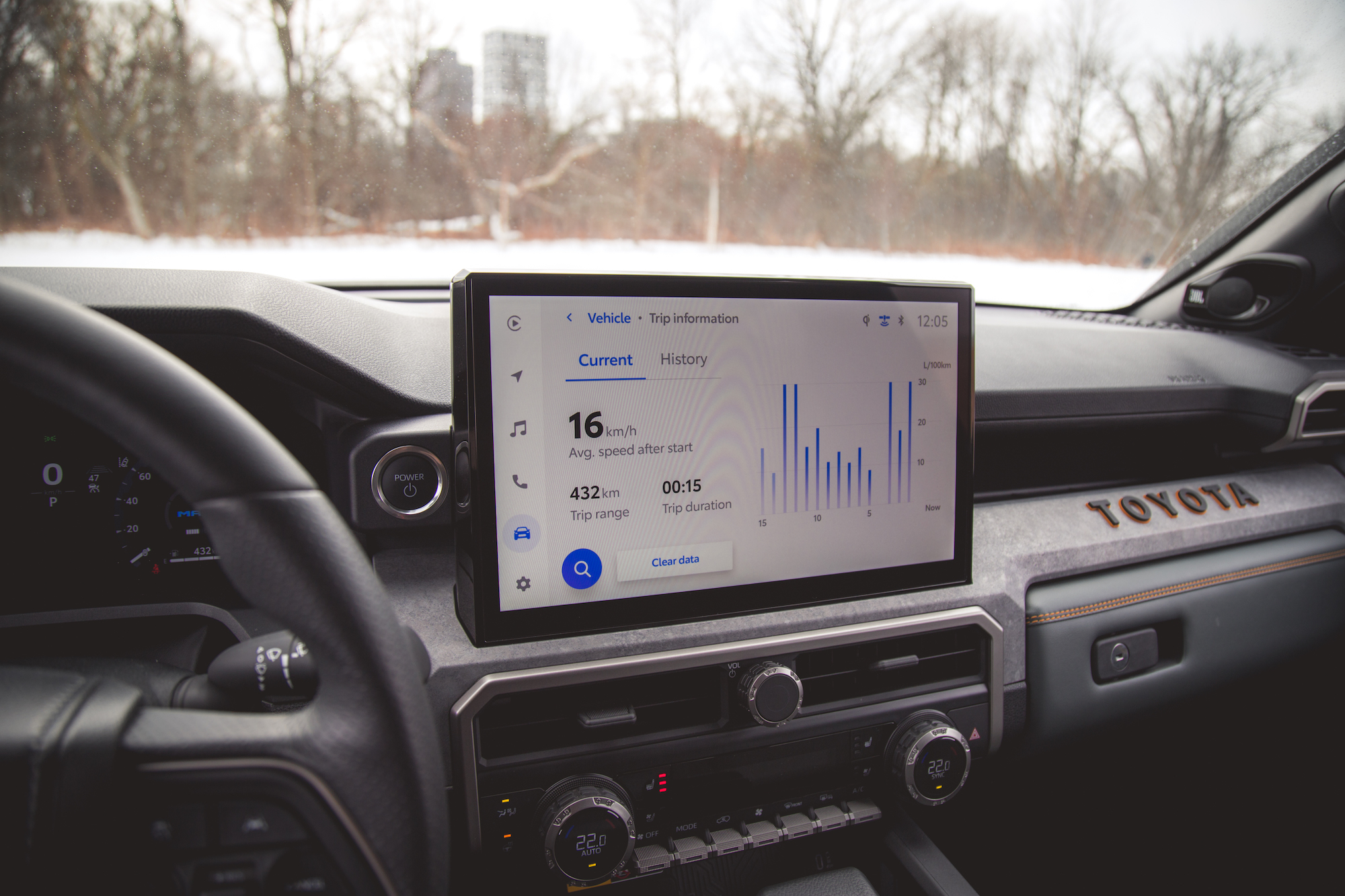
Acceleration is not as instantaneous as you might expect from a hybrid, in which the electric motors would traditionally fill the low-range gap while the turbo begins to spool. There is noticeable lag between throttle application and forward acceleration, with the gearbox constantly caught napping in the higher gears. As such, we prefer the more linear and predictable non-hybrid powertrain, but it’s clear that the hybrid duties are better suited to the efficiency-minded. Rather than boost performance, the hybrid augments the engine and smooths the edges. Like Toyota’s other hybrids, the engine will switch off under low-power demands, such as during low-speed cruising, but the 4Runner’s weight and intensive demands mean it seldom occurs. We averaged a respectable 12.3 L/100km over a mix of city and highway driving, not bad considering the off-road tires, and it only requires regular 87-octane fuel.
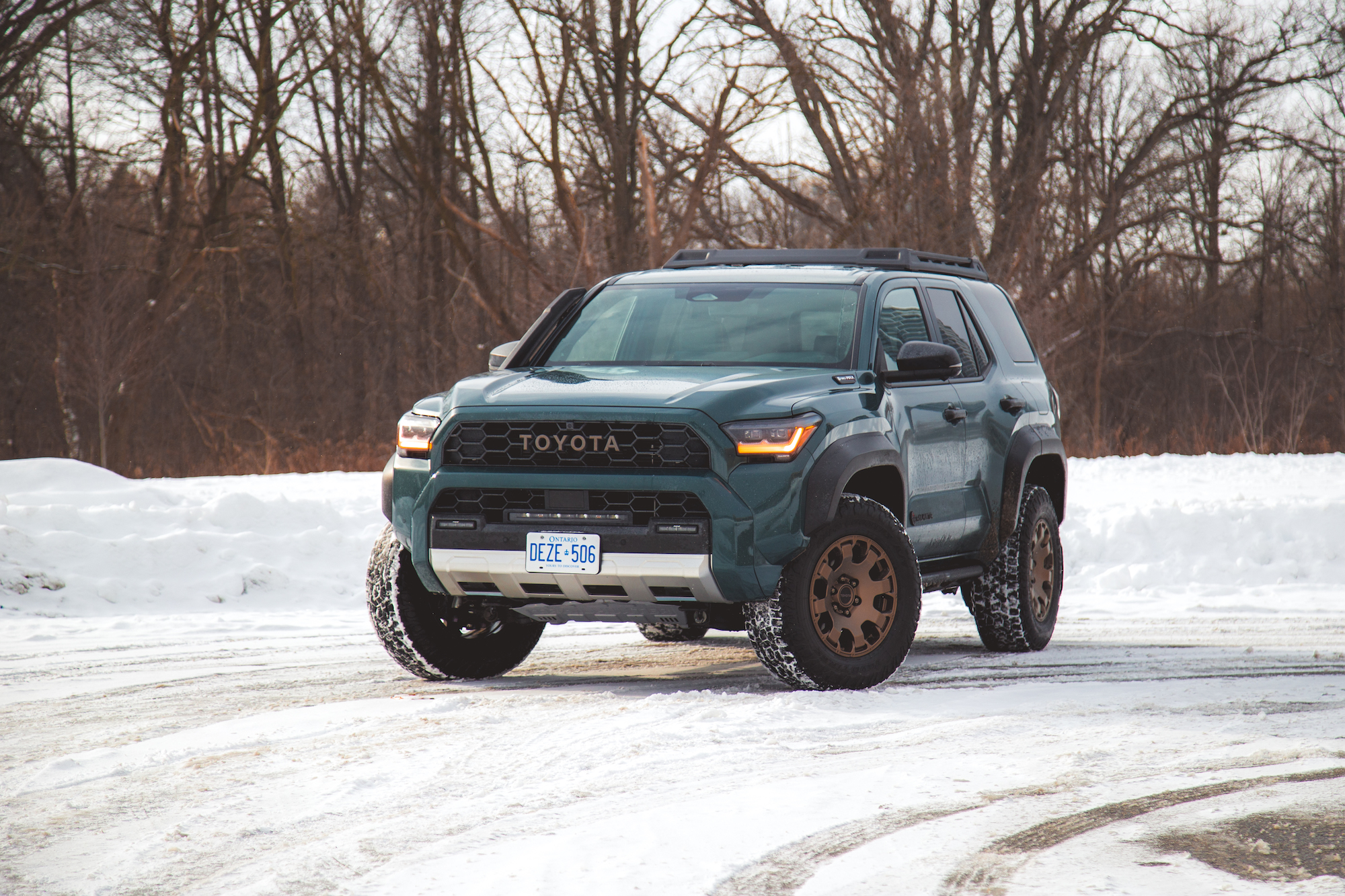
Whether you’ve flipped to page 38 or 97, you’re getting the same fundamental 4Runner that rides rough but tough. Each is loaded to the brim with off-roading equipment that would see it through an actual Armageddon, but its differing personalities cater to highly specific demographics and geographic destinations. The desert-crawling TRD Pro would still be our choice for its rowdier exhaust and muscular stance, but the overlanding Trailhunter is undeniably the more mature, elegant, and grown-up package, except for those JDM-style turbo acoustics. Still can’t decide? Back to page 1, then.
Specifications:
Model: 2025 Toyota 4Runner Hybrid Trailhunter
Paint Type: Everest
Base Price: $67,336
Price as Tested: $84,201
Wheelbase(mm): 2,850
Length/Width/Height (mm): 4,951 / 2,030 / 1,880
Curb weight (kg): 2,408
Engine: 2.4-litre turbocharged four-cylinder, electric motor, 1.87-kWh nickel-metal hydride battery
Horsepower: 326 hp
Torque: 465 lb-ft
Transmission: 8-speed automatic
Engine & Drive Configuration: Front engine, 4WD
Observed Fuel Consumption (L/100km): 12.3
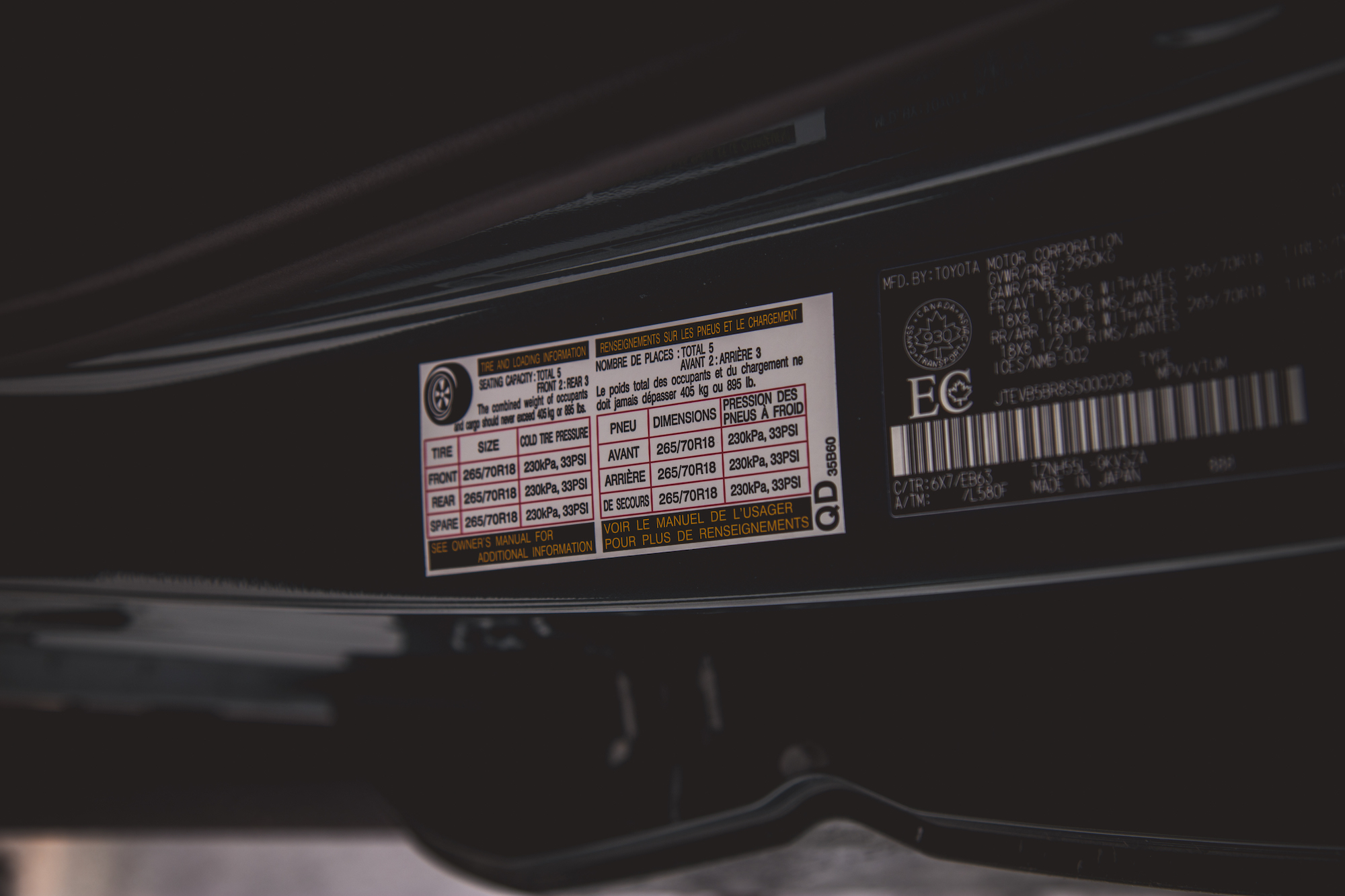
Tires: Toyo Open Country all-terrain 33-inch tires; 265/70R18














Leave a Reply