
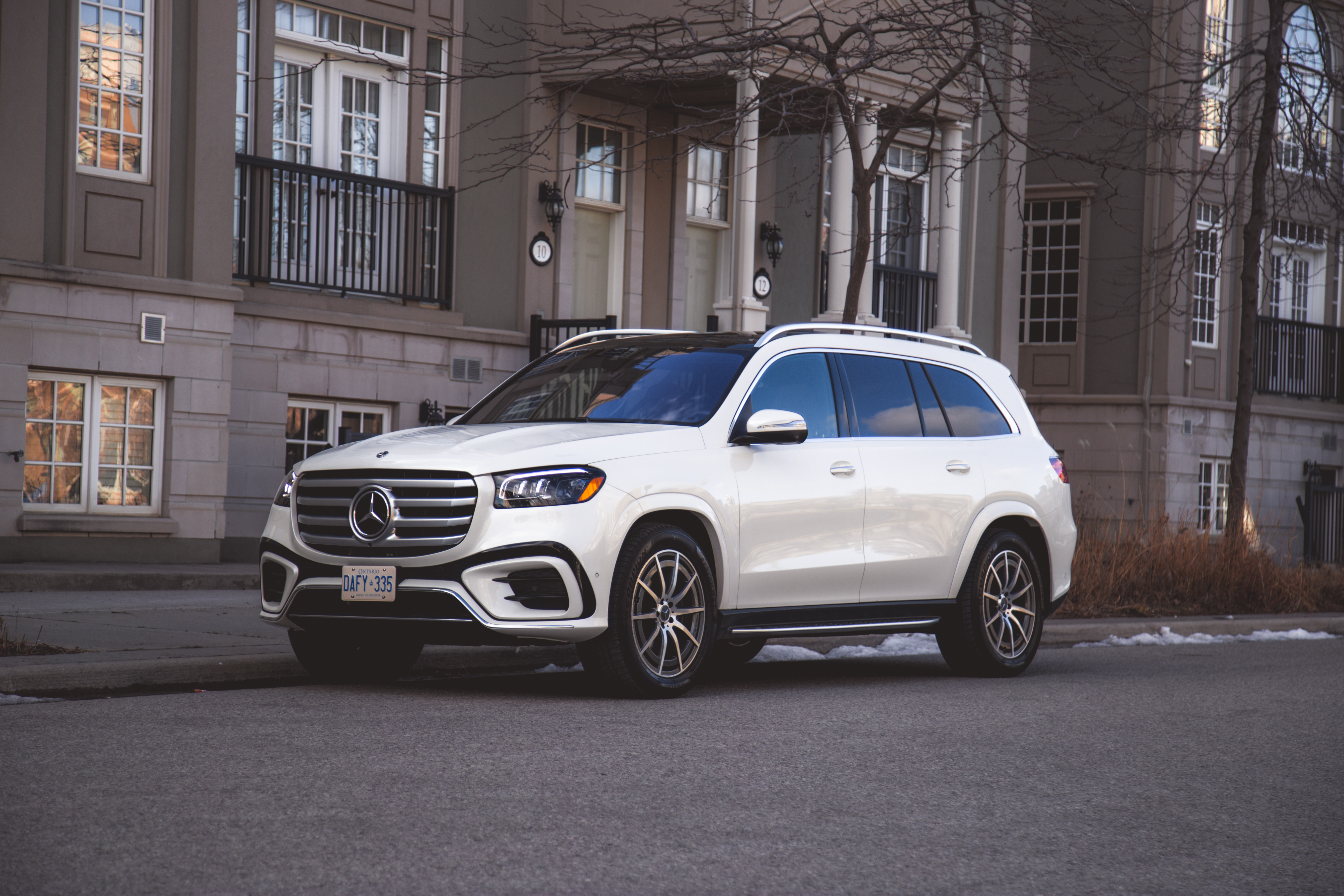
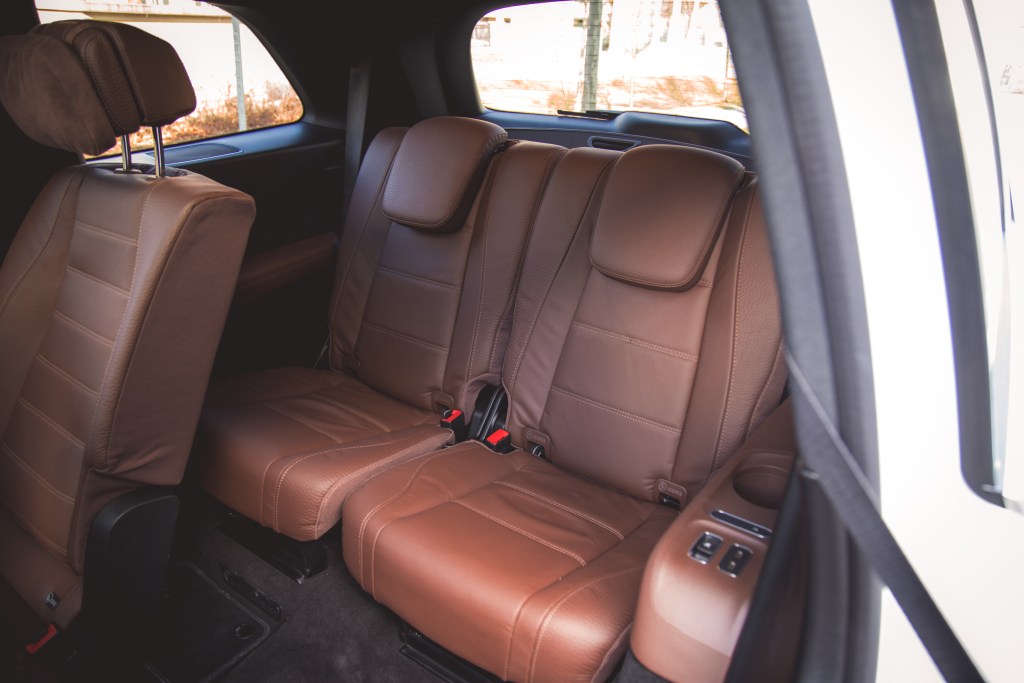
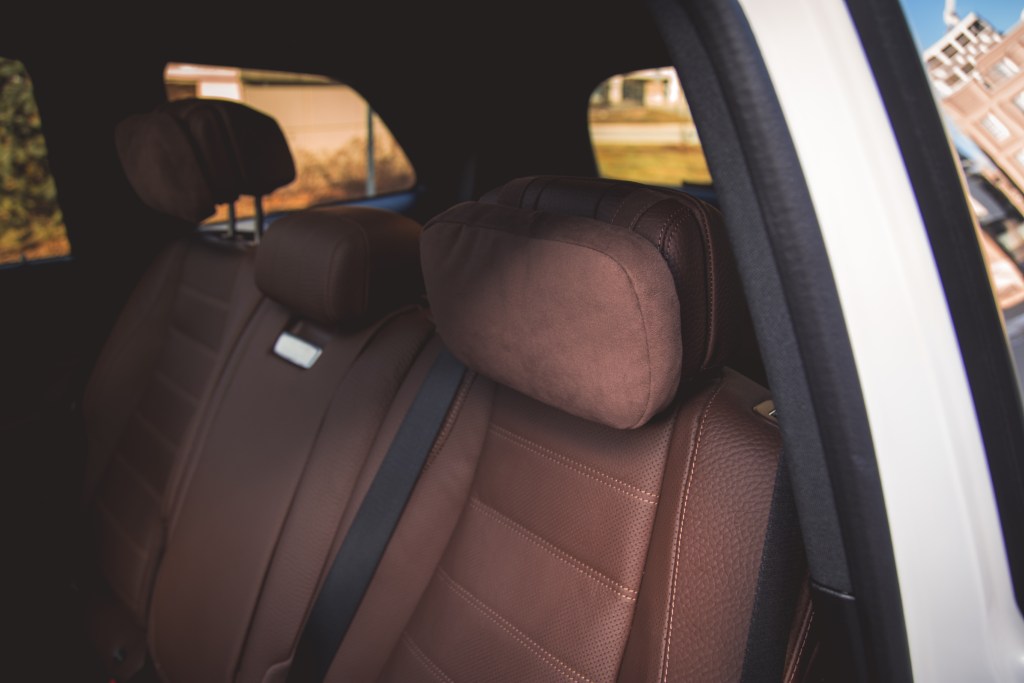
The GLS is consistently touted as the S-Class of SUVs and despite receiving only minor updates for 2024, Mercedes’ largest rig continues to impress with sublime ride quality, potent yet efficient powertrains, and enough upscale amenities to provide eight passengers with business-class treatment.

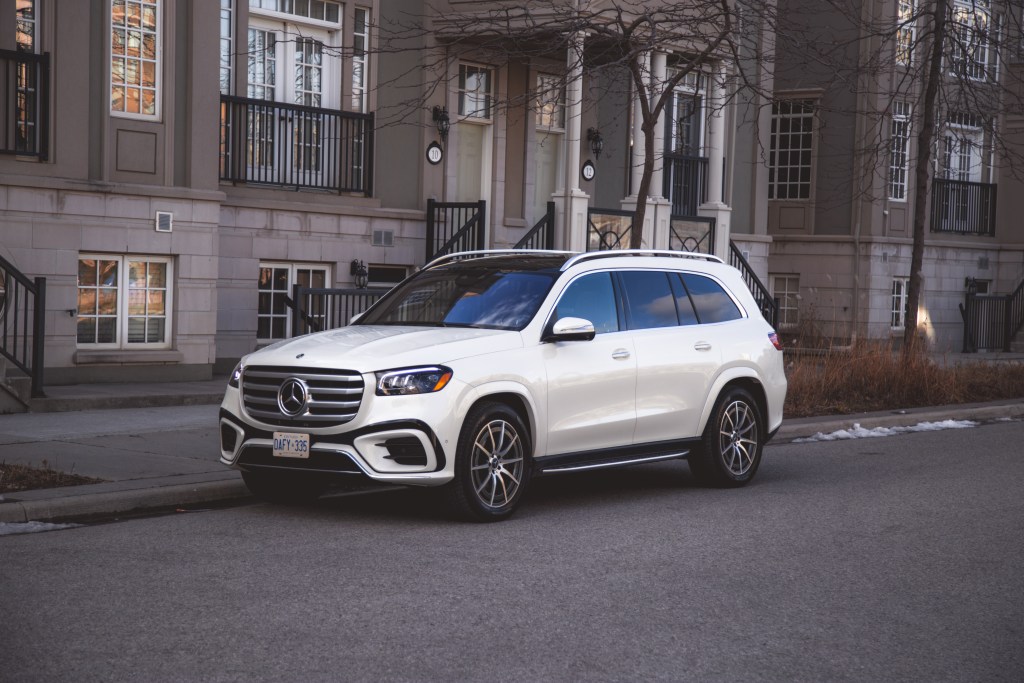
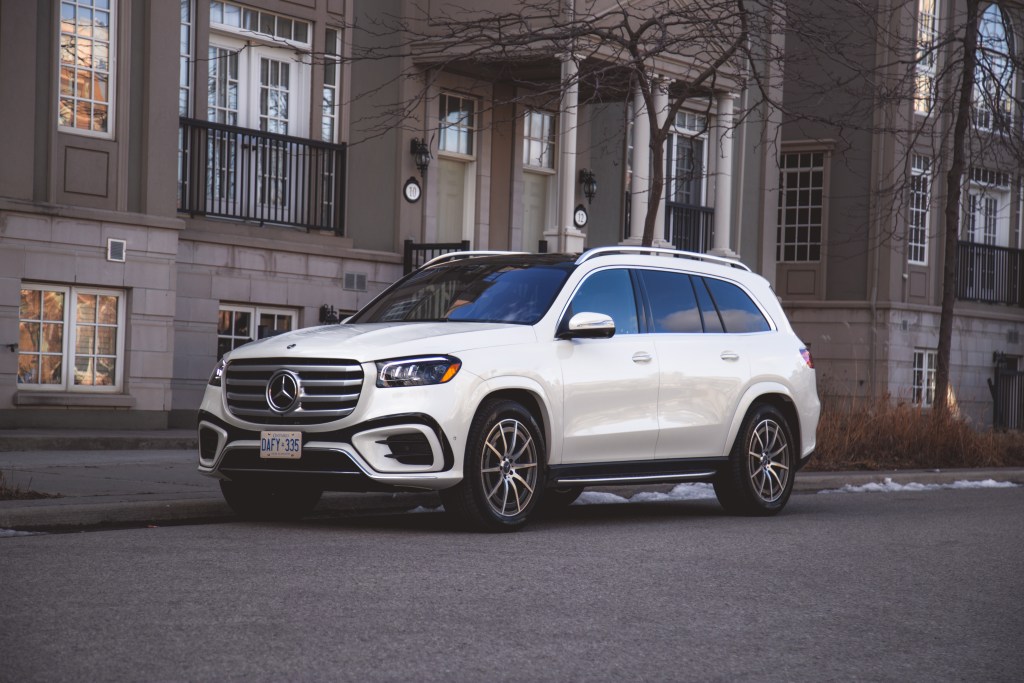
The biggest change for 2024 is the exterior styling. An enormous four-slat grill is now perched up front and it’s about as large as the controversial grill in the BMW X7 and 7 Series – the Bavarians are always ahead of their time. Admittedly, it’s a lot of visual grill and Mercedes is unashamed about it. Forcing road presence straight down your throat helps distinguish the GLS from other Mercedes SUVs that, let’s be honest, can all look alike to the untrained eye. Make your way to the rear and it’s nearly identical to the outgoing model save for the new taillight design. The overall shape of the GLS is attractive but not as sleek and well-proportioned as the Range Rover or Jeep Grand Wagoneer.
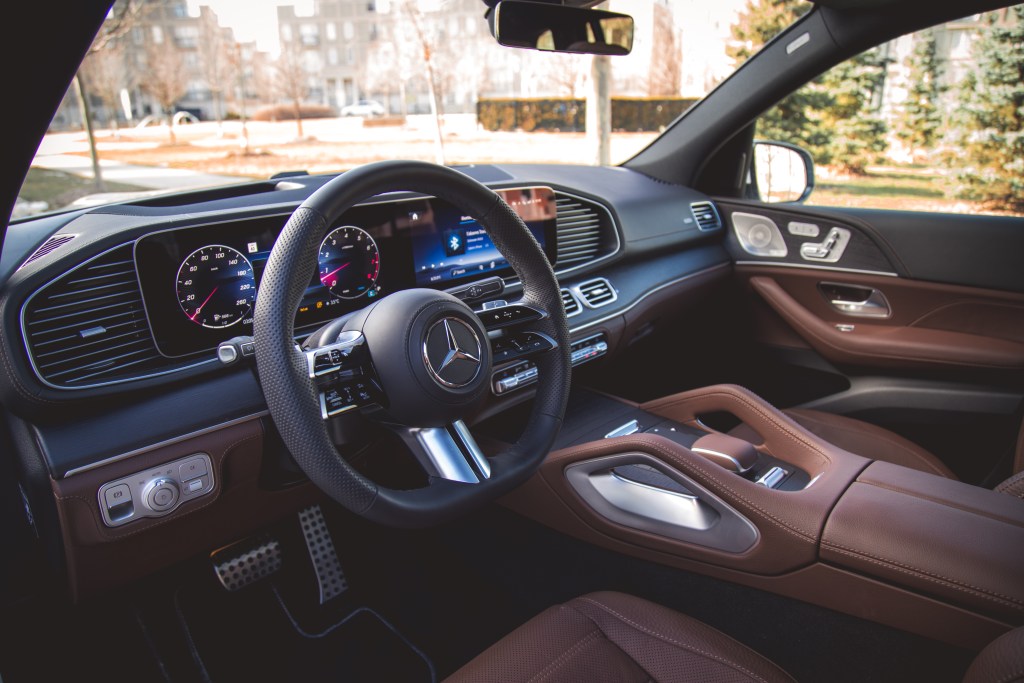
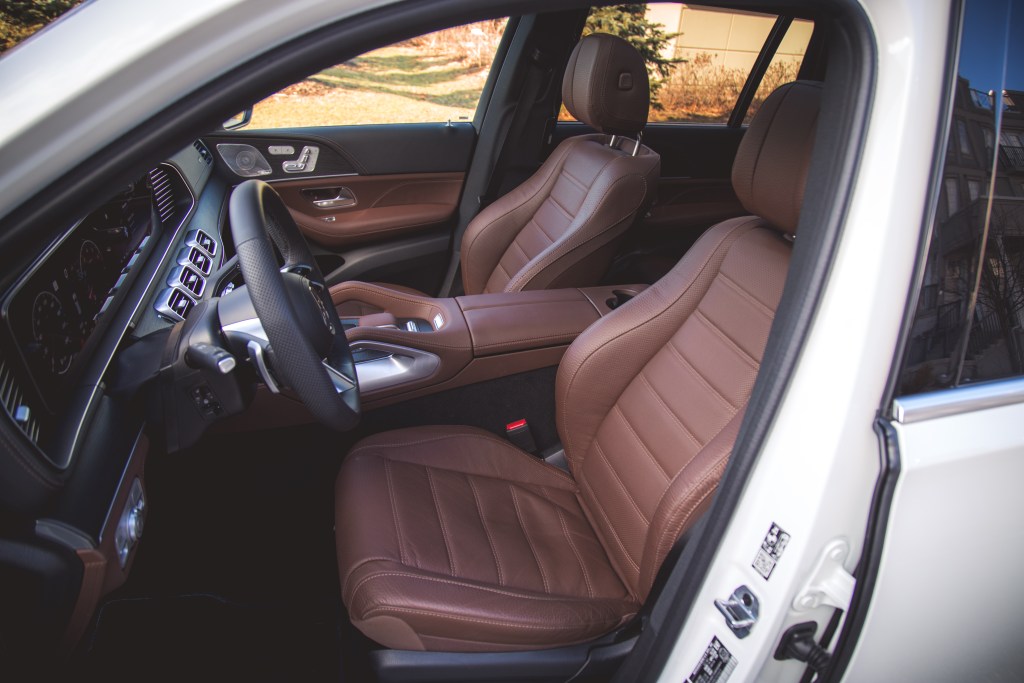
The GLS receives a new steering wheel pulled from the current crop of AMGs, and we appreciate the leather airbag cover, which replaces the normally scratchy black plastic found in other Mercedes. However, the plastic paddle shifters are out of place in this category, especially after experiencing the metallic paddles in the Range Rover and Maserati Levante. Furthermore, the wheel looks and feels small for such a large SUV. We just stepped out of the Land Rover Defender that houses an unusually large wheel, but we don’t think the flat-bottom design matches this GLS either – the round and leather-wrapped wheel is still the way to go.
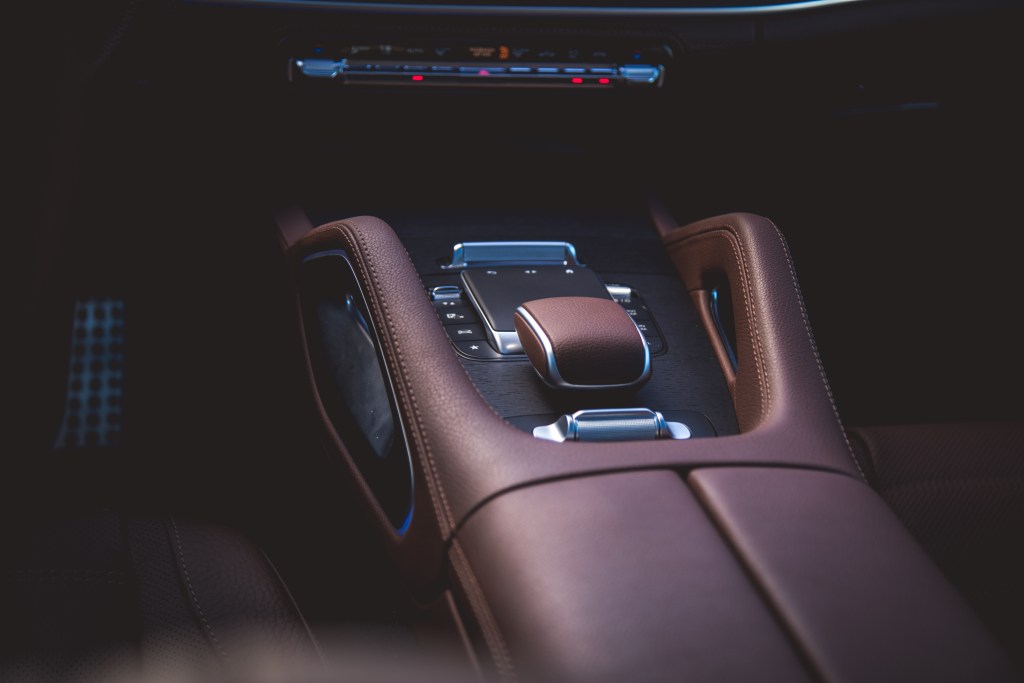
Like the Mercedes GLE and Porsche Cayenne, there are grab handles flanking the center console. Although more of an off-road gimmick, we did find ourselves grabbing them subconsciously for comfort, perhaps as a substitute for the missing gear lever. Unlike the armrests and steering wheel, the grab handles aren’t heated but we would greatly appreciate it if they were. Now there’s an idea for you, Mercedes.
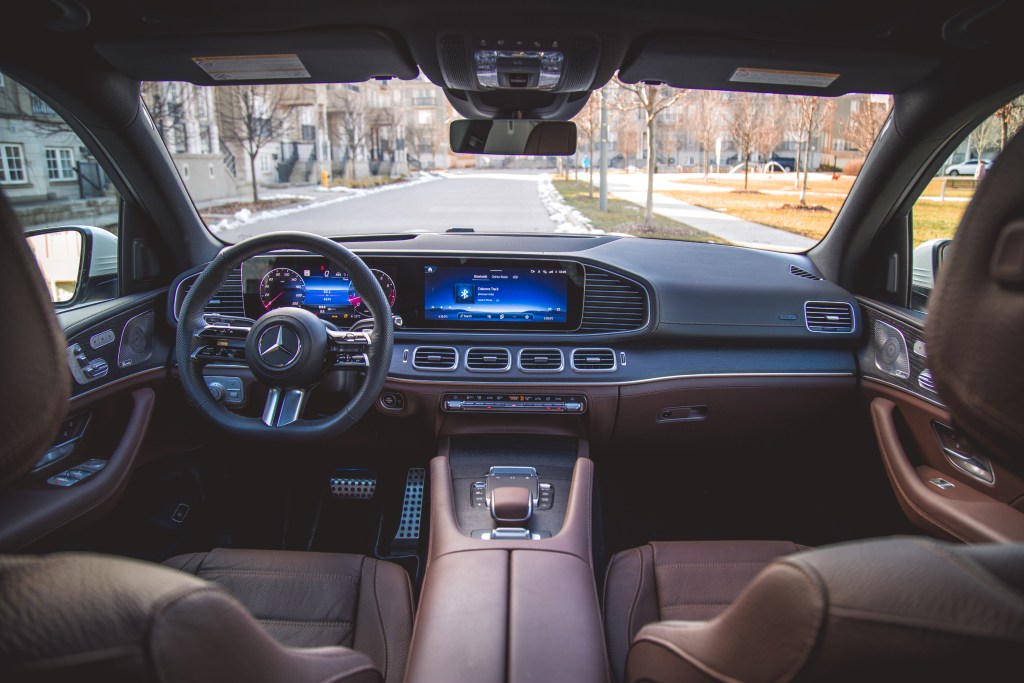
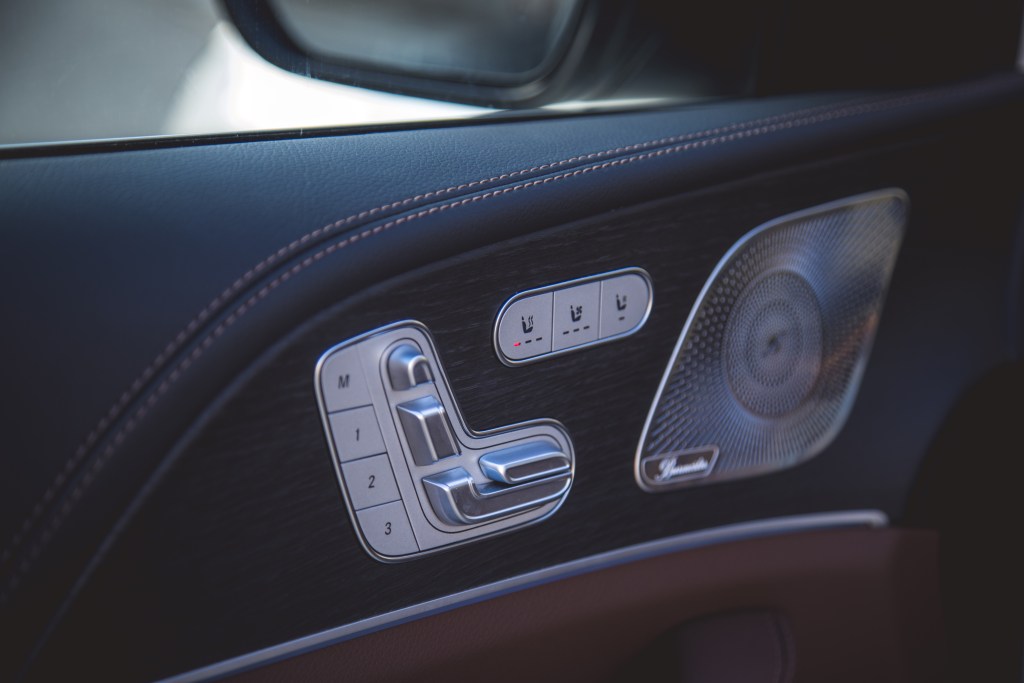
The rest of the interior is carried over from last year, including the two 12.3-inch digital screens that occupy the majority of the dashboard, door-mounted seat controls, and a trackpad that controls the infotainment. We are thankful for the array of toggles and switches arranged below the vents, all of which control the heating and ventilation, and are significantly easier to use than the BMW and Audi units that rely on a frustrating touchscreen. If you can’t find the heated steering wheel switch, it’s located on the left side of the steering column, next to the wheel telescoping toggle. On a smaller note, the key fob is now finished in chrome.
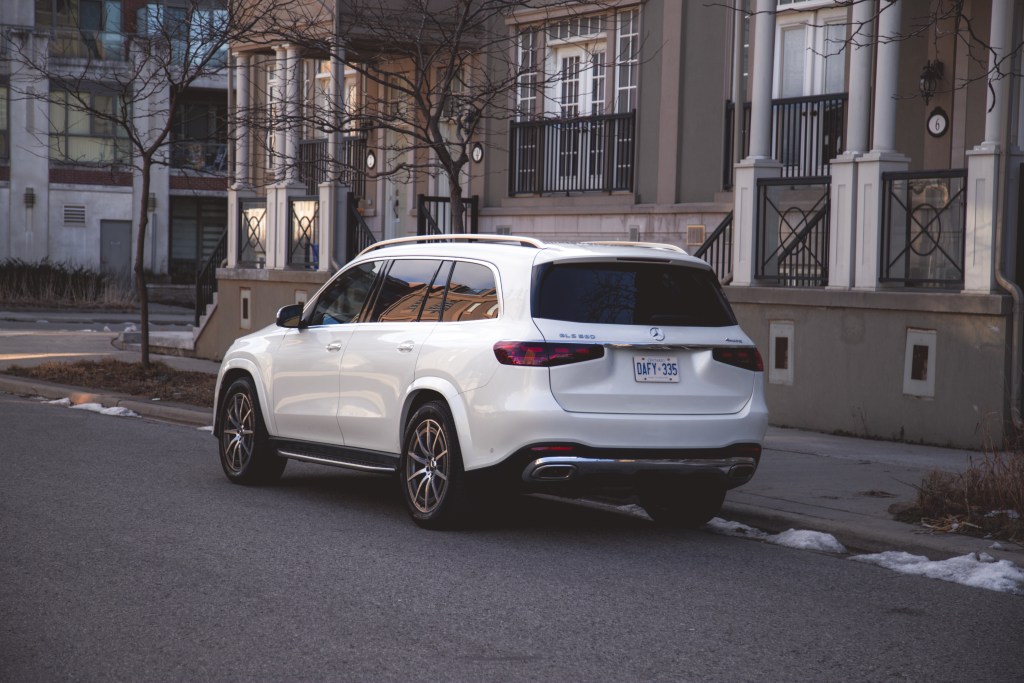
The GLS is offered in three mildly hybridized flavours: GLS 450 with a 375-hp inline-six, GLS 580 with a 510-hp twin-turbo V8, and an AMG GLS 63 with a bonkers 603-hp V8. We tested the popular GLS 580 and immediately felt a bond. It’s a peach of an engine and while reserved in sound, it’s commanding in output. The inline-six is far from lethargic but if you enjoy effortless speed and acceleration, the GLS 580 is the powerplant of choice.
Although gentle and polished under normal operation, the gearbox and start-stop system can occasionally expose their rough edges during low-speed maneuvers, such as rolling stops or slow right-hand turns, where the transition between first gear and engine cut-off is delayed, hesitant, and takes a full second to respond to throttle input.

On a positive note, the GLS 580 boasts outstanding fuel economy. We averaged 13.6 L/100km over a mix of city and highway driving, an exceptional yield for a large eight-cylinder SUV, and also when compared to the recently tested Land Rover Defender 110 P500 (17.2 L/100km) and Jeep Grand Wagoneer L with its new inline-six (16.2 L/100km).
The GLS rides as soft as we remembered, absorbing everything thrown at it via its reworked adaptive air suspension. Handling minor oscillations proficiently, it also neutralizes larger bumps with grace. Despite the expected body roll, the rear-wheel steering system mitigates it, adding a layer of agility and athleticism to the way it handles. The GLS demonstrates exceptional high-speed stability as well but if we were to split hairs, the Range Rover has a slight advantage here.

The GLS is like a higher-riding S-Class then, but it also lacks that extra layer of floatiness that transforms the S-Class into an isolated bubble that cocoons you from the rest of the world. The GLS doesn’t quite achieve that level of seclusion, but that’s not the fault of a high-riding SUV wearing 23-inch wheels. Not even the Rolls-Royce Cullinan hits that mark. However, the GLS does achieve cabin quietness with such effective acoustic insulation that rolling down the windows causes your ears to pop, and the sound resembles breaching a pressure seal.

Piloting a three-row SUV can be daunting but the GLS offers a seat situated high above other motorists on the road, giving occupants a top-down perspective and a farther depth of field so you can actually monitor the traffic a few car lengths ahead. You also feel integrated into the car, rather than sitting on top of it, as you would in a Land Rover Defender or Ford Bronco. As such, the motions of the GLS are swiftly transmitted to the driver, and it’s relatively undemanding to drive as a result.
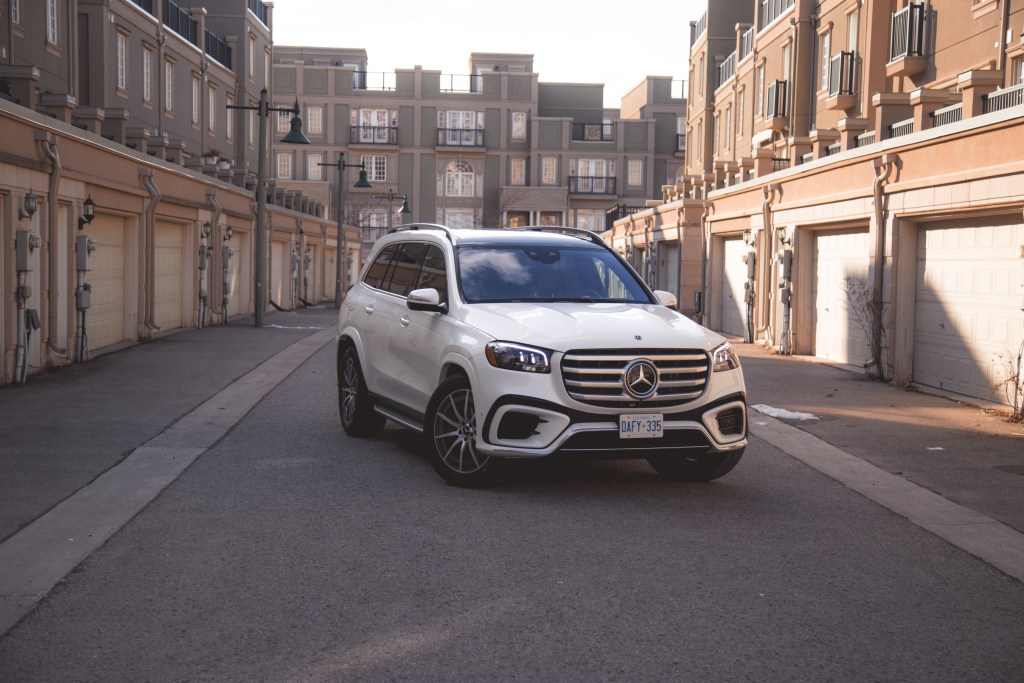
Though the upgrades are few, the 2024 Mercedes-Benz GLS 580 remains a luxurious family-hauling SUV that’s equipped with all the latest gadgets, gizmos, and top-shelf materials. While carrying a premium, we highly recommend the V8 for its effortless acceleration and superior towing capacity. Its impressive fuel consumption certainly doesn’t hurt either. Overall, the GLS is worthy of the S-Class title and is an easy choice for any buyer in the luxury SUV space.
Specifications:
Model: 2024 Mercedes-Benz GLS 580 4MATIC SUV
Paint Type: Diamond White Metallic
Base Price: $140,500
Price as Tested: $160,635
Engine: 4.0-litre twin-turbocharged V8
Horsepower: 510 hp
Torque: 538 lb-ft
Transmission: 9-speed automatic
Engine & Drive Configuration: Front engine, AWD
Claimed Fuel Consumption (L/100km): 16.8 / 11.9 / 14.6
Observed Fuel Consumption (L/100km): 13.6





Leave a Reply