

Jaguar has a rich and storied history deeply rooted in both motorsport and road cars, with the XJR-9 sports prototype drabbed in a purple Silk Cut livery taking a fairytale Le Mans victory in 1988, the green R2 and R3 snagging a few Formula 1 podiums in the early 2000s (the team which later became Red Bull Racing), and the 1960s E-Type clinching the title as one of the most beautiful road cars ever made. But with fuel regulations tightening and a sharpened global focus on reducing emissions, the light is beginning to dim for combustion-powered engines. The 2024 F-Type will be the last of its kind and serves as an appropriate swan song for fuel-burning Jaguar sports cars.
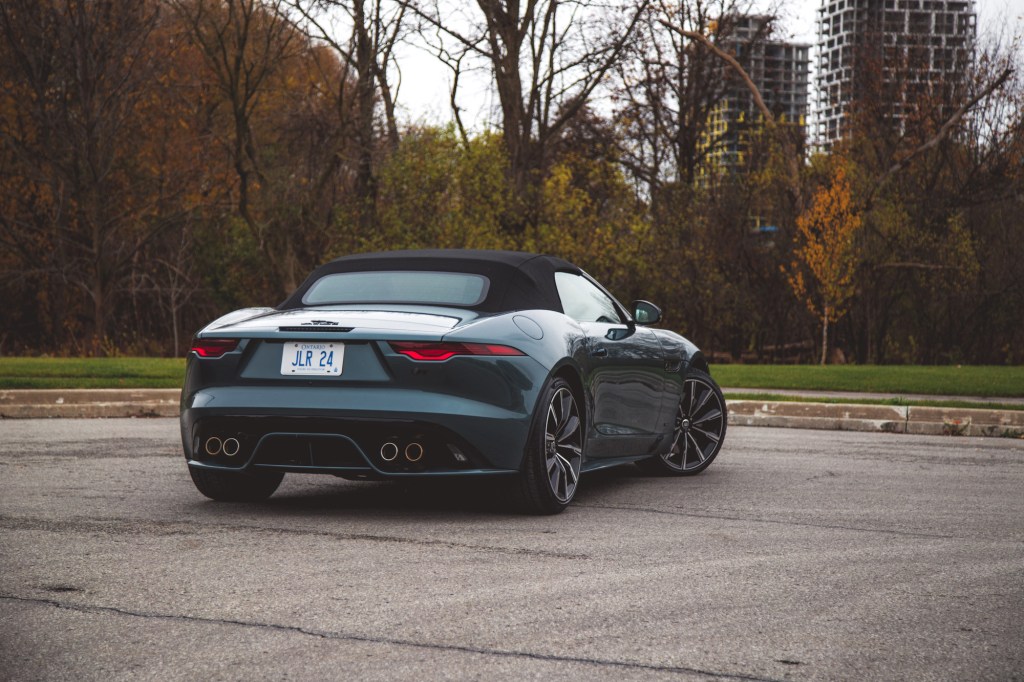
The F-Type was one of the first cars I reviewed in my career and it opened my eyes to a world of high-displacement engines, superchargers, and exhaust sounds that flirted with legality. Now in its tenth year, the F-Type will ring the bell as the brand transitions fully to electric in 2025. It’s fitting as they are also celebrating 75 years of Jaguar sports cars, referring to the XK120 built between 1948 and 1954, hence the R75 badge.
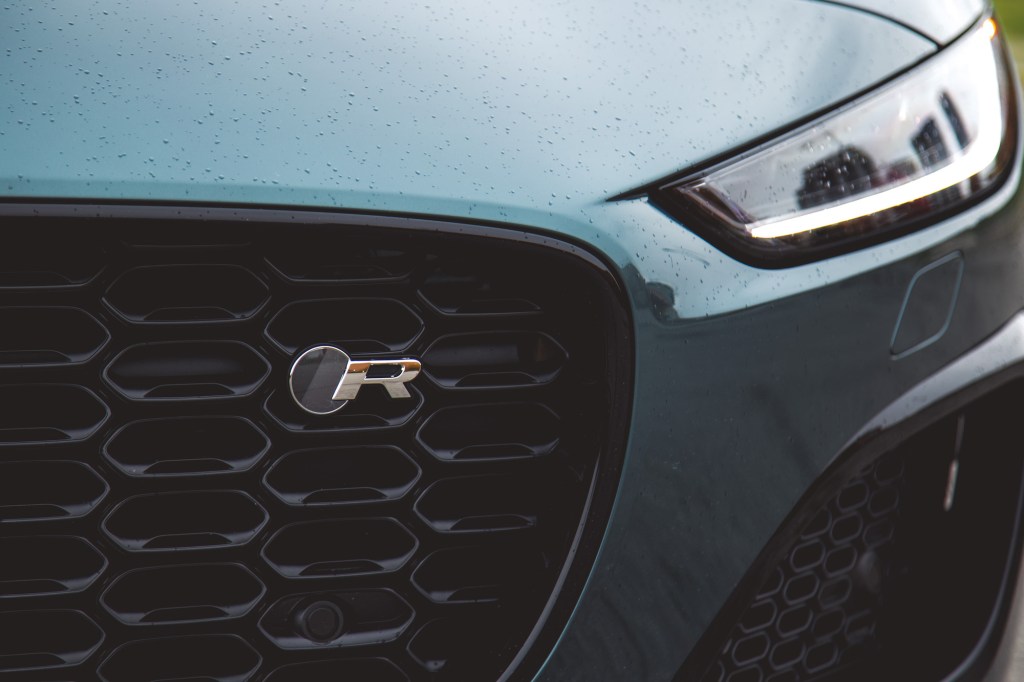
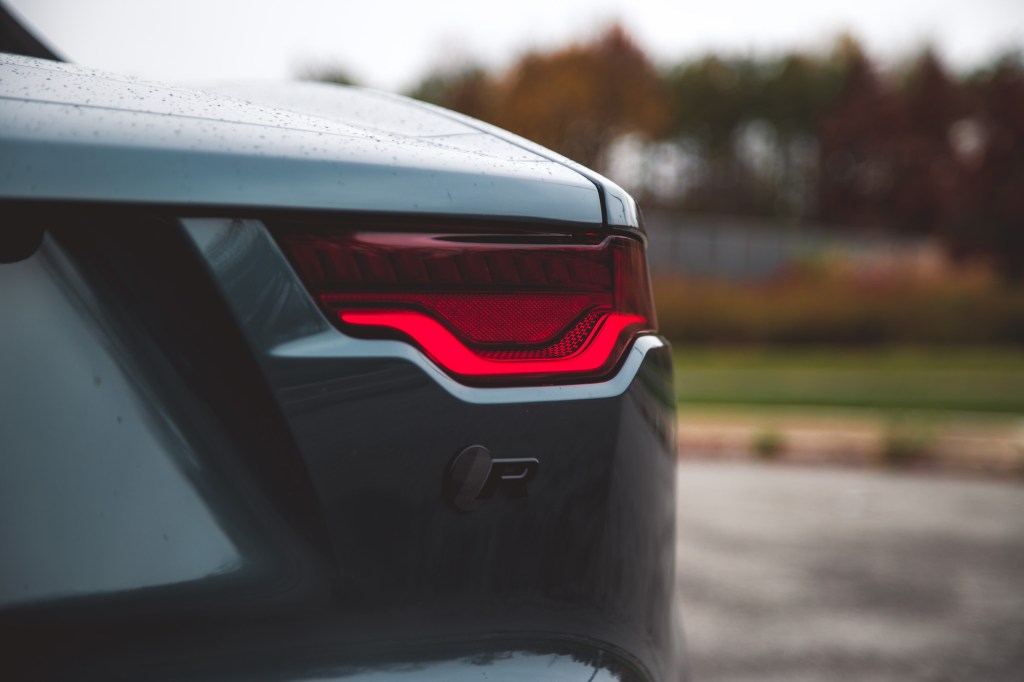
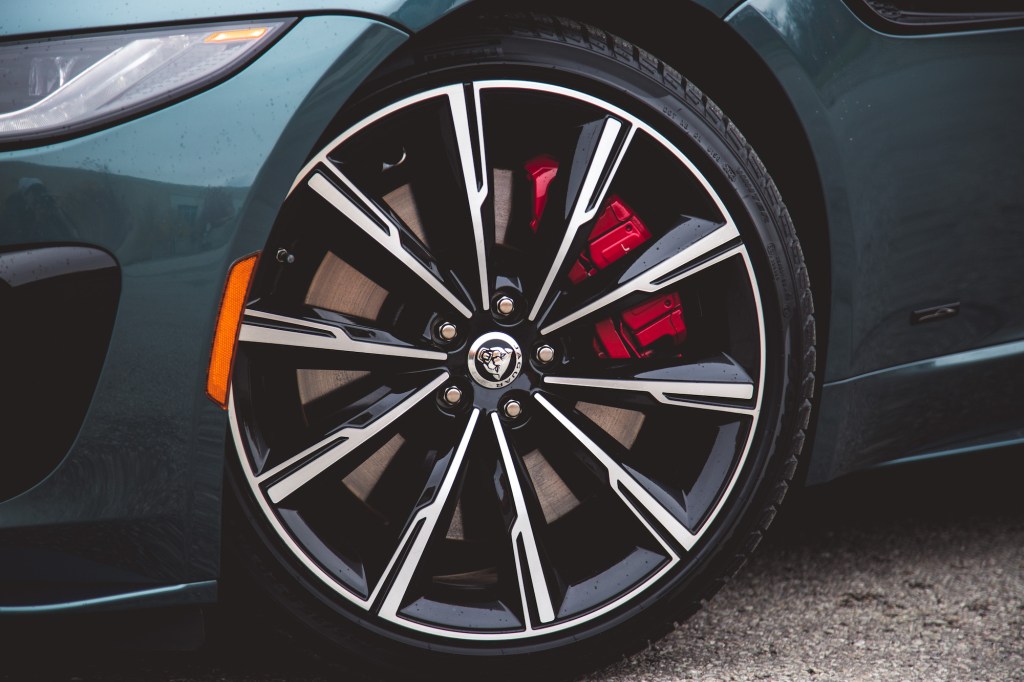
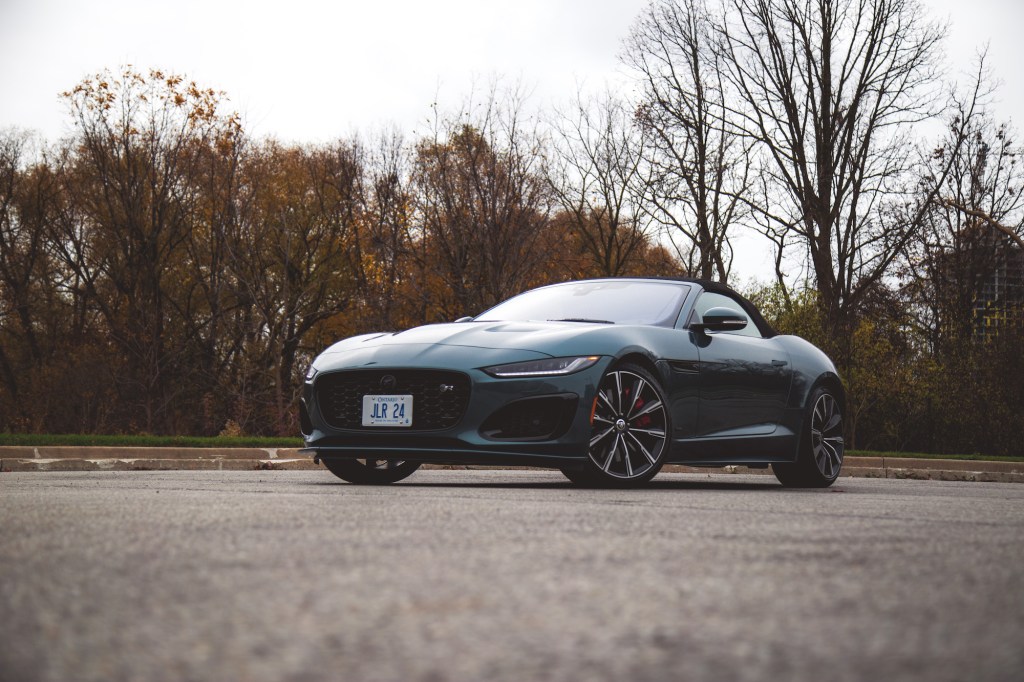
The R75 adds standard 20-inch wheels, achromatic shades for all the badges and scripts, and this exclusive Giola Green paint on our test vehicle. The rest of the F-Type remains mechanically identical underneath that dark teal shade, including brake-based torque vectoring and an electronic rear differential. So there isn’t much substance to warrant upgrading from a previous F-Type model, but it’s standard play for a vehicle reaching the end of its tenure: whip out a special edition that banks on nostalgia, add a few unique paint colours and trim pieces, and keep the price tag and residuals high. Subaru, Toyota, and Jeep are masters of this trade.
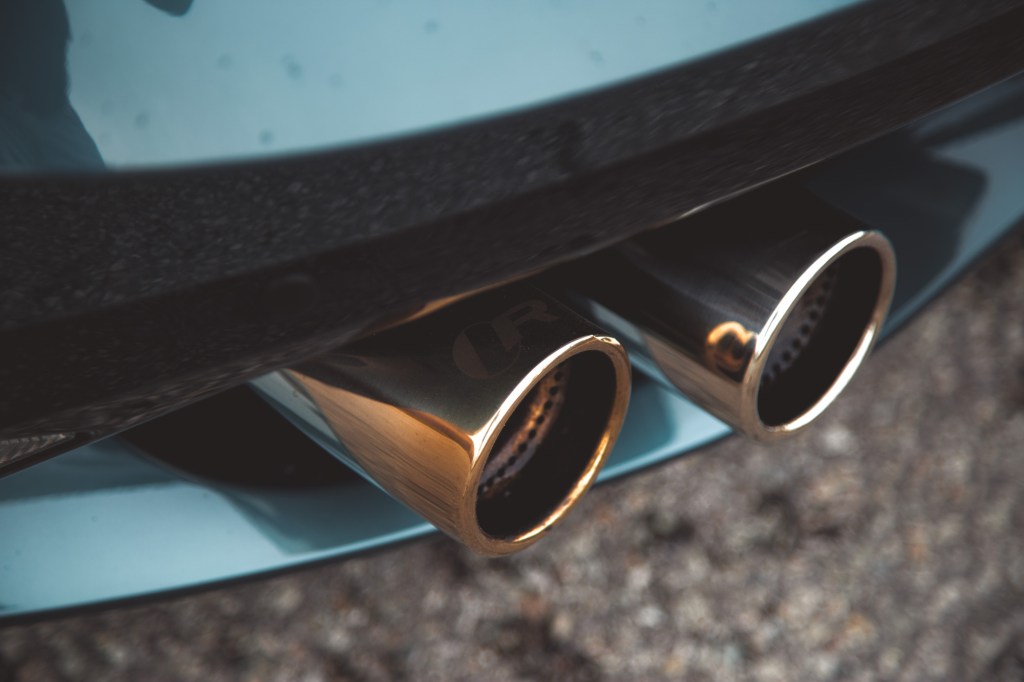
In a kingdom of downsized engines and choked-up anodyne exhausts, the F-Type continues to stand out with chainsaw-ripping vocals and enough decibels from its resonant 5.0-litre supercharged V8 to wake the dead. The soundtrack is almost enough to justify the car’s asking price single-handedly. Neighbours beware: this Jag fires up with an energetic spin of the starter, followed by a feral bark and crackle, and there’s no way to shut it up. It’s like having a chihuahua bark incessantly every time you open your front door. It can’t be helped. There may be more sonically pleasing notes coming from a Porsche boxer-six or a BMW inline-six, but this unapologetic eight-cylinder war drum shall always be cherished in our hearts and ears. Jaguar is keen on going out with a bang, no pun intended.
The lionheart engine is the car’s gravity, a 5.0-litre V8 delivering 575 hp and 516 lb-ft of torque, launching this convertible from 0-100 km/h in an eye-opening 3.7 seconds, three-tenths of a second quicker than the Porsche Cayman GTS 4.0. It’s an intensely thrilling yet deeply intimidating vehicle with that much energy uncorked by an easy push of a pedal. But why would anyone consider an F-Type over its overwhelming list of rivals, from the Toyota GR Supra, BMW M2, or the Porsche 911, especially when it commands a hefty starting price of $130,200? Here are three: character, charm, and driver engagement.
It starts with the exterior styling. The F-Type has got a big set of lungs but an even bigger sense of style. While 911s have swollen in dimensions to accommodate wider tracks and bigger engines, the F-Type has remained slim-fit and contoured, and it shows. It may be an aging platform but find me a more eye-catching front end. The rear end is equally as menacing, with quad exhausts stacked in a similar way as an Alfa Romeo Stelvio Quadrifoglio.

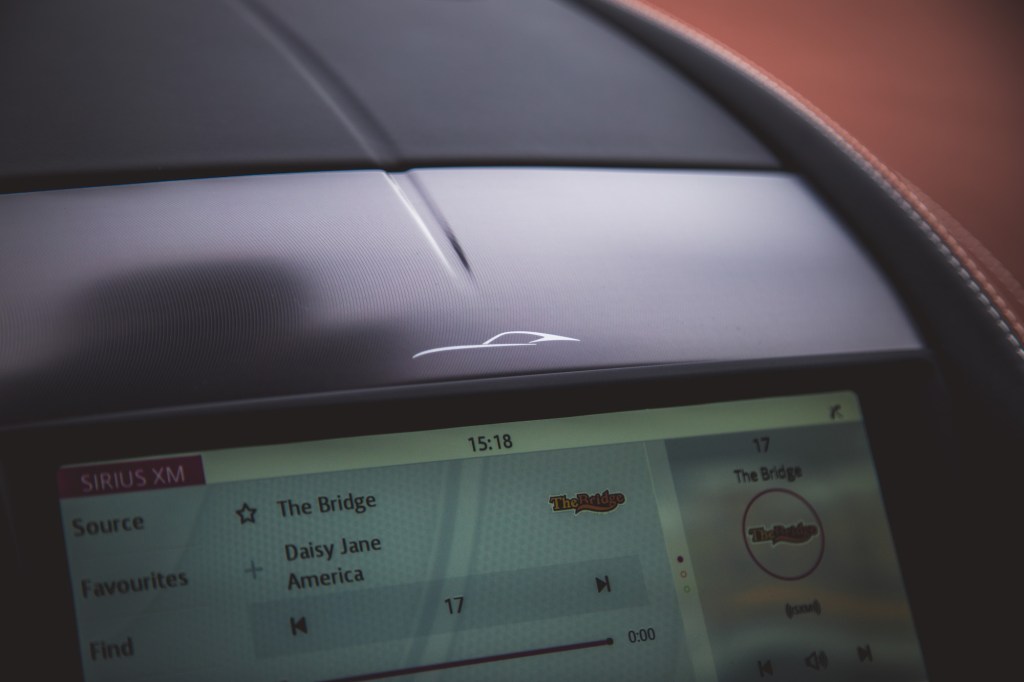
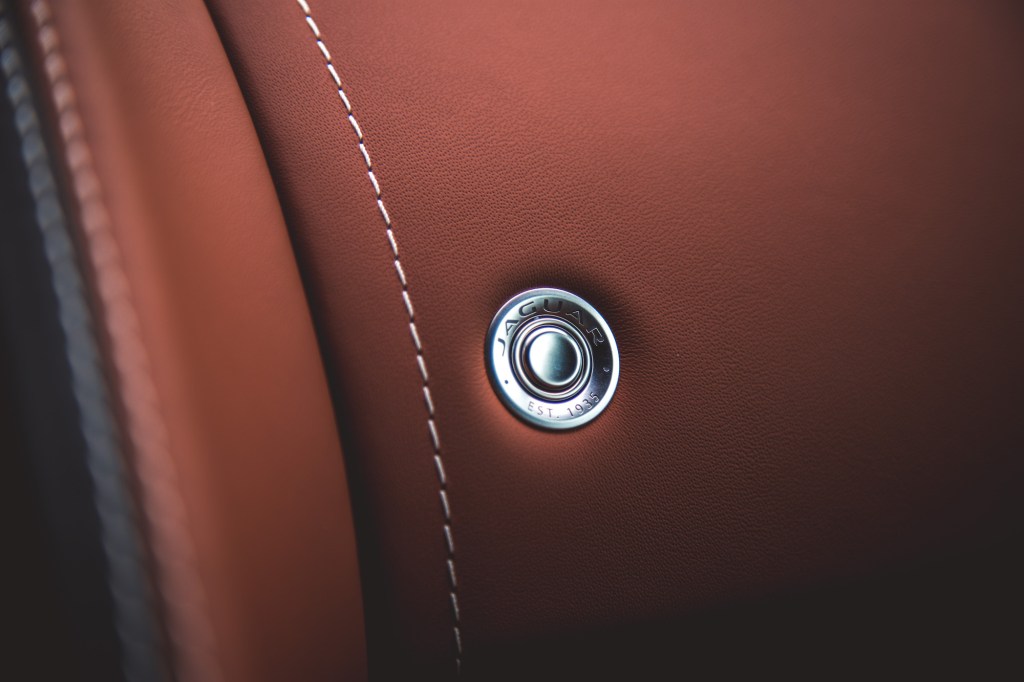
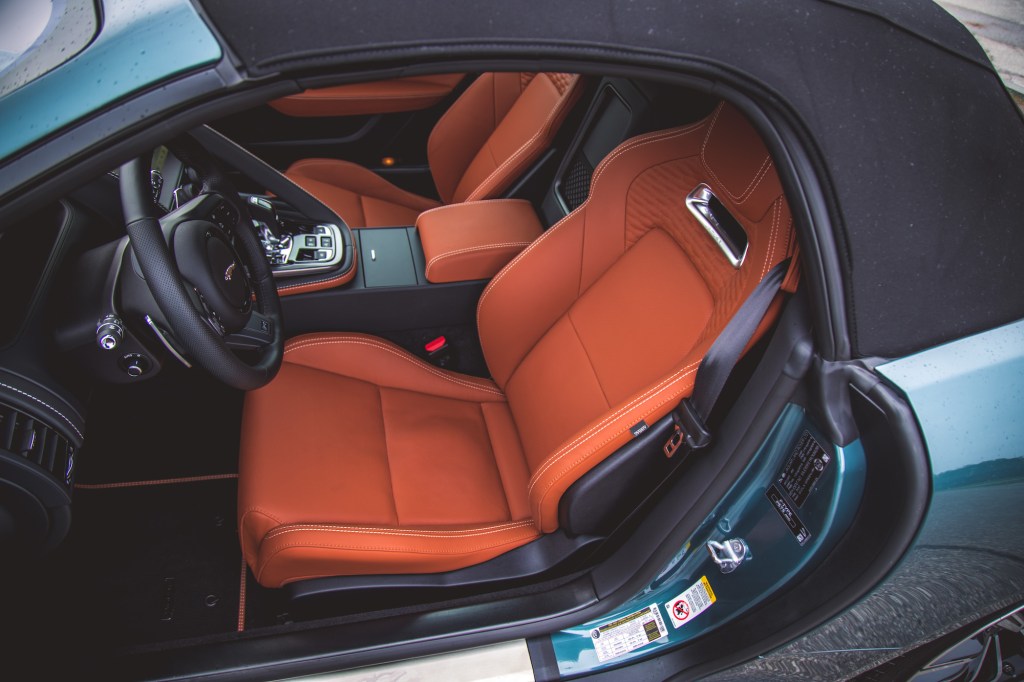
There are other neat features too like pop-out door handles, a front hood that swings up backwards, a hatchback-like lift gate like in the AMG GT, hidden cabin fan vents, and airplane-style switchgear and shifters. However, while the F-Type’s sheet metal has been refined over the years to keep pace with modern styling, the interior hasn’t. It’s the F-Type’s weakest area, and though we considered it stylish and chic back in 2014, it has aged incredibly quickly, blending together plasticky switchgear and an overall fit and finish that just hasn’t kept up with the times. The Extended Leather Package covers up some of the blemishes but it’s a shame they didn’t adopt the same cabin features as the current-gen F-Pace SVR earlier in the F-Type’s life cycle.
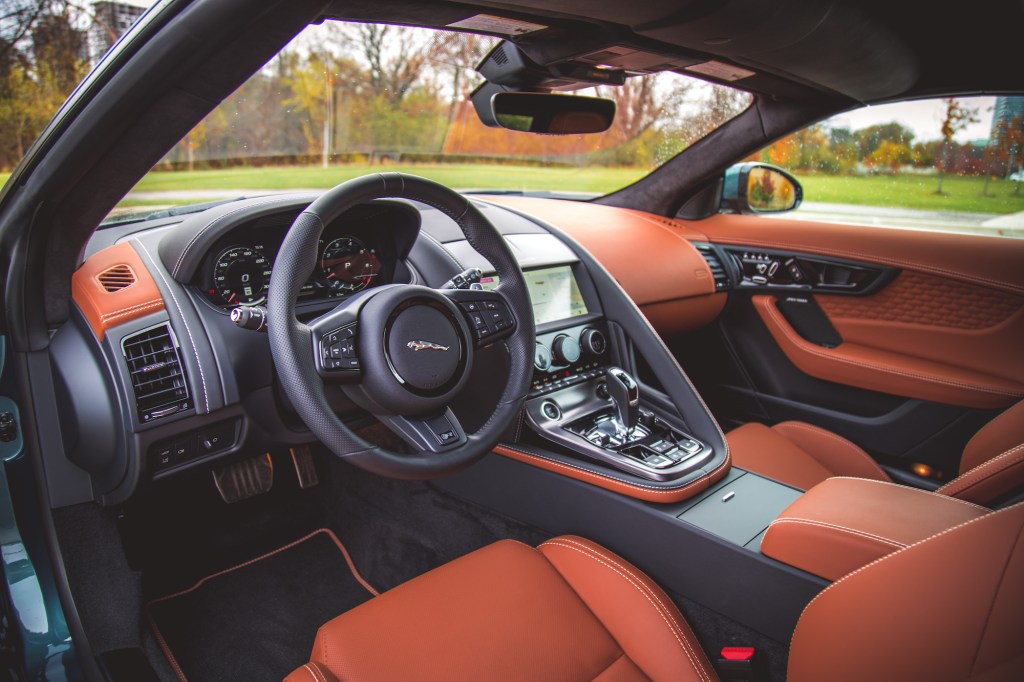
The steering wheel is a great size and ergonomic in shape with actual hard buttons and none of that fussy haptic touch nonsense you find in current Range Rovers. However, the flimsy paddle shifters feel less premium than those on a low-grade Logitech wheel. Cabin space is also tight, comparable to that of the Mercedes-AMG SL 63. Yet, it’s sorely lacking in both storage options and cubbies when compared to 2+2 rivals like the Lexus LC 500. The 12-way adjustable seats look great and appear thin, yet still provide a good amount of lumbar and lateral support. There is a fair amount of adjustment for my six-foot figure to find a cozy driving position but it’s slightly more limited in this convertible.
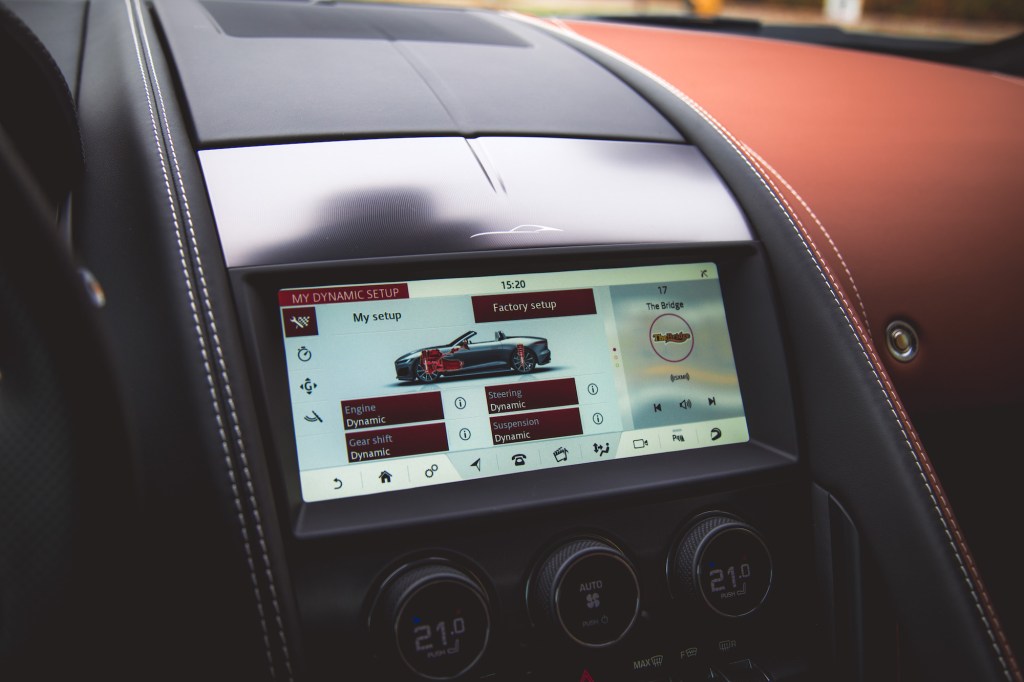
The F-Type doesn’t handle with the pinpoint precision of a Porsche 718, nor does it exude the confidence and playfulness of a BMW M2, but it’s better at putting a smile on our faces. Having a supercharged engine at the command of our right foot is a dying art, and the generous wave of torque that follows is addicting enough for us to question why turbochargers even exist. And it’s all nicely packaged with an effective all-wheel-drive system that envelops you in a thick layer of security. We did notice that the traction and stability control intervened more than in pre-2019 models, even in the Dynamic Mode setting, ensuring the rear is always kept in check. Therefore, you have to add more power than usual to instigate some oversteer, or simply turn the systems off altogether.
We all have different views on what makes up a successful sports car, whether it’s top speed, horsepower credentials, exhaust sound, or Nürburgring lap times. And to many, the esoteric Jaguar F-Type was never a G-force-hungry, apex-hunting predator like the Porsche 911, and we agree with that sentiment. Instead, Jaguar played a different hand, focusing on the emotional aspect of a sports car and amplifying those theatrics tenfold. They doubled down on the acoustics, heralded one of the only supercharged V8s left on the market, and maintained the glitz, glamour, and sexy silhouette of a British sports car. In that light, the F-Type is and always has been a shining success. And while that fire has begun to dim since its progenitor 75 years ago, we’re excited to see how Jaguar turns the page and reignites itself into a new electric age.
Specifications:
Model: 2024 Jaguar F-Type R75 Convertible
Paint Type: Giola Green
Base Price: $130,200
Price as Tested: $134,450
Wheelbase(mm): 2,622
Length/Width/Height (mm): 4,470 / 1,923 (mirrors folded) / 1,307
Curb weight (kg): 1,763
Engine: 5.0-litre supercharged V8
Horsepower: 575 hp @ 6,500 rpm
Torque: 516 lb-ft @ 3,500 – 5,000 rpm
Transmission: 8-speed automatic
Engine & Drive Configuration: Front engine, AWD
Observed Fuel Consumption (L/100km): 17.1
Tires: Pirelli Sottozero







Leave a Reply