
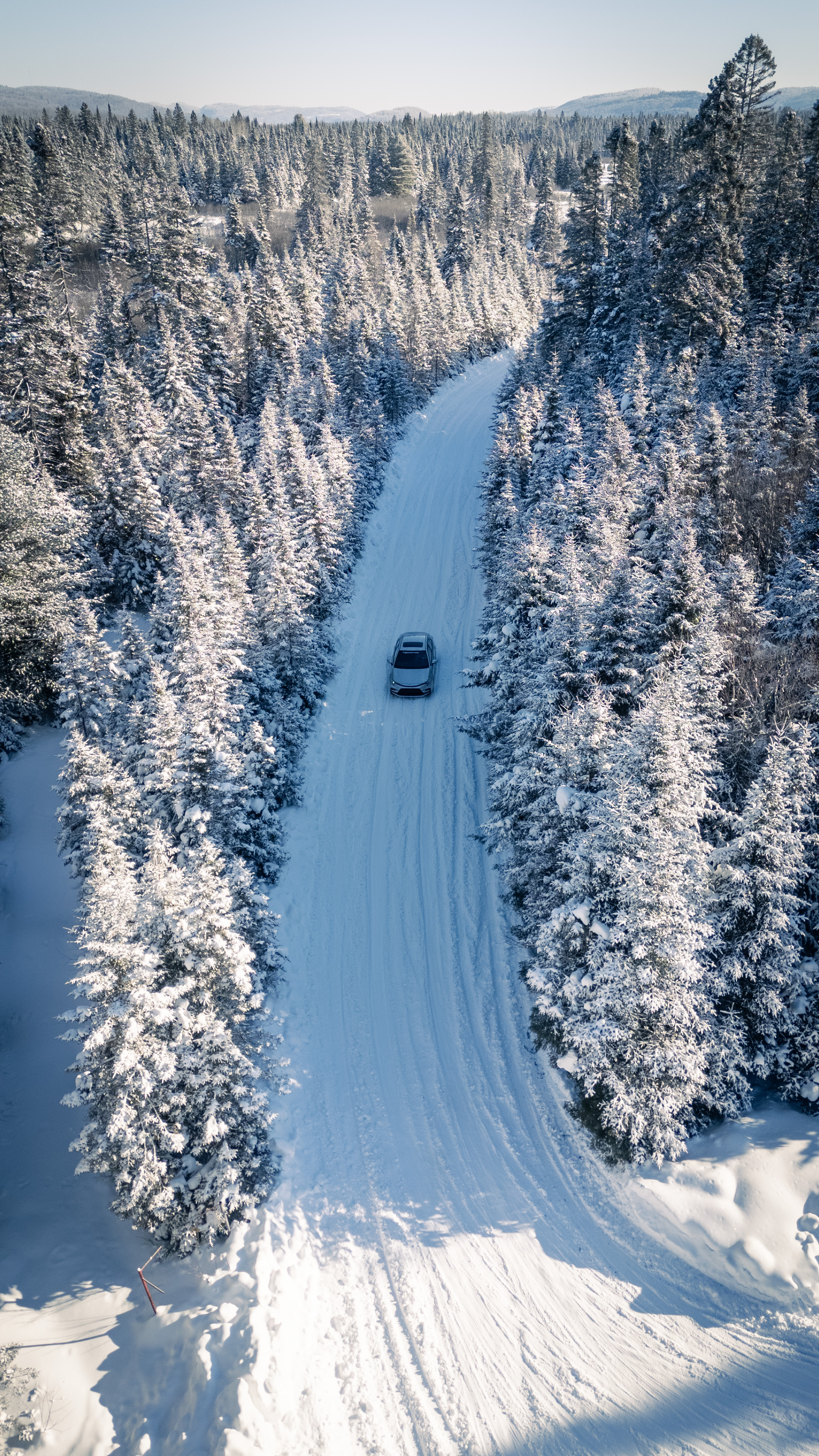
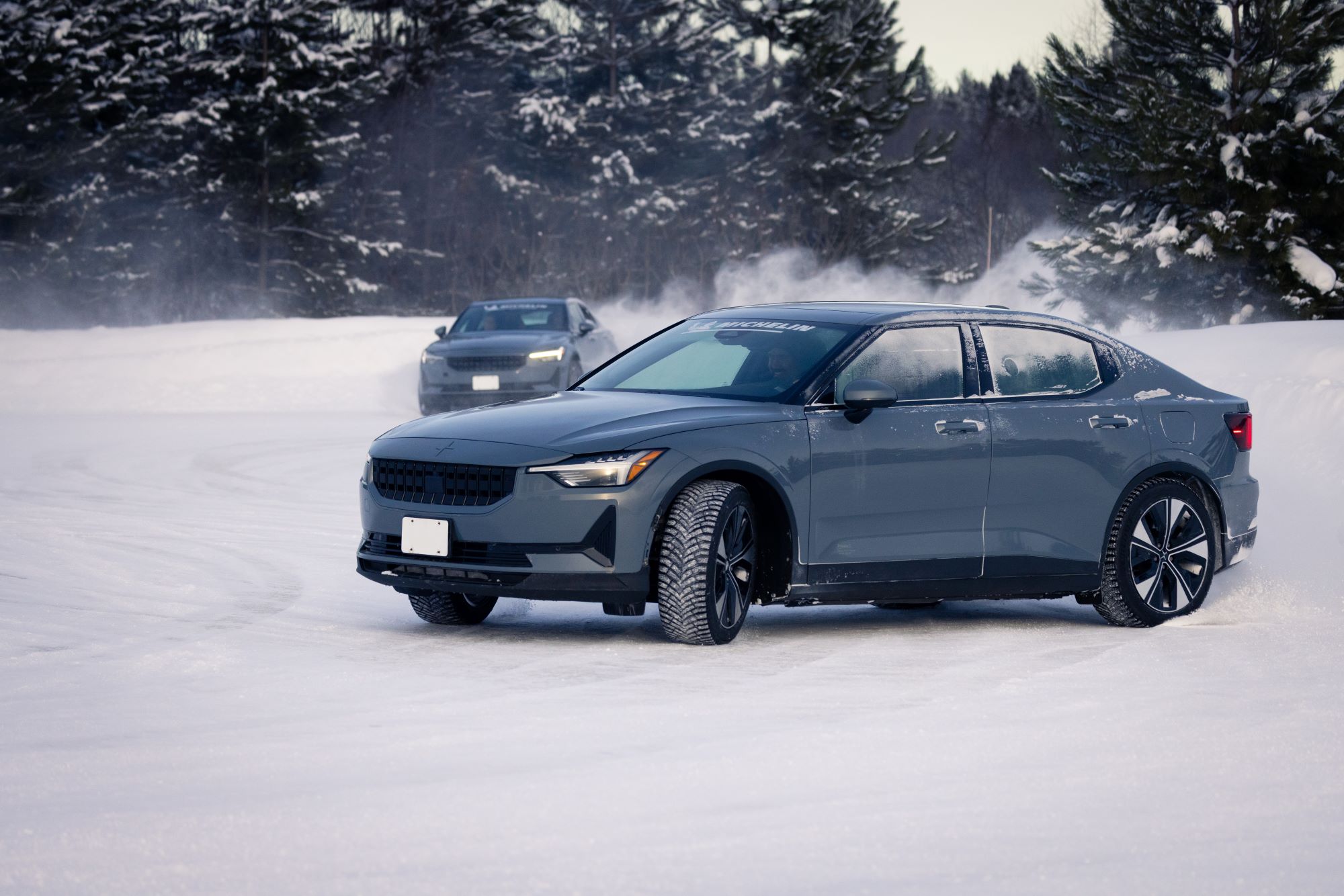
High up in the Laurentian Mountains lies a motorsport gem, the Circuit Mécaglisse. Surrounded by tumbling hills and snowcapped peaks, this frozen racetrack looks like the heavens threw down a boiling cup of ramen noodles and let its simmering broth melt into tight hairpins, long sweeping corners, and valley paths caked with deep, rutted snow. In other words, the perfect proving ground for Michelin’s latest winter tire, the X-Ice Snow+.
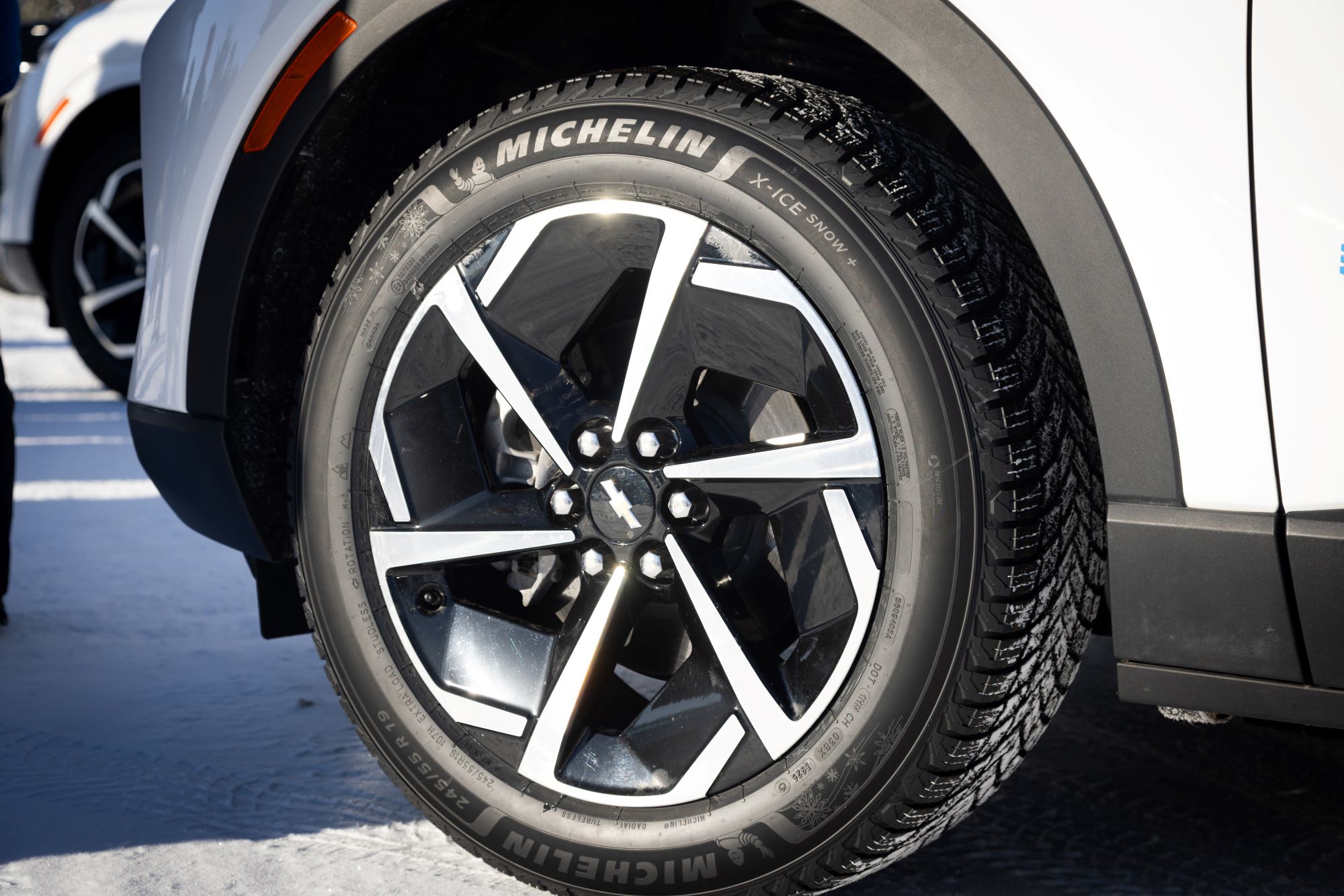

Apparently, when someone told Michelin, “if it ain’t broke, don’t fix it,” they didn’t get the memo. So they took their grippy, successful X-Ice Snow tire and gave it a sizable upgrade. Think of the new X-Ice Snow+ like the EVO variant, or system 2.0 software update. A keen eye will notice that the rubber tread is the exact shape V-shaped pattern as the outgoing X-Ice Snow, with the same blocks, full-depth sipes, and transversal grooves. But thanks to a new chemical compound they call Flex-Ice 3.0, which they’re keen to keep as tight-lipped as the Krabby Patty formula, Michelin says it now has stronger braking in low-grip situations, longer tread life, and better fuel and EV range.
We were invited to test Michelin’s bold claims at the Circuit Mécaglisse, with direct comparisons with equally spec’d cars wearing the Bridgestone Blizzak DM-V2, Continental VikingContact 8, and the Nokian Hakkapeliitta R5 SUV tires.
Our first exercise was with a front-wheel-drive Toyota Corolla Sedan wearing the new Michelins, and we were instructed to navigate a deep-snow path, the kind you would see after a heavy snowfall up in cottage country. The tires performed well, found grip under power, and didn’t put up too much fuss as it breezed over the fluff, even achieving a confident uphill ascent on an icy slope. We were immediately put into another Corolla, this one equipped with the Bridgestone Blizzak WS90, and we immediately felt a difference. On the same path, the front wheels produced significantly more understeer, it didn’t want to rotate, and they were constantly fighting the steering, forcing us to input more steering lock and throttle finesse. We made it out of the path in a similar fashion, but it was clear that the new Michelins required less driver involvement.
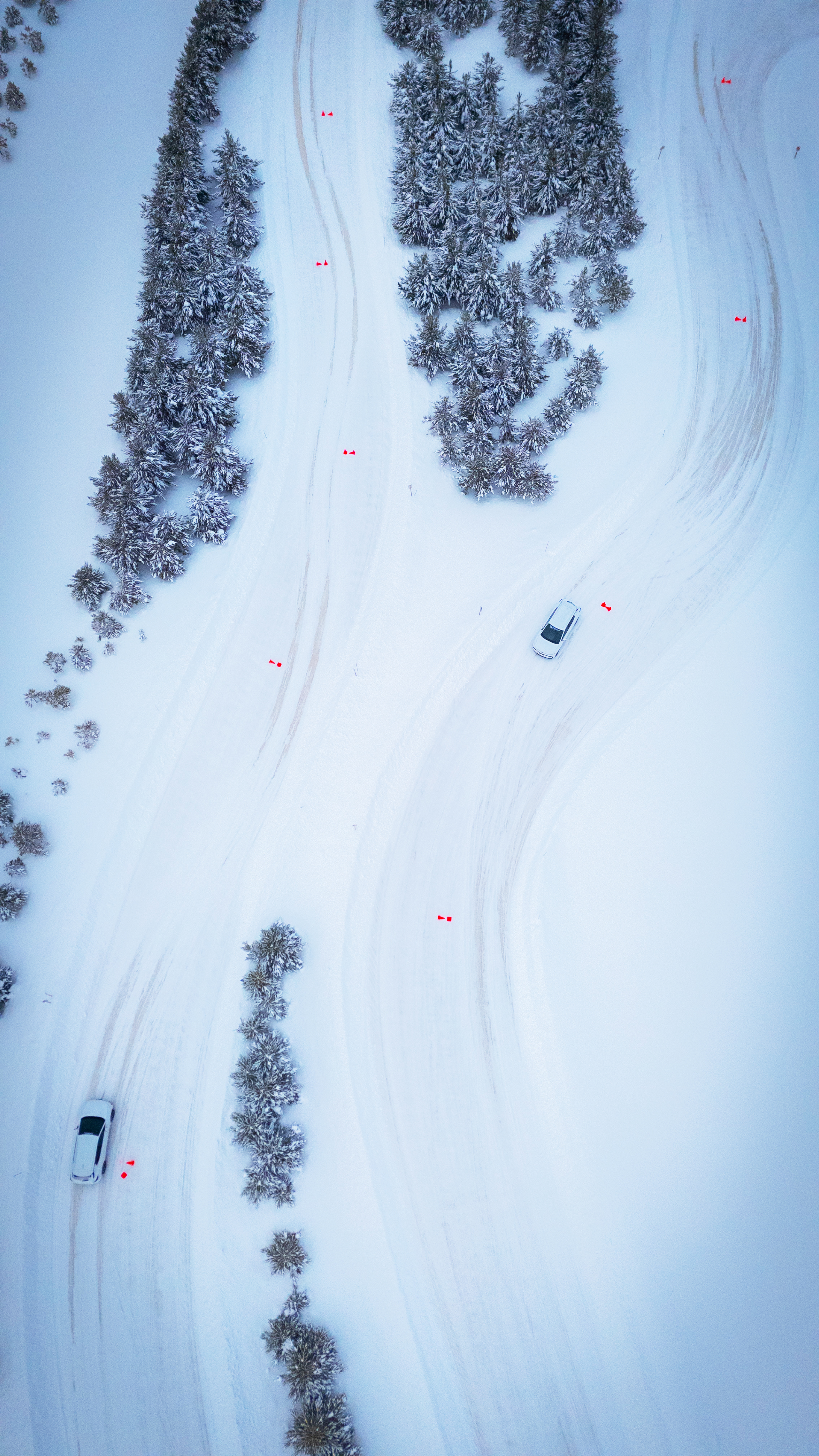
The second exercise was on the undulating Mécaglisse track. We were put behind the wheel of the fully electric, front-wheel-drive Chevrolet Equinox EV. It was here that we got a true feel for the tire in more realistic conditions. The track was covered in light snow but frozen over, which meant extremely low grip and commanded respect. Also, we didn’t fancy explaining to the track officials why our Equinox was bent backward, and a snowbank had been plowed over. So we set off with the Michelin-equipped vehicle, carefully at first, tackling the cone-guided slaloms and tight apexes, and utilizing the progressive acceleration and braking required on a track with multiple elevations. Compared to the Nokian Hakkapeliitta R5 EV and Continental VikingContact 8 tires that we tested right after, the Michelins achieved shorter braking distances and gave us the most confidence in the high-speed downhill braking zones. Lateral grip was quite similar across the tire range, though we felt the Nokians were more hesitant to rotate in the faster bends when the outside tire was loaded up. We had a difficult time getting the Continentals to bite on the uphill ascents when the unloaded front tires were trying to haul all the weight, but terminal understeer is an inherent feature of these front-driven setups. The Michelins came out on top, but it wasn’t as big a gap as we expected.

The third and final exercise was on another snow path, but with even deeper ruts and heavier, thicker snow, the kind you would see on an unpaved, barren path that no one has driven before. Our chariot was an all-wheel-drive Toyota RAV4 this time, and it was here that we noticed the largest disparity between the Michelins and the competing Continental. The Michelins tracked better through the divots and ruts and followed the direction of our steering, whereas the Continentals just grooved to wherever it felt like going, delivering understeer and seeming to wander about with a mind of its own. The Michelins allowed us to relax the steering, and without having to fight the front end, we instantly felt more confident behind the wheel. Though both tires made it out the other side unscathed, the Michelins got to the finish line quicker and with less sweat down the driver’s face.
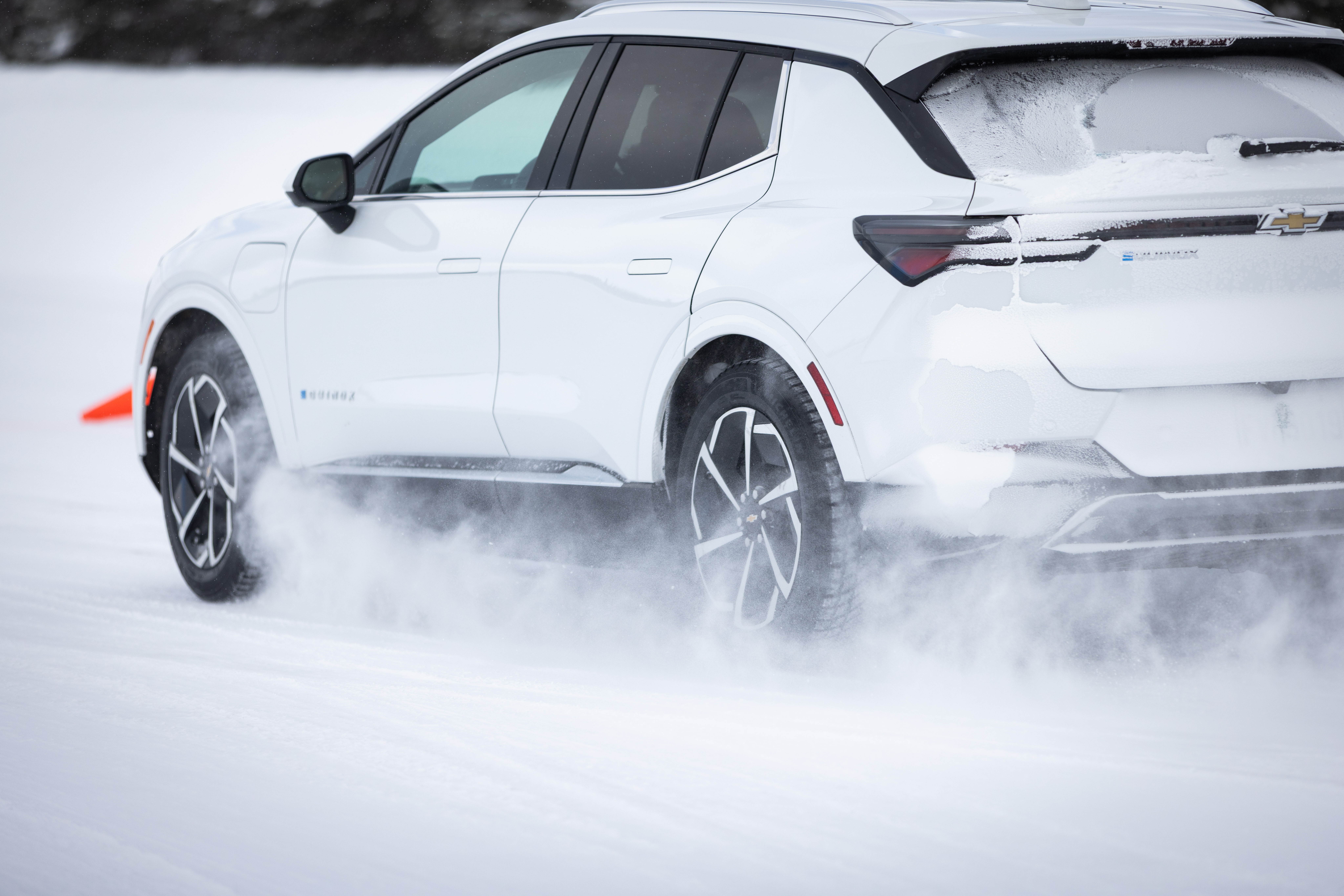
After an entire day’s worth of driving over snow, ice, and slush, it’s clear that the Michelin X-Ice Snow+ is a noticeable upgrade over its predecessor. While not a night-and-day difference compared to its competitors, we found that the way it builds driver confidence and reduces fatigue goes a long way toward making it successful, not to mention its excellent braking distances, which will put the safety-conscious at ease. Pairing that with Michelin’s 60,000 km mileage warranty, sizes that range from 15 to 23 inches, and availability for combustion, hybrid, and electric vehicles, it’s a difficult task not to recommend one when it reaches dealerships in May 2026.






Leave a Reply