

It’s common practice to give the proverbial alphabet soup a stir every now and then. Nomenclature and badge engineering and bound to change for automakers as they strive and adapt to a burgeoning electric age. Mercedes was the biggest culprit in recent years, renaming the mid-tier C-Class from the C 400 to C 450, and then to a C 43 AMG, in all just a handful of years. However, Audi is the latest, renaming their once-solo electric SUV, the e-tron, to the Q8 e-tron. It’s a shrewd move, building and attracting more attention and prestige into the brand’s halo Q8 product, but let’s also try and refrain from any cheap japs about the odorous French translation of ‘e-tron’.

The Q8 e-tron doesn’t actually share all that much with the combustion-powered Q8. This zero-emission, five-passenger SUV is powered by two electric motors, one on each axle, and a 114 kWh lithium-ion battery that is larger than the outgoing model’s 94 kWh battery, extending its driving range from 351 km to 459 km.

In all, the Q8 e-tron produces 355 hp and 414 lb-ft with a Boost Mode that can temporarily raise that output to 402 hp and 490 lb-ft. Think of it like a time-limited overclock function for your PC, and it will launch from 0-100 km/h in a respectable 5.7 seconds. Outside of Boost Mode, where regular driving occurs, the acceleration is nothing to write home about. We wouldn’t call it slow but it’s certainly not quick either. Forward thrust is somewhat tepid until you really get on the gas and build up a sense of urgency, yet the linearity and slow march of the power delivery behave much more like a combustion engine than an EV, making it easier for drivers to transition over. Those seeking a higher level of EV propulsion will find solace in the more powerful Audi SQ8 e-tron that houses an additional electric motor for an output of 496 horsepower and a quicker 0-100 km/h time of 4.6 seconds.
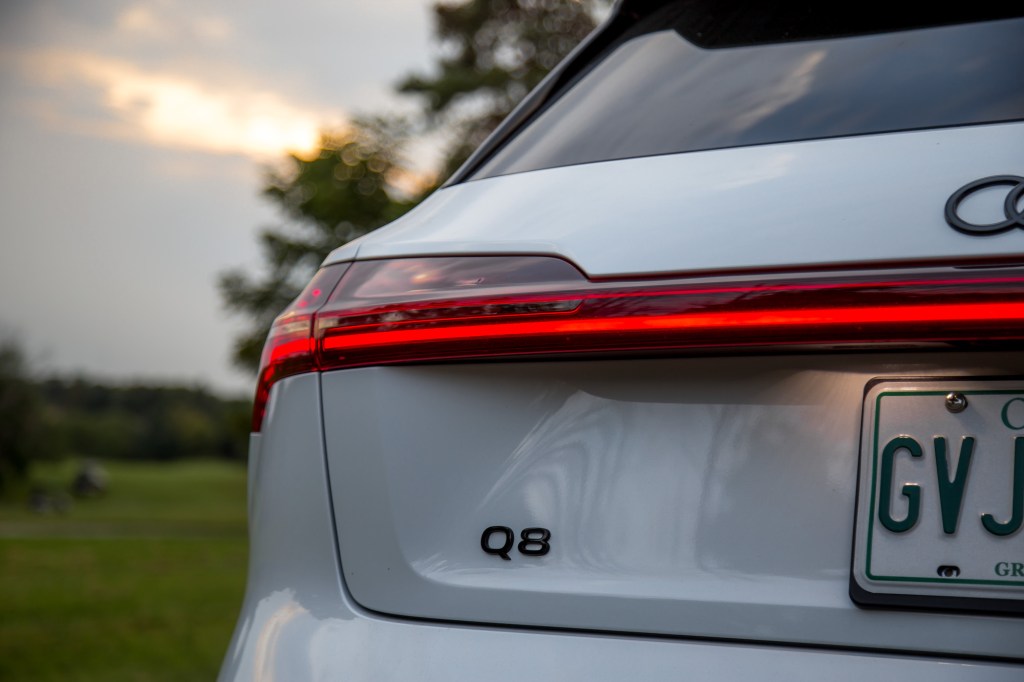
Our observed total range was 430 km, not too far off the claimed range of 459 km. This is impressive because half of that driving was at triple-digit speeds on the highway, which is notorious for quickly draining the batteries. The air conditioning was on the whole time, set at a cabin temperature of 21 degrees Celsius. That means the range is greater than the Genesis GV70 Electrified (383 km), Polestar 2 (400 km), Ford Mustang Mach-E (402 km), and Mercedes-Benz EQB 350 (356 km). However, it falls short of the BMW iX xDrive50 (521 km) and the Tesla Model X (536 km).
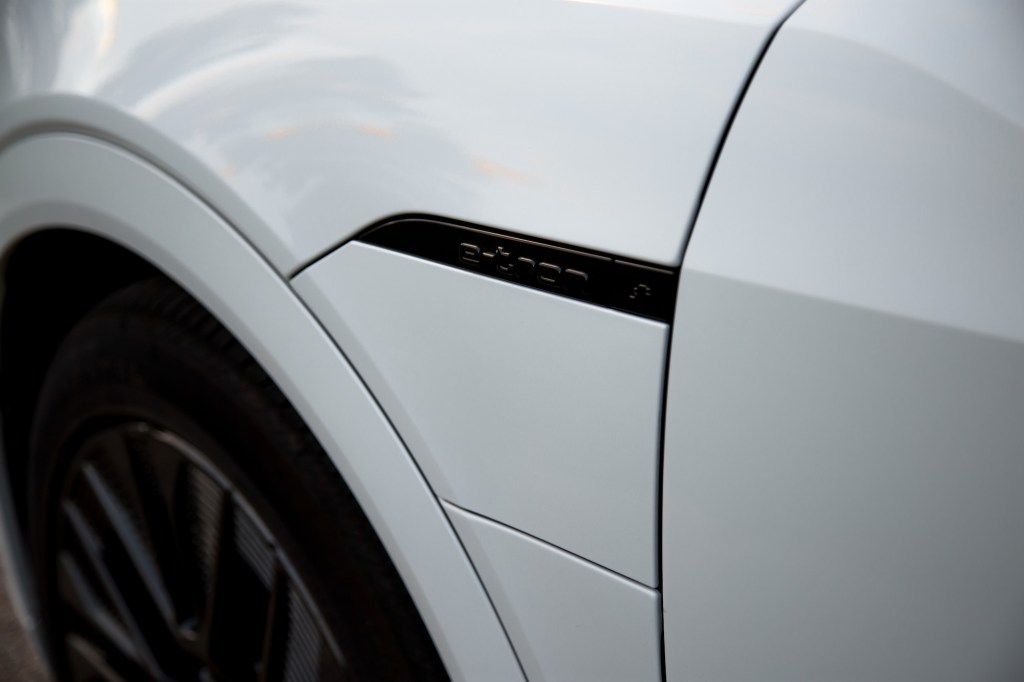
Like the outgoing e-tron, buyers can add on a second AC charging port (Level 1 and 2 only) on the passenger side of the vehicle for $700, so you never have to worry about parking the correct way on your driveway for optimal access, and both have an electronically-operated cover that opens and closes with the push of a button. And before you ask, no, you can’t plug one outlet in each port and expect double the charge.
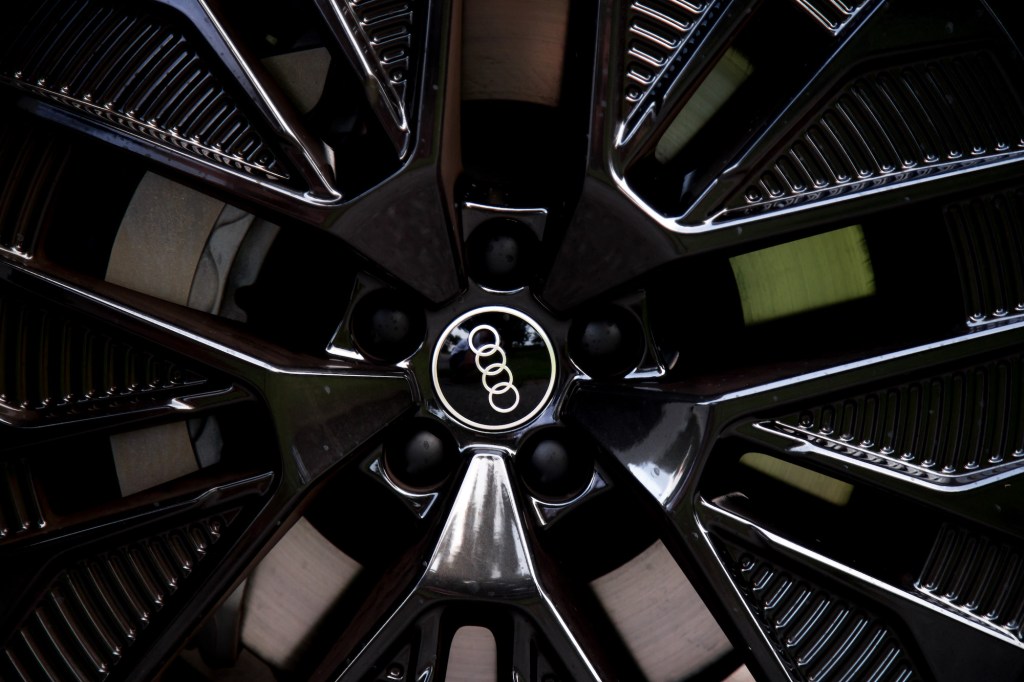
An air suspension is standard on the Q8 e-tron and it rides comfortably as a result, demonstrating better road stability and composure than the rivaling Ford Mustang Mach-E GT and Genesis GV70 Electrified, and is about on par with the BMW iX. But we wouldn’t call the Q8 e-tron agile, encouraging, or even involving. It rides reasonably well at low speeds but lacks body control and feels heavy on its springs. The amount of body roll exhibited when leaning into a high-speed corner is significant. Many other EVs feel spritely and darty thanks to their low centres of gravity and stiffened suspensions, but the Q8 e-tron is clearly tuned with comfort in mind, as a result, it doesn’t ride differently than the e-tron that preceded it.
Other weak points remain with the steering and the brakes. The steering is overly reactive to small rotational inputs, making it difficult to modulate at higher speeds where microcorrections lead to macro movements. The same applies to braking, and while we’re aware that the Q8 e-tron is a heavy SUV, the brakes don’t inspire a great deal of stopping confidence. It takes a deep pedal travel to get them to bite effectively. The braking regeneration helps a bit but it’s not strong enough for one-pedal driving. The incredibly low rolling resistance of the tires means the speeds we’re carrying on throttle lift are much greater, but we still find the BMW iX to be much easier and more confidence-inspiring to drive on an everyday basis.

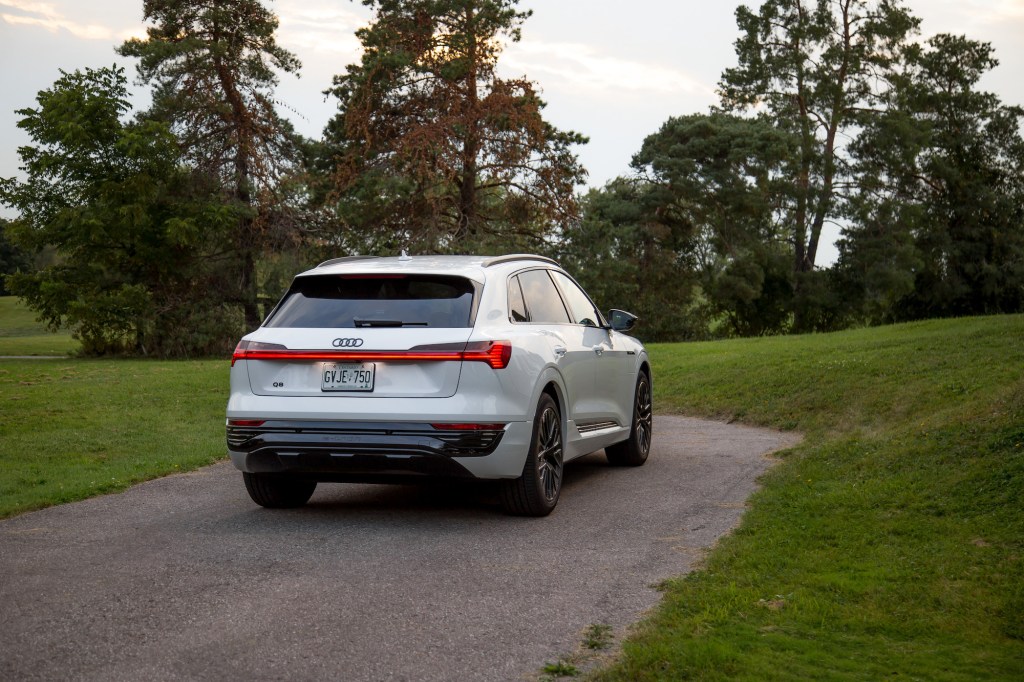
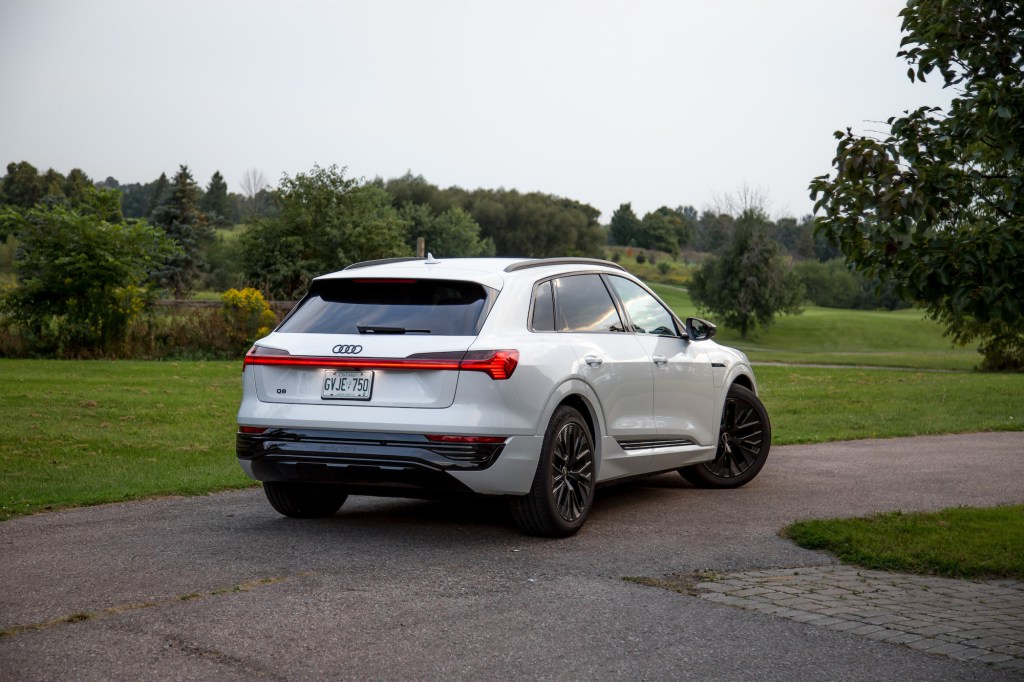
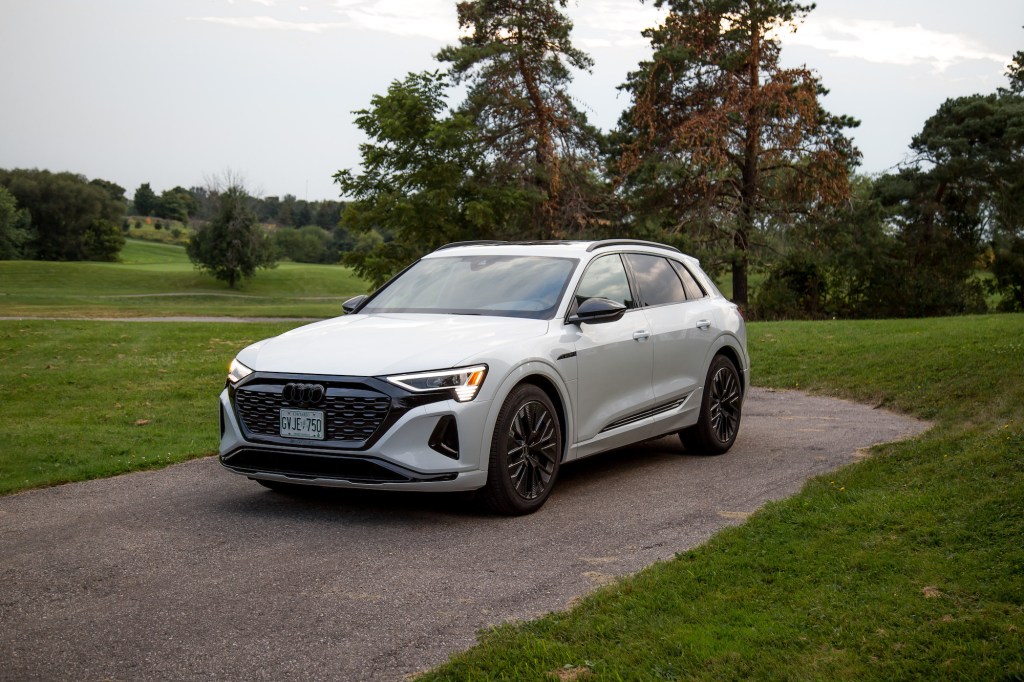
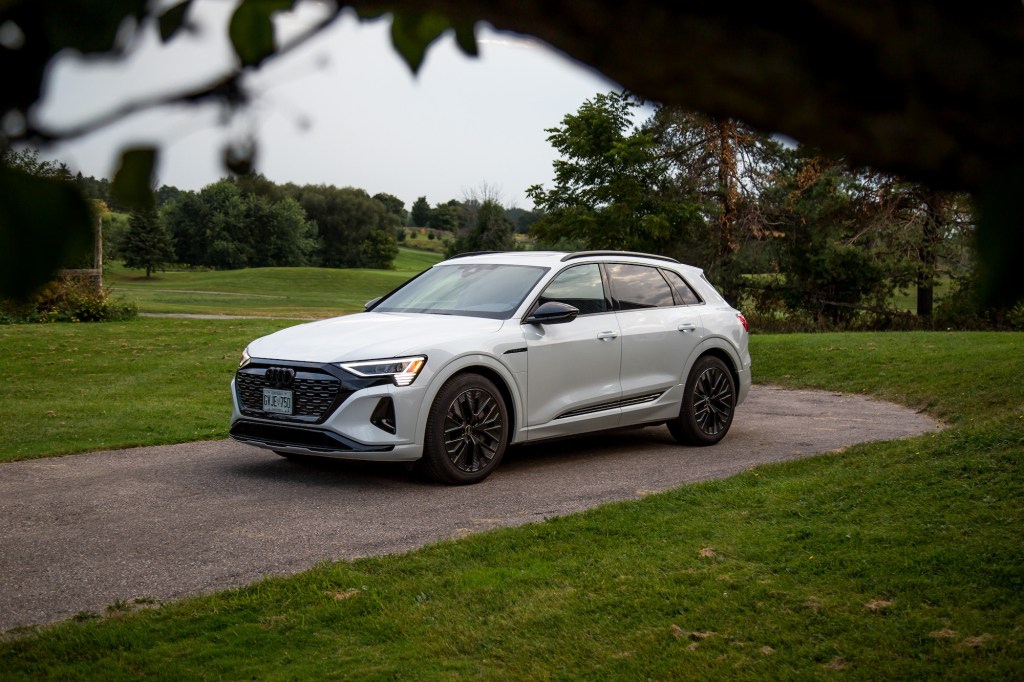
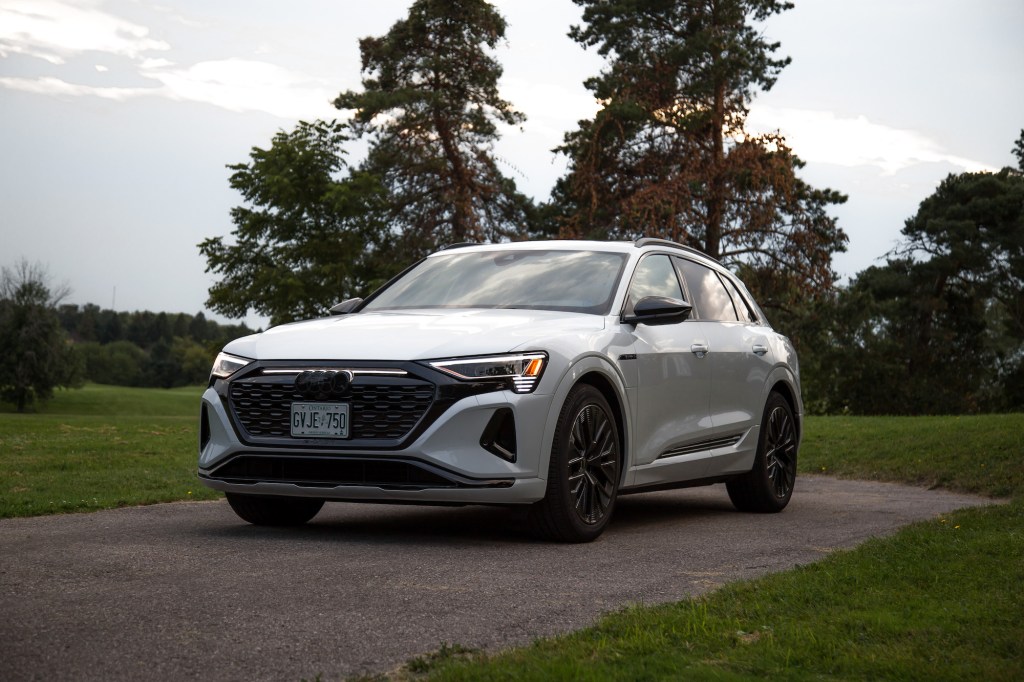
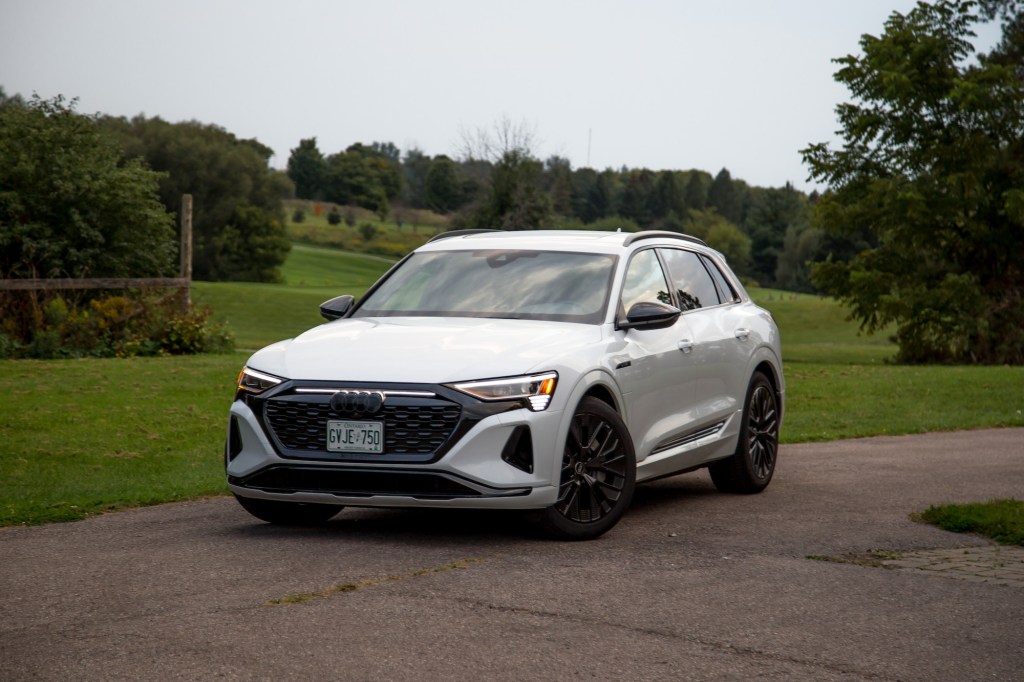
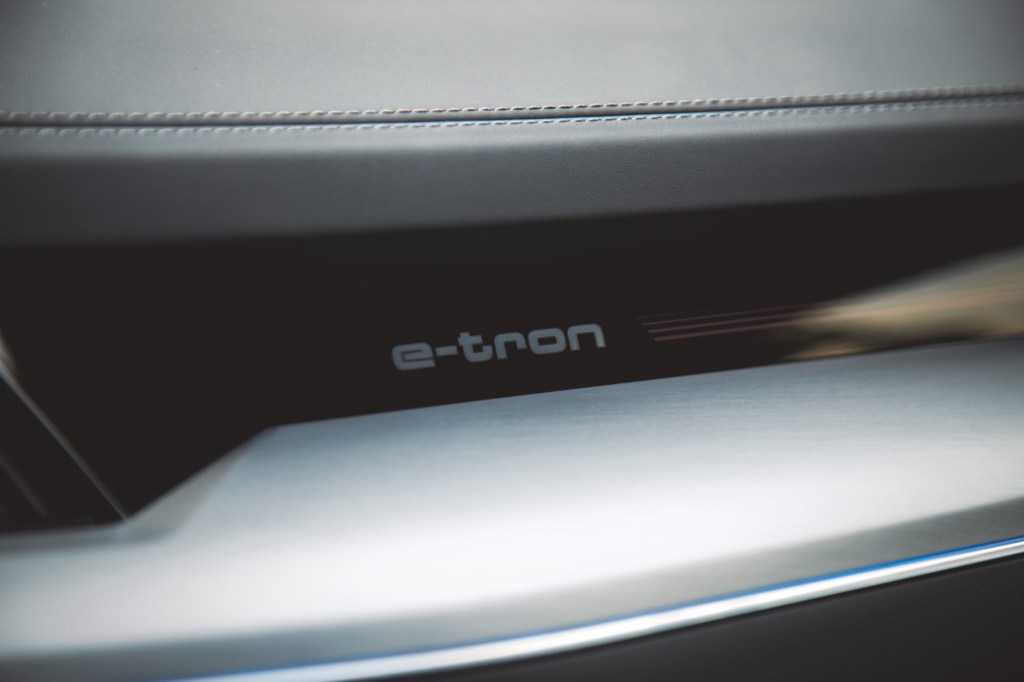
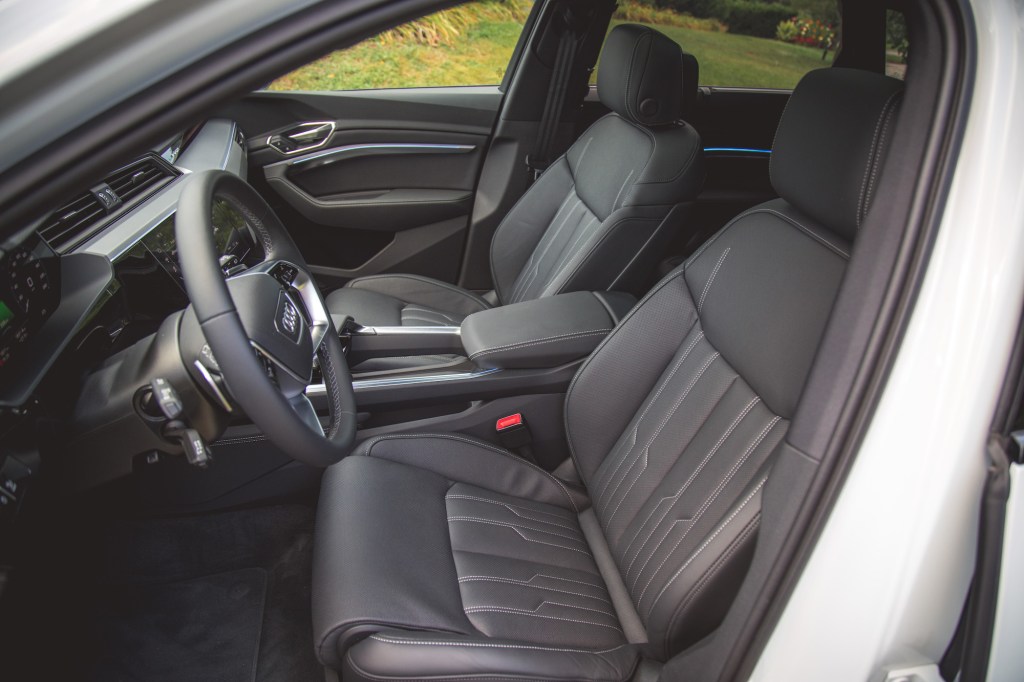
The exterior and interior of the Q8 e-tron have not undergone significant changes since its name was unveiled, but we believe the conventional SUV silhouette is more visually appealing than the Sportback model with its raked-back roofline. Those who have become accustomed to the interior of a combustion-powered Audi will have no issue transitioning to an electric one. Audi has cleverly adapted their cabin designs without trying anything too daring or unconventional. As such, the dark, minimalist, almost Spartan interior will be a familiar place of comfort for some, featuring dual touchscreens, a flurry of storage compartments, and a heavy mix of black plastics and sharp angles. It features a well-made interior with a range of premium features, including a head-up display, 360-degree camera view, front massage, heated and ventilated seats, and a Bang & Olufsen sound system.
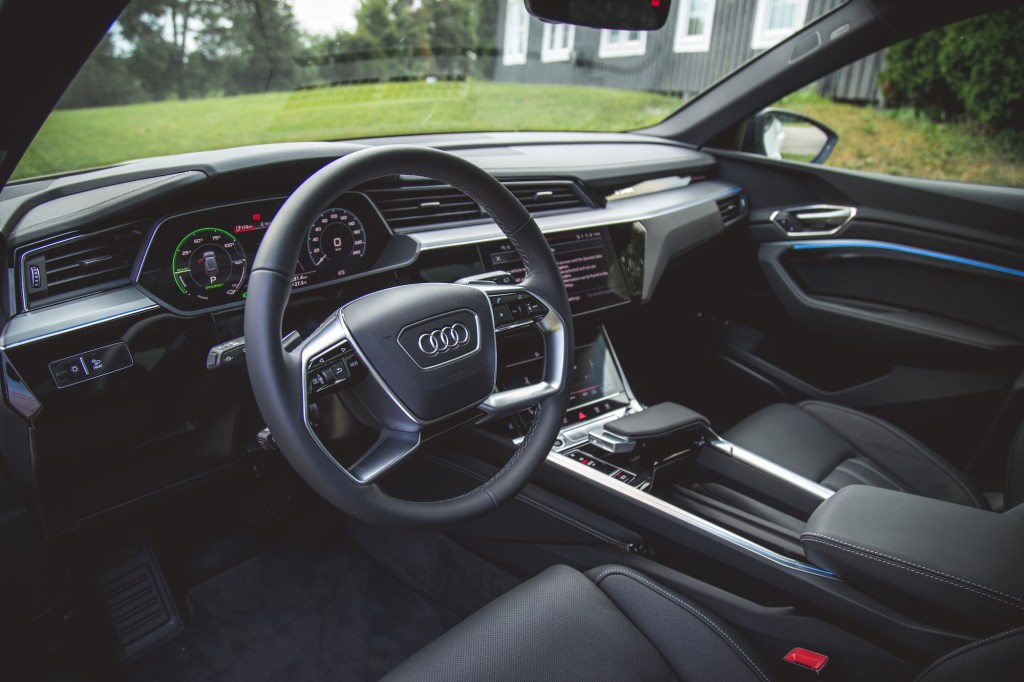
The proliferation of digital real estate will surely split opinions but Audi’s new dual-screen infotainment system works well, and we’ve experienced it before in the Audi A7 and Lamborghini Urus. The screens offer adjustable levels of haptic and audio feedback, and vibrate strongly to confirm each selection. That leaves less ambiguity on the table, which plagues many other vague-feeling touchscreens, but it doesn’t address the issue of hunting for the intended button and visually confirming you hit the right prompt – not an easy task when you’re trying to keep all eyes on the road.

Audi did their best to remedy these concerns with ergonomic steering wheel controls, a voice control system that effectively detects natural spoken dialogue, and a 12.3-inch Virtual Cockpit interface with 1920p native resolution – graphics that wouldn’t look out of place on a MacBook Pro. There’s even a shortcut button on the steering wheel that you can customize but the selectable options are limited – you can’t even program the driving modes.
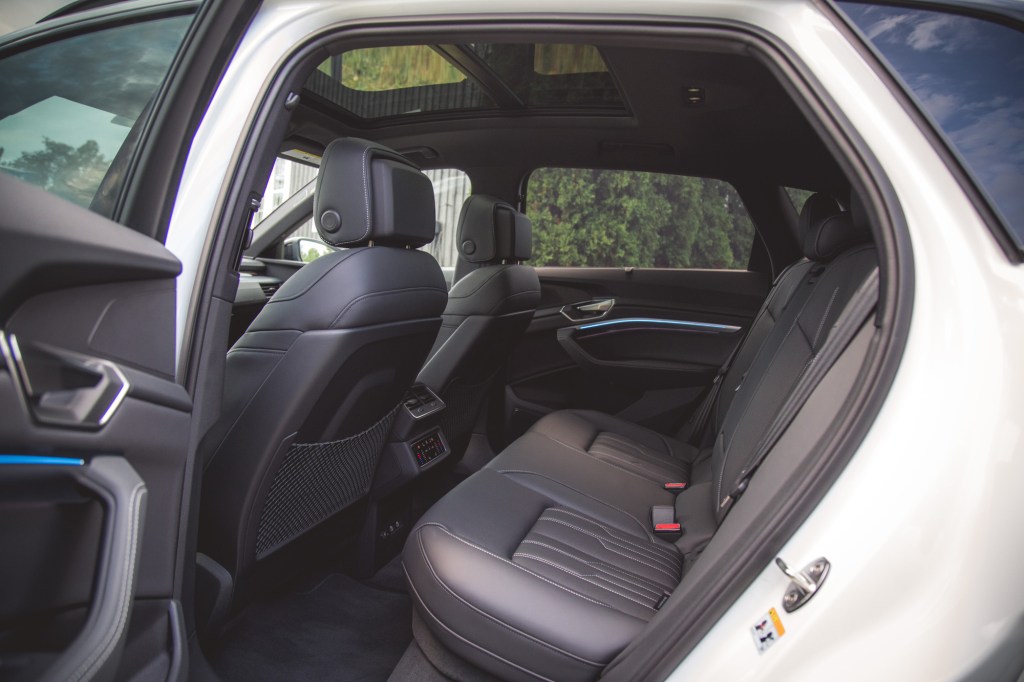
Rear accommodations are spacious as well, enough for a six-foot adult to sit behind themselves with plenty of wiggle room for their head and legs. The expansive sunroof helps brighten up the cabin with natural light, and it never feels cramped, despite its austere appearance. The trunk is also a decent size, with 569 L of cargo capacity in the back and an additional 62 L in the frunk.
Those looking to transition over to an electric vehicle will find that the learning curve is smaller than they think. The Audi Q8 e-tron makes it easy to transition into zero-emission mobility with its commendable real-world range, first-rate cabin technology that’s no different from the rest of the gasoline-powered Audis, and exemplary road comfort. What it’s missing is dexterity, connection, and engagement, but its focus on comfort and ease of use makes it a trouble-free recommendation for first-time EV buyers.
Specifications:
Model: 2024 Audi Q8 e-tron 55 quattro
Paint Type: Glacier White Metallic
Base Price: $92,500
Price as Tested: $104,690
Wheelbase(mm): 2,928
Length/Width/Height (mm): 4915 / 1935 / 1633
Unladen weight (kg): 2,510
Powertrain: 114 kWh lithium-ion battery; two asynchronous electric motors on each axle
Horsepower: 355 hp (402 hp in Boost Mode)
Torque: 414 lb-ft (490 lb-ft in Boost Mode)
Transmission: Single-speed automatic
Engine & Drive Configuration: Front engine, AWD
Claimed Range: 459 km
Observed Range: 430 km
Tires: P255/50R20 all-season tires






Leave a Reply