

The all-electric Mercedes-Benz EQS now comes in two body styles: a Sedan and an SUV. We’ve reviewed the Sedan here, and found it one of the most eye-opening showcases of automotive tech in 2022. Now we’re testing the SUV variant, which is essentially the same vehicle but raised with slightly different proportions, optional seven-passenger seating, a shorter electric driving range, and a $12,000 premium.

The EQS 580 SUV is based on the same chassis and features an identical battery to the EQS 580 Sedan. However, the range has diminished from 547 km to 459 km. What gives? The SUV is heavier, weighing in at 2,810 kg, compared to the Sedan’s 2,585 kg. That’s a 225 kg difference that significantly impacts the range. The second is aerodynamics. The Sedan is a sleek, soap bar-shaped vehicle that slices through the air with ease, while the SUV stands much taller. It retains that smooth silhouette but the laws of physics aren’t so kind, reducing the range and putting it in striking distance of the BMW iX M60 (463 km), Ford Mustang Mach-E (435 km), and Tesla Model Y Performance (488 km).
Our testing yielded a range of 402 km on a full battery, and while we could realistically achieve the official claim of 459 km, that would mean reducing the use of the cabin heaters, heated steering wheel, and massage, as well as paring down most of the infotainment functions and screen brightness. What’s even the point of spending nearly $200,000 after taxes (don’t forget the new luxury tax on top of HST) on an EQS if it comes down to such frugality? Therefore, we would expect 400 km on any given day with a temperature of 0 degrees Celsius. One must also consider the amount of highway driving and city traffic that would benefit from the three modes of regenerative braking. On the bright side, the Mercedes system is clever enough to identify what needs to be done or turned off to maximize battery efficiency and extend the range even further. All of this can be accessed inside the vehicle’s menus.

The EQS SUV comes in two power levels: 450 and 580. Again, same powertrain and motors but with different software tuning. The EQS 450 dishes out 335 hp and 590 lb-ft, while the EQS 580 releases 516 hp and 632 lb-ft. The 0-100 km/h time is slashed by a full 1.4 seconds with the latter, but so is the price, a difference of $22,500. The estimated range is the same for both.

We tested the EQS 580, and the acceleration is palpable and intense. Even with such a substantial curb weight (it clocks in 160 kg heavier than a G 63 AMG), the EQS fires off into the horizon with ease. Like most electric vehicles, the sensation of speed quickly tapers off once you hit triple-digit numbers, and it’s no turbocharged V8 from the Range Rover, but it’s a close substitute and one that doesn’t emit harmful gases into the atmosphere. And while we mourn the inevitable loss of V8 exhaust noises and the distinctive howls they create, the EQS has us firmly believing that electric vehicles can be just as entertaining to drive. It just takes some rewiring of the brain and refocusing our expectations.
You can feel some of that weight during heavy braking maneuvers, where the front nose tilts forward considerably, but the adaptive air suspension does its best to keep the body level. Lateral roll is kept to a minimum, but the EQS is catered towards a smooth, yacht-like driving style, rather than keeping pace with an AMG GT R.
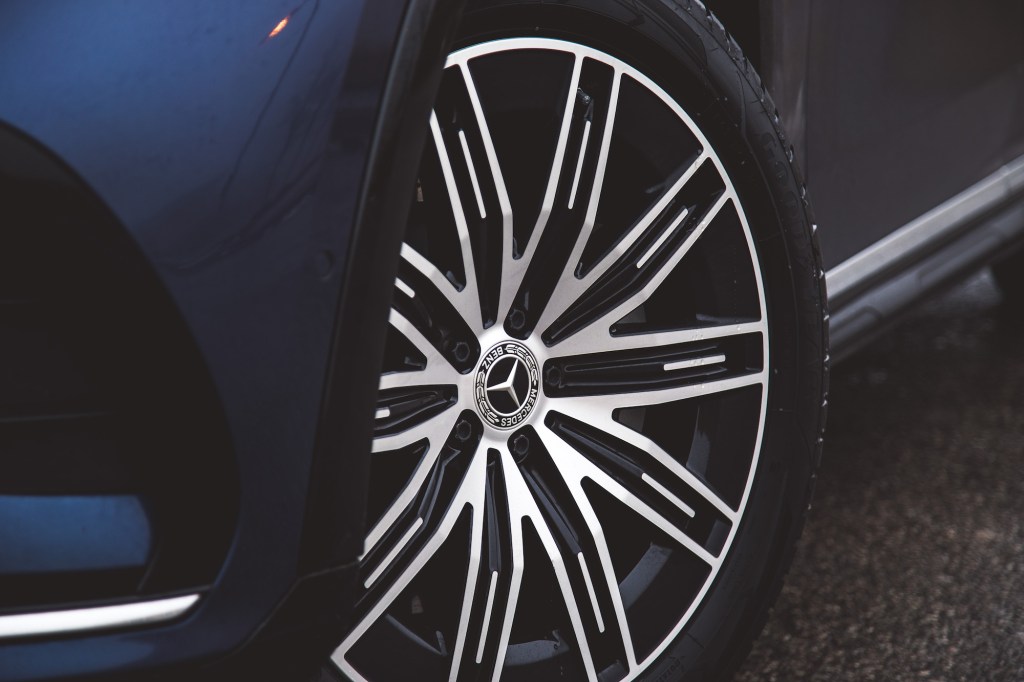
Be that as it may, the infinitely variable 4MATIC all-wheel drive system can distribute torque between the front and rear axles in any possible combination, constantly monitoring the road and adjusting as needed for maximum wheel grip. You can feel this when you swing the EQS through a high-speed corner, nail the throttle, and let the systems underneath throw everything to the inside wheel to rotate the car. It lends a sense of agility to the overall drive, and while it never pushes you to explore the limits, it’s nice knowing that the EQS is well-suited to the task should you ever have a need for speed.

The steering is numb and devoid of feel but more natural in rotation than the Sedan’s, as we didn’t find ourselves constantly overcorrecting our inputs. The rear-wheel steering feature further increases its manoeuvrability in small spaces, by allowing the rear wheels to rotate up to ten degrees. Three-point turns turn into two-point turns, and that’s impressive for such a lengthy vehicle. The brake pedal could use some work though – they need quite a bit of force to bite, and the pedal is not linear enough to modulate the vehicle smoothly. Other EVs like the BMW iX have it tuned much better.
The EQS SUV sits at approximately the same height as a Range Rover Sport and offers expansive views out the front, to the sides, and even above. It’s better than the Sedan by a wide margin. The seating position is excellent and there are wide door sills to rest your arms. Unique to the SUV is a new Off-Road feature that raises the air suspension and changes up the powertrain tuning to provide optimal grip and traction on less-than-ideal terrain. While we doubt 99% of owners to ever utilize this mode, we assume most will enjoy having the ability rather than using it. The same goes for the Range Rover’s litany of off-road modes, or the Mercedes G-Wagon’s three differential locks – unfortunate dust bunnies.

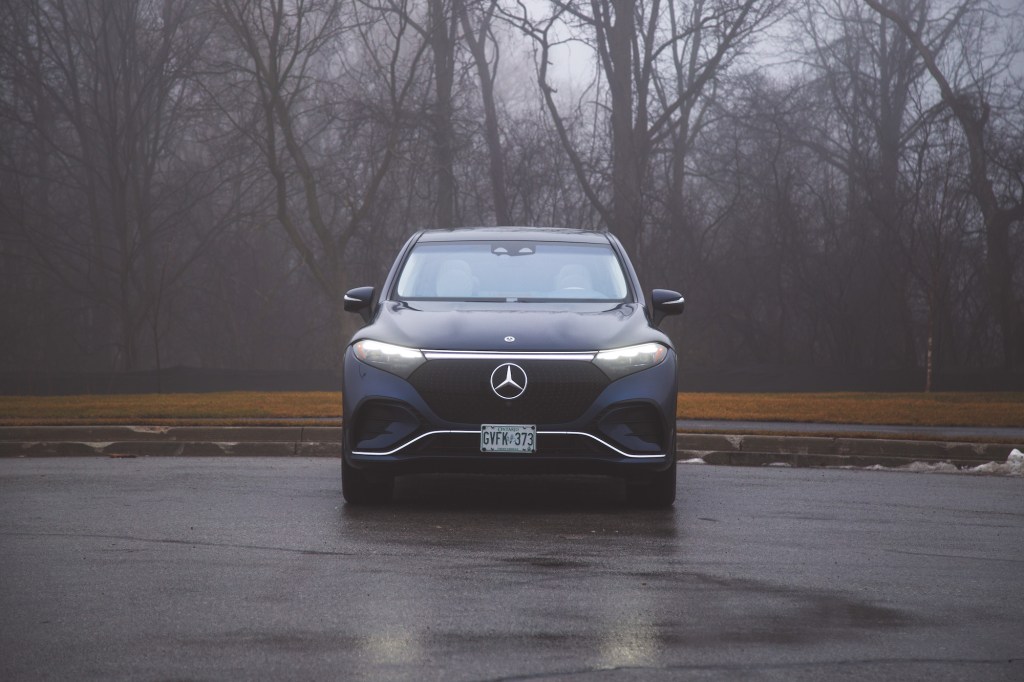
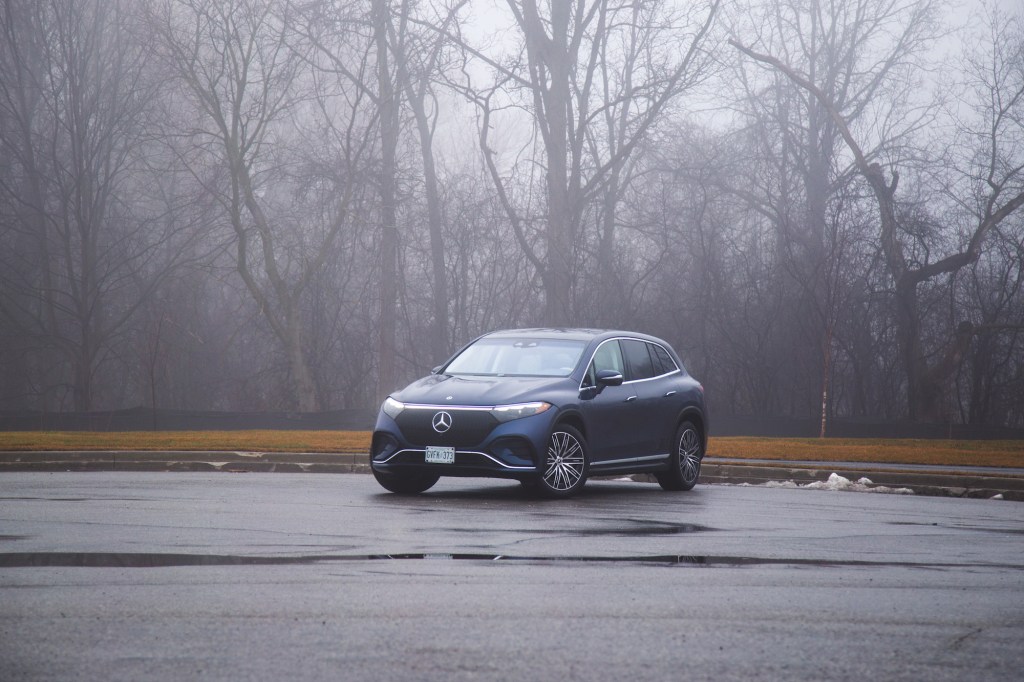
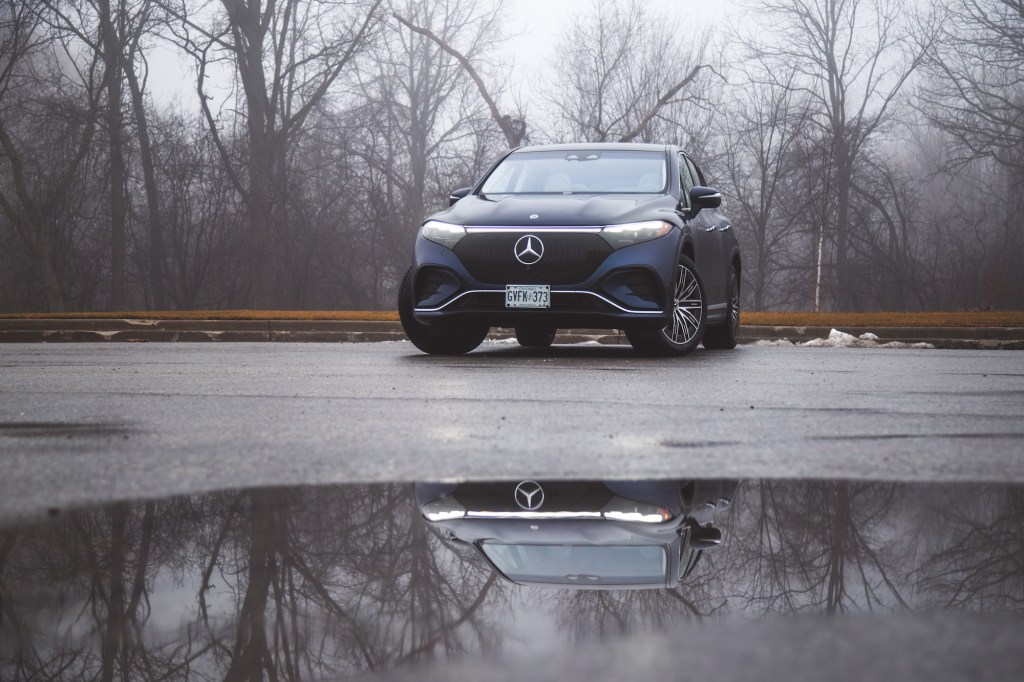
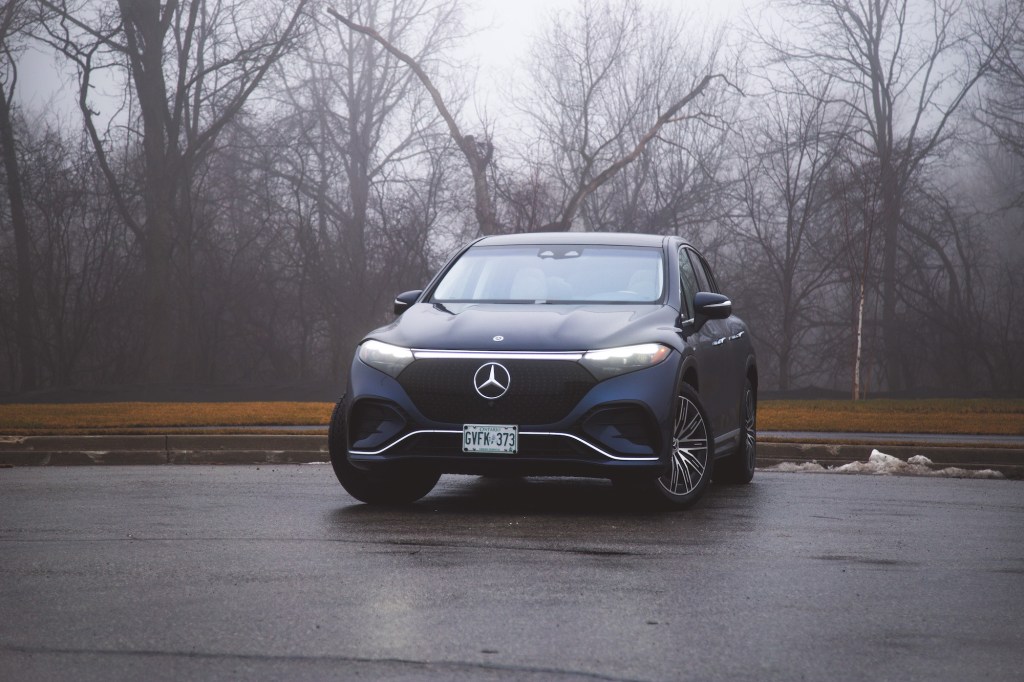
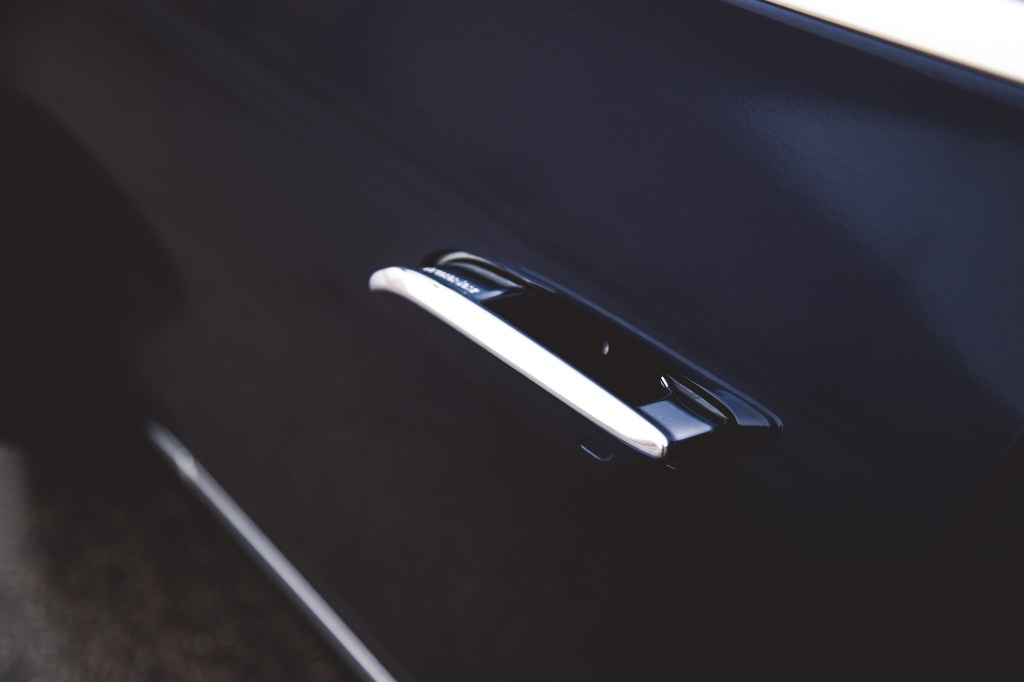
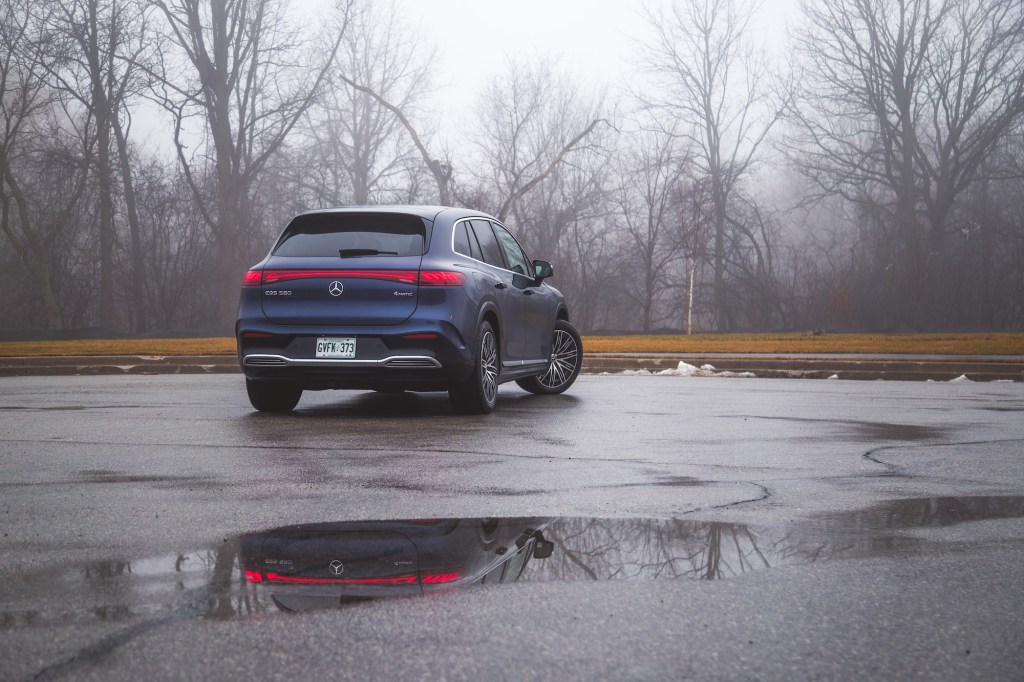
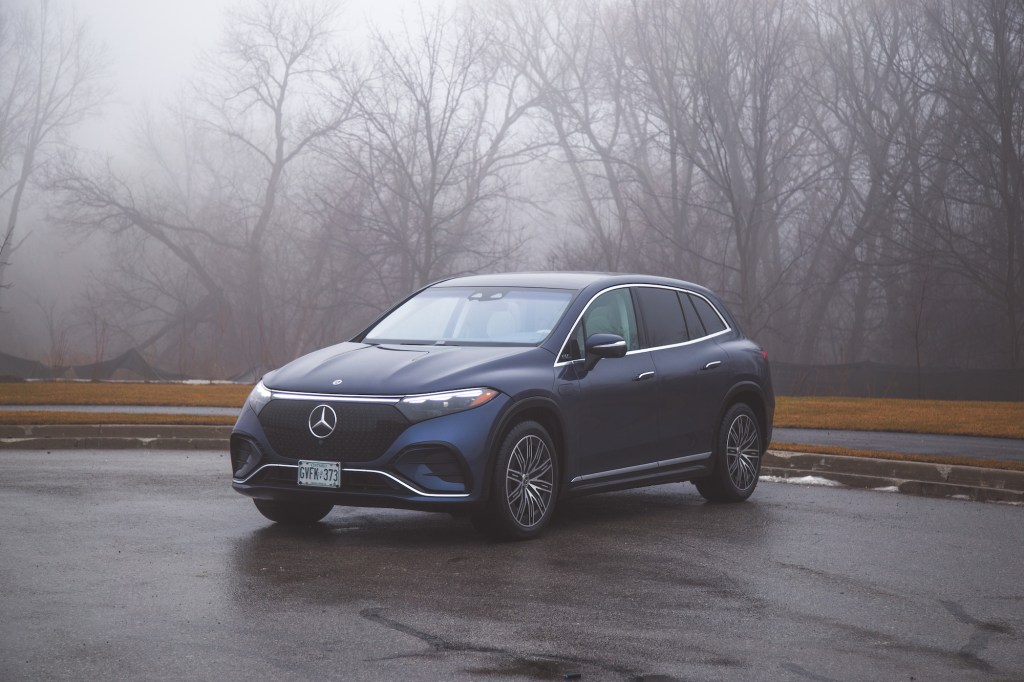
The SUV is easier on the eyes and appears more visually balanced and cohesive than the SUV. It features the same pop-out door handles that require a forceful pull to engage, yet feel solidly in place and are free from rattles. There is only one charging port on the rear passenger side, right where a conventional gas cap would be. There are also Mercedes stars embedded in the front ‘grill’, and while the headlights are not as diamond-like sparkly as the BMW iX or i7, they carry their own unique and distinctive signature at night.
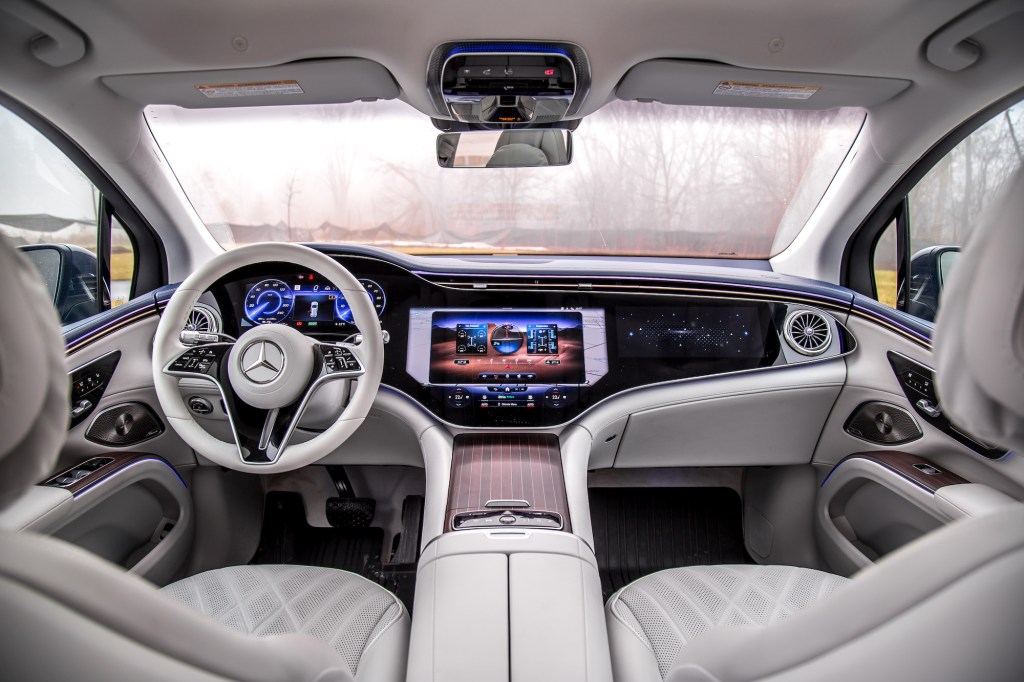
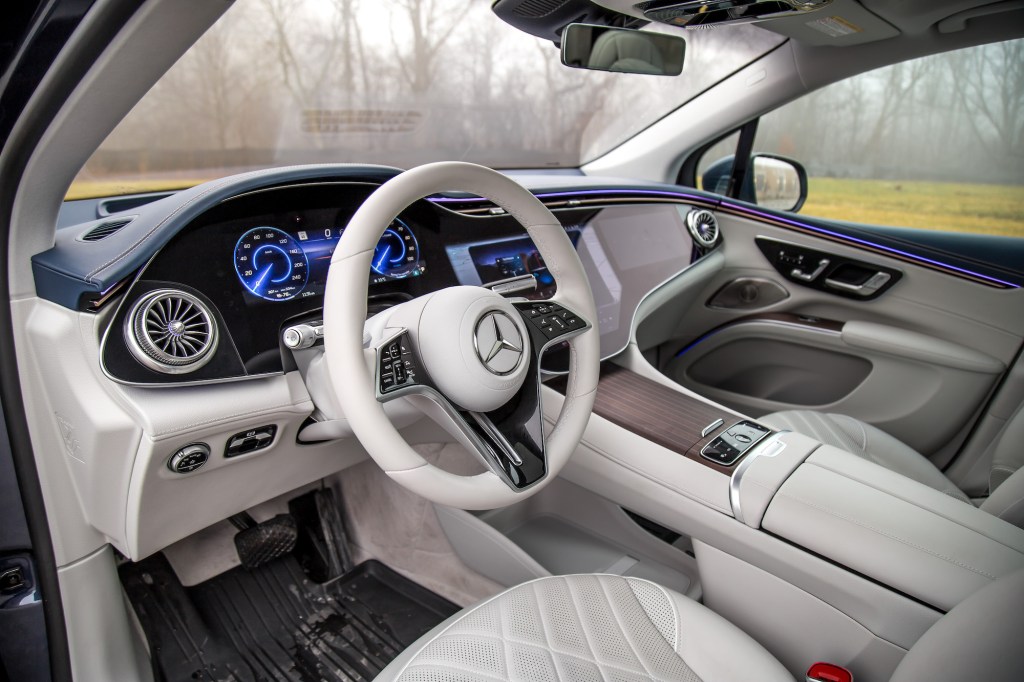
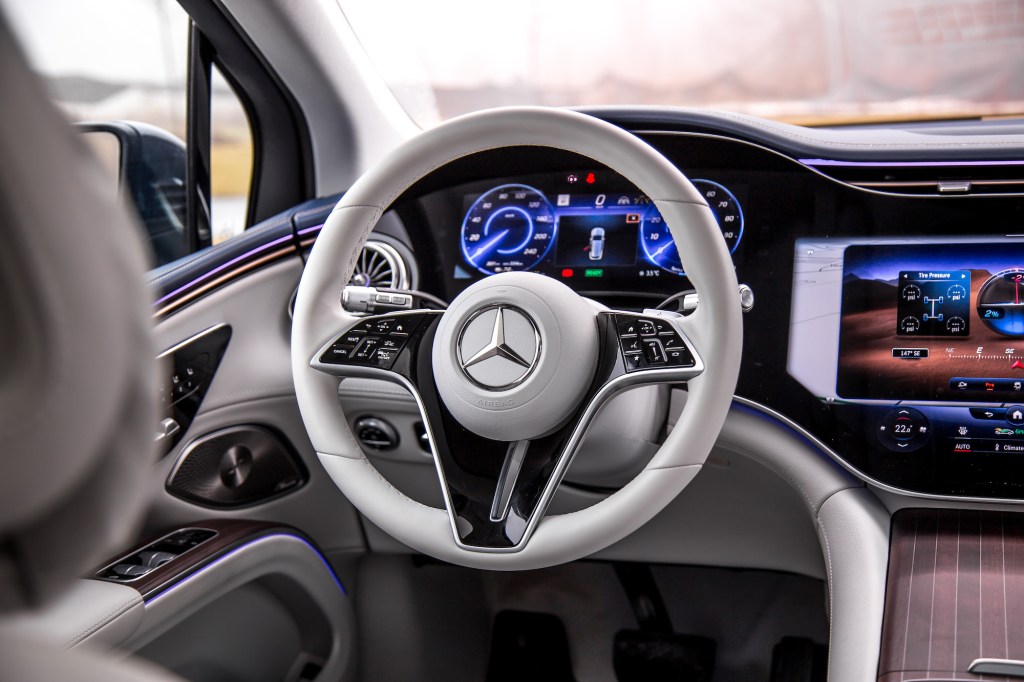
The cabin of the EQS SUV is the main spectacle. It’s like being inside a spaceship, as many of our passengers would describe, alluding to the 56-inch spread of glass embedded in the dashboard, housing three individual screens that stretch from the driver’s gauges to the passenger display. We love the aesthetic showcase of it all and the dramatic visuals it offers, but the actual functionality leaves a bit to be desired. We wouldn’t call it ergonomically sound, as the learning curve is steep. Navigating through the menus to find the intended function takes time, and it’s not as intuitive as the units in BMW, Tesla, or Land Rover. Best to use the ‘Hey Mercedes’ voice command, which detects speech exceptionally well.
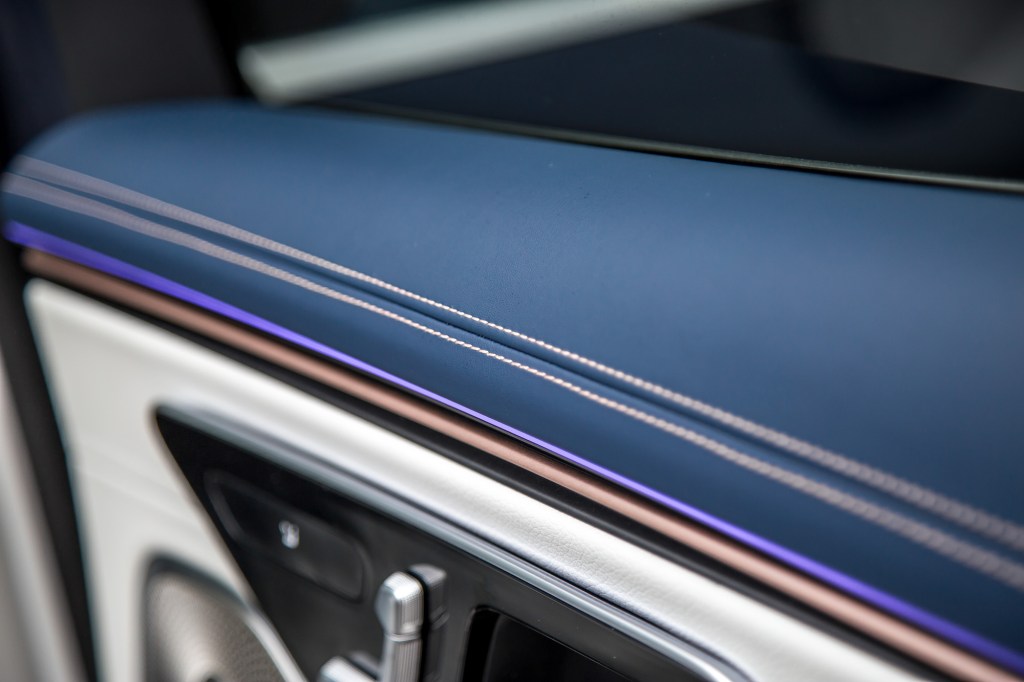
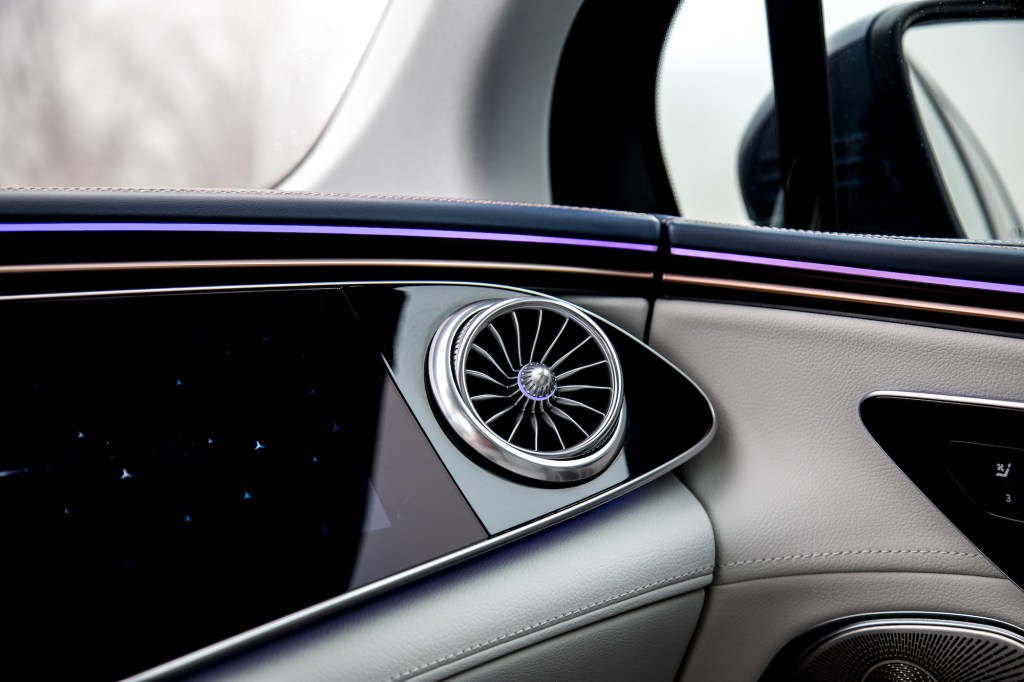
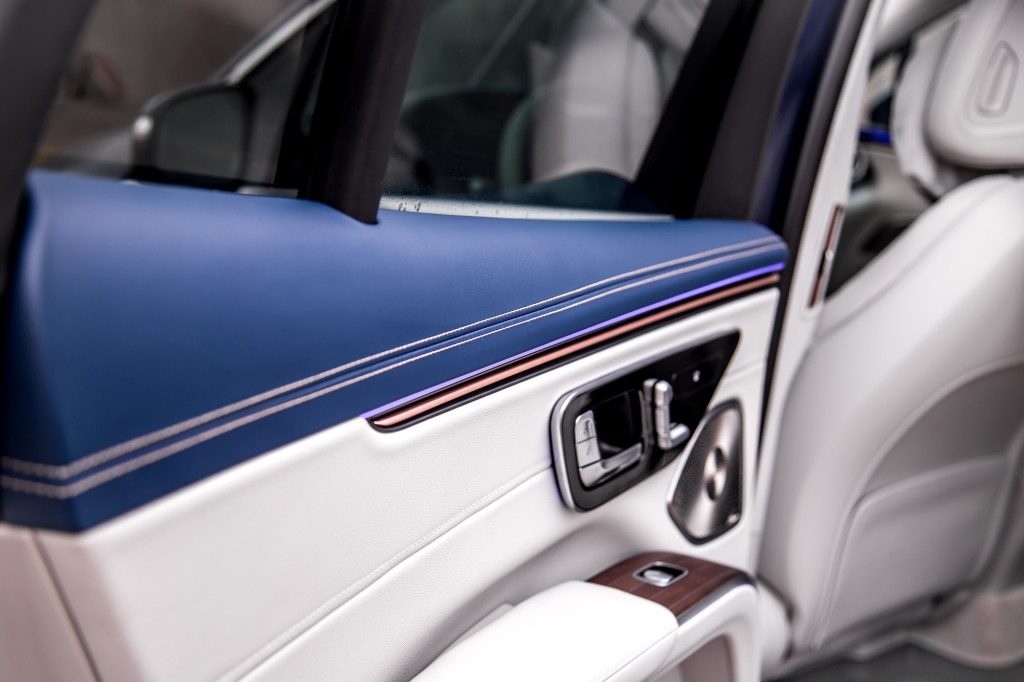
The dashboard is nicely decorated with leather stitching and ambient lighting that accentuates the curvaceous and rounded design. Add to that the Biscaya Blue and Neva Grey leather matched with what Mercedes calls Ship’s Deck Walnut wood, and it’s clear that they know how to dress up an interior. It’s right up there with the best of Range Rovers and even more impressive than an Aston Martin DBX. Of note, they call this leather upholstery Neva Grey, but it comes off more as off-white beige, with a few hints of a gray undertone.
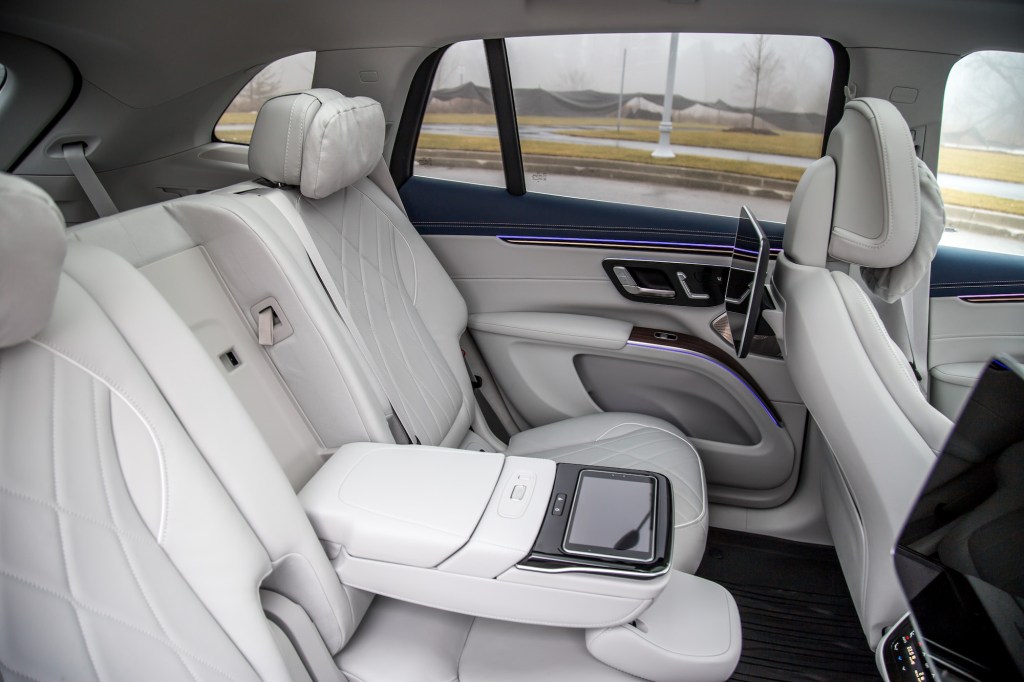
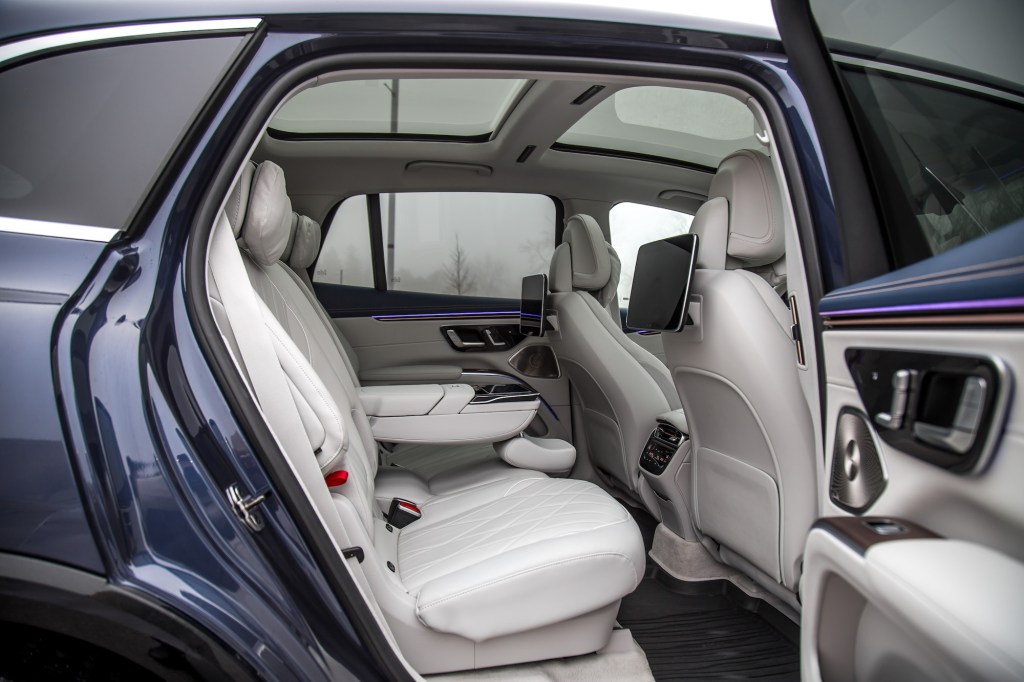
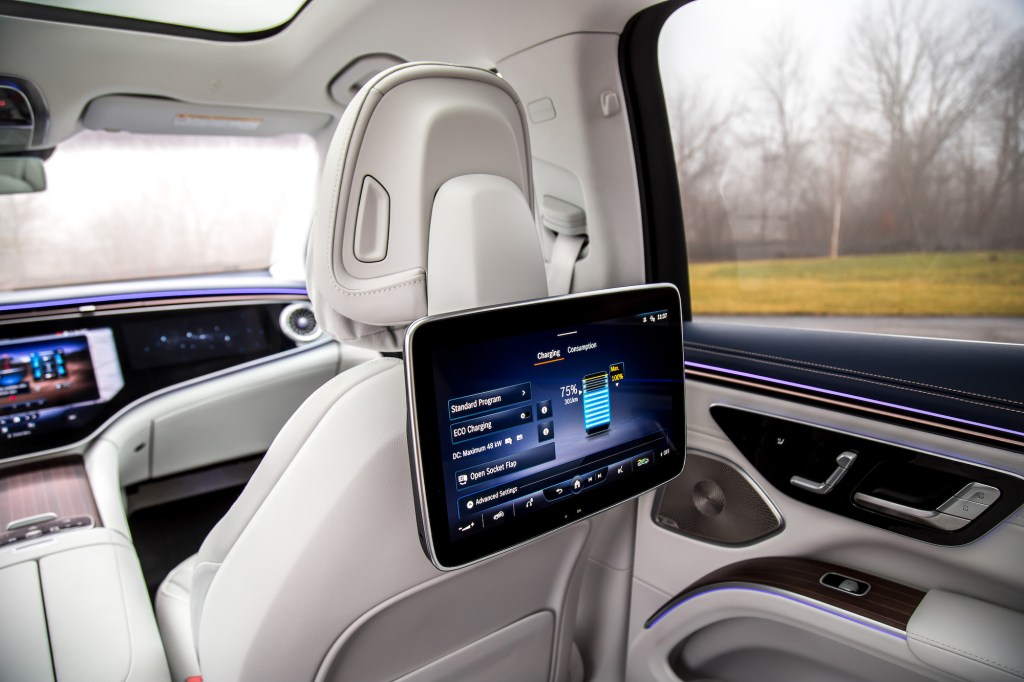
Like the Mercedes GLS, headroom is far from lacking, no matter which of the seven seats you choose. The third row is optional and usable for average-sized adults but do not expect them to be comfortable or complaint-free with the limited amount of legroom. Short journeys should be more than tolerable, though, especially with such expansive sunroofs above. The second-row cabin is not as luxurious or equipped with as many creature comforts as the Range Rover. While the Premium Rear Seating Package ($4,500) does offer detachable headrest pillows, heated seats, a removable Samsung tablet to control the infotainment features, a wireless charging pad, and even two entertainment screens ($5,000), it does not have first-class lounge seating, massage functions, or even rear sunblinds, all of which you would find in the BMW i7 and the Mercedes-Maybach GLS 600. Perhaps Mercedes is planning a more upscale, upmarket variant of the EQS instead.

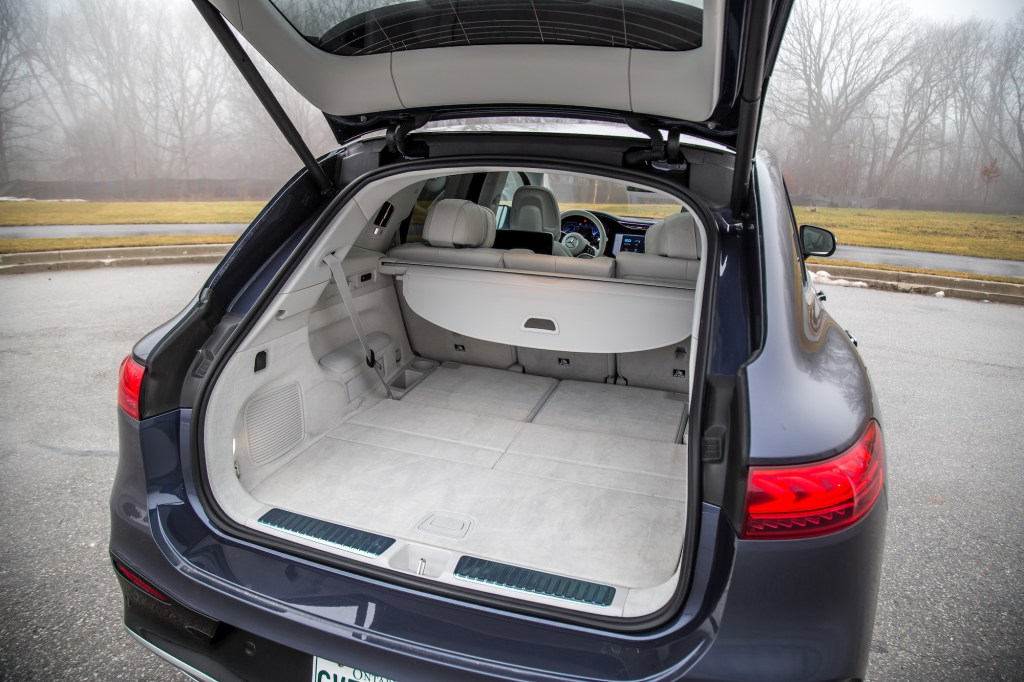
Thanks to its added practicality, passenger-hauling capability, and higher ride height, we would choose the SUV over the Sedan. However, if the range is of paramount importance or if you don’t have access to a home charger, then the Sedan will better address those priorities. Need a more engaging drive? The BMW iX M60 does a better job of putting a smile on the driver’s face. Need more backseat luxury and amenities? Look up Range Rover instead. Be that as it may, the EQS SUV is still one of the most innovative and forward-thinking products that we have driven in the Mercedes lineup, and we can’t wait for all the screens, gadgets, and gizmos to slowly trickle down to the more affordable C- and E-Class electric models in the future.
Specifications:
Model: 2023 Mercedes-Benz EQS 580 SUV
Paint Type: Sodalith Blue (Twilight Blue)
Base Price: $158,500
Price as Tested: $186,000
Wheelbase(mm): 3,210
Length/Width/Height (mm): 5,126 / 1,958 / 1,717
Curb weight (kg): 2,810
Powertrain: Dual permanently excited synchronous electric motors, 107.8 kWh battery
Horsepower: 516 combined hp
Torque: 632 combined lb-ft
Transmission: Single-speed automatic
Engine & Drive Configuration: Front engine, AWD
Claimed Range:459 km
Observed Range: 402 km
Tires: Goodyear Ultra Grip Performance; 275/45R21




Leave a Reply