

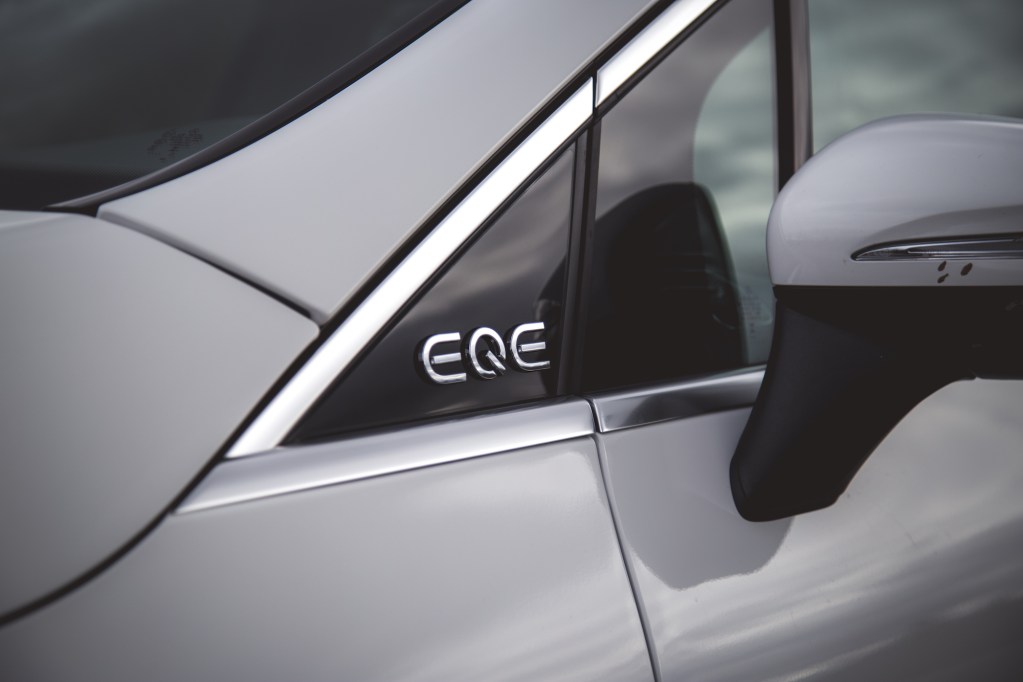
The Mercedes EQ sub-brand is unleashing a full onslaught of electric vehicles, and the EQE SUV is the latest. As the suffix suggests, this is an E-Class and GLE-Class-sized electric SUV, seating five in comfort with a range of up to 433 km, featuring swathes of leather and the latest technology, and available in two trims: EQE 350 and EQE 500. These differ in power outputs, range, options, and cost, but they’re nearly indistinguishable from the outside, a purposeful decision from Mercedes to streamline the stable. Besides, it is difficult to add aero bits and fancy spoilers on an electric vehicle when its main mission is to reduce drag and conserve range.

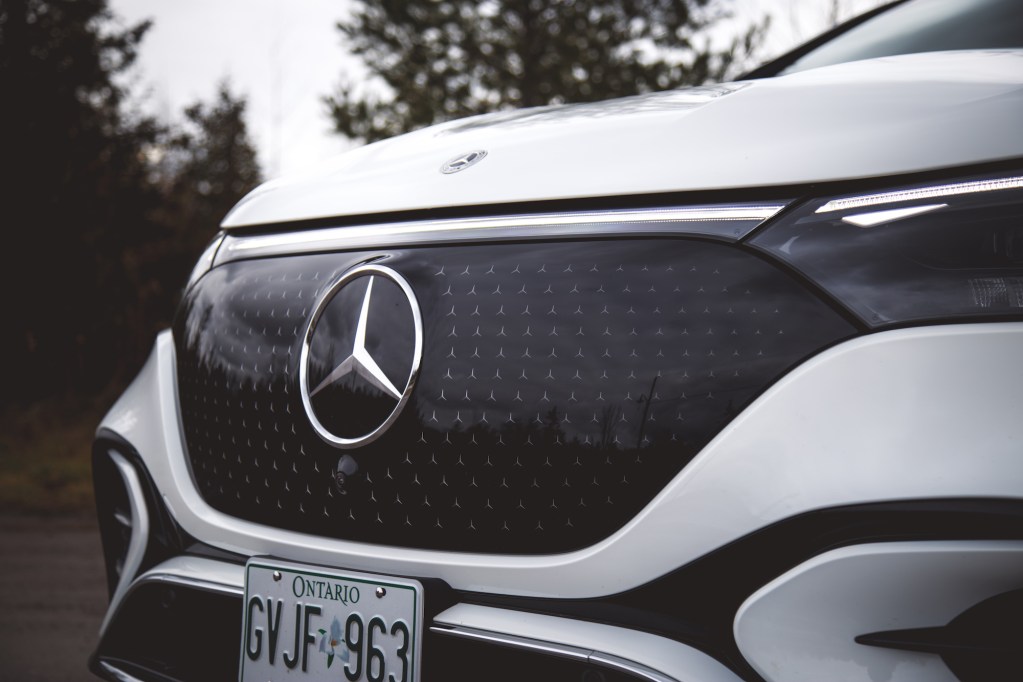
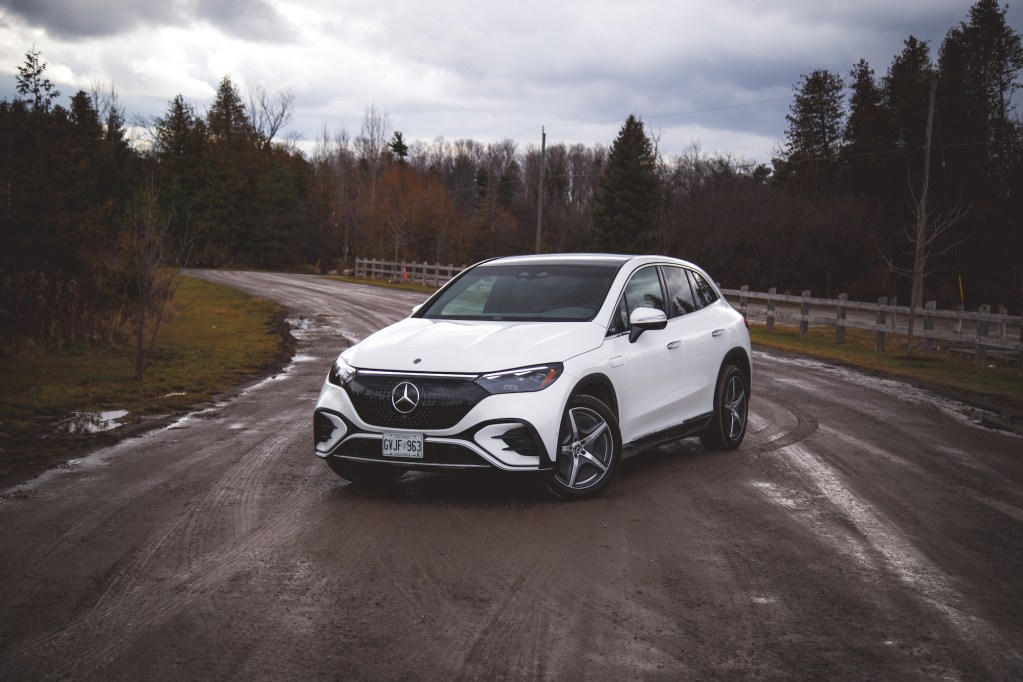
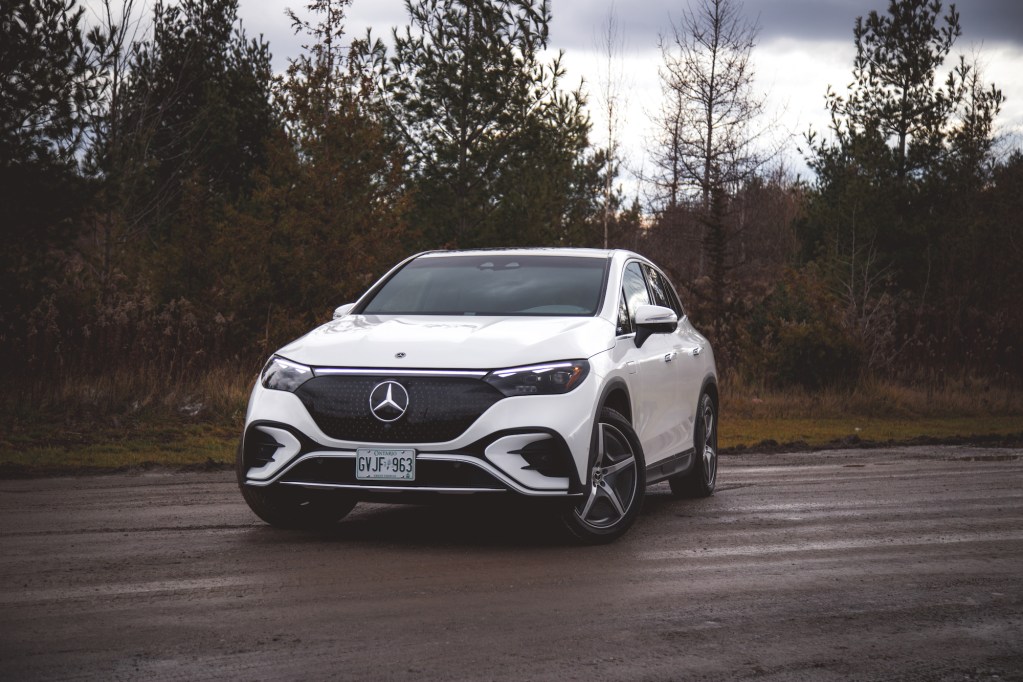
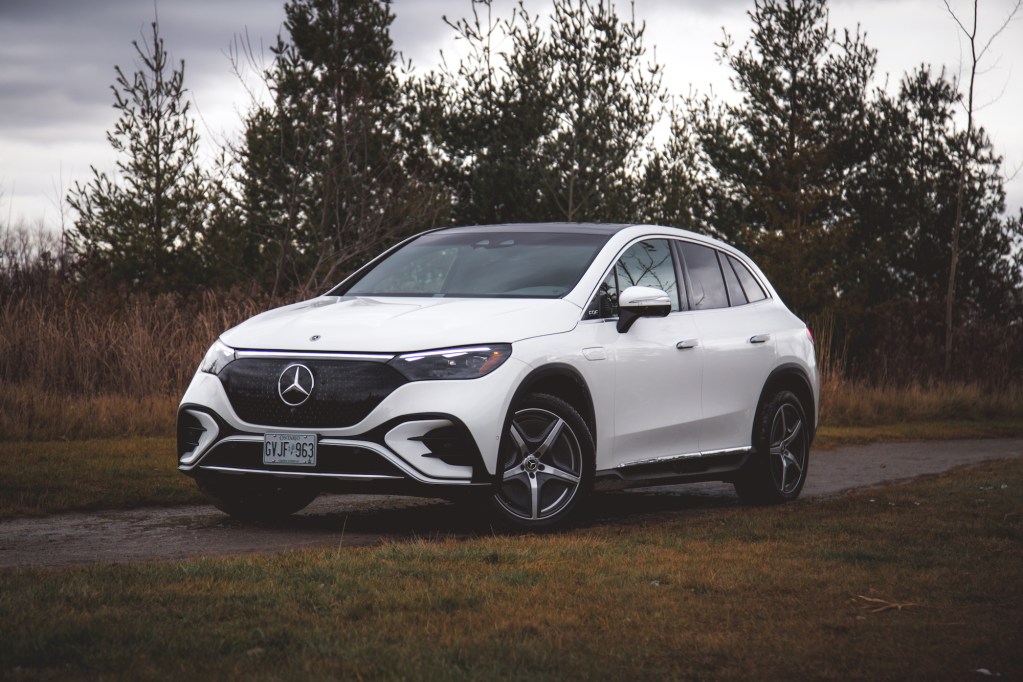
The EQE SUV looks fantastic and is much more visually appealing than the BMW iX and Cadillac Lyriq. The soapbar silhouette is a common trait among all EQ models, making it difficult to distinguish them. The EQE doesn’t appear as well-proportioned or visually balanced as the EQS SUV, either, as if someone took a nicely framed photo of the EQS and then cropped and resized it outside of its original ratio. Hence, its contours are still smooth but the shrunken roofline and cramped shoulders don’t give off the same kind of road presence. Be that as it may, we think this Polar White paint is the winning spec, and we give it full marks for at least distinguishing itself from Mercedes’ combustion-powered SUVs like the GLC and GLE. We would do without these porous block wheels, though, but it’s sadly the only 20-inch option available, with the 21s costing an extra $1,430.

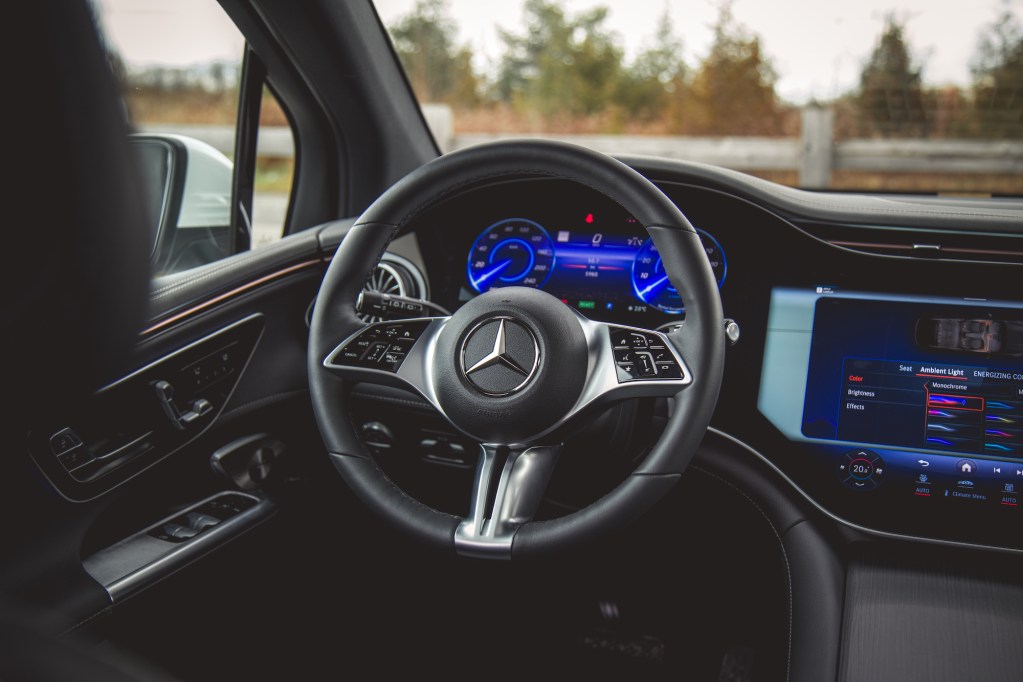
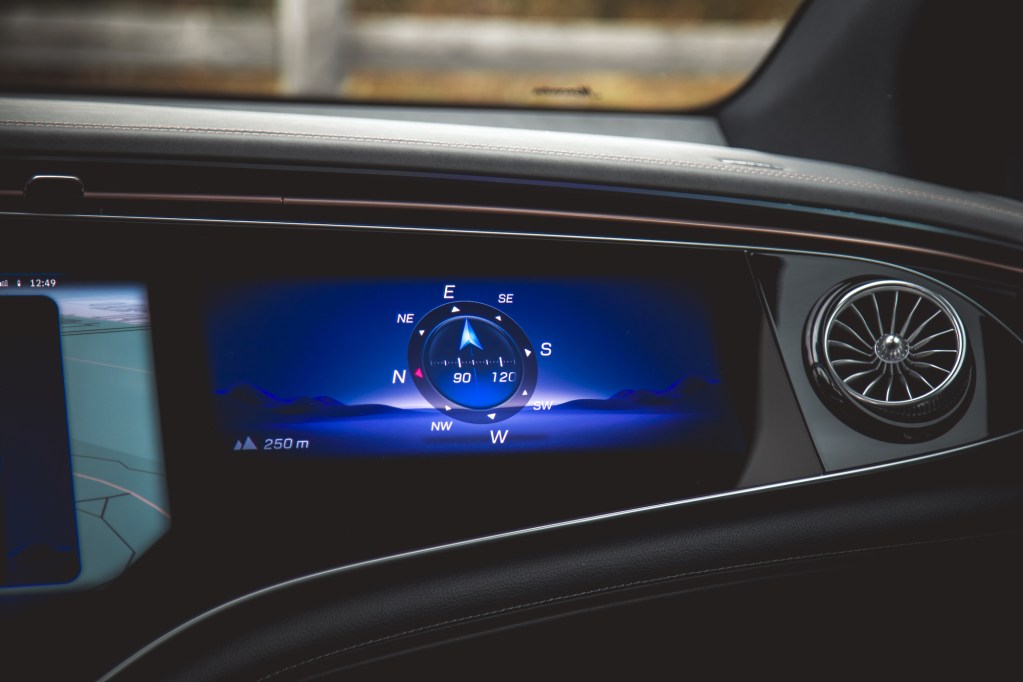
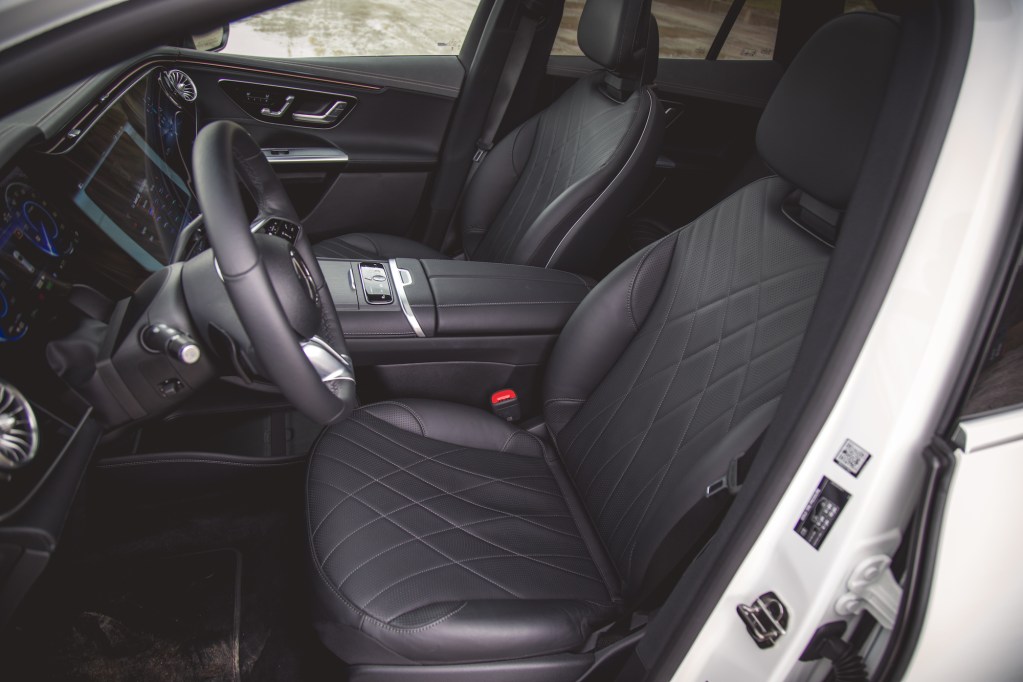
Those coming from a Tesla Model Y or a non-luxury EV will be smitten with the EQE’s digital interior. Our test vehicle was equipped with the optional Hyperscreen, which features a single piece of glass uniting a 12.3-inch driver’s screen, a 17.7-inch center screen, and a 12.3-inch passenger screen. In total, the fingerprint-resistant glass spans 56 inches wide, and it does take oily fingers to leave noticeable markings. Not to mention, heavy sunlight reflections do not impact screen visibility, and the touchscreen vibrates strongly to confirm each button press, leaving less ambiguity on the table that plagues other vague-feeling infotainment units.

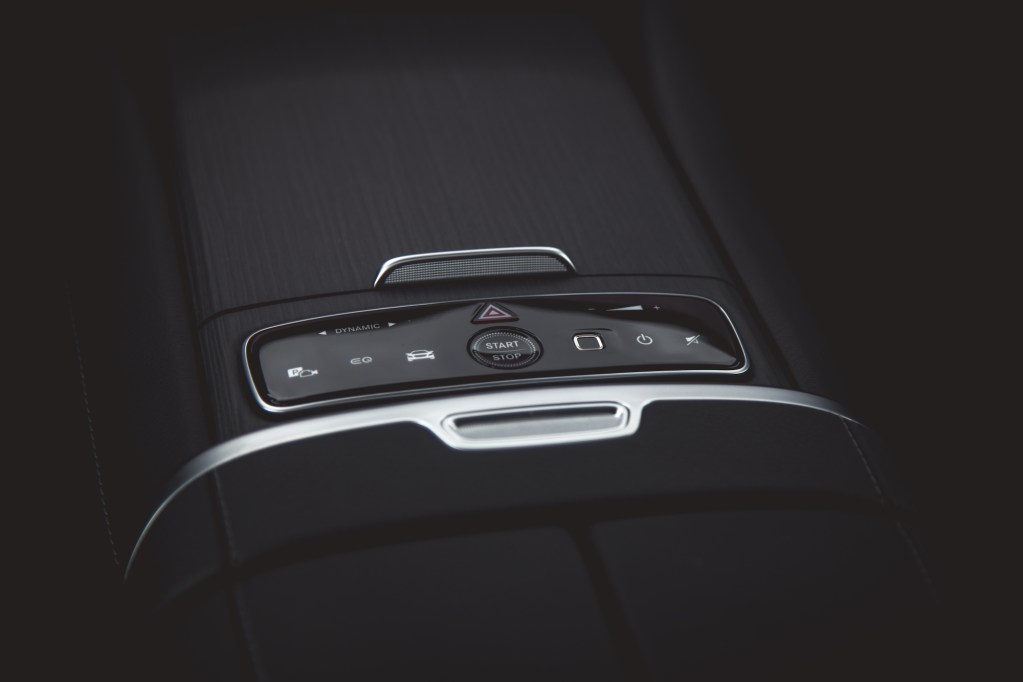
The Hyperscreen costs an eye-watering $9,900 and it will surely excite and overwhelm those coming from a Lexus RX or Genesis GV80, but it can also be viewed as an excessive overload of digital real estate. There is no real button in sight except for the start button located on the center console. Frankly, we prefer the standard touchscreen instead, as it exposes more of the wood veneer panelling underneath, giving the cabin more colour and charm (take a look at the Ship’s Deck Walnut wood trim and tell me that doesn’t look spectacular). That’s more appealing to the eye, and we think brighter leather colours seem to complement this cabin design better – look at some white and gray EQ interior examples from our previous test drives. But maybe that’s because we stare at screens all day, and don’t exactly want more digital exposure when commuting as well. Too bad there’s no warm light option to reduce stimulating blue light exposure, like on smartphone night settings, but at least you can configure the interior’s ambient lighting to a staggering 64 colours.

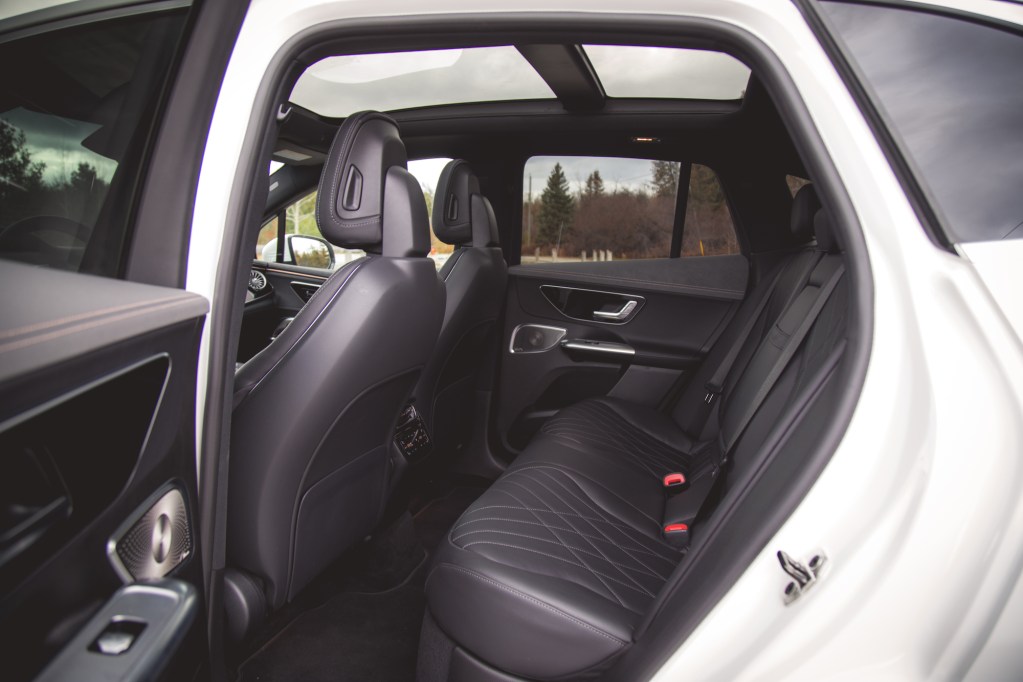
It’s an otherwise well-packaged and spacious interior. While essentially a shrunken-down EQS SUV in all cabin areas, there’s still generous head- and legroom in any of the five available seats, enough for my six-foot figure to find comfortable for lengthy journeys. We enjoy the dashboard and vent design, and the EQE SUV (and sedan) use a different steering wheel than the GLC and EQS. It’s a slim rim with the same frustrating haptic touch sensors but there are plastic paddle shifters flanking from behind rather than metallic ones. These let you select between three levels of braking regeneration, which is handy when adjusting on the fly.
Both EQE models are equipped with one electric motor on each axle, providing an all-wheel drive setup. The EQE 350 spec uses a 89.0 kWh lithium-ion battery to deliver 288 hp, 564 lb-ft of torque, a 0-100 km/h time of 6.6 seconds, and it costs $94,900. The more powerful EQE 500, on the other hand, utilizes a slightly larger 90.6 kWh lithium-ion battery to punch out 402 hp, 633 lb-ft, and a quicker 0-100 km/h time of 4.9 seconds.
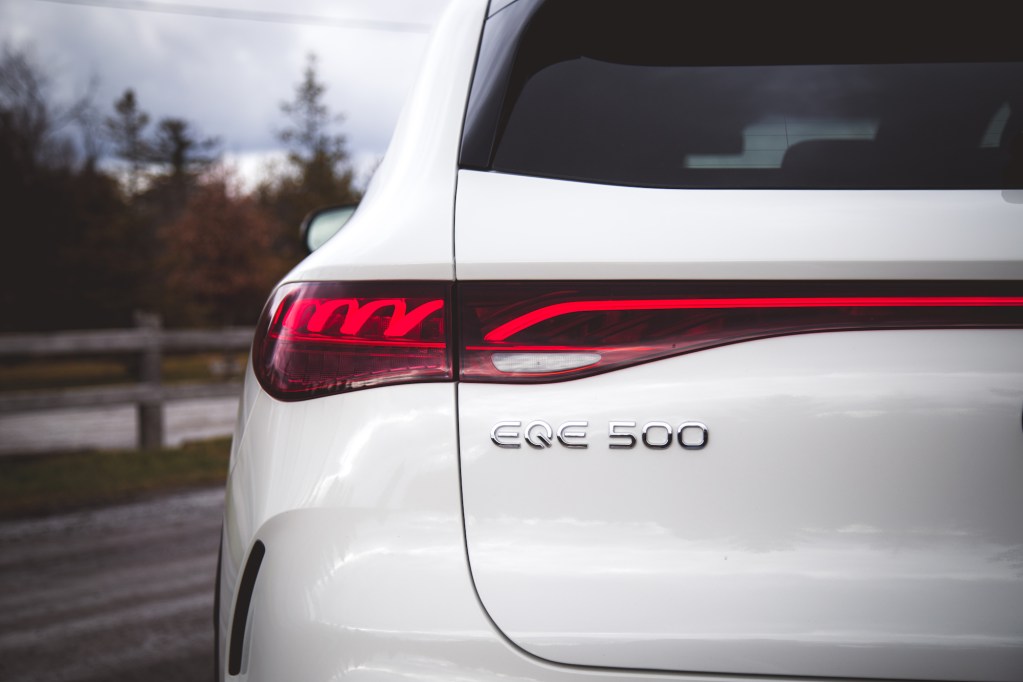
Mercedes claims the EQE 500 SUV can achieve a driving range of up to 433 km on summer tires, surpassing the 407 km claimed for the EQE 350. In our real-world test, we achieved a distance of just under 400 km in zero-degree Celsius Canadian weather with the heated seats and wheel constantly on, and our cabin temperature set to 22 degrees Celsius. Turning it all off and driving with iron-clad self-restraint would likely stretch that to the low 400s, which is more than competitive against the BMW iX xDrive50 (521 km), Audi Q8 e-tron (459 km), Cadillac Lyriq (494 km), and Tesla Model Y (497 km).
We drove the EQE 500 and experienced its fervent off-the-line acceleration. Like most other EVs, it offers that instant rush the moment you pounce on the pedal, but due to the weight of the EQE, the build of speed quickly tapers off and weakens once you clock past 100 km/h, where it begins to feel lethargic and picks up speed at a relatively glacial pace. The output of 663 lb-ft can be misleading, as it’s a different kind of punchiness depending on what speed you’re at.
It’s clear that the Mercedes EQE aims to disconnect and isolate you from the road, hence the steering is muted and devoid of feedback, the 10-degree rear axle steering ensures little steering effort, and the ride is tuned for comfort, but it’s not as compliant on the road as the EQS, failing to filter out those unflattering bumps on the road. Our EQE does not have the optional air suspension ($2,500) equipped and it shows. It handles with more floatiness and buoyancy, and the ride loses fluency the slower you go. We would highly recommend skipping the Hyperscreen option and allotting that coin to the air suspension instead. Of note, the EQE sedan handles better at speed but the SUV is ideal for those who favour a high seating position and excellent outward visibility.
The brakes are spongy, springboard-like, and difficult to modulate in small increments of pedal travel, making it tricky to find harmony with the road and feel at one with both acceleration and steering inputs. It’s an inherent issue with many EVs but not all-inclusive either – we always look to the Porsche Taycan as a shining example of EV driver engagement done properly. Word has it that Mercedes will remedy this in the upcoming 2024 model year EQE SUV.
The Mercedes-Benz EQE 500 SUV is a technological tour de force that stuffs everything we love from the EQS into a more manageable package. We aren’t head over heels with its exterior proportions but the interior is flourishing with premium touches and above-par fit and finish. Its range is more than competitive and though we find the driving dynamics uninspiring and ride comfort disappointing without the air suspension, the EQE is otherwise an excellent step forward in the EV world.
Specifications:
Model: 2023 Mercedes-Benz EQE 500 4MATIC SUV
Paint Type: Polar White
Base Price: $104,900
Price as Tested: $127,330
Wheelbase(mm): 2,888
Length/Width/Height (mm): 4,864 / 2,141 / 1,684
Curb Weight: 2,404 kg
Engine: 90.6 kWh lithium-ion battery, two electric motors
Horsepower: 402 hp
Torque: 633 lb-ft
Transmission: Single-speed automatic
Engine & Drive Configuration: Front and rear electric motor, AWD
Claimed Range: 433 km
Observed Range: 400 km






Leave a Reply