

The Defender is one of the most diverse models in the Land Rover lineup, available in a two-door layout (90 Series), a more traditional four-door specification (110 Series), and now an eight-passenger 130 Series model with an extended roofline, increased trunk space, and improved third-row accommodations.

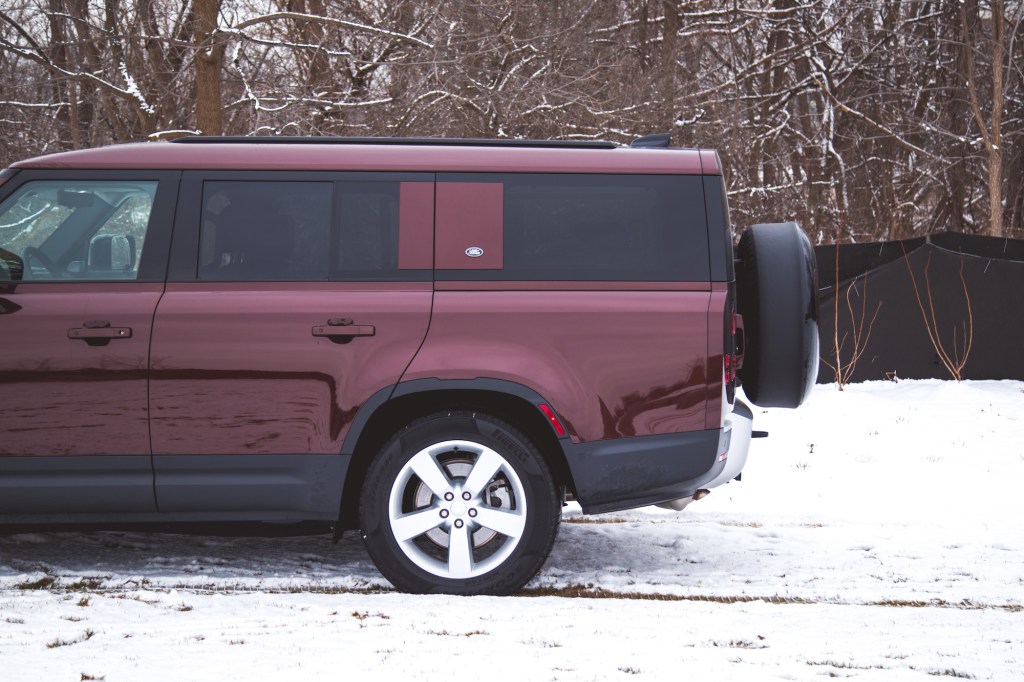
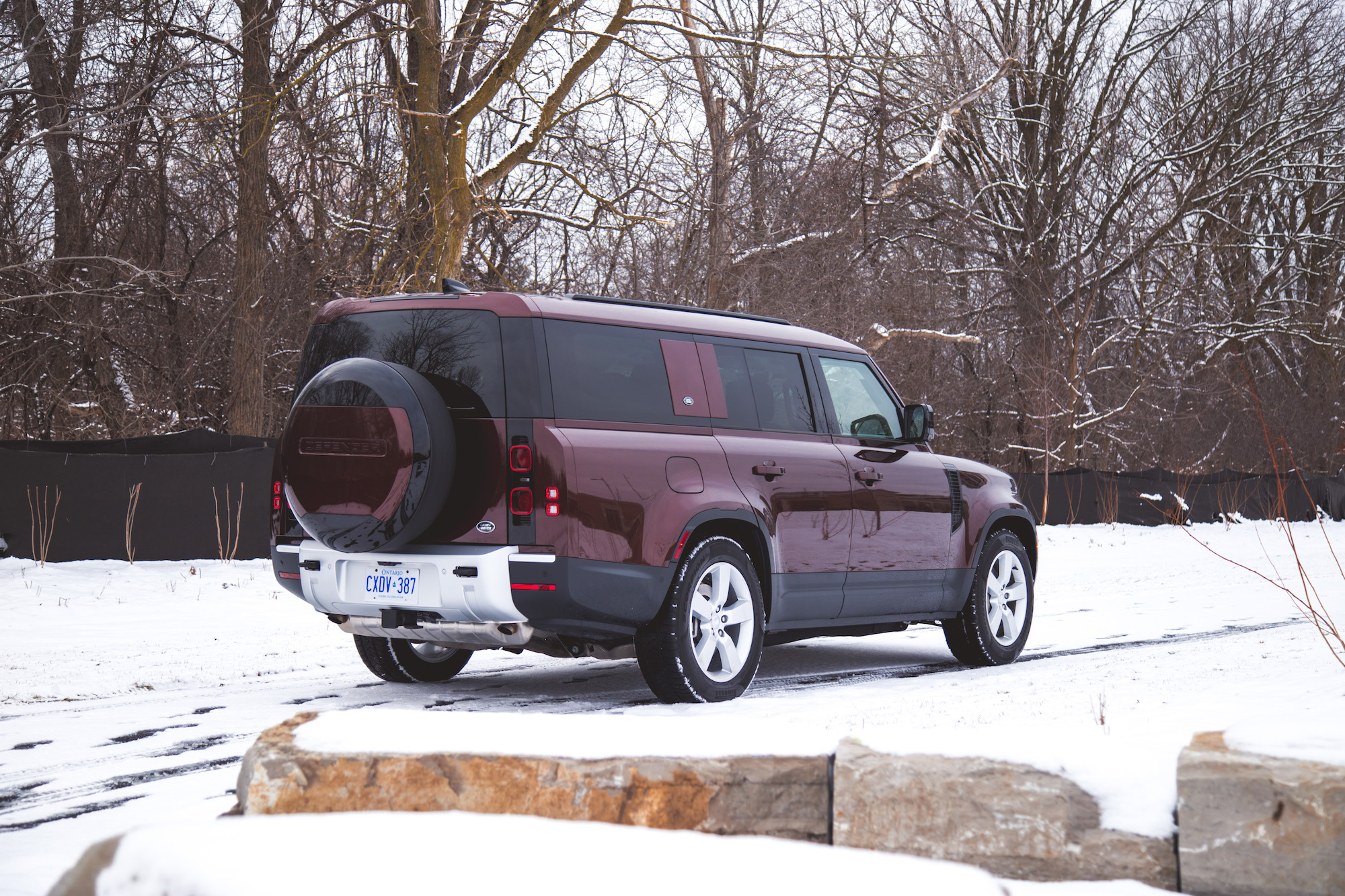
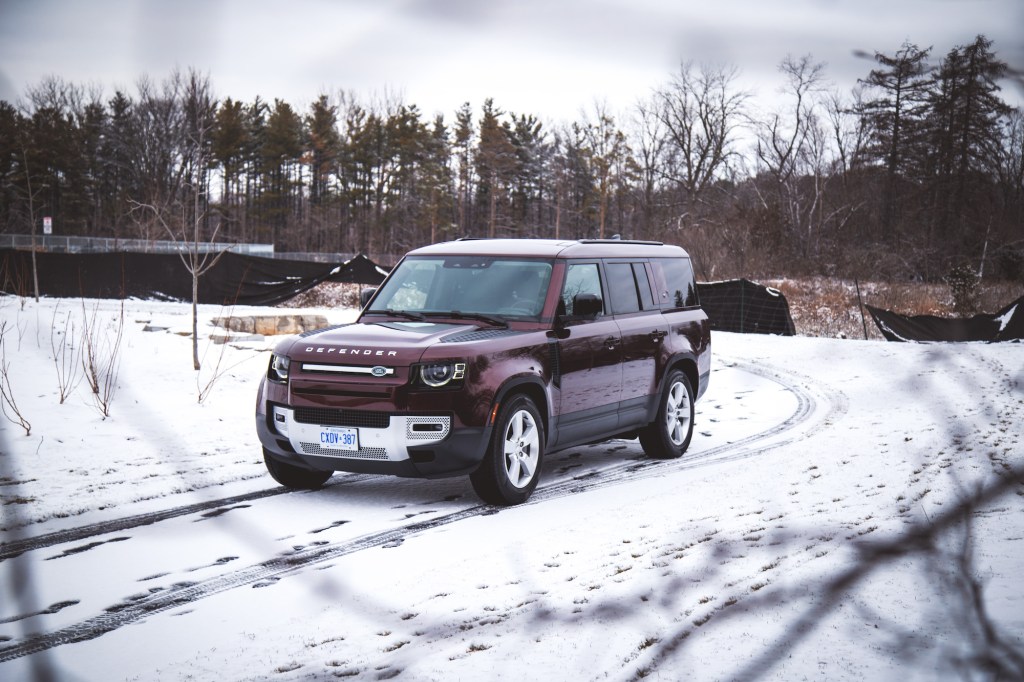
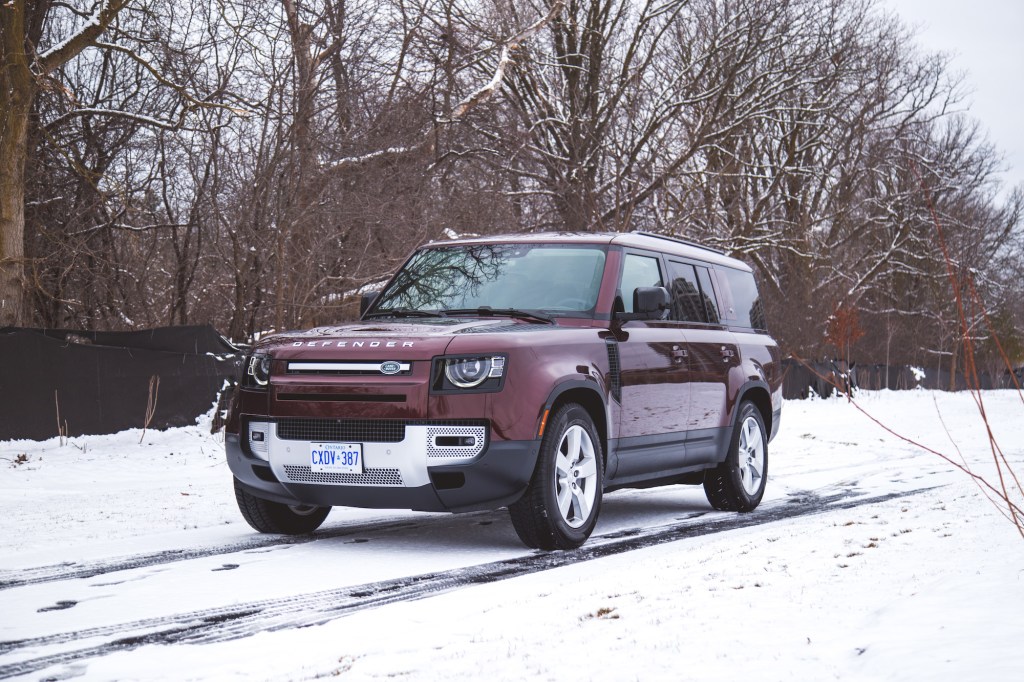
Like the extended Cadillac Escalade ESV or Lexus RX L, the Defender 130 is 337 mm longer than the 110, the majority of that length added behind the rear axle, somewhat exaggerating the rear overhang. The Defender now resembles a diaper with a loaded diaper, but it doesn’t seem to compromise its rounded and balanced proportions. It may appear ungainly from some viewing angles, but in person, from the side, it looks handsome and utilitarian, as if it could swallow up a whole soccer team and spit them out at the summit of Mount Everest. It looks great in Sedona Red too, a deep and rich hue of dark red that complements the white exterior elements well, a paint colour exclusive to the 130.

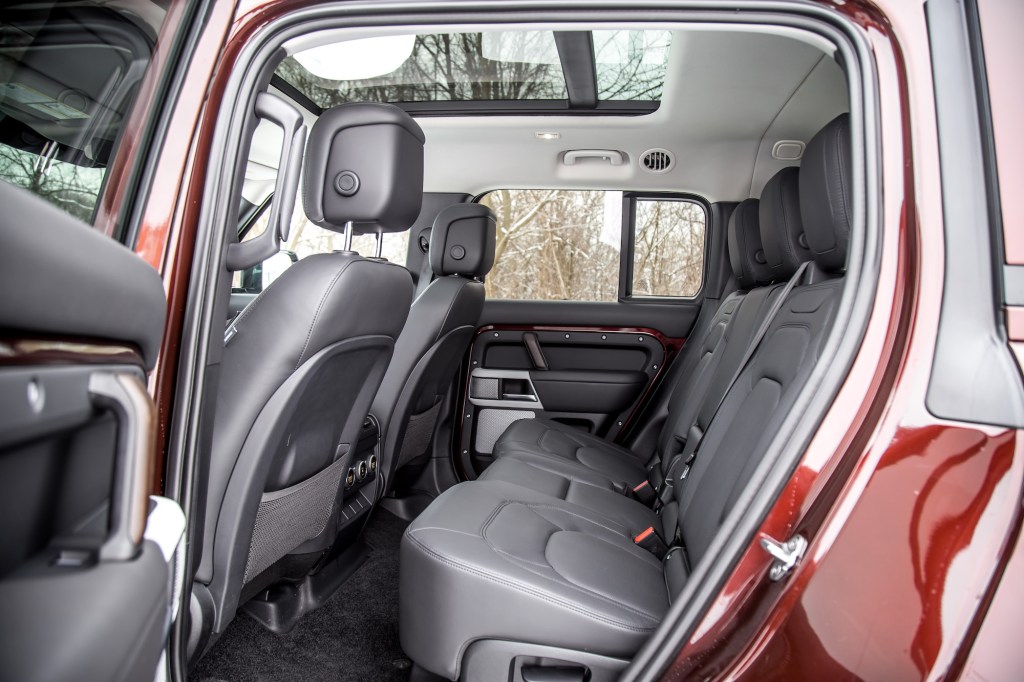
The interior design remains unchanged from the 110, except that there is now no second-row skylight window, making way for a separate glass roof over the third row of seats, which effectively adds a larger sense of airiness to the cabin. There’s a panoramic glass roof for the front two rows instead, and it does open.
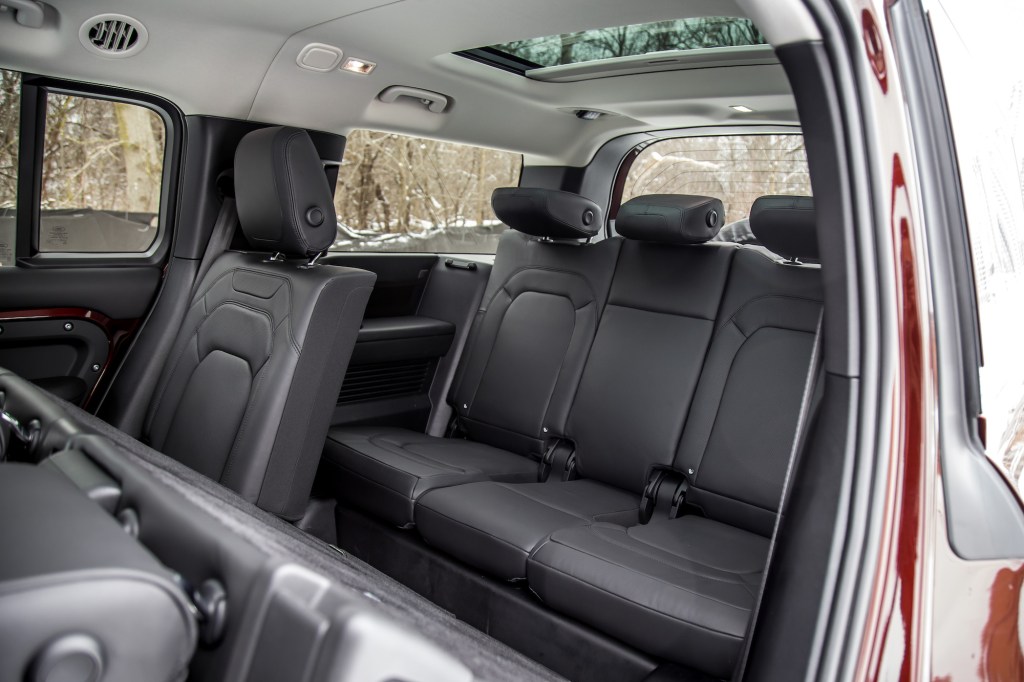
Ingress into the third row of seats isn’t difficult. With the pull of a lever, the second row of seats slides forward to create a sizable entry portal, complete with steps on the floor to prevent slipping. Once situated inside, there is more than enough leg and headroom for my six-foot figure, though seat width for three adults is a tight squeeze. Children or small adults shouldn’t have a problem, and they will even enjoy their own armrests, cupholders, and USB charging ports. Notably, the smaller 110 Series does offer a third row of seats, but they are diminutive and serve primarily as token seats for pets or small children, making them hardly usable for adults.

The only issue we have is that when all three rows of seats are up and occupied, there is very little trunk space available. Swing open the side-hinged tailgate, and you will find a pretty limited compartment – just enough to stow two upright carry-on suitcases. This can be remedied by folding the third row of seats down, however, they won’t be flush and flat with the floor. One curious omission from the 130 is the option for a three-seater front bench, similar to the 90 and 110 Defenders, which would increase the seating capacity to nine, surpassing that of any other SUV on the market today.
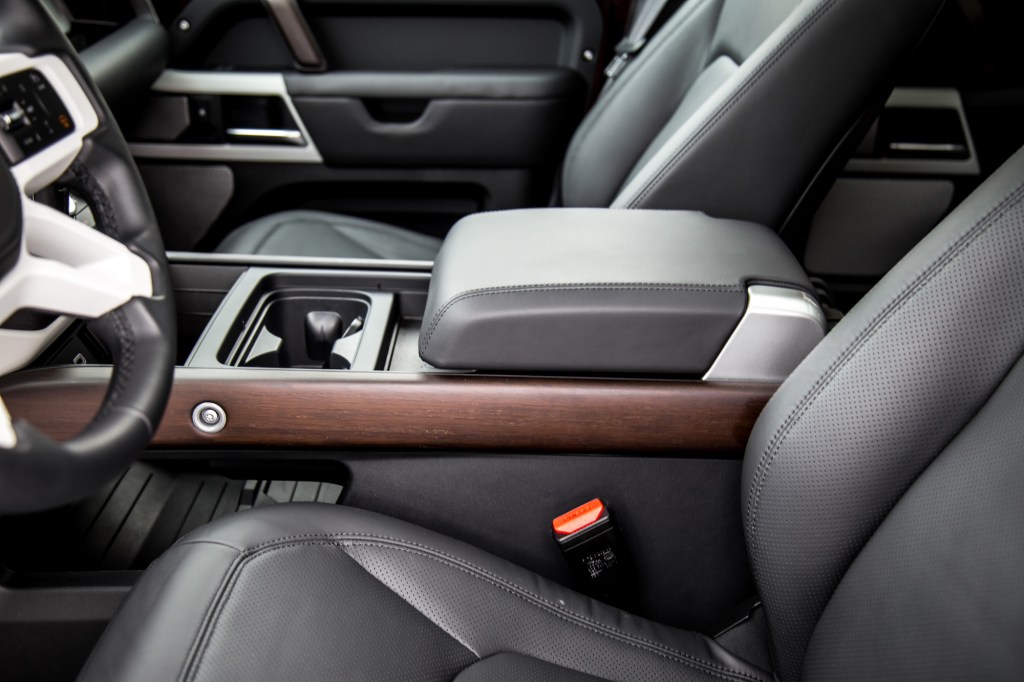
The rest of the Defender cabin excels in both ergonomics and aesthetics. We love how, like in the Mazda Miata, the body paint colour shows through on the inner door panels as part of the trim – Sedona Red really adds a nice splash of colour to the dark spec, as do the smoked oak veneer and the ceramic accents on the dashboard. The signal stalks have a more matted feel to them in this 2023 model, making them feel more expensive than the glossy plastic ones they replace. We also have no quarrels to report about the 11.4-inch touchscreen and its interface – it’s vibrant, high definition, and free from the lag and glitches that used to plague JLR products.

With added weight and dimension over the standard Defenders, it’s only logical that the 130 is solely paired with the more powerful P400 powertrain. For good reason, it’s a 3.0-litre turbocharged inline-six married with a mild hybrid system and an electrically-driven supercharger to eliminate turbo lag and ensure seamless transitions during stop-and-go procedures. Total output is 395 hp and 406 lb-ft of torque, and the 130 will sprint from 0-100 km/h in 6.6 seconds, five-tenths slower than an equivalent Defender 110 P400.

On the open road, the 130 does not feel much slower. It’s about 70 kg heavier but still remains lively under acceleration thanks to the engine’s quick pick-up and lack of turbo lag. It fails to exhibit any of the lethargy and hesitation that one would expect from a large SUV, and its long pedal travel allows for modulating and fine-tuning your inputs with care. The 8-speed automatic is a pleasant companion, shifting smoothly behind the scenes with a polish not commonly found outside of the German IP. The brakes are linear and forgiving yet full of bite. While not essential, we believe the 130 would be even better suited to a diesel option for maximum hauling range, or even a V8 option for those who require speed.
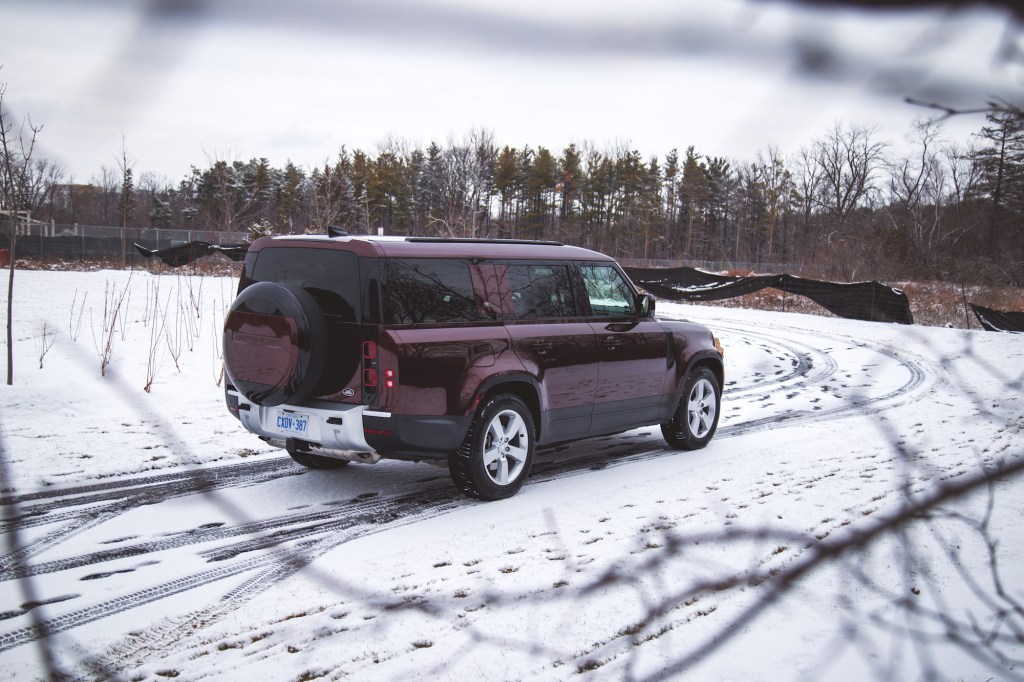
Equipped with a standard four-wheel drive system, a two-speed transfer case, locking differentials, and an adaptive air suspension, the 130 is not only off-road capable but rides very nicely on suburban roads. It wafts around and neutralizes road oscillations better than any pick-up truck on the market, thanks to its independent suspension and unibody construction. Body roll is effectively kept in check and while there is obvious leaning and unwieldiness when you enter a corner at speed, the quick steering rack makes it easy to control and navigate through tight spaces. In fact, we did not find it any more difficult to drive than the 110. However, for an SUV of this size, we would appreciate some rear-wheel steering to shrink its maneuverable footprint.
We averaged 15.1 L/100 km over an equal mix of city and highway driving, which is superior to the 110 V8, which yielded 17.1 L/100 km. Surprisingly, though, our 15.1 is the same as the one we achieved with the 110, both driven in similar snowy conditions, despite having the same six-cylinder engine. The four-cylinder-powered P300 110 got 14.9 L/100km. So while the driver and conditions may vary, aside from the V8, the Defenders all seem to average about the same and shouldn’t be a major deciding factor in the engine or choice of body spec.
So far, we’ve adored every variant of the Land Rover Defender, from the quirky two-door 90 Series to the obnoxious V8-powered 110. The largest 130 remains no exception, hauling eight passengers in style, off-road ruggedness, and supple ride quality. Now, there’s a Defender for everyone.
Specifications:
Model: 2023 Land Rover Defender 130 First Edition
Paint Type: Sedona Red
Base Price: $100,850
Price as Tested: $105,430
Wheelbase(mm): 3,022
Length/Width/Height (mm): 5,099 / 2,008 / 1,970
Curb weight (kg): 2,527
Engine: 3.0-litre turbocharged inline-six
Horsepower: 395 hp @ 5,500 – 6,500 rpm
Torque: 406 lb-ft @ 2,000 – 5,000 rpm
Transmission: 8-speed automatic
Engine & Drive Configuration: Front engine, AWD
Observed Fuel Consumption (L/100km): 15.1
Tires: Pirelli Scorpion Winter; 20-inch







Leave a Reply