
So you want a full-size SUV? Great. Want to ferry around seven passengers along with their luggage? Not a problem. Need enough towing capacity to cause a gravitational shift? You got it. Now the problem is choosing between the American trio: Chevrolet Tahoe, GMC Yukon, or Cadillac Escalade. All three fall under the same family tree, use similar engines, parts, and sheetmetal, and are essentially the same vehicle with different garnishes.
We recently spent some time with the Chevrolet Tahoe RST, which for the 2018 model year received optional performance goodies like the 6.2-litre V8 (previously reserved only for the Yukon and Escalade), performance suspension, 10-speed automatic transmission (from the Camaro ZL1, and co-developed with Ford), and Borla exhaust. This begs the question then: with the recent Tahoe upgrades, do the GMC Yukon and Cadillac Escalade offer enough bells and whistles to justify their hefty premiums?
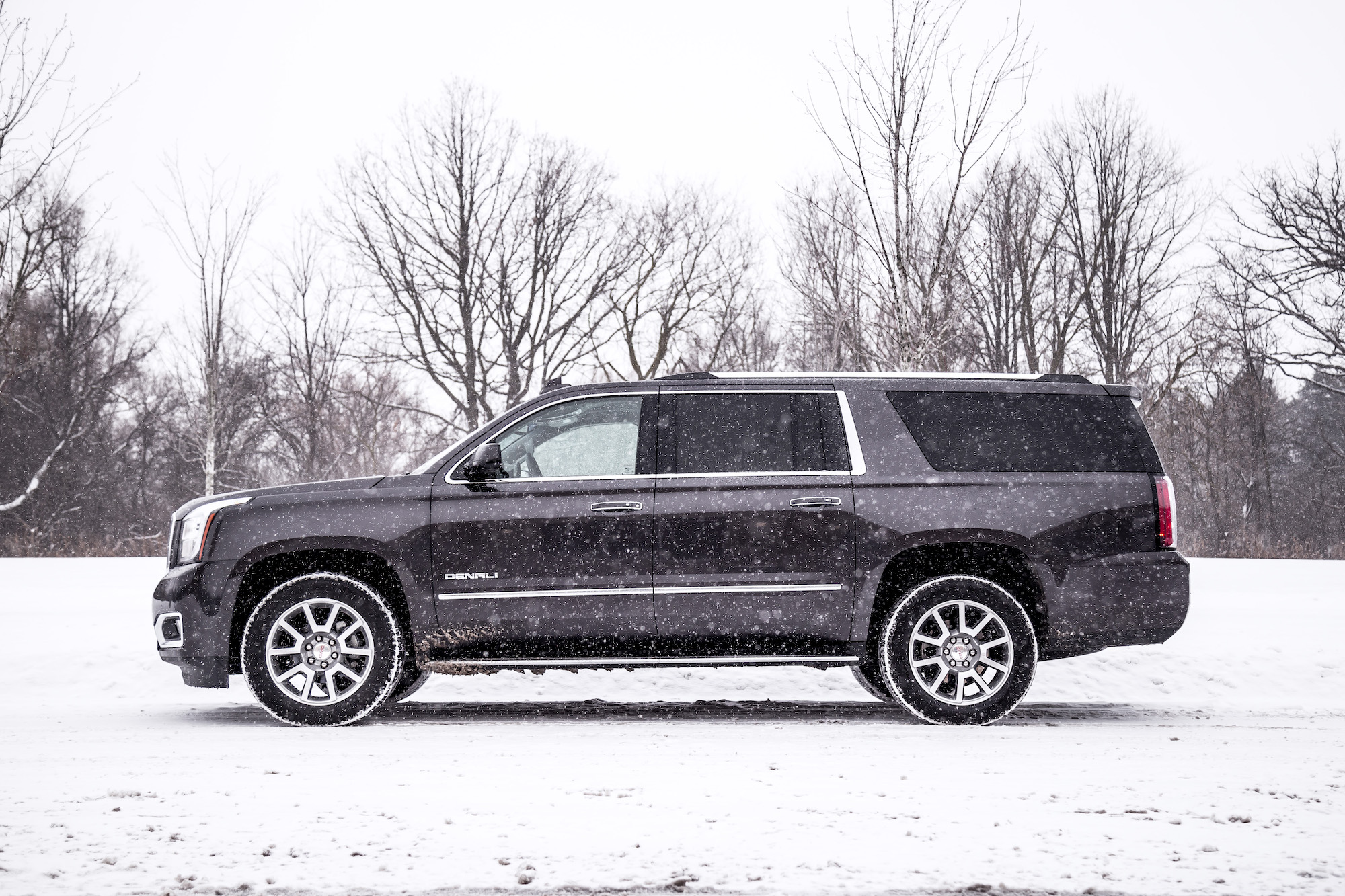
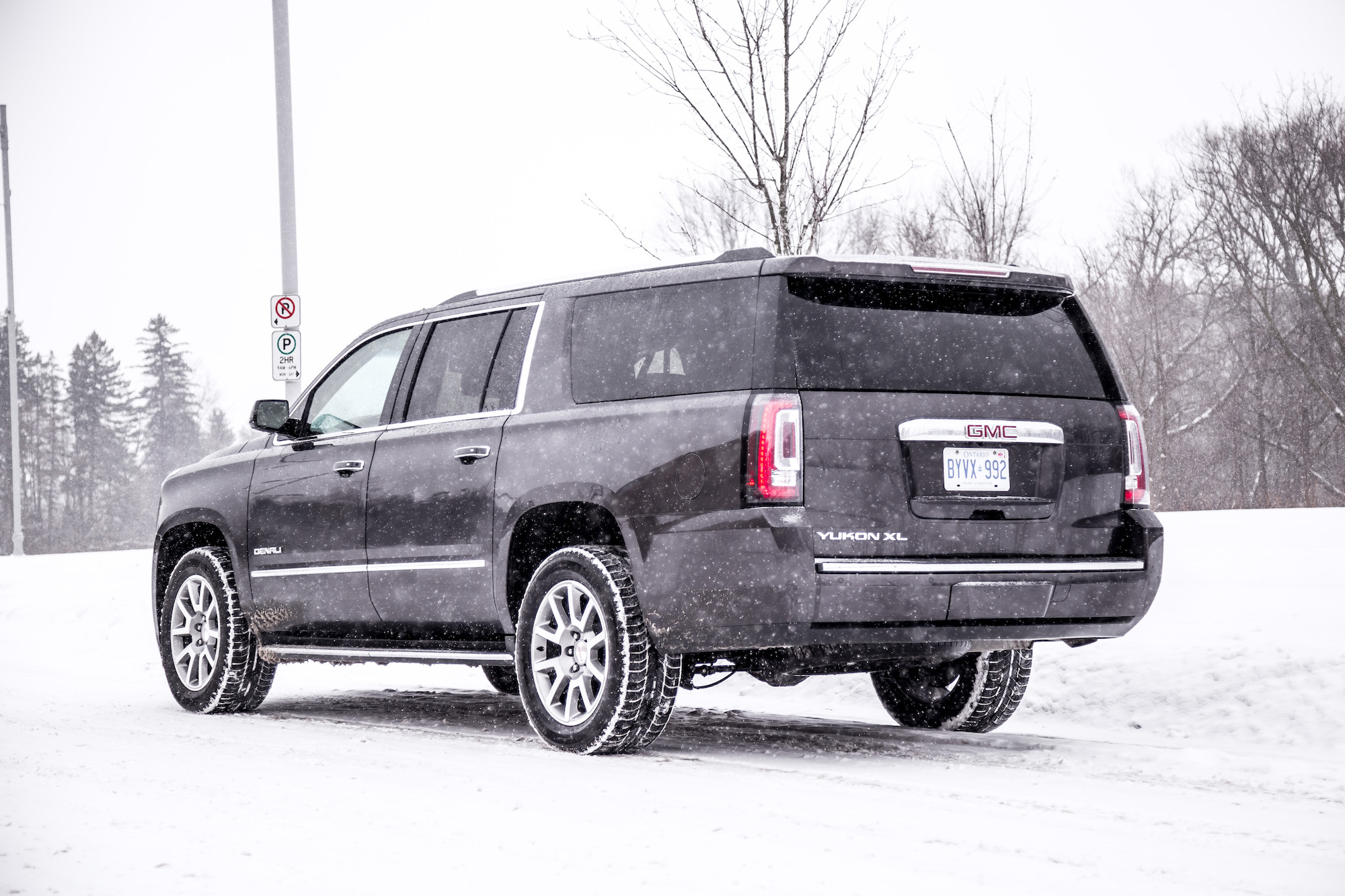
I had the opportunity to test drive the 2018 GMC Yukon Denali XL for a week, the closest thing to a legal M1 Abrams tank for the streets. Dressed in grey paint with chrome on every surface, the Yukon has got real road presence, though its muscular lines are much softer than its GM brethren. For 2018, the Yukon Denali replaces the honeycomb grille with a new design, though you really have to squint to realize there is a difference. This grill design now falls in line with the rest of the Denali portfolio (Acadia, Terrain, Sierra), and does offer better airflow to the radiator, and active grille shutters close under certain conditions to reduce drag. More importantly, the Yukon receives a new 10-speed automatic transmission, replacing the 8-speed and boy, does it make one hell of a difference.
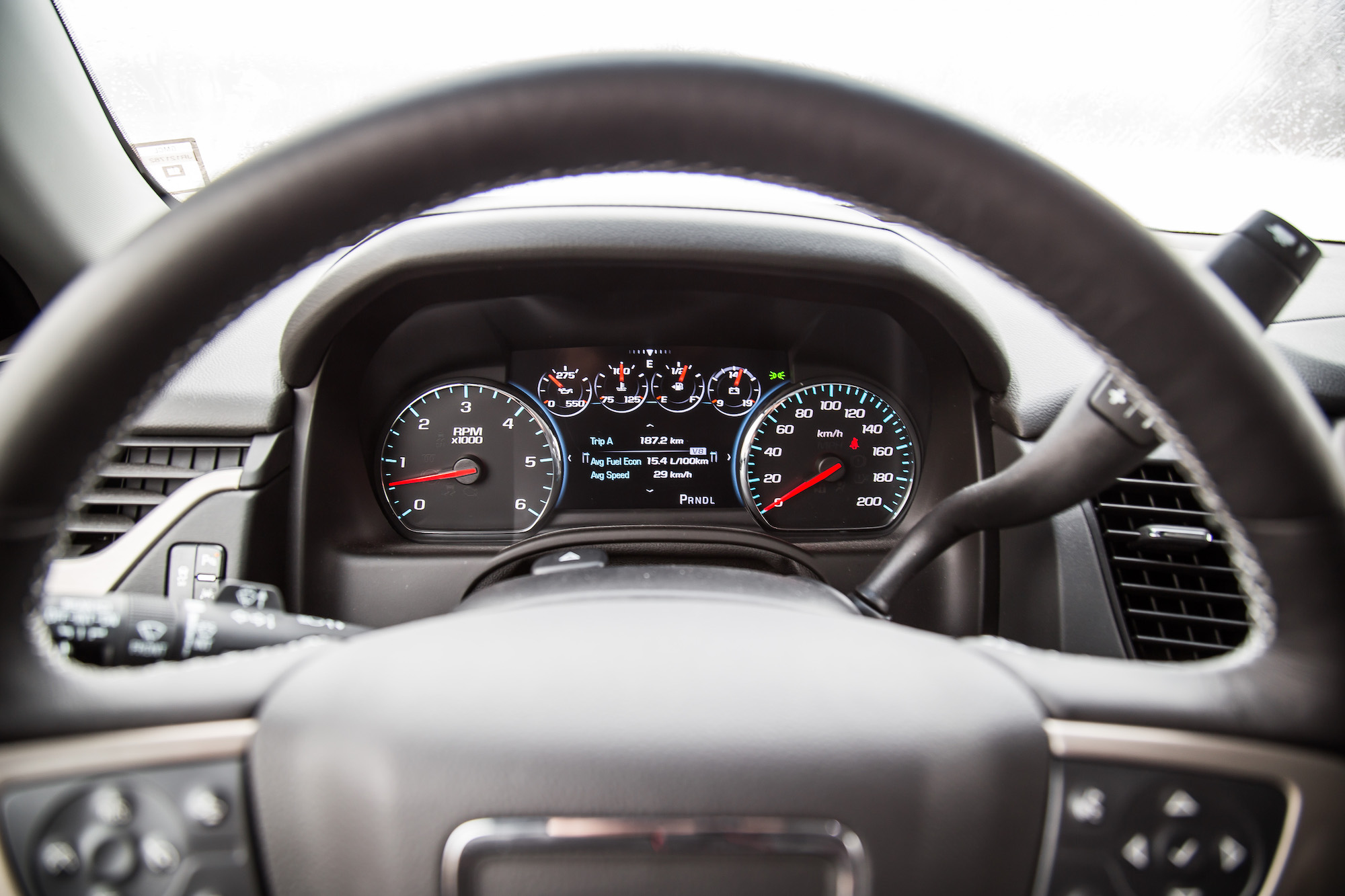
The first thing I noticed was a drop in my fuel consumption. The last Yukon XL I had with the 8-speed averaged around 16.2 L/100km. The Tahoe I drove recently which utilized the old 6-speed automatic and smaller 5.3-litre V8 engine averaged 15.6 L/100km. In the Yukon with its larger 6.2-litre V8 and driving the same testing routes and using the same gentle throttle applications as the previous two, I averaged a noteworthy 15.4 L/100km. And get this, that Tahoe wasn’t even the long wheelbase equivalent of this Yukon XL. So I am carrying more weight, I have more power, 420 hp and 460 lb-ft to be exact, yet I am paying around the same amount of money at the pump. Both vehicles also make use of cylinder deactivation, which shut off half the cylinders when power demand is light, further contributing to efficiency.
Better yet, gear shifts were smoother than before and rpms were notably lower at highway speeds, hovering just above 1,200 rpm at 100 km/h. Frankly, I could not even feel the transmission swapping gears, and half the time I didn’t even know which gear I was in due to the lack of a display for it. Yet, it was quick to snap off downshifts when requested via my heavy right foot. A major improvement over the outgoing 8-speed and comparative 6-speed, most definitely.
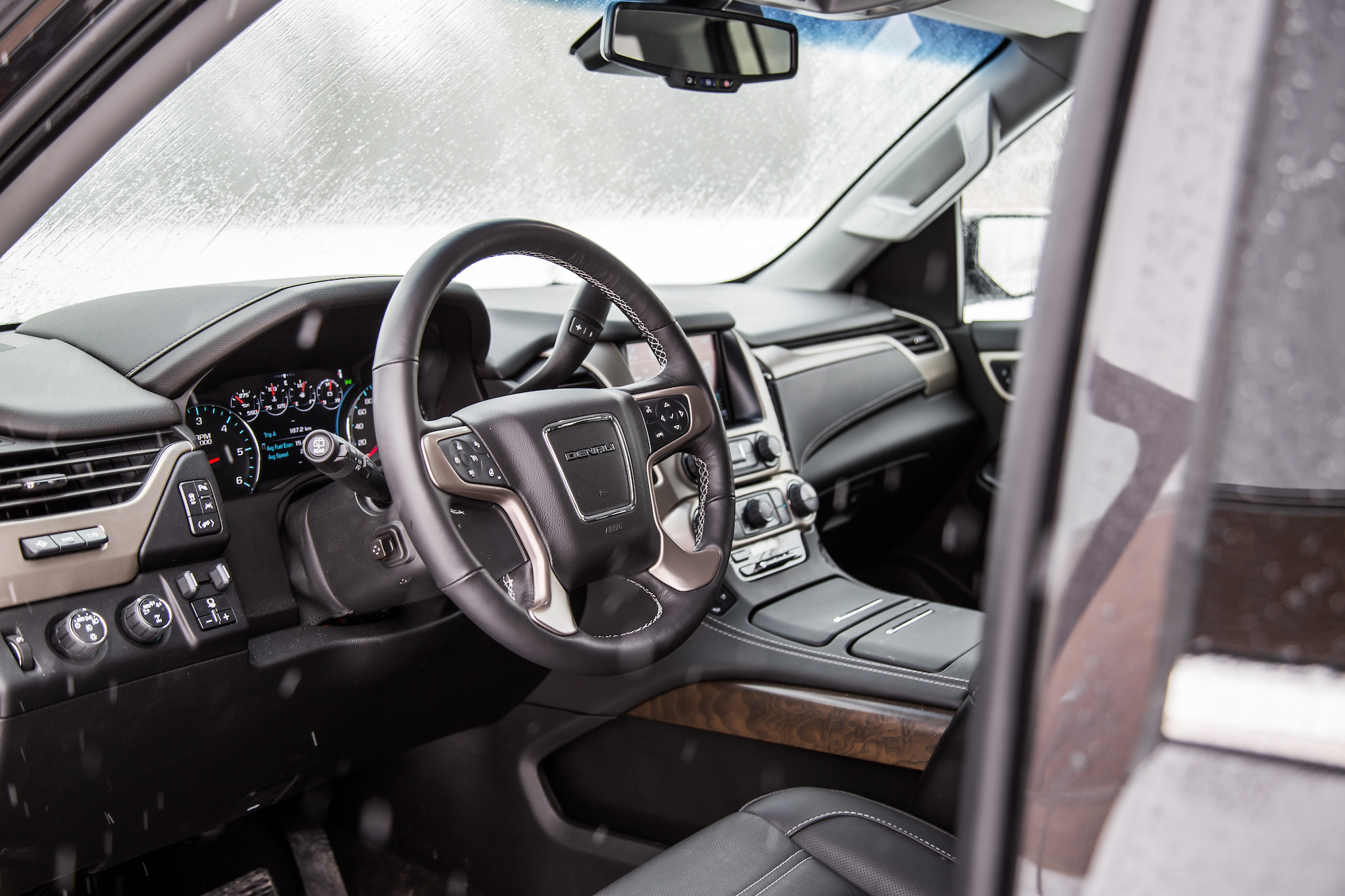
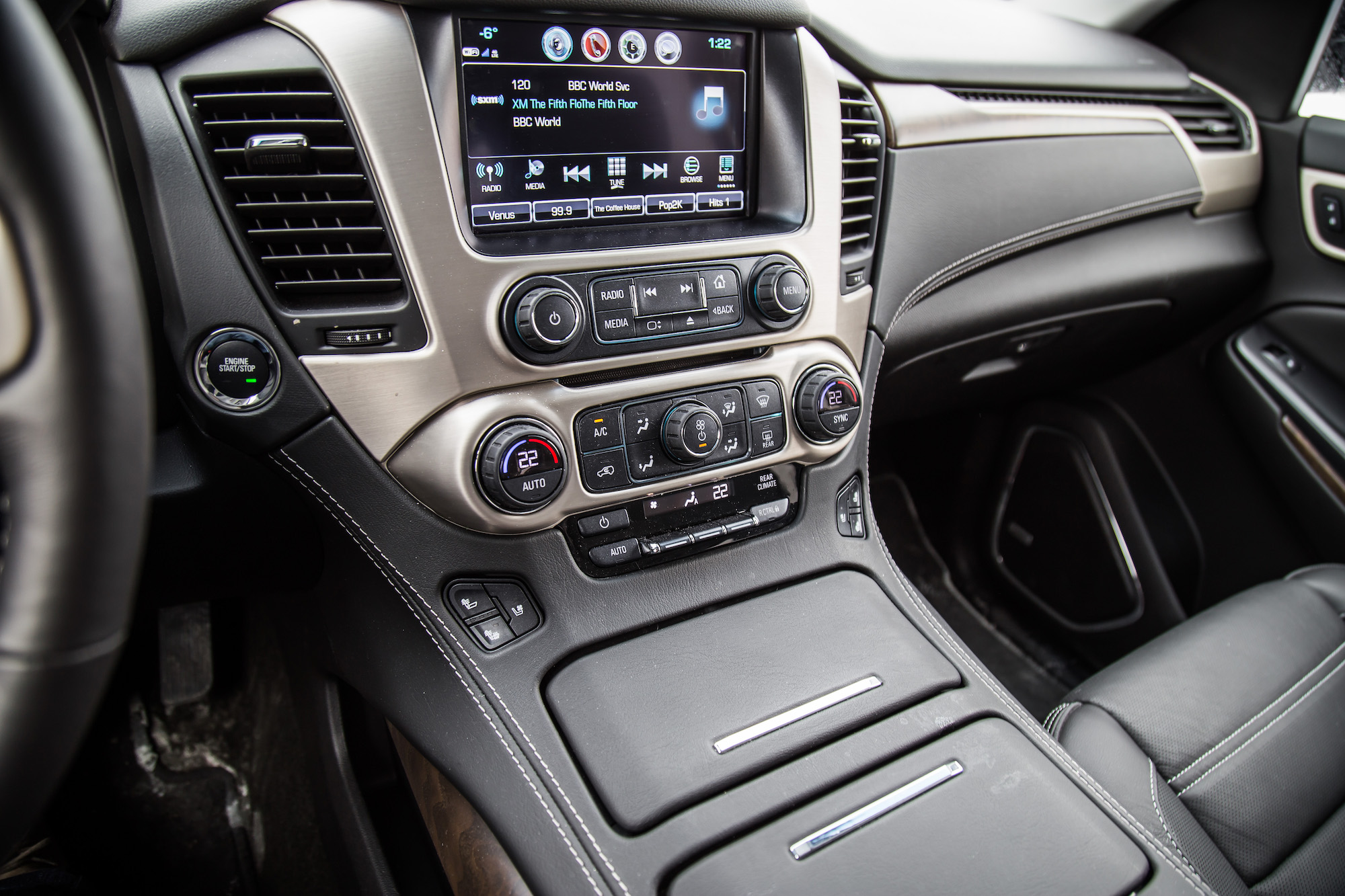
But now that the 6.2-litre V8 and 10-speed are offered in the Tahoe as well as the Escalade, what has the Yukon got left up its sleeve to justify signing on the dotted line? Yes, this GMC is marketed to be more upscale than the Chevy with a more mature demeanor and some fancier cabin wood trims, yet their interior designs are pretty much identical, save for obvious seat badging and the steering wheel logo. Their infotainment systems are the same, and that goes for the buttons, knobs, and column shifter too. The driver’s gauges are unique though, and the Yukon has a larger customizable screen flanked by analog gauges. The Escalade on the other hand goes full bling with a digital instrument panel and a unique center console. 4WD is available on all of them, as well as an extended cab version: Suburban, Yukon XL, Escalade ESV. Magnetic Ride Control and an adaptive damper system also make an appearance, as well as 22-inch wheels, 4G LTE Wi-Fi Hotspot, Bluetooth connectivity, and a hands-free power liftgate.
What it all boils down to are minute differences between the trio. The Chevrolet Tahoe ranges around $2,000 – $5,000 less than the equivalent GMC Yukon – not too significant of a difference, though neither are the upgrades. If it was my money, I’d be going home with the Chevrolet Tahoe/Suburban. Not only do I value its lower price tag but now that the bowtie truck is available with the larger V8, 10-speed transmission, and performance goodies, the justification for the not-so-premium-anymore GMC Yukon specifically has gone out the window.






Leave a Reply