The GLS continues to set the bar for seven-passenger luxury SUVs.
Calvin Chan
15–22 minutes
SALT LAKE CITY, Utah – When the GL-Class was first launched back in 2006, it was meant to be a replacement for the aging G-Wagen. Turns out, both SUVs were so successful that Mercedes decided to keep them both on board. 550,000 units later, the GLS enters its third-generation with refreshed looks, two electrified powertrains, and a dizzying list of off-road and safety assistance features.
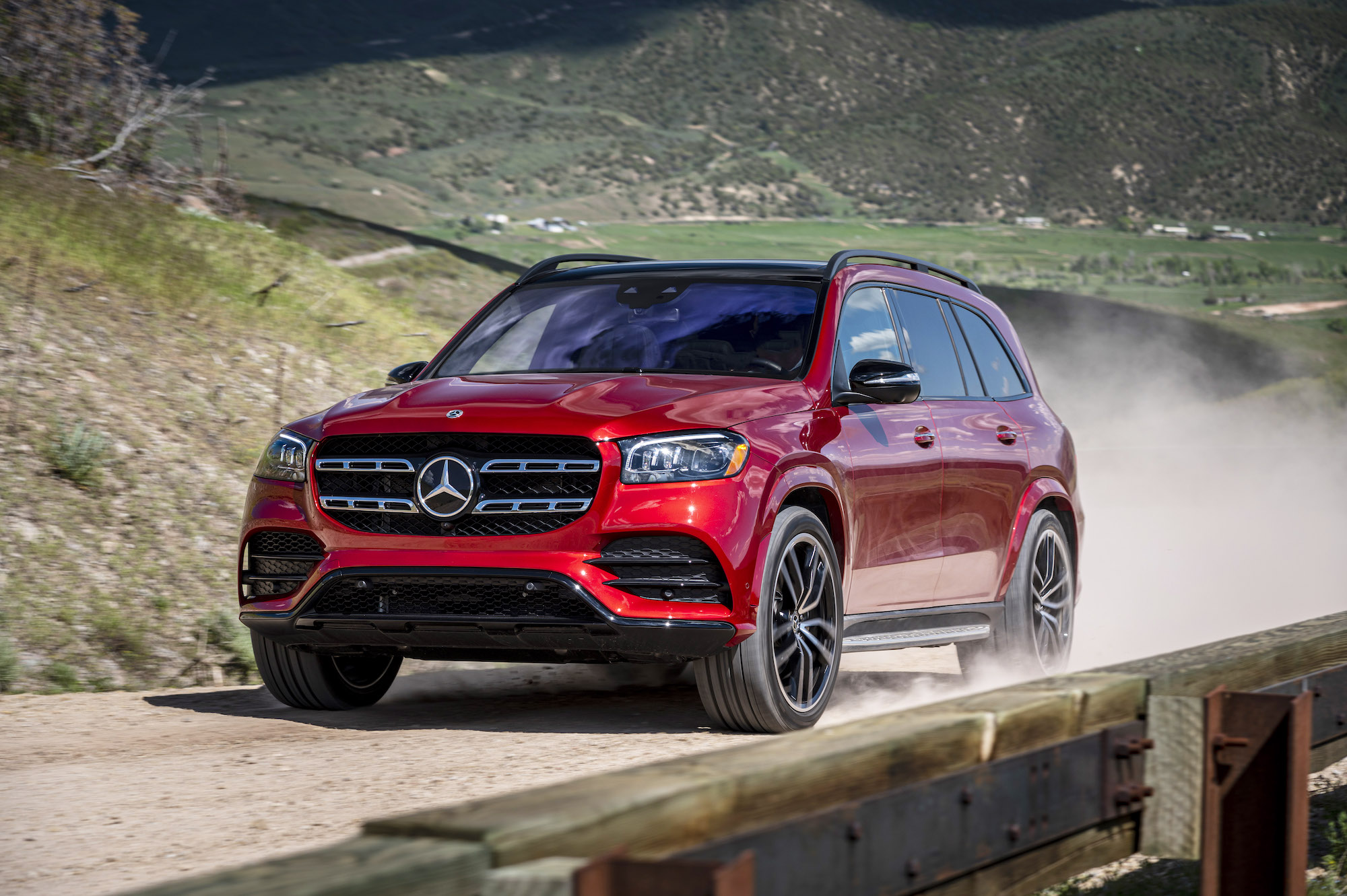
Mercedes has marketed the new GLS as the “S-Class of SUVs”, molding their seven-seater flagship SUV to be equal parts luxury, comfort, and people-hauler. Reworked from the ground up with new LED head- and tail-lights, the new GLS is much softer on the eyes but retains its muscular shoulders and imposing upright stature that allude to its generously-sized interior. Included are a range of 21-inch to 23-inch wheels, a revised dual-louvre radiator grill, and chrome plated front and rear underguards. The fake vents on the lower front apron aren’t terribly appealing but the Sport Package remedies that with a different bumper. More importantly, the wheelbase of the GLS has been stretched 60 mm over the outgoing model, offering more cabin space than ever before.
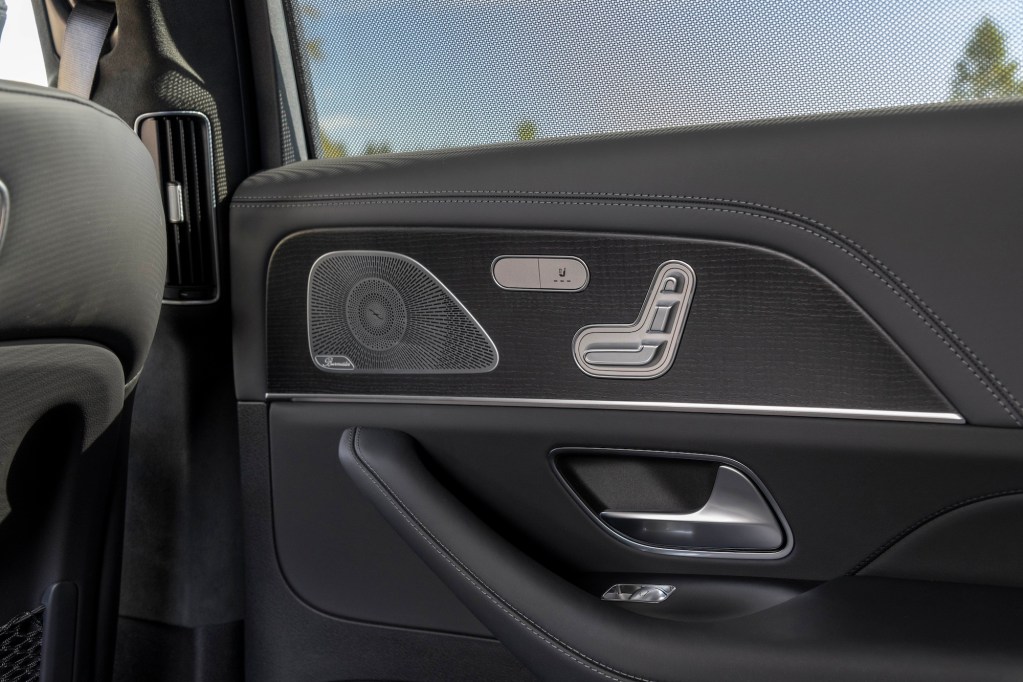
All three rows house electrically adjustable seats and for the first time, the GLS can be had in a six-seater configuration with two captain’s chairs. Rear passengers can now live like kings, much like in the S-Class, with 87 mm more legroom than before, wireless charging pads, a massive panoramic roof, and a dropdown center armrest that houses a 7-inch Samsung tablet, the latter of which is unavailable if you opt for six seats. With it, passengers can activate the massaging function, adjust the lumbar support, and select one of 64 preferred ambient lighting colours. The seats are plush and suitable for long journeys but I did not find them as contoured or as supportive as the S-Class sedan, and while the second row does slide fore and aft, the seats do not recline enough for you to assume a lie-back position.
When more passengers want to join the party, there’s an electric switch on the seat shoulder that automatically pushes the second row forward, and opens up a wide entry portal into the third row. Being electrically operated does make it convenient but the seat does take some time to move into position, and will test the patience of those used to the quick manual flip of a latch. The six-seater configuration remedies this with a wide center passthrough but it lacks the luxury amenities found with the seven-seater.
Mercedes says anyone under 1.94 metres tall will fit in the third row. I stand six-feet tall (roughly 1.80m) and even with the second row seat in its default position, the third-row accommodations are impressive, enough to quell any complaints of it being a penalty box. Headroom is ample despite its raised stadium position, and there is enough room for my legs to freely wobble about. There are even two USB-C slots, heated seats, armrests, and its own separate temperature control. Both rows fold flat for a flush loading cargo bay as well.
The remainder of the interior is garbed in the same design language as the GLE, with an expansive dual 12.3-inch screen setup mounted on the dashboard, rectangular air vents, and distinct grab handles flanking the center console, alluding to its go-anywhere abilities. Much like the Porsche Cayenne however, the handles can become a nuisance as they block your hand from accessing the center controls. Elsewhere, leather, metal, and bare wood caress high traffic surfaces, even the center cap of the thickly padded steering wheel.
The GLS utilizes the new MBUX infotainment system paired with an Apple-like trackpad instead of the outgoing rotary dial and archaic number buttons. Users can tap, slide, pinch, and scroll, much like the inputs that command your smartphone. And while the rotary dial was the gold standard for interface control, this new trackpad is intuitive enough to use on the fly. The learning curve is small and the menus are simply laid out with large button prompts. It’s similar to the Lexus interface that also uses a trackpad, but the MBUX unit is less complicated, the screens are not overloaded, and the input sensitivity level is more fluid and consistent.
If the trackpad is not to your liking, you can alternatively input your commands directly via the touchscreen, haptic touch buttons on each side of the steering wheel, or the new “Hey Mercedes” voice command feature that acts much like your Google Home or Android Alexa. You can verbally instruct the car to do your bidding, whether it’s turning on the massaging seats, or adjusting the cabin temperature. Augmented reality is available on the navigation maps as well, which uses a video image from the front camera and overlays that with helpful navigational information like street names, directional arrows, and correct lanes for turning.
Other notable features worth mentioning include 11 available USB total slots, heated and cooled front cupholders, a massive (and I mean massive) head up display, and a new car wash mode. When activated, it automatically folds the mirrors, jacks up the suspension to its highest position, closes the windows and sunroof, turns on the air recirculation mode, and deactivates the automatic windscreen wipers and parking sensors so that your GLS enters and exits the car wash unscathed.
The GLS offers two engine choices in Canada, both with a fully variable 4MATIC all-wheel drive system (meaning it can shuffle 100% of torque to either axle), 9-speed automatic, and 3,500 kg towing capacity. There are no diesels available. First up is the GLS 450 with a 3.0-litre turbocharged inline-six engine that delivers the exact same power output as the outgoing 3.0-litre V6 – 362 hp and 369 lb-ft – but it’s been paired with a mild hybrid system that consists of a 48-volt battery and integrated starter-generator. These power the car’s electronics, act as both a starter motor and alternator, allows the engine to shut off entirely while coasting at certain speeds, and dishes out 21 hp and 184 lb-ft of supplementary torque that serves as an intermediary to eliminate turbo lag.
When all is said and done, the GLS 450 sprints from 0-100 km/h in 6.2 seconds, only one-tenth of a second slower than the rivaling BMW X7 xDrive40i. The inline-six is a competitively quick engine, linear under acceleration, and doesn’t hiccup or run out of breath when racing up the rpms. Under full throttle, the GLS 450 runs on a smoother tempo than the outgoing V6 and sounds better too. The exhaust mimics that of the CLS 53, which uses the same powertrain, and induces a high-pitched wail followed by pops and bangs in Sport+ mode. The majority of the noise is muffled from the heavy cabin insulation – it’s pin-drop quiet in there – but rolling down the windows remedies that. Matched with a clever shifting 9-speed gearbox, the inline-six provides decent thrust off the line but it will never kick you back into your seat. That said, the torque and overtaking power is more than enough for the average urban jungle driver who doesn’t see themselves towing a boat or taming their left-lane ego on the highway.
For those that do care, the GLS 580 is available with a similarly electrified 4.0-litre twin-turbo V8, making 34 more horsepower than the outgoing 4.7-litre V8 unit, to a total of 483 hp and 516 lb-ft. The 48-volt hybrid system further supplements that with an additional 21 hp and 184 lb-ft. That’s enough for the GLS 580 to scuffle from 0-100 km/h in an impressive 5.3 seconds, one-tenth of a second faster than the BMW X7 xDrive50i. Once you drive the V8, it’s hard to go back and justify anything less. While not as smooth or as fuel-efficient, the low-end thrust is far superior and the way it builds up speed makes it hard to believe there are two turbochargers nestled between the cylinders. Forward propulsion comes so easy and the tidal wave of torque more effectively conceals its substantial weight. The GLS 580 makes a deeper, richer, and fuller soundtrack too. To save some fuel, the V8 also employs cylinder deactivation, shutting down four cylinders under light power loads.
In Canada, the GLS comes standard with an air suspension but adaptive dampers are optional. After evaluating the GLS with and without the latter, we can easily report that it makes a significant difference in ride quality. The active damping paired with the air springs melted bumps into smooth butter, negated any noticeable shakes that were aimed at the cabin, and comes exceptionally close to delivering the same magical carpet ride as the lower and lighter S-Class. Mission accomplished, Mercedes. It’s clear to see why a buyer would doubtlessly choose the GLS over its body-on-frame rivals like the G-Wagen or Cadillac Escalade.
We took the GLS through its paces around the barren suburbs just east of Salt Lake City, and while it’s not the most ideal piece of machinery to carve hairpins, the heavily weighted steering made it easy to articulate the front wheels, and the clever suspension counteracted any top heavy lean. The GLS does not noticeably squat or pitch under heavy braking or hard acceleration either, something its counterparts know all too well. Without the adaptive dampers however, the chassis exhibits more chatter and it doesn’t settle with the same amount of grace after hitting broken pavement. Safe to say, if you plan on optioning the GLS with the larger 22- or 23-inch wheels, adaptive dampers are a must.
For the full S-Class ride, you will also want to check the box for E-Active Body Control, a trick suspension system that uses electronically-driven hydraulics to control the spring and damper forces at each individual wheel. Mercedes says it’s the only system worldwide that can do this, and the application to the GLS allows it to challenge the off-road credentials of the Range Rover. Each spring can be individual controlled, raised, or lowered depending on the situation. Drivers can even dive into the infotainment screen and control the suspension height at each wheel themselves, or activate Rocking Mode where the dampers rock the GLS back and forth, and up and down, to free itself from deep sand or sticky situations. That, or to give lowriders with hydraulics a run for their money.
E-Active Body Control has other uses catered towards ride comfort like Curve Mode, which tilts the GLS into bends like a motorcycle to reduce lateral forces on occupants. While theoretically effective, the response is not the most pleasant for passengers, as the constant tilting and leaning from side to side can render them nauseous when they’re busy staring at their phones. The system also makes use of a front-facing camera to scan the road ahead, and it automatically preloads the dampers before hitting bumps for a smoother ride.
The Mercedes-Benz GLS continues to set the bar for seven-passenger luxury SUVs. I will have to save my final thoughts until we do a direct comparison with the BMW X7 but until then, the GLS is a well-mannered, wonderfully damped, and off-road ready SUV. The V8 is the engine you want if effortless acceleration is up your alley but the straight-six will undoubtedly be the cheaper and more fuel efficient volume seller. No matter the method of propulsion, the GLS is an exceedingly effective family hauler that submerses its occupants in a first-class cabin worthy of the S-Class title.
Pricing for the GLS has yet to be announced but Mercedes promises it to be in line with segment competitors. With the 2019 GLS and current BMW X7 pricing in mind, we expect the GLS 450 to cost around $90,000, and the GLS 580 to command a premium at $110,000. The GLS 450 will arrive in the fall of 2019, with the 580 to follow shortly after.
Mercedes-Benz GLS 580 4MATIC, designo diamantweiß bright, Leder Nappa magmagrau / schwarz, Kraftstoffverbrauch kombiniert: 10,1-9,8 l/100 km; CO2-Emissionen kombiniert: 230–223 g/km (vorläufige Daten) // Mercedes-Benz GLS 580 4MATIC, designo diamond white bright, Nappa leather in black and magma grey, Fuel consumption combined: 10.1-9.8 l/100 km; combined CO2 emissions: 230-223 g/km (provisional data)Mercedes-Benz GLS 580 4MATIC, designo diamantweiß bright, Leder Nappa magmagrau / schwarz, Kraftstoffverbrauch kombiniert: 10,1-9,8 l/100 km; CO2-Emissionen kombiniert: 230–223 g/km (vorläufige Daten) // Mercedes-Benz GLS 580 4MATIC, designo diamond white bright, Nappa leather in black and magma grey, Fuel consumption combined: 10.1-9.8 l/100 km; combined CO2 emissions: 230-223 g/km (provisional data)Mercedes-Benz GLS 580 4MATIC, designo diamantweiß bright, Leder Nappa magmagrau / schwarz, Kraftstoffverbrauch kombiniert: 10,1-9,8 l/100 km; CO2-Emissionen kombiniert: 230–223 g/km (vorläufige Daten) // Mercedes-Benz GLS 580 4MATIC, designo diamond white bright, Nappa leather in black and magma grey, Fuel consumption combined: 10.1-9.8 l/100 km; combined CO2 emissions: 230-223 g/km (provisional data)Mercedes-Benz GLS 580 4MATIC, designo diamantweiß bright, Leder Nappa magmagrau / schwarz, Kraftstoffverbrauch kombiniert: 10,1-9,8 l/100 km; CO2-Emissionen kombiniert: 230–223 g/km (vorläufige Daten) // Mercedes-Benz GLS 580 4MATIC, designo diamond white bright, Nappa leather in black and magma grey, Fuel consumption combined: 10.1-9.8 l/100 km; combined CO2 emissions: 230-223 g/km (provisional data)Mercedes-Benz GLS 580 4MATIC, designo diamantweiß bright, Leder Nappa magmagrau / schwarz, Kraftstoffverbrauch kombiniert: 10,1-9,8 l/100 km; CO2-Emissionen kombiniert: 230–223 g/km (vorläufige Daten) // Mercedes-Benz GLS 580 4MATIC, designo diamond white bright, Nappa leather in black and magma grey, Fuel consumption combined: 10.1-9.8 l/100 km; combined CO2 emissions: 230-223 g/km (provisional data)Mercedes-Benz GLS 580 4MATIC, designo diamantweiß bright, Leder Nappa magmagrau / schwarz, Kraftstoffverbrauch kombiniert: 10,1-9,8 l/100 km; CO2-Emissionen kombiniert: 230–223 g/km (vorläufige Daten) // Mercedes-Benz GLS 580 4MATIC, designo diamond white bright, Nappa leather in black and magma grey, Fuel consumption combined: 10.1-9.8 l/100 km; combined CO2 emissions: 230-223 g/km (provisional data)Mercedes-Benz GLS 580 4MATIC, designo diamantweiß bright, Leder Nappa magmagrau / schwarz, Kraftstoffverbrauch kombiniert: 10,1-9,8 l/100 km; CO2-Emissionen kombiniert: 230–223 g/km (vorläufige Daten) // Mercedes-Benz GLS 580 4MATIC, designo diamond white bright, Nappa leather in black and magma grey, Fuel consumption combined: 10.1-9.8 l/100 km; combined CO2 emissions: 230-223 g/km (provisional data)Mercedes-Benz GLS 580 4MATIC, designo diamantweiß bright, Leder Nappa magmagrau / schwarz, Kraftstoffverbrauch kombiniert: 10,1-9,8 l/100 km; CO2-Emissionen kombiniert: 230–223 g/km (vorläufige Daten) // Mercedes-Benz GLS 580 4MATIC, designo diamond white bright, Nappa leather in black and magma grey, Fuel consumption combined: 10.1-9.8 l/100 km; combined CO2 emissions: 230-223 g/km (provisional data)Mercedes-Benz GLS 580 4MATIC, designo diamantweiß bright, Leder Nappa magmagrau / schwarz, Kraftstoffverbrauch kombiniert: 10,1-9,8 l/100 km; CO2-Emissionen kombiniert: 230–223 g/km (vorläufige Daten) // Mercedes-Benz GLS 580 4MATIC, designo diamond white bright, Nappa leather in black and magma grey, Fuel consumption combined: 10.1-9.8 l/100 km; combined CO2 emissions: 230-223 g/km (provisional data)Mercedes-Benz GLS 580 4MATIC, designo diamantweiß bright, Leder Nappa magmagrau / schwarz, Kraftstoffverbrauch kombiniert: 10,1-9,8 l/100 km; CO2-Emissionen kombiniert: 230–223 g/km (vorläufige Daten) // Mercedes-Benz GLS 580 4MATIC, designo diamond white bright, Nappa leather in black and magma grey, Fuel consumption combined: 10.1-9.8 l/100 km; combined CO2 emissions: 230-223 g/km (provisional data)Mercedes-Benz GLS 580 4MATIC, designo diamantweiß bright, Leder Nappa magmagrau / schwarz, Kraftstoffverbrauch kombiniert: 10,1-9,8 l/100 km; CO2-Emissionen kombiniert: 230–223 g/km (vorläufige Daten) // Mercedes-Benz GLS 580 4MATIC, designo diamond white bright, Nappa leather in black and magma grey, Fuel consumption combined: 10.1-9.8 l/100 km; combined CO2 emissions: 230-223 g/km (provisional data)Mercedes-Benz GLS 580 4MATIC, designo hyazinthrot metallic, Leder schwarz, Kraftstoffverbrauch kombiniert: 10,1-9,8 l/100 km; CO2-Emissionen kombiniert: 230–223 g/km (vorläufige Daten) // Mercedes-Benz GLS 580 4MATIC, designo cardinal red metallic, leather black, Fuel consumption combined: 10.1-9.8 l/100 km; combined CO2 emissions: 230-223 g/km (provisional data)Mercedes-Benz GLS 580 4MATIC, designo hyazinthrot metallic, Leder schwarz, Kraftstoffverbrauch kombiniert: 10,1-9,8 l/100 km; CO2-Emissionen kombiniert: 230–223 g/km (vorläufige Daten) // Mercedes-Benz GLS 580 4MATIC, designo cardinal red metallic, leather black, Fuel consumption combined: 10.1-9.8 l/100 km; combined CO2 emissions: 230-223 g/km (provisional data)Mercedes-Benz GLS 580 4MATIC, designo hyazinthrot metallic, Leder schwarz, Kraftstoffverbrauch kombiniert: 10,1-9,8 l/100 km; CO2-Emissionen kombiniert: 230–223 g/km (vorläufige Daten) // Mercedes-Benz GLS 580 4MATIC, designo cardinal red metallic, leather black, Fuel consumption combined: 10.1-9.8 l/100 km; combined CO2 emissions: 230-223 g/km (provisional data)Mercedes-Benz GLS 580 4MATIC, designo hyazinthrot metallic, Leder schwarz, Kraftstoffverbrauch kombiniert: 10,1-9,8 l/100 km; CO2-Emissionen kombiniert: 230–223 g/km (vorläufige Daten) // Mercedes-Benz GLS 580 4MATIC, designo cardinal red metallic, leather black, Fuel consumption combined: 10.1-9.8 l/100 km; combined CO2 emissions: 230-223 g/km (provisional data)Mercedes-Benz GLS 580 4MATIC, designo hyazinthrot metallic, Leder schwarz, Kraftstoffverbrauch kombiniert: 10,1-9,8 l/100 km; CO2-Emissionen kombiniert: 230–223 g/km (vorläufige Daten) // Mercedes-Benz GLS 580 4MATIC, designo cardinal red metallic, leather black, Fuel consumption combined: 10.1-9.8 l/100 km; combined CO2 emissions: 230-223 g/km (provisional data)Mercedes-Benz GLS 580 4MATIC, designo hyazinthrot metallic, Leder schwarz, Kraftstoffverbrauch kombiniert: 10,1-9,8 l/100 km; CO2-Emissionen kombiniert: 230–223 g/km (vorläufige Daten) // Mercedes-Benz GLS 580 4MATIC, designo cardinal red metallic, leather black, Fuel consumption combined: 10.1-9.8 l/100 km; combined CO2 emissions: 230-223 g/km (provisional data)Mercedes-Benz GLS 580 4MATIC, designo hyazinthrot metallic, Leder schwarz, Kraftstoffverbrauch kombiniert: 10,1-9,8 l/100 km; CO2-Emissionen kombiniert: 230–223 g/km (vorläufige Daten) // Mercedes-Benz GLS 580 4MATIC, designo cardinal red metallic, leather black, Fuel consumption combined: 10.1-9.8 l/100 km; combined CO2 emissions: 230-223 g/km (provisional data)Mercedes-Benz GLS 450 4MATIC, brillantblau metallic, Leder schwarz, Kraftstoffverbrauch kombiniert: Nicht verfügbar in Westeuropa // Mercedes-Benz GLS 450 4MATIC, brilliant blue metallic, Rough leather/leather black, Fuel consumption combined: Not available in Western EuropeMercedes-Benz GLS 450 4MATIC, brillantblau metallic, Leder schwarz, Kraftstoffverbrauch kombiniert: Nicht verfügbar in Westeuropa // Mercedes-Benz GLS 450 4MATIC, brilliant blue metallic, Rough leather/leather black, Fuel consumption combined: Not available in Western EuropeMercedes-Benz GLS 450 4MATIC, brillantblau metallic, Leder schwarz, Kraftstoffverbrauch kombiniert: Nicht verfügbar in Westeuropa // Mercedes-Benz GLS 450 4MATIC, brilliant blue metallic, Rough leather/leather black, Fuel consumption combined: Not available in Western EuropeMercedes-Benz GLS 450 4MATIC, brillantblau metallic, Leder schwarz, Kraftstoffverbrauch kombiniert: Nicht verfügbar in Westeuropa // Mercedes-Benz GLS 450 4MATIC, brilliant blue metallic, Rough leather/leather black, Fuel consumption combined: Not available in Western EuropeMercedes-Benz GLS 450 4MATIC, brillantblau metallic, Leder schwarz, Kraftstoffverbrauch kombiniert: Nicht verfügbar in Westeuropa // Mercedes-Benz GLS 450 4MATIC, brilliant blue metallic, Rough leather/leather black, Fuel consumption combined: Not available in Western EuropeMercedes-Benz GLS 450 4MATIC, brillantblau metallic, Leder schwarz, Kraftstoffverbrauch kombiniert: Nicht verfügbar in Westeuropa // Mercedes-Benz GLS 450 4MATIC, brilliant blue metallic, Rough leather/leather black, Fuel consumption combined: Not available in Western EuropeMercedes-Benz GLS 450 4MATIC, brillantblau metallic, Leder schwarz, Kraftstoffverbrauch kombiniert: Nicht verfügbar in Westeuropa // Mercedes-Benz GLS 450 4MATIC, brilliant blue metallic, Rough leather/leather black, Fuel consumption combined: Not available in Western EuropeMercedes-Benz GLS 450 4MATIC, brillantblau metallic, Leder schwarz, Kraftstoffverbrauch kombiniert: Nicht verfügbar in Westeuropa // Mercedes-Benz GLS 450 4MATIC, brilliant blue metallic, Rough leather/leather black, Fuel consumption combined: Not available in Western EuropeMercedes-Benz GLS 450 4MATIC, brillantblau metallic, Leder schwarz, Kraftstoffverbrauch kombiniert: Nicht verfügbar in Westeuropa // Mercedes-Benz GLS 450 4MATIC, brilliant blue metallic, Rough leather/leather black, Fuel consumption combined: Not available in Western EuropeMercedes-Benz GLS 450 4MATIC, brillantblau metallic, Leder schwarz, Kraftstoffverbrauch kombiniert: Nicht verfügbar in Westeuropa // Mercedes-Benz GLS 450 4MATIC, brilliant blue metallic, Rough leather/leather black, Fuel consumption combined: Not available in Western EuropeMercedes-Benz GLS 450 4MATIC, brillantblau metallic, Leder schwarz, Kraftstoffverbrauch kombiniert: Nicht verfügbar in Westeuropa // Mercedes-Benz GLS 450 4MATIC, brilliant blue metallic, Rough leather/leather black, Fuel consumption combined: Not available in Western EuropeMercedes-Benz GLS 450 4MATIC, brillantblau metallic, Leder schwarz, Kraftstoffverbrauch kombiniert: Nicht verfügbar in Westeuropa // Mercedes-Benz GLS 450 4MATIC, brilliant blue metallic, Rough leather/leather black, Fuel consumption combined: Not available in Western EuropeMercedes-Benz GLS 450 4MATIC, brillantblau metallic, Leder schwarz, Kraftstoffverbrauch kombiniert: Nicht verfügbar in Westeuropa // Mercedes-Benz GLS 450 4MATIC, brilliant blue metallic, Rough leather/leather black, Fuel consumption combined: Not available in Western EuropeMercedes-Benz GLS 450 4MATIC, brillantblau metallic, Leder schwarz, Kraftstoffverbrauch kombiniert: Nicht verfügbar in Westeuropa // Mercedes-Benz GLS 450 4MATIC, brilliant blue metallic, Rough leather/leather black, Fuel consumption combined: Not available in Western EuropeMercedes-Benz GLS 450 4MATIC, brillantblau metallic, Leder schwarz, Kraftstoffverbrauch kombiniert: Nicht verfügbar in Westeuropa // Mercedes-Benz GLS 450 4MATIC, brilliant blue metallic, Rough leather/leather black, Fuel consumption combined: Not available in Western EuropeMercedes-Benz GLS 450 4MATIC, brillantblau metallic, Leder schwarz, Kraftstoffverbrauch kombiniert: Nicht verfügbar in Westeuropa // Mercedes-Benz GLS 450 4MATIC, brilliant blue metallic, Rough leather/leather black, Fuel consumption combined: Not available in Western EuropeMercedes-Benz GLS 580 4MATIC, cavansitblau metallic, Leder Nappa magmagrau/schwarz, Kraftstoffverbrauch kombiniert: 10,1-9,8 l/100 km; CO2-Emissionen kombiniert: 230–223 g/km (vorläufige Werte) // Mercedes-Benz GLS 580 4MATIC, cavansite blue metallic, Nappa leather magma grey/black, Fuel consumption combined: 10.1-9.8 l/100 km; combined CO2 emissions: 230-223 g/km (provisional figures)Mercedes-Benz GLS 580 4MATIC, cavansitblau metallic, Leder Nappa magmagrau/schwarz, Kraftstoffverbrauch kombiniert: 10,1-9,8 l/100 km; CO2-Emissionen kombiniert: 230–223 g/km (vorläufige Werte) // Mercedes-Benz GLS 580 4MATIC, cavansite blue metallic, Nappa leather magma grey/black, Fuel consumption combined: 10.1-9.8 l/100 km; combined CO2 emissions: 230-223 g/km (provisional figures)Mercedes-Benz GLS 580 4MATIC, cavansitblau metallic, Leder Nappa magmagrau/schwarz, Kraftstoffverbrauch kombiniert: 10,1-9,8 l/100 km; CO2-Emissionen kombiniert: 230–223 g/km (vorläufige Werte) // Mercedes-Benz GLS 580 4MATIC, cavansite blue metallic, Nappa leather magma grey/black, Fuel consumption combined: 10.1-9.8 l/100 km; combined CO2 emissions: 230-223 g/km (provisional figures)Mercedes-Benz GLS 580 4MATIC, cavansitblau metallic, Leder Nappa magmagrau/schwarz, Kraftstoffverbrauch kombiniert: 10,1-9,8 l/100 km; CO2-Emissionen kombiniert: 230–223 g/km (vorläufige Werte) // Mercedes-Benz GLS 580 4MATIC, cavansite blue metallic, Nappa leather magma grey/black, Fuel consumption combined: 10.1-9.8 l/100 km; combined CO2 emissions: 230-223 g/km (provisional figures)Mercedes-Benz GLS 580 4MATIC Offroad Experience, brillantblau metallic, Kraftstoffverbrauch kombiniert: 10,1-9,8 l/100 km; CO2-Emissionen kombiniert: 230–223 g/km (vorläufige Werte) // Mercedes-Benz GLS 580 4MATIC Offroad Experience, brilliant blue metallic, Fuel consumption combined: 10.1-9.8 l/100 km; combined CO2 emissions: 230-223 g/km (provsional figures)Mercedes-Benz GLS 580 4MATIC Offroad Experience, brillantblau metallic, Kraftstoffverbrauch kombiniert: 10,1-9,8 l/100 km; CO2-Emissionen kombiniert: 230–223 g/km (vorläufige Werte) // Mercedes-Benz GLS 580 4MATIC Offroad Experience, brilliant blue metallic, Fuel consumption combined: 10.1-9.8 l/100 km; combined CO2 emissions: 230-223 g/km (provsional figures)Mercedes-Benz GLS 580 4MATIC Offroad Experience, selenitgrau metallic, Kraftstoffverbrauch kombiniert: 10,1-9,8 l/100 km; CO2-Emissionen kombiniert: 230–223 g/km (vorläufige Werte) // Mercedes-Benz GLS 580 4MATIC Offroad Experience, selenite grey metallic, Fuel consumption combined: 10.1-9.8 l/100 km; combined CO2 emissions: 230-223 g/km (provisional figures)Mercedes-Benz GLS 580 4MATIC Offroad Experience, selenitgrau metallic, Kraftstoffverbrauch kombiniert: 10,1-9,8 l/100 km; CO2-Emissionen kombiniert: 230–223 g/km (vorläufige Werte) // Mercedes-Benz GLS 580 4MATIC Offroad Experience, selenite grey metallic, Fuel consumption combined: 10.1-9.8 l/100 km; combined CO2 emissions: 230-223 g/km (provisional figures)Mercedes-Benz GLS 580 4MATIC Offroad Experience, selenitgrau metallic, Kraftstoffverbrauch kombiniert: 10,1-9,8 l/100 km; CO2-Emissionen kombiniert: 230–223 g/km (vorläufige Werte) // Mercedes-Benz GLS 580 4MATIC Offroad Experience, selenite grey metallic, Fuel consumption combined: 10.1-9.8 l/100 km; combined CO2 emissions: 230-223 g/km (provisional figures)Mercedes-Benz GLS 580 4MATIC, Kraftstoffverbrauch kombiniert: 10,1-9,8 l/100 km; CO2-Emissionen kombiniert: 230–223 g/km (vorläufige Werte) // Mercedes-Benz GLS 580 4MATIC, Fuel consumption combined: 10.1-9.8 l/100 km; combined CO2 emissions: 230-223 g/km (provisional figures)





Leave a Reply