
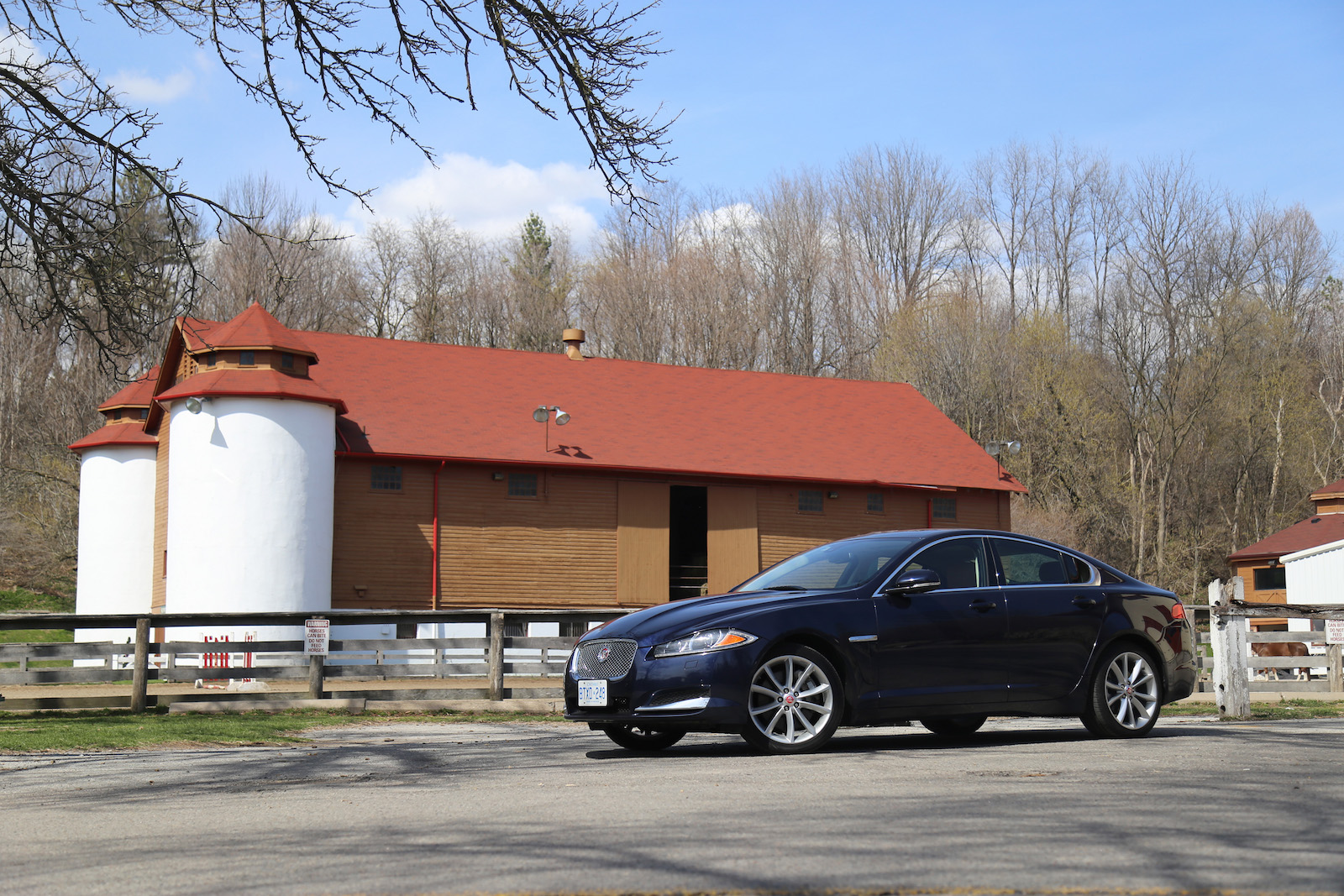
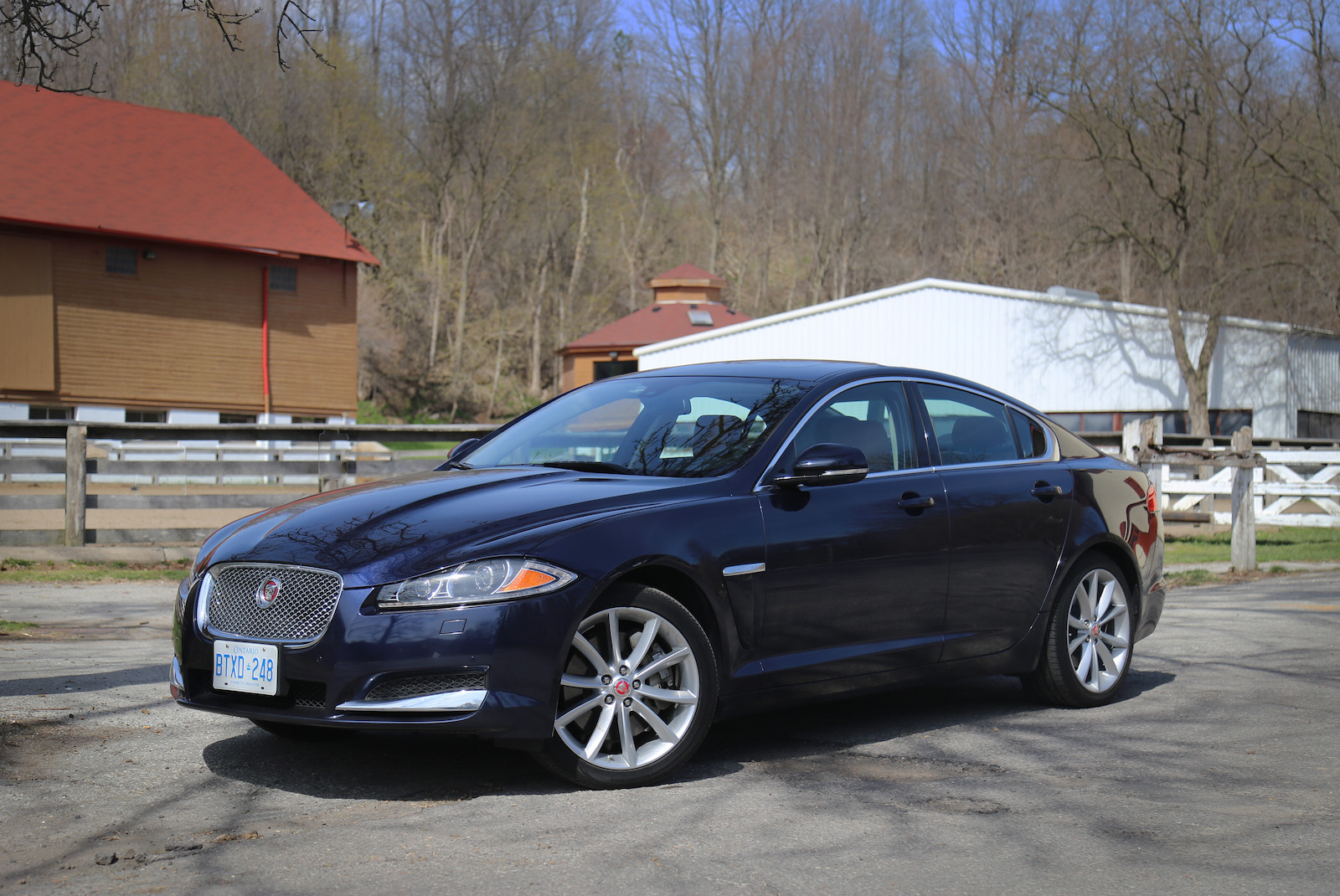
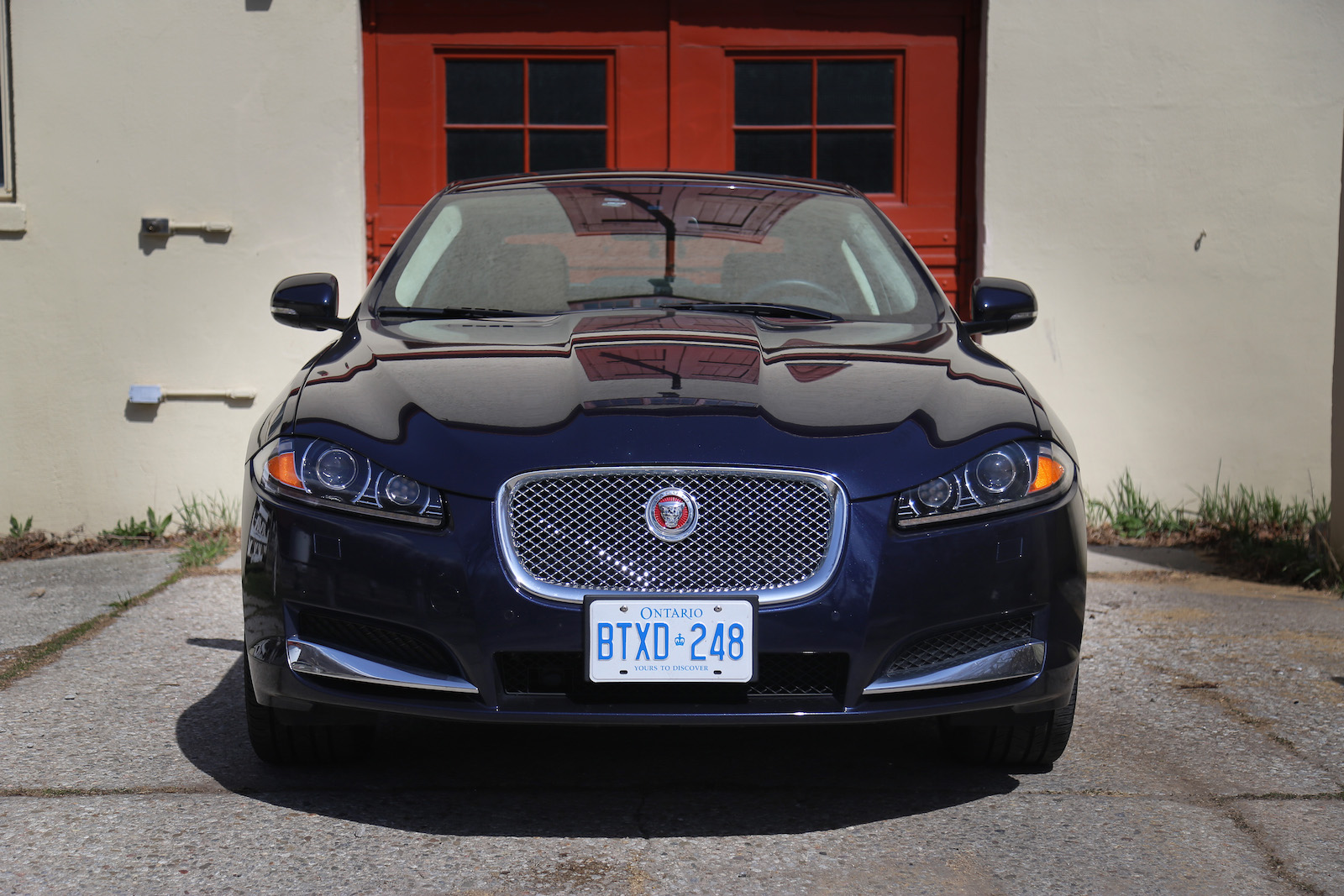
Jaguar’s mid-size luxury sedan, the XF, is quite a handsome looking car. Since its introduction back in 2007, it has gone through many exterior and interior changes but for 2015, Jaguar has instead focused on increasing the amount of available standard equipment and adjusted the starting prices for each XF trim. There are two new trims added to the lineup: Luxury and Sport, each offering different equipment and design features at a cheaper price than if you were to add the options separately.
The Sport trim ($69,000) offers a more aggressive look: 20-inch wheels, a low-profile aero body kit, blacked-out wheels, bright pedals, suedecloth headliner and heated front sport seats. The Luxury trim ($67,500) on the other hand adds on a premium 825-watt Meridian Surround Sound system, heated and cooled front seats, 19-inch wheels, Blind Spot Monitoring, Adaptive Headlamps, Intelligent Head Beams, and auto-dimming exterior mirrors. We spent a week with the Luxury trim added onto the 3.0L supercharged V6 engine with all-wheel drive.
Not many buyers are aware that the XF can be had with a 240-hp 2.0-litre turbo-four engine, and it starts at a more affordable $53,500. Jaguar expects that most Canadians will flock over to the V6 because that’s the only engine that comes with all-wheel drive. Speaking of which, Jaguar’s Instinctive All Wheel Drive system is quite brilliant. Under normal driving, it sends most of the power to the rear wheels, essentially making it a rear-wheel drive car. But when the vehicle detects tire slip (hence the term “instinctive”), it will send up to 50% of the power to the front wheels. It’s like having the best of both worlds in one car, AWD and RWD, and it helps retain that tail-happy characteristic. The only setback is that it can’t be had with the 4-cylinder or V8 engines.
It’s true that the XF is a sportier sedan than it’s big brother XJ. The XF is smaller and nimbler despite weighing nearly the same as a long-wheelbase XJ AWD – 1880kg and 1883kg respectively. That’s because the XF is the only Jag made out of a steel platform. All other models in the lineup have aluminum under their skin. As a result it does feel heavy around the corners and during liftoff.
The supercharged V6 is quick to the punch. It feels more responsive than a BMW 535i, but the driving feel is unfortunately very numb and feels anesthetized. The light steering worked well in the XJ. For such a big sedan you’d want a lighter feel, but for this mid-size XF I would’ve preferred it to be heavier, more responsive and more communicative. To put this into perspective, it felt like the XF was infinitely stuck in “Comfort” mode, and even switching to “S” on the gear shifter or hitting the “Dynamic” button wouldn’t provide a remedy – those modes only seemed to affect the transmission and power delivery. It’s a shame because the BMW 5-series has this area nailed down to the tee.
There isn’t much theatre coming from the exhaust either. Those seeking excitement should take a look at the XFR. It uses the same 510-hp 5.0-litre supercharged V8 engine housed in the top-spec Range Rovers and F-Types. Oh and there’s also the XFR-S (keep piling on the letters) with 550 hp and 502 lb-ft of torque on tap – yeah give it a second to sink in. Those eight cylinder engines drink gas like no tomorrow but for those buyers wanting to be a bit more frugal, they’ll be happy to know that our V6 AWD tester did quite well averaging 13.2 L/100km. It’s decent considering the weight, but we somehow managed even better in the XJL V6 AWD that we tested a few weeks ago, 11.8 L/100km to be exact. A week’s worth of premium gas cost us around $80.
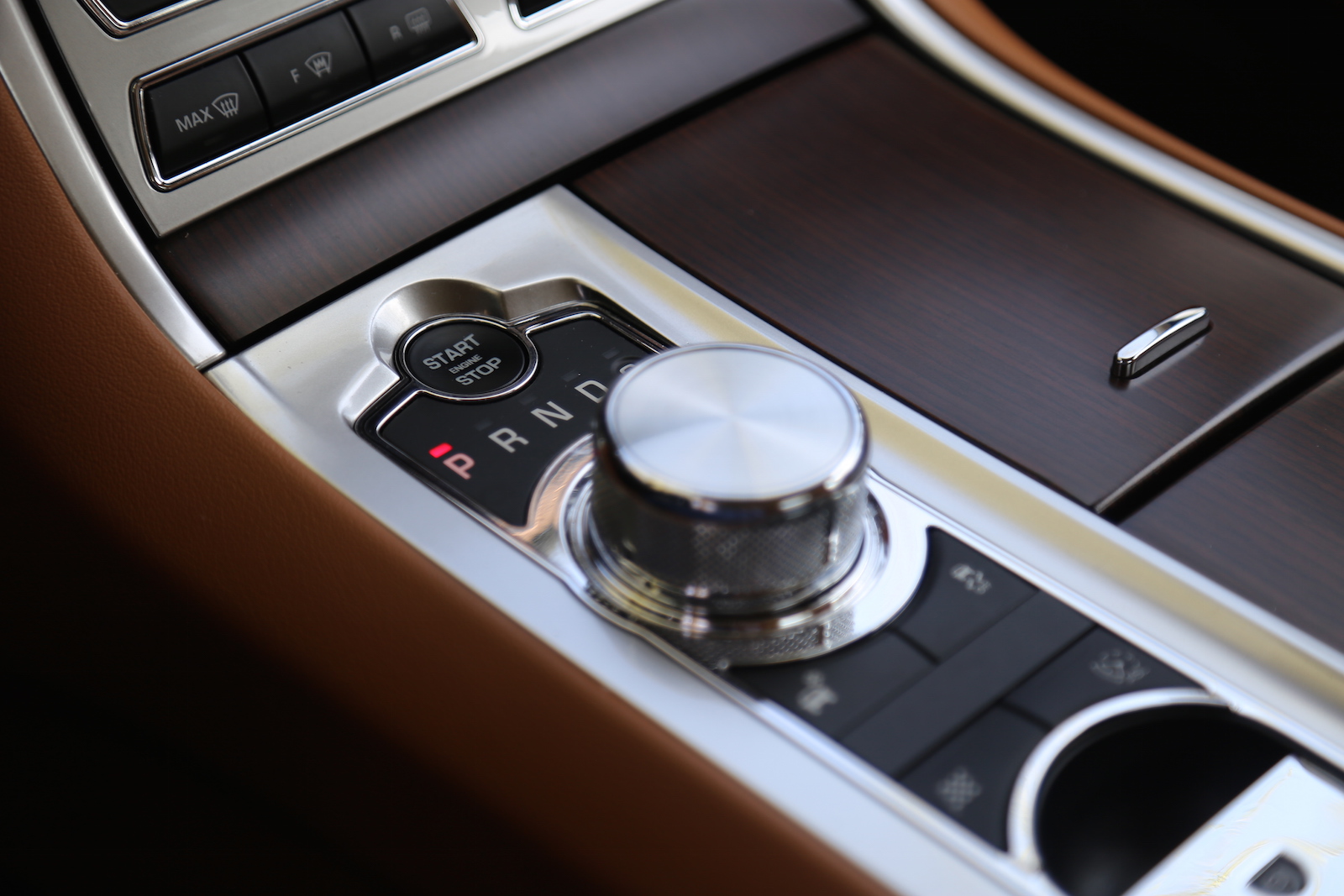
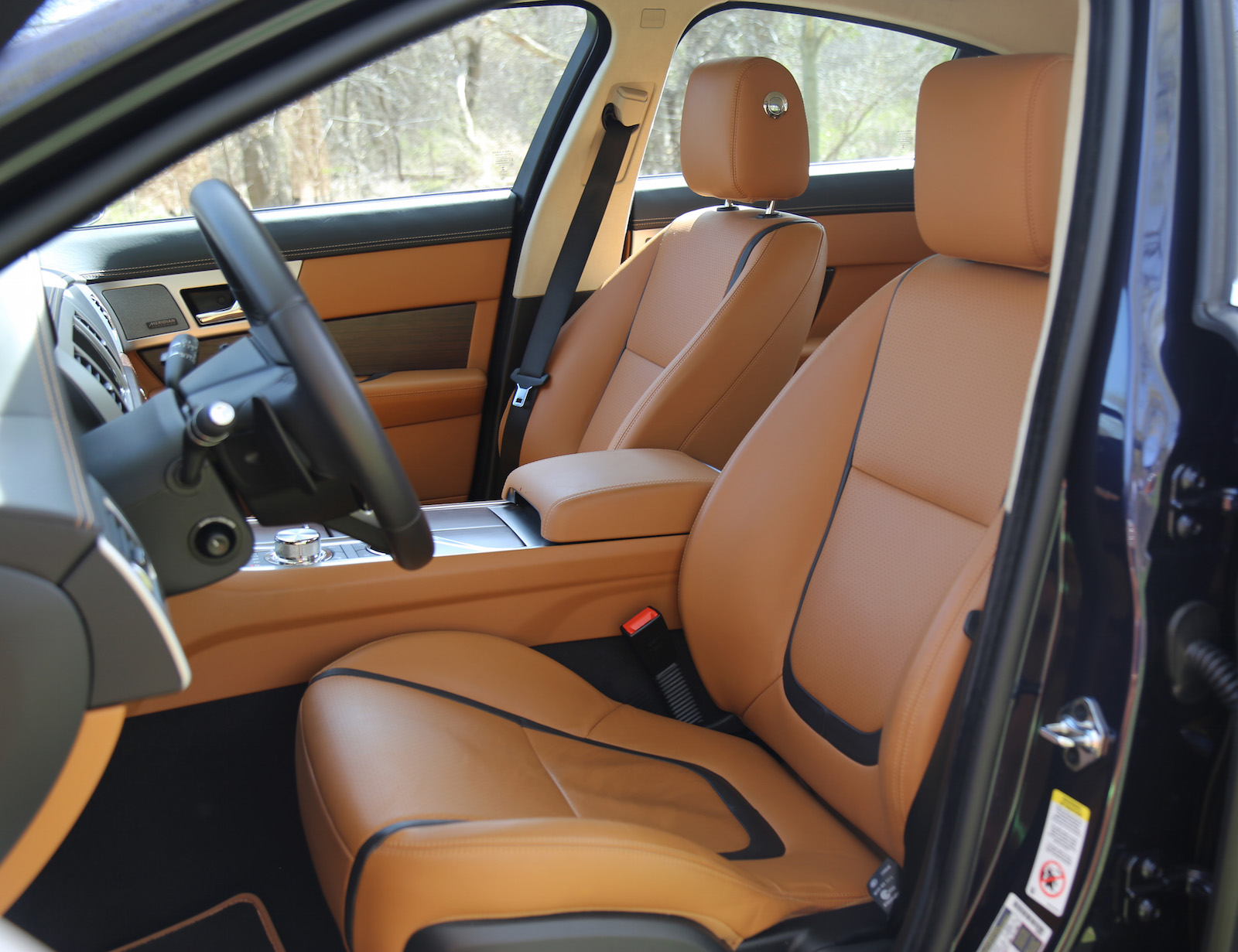
The XF’s interior isn’t as modern looking as the XJ’s. It feels a bit behind the times but we can’t argue that it still looks damn good. The London Tan leather gets all the compliments along with several party tricks like the rising center rotary dial and the fan covers that magically open when the vents are turned on. The stitching on the dash is meticulous and we can’t find any imperfections anywhere. Even the grains on the wood panels look way too perfect, making us have doubts and wonder if they’ve been made in China or if the tree was incredibly OCD.
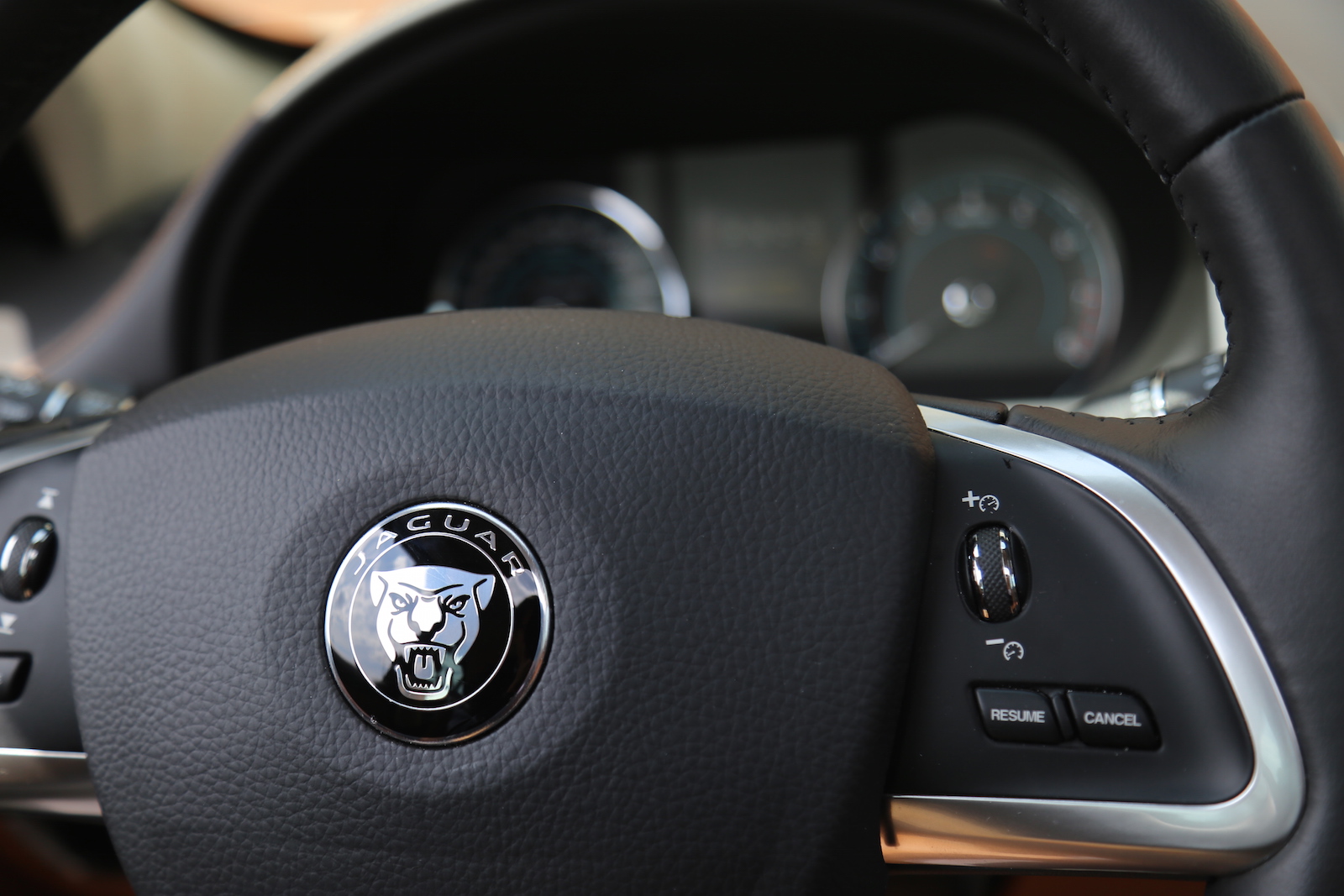
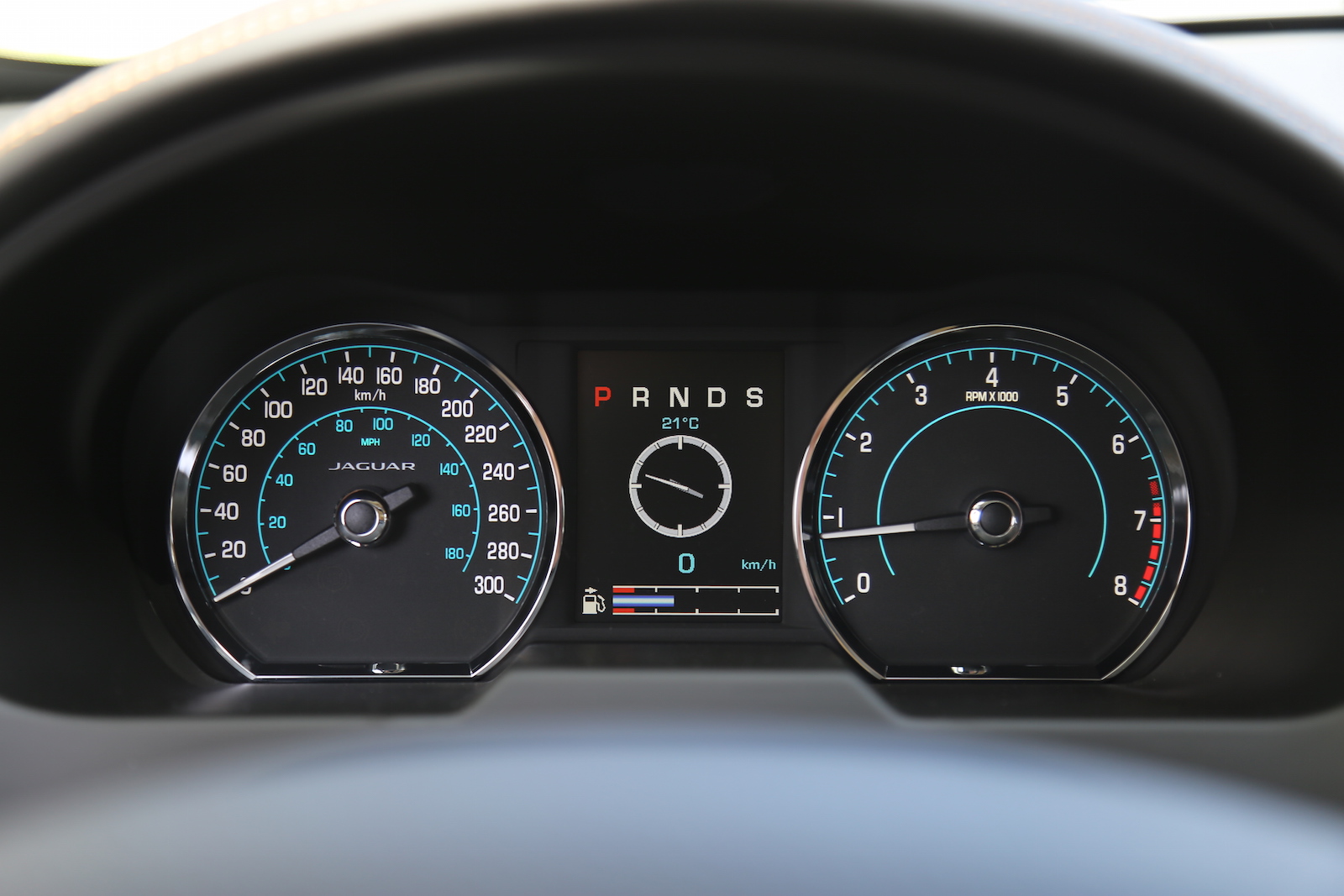
The steering wheel is beginning to stretch its tenure but the well-bolstered seats certainly make up for it. They almost make you forget about the low-resolution gauges and infotainment screen, areas that have gotten a lot of criticism over the years. But I’m happy to report that the media interface has been vastly improved and updated. It’s no longer as laggy as it used to be and it’s fairly easy to use now. The rest of the cabin is all dandy though I am beginning to question the build quality – the sunroof panel keeps rattling when closed and I can’t figure out why.
The Jaguar XF may be a bit behind the BMW 5-series and Mercedes-Benz E-Class in terms of sales and performance, but it’s right up there in regards to luxury and refinement. Besides, all my complaints about this 2015 XF – the dated infotainment system and the heavy steel frame – will be solved next year with the introduction of the 2016 XF. It gets an updated media interface and an all-aluminum structure – the German trifecta are finally going to have something to worry about.








Leave a Reply